
Review · PASTA
Discover the old market and make fresh pasta
The best part of this four-hour experience is that you do not simply sit down to eat Veronese food. You first help choose the ingredients at Villafranca’s old market, then turn flour and eggs into pasta with your own hands. The market-to-table format gives the meal a clear sense of place.
I like the small group, limited to 10 people, and the chance to make tortellini Nodo d’amore, a local specialty shaped like a knot of love. I also like the practical teaching style reported by guests, with the chef offering useful tips on ingredients and different ways to prepare them. The main consideration is timing: Villafranca’s market operates on Wednesday, while other days use selected local shops, and one booking had poor last-minute communication.
Key points
- Wednesday brings the full market experience: Browse Villafranca’s old market and choose ingredients with the chef.
- You make several classic dishes: Work with fresh pasta dough, then prepare tortellini Nodo d’amore, pappardelle, or seasonal vegetable tortelli.
- Tiramisu is part of the lesson: The dessert is prepared by the group rather than simply served at the end.
- The setting feels local: Cooking takes place in a Venetian-style kitchen with a garden and views toward Scaliger Castle.
- Wine is part of the meal: Taste renowned Veronese wines alongside the food you prepare.
- The class stays personal: Italian and English instruction is available, with no more than 10 participants.
Starting at Villafranca’s Scaliger Castle
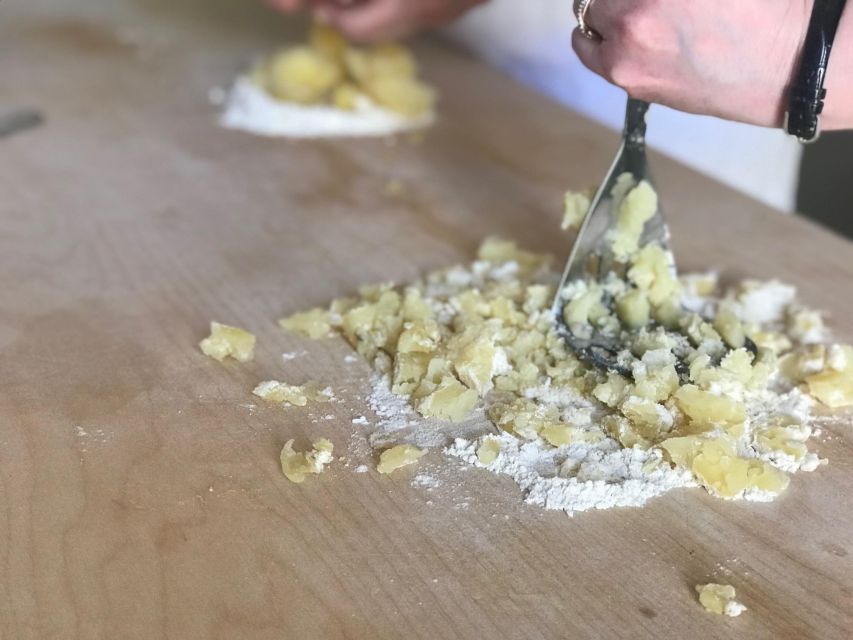
You meet the chef in Villafranca, in front of the Scaliger Castle. This is a useful meeting point because it gives you an easy landmark in a town that may be unfamiliar if you are staying in Verona or elsewhere in the area.
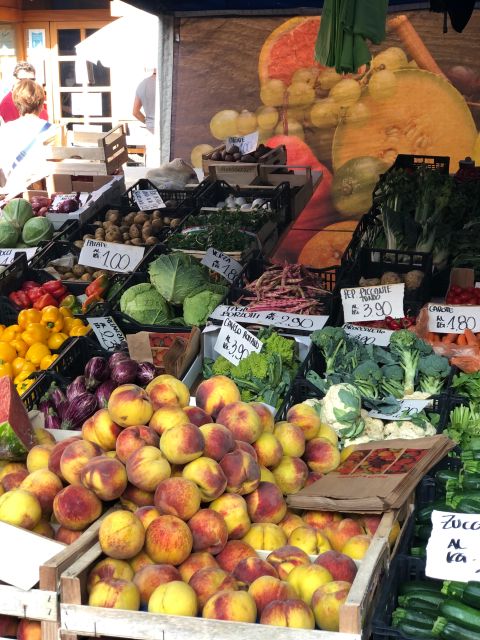
The experience begins on foot, with a walk through the old market. This is not just a quick stop to admire food stalls. You help select the products that will later appear in the cooking lesson, so the market visit has a practical purpose.
I like that connection. You see ingredients before they are chopped, folded, or cooked. The chef can explain how the food will be used and help you think about quality, season, and quantity. That makes the cooking lesson feel less like a fixed demonstration and more like a meal built from what is available that day.
Your exact market experience depends on the calendar. Wednesday is market day in Villafranca, so it is the best choice if you want to browse the town’s market stalls with the chef. On other days, you choose products together in selected local shops. The shop version may be less atmospheric, but it still keeps the ingredient-buying part of the experience intact.
The information supplied for the meeting point includes coordinates near Villafranca’s castle, while the host’s direct contact details are provided after booking. Because one booking had trouble receiving confirmation until shortly before the start, I would keep those host details handy and check your meeting instructions before the activity date.
More Pasta Experiences in Italy:
- Bologna Food & Market Tour with 6 Tastings, Pasta, Wines & More
★ 5.0 · 1,328 reviews - Pasta and Tiramisu Cooking Class with optional Local Market Tour
★ 5.0 · 515 reviews - Rome: Pasta Cooking Class with Market Visit and Wine
★ 4.9 · 277 reviews
Choosing ingredients instead of following a fixed menu
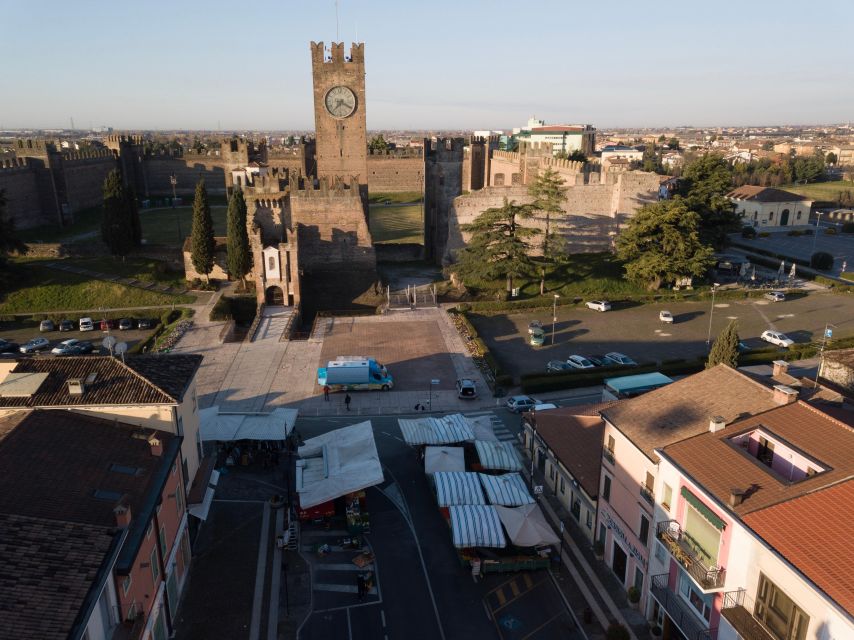
Many cooking classes hand you a prepared box of ingredients. Here, the first stage gives you a small role in deciding what goes into lunch or dinner.
That matters most for the filled pasta. Seasonal vegetables from the market may be used in tortelli, and the available produce can shape the final dish. You are not promised one identical menu every day, which adds a little uncertainty, but also makes the class more connected to local shopping.
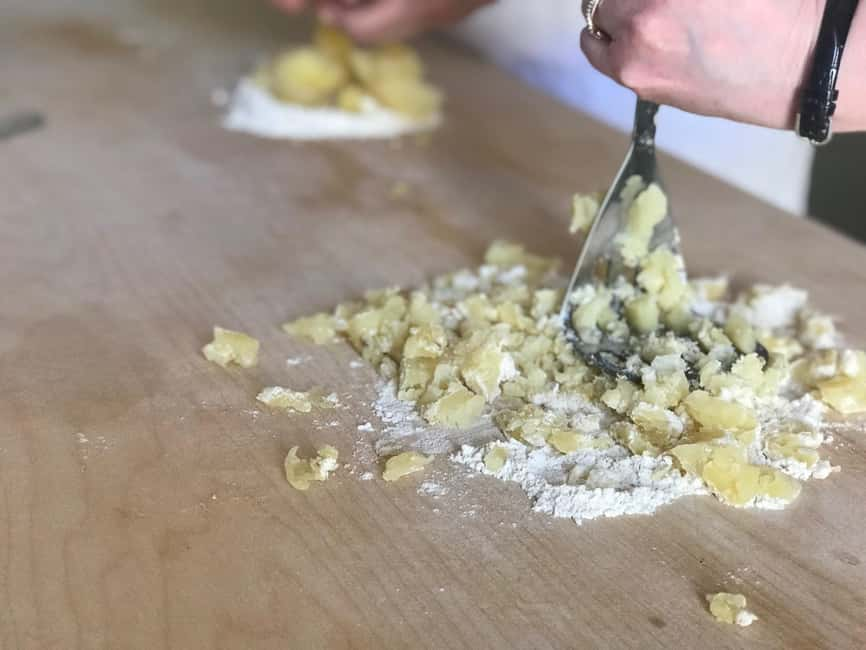
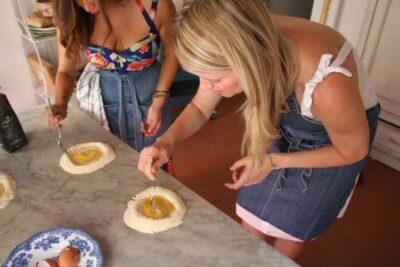
The experience specifically includes fresh pasta made with eggs and flour. You knead the dough by hand, following techniques associated with the way Italian grandmothers once prepared pasta. Expect a tactile lesson rather than a quick demonstration. Your hands do the work, and the quality of the dough depends on how you mix, knead, and shape it.
A chef’s help is particularly useful here. Fresh pasta looks simple, but the texture of the dough and the thickness of the sheets can make a large difference to the finished dish. One of the strongest points in the available feedback is the chef’s willingness to explain how ingredients can be used in different ways and to offer practical suggestions for improving your cooking.
This is a good match for you if you want to learn a few techniques you can repeat at home. It is less suited to anyone who wants a purely passive food tasting with no flour on the hands.
Making tortellini Nodo d’amore
The signature preparation is tortellini Nodo d’amore, the famous local pasta associated with the area around Valeggio and Villafranca. The name refers to a knot of love, and the shape gives the pasta a more memorable identity than ordinary filled parcels.
You learn to roll and fill the pasta, then form the pieces by hand. The available details do not specify the exact filling or final sauce, since those may depend on the market ingredients and the chef’s plan for the day. That flexibility is worth keeping in mind when comparing this class with a lesson that advertises one fixed recipe.
You may also prepare pappardelle or tortelli stuffed with seasonal vegetables. Pappardelle gives you a chance to work with broad pasta ribbons, while tortelli introduces another style of filling and folding. Together, these dishes show how one basic dough can become several different shapes.
I like this part because it offers more than one pasta skill in a single session. You are not only learning to cut noodles. You may also practice filling, sealing, and shaping, all under the chef’s direction. The class can therefore be useful even if you already know how to make a basic pasta dough.
Still, remember that a four-hour experience has a natural limit. You are learning the main steps, preparing food, and eating it in the same session. You should expect helpful instruction and hands-on practice, not professional culinary training.
Preparing tiramisu before the meal
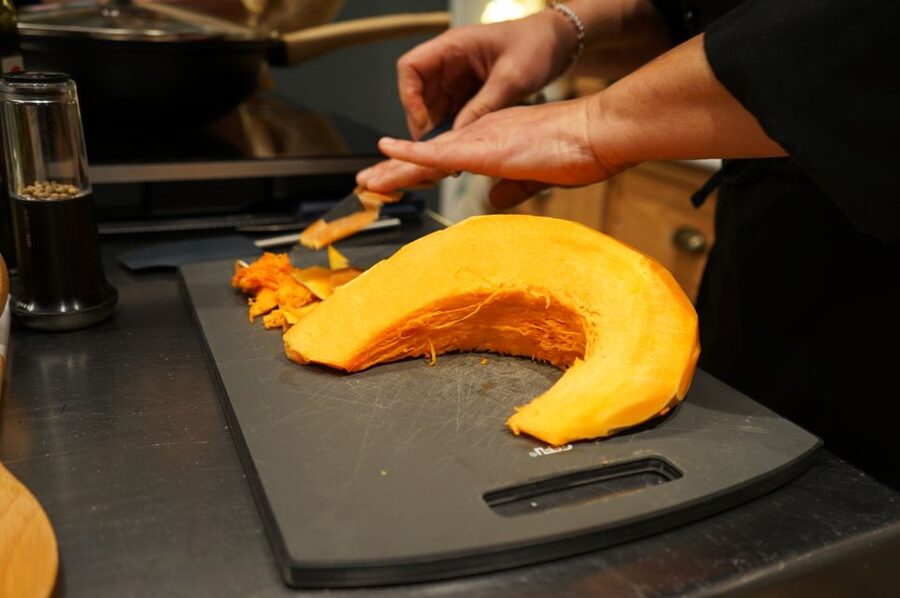
The class also includes tiramisu, Italy’s familiar coffee-and-cream dessert. Preparing it yourself gives the lesson a pleasant change of pace after the effort of rolling and shaping pasta.
The information provided does not list the precise recipe or whether the tiramisu rests for a long period before serving. That means the finished texture and method may follow the chef’s own approach. You will still take part in making the dessert rather than receiving a ready-made portion without explanation.
This is one reason the experience works well for couples, families, or friends who want an activity with a meal attached. There is a clear sense of progress: shop for ingredients, prepare the pasta, make dessert, and then sit down together.
The social side matters. Cooking by hand can be messy and slow, and a small group makes the process more enjoyable than working alone. With a maximum of 10 participants, you should have a better chance of seeing the chef’s technique and receiving help when your pasta shape refuses to cooperate.
A few more market tours around Italy worth a look
- Cooking Class and Lunch at a Tuscan Farmhouse with Local Market Tour from Florence
★ 5.0 · 4,831 reviews - Rome: Colosseum, Roman Forum & Trajan’s Market Exterior Tour
★ 4.3 · 2,038 reviews - Small Group Cooking Class & Market Food Tour in Florence
★ 5.0 · 1,574 reviews - Venice Street Food Tour with Local Guide with Local Food Market Visit
★ 5.0 · 822 reviews
Eating in a Venetian-style kitchen
After the cooking, you taste what you have prepared in a typical Venetian-style kitchen. The setting includes a garden and views toward the castle, which gives the meal a stronger sense of place than a standard classroom.
The meal is paired with local Veronese wines. Since the exact wines are not named, you should think of this as a regional tasting alongside lunch or dinner, rather than a formal winery visit with detailed vineyard education.
I like the balance between food and wine here. You are not simply given a glass at the start and sent home. The wine accompanies food you have made yourself, which gives you a practical way to think about pairing. It also helps turn the cooking lesson into a full social meal.
Alcohol is included in the tasting, so this activity is not a good choice if you want a completely alcohol-free experience. The rules also prohibit alcohol and drugs brought into the activity. Anyone with dietary restrictions should ask the host before booking, since the supplied information does not explain substitutions or allergy procedures.
The castle view adds atmosphere, but it should not be confused with a separate castle tour. The castle is the meeting landmark and part of the setting. The main focus remains the market, kitchen, pasta, dessert, and wine.
What the four-hour schedule means for you
Four hours is long enough for the experience to feel complete without taking over your whole day. You have time for the market or shop visit, instruction, preparation, and the shared meal.
That length also means you should allow enough space in your schedule. This is not a quick pasta demonstration that fits neatly between two sightseeing stops. If you plan to visit Verona’s major sights on the same day, leave room for the full activity and the journey to and from Villafranca.
The duration can work especially well as a half-day plan. You get a food experience in the morning or afternoon, then still have time for other plans, depending on the starting time available. The activity page advises you to check current availability for exact start times.
The language options are Italian and English. That is useful for English-speaking visitors, but the class remains a live cooking session, so some communication will happen through watching, copying, and hands-on practice. You do not need every kitchen term explained to benefit from seeing the dough being handled and shaped.
Group size, teaching style, and communication
The group is limited to 10 participants. That is small enough to keep the class from feeling like a large demonstration, though the actual atmosphere will depend on how many people book your date.
The strongest praise centers on the chef rather than on the setting alone. The chef is described as attentive, professional, and ready to explain ideas or suggest better ways to prepare the available ingredients. That points to a useful class for beginners and home cooks who want practical guidance.
Another important detail is that the chef may adapt the dishes to what is found in the market. This can make the lesson more interesting, but it also means the menu is not fully fixed. If you have your heart set on one exact pasta filling, ask about the plan before you commit.
Communication before the activity deserves care. One person had unclear instructions and difficulty getting a confirmation until about an hour before the morning start. That is the only sharply negative account in the supplied feedback, but it is specific enough to take seriously. After booking, check the meeting point, starting time, and host contact details. If anything remains unclear, contact the provider before your travel day rather than waiting.
Value compared with other Verona food classes
The value here comes from the number of stages packed into one experience. You are not only learning pasta. You also visit the market or local shops, choose ingredients, prepare tortellini or other pasta, make tiramisu, taste regional wine, and eat in a castle-facing setting.
A class with a higher price may still be worth it if it includes fewer people, better ingredient quality, or more time with the chef. Since no price is supplied here, I cannot judge the exact deal in euros. Instead, compare what is included: the market visit, food, instruction, meal, wine, and four-hour duration.
This experience may offer better value than a short pasta lesson if you want a full half-day outing. It may offer less value for you if you only want to learn one recipe and prefer to spend the rest of the day sightseeing.
Other cooking options around Verona focus on pasta and tiramisu, fresh pasta with risotto, homemade gelato, or dining in a local home. This activity has a different angle because it begins with ingredient shopping in Villafranca and includes the local specialty Nodo d’amore. Choose it for the market connection and small-group cooking, not simply because it includes pasta.
Who should book this experience
I would recommend it to people who like food with a local setting and want to take part rather than watch. It suits first-time pasta makers, home cooks seeking new ideas, couples, families, and small groups of friends.
It is also a good choice if you are staying near Verona and want to see something beyond the city center. Villafranca gives the activity a different setting, with the castle as a useful visual anchor and the market as part of the day’s rhythm.
You may want to skip it if you dislike group cooking, do not want to handle flour and dough, or need a tightly fixed menu for dietary reasons. You should also avoid booking it as a last-minute plan until the meeting instructions are clear.
Free cancellation is available up to 24 hours before the start for a full refund, and you can reserve while paying later. Those terms help if your Verona plans are still moving around, but they do not remove the need to confirm the practical details.
Should you book the Villafranca pasta class?
Book this experience if you want a hands-on food morning or afternoon with a real local-food thread running through it. The market visit, hand-shaped tortellini Nodo d’amore, seasonal pasta options, homemade tiramisu, wine, and castle view make it more substantial than a basic cooking demonstration.
I would choose a Wednesday for the full market visit. On another day, the selected local shops still provide an ingredient-shopping element, but the market is the stronger version.
The biggest reason to book is the chef’s practical teaching style and the small group. The main reason to pause is the uneven pre-tour communication reported by one booking, so verify everything in advance. If those details are settled, this is a pleasant and useful way to spend four hours near Verona, especially if you want to leave with techniques you can use at home.
FAQ
Where does the experience begin?
You meet the chef in Villafranca, in front of the Scaliger Castle. The meeting coordinates provided are 45.3514404296875, 10.846451759338379.
How long does the activity last?
The experience lasts four hours. Starting times vary, so you need to check availability for the date you want.
Is the market visit available every day?
Villafranca’s market day is Wednesday. On other days, you choose products with the chef in selected local shops.
What food will I learn to prepare?
You work with eggs and flour to make fresh pasta by hand. Depending on the ingredients available, the class may include tortellini Nodo d’amore, pappardelle, or tortelli filled with seasonal vegetables. You also prepare tiramisu.
What languages are offered?
Instruction is available in Italian and English.
How large is the group?
The activity is limited to 10 participants. The chef leads the cooking lesson and shares the meal and wine with the group.
Can I cancel the booking?
You can cancel up to 24 hours in advance for a full refund. The reserve-now-and-pay-later option lets you book without paying immediately.
Just added around Italy
- Cesarine: Market Tour & Home Cooking Class in Catania★ 4.0 · 6 reviews
- Small Group Market tour and Dining Experience at a Cesarina’s home in Brindisi★ 4.5 · 6 reviews
- Small Group Market tour and Cooking class in Brindisi★ 4.5 · 8 reviews
- One day tour Christmas markets Innsbruck – Bressanone – Vipiteno★ 4.5 · 11 reviews
- Private Market Tour and Cooking Class in Bologna with Giovanna C★ 5.0 · 20 reviews
- Food markets tour with a local!★ 4.5 · 39 reviews
- Cesarine: Market Tour & Cooking Class at Local’s Home in Bologna★ 5.0 · 19 reviews
- Cesarine: Small Group Market tour and Dining in Altamura★ 3.0 · 2 reviews
Pasta, compared.
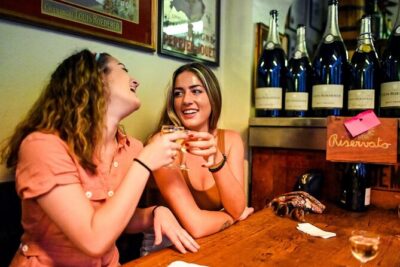
Bologna Food & Market Tour with 6 Tastings, Pasta, Wines & More
Read our review →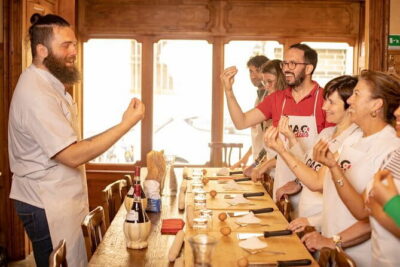
Pasta and Tiramisu Cooking Class with optional Local Market Tour
Read our review →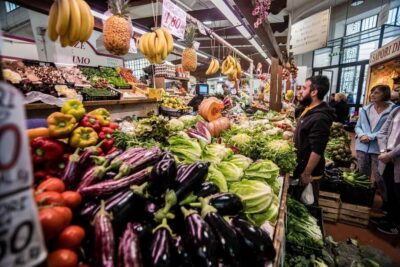
Pasta Cooking Class with Market Visit and Wine
Read our review →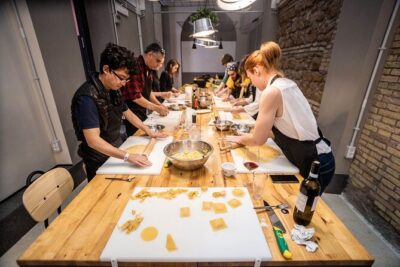
Kitchen of Mamma: Pasta Cooking Class with market visit in Rome
Read our review →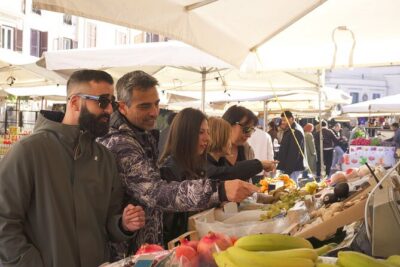
Farmers’ Market Shopping with Cooking Class and Pasta Making
Read our review →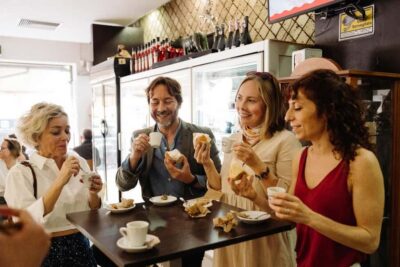
Dolce Vita by Day Market Tour & Pasta Making Class
Read our review →Browse the lists this tour appears in