
Review · STREET FOOD MARKET TOURS
Rome: Testaccio Market Food Tour with Street Food & Wine
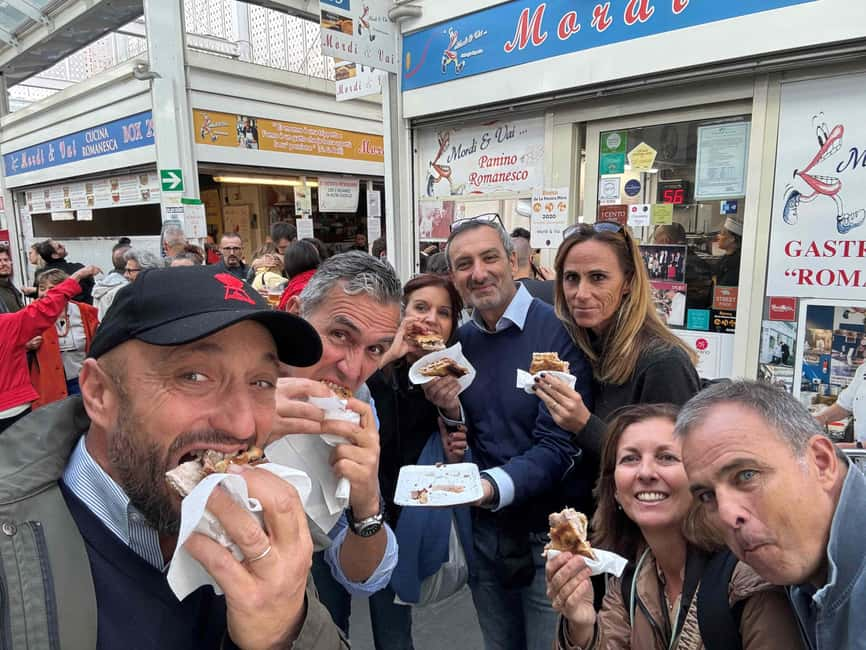
Testaccio is where Rome feels most like a neighborhood and least like a backdrop for sightseeing. This small-group food tour takes you through the market and nearby streets for pizza, sandwiches, pasta, wine, and a final maritozzo with espresso. You get a meal, but you also get the story of a former slaughterhouse district and ancient river port.
I like the generous tastings and the way the guide connects food with place. I also like the blind wine game, which adds a light, social touch without turning the tour into a formal lesson. The main drawback is timing: the 11:00 AM start and substantial food stops make this more of a late breakfast or full lunch than a snack outing.
Key points at a glance
- Five stops in Testaccio: Expect market stalls, wine spots, street food, pasta, and dessert rather than one long restaurant meal.
- Roman pasta is central: Carbonara, amatriciana, and cacio e pepe may appear, with wine served alongside the food.
- A full Roman meal: Pizza by the slice, sandwiches, cheeses, cured meats, pasta, maritozzo, and espresso make this filling.
- Local context matters: Your guide explains Monte Testaccio, the former slaughterhouse, and the district’s river-port past.
- Duné brings the personality: Duné is praised for her warmth, humor, food knowledge, and ability to make the neighborhood feel personal.
- Small group, practical format: Groups are limited to 10, vegetarian and gluten-free choices are available, and the tour runs in rain or shine.
Why Testaccio makes such a good food base
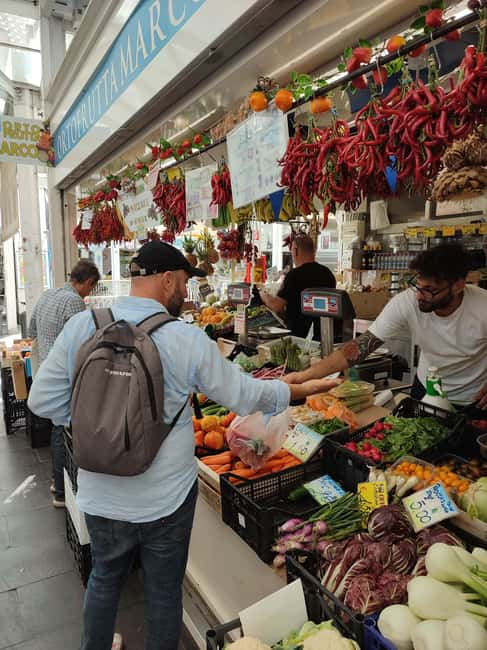
Rome has no shortage of food tours, but Testaccio gives you a clearer sense of daily Roman life than the streets around the Trevi Fountain or the Colosseum. The neighborhood grew around work, trade, and food. Its old slaughterhouse shaped local cooking, while its position near the Tiber made it important as a river port.
That context gives the tastings more meaning. You are not simply moving from one plate to the next. You are learning why Rome developed a practical, hearty food culture and why dishes made with inexpensive ingredients became local classics.
Monte Testaccio is one of the district’s most unusual landmarks. The hill was formed from broken ancient amphorae, the large clay containers once used to carry goods such as oil. Your guide uses this and the former slaughterhouse to explain how Rome’s food supply worked long before today’s market stalls appeared.
I like this approach because it keeps the neighborhood from becoming a backdrop. Food is the main event, but the stories help you understand what you are eating and why Testaccio feels different from Rome’s monument zone.
More Street Food Market Tours in Italy
- Roman Food Tour with Visit to the Trionfale Food Market
★ 5.0 · 471 reviews - Rome: Food Tour with Market Visit
★ 4.9 · 200 reviews - Devour Rome Testaccio Market Food Tour
★ 5.0 · 180 reviews
Meeting Duné and entering the market
The meeting point is Piazza di Testaccio, near the north side of the Amphora Fountain. More specifically, look for Edicola Emporio Testaccio next to the newsstand. Your guide should be wearing or carrying a FoodLoverTour cap or bag, so this is not a difficult meeting spot.
Duné is the guide most closely associated with the experience. She speaks English and Italian, and her style seems well suited to a food walk: friendly, playful, and full of small facts about the district, food, and local people. Marco and other guides are also part of the team, so the exact host can vary.
The group size is limited to 10 people. That matters in a market. A group of 20 can block a stall, lose sight of the guide, and turn every tasting into a queue. With fewer people, you should have a better chance to hear explanations and ask questions.
This is also the point to discuss allergies and dietary needs. Vegetarian and gluten-free options are available, but the tour is not fully vegan. Tell the operator in advance rather than waiting until the first food stop.
Five stops, from street food to Roman pasta
The tour covers five handpicked stops across Testaccio Market and the surrounding streets. The precise order and vendors may change, but the food pattern is clear: you will eat in stages, with each stop adding another part of the Roman table.
Pizza by the slice and Roman sandwiches
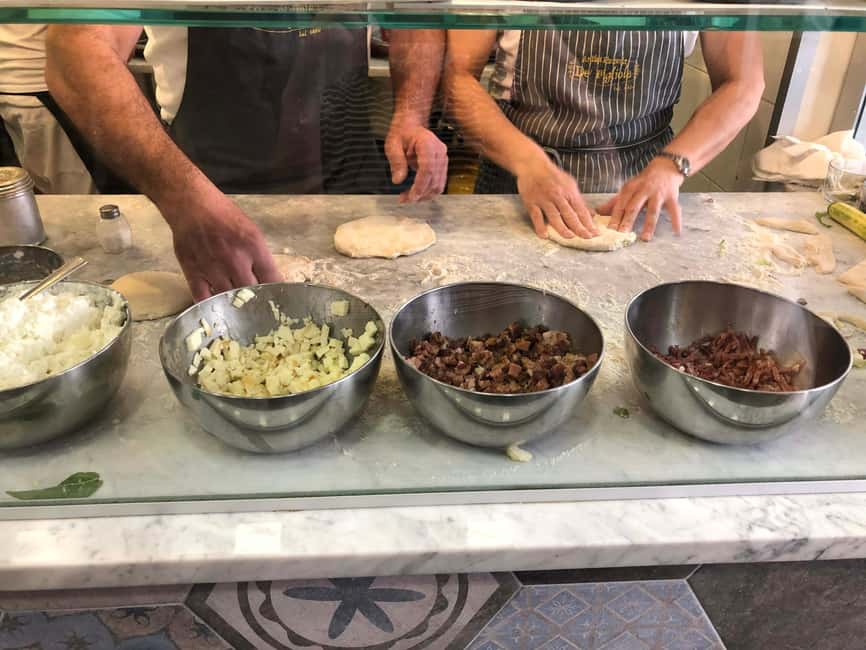
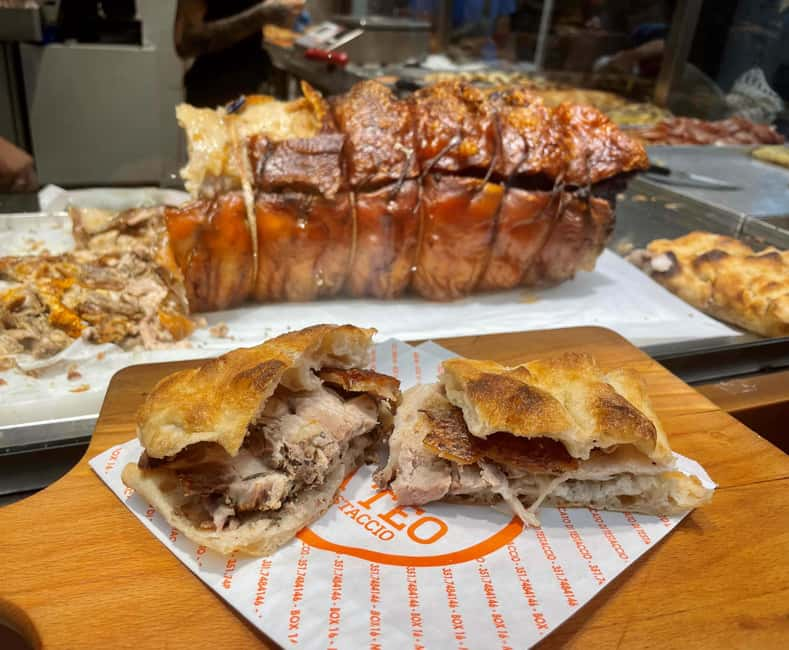
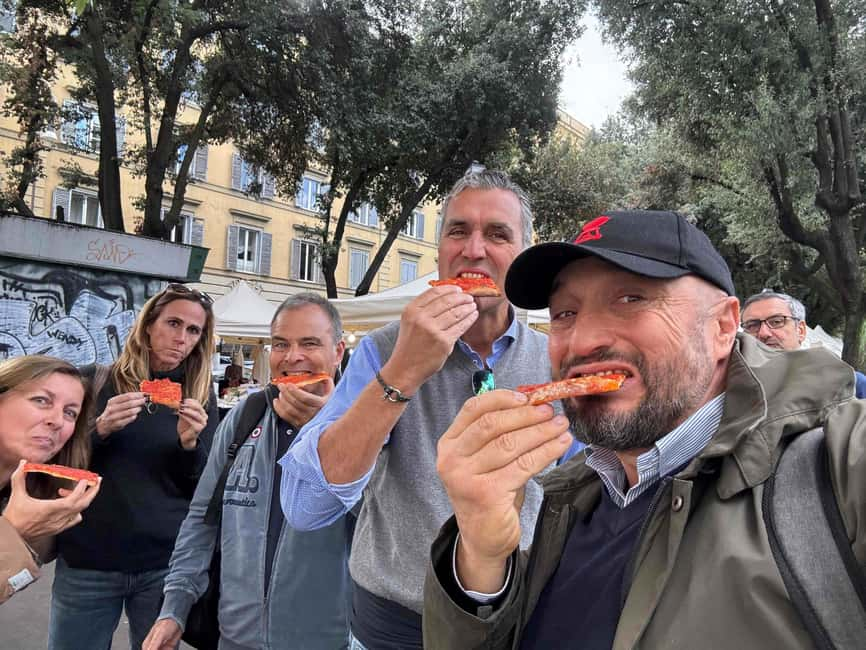
The opening tastings may include pizza by the slice and Roman-style sandwiches. These foods are useful introductions because they show the quick, everyday side of Roman eating. You can eat them standing or at a market stop, without the ceremony of a restaurant meal.
Pizza by the slice is especially practical for a walking tour. You get a small portion rather than committing to an entire pie, leaving room for later tastings. The sandwiches add another texture and style, with fillings that may include familiar market products.
The important point is pacing. Do not treat the first stop as a light sample if you have a small appetite. The tour promises portions equal to a full Roman meal, and the early street food is part of that total.
More Street Food Market Tours in Rome
- Rome: Street Food, Local Market and Hidden Gems Tour
★ 5.0 · 57 reviews - Rome E-Bike Tour: Ultimate Street Food and Market Feast
★ 4.9 · 50 reviews - Tasty Trionfale Farmers Market Food Tour and Local Wines Tasting
★ 5.0 · 43 reviews - Rome: Vatican Street Food and Wine Tour with Farmers Market
★ 5.0 · 37 reviews
Cheese and cured meats at the market
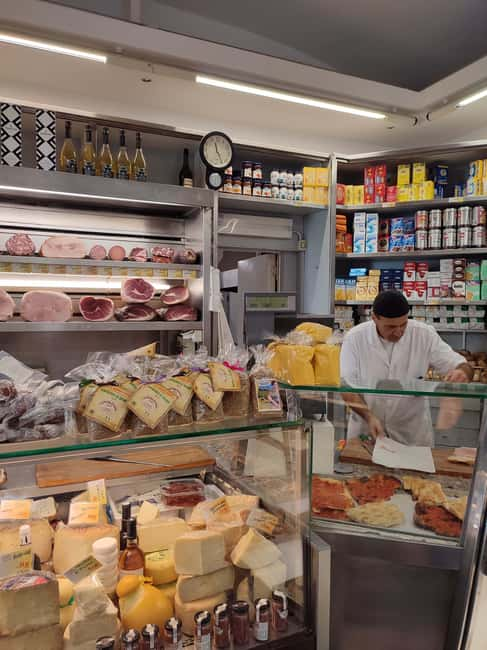
Cheeses and cured meats bring you closer to the market itself. These are the foods that make a Roman counter feel like a place where locals shop, not simply a set built for visitors.
Your guide can explain what you are tasting and how the products fit into Roman eating habits. The value here is not only the bite. It is the chance to see how food is displayed, sold, and combined before it reaches a plate at home or in a restaurant.
This stop can also help you identify ingredients you may want to buy later in your trip. Since the tour is conducted in English, you can ask questions about names and pairings without having to guess at the counter.
Homemade pasta with classic sauces
The pasta course is the heart of the tour. Expect traditional Roman sauces such as carbonara, amatriciana, and cacio e pepe, served as a proper dish rather than a tiny tasting spoon.
Each sauce represents a different balance of simple ingredients. Carbonara is creamy in texture but traditionally gets its body from eggs and cheese, not cream. Amatriciana brings tomato and a salty pork flavor. Cacio e pepe relies on cheese and black pepper, proving how much Roman cooking can do with a short list of ingredients.
The tour does not promise all three sauces at every sitting, so think of these as possible examples rather than a fixed menu. Still, this is the part that makes the experience especially useful for a first visit to Rome. You can taste the dishes in a local setting, then recognize them on menus elsewhere.
Wine is paired throughout the tour. That makes the pasta stop feel more like lunch than a cooking demonstration. The wine tasting is part of the price, although extra drinks are not included.
The blind wine game
The blind tasting gives the group a break from simply eating. You sample wine without being told everything at once, then try to identify or compare what is in the glass. There is a small prize, which keeps the game friendly rather than serious.
I like this feature because it gives strangers an easy way to talk. It also removes some of the pressure people feel around wine. You do not need expert vocabulary or a trained palate. You only need to taste, guess, and enjoy the joke if you get it wrong.
If you do not drink alcohol, check with the operator before booking. The tour includes wine throughout, and the supplied information does not promise a nonalcoholic replacement.
Maritozzo and espresso to finish
The final stop is sweet and unmistakably Roman: a maritozzo with whipped cream and an espresso. A maritozzo is a soft, sweet bun filled with cream, and it makes a fitting end to a day built around traditional food.
This is not a token dessert. After the savory tastings, the cream-filled pastry gives the tour a proper finish. The espresso adds the familiar Roman punctuation mark.
You should plan your next activity with a little space after the tour. The food is described as equivalent to a full meal, and dessert comes on top. This is not the best choice immediately before a large dinner reservation.
The neighborhood stories add real value
A food tour can be little more than a list of bites. This one has enough local history to give the walk shape. Testaccio’s connection to the river, its former slaughterhouse, and Monte Testaccio all help explain why the district developed its own identity.
The former slaughterhouse is particularly useful context for understanding Roman cooking. Offal and less expensive cuts became part of local food traditions because workers and families made use of what was available. Even if the tour does not serve every example of that cooking, the background helps you see Roman cuisine as practical and inventive rather than simply old-fashioned.
The neighborhood’s working-class roots also explain why Testaccio can feel less polished and less geared to sightseeing than central Rome. That is part of its appeal, but it also means you should come for local character rather than grand monuments.
Duné’s role matters here. A guide who knows how to connect a food stall to a street, a dish to a tradition, or a hill of pottery fragments to ancient trade makes the walk easier to remember. Her warm, entertaining style is repeatedly praised, and that is important on a small-group tour where the guide sets the mood for the entire morning.
How much food do you really get?
The honest answer is plenty. The tour includes street food, cheeses, cured meats, a substantial pasta tasting, wine, maritozzo, and espresso. The tastings are intended to equal a full Roman meal.
I would not eat a large breakfast before meeting the group. A small coffee or light snack is the safer plan, especially since the tour begins at 11:00 AM. You will want room for the pasta and dessert, not just the first slice of pizza.
The format also suits people who like variety. You are not ordering one dish and hoping it is good. You are trying several foods across different stops, which gives you a broader picture of Roman eating.
The tradeoff is that portions and exact dishes can change. A market is not a fixed restaurant menu, and the tour does not list a guaranteed serving of every sauce or product. If you need a very specific meal, this may feel less predictable than booking a restaurant.
Is the $95 price fair?
At $95 per person, this is not a cheap way to grab lunch. It is a guided food experience with several tastings, wine, a small group, and neighborhood interpretation.
The value is strongest if you would otherwise spend money sampling several places on your own. You get a planned route, an English-speaking guide, vendor access, and enough food to replace a meal. You also avoid the guesswork of choosing from unfamiliar market stalls.
The price is less attractive if your main goal is simply to eat the least expensive Roman food possible. You can buy pizza or pasta for far less without a guide. You are paying for the combination of food, organization, conversation, and local context.
For a first or second visit to Rome, I think the cost is reasonable if you care about food and want a district-based experience. The small group helps, too. A maximum of 10 keeps the walk more personal than a large coach-style outing.
Timing, comfort, and practical limits
The tour lasts about two and a half to three hours, depending on how the schedule is described at booking. It starts at 11:00 AM and runs Monday through Saturday, not Sunday.
Wear comfortable shoes. You will walk through the market and neighborhood streets, and the tour runs in rain or shine. A light rain jacket is sensible on unsettled days because this is not an indoor restaurant crawl.
People with mobility impairments may find the format unsuitable. The information specifically lists the tour as not suitable for those with mobility impairments, so ask the operator if you have questions about walking or access before reserving.
Children are welcome. Keep in mind, though, that the experience includes wine and a long sequence of tastings, so it will suit children best when they are happy with a food-focused morning.
Free cancellation is available up to 24 hours before the tour for a full refund. You can also reserve and pay later, though full payment is required to confirm the booking. A minimum of two participants is needed for the tour to run.
Who should book the Testaccio food tour?
I would choose this tour if you want to eat beyond the most famous tourist streets and prefer a guide who talks about the people and work that shaped a neighborhood. It is also a good fit if you want several classic Roman foods without planning five separate stops yourself.
Food-focused couples, small groups of friends, and first-time Rome visitors should get the most from it. The blind tasting and shared market stops make it easy to talk with other participants, while the group limit keeps the morning manageable.
I would think twice if you dislike alcohol, need a fully vegan menu, have limited mobility, or want a tightly fixed menu. The tour includes wine, is not fully vegan, runs outdoors in all weather, and depends partly on the day’s market offerings.
Should you book it?
Book this Testaccio tour if you want a generous meal wrapped in local stories. The best reasons are the five-stop format, the Roman pasta, the wine pairings, and Duné’s engaging way of tying food to the district’s working past.
Skip it if you only want a quick snack, a formal cooking class, or a central Rome sightseeing tour. For everyone else, $95 buys more than food. It buys a well-paced introduction to Testaccio, with enough pasta, wine, and maritozzo to carry you happily into the afternoon.
FAQ
Where does the Testaccio food tour meet?
Meet in Piazza di Testaccio, near the north side of the Amphora Fountain. The specific meeting point is Edicola Emporio Testaccio, next to the newsstand.
How do I recognize the guide?
Look for a guide wearing or carrying a FoodLoverTour cap or bag.
What time does the tour start?
The tour starts at 11:00 AM.
How long does the experience last?
The tour lasts about two and a half to three hours. The information describes the duration both as 2.5 hours and three hours.
Which days does the tour operate?
It operates Monday through Saturday and is not available on Sundays.
Is the tour conducted in English?
Yes. English is the listed tour language. Other languages may be available upon request.
How many people are in each group?
Groups range from 2 to 10 participants. A minimum of two participants is required for the tour to run.
Are vegetarian or gluten-free options available?
Yes. Vegetarian and gluten-free options are available. The tour is not fully vegan.
Is wine included?
Yes. Wine tastings are included throughout the tour, along with a blind wine-tasting game. Additional food and drinks are not included.
Is the tour suitable for children?
Yes, children are welcome. The tour still includes wine and several substantial food tastings.
Can I cancel for a refund?
You can cancel up to 24 hours in advance for a full refund. Reserve and pay later is also available, while full payment is needed to confirm the booking.
More Food and Drink Trips in Rome
- Rome: Taste of Testaccio Food & Market Tour
★ 4.9 · 38 reviews - Rome: The Vatican Market Experience Tasting and Class
★ 4.7 · 10 reviews - Rome: Prati Food & Wine Market Tour with St. Peter Square
★ 5.0 · 7 reviews - Testaccio Experience: Street Food, Market and Traditions
★ 5.0 · 4 reviews
More Wine Tours in Rome
- Trevi Fountain, Pantheon, and Campo Dei Fiori Market Food and Wine Tour
★ 5.0 · 320 reviews - Rome: Pasta Cooking Class with Market Visit and Wine
★ 4.9 · 277 reviews - Rome: Testaccio Food & Market Tour with Pasta & Wine
★ 5.0 · 38 reviews - Rome: Campo De’ Fiori Market & Trevi 4-Hour Food & Wine Tour
★ 4.8 · 9 reviews
Just added around Rome
- Testaccio Experience: Street Food, Market and Traditions★ 5.0 · 4 reviews
- Rome: Testaccio Food & Market Tour with Pasta & Wine★ 5.0 · 38 reviews
- Rome: Temples, Squares & Markets Guided Walking Tour★ 4.8 · 26 reviews
- Rome: Taste of Testaccio Food & Market Tour★ 4.9 · 38 reviews
- Rome: The Vatican Market Experience Tasting and Class★ 4.7 · 10 reviews
- Rome: Trajan’s Markets & Museum of The Imperial Fora Tour★ 4.8 · 4 reviews
- Rome: Trajan Markets Experience with Multimedia Video★ 4.0 · 66 reviews
- Rome: Prati Food & Wine Market Tour with St. Peter Square★ 5.0 · 7 reviews
Street Food Market Tours, compared.
Old Town, Creek, Museums, Souks, & Street Food Tour
Read our review →
Old Town, Souks, Street Food, Guided Tour & Abra Ride
Read our review →
Old Town, Souks, Street Food, Guided Tour & Abra Ride
Read our review →
Small Group Cooking Class & Market Food Tour in Florence
Read our review →
Old Town, Street Food, Creek, Souks, & Emirati House
Read our review →
Browse the lists this tour appears in