
Review · MARKET AND COOKING CLASS TOURS
Seoul: Authentic Korean Cooking Class and Market Tour
Seoul’s best food lessons often begin far from a restaurant, and this one starts at a local traditional market near Sillim Station. You shop for seasonal produce and Korean seasonings with Ann, then carry those ingredients to a family home where you help choose and cook the meal.
I like the small group of four and the freedom to choose dishes such as bulgogi, bibimbap, or kimchi pancakes. I also like the gentle finish: homemade dessert and tea in a room decorated with traditional embroidery. The main consideration is the location. Sillim is outside Seoul’s main sightseeing core, so you need to allow subway time and follow the meeting instructions carefully.
Key points at a glance
- Market shopping comes first: Learn how Korean ingredients are used while buying fresh produce and seasonings from local vendors.
- Ann shapes the cooking lesson around you: You can choose dishes, rather than simply follow a fixed menu.
- The class takes place in a Korean home: You also meet Ann’s mother and see a more personal side of local life.
- Lunch is made by the group: The meal gives you time to practice, eat, and understand how the dishes fit together.
- Dessert and tea slow the pace: The final course takes place in a room filled with hand-embroidered works.
- The small format matters: With no more than four participants, you can ask questions and get hands-on help.
Starting at Sillim Station at 10:30
Your meeting point is inside Sillim Station, on subway line 2, station number 230. Meet at 10:30 in front of Cafe Mignon, a take-out cafe located after the ticket turnstiles and before the station exits.
That last detail matters. You do not want to leave the station and then search the streets for the group. Stay inside the paid area, find Cafe Mignon, and look for the person holding a Sobaan cooking sign. The host speaks English, and the instructions are specific enough if you read them before setting out.
Sillim is not one of the usual first stops for a Seoul food outing. That is part of the appeal. You begin in an everyday neighborhood rather than at a polished tourist venue, though you should allow enough time to reach the station without rushing. The class lasts 210 minutes, so the schedule is long enough for the market, cooking, lunch, dessert, and tea without turning each part into a race.
The group limit is four people. I consider that a major advantage for a cooking class. You have a better chance to handle ingredients, ask about unfamiliar seasonings, and get help with technique. A large demonstration class can show you plenty, but this format is built for participation.
More Market and Cooking Class Tours in Seoul:
- Local Home Korean Cooking Class & Market Adventure in Seoul
★ 5.0 · 1,024 reviews - Seoul: Korean Cooking Class at a Local Home and Market Tour
★ 5.0 · 348 reviews - Korean Cooking Class with Grocery Shopping at Seoul Local Market
★ 5.0 · 107 reviews
Reading Seoul through a traditional market
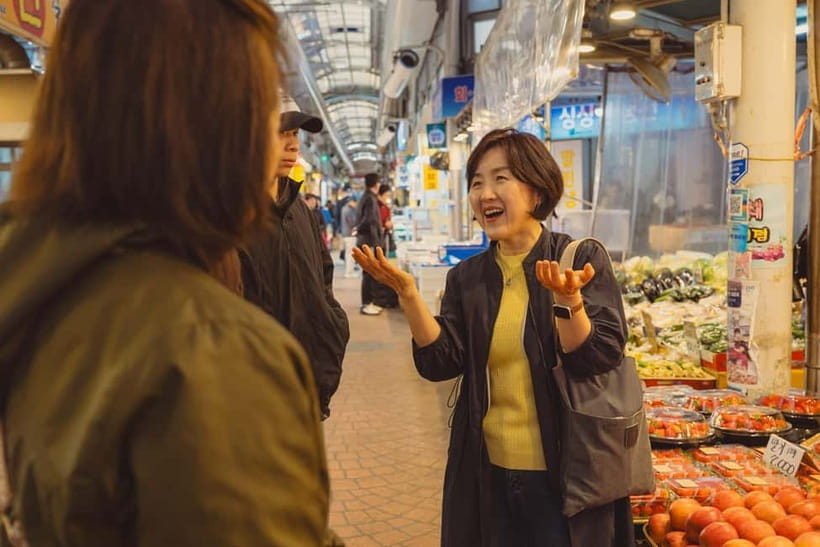
The market visit is more than a quick shopping stop. Ann guides you through Korean ingredients and explains their place in local cooking. You pick up fresh produce and authentic seasonings, with the exact selection shaped by what is in season and what you decide to prepare.
This is where the class gains much of its cultural value. A Korean recipe can look simple on paper, yet the ingredients carry clues about how the food is prepared at home. The market helps connect the finished dish to the products themselves. You can learn what to look for, how local vendors present food, and why certain seasonings matter.
You also make several stops to look at typical market foods and hear the stories behind them. That is useful if you plan to eat your way around Seoul afterward. Instead of seeing an ingredient only after it has been chopped and cooked, you get a clearer sense of its original form and purpose.
The market is also a practical place to ask questions. If you are curious about Korean staples, this is the moment to ask Ann what to buy, how to use it, or which items are worth taking home. The shopping portion keeps the class tied to real daily cooking rather than treating Korean food as a performance arranged for visitors.
One point to keep in mind is that market conditions can change. Seasonal shopping means the exact produce and ingredient selection may vary. That is a strength if you want a food lesson rooted in the day’s supply, but it also means you should not expect every class to follow an identical ingredient list.
Cooking in a family Korean home
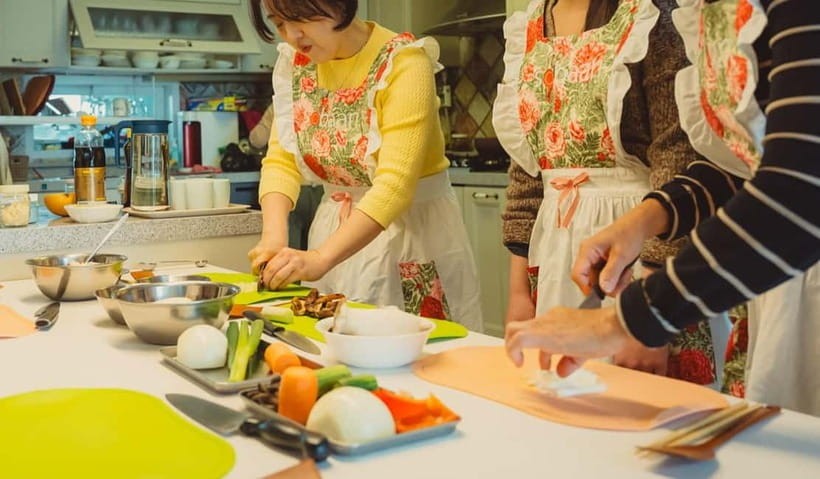
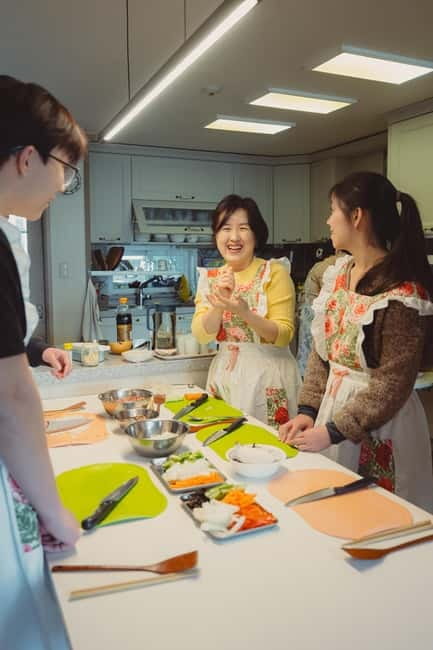
After the market, you head to a beautiful Korean house filled with traditional hand-embroidered works. Ann’s mother welcomes you there, adding a family connection that a standard cooking studio cannot easily copy.
The home setting changes the mood. You are not just standing at a workbench in a commercial classroom. You are entering a place connected to the hosts’ daily life and family culture. The embroidered pieces give the room a quiet visual focus, and they make the tea portion feel like part of the same experience rather than an extra drink added at the end.
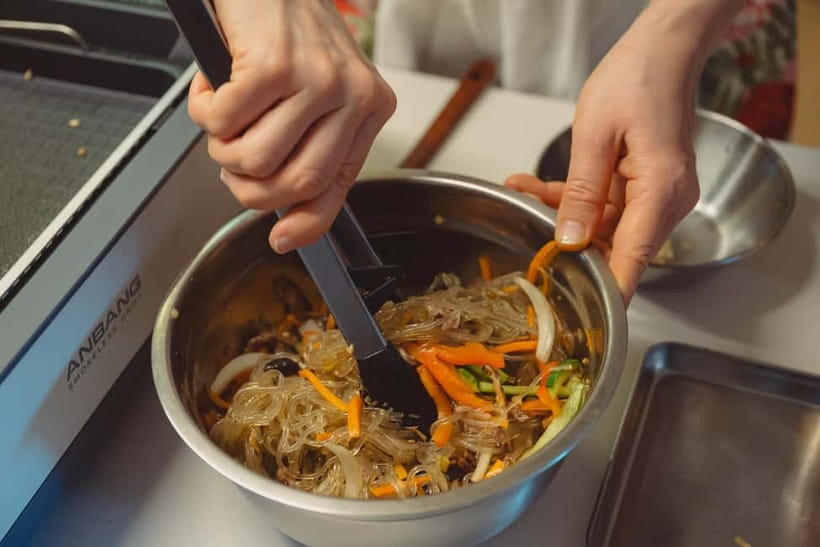
The class is also flexible. You can choose from dishes such as bulgogi, bibimbap, and kimchi pancakes, or ask about another Korean dish you are curious about. The available menu is not described as unlimited, so it is sensible to think about your preferences before arriving and discuss them with Ann during the booking process or at the start.
That choice is valuable for two reasons. First, you are more likely to learn food you actually want to cook again. Second, choosing your meal gives you a chance to compare different styles of Korean cooking. Bulgogi introduces marinated meat, bibimbap brings together rice and assorted toppings, and kimchi pancakes offer a different texture and a handy way to use familiar Korean flavors.
The lesson has an unhurried pace. That does not mean the class is slow or overly formal. It means you have time to follow the steps, help prepare the food, and understand what you are doing. The four-person limit should make it easier to stay involved instead of watching from the back.
Ann is the main English-speaking host, while her mother adds another personal link to Korean home life. The combination is one of the more distinctive parts of the experience. You get cooking guidance from Ann and a glimpse of the family setting from the home itself.
A homemade lunch you help create
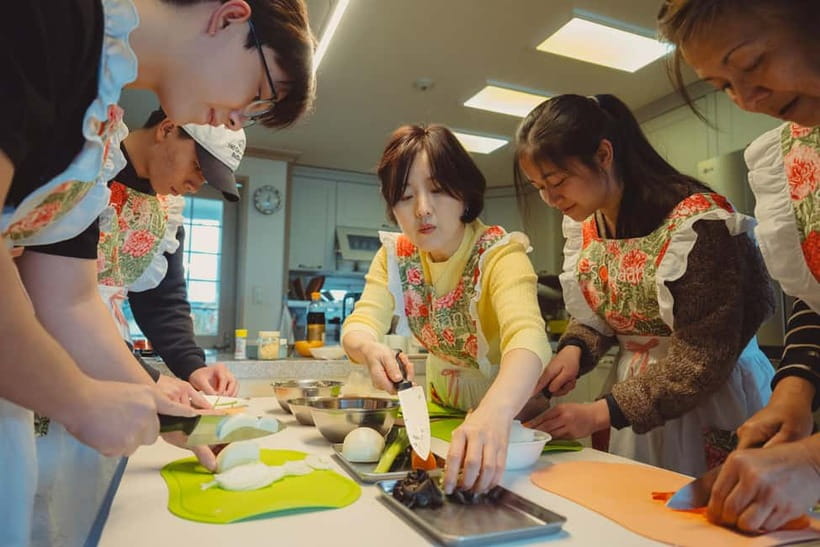
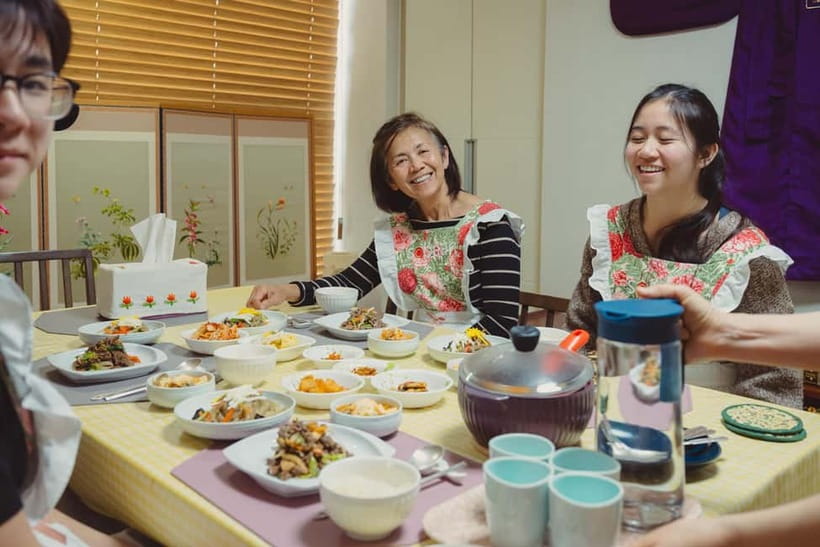
The lunch is the central reward, but it is also part of the lesson. You eat the dishes you selected and prepared, which gives the meal a different feel from simply ordering Korean food at a restaurant.
I like this format because it lets you judge the food in a practical way. You have handled the ingredients, followed the preparation, and seen how separate parts come together. If you make a mistake, you can ask about it right away. If a flavor surprises you, you can trace it back to the seasoning or cooking method.
The meal also gives you a chance to pause. Market visits and cooking classes can become a blur when the schedule moves directly from one activity to the next. Sitting down for a homemade lunch lets you enjoy the result and talk with the hosts about Korean food and culture.
The description does not promise a fixed number of dishes, although one account describes preparing three. Expect the final menu to depend on the dishes selected and the ingredients available. That flexibility is good for personal interest, but it means you should not book this expecting a set tasting menu with a guaranteed list of every dish.
If you are mainly interested in eating rather than cooking, this may not be the right choice. The value comes from taking part. You will spend time shopping, preparing, and learning before lunch arrives.
A few more market tours around Seoul worth a look
- Seoul Street Food Market Tour
★ 5.0 · 1,226 reviews - Seoul: Night Market Food Tour with Local Guide
★ 4.9 · 943 reviews - Seoul: Palace, Temple and Market Guided Foodie Tour at Night
★ 4.9 · 750 reviews - Seoul: Guided Food & Market Tour with 8+ Tastings
★ 4.9 · 342 reviews
Dessert and tea among embroidered works
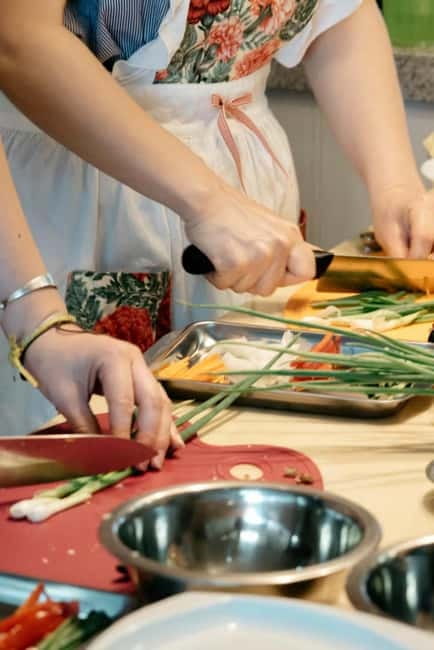
The class ends with a traditional Korean dessert that you make together. Then you sit down for tea in the embroidery-filled room.
This final stage gives the experience a nice change of pace. The cooking portion is active and practical. Dessert making adds another food tradition, while tea creates room for conversation and reflection. It is a calmer finish than simply cleaning up and leaving after lunch.
The exact dessert is not specified, so you should not book this expecting a particular sweet. What you can count on is the chance to prepare a traditional dessert and enjoy it with tea in the host’s home.
For me, this is where the class feels most personal. The market shows you how Korean food begins, and the meal shows you how it comes together. Tea and dessert connect the food to hospitality, family, and the pleasure of taking time with people.
What the $69 price really covers
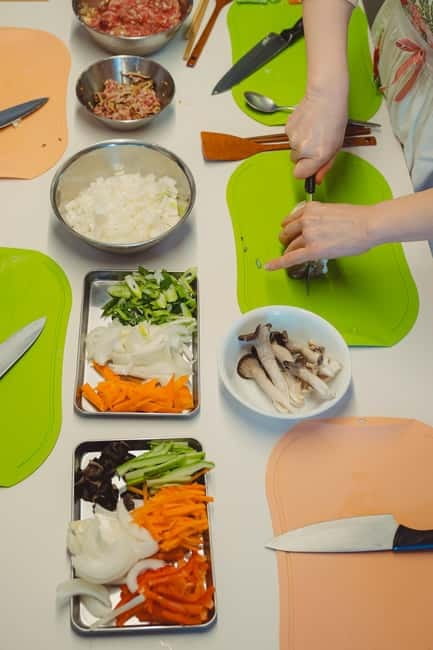
At $69 per person, the price includes more than a cooking demonstration. You receive a guided market tour, ingredient shopping, the home cooking class, lunch, dessert making, and tea. The small group size also gives the experience more value than a large class where you may have little direct contact with the instructor.
The strongest value comes from the combination of activities. A market walk alone would be shorter and less hands-on. A cooking lesson alone might not explain where the ingredients come from. Here, the shopping and cooking are connected, and the meal gives you a chance to enjoy the result.
You are also paying for access to a private family setting and for Ann’s guidance through several parts of Korean food culture. That is different from paying for a restaurant meal, where the work and explanation happen out of sight.
Still, the price may feel high if your only goal is a cheap lunch. You are paying for time, teaching, local contact, and the chance to cook. I would choose it for the experience and the knowledge you can take home, not simply for the amount of food.
Who will get the most from this class
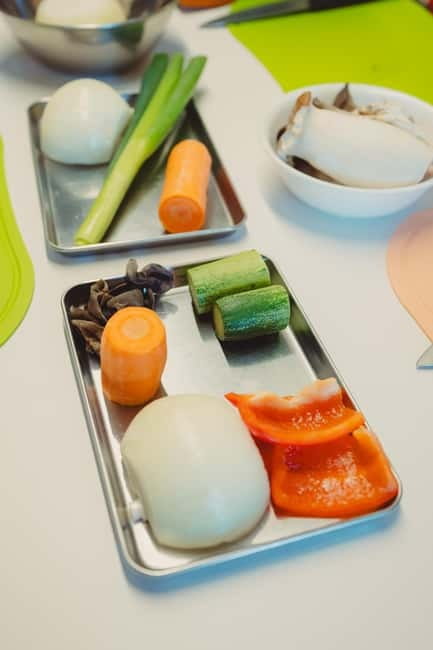
This experience suits you if you want a personal introduction to Korean food and prefer a small setting to a crowded group outing. It is especially useful if you enjoy asking questions, trying unfamiliar ingredients, and learning recipes that you might repeat at home.
It also works well for people who want a cultural activity that does not stop at a food sample. The market, family home, embroidered room, dessert, and tea give the class several layers.
You should think twice if your schedule is packed with central Seoul sights. The meeting point at Sillim Station requires planning, and the 210-minute duration takes a solid part of the day. The class is also less suitable if you want a fixed menu or a purely observational demonstration.
The activity is listed as wheelchair accessible, which is important for anyone checking access before booking. Since the experience includes a market and a home, it is still wise to confirm any specific mobility needs directly when arranging your visit.
Practical details before you book
Book this with enough time to reach Sillim Station for the 10:30 meeting. The meeting instructions are exact: stay inside the station after passing the ticket turnstiles, find Cafe Mignon before taking an exit, and look for the Sobaan cooking sign.
English is the stated language, and Ann is the English-speaking host. The group is limited to four participants, so spaces may be limited on popular dates.
You can cancel up to 24 hours in advance for a full refund. The reserve-now, pay-later option lets you hold a place without paying immediately, which helps if your Seoul schedule is still shifting.
The experience has a top rating based on six submitted ratings, with praise focused on Ann, the welcoming home, the relaxed pace, the market explanations, and the ability to choose dishes. Those points match what I see as the class’s real strengths: it is personal, flexible, and built around food as part of family culture.
Should you book the Seoul cooking class?
Book it if you want to do more than eat Korean food. The market visit teaches you how ingredients enter the kitchen, the home setting adds a personal touch, and the meal, dessert, and tea give the day a warm rhythm.
I would especially recommend it to couples, solo visitors, and small groups who value conversation and hands-on learning. The best reason to choose it is the combination of Ann’s guidance, her mother’s welcome, and the freedom to shape the meal around your interests.
Skip it if you want a central Seoul activity, a fast food stop, or a guaranteed menu with exact dishes. For everyone else, $69 is a fair price for three and a half hours of cooking, culture, and a meal you helped make.
FAQ
Where does the experience begin?
It begins inside Sillim Station, station number 230 on subway line 2. Meet at 10:30 in front of Cafe Mignon, after the ticket turnstiles and before taking any exit.
How do I identify the host?
Look for someone holding a Sobaan cooking sign. Ann is the English-speaking host.
How long does the experience last?
The experience lasts 210 minutes.
What does the market visit include?
You take a guided tour of a local traditional market, learn about Korean ingredients and food traditions, and shop for seasonal produce and authentic seasonings.
Which dishes can I cook?
Possible dishes include bulgogi, bibimbap, and kimchi pancakes. You can choose dishes based on what you are curious to learn.
Is lunch included?
Yes. You prepare and enjoy a homemade Korean lunch as part of the experience.
What happens after lunch?
You make a traditional Korean dessert and enjoy tea in a room filled with traditional embroidery.
How many people are in the group?
The experience is limited to four participants. It is wheelchair accessible and conducted in English.
How much does it cost?
The listed price is $69 per person.
Can I cancel or pay later?
You can cancel up to 24 hours in advance for a full refund. The reserve-now, pay-later option lets you book without paying immediately.
Just added around Seoul
- Seoul: The Biggest Sea-food Noryangjin Market Tour★ 4.3 · 30 reviews
- Seoul: Namdaemun Market Food Tour★ 4.9 · 34 reviews
- Seoul: Sokcho beach, market, hot spring and Seorak Cable Car★ 4.8 · 5 reviews
- Seoul Gwangjang Market Foody Walking Tour★ 4.1 · 7 reviews
- Seoul: Gyeongbokgung Palace Tour & Lunch at Authentic Market★ 4.5 · 2 reviews
- Seoul: Gwangjang Market Vegan & Vegetarian Food Tour★ 5.0 · 16 reviews
- Seoul: Bukchon Village, Gyeongbokgung, Gwangjang Market★ 4.9 · 11 reviews
- Seoul Evening Tour:Gwangjang Market&Naksan Park&Eungbongsan★ 5.0 · 2 reviews
Market and Cooking Class Tours, compared.
Hanoi Cooking Class: Culture, Local Market & Meaning CSR Impact
Read our review →
5 Traditional Dishes Hanoi Cooking Class with Market Trip
Read our review →
Cooking Class and Lunch at a Tuscan Farmhouse with Local Market Tour from Florence
Read our review →
Cooking Class, Market & Thai Herbs Garden Tour
Read our review →
Authentic Cooking Class with Market & Farm Visit
Read our review →
Paella Cooking Experience & Boqueria Market Tour
Read our review →
Cooking Class Hoi An:Local Market, Basket Boat, Fishing & Cooking
Read our review →
Hoi An Cooking Class(Market,BasketBoat Crabfishing&Cooking Class)
Read our review →Browse the lists this tour appears in