
Review · STREET FOOD MARKET TOURS
Kyoto: Local Food Tasting Tour at the Nishiki Market
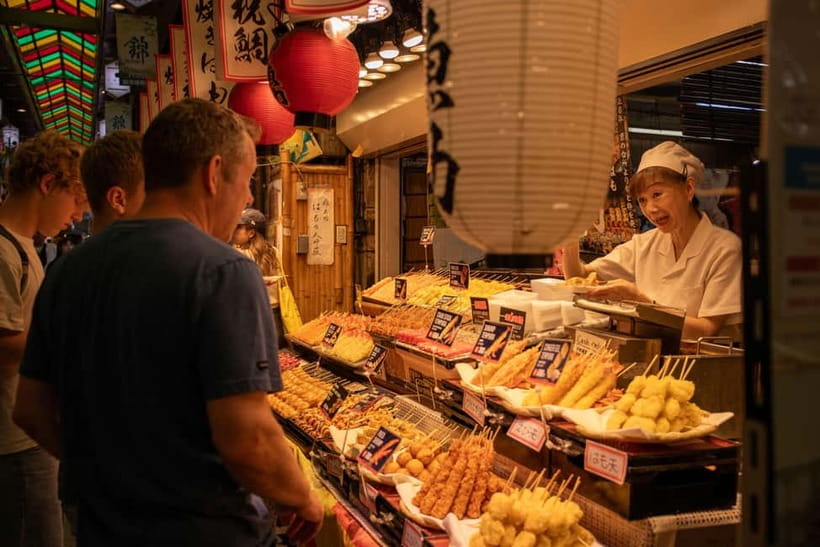
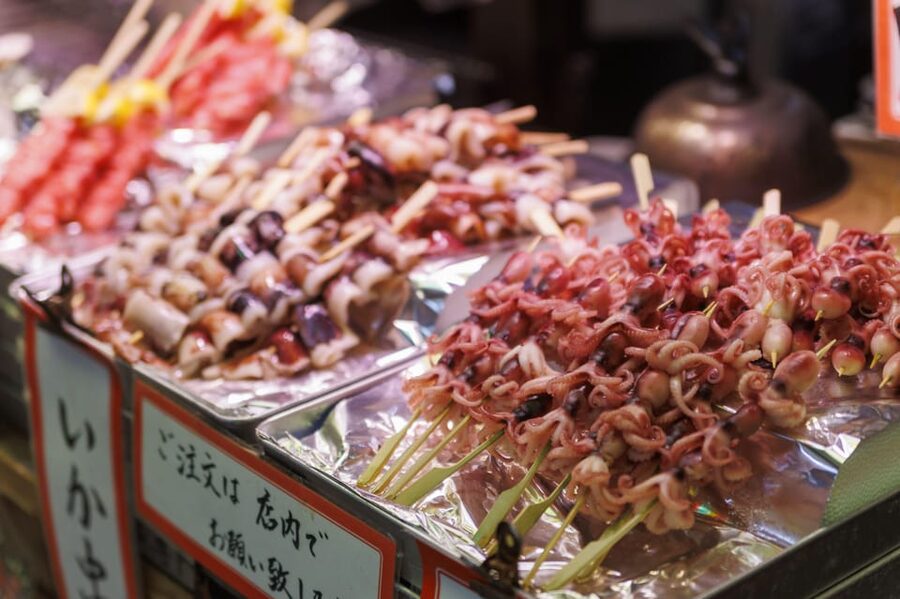
Nishiki Market is easy to enter and surprisingly easy to mishandle. The long arcade holds about 130 food stalls, and the best bites are not always the ones with the biggest signs. This small-group walk gives you five local tastings, including yuba, obanzai, hamo tempura, and wagyu steak skewers, while a guide explains what you are eating and why it matters.
I like the intimate size, limited to six people, and the way the outing mixes food with shrines, shopping streets, and everyday Kyoto culture. Guides such as Ayu, Taku, Saki, Toshi, and Takuma have been praised for answering questions and helping people find foods they would likely miss alone. The main drawback is important: this is not suitable for dietary restrictions, and the market can be crowded and hard to navigate at the meeting point.
Key points at a glance
- Five named Kyoto tastings: Expect yuba, obanzai, hamo tempura, wagyu steak skewers, and other small bites such as seasoned crackers and flavored honey.
- A 400-year-old food arcade: Nishiki Market has around 130 stalls, so a guide helps you sort useful stops from random snacks.
- A food tour with extra Kyoto context: The route includes Nishiki-Tenmangu Shrine, Shinkyogoku Shopping Arcade, and Teramachi Street.
- Small groups of six or fewer: This gives you a better chance to ask questions and keep pace in narrow market lanes.
- Optional tea ceremony: Add a 90-minute session with kimono dressing and instruction from a tea master after the market walk.
- A walking tour, not lunch: Portions are spread across several stops. You should arrive ready to sample, not expecting one large meal.
Why Nishiki Market works best with a guide
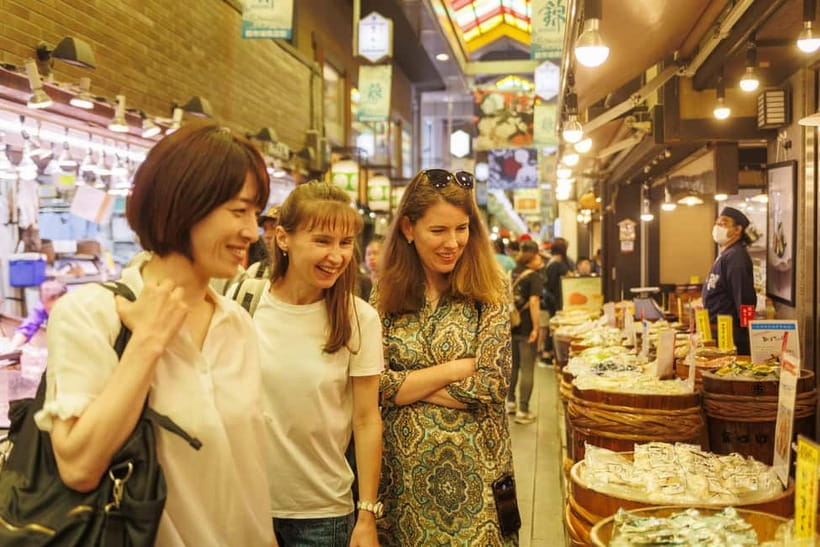
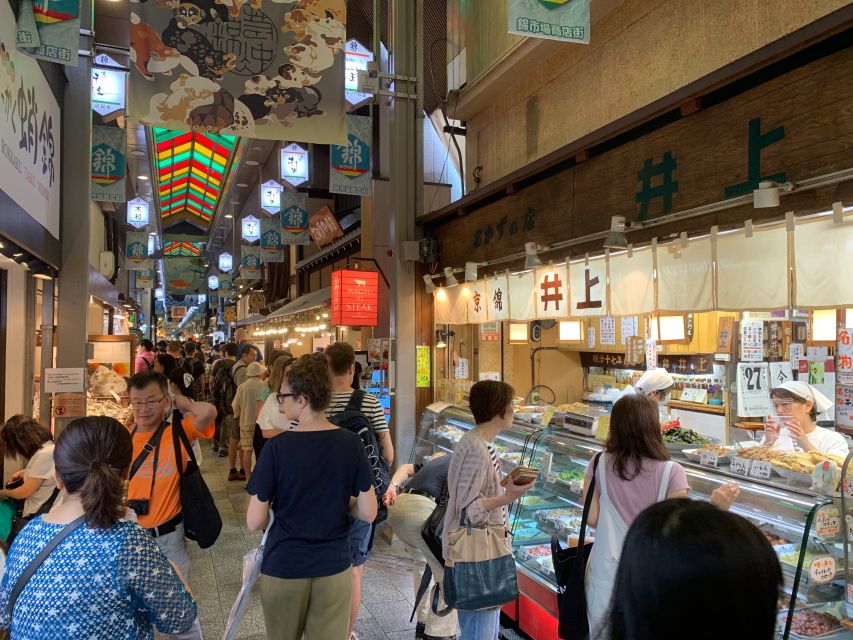
Nishiki Market is one of Kyoto’s most useful food stops, but it can also feel like a corridor of competing smells, signs, samples, and crowds. You may see pickles, seafood, sweets, tofu products, seasonings, and prepared dishes all within a few steps. Without local help, it is easy to spend your time choosing and miss the stories behind the food.
This tour gives the market a clear shape. You walk from shop to shop, taste selected specialties, and hear explanations along the way. The guide can point out foods that are central to Kyoto cooking but unfamiliar to many first-time visitors, including tofu skin and home-style obanzai dishes.
I especially like the mix of tasting and conversation. Several guides have worked in restaurants or have strong knowledge of Japanese cuisine, and that background helps when you want to know how a food is made, when it is eaten, or how it differs from something you know at home. The tone is less like a formal lecture and more like a local friend helping you order with confidence.
The group cap matters here. Six people is small enough for questions, but it is still a shared outing rather than a private tour. Past departures have sometimes been even smaller, including couples and one-on-one bookings. That can make the pace more flexible, though you should not count on having the guide to yourself.
More Street Food Market Tours in Japan
- Kyoto: Nishiki Market and Depachika Food Tour with a Local
★ 4.7 · 76 reviews - Kyoto: Nishiki Market Tour with a Local Foodie & Tastings
★ 4.5 · 67 reviews - Nishiki Market Food Tour with Cooking Class
★ 4.9 · 42 reviews
The first tastes: yuba, obanzai, and Kyoto seasonings
The food portion at Nishiki Market lasts about 90 minutes. You will not sit down for a full meal. Instead, the guide takes you to several shops for small portions that build a picture of Kyoto cooking.
Yuba, or tofu skin, is one of the useful introductions. It is closely tied to Kyoto’s long tradition of tofu-based cooking, and its texture may be new if you have not eaten it before. One family on the tour was encouraged to try it and found it a worthwhile surprise. This is exactly the sort of food a guide can make less intimidating.
Obanzai gives you a taste of Kyoto home cooking. The idea is simple, seasonal dishes prepared in an everyday style rather than grand restaurant fare. It helps balance the more showy market snacks and shows that Kyoto food is not only about temple cuisine, sweets, or elaborate presentation.
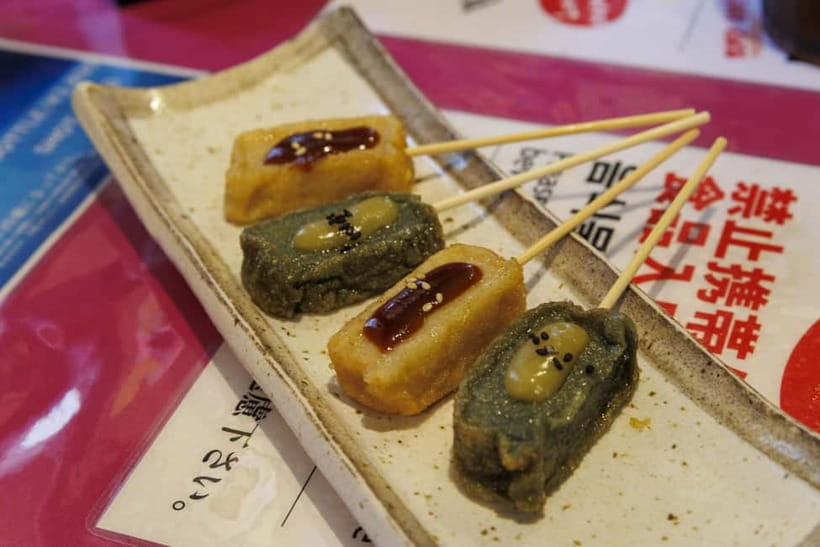
You may also sample special Kyoto seasonings, crackers, Japanese flavored honey, and other small items. The exact selection can change, since market stalls work with seasonal products and availability. That flexibility is part of the appeal, but it also means you should not treat the listed foods as a guaranteed fixed menu beyond the main advertised specialties.
Hamo tempura and wagyu skewers
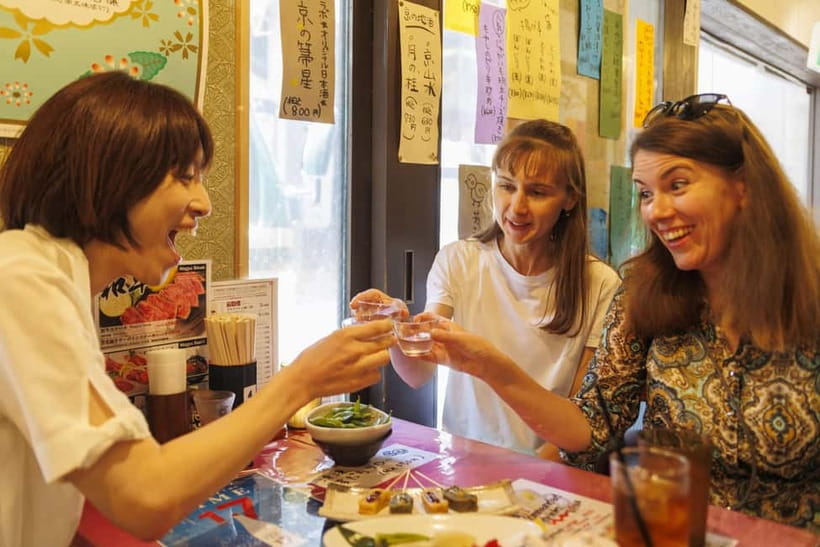
Two of the most distinctive tastings are hamo tempura and wagyu steak skewers. Hamo is a traditional Kyoto-area fish, and tasting it in tempura form gives you a clear sense of the market’s regional character. It is a more interesting stop than simply ordering another familiar fried snack.
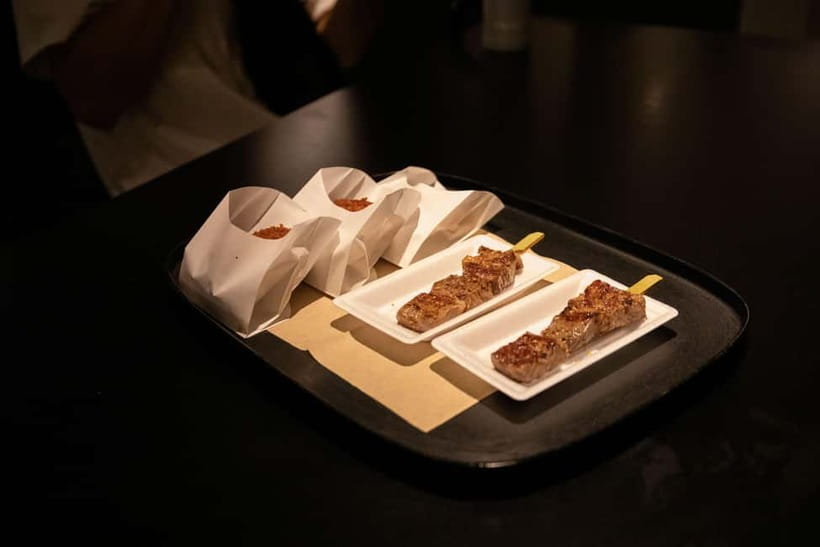
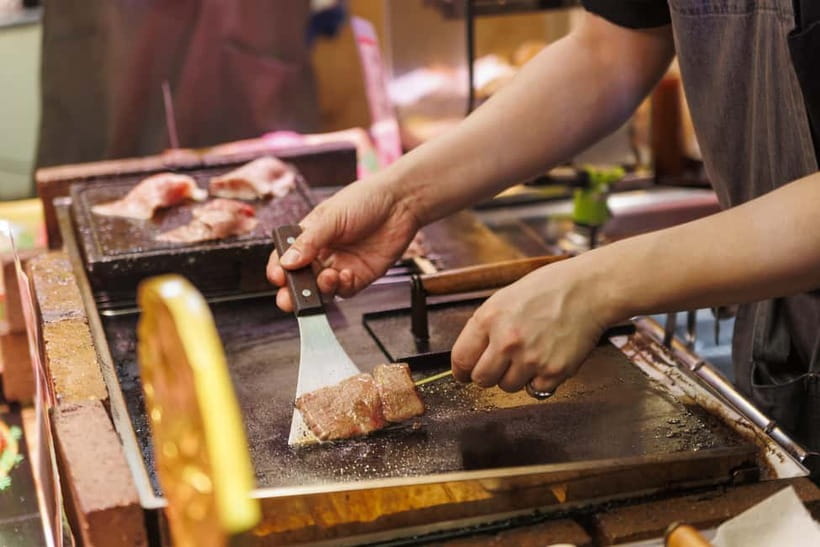
The wagyu skewer offers a different experience. A small portion lets you try the rich beef without committing to the price of a full restaurant dish. If you are comparing food tours, this kind of tasting helps explain the value: you sample several premium or specialized foods in one walk instead of paying separately for full portions.
Still, appetite matters. A collection of five specialties plus extra samples can add up, especially if you have eaten breakfast shortly before the tour. One past participant advised keeping breakfast light and not planning a normal lunch immediately afterward. I would follow that advice, while remembering that portion sizes and selections can vary.
You should also expect to pay for anything you buy beyond the included tastings. The tour gives you an introduction, not an unlimited shopping allowance. That is useful because you can try first, then return to a stall later for a larger purchase if something catches your attention.
Nishiki-Tenmangu Shrine adds a quieter pause
After the main market walk, the route includes Nishiki-Tenmangu Shrine for about 10 minutes. This short stop changes the mood from food and commerce to worship and local tradition.
Your guide explains the shrine and its place in the neighborhood. It is a small but valuable addition because the tour is not limited to eating. You begin to see how the market fits into the older streets around it, rather than treating Nishiki as an isolated attraction.
Do not expect a long temple visit here. Ten minutes is enough for an introduction, a few questions, and a look around, but not a detailed religious tour. If shrine architecture is your main interest, you will want separate time elsewhere in Kyoto.
More Street Food Market Tours in Kyoto:
- Kyoto: Nishiki Market Food Tour
★ 4.9 · 21 reviews - Taste of Nishiki Market Walking Food Tour with Local guide
★ 5.0 · 17 reviews - Kyoto: Nishiki Market Food Tour with Local Guide
★ 4.6 · 5 reviews - Dubai: Old Town, Creek, Museums, Souks, & Street Food Tour
★ 4.8 · 10,816 reviews
Shinkyogoku and Teramachi: food gives way to shopping
The walk continues through Shinkyogoku Shopping Arcade for about 45 minutes. This is a longer section of the outing and gives you time to see how Kyoto’s shopping culture works beyond Nishiki’s food stalls.
You can browse shops, watch the flow of local shoppers, and ask your guide about products or customs that seem unfamiliar. Several guides have also offered practical suggestions for the rest of a visitor’s Kyoto stay, so this is a good time to ask about places you plan to visit later.
Teramachi Street Shopping District follows for about 30 minutes. Together, Shinkyogoku and Teramachi make the experience feel broader than a simple market tasting. You get food, retail streets, a shrine, and local explanations in one route.
The tradeoff is that shopping time may not suit everyone. If you want three straight hours of eating, the latter part could feel like a change of subject. I see it as a plus for a first Kyoto day, especially when you want to get your bearings and learn how the central shopping area connects.
A short stop described as a less obvious local spot is also included. The exact character of that stop is not specified, so think of it as a brief guide-led addition rather than a major attraction.
What the guides add
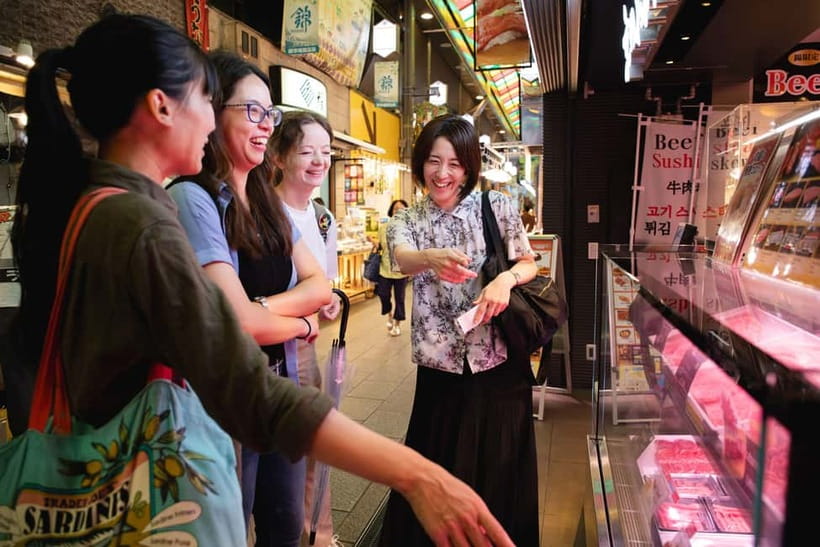
The strongest part of this experience is the human element. Guides named in past departures include Ayu, Taku, Takuma, Toshi, Saki, Miho, Annie, Yume, Satomi, Nagi, and others. You cannot choose a specific guide unless the booking allows it, but the repeated pattern is clear: the guide is central to the value.
A good guide does three jobs:
- Helps you identify food without guessing from signs.
- Explains customs, preparation, and local meaning in plain English.
- Adjusts the pace when you have questions or want to look more closely.
One guide waited for a group that had trouble finding the meeting point. Another helped a family with children take its time. A solo participant found the small group especially useful, while another guide helped visitors plan the rest of their afternoon. These details matter because the market can be confusing even before you start eating.
The experience is also suitable for curious older children. An 11-year-old enjoyed trying unfamiliar foods with a guide’s encouragement, and a family with three tweens found the pace manageable. You still need to judge your own child’s comfort with walking, crowds, and unfamiliar textures.
Price, pace, and practical value
At $78 per person, the price is fair if you want a guided introduction rather than simply a list of market stalls. You are paying for the guide’s time, five included specialties, additional samples, a small group, and a route that continues into nearby cultural and shopping areas.
It is less compelling if your only goal is to eat as much as possible for the lowest cost. Nishiki Market is open to independent exploration, and an experienced Kyoto visitor may feel comfortable choosing food without help. One person specifically felt the route could be done independently.
For a first visit, I think the value comes from reducing guesswork. You avoid ordering blindly, learn what you are tasting, and gain enough confidence to return to the market on your own. That last point is useful: the tour can function as a friendly orientation, not just a one-time meal.
The published duration is three hours, with the food section taking about 90 minutes. Some past outings have lasted around three and a half hours, and one older experience ran longer. Leave room in your schedule rather than booking a tight train connection or fixed lunch immediately afterward.
Wear comfortable shoes. You will be walking and standing through market lanes and shopping arcades. Bring rain gear if the forecast calls for it. Large bags and luggage are not allowed, and pets cannot join. The walking route is not suitable for wheelchair users or people with mobility impairments.
The meeting point can change depending on the option booked, with several possible starting locations around Shijo and the market area. Read the confirmed meeting instructions carefully. One otherwise excellent outing began with confusion over the meeting spot, though the guide waited and helped the group get organized.
The optional tea ceremony
You can add a 90-minute Japanese tea ceremony after the market tour. The session begins at 2:00 PM, and you must make your own way from the market to the tea ceremony venue nearby.
The ceremony includes professional kimono dressing, instruction from a tea master, and time for commemorative photographs. The guide explains the meaning behind the movements and gestures, so this option adds a more formal cultural experience after the casual market walk.
This is a good pairing if you want your day to move from food into traditional practice. It is not automatic, so select the tea ceremony option when booking. Also allow enough time to walk to the venue after the food tour, since the transfer is not described as part of the guided route.
Who should book this Kyoto food walk?
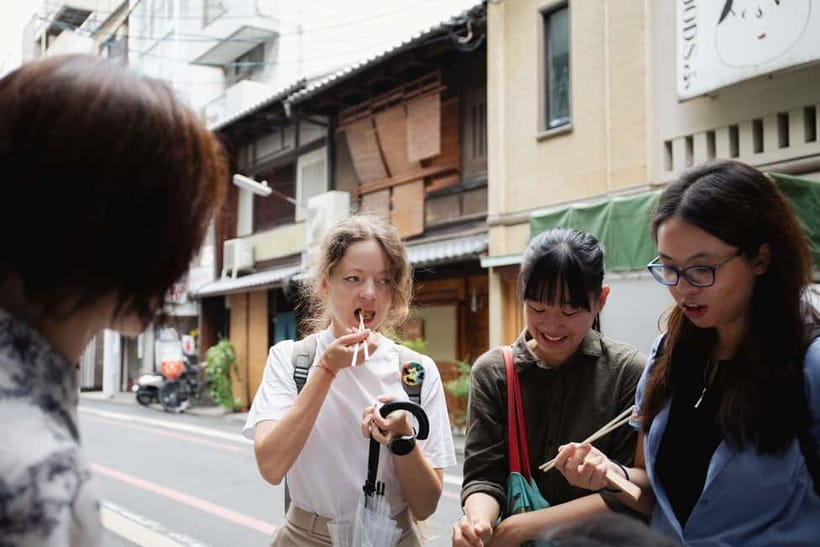
I would choose this tour for a first-time Kyoto visitor who wants a friendly introduction to local food without committing to a formal restaurant meal. It also suits solo visitors, couples, families with older children, and anyone who likes learning the background of a dish before trying it.
It is especially useful if you feel uneasy in crowded markets or do not know how to order from small stalls. The small group and English-speaking guide make the experience more approachable, and the surrounding shrine and shopping streets give you extra context.
I would not book it if you need vegetarian, halal, kosher, gluten-free, or allergy-safe food. The operator states that dietary restrictions cannot be accommodated. You should also skip it if you cannot manage several hours of walking and standing.
Should you book it?
Book this Nishiki Market tour if you want five well-chosen tastes, clear explanations, and an easy route through one of Kyoto’s busiest food areas. The combination of yuba, obanzai, hamo, wagyu, shrine visits, and shopping streets offers more range than a simple snack crawl.
Skip it if you prefer to explore independently, need strict control over ingredients, or want a large sit-down meal. For most first-time visitors who value local guidance and a small group, $78 is a sensible way to get oriented, try unfamiliar foods, and leave Nishiki ready to explore on your own.
FAQ
How long does the Nishiki Market food tour last?
The published duration is three hours. The food tasting section at Nishiki Market lasts about 90 minutes, followed by visits to a shrine and nearby shopping districts.
What foods are included?
The included specialties are yuba, obanzai, hamo tempura, wagyu steak skewers, and other local tastings. Additional samples can include Kyoto seasonings, crackers, and Japanese flavored honey.
Is this a full meal?
No. It is a walking tasting tour with small portions at several shops, rather than a single sit-down meal. You may want a light breakfast before joining.
How many people are in the group?
The group is limited to six participants. Some departures may be smaller, depending on bookings.
Is the tour offered in English?
Yes. The experience includes a live English-speaking local guide.
Can I choose my guide?
The available information names guides including Ayu, Taku, Takuma, Toshi, Saki, Annie, and others, but it does not state that you can select a particular guide when booking.
Can people with food allergies join?
The tour cannot accommodate dietary restrictions, including vegetarian, halal, kosher, gluten-free, or allergy-related requests.
Is the tour accessible to wheelchair users?
No. The experience is not suitable for wheelchair users or people with mobility impairments.
What should I bring?
Wear comfortable shoes and bring rain gear. Luggage and large bags are not allowed, and pets cannot join.
What does the tea ceremony option include?
The optional 90-minute tea ceremony begins at 2:00 PM near Nishiki Market. It includes kimono dressing, instruction from a tea master, an authentic tea ceremony, and time for commemorative photos. You must travel to the tea ceremony venue yourself after the market tour.
More Food and Drink Trips in Kyoto
- Kyoto Nishiki Market Food and Culture Walking Tour
★ 5.0 · 412 reviews - Dubai: Old Town, Souks, Street Food, Guided Tour & Abra Ride
★ 4.9 · 7,170 reviews - Bangkok by Night: Temples, Markets and Food Tuk-Tuk Tour
★ 5.0 · 3,752 reviews - Chef Guided Food Tour of Pike Place Market
★ 5.0 · 3,733 reviews
Just added around Kyoto
- Taste of Nishiki Market Walking Food Tour with Local guide★ 5.0 · 17 reviews
- Kyoto: Nishiki Market Tour with a Local Foodie & Tastings★ 4.5 · 67 reviews
- Golden Pavilion, Nijo Castle, & Nishiki Market Half day tour★ 5.0 · 29 reviews
- Kyoto: Nishiki Market and Depachika Food Tour with a Local★ 4.7 · 76 reviews
- Kyoto: Nishiki Market Food Tour with Local Guide★ 4.6 · 5 reviews
- Kyoto: Wholesale Fish Market Walking Tour★ 5.0 · 2 reviews
- Kyoto: Enjoy Sushi & Market Tour! Best for Family & Couple!★ 4.8 · 20 reviews
- Kyoto: Nishiki Market Food Tour★ 4.9 · 21 reviews
Street Food Market Tours, compared.
Old Town, Creek, Museums, Souks, & Street Food Tour
Read our review →
Old Town, Souks, Street Food, Guided Tour & Abra Ride
Read our review →
Old Town, Souks, Street Food, Guided Tour & Abra Ride
Read our review →
Small Group Cooking Class & Market Food Tour in Florence
Read our review →
Old Town, Street Food, Creek, Souks, & Emirati House
Read our review →
Browse the lists this tour appears in