
Review · MARKET AND COOKING CLASS TOURS
Hanoi: Maya Traditional Cooking Class & Market Tour
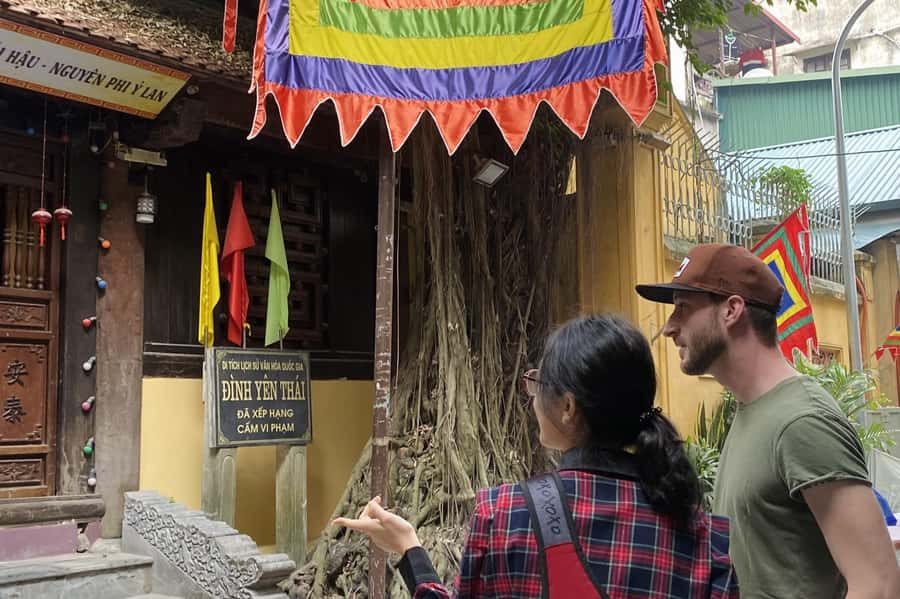
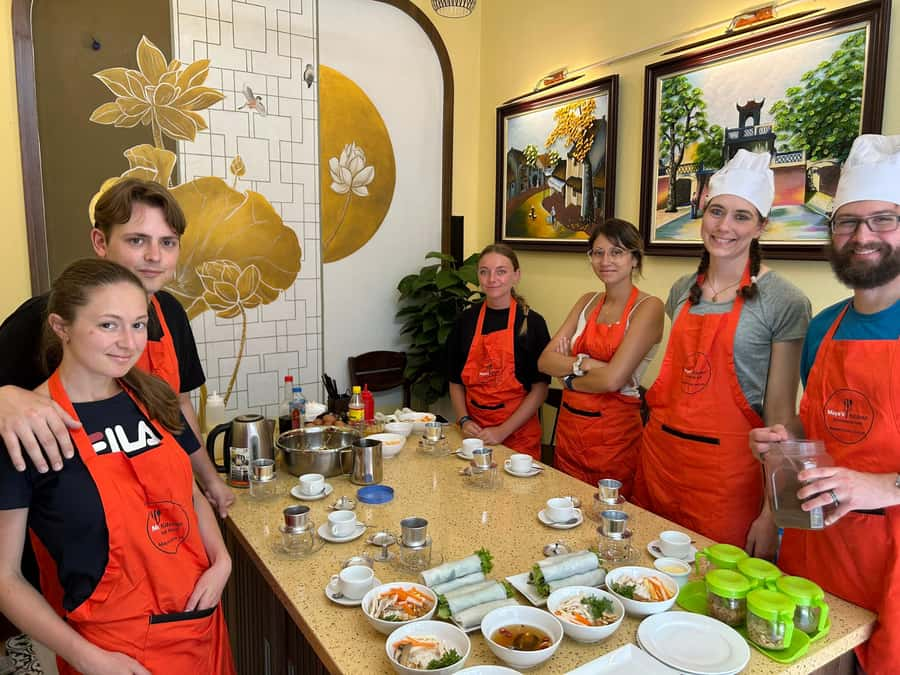
The best part of this Hanoi cooking class happens before you pick up a knife. At Yen Thai Market, you see the herbs, fruit, noodles, and fresh ingredients that give Vietnamese food its character. Then, in a small kitchen group, you turn those ingredients into pho rolls, fried spring rolls, papaya salad, mixed pho, and egg coffee.
I like the hands-on teaching and the useful market stop. You do not simply watch someone cook. You roll, mix, fry, season, and make the coffee yourself, with guides such as Iris, Ruby, Stephanie, Devin, and Evelyn explaining each step. The $22 price also covers the food, drinks, market purchases, recipes, fruit, and local wine tasting.
The main drawback is timing. The class runs three to four hours, and the meal comes at the end, so do not arrive starving. If you choose an afternoon session, the market may not be open, since local markets usually operate in the morning.
Key points at a glance
- Yen Thai Market comes first: See local produce and learn how Vietnamese ingredients are used before cooking.
- Four dishes plus egg coffee: Make fried spring rolls, papaya salad, pho rolls, mixed pho, and Hanoi-style egg coffee.
- Small groups help: The class accepts up to 10 people, giving you a better chance to work directly with the instructor.
- Recipes go home with you: The cooking guidance is designed to be repeated in your own kitchen.
- Fresh fruit adds a local touch: Seasonal fruit is served for dessert, and you may choose fruit at the market.
- Morning is the safer choice: Afternoon departures may miss the market portion.
Why this $22 Hanoi class offers good value
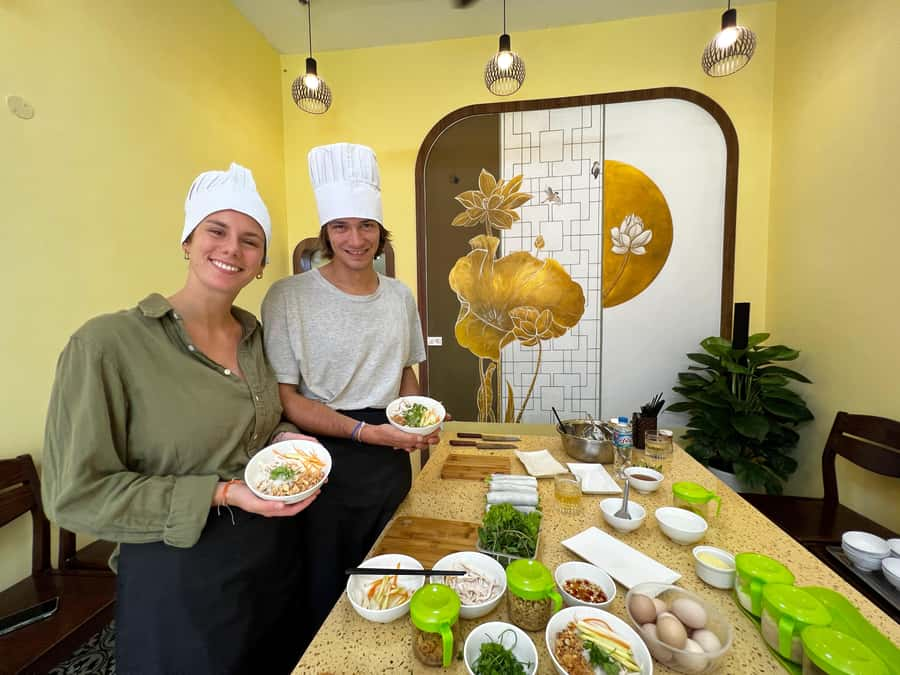
At $22 per person, this is an inexpensive way to combine a market walk, a meal, a cooking lesson, and a cultural introduction. You are not paying only for a demonstration. The price includes the ingredients bought for the class, all food and drinks, drinking water, seasonal fruit, a recipe, and local wine tasting.
The value improves if you want an activity that fills much of a morning or afternoon. Three to four hours gives you time to see the market, prepare several dishes, eat what you made, and ask questions. You also leave with recipes rather than only a full stomach.
The class is especially useful early in a Hanoi visit. You get a working introduction to ingredients such as fresh herbs, papaya, rice noodles, and the fillings used in spring rolls. Later, when you eat at street stalls or local restaurants, you will have a better idea of what is on your plate.
There is one limit to keep in mind. This is not a long chef’s course, and the market visit can be brief. One participant wished for more time there, with most of the experience taking place in the kitchen. That is a fair trade for the low price and the amount of cooking, but market fans should set their expectations accordingly.
More Market and Cooking Class Tours in Hanoi
- Hanoi Cooking Class: Culture, Local Market & Meaning CSR Impact
★ 5.0 · 5,147 reviews - 5 Traditional Dishes Hanoi Cooking Class with Market Trip
★ 5.0 · 4,890 reviews - Vietnamese Food Cooking Class in Hanoi with Market Experience
★ 5.0 · 778 reviews
Starting at Crossing Vietnam Tour
You meet at the Crossing Vietnam Tour travel agency. Hotel pickup and drop-off are not included, so you need to make your own way to the meeting point. The class is offered in English and Vietnamese, and the instructor assigned to you may vary.
Past sessions have been led by guides including Iris, Ruby, Stephanie, Devin, Evelyn, Lena, Ashley, Yuu, Anne, Aurora, and others. The repeated strength of the class is the teaching style: clear instructions, patience, and plenty of conversation about Vietnamese food and daily life.
That variation in guides is worth noting. You cannot book a particular teacher based on the information provided, but the names associated with the class include several instructors praised for friendly explanations and strong English. Iris has been especially effective with step-by-step instruction, while Ruby and Stephanie are known for warm, engaging classes. Devin has also led both market visits and cooking sessions.
The group limit is 10 people. That is small enough for a personal feel without requiring the cost of a private class. Some sessions may have only a couple of participants, while others can be fuller. Either way, you should expect to share preparation space and take turns with some tasks.
Yen Thai Market, where the food starts
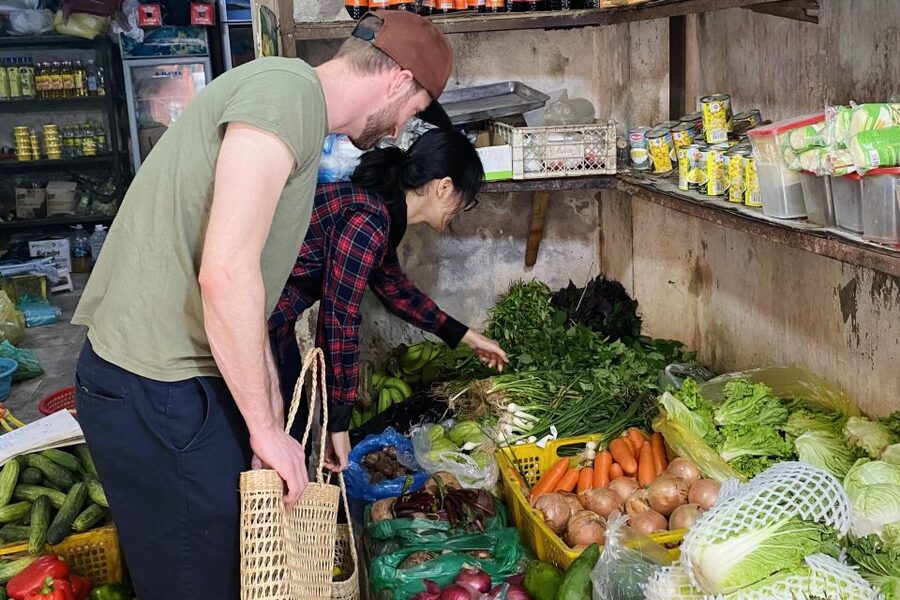
The market visit gives the class its best sense of place. Instead of beginning with bowls and pre-measured ingredients, you first see where the food comes from. You can look at produce, fruit, herbs, noodles, and other ingredients while the guide explains their uses and suggests substitutes.
This matters because Vietnamese cooking often depends on fresh additions rather than heavy sauces. A salad can change with the balance of sour, sweet, salty, and spicy flavors. Herbs and fruit are not just decoration. They shape the taste and texture of the meal.
You may also have a chance to choose fruit for dessert. Several classes have included tastings of unfamiliar local fruits, which is a pleasant bonus and an easy way to ask questions about Vietnamese eating habits.
The market is a working local market, not a polished food museum. You get a glimpse of ordinary shopping and fresh ingredients, but the visit is not designed as a long guided tour of every stall. If you choose the morning session, you have the best chance of seeing it operating. Afternoon visitors should be prepared for the market portion to be reduced or unavailable.
Learning to roll, mix, and season
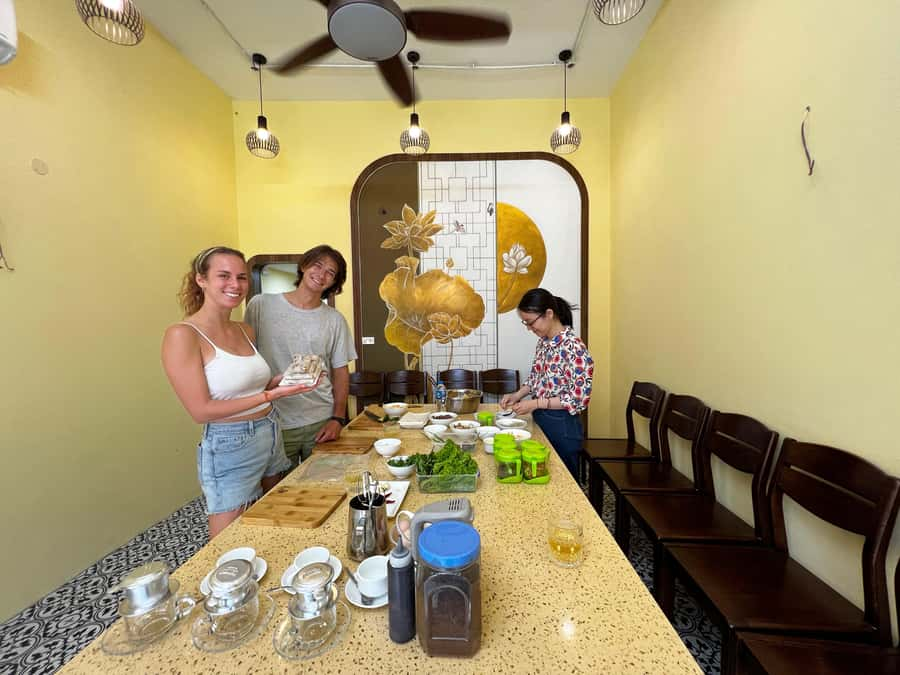
Once you leave the market, you head to the kitchen for the main lesson. The class is practical from the start. Your instructor demonstrates each dish, then guides you through the same steps.
The usual order begins with nem ran, or fried spring rolls. You work with the filling and learn to form even rolls. This sounds simple, but the rolling takes some hand control. Loose rolls can break in the pan, while overfilled ones may cook unevenly.
The class presents spring rolls as an important dish for Vietnamese holidays and family gatherings. That context gives the recipe more meaning than a basic fried snack. You learn not only how to prepare it, but also why it appears at shared meals.
Next comes nom du du, or green papaya salad. Its main balance is sour and sweet, and this is a useful lesson in Vietnamese seasoning. You can taste how small adjustments change the dish. The preparation also gives you a fresh contrast to the fried rolls.
The recipes are explained one step at a time. That helps if you are not an experienced cook, and it also gives confident cooks a chance to ask why a technique or ingredient is used. The guides are happy to answer questions about Vietnamese food culture, local produce, and ways to recreate the dishes at home.
More Market and Cooking Class Tours in Vietnam
- Hanoi: 5 Local Dishes Cooking Class with Meal & Market Visit
★ 5.0 · 420 reviews - Hanoi Cooking Class and Market Tour in Ancient House
★ 5.0 · 379 reviews - Rose Kitchen Hanoi: Market, Cooking & Culture Tour + Free PickUp
★ 5.0 · 342 reviews - Hanoi: Cooking Class in a Local Villa with Market Tour
★ 4.9 · 320 reviews
Pho two ways, with plenty of hands-on work
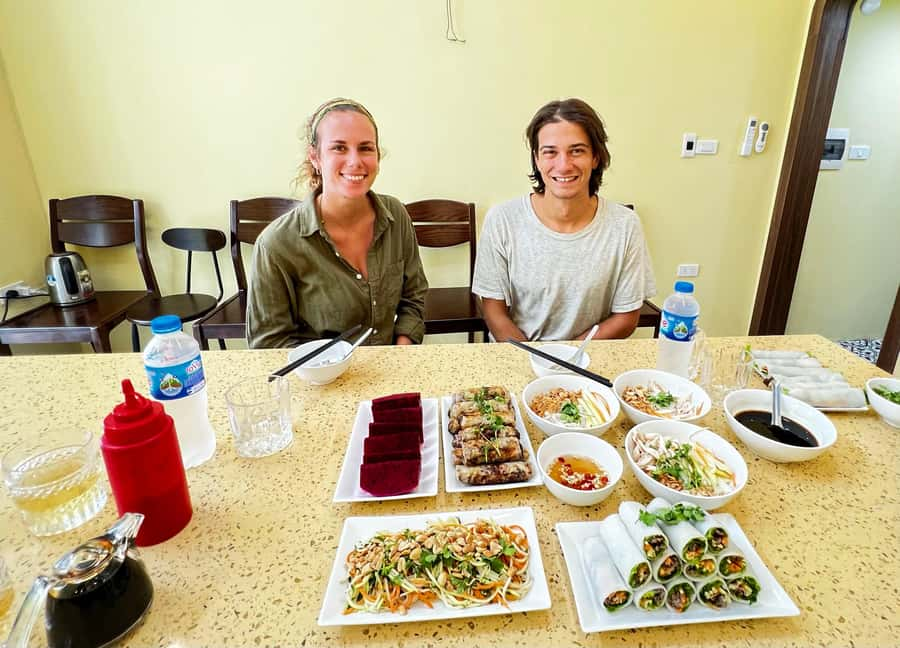
The class includes pho cuon, or pho rolls, and pho tron, or mixed pho. These are useful choices because they show two different ways to use familiar pho ingredients.
Pho rolls are assembled rather than served as soup. You work with the soft rice noodles and fillings, then roll them into neat pieces. The technique is gentle, and the finished dish is fresh and easy to share.
Mixed pho gives you a different texture and flavor. Instead of a bowl of broth, the noodles are combined with the other ingredients and dressing. This version may be less familiar to people who know only Hanoi’s traditional noodle soup, which makes it a good addition to the class.
You make both dishes yourself, but you should not expect a long lesson on preparing pho broth from bones. The focus here is on accessible recipes that fit within a three-to-four-hour class and can be repeated at home. That makes the menu practical, though it is not a full study of every style of Vietnamese pho.
The portions are manageable. Several sessions have produced enough food for a satisfying meal without making each dish oversized. If the group makes more than you can eat, leftovers may sometimes be packed for you, though that depends on the amount prepared and the class arrangements.
Egg coffee is the Hanoi finale
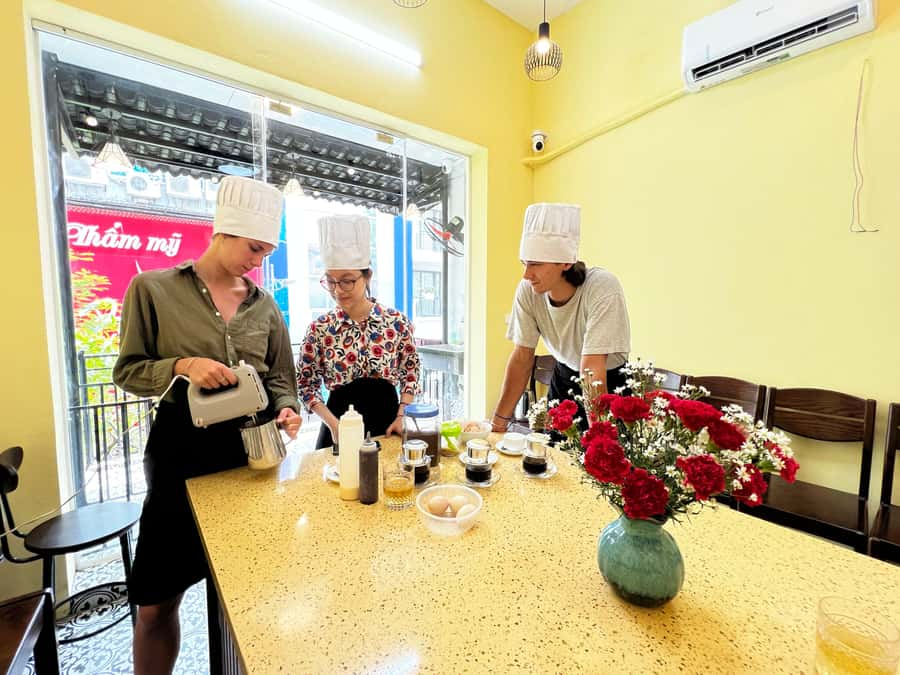
The drink course is ca phe trung, or Vietnamese egg coffee. This is Hanoi’s signature contribution to the menu and one of the most memorable parts of the experience.
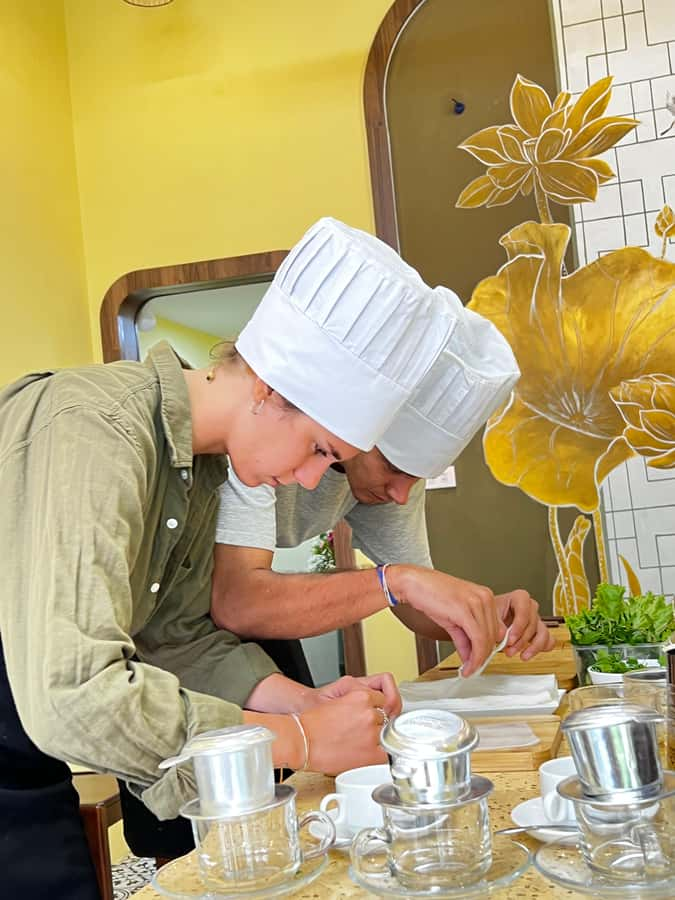
The egg mixture is prepared until creamy, then combined with coffee. You learn the basic method rather than simply receiving a finished cup. It is a sweet, rich drink, so it works well as the final course after the savory dishes.
Including egg coffee makes the class more than a standard spring-roll lesson. It gives you something strongly connected with Hanoi and a recipe you can try again at home. The seasonal fruit served afterward keeps the ending lighter.
A local wine tasting is also included. The available information does not give a detailed description of the wine, so treat it as a small extra rather than the main reason to book.
The meal you make is the real payoff
After the cooking is finished, you sit down and eat the dishes you prepared. This final meal gives the class a relaxed close. You can compare results, ask last questions, and get advice on substitutions.
I like this format because you understand the food better after handling it. A fried spring roll tastes different when you know how tightly it was rolled. A papaya salad makes more sense when you have adjusted its sweet and sour balance yourself.
The setting can also feel pleasantly informal. One session took place on a balcony while rain fell and the street carried on below. That detail captures the appeal of a Hanoi cooking class: you are not in a formal culinary school, but in a city setting where cooking and daily life remain close together.
The cooking room has been described as air-conditioned, which matters during Hanoi’s hotter or wetter periods. You still need to be comfortable standing, preparing food, and working at a shared station for much of the class.
What the guides add to the experience
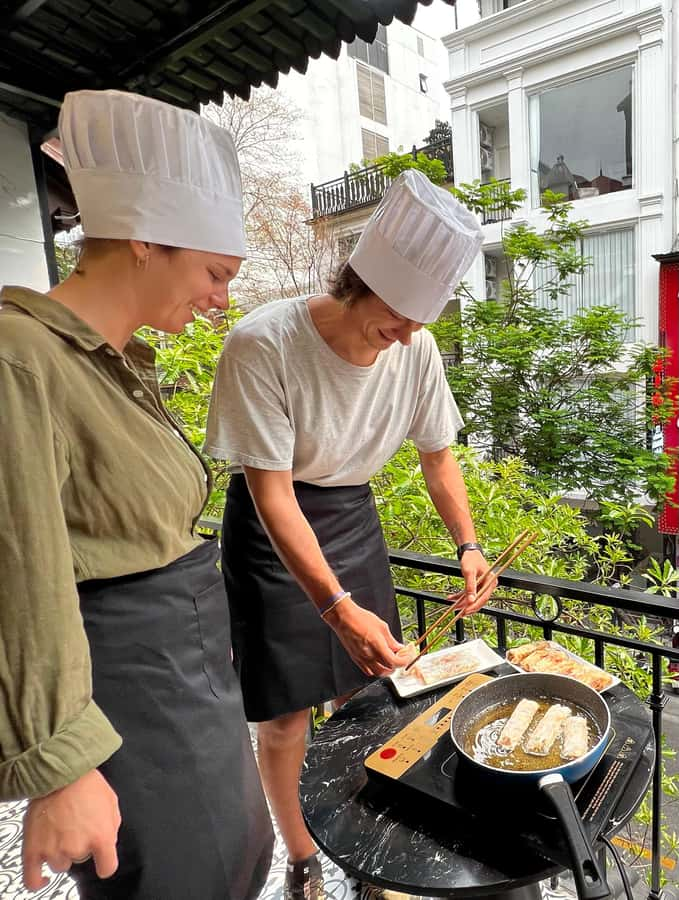
The instructor makes a large difference in a short cooking class. Here, the guide is both teacher and local contact. You can ask about ingredients, food customs, the city, and how to adapt a recipe outside Vietnam.
I would look for the guides’ strongest common traits: patience, clear English, and willingness to let you do the work. Iris has been particularly helpful with detailed explanations. Ruby has a friendly, welcoming approach, while Stephanie has a lively style that keeps the class moving. Devin is a good fit if you want conversation alongside the cooking.
The guide can also adjust the menu for dietary needs or allergies. One class accommodated a nut allergy without trouble, and another participant noted that the menu could be adapted. You should still explain your needs when booking and again at the start, since the supplied information does not specify every possible substitution.
Recipes are provided after the class. In some sessions, the instructor sent them by WhatsApp. That is useful because measurements and methods can be easy to forget after a busy afternoon of cooking.
Timing, food, and practical planning
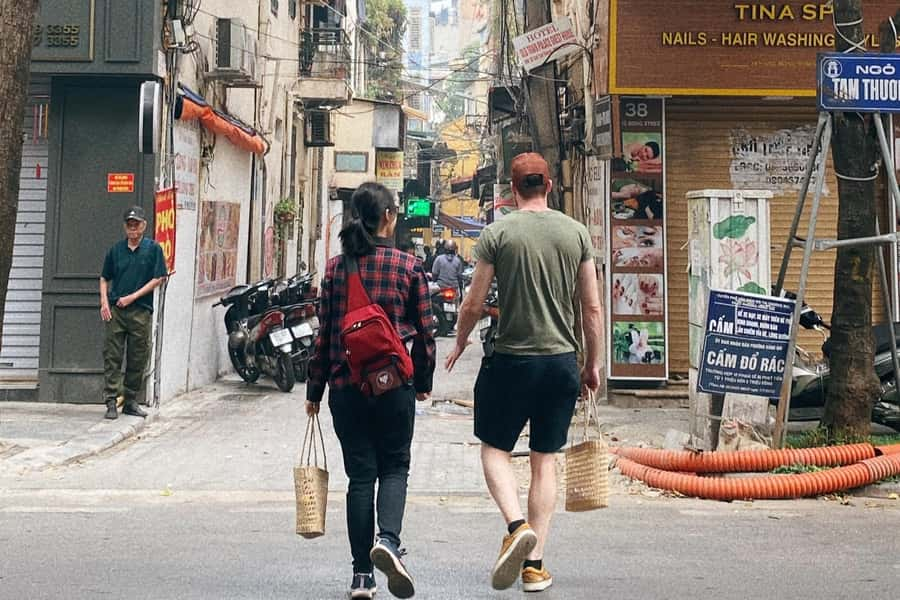
The experience lasts three to four hours. Plan around that full block, especially because you eat at the end rather than at the beginning. A small snack beforehand may be sensible if you are sensitive to long gaps between meals.
For the best version of the itinerary, choose a morning departure. Local markets usually operate in the morning, and the afternoon session may not include the full market visit. The class remains worthwhile without it, but the market is part of what makes the experience feel connected to Hanoi rather than like a cooking lesson anywhere.
The class includes drinking water. Fresh ingredients used in one session were washed with drinking water, which may reassure visitors who are cautious about food preparation. You should still share allergies and dietary restrictions clearly.
Cancellation is flexible: you can cancel up to 24 hours in advance for a full refund. You can also reserve now and pay later, which helps if your Hanoi schedule is still changing.
Who should book this Hanoi cooking class?
I would recommend it to first-time visitors who want an easy introduction to Vietnamese food. It is also a good fit for couples, solo participants, and families with older children or teenagers who enjoy doing rather than watching.
You do not need advanced cooking skills. The instructions are designed for beginners, and the guides keep participants involved. Confident home cooks will still find value in the ingredient explanations, local methods, and chance to compare Vietnamese seasoning with what they use at home.
This may not suit you if your main goal is a long market tour or a serious lesson in traditional broth-making. The market visit is short, and the menu centers on rolls, salad, mixed noodles, and coffee. It is a broad introduction, not a specialist course.
The group size also matters. A maximum of 10 keeps the price low and usually allows hands-on practice, but it is not the same as a private lesson. If you want every minute tailored to your interests, ask about the group arrangement before you go.
Should you book it?
At $22, I think this is one of the better-value food activities in Hanoi. You get a local market visit, several dishes, a signature drink, fruit, recipes, and a guide who can explain the food as you work.
Book the morning session if the market matters to you. Choose this class if you want a friendly, practical introduction to Vietnamese cooking and plan to eat a proper meal at the end. Skip it only if you are seeking an in-depth market tour, a private chef lesson, or a full pho broth workshop.
FAQ
How much does the Hanoi cooking class cost?
The class costs $22 per person. The price includes the market tour, ingredients bought for the class, the instructor, food and drinks, seasonal fruit, drinking water, a cooking recipe, and local wine tasting.
How long does the experience last?
The cooking class and market visit take three to four hours.
Where is the meeting point?
You meet at the Crossing Vietnam Tour travel agency.
Is hotel pickup included?
No. Hotel pickup and drop-off are not included.
What dishes will I make?
You will make fried spring rolls, papaya salad, pho rolls, and mixed pho. You will also prepare Vietnamese egg coffee and receive seasonal fruit for dessert.
Is the market open for every session?
Not always. Local markets usually operate in the morning, so an afternoon session may not include the full market visit.
What languages are offered?
The instructors speak English and Vietnamese.
How large is the group?
The group is limited to 10 participants.
Can I cancel or pay later?
You can cancel up to 24 hours before the activity for a full refund. The reserve-now, pay-later option lets you book without paying immediately.
Just added around Hanoi
- Hanoi’s Culinary: Authentic Cooking Class and Local Market★ 4.8 · 5 reviews
- Hanoi Cooking Class: Market Tour, Free Recipe & Beverages★ 5.0 · 10 reviews
- Weekend Hanoi Night Market & Street Food Tour★ 4.5 · 47 reviews
- Hanoi: Vietnamese Cooking Class- Market Tour with Local Chef★ 5.0 · 2 reviews
- Hanoi Food Adventure: Vietnamese Market Tour & Cooking Class★ 4.8 · 5 reviews
- 2 Day Sapa-Bac Ha Market: Night Train& Homestay-Bus Ha Giang★ 5.0 · 2 reviews
- Hanoi: Old Quarter Market Tour and Cooking Class with Meal★ 4.8 · 192 reviews
- Hanoi Maya Kitchen: Traditional Cooking Class & Market Tour★ 5.0 · 287 reviews
Market and Cooking Class Tours, compared.

Hanoi Cooking Class: Culture, Local Market & Meaning CSR Impact
Read our review →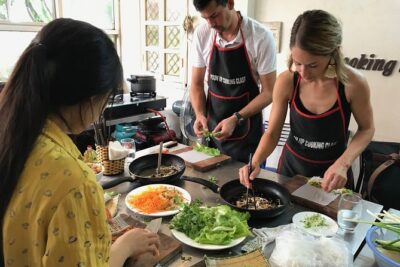
5 Traditional Dishes Hanoi Cooking Class with Market Trip
Read our review →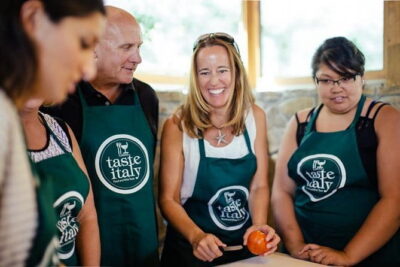
Cooking Class and Lunch at a Tuscan Farmhouse with Local Market Tour from Florence
Read our review →
Cooking Class, Market & Thai Herbs Garden Tour
Read our review →
Authentic Cooking Class with Market & Farm Visit
Read our review →
Paella Cooking Experience & Boqueria Market Tour
Read our review →
Cooking Class Hoi An:Local Market, Basket Boat, Fishing & Cooking
Read our review →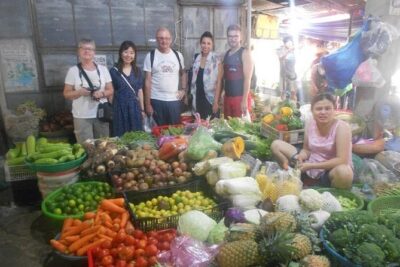
Hoi An Cooking Class(Market,BasketBoat Crabfishing&Cooking Class)
Read our review →Browse the lists this tour appears in