

Review · FOOD & DRINK
Barcelona: Market, Tasty Tapas/Food and Gothic History Tour
Barcelona’s best history lesson may come with a plate of jamón. This small-group tour threads through the Gothic Quarter, visits one of Europe’s oldest markets, and turns Roman ruins, medieval lanes, and Catalan food into one compact three-hour outing. You’ll eat your way through the city rather than sit through a string of dates.
I like the small group of no more than 10, which gives the guide room to answer questions and adjust the food stops. I also like the mix of eight tastings and three drinks, from pintxos and botifarra to Manchego cheese, cava, and a sweet treat with pre-Columbian roots. The main drawback is that this is not a good choice for vegans or anyone with gluten intolerance, and the moderate walking pace can feel demanding in warm weather.
Key details at a glance
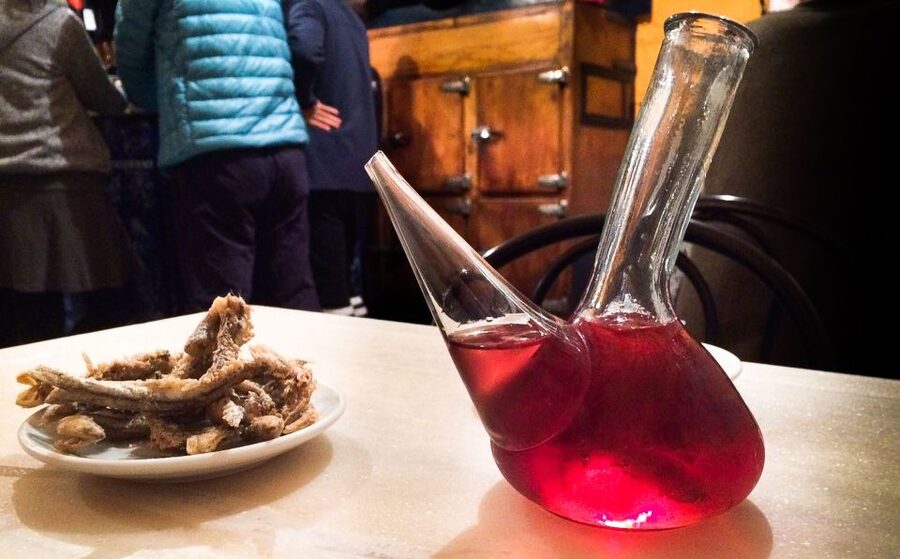
- Boqueria Market comes early: Expect a busy, colorful food market where the guide helps you make sense of the stalls and local ingredients.
- Eight tastings are included: The food may include pastry, pintxos, Catalan sausage, pa amb tomàquet, salad, seafood, jamón, and cheese.
- Three drinks add local flavor: Wine, cava, and Clara beer are part of the tasting experience, with nonalcoholic participation possible.
- Adrian is the guide most often named: He is known for mixing Barcelona history with humor and practical food knowledge. One account also names Andrew.
- The Gothic Quarter supplies the setting: You walk through medieval lanes while hearing about Roman Barcino, Barcelona’s older foundation.
- The tour ends near the Gambrinus Lobster Statue: You finish in the city center, not back at the starting point.
Starting at Hard Rock Cafe and entering old Barcelona
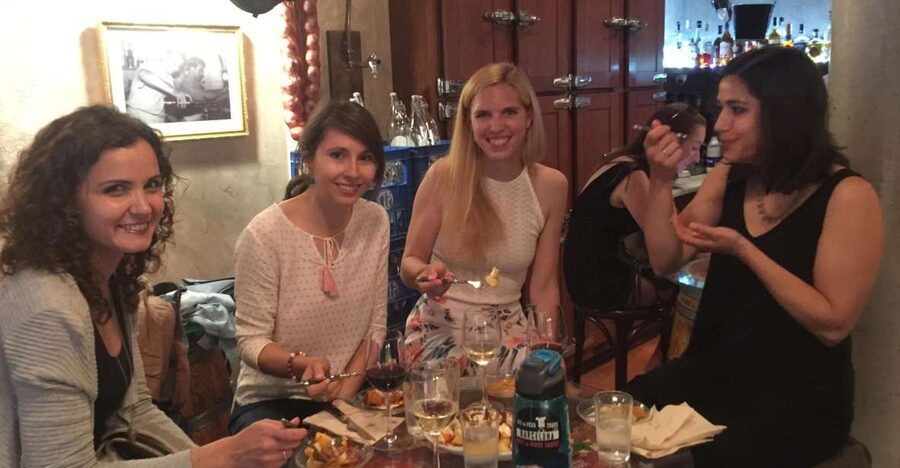
Meet outside the Hard Rock Cafe, where your guide carries an Eye on Food Tour sign and a name badge. This meeting point is easy to recognize, but check the location carefully before setting out. One booking had confusing directions that referred to Plaça Drassanes while also describing the Hard Rock Cafe, which caused unnecessary stress. The practical answer is simple: go to the Hard Rock Cafe and look for the sign.
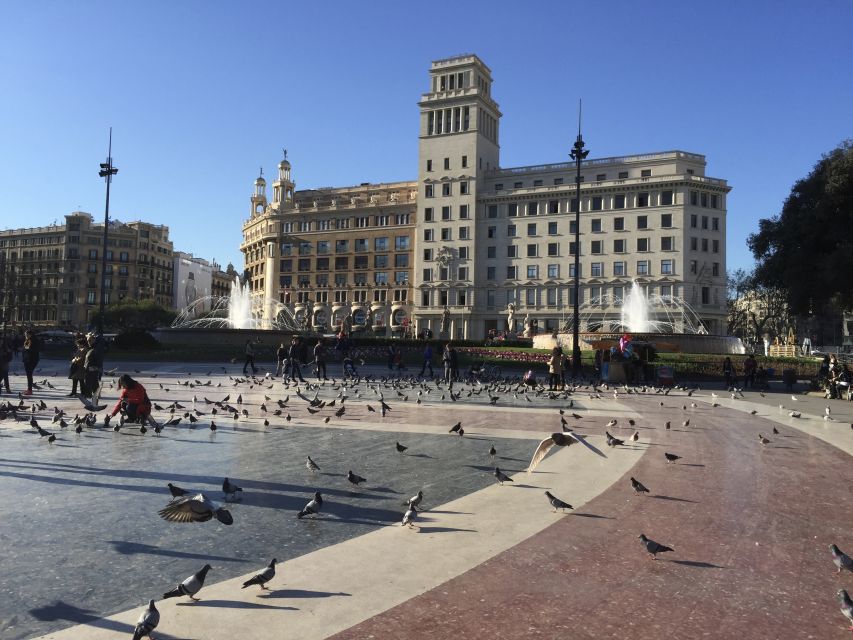
From there, the route moves toward the Gothic Quarter. This is a useful introduction to Barcelona because the old center is not just a collection of attractive stone buildings. It contains layers from Roman Barcino, the medieval city, and modern Catalan life. The guide uses food to connect those periods, so you are not hearing history in isolation.
Adrian is the guide most frequently identified by name, and the strongest praise centers on his easy humor, energy, and command of both food and local history. Another account names Andrew, so the guide may vary by date. Either way, expect the tour to depend heavily on the individual leading it. In a group of 10 or fewer, that personal style matters.
More Food and Drink Trips in Barcelona:
- Ultimate Barcelona Food Tour with visit to a Local Market
★ 5.0 · 507 reviews - Barcelona: La Boqueria Food, Wine & History Walking Tour
★ 5.0 · 126 reviews - Barcelona Food Tour: Market & Gothic Quarter with Expert Guide
★ 4.5 · 85 reviews
Boqueria Market: where the food story gets noisy
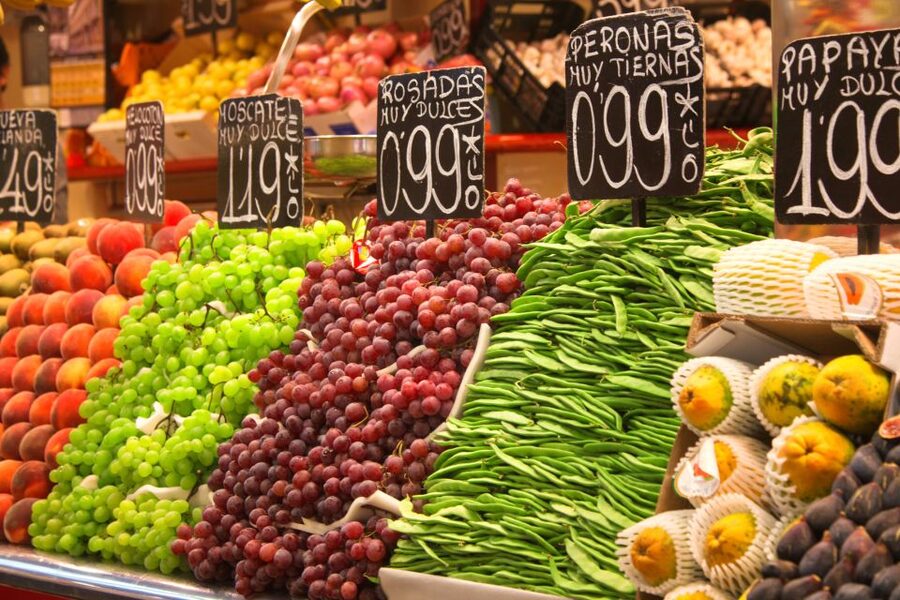
The market portion is one of the tour’s main attractions. You enter a place built for sensory overload, with stalls selling fresh produce, cured meats, cheese, seafood, sweets, and prepared foods. The guide helps you read the market as a local food center rather than simply marching you past colorful displays.
This is a good place to ask questions about ingredients you may see elsewhere in Catalonia. Jamón, regional cheese, seafood, and pastries all make more sense when you learn how they fit into daily eating habits. The guide may point out useful stalls and offer samples, although the exact market tastings can vary.
The market is also the tour’s least quiet stop. If you dislike crowds, noise, or narrow aisles, this section may take some patience. Still, the setting gives you something a restaurant cannot: a look at how ingredients are displayed, sold, and woven into Barcelona’s food culture.
The market visit works best near the beginning, before you are too full. It gives you a taste of the city’s food vocabulary, then the later tavern stops show how those ingredients appear on the table.
Pintxos, Clara, and the first taste of Catalonia
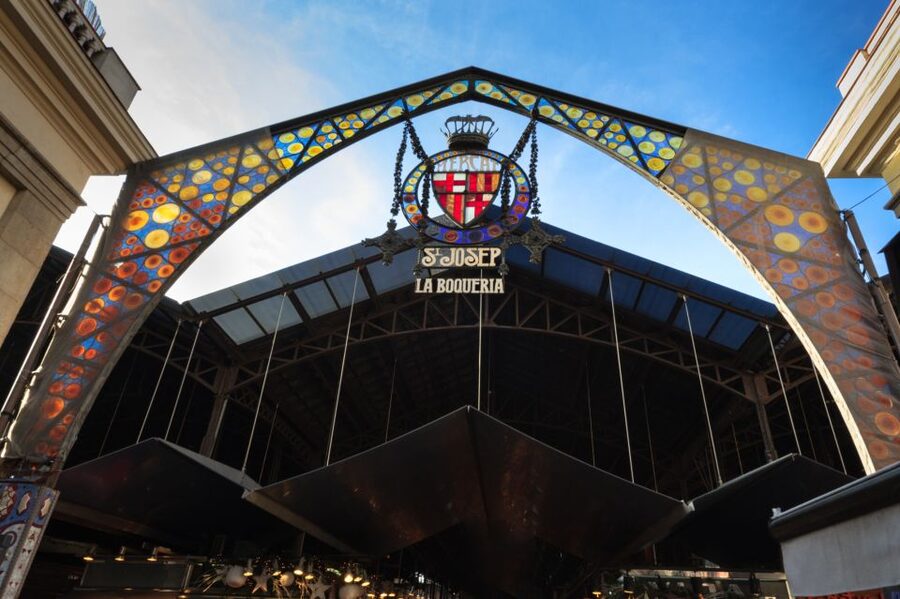
The first food stop focuses on pintxos, small bites that are designed for grazing and conversation. You may receive miniature dishes with a Clara, the local combination of beer and lemonade. This is a lighter start than a full plate, but it sets the tone for a food crawl built around variety.
Pintxos are useful for first-time visitors because they let you sample several flavors without committing to one large dish. You can compare textures and ingredients, then ask the guide what makes a particular bite local or traditional.
The drink program includes wine, cava, and Clara. The information describes three drinks, with local red and white wine also included among the offerings. You do not need to drink alcohol to take the tour, but water is not included, so bring some. That is especially sensible during Barcelona’s warmer months and on a three-hour walk.
Catalan classics in the Gothic Quarter
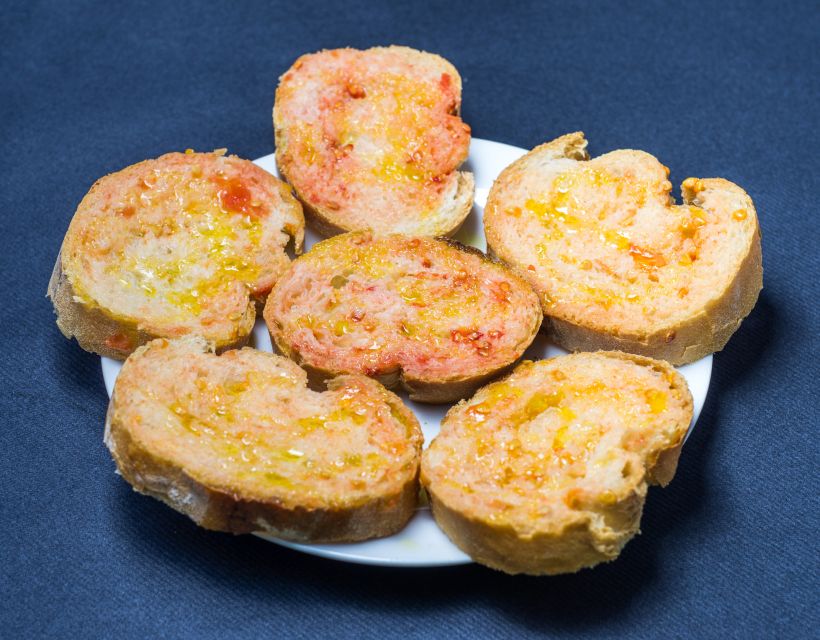
The next part moves into more substantial food. Botifarra, a traditional Catalan sausage, gives the meal a hearty center. You may also try pa amb tomàquet, bread rubbed with tomato and finished with oil and seasoning, along with a Mediterranean salad.
These dishes are valuable because they show how simple ingredients can carry a meal. The bread and tomato combination is not a complicated recipe, but it is one of the clearest ways to understand everyday Catalan eating. Botifarra offers a different side of the region, with a more filling and rustic character.
The tour also includes seafood, described as fresh pescaditos, or small fish. If you enjoy seafood, this adds welcome contrast to the cured meats and sausage. If you do not eat fish, ask about alternatives at the start. One account indicates that food choices were available for people who preferred vegetarian dishes or avoided seafood, but the tour is not designed for vegans.
The portions are tasting portions, yet the total meal is substantial. Come hungry, but not so hungry that you rush through the historical walking between stops.
More History Tours in Barcelona:
- Taste of Barcelona: Boqueria Market, Tapas & History Tour
★ 4.5 · 22 reviews - Private Excursion to Floating Market and Ayutthaya World Heritage
★ 5.0 · 515 reviews - Palermo: Walking Tour of Historic Markets and Monuments
★ 4.9 · 478 reviews - Discover Palermo in 3 hours. Art, history, markets and street food
★ 5.0 · 352 reviews
Wine from a porrón and the fun of local custom
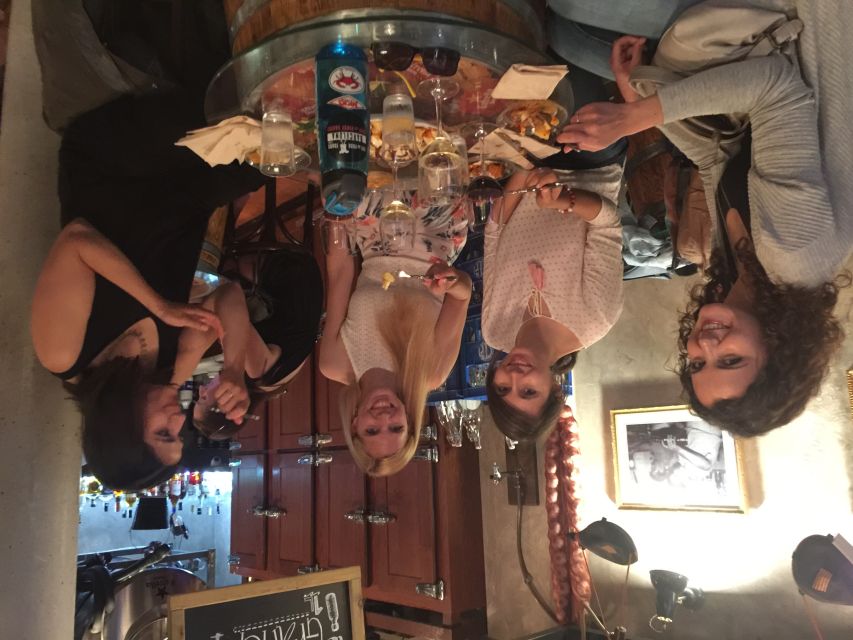
At one point, you may be offered wine from a porrón, the traditional glass vessel with a long spout. Drinking from one takes a little nerve and a little coordination. It can be messy, which is part of the fun, but you can always choose another way to drink if you prefer.
This kind of detail gives the tour personality. You are not just eating standardized samples at a succession of restaurants. You are being introduced to a custom associated with shared drinking and informal meals. The guide’s job is important here, since a short explanation makes the object more than a photo opportunity.
The tour is suitable for people who do not drink alcohol. Still, the included drinks are a major part of the program, so tell the guide your preference early. The food remains the main attraction, but non-drinkers should not expect a separate, elaborate beverage menu.
Medieval lanes and Roman Barcino
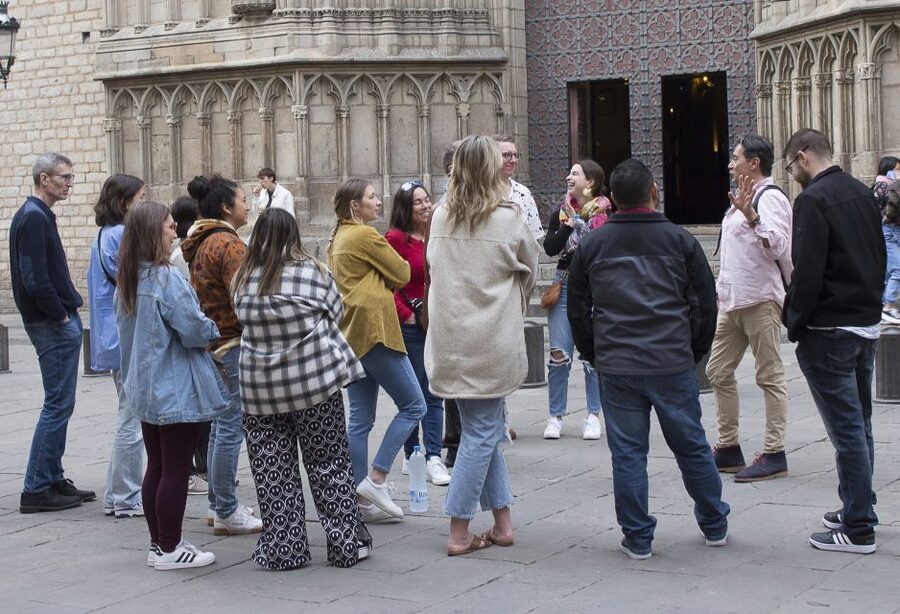
Between tastings, you walk through the Barri Gòtic at a moderate pace. The streets twist, narrow, and open onto historic sights that are easy to miss when you explore alone. The guide explains Barcelona’s story from Roman times through the medieval period and into the present.
The strongest historical feature is the sense of continuity. Ancient Barcino is not treated as a distant museum subject. Its remains and street plan form part of the city you are walking through now. Medieval buildings supply the atmosphere, while the food stops show how the old quarter still functions as a place for eating and social life.
This is not a full architectural tour, and you should not expect long visits inside major monuments. The history comes in short explanations during the walk, with food providing the rhythm. I see that as a strength for anyone who wants context without spending three hours in a lecture.
Wear proper walking shoes. Cobblestones, narrow lanes, and a moderate pace can be tiring, especially after several tastings. Large bags and luggage are not allowed, and pets are not permitted.
Jamón, Manchego, cava, and the final course
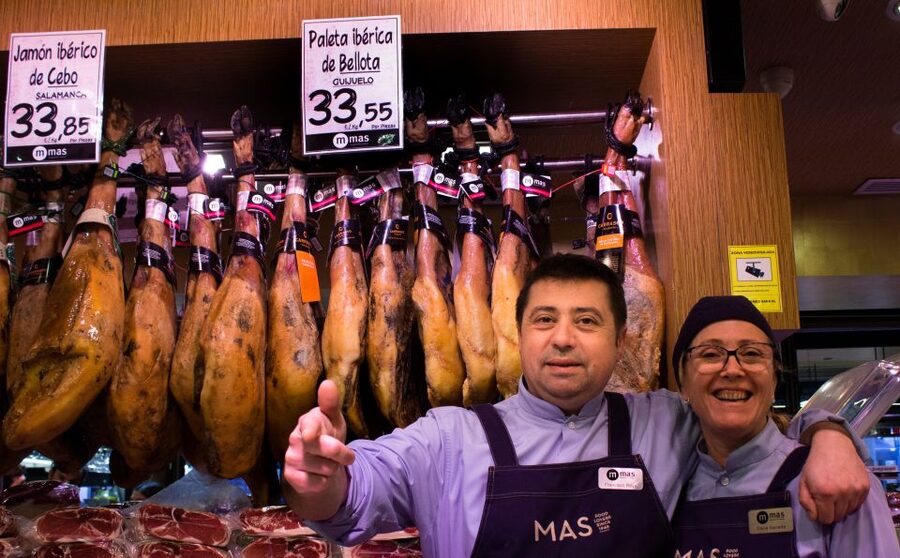
The final food sequence brings together jamón serrano, Manchego cheese, and cava. This is the most classic Spanish combination on the tour, and it offers a clear lesson in contrast: salty cured ham, firm cheese, and crisp sparkling wine.
You also learn about the difference between jamón and regional cheeses, including how these products fit into Spanish dining. The information specifically highlights jamón and Manchego, so this is a useful stop for anyone who wants to understand the basics of Spanish tapas culture before ordering on their own.
A sweet course appears earlier in the food program and is described as a treat with roots reaching back to before Columbus. The exact pastry is not specified, so do not book this expecting a particular dessert. Think of it as another small piece of the food story rather than a full final dessert course.
Cava makes a pleasant ending, but keep in mind that the day’s alcohol may add up. You can take part without drinking, and you should not feel pressured to sample everything if you are pacing yourself.
What the $69 price really covers
At $69 per person, the price is reasonable if you value a meal, a market visit, and a guided walk as one package. You receive eight tastings and three drinks, along with three hours of guiding in one of Barcelona’s most visited areas. Recreating that combination independently would require several purchases and a fair amount of planning.
The value is strongest for a first visit. You get help choosing local foods, explanations of unfamiliar dishes, and a route through the Gothic Quarter that you can later revisit on your own. The guide also takes care of the sequence, so you are not spending your holiday searching for suitable taverns or guessing what to order.
The price is less compelling if you only want a formal sightseeing walk or if you prefer to choose every dish yourself. It is also a poor deal for someone who cannot eat gluten or avoids all animal products, since many of the listed tastings center on bread, meat, cheese, and seafood.
Free cancellation up to 24 hours before the start gives you some flexibility, and you can reserve now and pay later. A 10 to 15 percent tip is customary if the guide provides good service, so include that in your budget.
Who will enjoy this food and history walk
I would recommend this tour to first-time visitors who want a quick orientation to central Barcelona. It suits couples, friends, and small families with older children who can manage three hours of walking and several food stops.
It is also a smart choice for anyone who feels uncertain about Spanish menus. You will hear the names of local foods, taste them in context, and learn enough to order with more confidence later in your trip.
The tour may not suit you if you want a slow, formal meal. The route keeps moving, and the food arrives as a series of tastings rather than one long restaurant sitting. It is also not suitable for vegans or people with gluten intolerance. Vegetarians may have some options, but you should discuss those needs before the food begins rather than assume every stop can accommodate them.
Because the group is limited to 10, the atmosphere can feel more like walking with a food-minded local than joining a large coach excursion. That small size is one of the best reasons to choose it.
Practical advice before you go
Wear comfortable shoes and dress for the weather. The walking is moderate, but the old quarter’s surfaces and turns make sensible footwear more important than stylish footwear.
Bring water. It is not included, and the combination of walking, salty foods, and alcoholic drinks can leave you thirsty.
Arrive at the Hard Rock Cafe with enough time to identify the guide’s sign. Do not rely on a vague plaza name if your confirmation uses one. The meeting-point confusion reported in the past is easy to avoid with a quick map check.
If you have dietary restrictions, explain them clearly at the start. The tour can suit some people who avoid seafood or prefer vegetarian choices, but it is not intended for vegans or those who cannot eat gluten.
Should you book this Barcelona tour?
Book it if you want a compact introduction to Barcelona through food, Roman history, and Gothic streets. The combination is unusually practical: you eat well, learn how the old city developed, and finish with a better sense of where to return for your own meals.
Skip it if you need a vegan or gluten-free program, dislike moderate walking, or want a quiet sit-down dining experience. For everyone else, $69 buys more than snacks. It buys a guided route, eight chances to try local food, several drinks, and a friendly entry point into the city’s old center.
FAQ
How long does the Barcelona food and history tour last?
The tour lasts about three hours. The description also refers to a two-and-a-half-hour adventure, so allow the full three hours when planning your day.
Where does the tour begin?
Meet outside the Hard Rock Cafe. The guide will hold an Eye on Food Tour sign and wear a badge with their name.
Where does the tour finish?
The tour ends at the Gambrinus Lobster Statue.
What food is included?
The tour includes eight tastings. These can include a pastry, pintxos, botifarra sausage, pa amb tomàquet, Mediterranean salad, small fish, jamón serrano, and Manchego cheese.
Are drinks included?
Yes. Three drinks are included, with offerings described as local red and white wine, cava, and Clara beer. Water is not included.
Can people who do not drink alcohol join?
Yes. The tour is suitable for people who do not drink alcohol. It is not suitable for vegans or people with gluten intolerance.
Just added around Barcelona
- Spanish Oysters, Cava and Ibérico Ham at Barcelona’s La Boqueria Market★ 5.0 · 8 reviews
- Taste of Barcelona: Boqueria Market, Tapas & History Tour★ 4.5 · 22 reviews
- Private Barcelona Market Tour & Paella Cooking Class with Josh★ 5.0 · 4 reviews
- Barcelona La Boqueria & Sant Antoni Private Food Experience★ 5.0 · 7 reviews
- Cook Paella & Tapas + Market Tour in Barcelona (4-Course Meal)★ 5.0 · 2 reviews
- Market Gourmet Visit and Spanish Culinary Experience in Barcelona★ 5.0 · 34 reviews
- Tasty Barcelona Street Food Tour With Local Market Visit★ 4.5 · 24 reviews
- Eat Barcelona 3 Covered Markets & Hands On Mini Cooking Workshop★ 5.0 · 2 reviews
Food & Drink, compared.
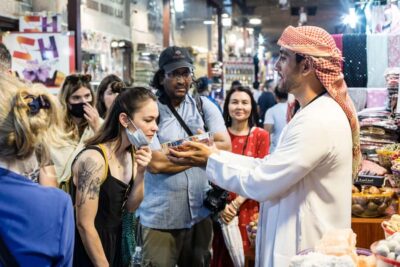
Old Town, Creek, Museums, Souks, & Street Food Tour
Read our review →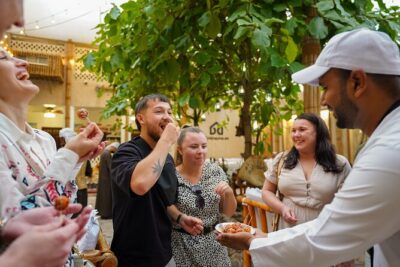
Old Town, Souks, Street Food, Guided Tour & Abra Ride
Read our review →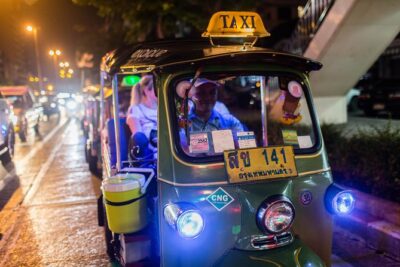
Bangkok by Night: Temples, Markets and Food Tuk-Tuk Tour
Read our review →
Tokyo Tsukiji Fish Market Food and Culture Walking Tour
Read our review →
Markets, Temples and Food Night Tour by Tuk Tuk
Read our review →
Old Town, Souks, Street Food, Guided Tour & Abra Ride
Read our review →Browse the lists this tour appears in