
Review · PERU MARKET TOURS
Cusco City Sightseeing, San Pedro Market, Cathedral and Qorikancha Temple
Cusco’s past and present meet neatly on this afternoon route. You start above the city at San Cristóbal Plaza, smell and shop your way through San Pedro Market, then move from Inca stonework to Spanish churches at Qorikancha and the Cathedral. It is a useful first look at Cusco before you tackle longer trips around the Sacred Valley or Machu Picchu.
I like the well-chosen mix of sights, especially the contrast between the working market and the former Temple of the Sun. I also like the small-group format, which can make a big difference on narrow streets and inside busy historic buildings. The main concern is timing: some departures have finished in about two and a half hours, and a bilingual group may receive more commentary in Spanish than English.
Key points to know before you book
- San Pedro Market shows everyday Cusco: You’ll see potatoes, Andean corn, cheese, bread, produce, handicrafts, and the local rhythm of shopping.
- Qorikancha is the historical centerpiece: The former Inca Temple of the Sun now shares its foundations with the Santo Domingo church and convent.
- The route links Inca and colonial Cusco: San Blas, Hatun Rumiyoc Street, the Twelve-Angled Stone, Plaza de Armas, and the Cathedral fit into one afternoon.
- A small group keeps the outing manageable: The maximum is 15 people, with hotel pickup and drop-off from selected hotels.
- The guide can shape the experience: Guides such as Henry, José Marie, Gabriel, Marcelo, Manuel, and Robin have been praised for clear historical and cultural explanations.
- Plan around altitude and timing: Cusco sits high, so give yourself time to adjust. Carry a few Peruvian soles for bathrooms and allow extra time if you have evening plans.
Why this afternoon route works well in Cusco
At $59 per person, this is not the cheapest way to walk around central Cusco. Several stops are easy to reach on your own, and San Pedro Market, Hatun Rumiyoc Street, and Plaza de Armas cost nothing to enter.
The value comes from putting the main pieces together in one organized outing. You get transport where useful, a bilingual guide, entry to Qorikancha and the Cathedral, and a ready-made route through places that can otherwise feel scattered. If you have only one free afternoon, that convenience is worth something.
I would see this as an orientation tour rather than a slow, scholarly examination of every church and Inca wall. The route gives you context, shows you where the main sights are, and lets you decide what deserves a longer visit later.
The advertised length is about three hours and 30 minutes, beginning at 2:00 pm. Actual timing can vary. Some tours have run close to the expected length, while others ended after roughly two and a half hours. Traffic, hotel pickups, group delays, and the guide’s pace all matter.
A few more market tours around Peru worth a look
- Cusco: Peruvian Cooking Class, Cocktails & Local Market Tour
★ 4.9 · 512 reviews - Pisac Indian Market and Ollantaytambo Fortress with Lunch
★ 4.5 · 395 reviews - Lima: Historic Center Street Food, Market, and Eateries Tour
★ 4.9 · 216 reviews
San Cristóbal Plaza gives you the big picture
The tour begins at San Cristóbal Plaza, where you get broad views over Cusco. This is a smart opening stop because the city’s shape makes more sense from above. You can see the historic center, the surrounding hills, and the tight pattern of streets spreading below.
You’ll have time for photographs and an introduction to Cusco’s past. The viewpoint also helps you understand why the city feels both compact and steep. Later, when you walk through the center, you’ll recognize the relationship between the main square, the church towers, and the hillside neighborhood of San Blas.
Pickup arrangements require some care. Hotel service is included from selected properties, but vehicles cannot enter every central street. You may need to walk a short distance to a meeting point. Confirm the exact pickup spot and time, especially if your hotel is inside a pedestrian area.
San Pedro Market brings Cusco down to earth
San Pedro Market is the most everyday stop on the route. Instead of looking only at grand buildings, you see where people shop for food and household goods. Stalls feature potatoes, Andean corn, cheese, bread from Oropesa, produce, and regional products, along with handicrafts.
The market is useful because it gives you a sense of Cusco beyond its monuments. You can watch the daily rhythm, ask about local foods, and take in the smells and colors of a working market. It is not arranged as a museum, so the experience feels less polished and more direct.
Your guide can help explain what you are seeing, but you should also leave room to look around at your own speed. Forty-five minutes is enough for an introduction, not a full food tour. If you want to buy something, carry small amounts of Peruvian currency and keep purchases modest so the group can stay on schedule.
This stop may be less appealing if you dislike crowded markets or strong food smells. For most people, though, it adds the local angle that a church-and-ruins tour often misses.
Qorikancha explains the clash of two eras
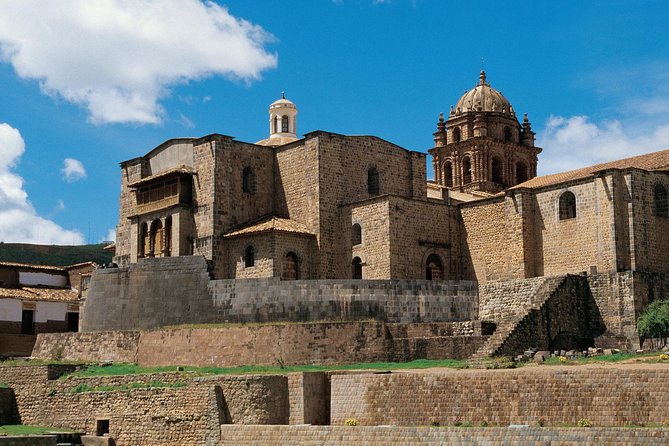
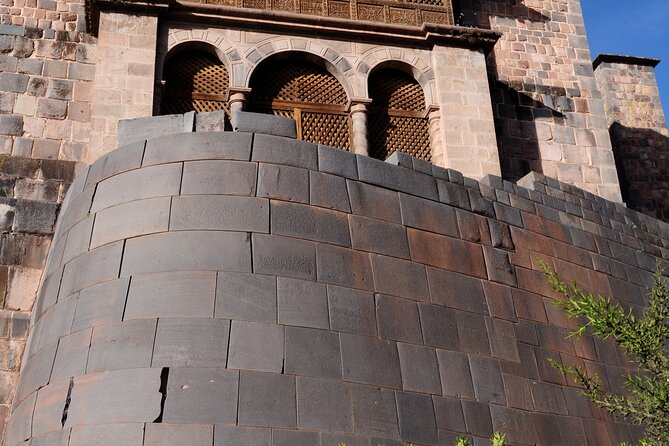
Qorikancha, also called the Temple of the Sun, is the strongest historical stop. In Inca times it was known as Intikancha or Intiwasi and was dedicated to Inti, the sun god. Spanish forces later destroyed much of the original complex, and the surviving Inca stonework became the foundation of the Santo Domingo church and convent.
That physical layering is the point. You are not simply looking at an Inca site next to a colonial church. You are seeing how Spanish Cusco was built directly over the former Inca capital. The walls, construction methods, and changing religious use give your guide plenty to explain.
The tour includes admission, with about an hour assigned to this stop in the stated schedule. In practice, the visit may be shorter depending on traffic and the group. One departure spent about 30 minutes inside, which was enough for an overview but not for a leisurely examination of every room.
You should pay close attention here. The guide’s explanation adds much of the value, particularly when discussing the temple’s former gold decoration and its role in Inca religious life. If your main interest is archaeology, this is the stop that may make the $59 price worthwhile.
Same place, a different set of stalls:
- Cooking class and market tour with a local chef
★ 5.0 · 186 reviews - Experience Lima: Taste 12 Snacks and Visit Top Monuments
★ 5.0 · 138 reviews - Lima Street Food Tour Beyond Netflix
★ 5.0 · 117 reviews - Market Tour, Tasting of 35 Fruits, and 4-Course Peruvian Cooking Class in Lima
★ 5.0 · 86 reviews
San Blas and Hatun Rumiyoc show Cusco’s street-level character
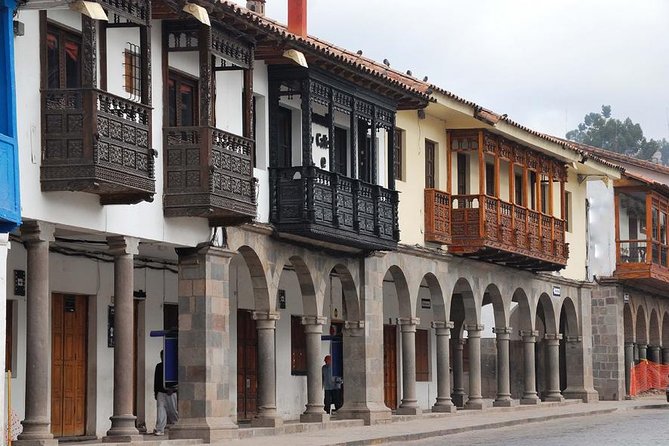
The route continues through San Blas, the city’s artisans’ quarter. The neighborhood is known for its church and carved woodwork, and it gives you a change of pace after the formal Qorikancha visit.
San Blas is best experienced on foot. The streets are narrow and can be steep, so wear shoes with a firm sole. The tour is not described as difficult, and most people can take part, but Cusco’s altitude can make even a gentle walk feel harder than expected.
From San Blas, you continue along Hatun Rumiyoc Street. Here you’ll see the former Inca Roca Palace, now associated with the Archbishop’s Palace, and the famous Twelve-Angled Stone. Its carefully fitted stonework is one of the clearest places to see Inca masonry in the middle of the modern city.
This part of the route rewards patience. The stone is famous, so people often gather around it for photographs. If your guide is moving quickly, take a moment to look at the tight joints and the irregular shape of the surrounding wall. The important detail is not only the number of angles, but how precisely the stones fit without visible mortar.
Cusco Cathedral closes the afternoon on Plaza de Armas
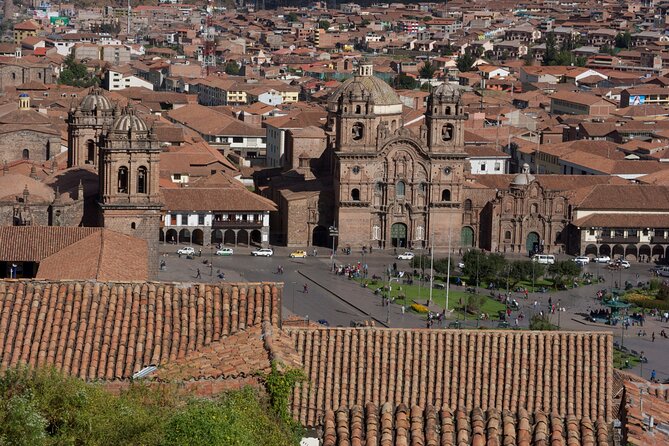
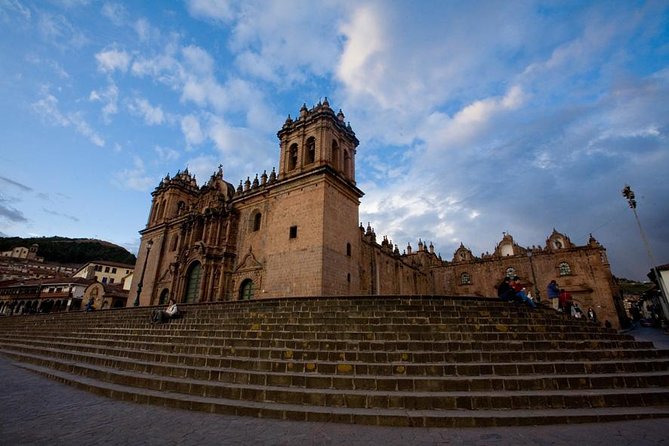
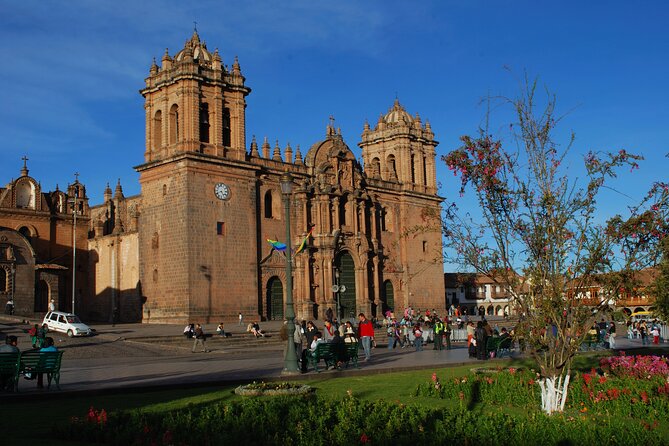
The final major stop is Cusco Cathedral, formally the Cathedral Basilica of the Assumption of the Virgin. It faces Plaza de Armas and was built between 1560 and 1654.
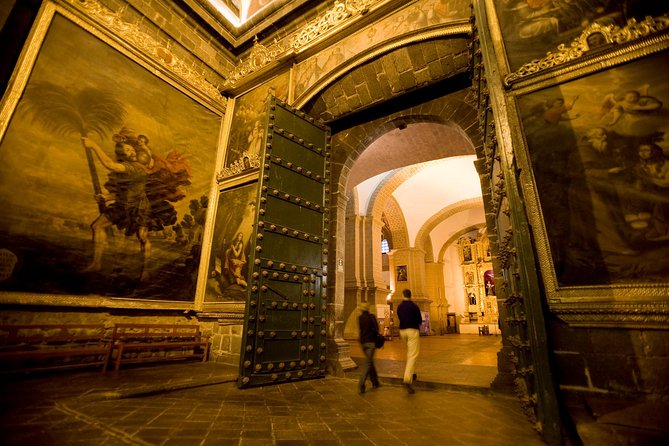
Inside, you can see colonial paintings, carved woodwork, and religious art made during the Spanish period. The Cathedral helps explain how Cusco became the center of colonial religious life after the conquest. Its location on the main square also ties together much of what you have seen earlier in the afternoon.
Admission is included. The planned visit is about an hour, although the actual time can depend on the group and the rest of the schedule. Some tours have treated the Cathedral as a quick final stop, while others have given it more attention.
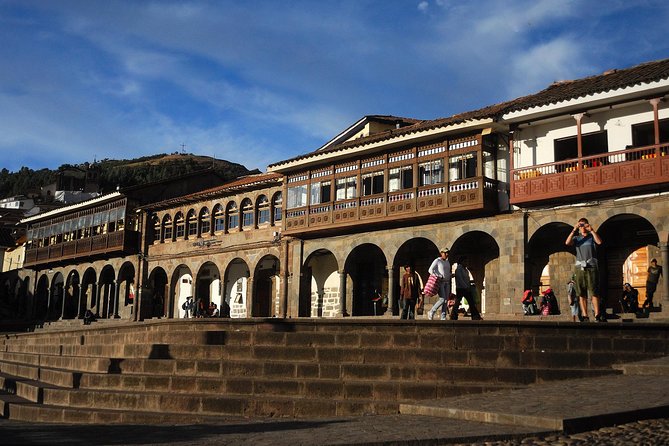
If you want time to study the artwork, ask early in the tour how long the Cathedral visit will be. The walk through the square is also a pleasant place to finish. You can remain at Plaza de Armas afterward, but the included return service is described as hotel drop-off, so clarify the final arrangement if you would rather stay in the center for dinner.
The guide makes more difference than the vehicle
This tour uses both a vehicle and walking. The vehicle helps with hotel pickups and can reduce wasted time across town, even though much of the central route is walkable. The tradeoff is traffic. One poorly timed pickup can eat into a three-and-a-half-hour afternoon.
The guide is the key part of the experience. Several named guides have received especially warm praise. Henry was noted for detailed explanations and interesting details. José Marie was praised for a relaxed pace and clear discussion of Cusco’s history and culture. Gabriel helped a solo visitor feel comfortable and even assisted with photographs.
Marcelo was singled out for answering questions in detail, while Marco, the driver, was described as kind and careful. Manuel and Robin were also praised for their explanations and ability to keep the group engaged. These names do not guarantee who will lead your departure, but they show how much the quality can vary with the individual guide.
The service is bilingual in Spanish and English. That is helpful for mixed groups, but it also creates a possible drawback. If most of the group speaks Spanish, explanations may be longer in Spanish and shorter in English. If English commentary is important to you, state that clearly at booking and again when you meet the guide.
Altitude, walking, and practical comfort
Cusco’s altitude deserves serious attention. One person joined the tour soon after arrival and felt sick throughout it, while still finding the route worthwhile. I would not schedule this as your first activity immediately after a long flight if you know you react badly to altitude.
Give yourself a day to adjust when possible. Drink fluids, take the pace slowly, and ask local medical staff about altitude medication if you need it. Coca tea, soup, and light meals are commonly suggested in the supplied guidance, but medical advice should come from a qualified professional.
Bring comfortable shoes, water, sun protection, and a small amount of Peruvian currency. Public bathrooms may charge one or two soles, and free facilities are not always available. The tour includes walking through streets and market areas, so keep your bag easy to carry.
Most people can participate, but the mix of altitude, uneven streets, steps, and standing may be tiring. Tell the guide if you need a slower pace. A small group of no more than 15 makes that conversation easier than it would be on a large coach outing.
Who gets the most value from the $59 price
I would recommend this tour to a first-time visitor who wants a guided introduction without spending a full day on formal museums. It suits solo visitors, couples, and families who prefer a planned route and want help with transport.
It is also a good choice if you have arrived in Cusco and want to get your bearings before independent sightseeing. The market, viewpoint, Inca masonry, temple, and Cathedral give you several reference points for the rest of your stay.
You may find better value elsewhere if you already know the city well or are comfortable arranging entrance tickets and walking between sights. San Pedro Market and the Twelve-Angled Stone are free, and much of the historic center can be explored independently.
The tour is less suitable if you need a slow pace inside every attraction, want a fully English-speaking group, or have a strict evening reservation. Build in a buffer after the scheduled 5:30 pm finish, since delays can happen during hotel pickups and city traffic.
Should you book this Cusco city tour?
Book it if you want one organized afternoon covering Cusco’s essential contrasts: a working market, Inca construction, a former sun temple, San Blas, the main square, and a colonial cathedral. The strongest parts are Qorikancha, the Twelve-Angled Stone, and the chance to see ordinary market life between major monuments.
Skip it if you prefer a self-guided walk, need complete control over timing, or expect four hours of detailed church visits. Before paying, confirm hotel pickup, the English-language arrangement, and the likely finish time. At $59, the tour offers fair value when the guide is strong and the schedule runs properly, but its worth drops if traffic or bilingual commentary cuts the visits short.
FAQ
What time does the tour start?
The tour starts at 2:00 pm.
How long does the experience last?
The advertised duration is approximately three hours and 30 minutes. Actual departures may vary in length.
What places are included?
The route includes San Cristóbal Plaza, San Pedro Market, Qorikancha, San Blas, Hatun Rumiyoc Street, the Twelve-Angled Stone, Plaza de Armas, and Cusco Cathedral.
Are entrance tickets included?
Yes. Admission to Cusco Cathedral and Qorikancha Temple is included.
Is hotel pickup included?
Yes, hotel pickup and drop-off are included from selected hotels. Some central hotels are in areas where vehicles cannot enter.
Is the tour offered in English?
Yes. The service is bilingual in Spanish and English.
How large is the group?
The tour has a maximum of 15 participants.
Is San Pedro Market included?
Yes. The visit lasts about 45 minutes in the stated schedule and includes time to see local food, produce, regional products, and handicrafts.
Can most people participate?
Most people can participate, but the tour includes walking in Cusco and takes place at high altitude.
Can I cancel for a refund?
You can cancel at least 24 hours before the local start time for a full refund. Cancellations or changes made less than 24 hours before the start are not accepted for a refund.
Just added around Peru
- Lima: Market Tour, 35 Fruits Tasting & Cooking Class★ 5.0 · 3 reviews
- Lima: Market Tour and Cooking Class with Pisco Sour★ 5.0 · 3 reviews
- Lima: Peruvian cooking class and tour of Surquillo market★ 5.0 · 2 reviews
- Lima Food Experience with local Markets & Barranco Tour★ 5.0 · 2 reviews
- Lima: Food Tour on Local Market★ 5.0 · 8 reviews
- Full Day Lima: Local Market+ CityTour+ Barranco & Miraflores★ 5.0 · 3 reviews
- Cusco: Coricancha, Cathedral & San Pedro Market Walking Tour★ 5.0 · 2 reviews
- Cusco: Peruvian Cooking Class & Market Tour★ 4.9 · 19 reviews
Peru Market Tours, compared.
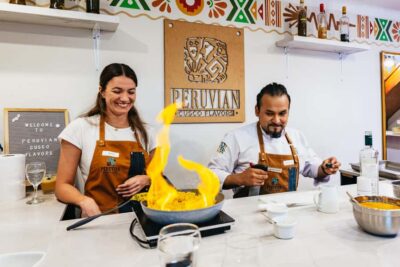
Peruvian Cooking Class, Cocktails & Local Market Tour
Read our review →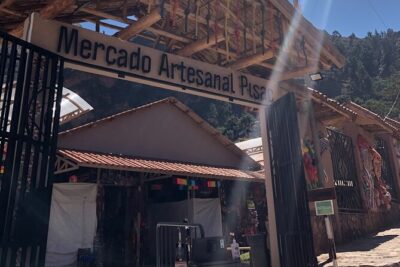
Pisac Indian Market and Ollantaytambo Fortress with Lunch
Read our review →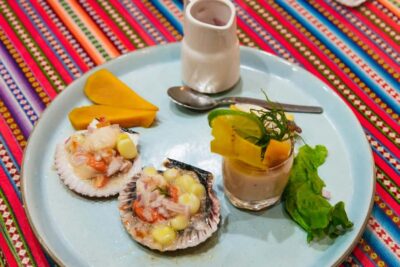
Historic Center Street Food, Market, and Eateries Tour
Read our review →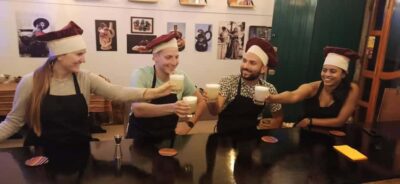
Cooking class and market tour with a local chef
Read our review →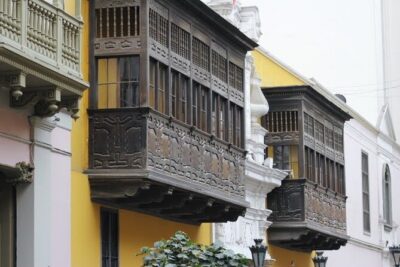
Experience Lima: Taste 12 Snacks and Visit Top Monuments
Read our review →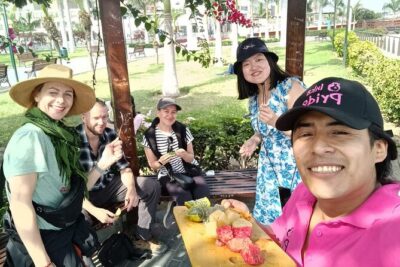
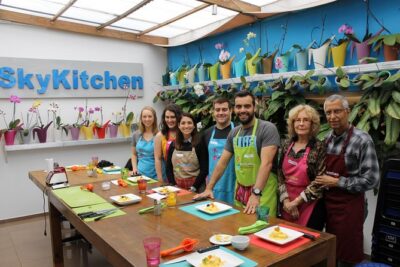
Market Tour, Tasting of 35 Fruits, and 4-Course Peruvian Cooking Class in Lima
Read our review →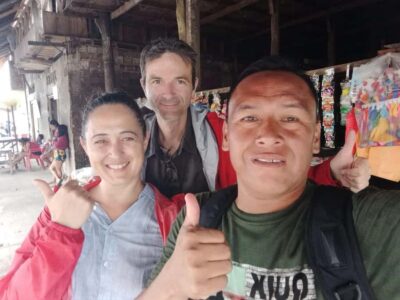
Belen Market & Floating City 2-3 Hour Private Tour
Read our review →Browse the lists this tour appears in