
Review · FOOD & DRINK
Food markets tour with a local!
Bologna’s best food lesson happens at the market counter, not in a lecture room. This small-group walk takes you through Mercato delle Erbe and the medieval Quadrilatero, where guide Benedetta helps you choose local bites such as tortellini, piadina, mortadella, tigella, wine, and gelato. I like the choose-your-own tasting setup and the way the walk links food with Bologna’s streets and landmarks.
I also like the small size, with no more than eight people, and the practical restaurant tips you can use after the tour. The main catch is clear: the $50.33 tour price does not include food or drinks, so you need extra money and must be comfortable making several small purchases.
Key points at a glance
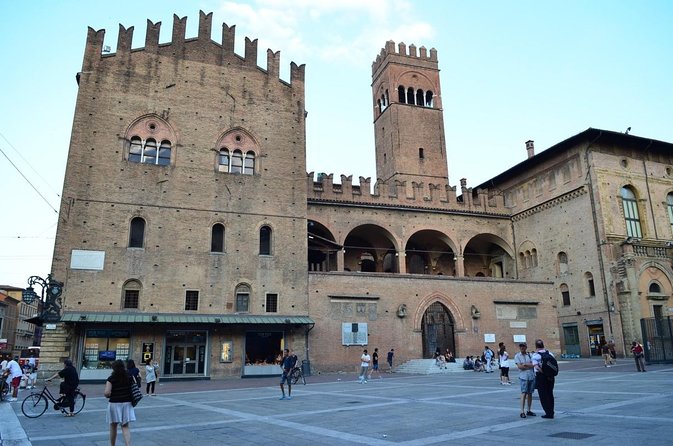
- Mercato delle Erbe begins the food story: Expect about 30 minutes among market stalls, with stops for local specialties.
- The Quadrilatero gets most of the time: About one hour is spent in Bologna’s old medieval market area.
- You control the eating: Buy only what appeals to you, and sharing portions can help you avoid too much food.
- Benedetta adds local context: She explains Bolognese food customs, suggests places to eat, and can guide you toward vegetarian choices.
- Small groups keep it personal: The maximum is eight people, with the walk offered in English.
- The route ends near the Towers: You start at Via Belvedere 6 and finish at Piazza Santo Stefano, close to Bologna’s famous Two Towers.
Why this food walk works in Bologna
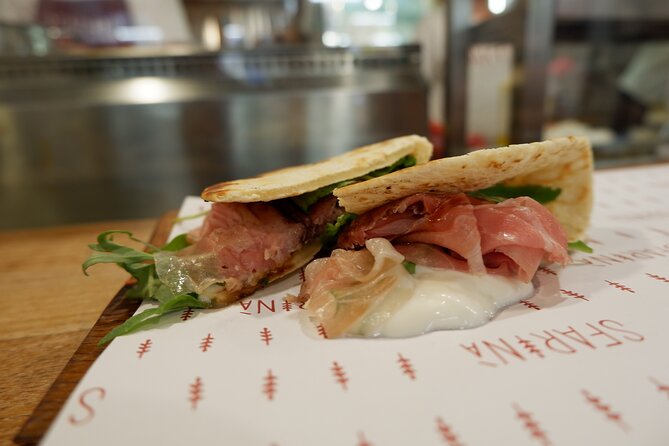
Bologna is a city where food is part of daily life, not just a dish placed in front of you at dinner. Fresh pasta, cured meat, aged cheese, filled flatbreads, balsamic vinegar, and gelato all have a place here. The challenge for a first-time visitor is knowing what to order, where to buy it, and how much is enough.
That is where a local guide can help. Instead of sitting down to one fixed meal, you move through several food spots and make small choices along the way. You can sample a traditional item, ask what makes it local, then continue walking before you feel overly full.
I especially like this format for Bologna because the food market and the old center are close enough to connect in one outing. You are not spending the full two hours at one restaurant. You are seeing how the city shops, eats, and talks about its food.
The experience is led by Benedetta through Benedetta My Bologna. Several detailed accounts also refer to a guide named Simone, so if having a particular guide matters to you, confirm that when booking. The central promise remains the same: an English-speaking local who helps you navigate the food choices rather than handing you a fixed tasting menu.
More Food and Drink Trips in Italy:
- Small Group Cooking Class & Market Food Tour in Florence
★ 5.0 · 1,574 reviews - Bologna Food & Market Tour with 6 Tastings, Pasta, Wines & More
★ 5.0 · 1,328 reviews - Venice Street Food Tour with Local Guide with Local Food Market Visit
★ 5.0 · 822 reviews
Starting at Mercato delle Erbe
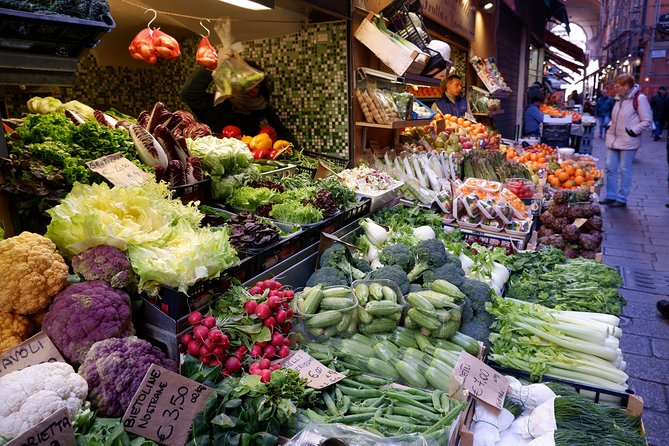
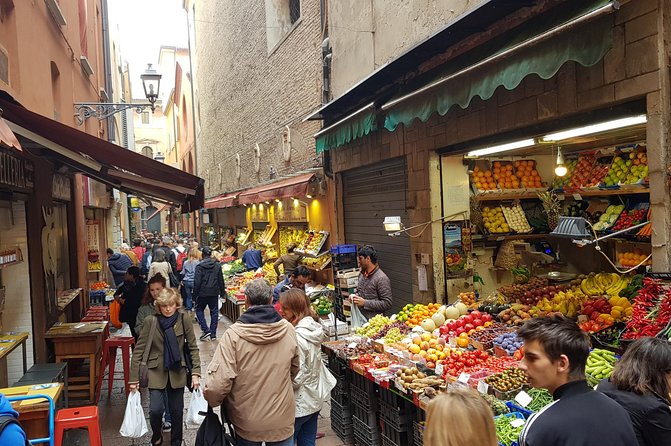
The tour begins at Via Belvedere 6 and moves first to Mercato delle Erbe. Plan on roughly 30 minutes here. Admission to the market itself is free, but the food you decide to buy is not included.
This is a useful opening stop because it gives you a look at Bologna’s food supply before you move into the older market lanes. You might stop for a taste, inspect a specialty, or buy something that catches your eye. Benedetta’s role is to point out what is typical and help you decide what is worth trying.
Do not expect a long sit-down meal at this stage. The strength of the stop is choice and orientation. You can ask questions, take in the market atmosphere, and begin building a sense of the products associated with Emilia-Romagna.
The flexible portions are important. A full serving at every stop would be too much for many people, especially with more food still ahead. You can share a portion with someone in your group or simply choose one small item rather than trying everything.
One account describes four main food stops overall, including tortellini in broth, piadina, tigella, and gelato. Another tasting included fruit, along with the savory dishes. Exact choices can change, so treat these as examples rather than a guaranteed menu.
Entering the Quadrilatero’s medieval market
The main part of the walk takes place in the Quadrilatero, Bologna’s old market quarter. Allow about one hour here. This is where the tour shifts from a general market visit to a focused look at classic Bolognese ingredients and prepared foods.
You may be guided toward Parmesan, prosciutto, mortadella, balsamic vinegar, and other local specialties. These are not random Italian foods. They help explain why Bologna and the surrounding Emilia-Romagna region are so closely linked with cured meats, pasta, cheese, and carefully aged products.
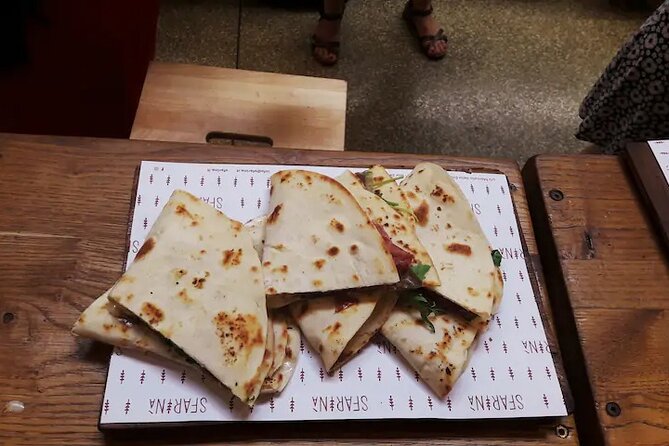
The guide can also suggest typical foods to taste on the spot. Tortellini in broth is one of the most useful examples because it connects a familiar pasta shape with a traditional local preparation. Piadina gives you something quite different, a flatbread-style specialty that is easy to eat while walking or sharing.
Tigella may also appear among the suggestions. If you are not sure what to order, this is the moment to ask for a small portion and let the guide explain how locals think about it. The point is not to collect the largest meal. It is to understand what makes each item part of Bologna’s food culture.
Wine can be part of the route as well. Since drinks cost extra, you can decide if a small glass fits your plans. If you have a busy afternoon ahead, skipping alcohol will not prevent you from getting value from the tour.
The Quadrilatero is also the most useful part of the route for future meals. You finish with a better sense of which ingredients and dishes you want to seek out later. The walk ends at Piazza Santo Stefano near the Towers, so you can continue sightseeing in a central part of town.
What you actually eat, and what you pay
The most important detail is easy to miss if you book quickly: the tour fee covers the guide, not the tastings. The listed price is $50.33 per person, and you pay separately for every food or drink you choose.
That setup has both an advantage and a drawback. You are not forced to pay for foods you dislike, and you can adjust the amount to your appetite. A vegetarian can ask for suitable choices, and you can keep portions small if you have dinner plans later.
The downside is that the final cost depends on your appetite and choices. One account describes spending about €15 per person on food, but that is not a guaranteed total. Several small tastes at specialty shops can add up, particularly if you purchase full portions, wine, or products to take home.
I would budget for the tour fee plus extra spending money, and I would decide before starting how much food I want. If your main goal is a full meal at the lowest price, this probably is not the best format. If you want guidance and a range of local samples, the separate-payment system gives you useful control.
Ask for half portions or shared servings when possible. This is one of the best ways to taste more without turning a two-hour walk into an uncomfortable eating challenge.
A few more market tours around Italy worth a look
- Cooking Class and Lunch at a Tuscan Farmhouse with Local Market Tour from Florence
★ 5.0 · 4,831 reviews - Rome: Colosseum, Roman Forum & Trajan’s Market Exterior Tour
★ 4.3 · 2,038 reviews - Palermo: Street Food and Local Market Tasting Tour
★ 4.9 · 540 reviews - Pasta and Tiramisu Cooking Class with optional Local Market Tour
★ 5.0 · 515 reviews
The guide’s role makes the difference
This is not simply a route from one shop to another. The value rests heavily on the person leading you. Benedetta is described as warm, enthusiastic, and well informed about Bologna’s food. She also shares restaurant suggestions after the walk, which can be useful if you are staying in town for more than a night.
A good guide can explain the difference between buying a product as a souvenir and tasting it in the setting where it is normally eaten. That context is especially helpful with foods such as mortadella, Parmesan, balsamic vinegar, and fresh pasta, all of which can look familiar to outsiders while having very different local versions.
Food preferences are handled in a practical way. A vegetarian account describes receiving a good option at each stop. Still, you should mention dietary needs clearly before the tour begins. The available information specifically supports vegetarian-friendly choices, but it does not promise arrangements for every allergy or restricted diet.
The small group matters here. With a maximum of eight people, you have a better chance to ask questions and hear explanations than you would on a large city tour. The tradeoff is that there are no microphones. One disappointed participant found it hard to follow a fast-speaking guide when standing farther away. Stay close to the guide and tell her if you are having trouble hearing.
A relaxed pace, with a little city history
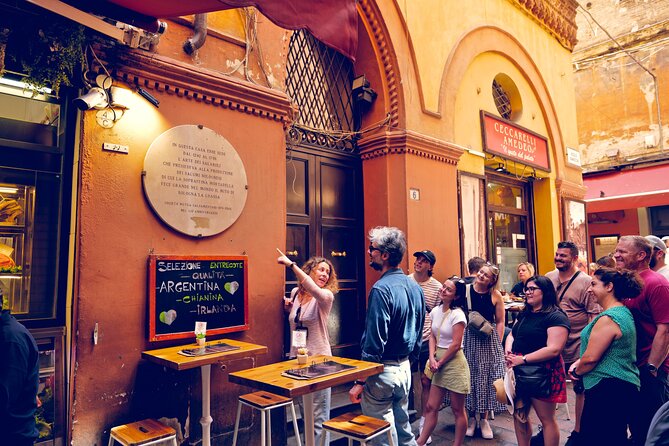
Food is the main subject, but the route also passes through notable parts of central Bologna. Stops along the way can point out attractions and explain how the market areas fit into the city.
That makes the experience more useful than a string of tastings. You learn what you are eating and where you are eating it. The walk also gives you a gentle introduction to the old center, finishing near the Towers at Piazza Santo Stefano.
The pace is relaxed rather than rushed. Two hours is long enough for several tastes and short explanations, but not long enough for a full history of Bologna or an exhaustive tour of every market. You should book it for food guidance with some local background, not as a replacement for a dedicated city sightseeing walk.
The format suits families as well. A family with three children under 12 found the food choices manageable and enjoyable. Children may appreciate the variety, though the separate cost of each sample means you should keep an eye on what everyone orders.
Where the tour is strongest
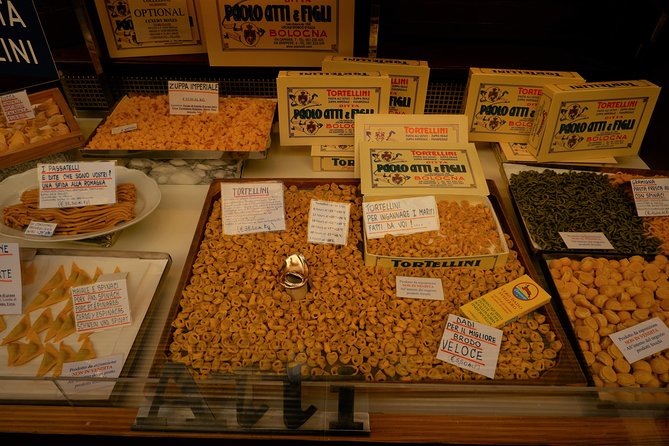
The food selection receives the most consistent praise. Tortellini and piadina are frequent highlights, while the gelato stop can be a memorable finish. The appeal is not just sweetness or novelty. You get a chance to compare several types of food in one short outing.
The local advice is another strong point. You can ask what to order later, which restaurants are worth considering, and how to recognize dishes that are especially tied to Bologna. The post-tour recommendations can be valuable if you use the experience as the first step in planning the rest of your meals.
The guide’s attitude also helps. The best version of this tour feels social and informal. You try food with a small group, discuss what you like, and keep moving through the market quarter. That is a better fit for curious eaters than for anyone who wants a formal tasting with a printed menu and fixed pairings.
The limits you should know before booking
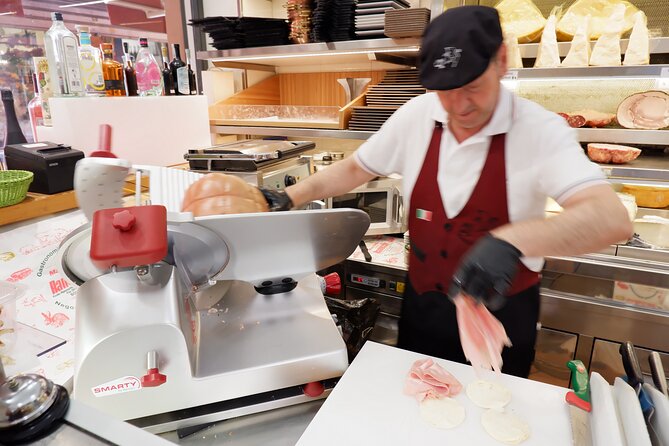
This walk is not a bargain meal. At $50.33 before food and drinks, it costs more than simply finding a market stall and ordering lunch on your own. You are paying for the guide’s time, local judgment, explanations, and route planning.
That extra value will matter most if Bologna’s food is new to you. If you already know the markets, speak Italian, and feel confident choosing local specialties, you may find it easier to explore independently. One person felt the stops were more expensive than other options and did not see enough added value.
The amount of information can also vary with the group and the guide’s speaking pace. You may get useful food history and restaurant advice, but you should not expect a formal culinary course. Keep close to the guide, especially in busy market areas, and ask her to repeat anything you miss.
The tour also requires good weather. If poor weather causes cancellation, you are offered another date or a full refund. The experience also needs a minimum number of participants, and the provider offers a different date, another experience, or a full refund if that minimum is not reached. Otherwise, the booking is non-refundable and cannot be changed.
Who should book this Bologna food walk
I would recommend it to first-time visitors who want a quick, friendly introduction to Bolognese food. It is especially useful if you do not know the difference between the city’s famous specialties, want help ordering, or would like restaurant suggestions for later.
It also suits people who prefer small tastes to one large meal. Vegetarians can benefit from having someone point out suitable options, and families can use the shared portions to control both appetite and spending.
You may want to skip it if you dislike paying separately at each stop, need a guaranteed fixed menu, or already know Bologna’s food markets well. It is also not the right choice if you want a quiet, highly structured lecture or a full meal included in the ticket.
The best approach is to view it as a guided food walk, not a prepaid tasting menu. Bring an open appetite, a little extra cash, and a willingness to try foods you might not order on your own.
Should you book Food Markets Tour with a Local?
Book it if you want help making sense of Bologna’s food and prefer a small group to independent guesswork. The combination of Mercato delle Erbe, the Quadrilatero, local specialties, and a finish near the Towers gives you both food ideas and a useful route through the center.
Before paying, make sure the separate food cost suits your budget and ask about the day’s guide if you have a strong preference between Benedetta and Simone. Stay close so you can hear, request shared portions, and tell the guide about dietary needs. With those expectations in place, this is a practical way to turn Bologna’s famous food culture into something you can taste and understand.
FAQ
How long does the food markets tour last?
The tour lasts approximately two hours. About 30 minutes are allocated to Mercato delle Erbe and about one hour to the Quadrilatero, with the remaining time used for walking and stops.
Is food included in the $50.33 price?
No. The tour price covers the guide, while all food and drinks are paid for separately by each participant.
How much extra should I budget for food?
One detailed account spent about €15 per person on food, but your total depends on what you choose. You can control the cost by sharing portions or buying fewer samples.
Where does the tour start and finish?
The tour starts at Via Belvedere 6 in Bologna. It ends at Piazza Santo Stefano near Bologna’s Towers.
How many people can join the tour?
The maximum group size is eight travelers. The tour is offered in English.
What happens if bad weather cancels the tour?
If poor weather causes cancellation, you are offered a different date or a full refund. If the minimum number of participants is not reached, you are offered a different date, another experience, or a full refund.
Just added around Italy
- Cesarine: Market Tour & Home Cooking Class in Catania★ 4.0 · 6 reviews
- Small Group Market tour and Dining Experience at a Cesarina’s home in Brindisi★ 4.5 · 6 reviews
- Small Group Market tour and Cooking class in Brindisi★ 4.5 · 8 reviews
- One day tour Christmas markets Innsbruck – Bressanone – Vipiteno★ 4.5 · 11 reviews
- Private Market Tour and Cooking Class in Bologna with Giovanna C★ 5.0 · 20 reviews
- Cesarine: Market Tour & Cooking Class at Local’s Home in Bologna★ 5.0 · 19 reviews
- Cesarine: Small Group Market tour and Dining in Altamura★ 3.0 · 2 reviews
- Cesarine: Market Tour & Home Cooking Class in Bari★ 5.0 · 5 reviews
Food & Drink, compared.
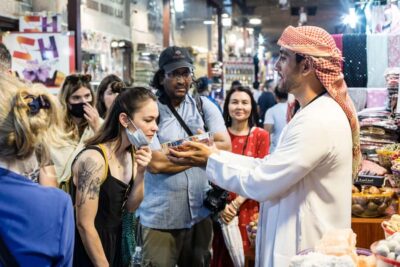
Old Town, Creek, Museums, Souks, & Street Food Tour
Read our review →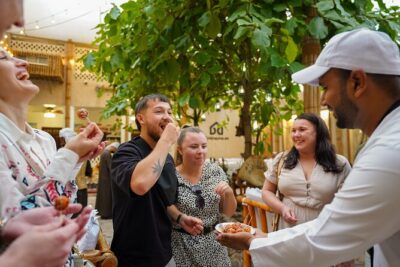
Old Town, Souks, Street Food, Guided Tour & Abra Ride
Read our review →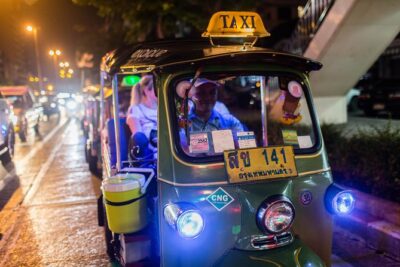
Bangkok by Night: Temples, Markets and Food Tuk-Tuk Tour
Read our review →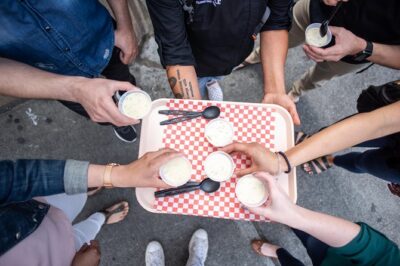
Tokyo Tsukiji Fish Market Food and Culture Walking Tour
Read our review →
Markets, Temples and Food Night Tour by Tuk Tuk
Read our review →
Old Town, Souks, Street Food, Guided Tour & Abra Ride
Read our review →Browse the lists this tour appears in