
Review · GEORGIA MARKET TOURS
Tbilisi: Street Art & Dezerter Bazaar Tour w/ Tastings
Tbilisi’s best stories are often painted on walls, tucked into side streets, or sold from a market stall. This tour connects those pieces in one walk, taking you from Fabrika’s creative district to the city’s enormous Dezerter Bazaar, with street art, local history, and Georgian food along the way.
I like two things especially: the guide-led look at both legal and illegal street art, and the market tasting, which gives you a reason to try churchkhela, tklapi, dried fruit, cheese, wine, and chacha instead of simply walking past unfamiliar foods. The main drawback is the walking distance, about 2 to 3 miles, and the timing can stretch from 1.5 to 4 hours depending on the group and stops.
I also like that guides such as Giorgi, also called George, bring personal memories of growing up in Georgia into the walk. Just remember that Dezerter Bazaar is a working market, not a polished food hall, so expect noise, crowds, uneven streets, and a little friendly chaos.
Key points to know before booking
- Fabrika opens the tour with Tbilisi’s creative side: You get a photo stop, guided walk, and time to see one of the city’s best-known social and artistic spaces.
- Street art comes with local context: The guide explains the artists, styles, and place of art in present-day Tbilisi.
- Dezerter Bazaar is the main food stop: Try Georgian cheese, churchkhela, tklapi, dried fruit, wine, and a shot of chacha.
- The tour reaches beyond the standard old-town route: You see ordinary streets, alleys, architecture, and daily city life.
- Giorgi and George receive especially strong praise: Their friendly manner, local stories, patience, and humor are central to the experience.
- It is flexible but still active: Hotel pickup and drop-off are included, yet you should wear good walking shoes and bring only a small bag.
Why this tour shows a more useful side of Tbilisi
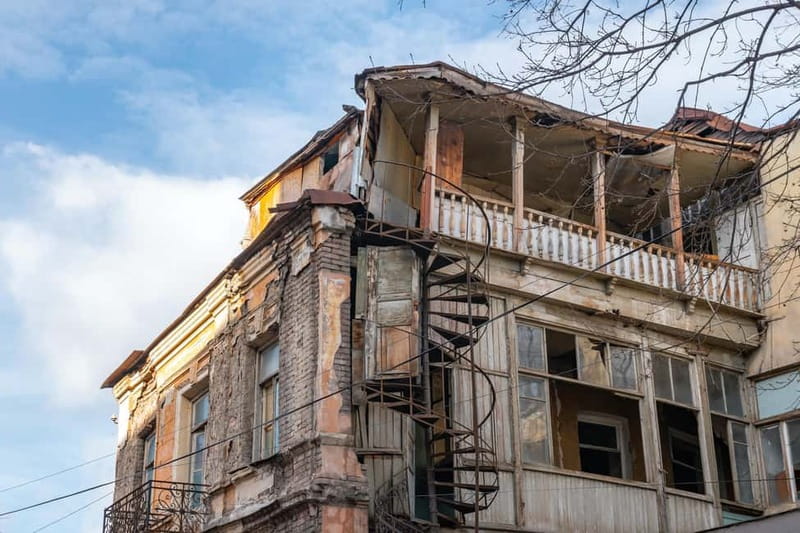
Tbilisi can be easy to reduce to a few familiar sights: the old town, sulfur baths, fortress views, and the river. Those places deserve time, but they do not explain the whole city. This walk moves into districts where art, trade, old buildings, cafés, railway life, and ordinary errands meet.
That makes the tour a good choice early in your stay. You get a feel for how the city changes from one street to the next, and you can ask a local guide practical questions while you still have time to use the answers. Guides provide suggestions about where to go, what to eat, and places you may want to avoid.
The tone is informal. Giorgi has been praised for being easygoing, patient, and happy to pause for photographs or rest. He also brings stories from his own childhood, which helps connect Georgian history and current life without turning the walk into a classroom lecture.
The tour has a rating of 4.8 from 30 reviews, and the strongest praise centers on the guides. That matters here because the route is not just a chain of sightseeing stops. The value comes from knowing what you are looking at and why a street, painting, market product, or building matters.
More Street Art Walks in the world:
- 2-Hour Food, History and Street Art Tour of Ponce City Market
★ 5.0 · 159 reviews - Phnom Penh’s Morning Market and Street Art Tour by Tuk tuk
★ 5.0 · 128 reviews - Naples: The Spanish Quarters, Street Art and Local Market
★ 4.7 · 59 reviews
Starting at Fabrika and finding the city’s creative pulse
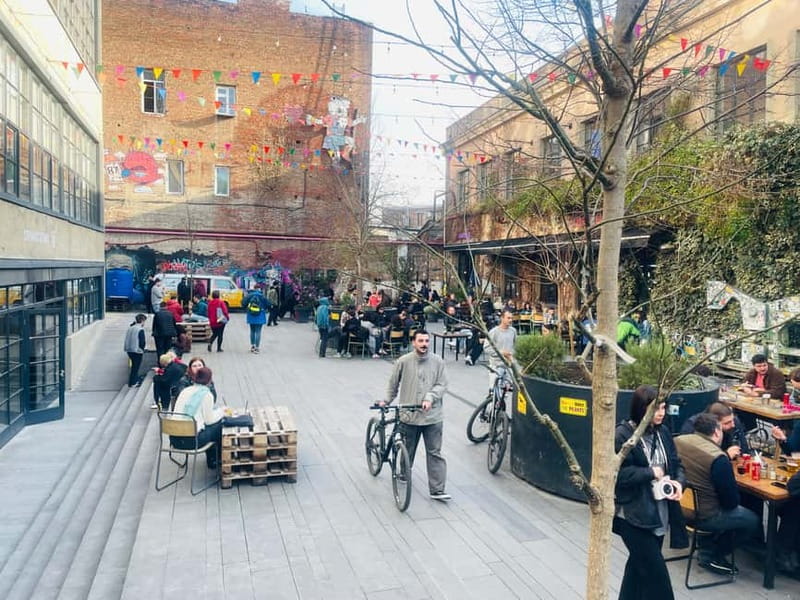
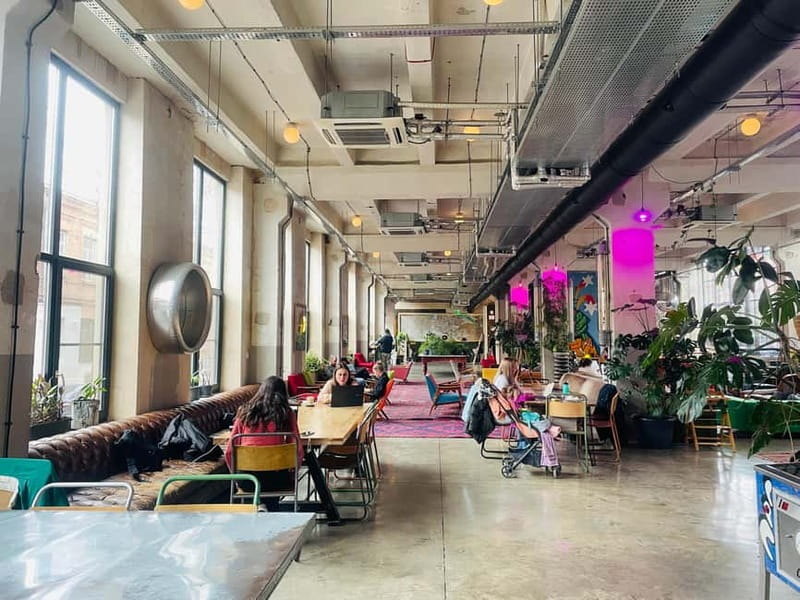
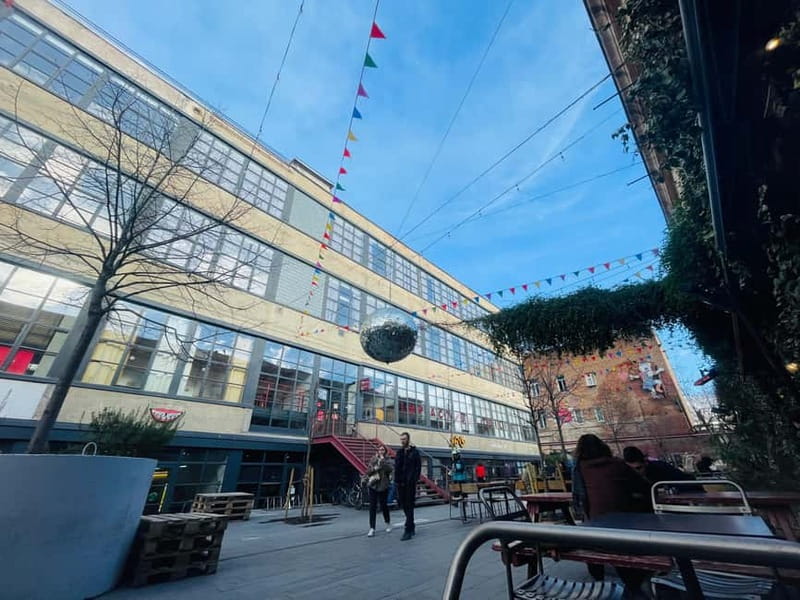
Fabrika is the first major stop. You receive a guided visit and time for photographs, coffee, or tea, with views and street scenes along the way. The former industrial setting has become one of Tbilisi’s best-known meeting points for art, food, design, and social life.
You should think of Fabrika as an introduction to the city’s newer cultural side. It gives you a clear contrast with the older parts of Tbilisi, and it is a useful place to pause before the longer walk. The stop also gives your guide room to explain how former buildings and overlooked districts have found new uses.
The tour does not treat Fabrika as an isolated attraction. It uses the area as a starting point for looking at Tbilisi’s wider creative scene. You will see how street art, cafés, hostels, and local meeting places fit into the changing city.
Coffee and tea are listed as part of the Fabrika stop, but the food and drink included in the tour are mainly the later tastings. If you want more than the included stop offers, extra food and drinks cost more.
Street art in alleys, side streets, and plain sight
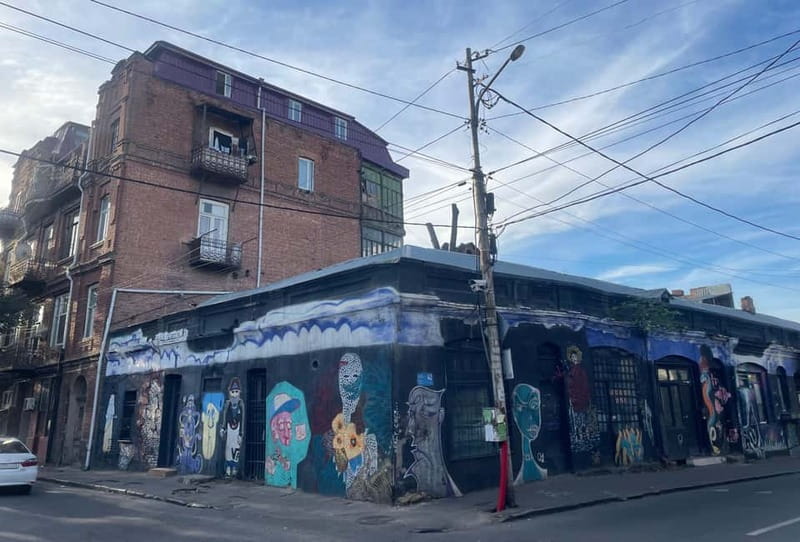
After Fabrika, the walk follows streets with legal and illegal artwork. That distinction is important. Tbilisi’s street art is not presented as a tidy outdoor gallery, and the guide helps you notice work that could easily be missed if you were walking alone.
You may see paintings and graffiti in well-known lanes as well as less obvious corners. The route includes a secret stop, described as a photo and guided walking stop, but the exact location is not given in advance. That keeps some discovery in the experience, although it also means you should not expect a fixed list of famous murals.
The guide discusses local artists and the relationship between art, memory, and the city. One part of the walk passes the former residence of one of Georgia’s best-known painters, adding an older artistic connection to the newer street-art scene.
I like this mix because it avoids treating street art as decoration alone. You learn to look at who made it, where it appears, and how it sits beside older buildings and everyday city life. The route also shows Tbilisi’s architectural variety, from familiar streets to less polished alleys.
Do not expect a museum-style presentation. The appeal is the conversation and the act of walking through the city. If you like stopping often for photographs, allow extra time. One guide was praised for waiting patiently during photo stops and rest breaks, which is useful on a route of several miles.
The railway station area and a different view of the city

Tbilisi Railway Station is another planned photo and sightseeing stop. The station area gives the walk a more practical, working-city character. It is a useful counterpoint to Fabrika’s social and creative atmosphere.
The tour does not promise an extended interior visit or a railway-focused history lesson. Instead, expect a guided look at the area as part of the walk toward the market. The stop helps you see how the city’s transport routes, commercial areas, and side streets connect.
This part may feel less scenic than the art stops, but it is valuable if you want more than a postcard version of Tbilisi. You are moving through places people use for work, shopping, and daily errands. The guide’s explanations are what make the stop worthwhile.
A few more market tours around the world worth a look
- Bangkok: Damnoen Saduak Market and Maeklong Railway Market
★ 4.5 · 26,723 reviews - The Old Siam: Damnoen Saduak and Maeklong Railway Market
★ 4.5 · 10,992 reviews - Dubai: Old Town, Creek, Museums, Souks, & Street Food Tour
★ 4.8 · 10,816 reviews - Bangkok: Train Market & Floating Market with Boat Ride
★ 4.7 · 9,547 reviews
Entering Dezerter Bazaar, Tbilisi’s great market stop

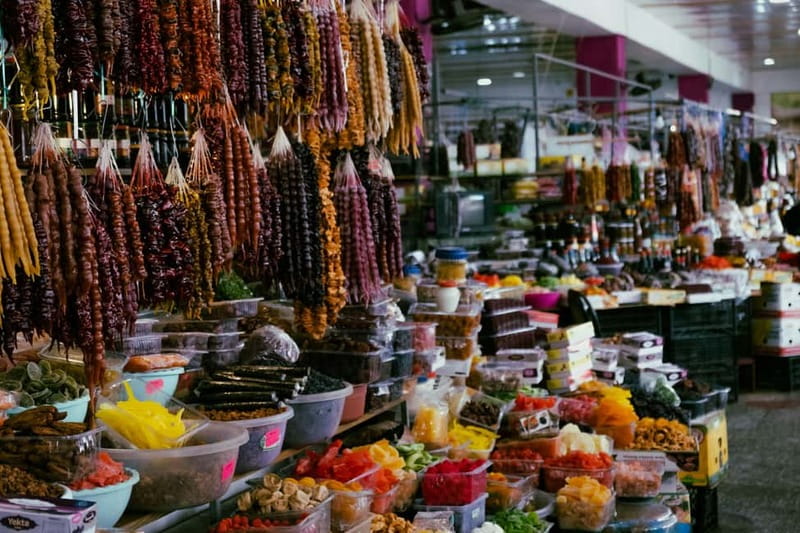
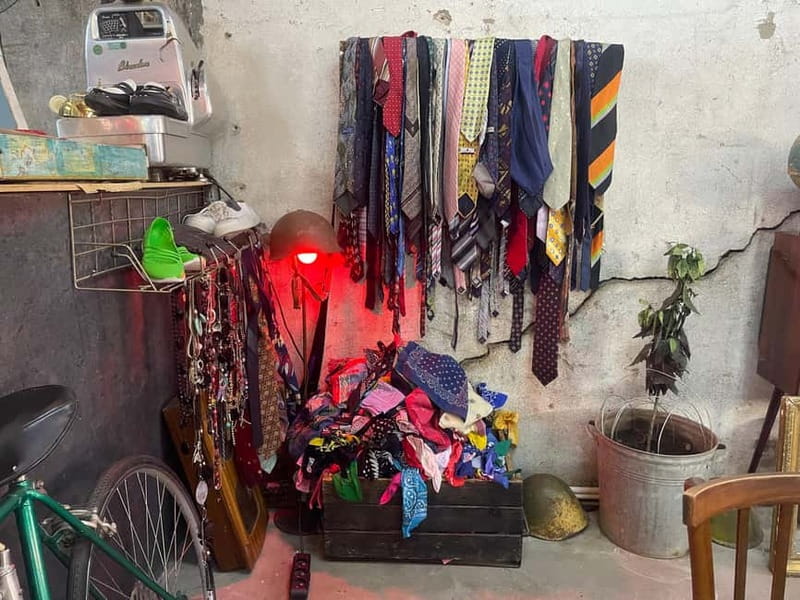
The final main stop is Dezerter Bazaar, described as Tbilisi’s oldest and largest farmers market. This is where the tour becomes most sensory. You will encounter the smell of food, the sound of vendors, displays of regional products, and the fast pace of a real market.
The bazaar is not arranged for easy sightseeing. You may find narrow paths, busy stalls, and plenty of activity. That can be part of the fun, but it may feel overwhelming if you prefer quiet, orderly markets. Keep your belongings close, follow the guide, and leave large bags behind.
The guide makes a real difference here. Georgian food names and unfamiliar products can be confusing when you are looking at them without context. With help, you can understand what you are tasting and how these foods fit into local eating traditions.
Included tastings feature:
- Georgian cheese
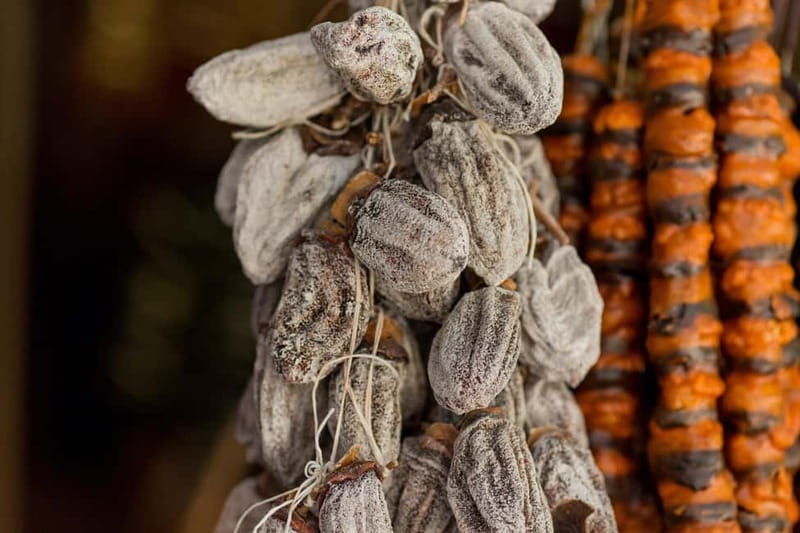
- Churchkhela
- Tklapi
- Dried fruits
- Traditional Georgian wine
- A shot of chacha
- Other local sweets and market snacks
Churchkhela is the familiar candle-shaped sweet made with nuts and thickened fruit mixture. Tklapi is a dried fruit preparation. The experience gives you a chance to try both, rather than guessing from a stall display.
The wine and chacha add a distinctly Georgian finish. You receive a traditional wine tasting and one shot of chacha. Chacha is a strong Georgian spirit, so take the small tasting seriously, especially if you are walking afterward. Extra food and drinks are not included.
You can continue shopping at the bazaar after the formal tour ends. That is one of the more useful features of the route. If you find cheese, dried fruit, sweets, or another product you want, you can stay and browse instead of being rushed straight back to your hotel.
What the guide adds to the experience
The guide is the heart of this tour. The route itself is interesting, but street art and a market are much more rewarding when someone can explain the local setting.
Giorgi and George are names associated with the experience. The comments about them are unusually consistent in the details that matter: they are friendly, open, informative, relaxed, and willing to answer questions. One guide was also praised for sharing stories about growing up in Georgia, which gives the walk a personal layer.
A guide was described as passionate about street art, music, and local culture. Another detail that comes through is patience. The walking pace can include pauses for photographs, conversation, looking at artwork, and rest. That is helpful because a route covering 2 to 3 miles can feel very different depending on how quickly you move.
The guides speak English and Russian. If you want a tour with lots of questions and conversation, the private or small-group format should suit you better than a large group. The experience is also available with hotel pickup and drop-off, which removes some of the morning or afternoon planning.
Duration, walking, and practical comfort
The stated duration ranges from 1.5 to 4 hours. That is a wide window, so do not schedule a tight appointment immediately afterward. The shorter end may suit a compact walk, while a longer outing can include more conversation, market time, tastings, shopping, and photo stops.
You will cover about 2 to 3 miles on foot. Wear comfortable shoes, not just fashionable ones. Weather-appropriate clothing matters because the activity operates in all weather conditions.
Hotel pickup is included from Tbilisi accommodations, with drop-off at the end. You should wait in the lobby five minutes before pickup. The car will wait no more than five minutes after the scheduled time, so be ready early.
Large bags and oversize luggage are not allowed. That rule makes sense at the market, where space can be limited, but it means you should not treat this as a transfer from one hotel to another with all your luggage.
The listed pickup and drop-off choices include 10 Dodo Abashidze Street, 26 Ramaz Davitashvili Street, and Tbilisi. Confirm the exact arrangement when booking, especially if your accommodation is outside the usual pickup area.
Is $30 a fair price?
At $30 per person, the tour is reasonably priced for what it includes. You are paying for a guide, hotel transportation, several hours of walking, a wine tasting, chacha, sweets, cheese, and local snacks. The route also covers several different parts of the city instead of focusing on one attraction.
The value is strongest if you want interpretation. You could walk around Fabrika and Dezerter Bazaar on your own, and Tbilisi is generally easy to explore independently. But you would likely miss the context around the street art and might pass over foods without understanding what to try.
The included tastings are samples, not a full meal. If you arrive hungry, budget for extra food and drinks at the market. The price also does not promise a private tour unless you select that option. Small-group or private arrangements may cost more, depending on availability.
For a first visit, I see the tour as a good use of $30. It combines transport, guiding, tastings, and local orientation in one outing. It is less useful for someone who wants a formal art lecture or a long sit-down meal.
Who should book this walk?
I would recommend it to first-time visitors who want a practical introduction beyond Tbilisi’s famous old-town sights. It suits people who enjoy walking, food sampling, photography, casual conversation, and places that feel connected to daily life.
It is also a strong choice if you have limited time. One guest with a short stay found the combination of history, present-day culture, and local advice especially useful. The tour helps you decide what to explore next.
Art fans will appreciate the attention to local artists and street work. Food-focused visitors will enjoy the bazaar, though this is a tasting walk rather than a complete culinary tour. Independent explorers can still benefit because the guide points out details and products that are easy to overlook alone.
You may want to skip it if you dislike markets, strong spirits, uneven walking, or flexible timing. The route operates in any weather, and the bazaar is an active working market, not a quiet attraction designed only for sightseeing.
Should you book the Tbilisi Street Art and Dezerter Bazaar Tour?
Book it if you want to see Tbilisi through its art, side streets, working market, and local stories. The strongest reasons are the guides, especially Giorgi or George, the useful market explanations, and the chance to taste Georgian products with someone who can tell you what they are.
Choose a different tour if your priority is the old town, major monuments, or a long restaurant meal. This experience is about connecting with the city’s less polished, more ordinary side.
For most visitors, I would schedule it near the beginning of a Tbilisi stay. You will leave with food ideas, neighborhood tips, and a better sense of how the city fits together. At $30, that is a solid return, provided you are ready to walk and accept a little market chaos.
FAQ
How much does the tour cost?
The listed price is $30 per person.
How long does the activity last?
The stated duration is between 1.5 and 4 hours. Starting times vary, so check availability when booking.
Where does the tour go?
The route includes Fabrika Tbilisi, a secret street-art stop, the Tbilisi Railway Station area, and Dezerter Bazaar.
What food and drinks are included?
The tour includes traditional Georgian wine, one shot of chacha, local sweets, churchkhela, tklapi, dried fruits, and Georgian cheese. Extra food and drinks are not included.
Is hotel pickup and drop-off provided?
Yes. Hotel pickup and drop-off in Tbilisi are included. You should wait in the lobby five minutes before the scheduled pickup time.
What languages does the guide speak?
The live guide service is available in English and Russian.
How much walking is involved?
You will walk around 2 to 3 miles. Comfortable shoes are recommended.
Can I cancel or pay later?
You can cancel up to 24 hours in advance for a full refund. Reserve now and pay later is also available.
Just added around the world
- 3-Hour Herbal Wholesale TCM Market and a Local Wet Market Tour★ 5.0 · 4 reviews
- Half-day Dandan Noodles Cooking Class with a Local Market Visit★ 5.0 · 8 reviews
- Chania Old Town, Public Market and Chrisopigi Monastery Tour★ 4.5 · 6 reviews
- Charleston International Sweet Treats & Historic City Market Tour★ 5.0 · 22 reviews
- Chania: Old Town, Public Market, Hill of Prophet Elias, Agia Triada★ 5.0 · 35 reviews
- Food Tasting & Market Shopping: Private Guided Tour in PORT LOUIS★ 4.5 · 9 reviews
- Moroccan Cooking Class with a Local Family & Market Visit★ 5.0 · 16 reviews
- Private Market Tour & Cooking Class in Casablanca with Transfers★ 5.0 · 20 reviews
Georgia Market Tours, compared.
Tbilisi: Mtskheta Jvari Bazaar, Chronicles of Georgia & Wine
Read our review →
Tbilisi:Mtskheta,Jvari,Bazaar,wine tasting,Chronicles of Georgia
Read our review →
Join a Local for a Market Tour, Cooking Class and Meal in her Tbilisi Home
Read our review →
Tbilisi: Street Food & Sightseeing Tour with Local Markets
Read our review →
Tbilisi 2 Parks: Turtle Lake & Dedaena Park with Flea Market
Read our review →Browse the lists this tour appears in