
Review · HISTORICAL TOURS
Split: Historical & Gastro Treasures Tour with Green Market
Split’s best introduction may be a meal eaten in stages. This three-hour food and history tour starts at the Green Market, moves through Diocletian’s Palace, and finishes at a traditional konoba with seafood, pasta, black risotto, local wine, and dessert. You get the city’s story and its table at the same time.
I like the generous portions and the way the food is tied to local life rather than treated as a string of random samples. I also like the guides. Hani, Olga, Christina, Vicky, Lucy, and others are praised for making the history easy to follow and the group feel at home. The main consideration is simple: come very hungry. At $135 per person, the tour is not cheap, and some of that value depends on how much food and wine you will enjoy.
Key points to know before booking
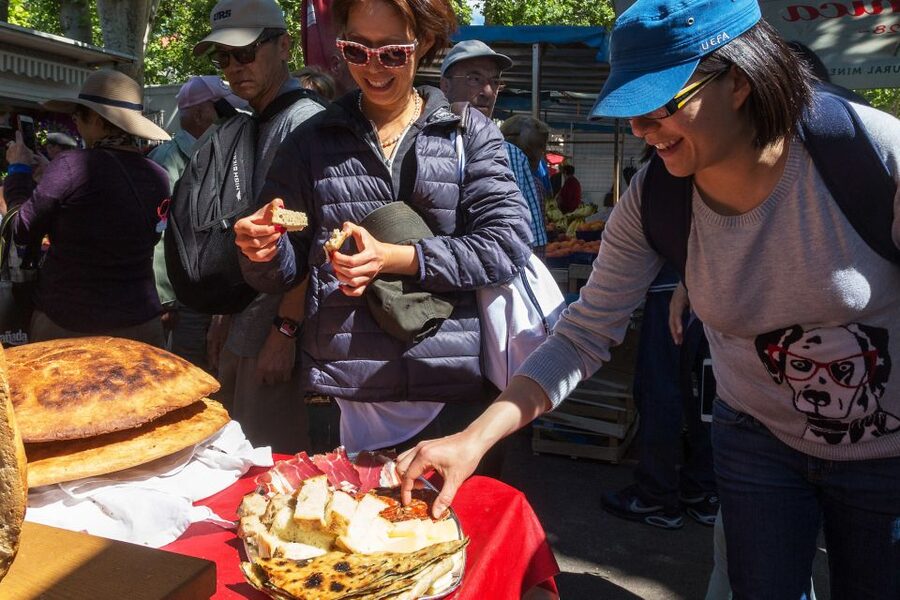
- Green Market first: The morning option includes prosciutto, cheese, peka bread, soparnik pie, grappa, and local produce.
- Palace sights are part of the meal: You visit Peristil, the Golden Gate, and medieval Pjaca while learning how Split grew around the Roman palace.
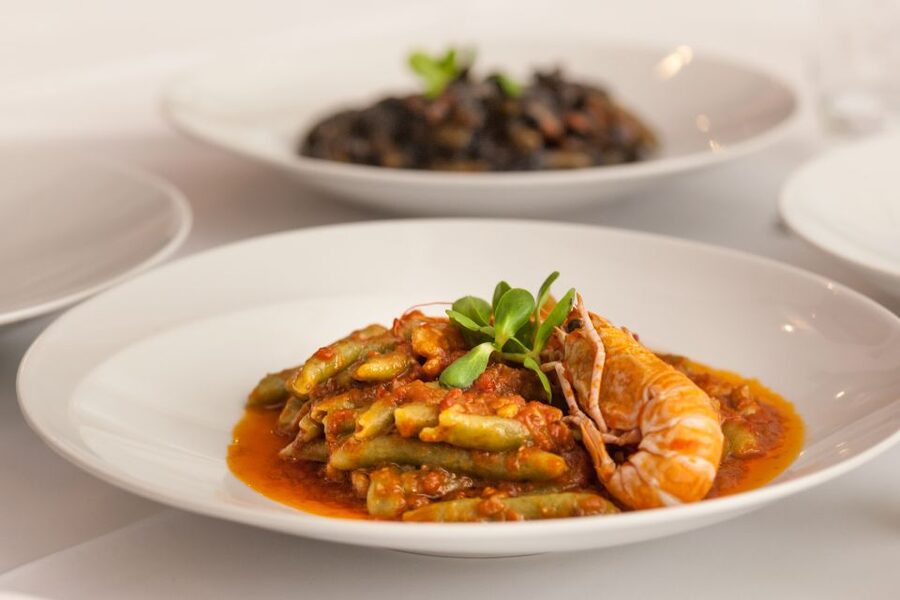
- A full Croatian lunch: Expect seafood, two types of traditional pasta, black risotto, and wine from Brač.
- Guides shape the experience: Hani, Olga, Christina, Vicky, Lucia, and other local guides bring their own stories and food knowledge.
- Afternoon plans differ: The Green Market is closed later in the day, so the afternoon option replaces it with similar tastings in a local tavern.
- Best for curious eaters: Tell the operator about allergies or dietary restrictions before you go.
Why this Split tour works so well
Many city tours make you choose between monuments and meals. This one does not. You walk through central Split, hear about Roman and Venetian chapters, and eat the kinds of food that help explain Dalmatian life.
That pairing matters. Soparnik is more than a pastry sample when you hear about its place in local cooking. Black risotto becomes easier to understand when you taste it with the region’s seafood traditions in mind. A market visit also gives you a look at how local people shop, not just how Split presents itself to sightseers.
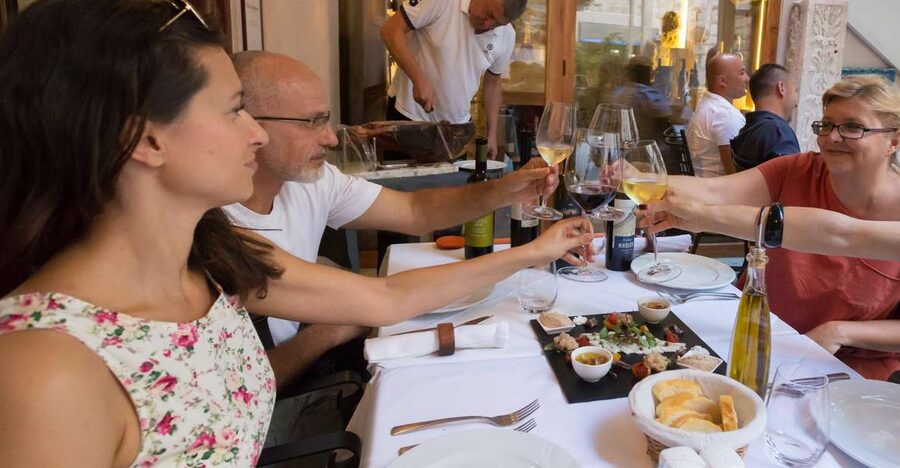
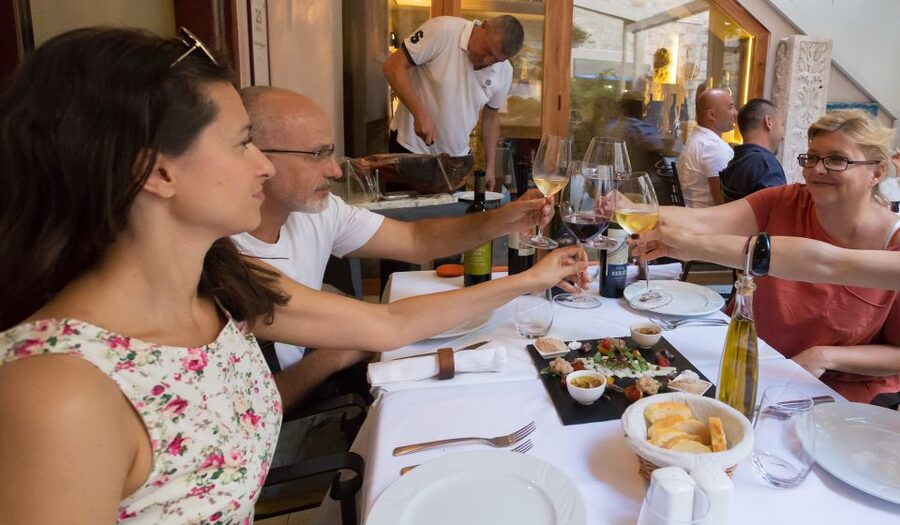
The format is social. You are not simply following a guide from one plaque to the next. You sit down, share dishes, ask questions, and compare flavors with the people in your group. Several guides are praised for keeping everyone involved, including at the table, rather than speaking only to the person nearest them.
The pace is another strength. Three hours is long enough for a proper introduction but short enough to fit around other plans. I would place this tour near the start of your Split stay. You can use the guide’s food advice later, and the palace walk gives you a useful map of the old center.
More History Tours in the world:
- Private Excursion to Floating Market and Ayutthaya World Heritage
★ 5.0 · 515 reviews - Palermo: Walking Tour of Historic Markets and Monuments
★ 4.9 · 478 reviews - Discover Palermo in 3 hours. Art, history, markets and street food
★ 5.0 · 352 reviews
Starting at the Green Market
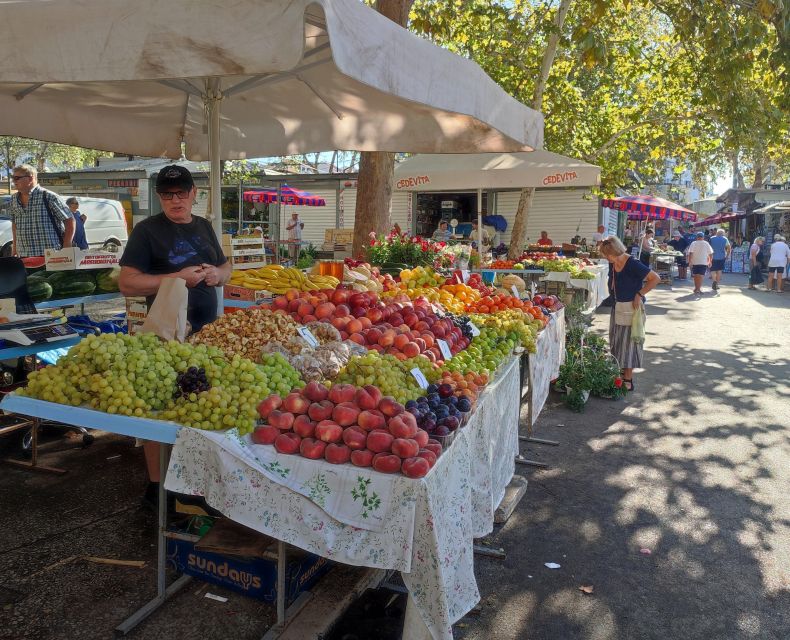
The morning tour begins at the Green Market, with the meeting point listed at Hrvojeva 1 or another point depending on the option booked. Check the exact location on your reservation before setting out.
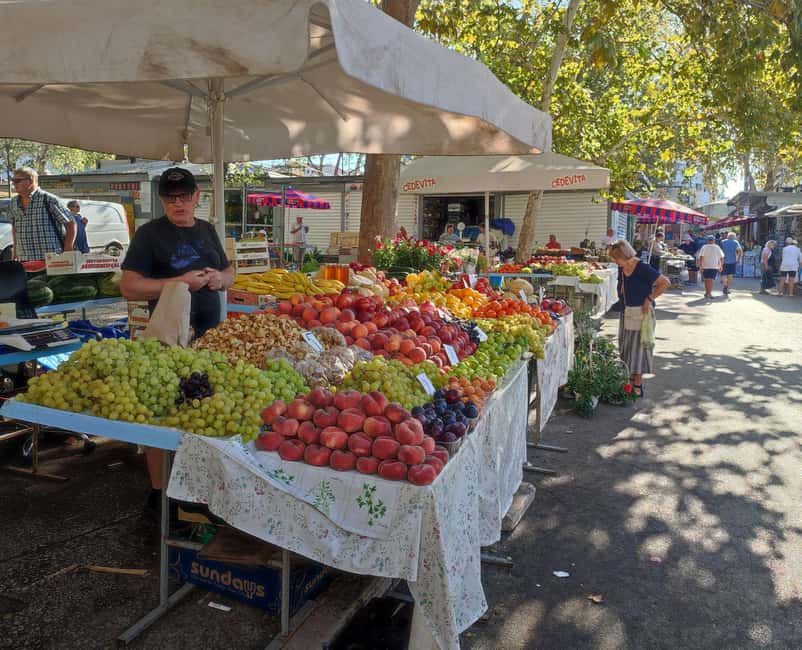
This is the most local-feeling part of the experience. The market gives you a chance to see produce and everyday shopping alongside the tasting. You start with a Mediterranean-style brunch of prosciutto, cheese, peka bread, soparnik pie, and grappa.
The portions are meant to be generous, not symbolic. That is good news if you enjoy food tours that actually feed you, but it also explains the repeated warning to arrive with an appetite. If you eat a large breakfast first, the later seafood and pasta courses may feel like a challenge.
Soparnik deserves special attention. It is a traditional savory pie, and it offers a different experience from the cured meat and cheese on the table. Peka bread adds another local touch. The food is simple, filling, and rooted in home cooking rather than restaurant decoration.
Grappa brings a strong finish to the first tasting. If you do not drink alcohol, you should mention that before booking or at the start. Wine and grappa are built into the experience, and one person specifically found the price less appealing for a partner who did not drink. That does not make the tour a poor choice for non-drinkers, but it is worth considering when judging the $135 cost.
The market is also where your guide can explain local ingredients and customs in a natural setting. Olga, Hani, and other guides are praised for describing how foods are made, what flavors to notice, and how local cooking differs from dishes you might order at home.
Walking through Diocletian’s Palace
After the market, the tour turns to Split’s historic center. The focus is ancient Diocletian’s Palace, the UNESCO-listed core around which much of modern Split developed.
You visit Peristil Square, the Golden Gate, and Pjaca, a medieval Venetian square. These are not distant sights reached by bus. They are woven into the city, with daily life continuing around and within the old structures.
Peristil is the grandest stop on this portion. It gives you a sense of the palace’s Roman planning and ceremonial purpose. The Golden Gate helps you understand how people entered and moved through the complex. Pjaca shifts the story toward the medieval Venetian period, showing that Split was not frozen in Roman times.
This is where the guide makes a big difference. Guides such as Christina, Olga, Hani, and Lucia are praised for explaining how the palace changed over time and how it is used today. The strongest part of the commentary is not simply naming dates. It is showing how the old palace became part of an inhabited city.
You should not expect an exhaustive archaeological tour. The focus is a food-and-history introduction, not a specialist lecture. That balance suits most visitors, especially if you want enough context to make the streets meaningful without spending the whole day on formal history.
Some guides also add personal observations about Split’s culture and daily habits. That local viewpoint is one of the tour’s better features. You are hearing about the city from people connected to it, rather than getting only a polished script.
Lunch in a traditional konoba

The meal continues in a konoba, a tavern-style restaurant associated with traditional local food. Here the tasting becomes a proper lunch.
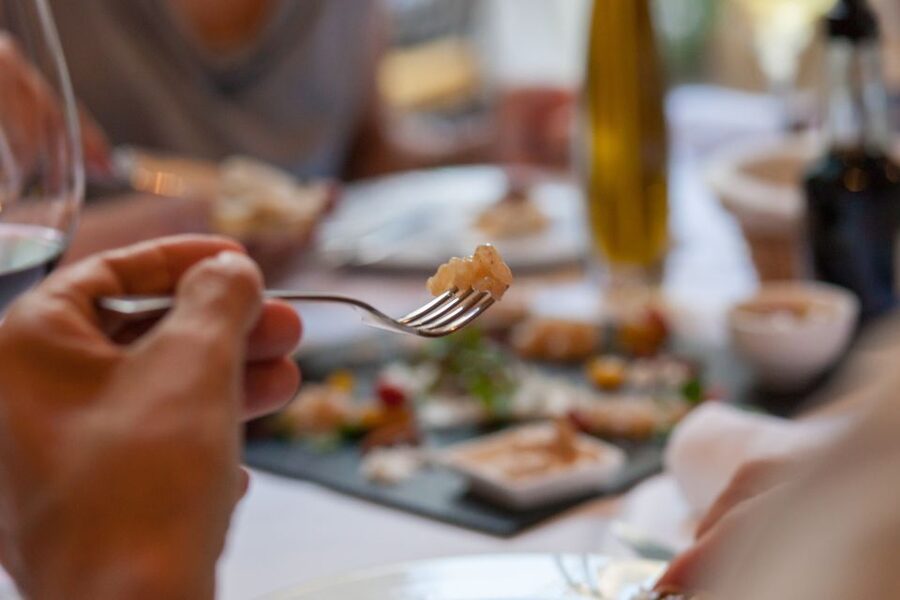
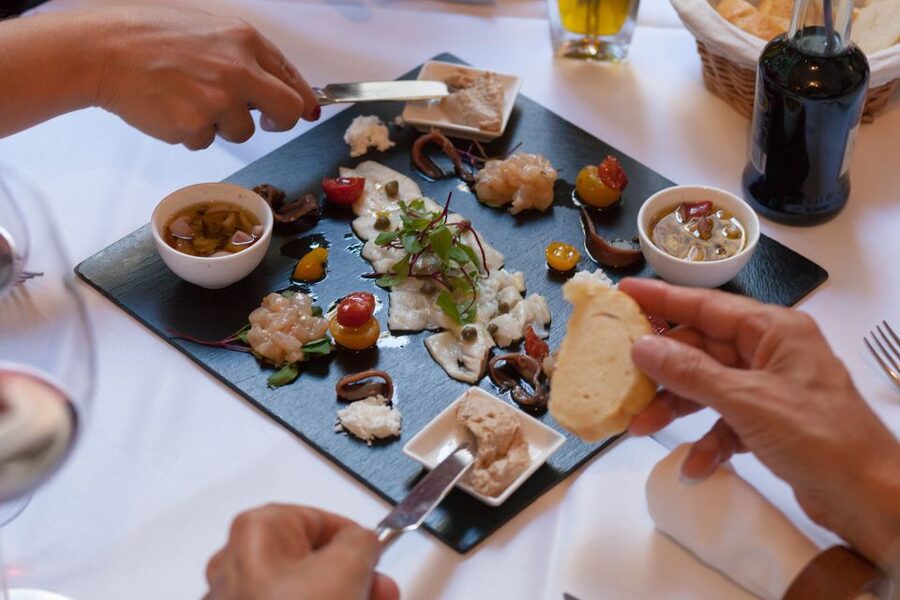
The first course is a seafood starter paired with white wine. Exact dishes can vary, so you should think of this as a local seafood introduction rather than one guaranteed recipe. The setting is intended to feel more like a neighborhood meal than a formal dining room.
Next come two types of traditional pasta and the famous black risotto. The risotto gets its color from cuttlefish ink, and it is one of the dishes many people would not think to order on their own. That is exactly where a food tour earns its place. You can try a regional specialty without committing to a full restaurant order based on guesswork.
Local red wine from Brač is served with the second course. The pairing gives you a useful taste of Dalmatian wine culture, though the tour is not presented as a formal wine class. You get the chance to compare the white and red wines with different foods and hear your guide explain what you are tasting.
The meal is one of the biggest reasons to consider the price. You are not paying only for a walking tour with a few bites. The cost includes all listed food and wine, and the schedule includes enough courses to function as brunch and lunch, followed by dessert.
Still, value depends on your appetite and drinking habits. A person who enjoys seafood, pasta, wine, and large tastings is likely to find the package worthwhile. Someone who eats lightly, avoids alcohol, or prefers choosing individual meals may see it as expensive.
A few more market tours around the world worth a look
- Bangkok: Damnoen Saduak Market and Maeklong Railway Market
★ 4.5 · 26,723 reviews - The Old Siam: Damnoen Saduak and Maeklong Railway Market
★ 4.5 · 10,992 reviews - Dubai: Old Town, Creek, Museums, Souks, & Street Food Tour
★ 4.8 · 10,816 reviews - Bangkok: Train Market & Floating Market with Boat Ride
★ 4.7 · 9,547 reviews
Dessert and the changing seasonal finish
The tour ends with a light dessert. Depending on the season, this may be gelato or a traditional Croatian dessert.
The seasonal choice is a small but useful detail. Gelato is easy to find throughout Split, while a traditional dessert gives you another chance to try something tied to the region. If you have a preference, ask your guide what is available that day.
One useful tip comes from a guest who strongly preferred the traditional cake to gelato. The choice may depend on the group, so speak up if you want to try the local dessert. You may not get another chance during the tour.
By this point, you will probably be full. The final sweet course is not the main reason to book, but it gives the meal a pleasant ending and keeps the three-hour route from feeling like a rush between savory stops.
The guides make the difference
The provider uses several English-speaking local guides, so the personality of your tour can vary. Names praised for warmth, food knowledge, and historical insight include Hani, Olga, Christina, Vicky, Lucia, Lucy, Ana, Maria, Ella, Darko, Doris, and Kristina.
Hani is especially praised for combining humor with food and cultural insight. Olga is often noted for explaining both Split’s history and the details of the food. Christina is described as energetic and attentive, while Vicky is praised for her understanding of food, wine, and local traditions.
The important point is not to expect one fixed presenter. It is to expect a local guide who leads the walk and the meal, answers questions, and adjusts the conversation to the group. One guide made specific adjustments for dietary restrictions, but you should still provide those details in advance rather than rely on a last-minute solution.
Some guides lean more toward history, while others spend more time on food preparation and local customs. That variety can be a benefit. If you want a strong history component, mention it at the start. If cuisine matters most, ask questions about the dishes as they arrive.
Morning or afternoon?
Choose the morning option if the Green Market is important to you. The market does not operate in the afternoon, so the later tour replaces that stop with similar food tastings in a local tavern.
The morning route has a natural rhythm: market brunch, palace walk, savory meal, and dessert. It is also a good way to begin a day of sightseeing because the food and palace route orient you to central Split.
The afternoon option may suit your schedule better, especially if you arrive late or prefer a later meal. Just understand that it will not include the market itself. If seeing local produce and market life is one of your main reasons for booking, choose the morning departure.
The tour ends back at the meeting point. There is no hotel pickup or drop-off, so plan to reach the starting location on your own.
Price, planning, and practical value
At $135 per person, this is a premium half-day food experience. The fee includes the guide, all food, and wine, which makes it easier to compare with separate restaurant meals and a paid walking tour.
I would not call it a bargain for every visitor. It becomes better value if you want a full meal, several tastings, local wine, and historical explanation in one booking. It also removes the guesswork of selecting unfamiliar dishes in a tourist-heavy center.
Reserve with your food needs in mind. The operator asks you to provide allergies and dietary restrictions. The tour is offered in English, and cancellation is allowed up to 24 hours ahead for a full refund. You can also reserve and pay later, which helps if your Split schedule is still moving around.
The tour is best for adults and older children who enjoy trying unfamiliar food, walking through the old center, and sitting down for a social meal. It is less suited to anyone looking for a quick snack tour, a strictly historical walk, or a quiet private dining experience.
Who should book this Split food tour?

I would book it early in a Split visit if you want a practical introduction to the city. You will learn the layout of the old center, sample dishes you might otherwise miss, and get food suggestions from someone who lives in the area.
Book it if you enjoy generous portions and are open to seafood, cuttlefish risotto, cured meats, local cheeses, pasta, wine, and grappa. Tell the operator about restrictions before you go, and do not eat a heavy breakfast.
Skip it if you do not drink and care little about food, since the wine and tasting menu make up a large part of the experience. You may also prefer a standard palace tour if Roman architecture is your only priority.
For most curious eaters, this is a strong first-day choice. It gives you a meal, a map, local context, and a few new dishes to seek out later. Just choose the morning option if the Green Market is the part you most want to see.
FAQ
How long does the tour last?
The tour lasts three hours.
Where does the tour start?
The starting point is at Hrvojeva 1 street, though the exact meeting point may vary depending on the option you book.
Where does the tour end?
The activity ends back at the meeting point.
Is the Green Market included in every departure?
No. The afternoon option does not include the Green Market because it is closed later in the day. Similar foods are tasted at a local tavern instead.
What food is included?
The morning tasting includes prosciutto, cheese, peka bread, soparnik pie, and grappa. The later meal includes a seafood starter, two types of traditional pasta, black risotto, wine, and a seasonal dessert or gelato.
Are food and wine included in the price?
Yes. The cost of all listed food and wine is included.
Is hotel pickup available?
No. Hotel pickup and drop-off are not included.
Can I report allergies or dietary restrictions?
Yes. You should indicate any allergies or dietary restrictions when booking.
What language is the tour offered in?
The tour is offered in English.
Just added around the world
- 3-Hour Herbal Wholesale TCM Market and a Local Wet Market Tour★ 5.0 · 4 reviews
- Half-day Dandan Noodles Cooking Class with a Local Market Visit★ 5.0 · 8 reviews
- Chania Old Town, Public Market and Chrisopigi Monastery Tour★ 4.5 · 6 reviews
- Charleston International Sweet Treats & Historic City Market Tour★ 5.0 · 22 reviews
- Chania: Old Town, Public Market, Hill of Prophet Elias, Agia Triada★ 5.0 · 35 reviews
- Food Tasting & Market Shopping: Private Guided Tour in PORT LOUIS★ 4.5 · 9 reviews
- Moroccan Cooking Class with a Local Family & Market Visit★ 5.0 · 16 reviews
- Private Market Tour & Cooking Class in Casablanca with Transfers★ 5.0 · 20 reviews
Historical Tours, compared.

Private Excursion to Floating Market and Ayutthaya World Heritage
Read our review →
Discover Palermo in 3 hours. Art, history, markets and street food
Read our review →
Private Heritage Walking Tour in Jaisalmer Fort and Old Bazaar
Read our review →
2 Hour Historic Market Food Tour and Hands-On Biscuit Class
Read our review →
Abu Dhabi Sightseeing Tour: Sheikh Zayed Mosque, Heritage Village & Dates Market
Read our review →
Historic Center Street Food, Market, and Eateries Tour
Read our review →
Old Delhi: Spices, Heritage and Bazaars Walking Tour
Read our review →Browse the lists this tour appears in