
Review · LOCAL & FARMERS MARKET TOURS
Oldest Local Market Walking Tour With Living Goddess Kumari
Seeing Kathmandu’s Living Goddess Kumari is the unusual heart of this two-hour walk. You visit Ason, the city’s oldest local market, then continue to Kathmandu Durbar Square, where palaces, temples, and courtyards make the valley’s past feel close at hand.
I like the simple route and the cultural range. You get market life, royal architecture, Hindu beliefs, and Buddhist traditions in one compact outing. I also like that an English-speaking guide can explain what you are seeing instead of leaving you to guess. The main consideration is cost at $39, plus the NPR 1,000 Kathmandu Durbar Square entry fee, meals, and drinks.
Key points
- Ason market: Walk through Kathmandu’s oldest market area, with shops and stalls selling spices, textiles, souvenirs, and daily goods.
- Kumari Ghar: Visit the home of the Kumari, a prepubescent girl regarded as the living form of the goddess Taleju.
- Kathmandu Durbar Square: Explore a central historic square filled with temples, palaces, and courtyards.
- Two-hour format: The short length suits a first day in Kathmandu or a morning between larger plans.
- English-speaking guide: Guides explain Hindu and Buddhist customs, with Santos named among the guides connected to the experience.
- Straightforward meeting point: Begin and end at the main gate side of Chhaya Devi Complex in Thamel.
Why the Kumari makes this walk different
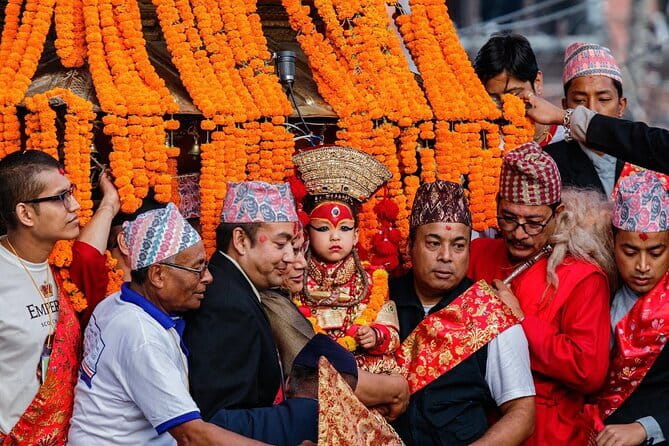
Many Kathmandu walks focus on buildings. This one adds a living religious tradition that you cannot understand from architecture alone. The Kumari is a young girl chosen according to traditional beliefs and regarded as the living embodiment of Taleju, a goddess with an important place in Nepalese culture.
She resides in the Kumari Ghar, a traditional residence connected with Kathmandu Durbar Square. The visit is not a performance arranged for tourists. It is tied to religious practice, so your guide’s explanation matters. You need context to understand why the Kumari is present, why the visit is brief, and why respectful behavior is essential.
You may see the Kumari at a window or in another designated setting, but the exact moment and form of the appearance can vary. The supplied details promise an opportunity to witness her, not a guaranteed private audience or photo session. Keep that distinction in mind when you book.
The experience has a quiet sense of ceremony. Kristine from the United States described the Kumari’s gaze as impressive and felt honored by the visit. That reaction gives you a useful clue: this is less about checking off a famous sight and more about seeing a living part of Nepalese belief.
More Farmers Market Tours in the world:
- Hanoi Cooking Class: Culture, Local Market & Meaning CSR Impact
★ 5.0 · 5,147 reviews - Cooking Class and Lunch at a Tuscan Farmhouse with Local Market Tour from Florence
★ 5.0 · 4,831 reviews - Chef Guided Food Tour of Pike Place Market
★ 5.0 · 3,733 reviews
Starting in Thamel and reaching Ason
You meet at the main gate side of Chhaya Devi Complex in Thamel, Kathmandu. This is a practical base because Thamel is a familiar part of the city for many visitors, and the tour returns to the same place after the walk.
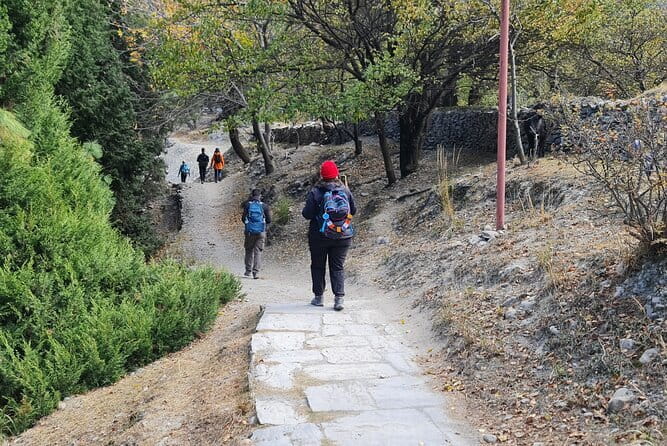
From there, the route leads toward Ason. The experience does not include a private vehicle, and the supplied information presents it as a walking tour. Wear comfortable shoes and expect city streets rather than a quiet museum path.
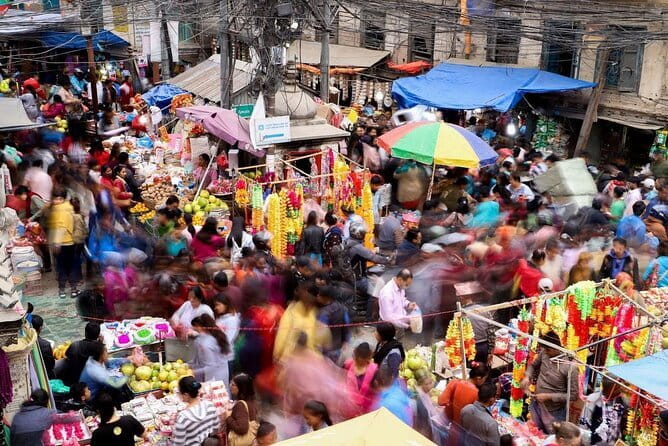
Ason is known as Kathmandu’s oldest local market area. Its appeal is ordinary city life: shops, stalls, traditional buildings, spices, textiles, souvenirs, and the constant business of buying and selling. You are not simply looking at a preserved monument. You are seeing a market that remains part of the city’s daily rhythm.
That makes Ason a good opening stop. The market gives you a practical view of Kathmandu before the tour turns toward royal and religious landmarks. Look at the goods as well as the buildings. Spices tell you something about cooking and trade. Textiles point toward local craft and clothing. Souvenirs show how the market also serves people passing through.
The market may feel crowded and energetic, though the supplied details do not promise a particular shopping stop or a chance to bargain. Treat shopping as optional. The main value is the guide’s explanation and the chance to see this long-standing trading area on foot.
Reading Ason beyond the shopping stalls
Ason can be easy to rush through. You see a spice shop, a fabric stall, and a lane full of people, then move on. A guide helps turn those quick impressions into a clearer picture of how the market fits into Kathmandu.
The guide can point out what is traditional, what is practical, and what is aimed at visitors. The experience description specifically highlights Hinduism and Buddhism, so expect the cultural explanation to go beyond prices and products.
This is one place where the tour’s short length works in its favor. You get an introduction rather than an exhausting market study. In two hours, you can take in the setting without giving up an entire day to city walking.
The tradeoff is depth. A two-hour outing cannot cover every lane, stall, temple, and courtyard in central Kathmandu. If you want a long food tour or serious shopping time, this is not designed for that. If you want a focused first look with religious context, the pace should suit you.
Entering Kathmandu Durbar Square

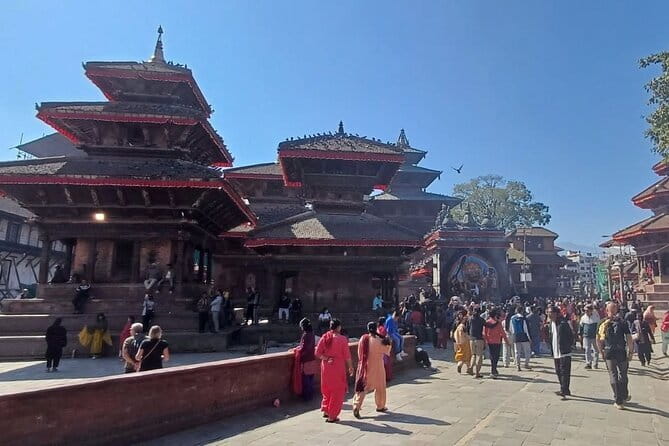
The walk continues to Kathmandu Durbar Square, one of Kathmandu’s central historic sites. The square is known for palaces, temples, and courtyards that reflect the history of the Kathmandu Valley.
This is the architectural center of the experience. Ason shows you the city as a working market. Durbar Square shows you the city as a royal and religious center. The contrast gives the tour its shape.
You can expect a guided visit lasting about two hours according to the supplied schedule, although the overall activity is also described as a two-hour experience. Because the timing information is presented this way, check the available starting time when booking and allow some flexibility around the stated duration.
The square is not included in the price. You pay a separate entry fee of NPR 1,000. That is an important part of the budget, especially because the advertised price of $39 may look like the full cost at first glance.
Still, the fee can offer fair value if you want a guide to explain what you are seeing. A self-guided visit costs less apart from entry, but you would need to supply your own background on the palaces, temples, courtyards, Hindu practices, and Buddhist connections. Here, the guide is the main reason to consider paying for the experience.
More Market Market Walking Tours in the world:
- Bangkok: City Highlights Temple and Market Walking Tour
★ 4.5 · 3,990 reviews - Tokyo Tsukiji Fish Market Food and Culture Walking Tour
★ 5.0 · 3,184 reviews - Marrakech: Ben Youssef, Secret Garden, & Souks Walking Tour
★ 4.6 · 2,802 reviews - Marrakech: Colorful Medina Souks Guided Walking Tour
★ 4.7 · 2,470 reviews
Hindu and Buddhist traditions in one short walk
Kathmandu is a place where religious practices and historic buildings often sit close together. The tour specifically connects Hinduism and Buddhism, which is useful because a first visit can leave you unsure which traditions belong to which site.
Do not expect a classroom lecture. The value is in receiving explanations at the places where the traditions are visible. A good guide can help you understand why a courtyard matters, how a temple fits into local life, and why the Kumari tradition belongs in the same cultural setting as the square and market.
Erin from the United States described the tour as very informative. Alison from Australia singled out Santos as an excellent communicator who explained the setting in detail. Those are useful qualities for this particular walk. The sights are close together, but their meaning is not always obvious.
The experience is conducted in English. If you want a guide who can answer questions as you go, this is a better choice than walking through the area with only a map. If you already have a strong background in Nepalese religion and architecture, the tour may feel introductory rather than advanced.
Meeting the Kumari at Kumari Ghar
The Kumari Ghar is the emotional center of the walk. This traditional residence is associated with the Kumari, the young girl regarded as the living form of Taleju.
The word goddess can make this sound like a theatrical attraction. It is better to approach the visit as a religious encounter shaped by tradition. The Kumari’s role is rooted in Nepalese beliefs, and the guide can help you understand that the person you see is part of a cultural and spiritual system, not simply a landmark.
Keep your expectations respectful and flexible. The supplied information does not specify how long you will remain at the building, whether the Kumari will appear at a particular window, or whether photography is permitted. Follow the guide’s instructions and any rules at the site.
This is also the moment when a short tour can feel substantial. Ason gives you the city’s daily trade. Durbar Square gives you historic architecture. The Kumari adds a living religious tradition that is still present in the city today.
What the $39 price really covers
The advertised price is $39 per person. It includes an English-speaking guide, government taxes and VAT, and a bottle of mineral water.
You pay extra for Kathmandu Durbar Square entry, listed as NPR 1,000. Meals, beverages, and personal expenses are also outside the price. Since the tour lasts only two hours, you are paying mainly for the guide and the focused route, not for a full-day excursion or transport package.
I see the value most clearly for first-time visitors who want orientation. You get three strong subjects in one outing: the market, the square, and the Kumari. The price is less compelling if you only want to stroll through Ason or take photographs of the buildings without explanation.
There is no meal included, so plan food separately. The mineral water is a small but useful inclusion, especially during a city walk. The activity begins and ends at Chhaya Devi Complex, so you do not have to arrange a separate meeting and drop-off point.
Who will enjoy this two-hour experience
This walk is a good match for you if:
- You are visiting Kathmandu for the first time.
- You want cultural background, not only photographs.
- You are curious about the Kumari tradition.
- You prefer a short activity that fits around other plans.
- You want to compare everyday market life with royal architecture.
- You are comfortable walking through city streets and paying the separate site fee.
It also suits visitors with a limited schedule. The start and finish are both at Chhaya Devi Complex, and the activity does not require a full day away from Kathmandu.
It may not suit you if you want an unhurried market visit, a food-focused tour, or detailed architectural study. The route covers important subjects, but two hours imposes a firm limit. The price also requires a little budget planning because the square ticket and refreshments are extra.
Practical details before you go
The tour is conducted in English with a live guide. Santos is one guide associated with the experience, and his clear communication and detailed explanations have been singled out as strengths.
Meet at the main gate side of Chhaya Devi Complex in Thamel. Confirm the starting time when you reserve because availability can vary.
The tour includes a bottle of mineral water, but no food or other drinks. Wear shoes suitable for walking and carry some money for the NPR 1,000 entry fee and personal purchases in Ason.
You can cancel up to 24 hours before the activity for a full refund. You can also reserve now and pay later, which helps if your Kathmandu schedule is still changing.
The experience has received eight published ratings, all at five out of five. The strongest praise centers on clear explanations, friendly guiding, and the Kumari visit. That is encouraging, though the sample is small, so I would still choose it for the route and subject matter rather than rely on the score alone.
Should you book this Kathmandu walk?
Book it if you want a compact introduction to Kathmandu that combines ordinary market life with major religious and historic sights. The Kumari visit gives the walk a purpose beyond sightseeing, while Ason keeps the experience connected to everyday city life.
I would especially recommend it for first-time visitors, short-stay visitors, and anyone who wants a guide to explain Hindu and Buddhist traditions in plain English. Add the NPR 1,000 entry fee to your budget, and remember that food and drinks are not included.
Skip it if your priority is extensive shopping, a long food experience, or a quiet architectural study. For everyone else, $39 is a reasonable price for a focused two-hour introduction, provided you value interpretation as much as the sights themselves.
FAQ
How much does the Oldest Local Market Walking Tour cost?
The tour costs $39 per person. Kathmandu Durbar Square entry is not included and costs NPR 1,000.
How long does the experience last?
The activity is listed as lasting two hours. Check the available starting times when booking.
Where does the tour start?
Meet at the main gate side of Chhaya Devi Complex in Thamel, Kathmandu.
Where does the tour finish?
The experience returns to Chhaya Devi Complex in Thamel.
Is the tour conducted in English?
Yes. The activity includes a live English-speaking guide.
Is Kathmandu Durbar Square entry included?
No. The Kathmandu Durbar Square entry fee is separate and listed as NPR 1,000.
Is food included?
No. Meals and beverages are not included. A bottle of mineral water is included.
Can I cancel for a full refund?
Yes. You can cancel up to 24 hours in advance for a full refund.
Can I reserve now and pay later?
Yes. The activity allows you to reserve your place and pay later.
Just added around the world
- 3-Hour Herbal Wholesale TCM Market and a Local Wet Market Tour★ 5.0 · 4 reviews
- Half-day Dandan Noodles Cooking Class with a Local Market Visit★ 5.0 · 8 reviews
- Chania Old Town, Public Market and Chrisopigi Monastery Tour★ 4.5 · 6 reviews
- Charleston International Sweet Treats & Historic City Market Tour★ 5.0 · 22 reviews
- Chania: Old Town, Public Market, Hill of Prophet Elias, Agia Triada★ 5.0 · 35 reviews
- Food Tasting & Market Shopping: Private Guided Tour in PORT LOUIS★ 4.5 · 9 reviews
- Moroccan Cooking Class with a Local Family & Market Visit★ 5.0 · 16 reviews
- Private Market Tour & Cooking Class in Casablanca with Transfers★ 5.0 · 20 reviews
Local & Farmers Market Tours, compared.
Hanoi Cooking Class: Culture, Local Market & Meaning CSR Impact
Read our review →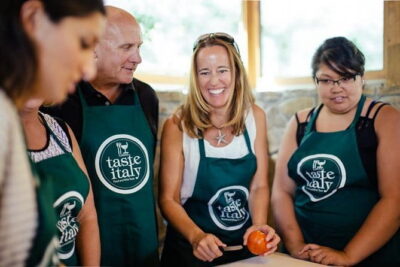
Cooking Class and Lunch at a Tuscan Farmhouse with Local Market Tour from Florence
Read our review →

Cooking Class Hoi An:Local Market, Basket Boat, Fishing & Cooking
Read our review →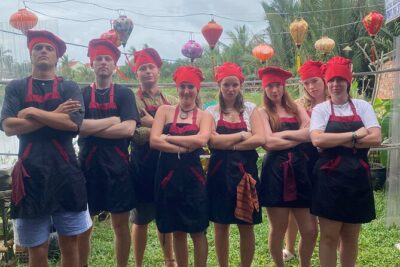
Hoi An Cooking Class(Local market,Basket Boat,Fishing & Cooking)
Read our review →

Paella Cooking Class, Wine Tasting & Central Market in Valencia
Read our review →
Seattle: Pike Place Market Chef-Guided Food Tour
Read our review →Browse the lists this tour appears in