
Review · MARKET AND COOKING CLASS TOURS
Marrakech: Moroccan Cooking Class with Market Visit and Meal
Marrakech cooking classes are often less about following a recipe and more about learning how a meal comes together. Here, the morning market visit gives you a hand in choosing ingredients before you return to prepare tagines, salads, and dessert with local cooks such as Kaoutar, also called Kooky or Cookie, Leyla, Fatiha, Fatima, and Bouchra.
I like the small groups, capped at 10, because you can ask questions and get your hands on the food instead of watching from the back. I also like the full market-to-table flow, from selecting produce and herbs to sitting down with the finished meal. The main consideration is that only the morning session includes the market visit, so the 4:30 pm class is cooking-only.
Key points at a glance
- Morning market shopping: Walk to a local market and help select vegetables, herbs, chicken, and other ingredients.
- A full Moroccan menu: Prepare dishes that can include lemon-chicken and vegetable tagines, Moroccan salad, zaalouk, taktouka, dessert, tea, and coffee.
- Small-group instruction: The class is limited to 10 people, with English and Arabic guidance.
- Local cooking team: Kaoutar, Leyla, Fatiha, Fatima, Bouchra, and other team members may lead or assist the session.
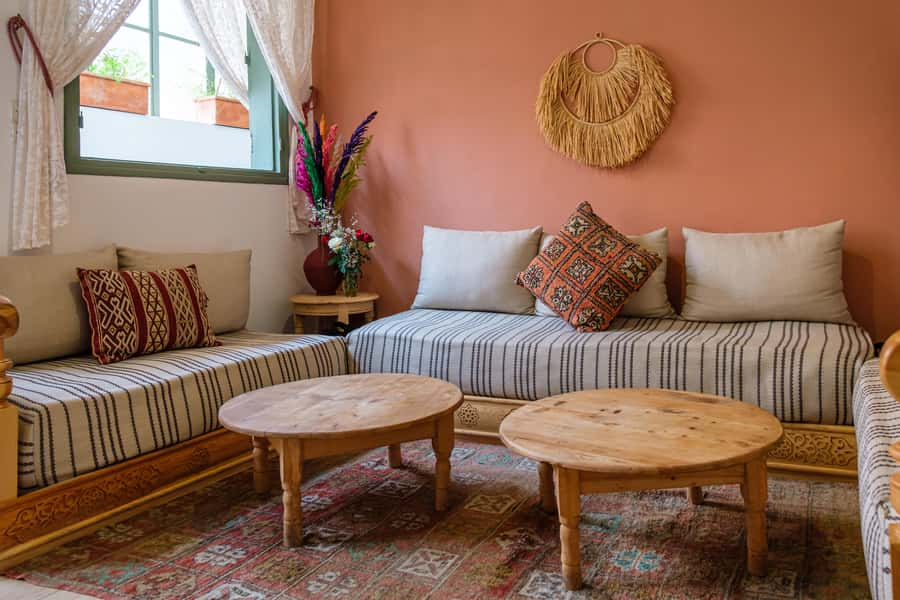
- A meal you make yourself: Sit down in the salon and eat the food prepared during class.
- Recipes for home: A PDF of the recipes is sent by email after the class.
This four-hour experience takes place at Flavors of Marrakech in the Medina, next to the BIM store. It is priced at $57 per person, which is not the cheapest cooking class in Marrakech, but the cost covers instruction, ingredients, cooking tools, the meal, tea and coffee, bottled water, Wi-Fi, and the recipe PDF.
The extra value is the structure. You are not simply shown how to make a tagine in a demonstration kitchen. In the morning, you help buy the ingredients, prepare them, cook them, and eat the result. That gives you a better sense of how Moroccan food works in daily life.
The class is also a good choice if you are traveling with mixed cooking abilities. You do not need to be an experienced cook. The team guides you through chopping, seasoning, and timing, and the atmosphere is designed to be social rather than formal.
Starting with tea and a walk through the souk
The morning class begins at 10:30 am and includes a short walk to a local market. This is one of the most useful parts of the experience because it puts names and faces to ingredients you may have already seen on restaurant menus.
You may help choose vegetables, herbs, chicken, and other items for the meal. One practical feature is that participants can be given baskets and assigned produce to collect. That turns shopping into a shared task rather than a quick stop while someone else does all the buying.
The market visit also offers cultural context. Guides have explained food traditions, spice use, the preparation of filo pastry, and halal butchering. If you are interested, you may be offered the chance to observe the chicken being prepared according to religious rules. This is optional, and it may not suit everyone, so ask your guide what to expect before joining that part.
The market can be busy and sensory, with narrow passages and plenty to look at. Wear comfortable clothes and shoes that work for walking. Bring a camera if you want photographs, but stay attentive to the group and to the market’s normal rhythm.
The afternoon class begins at 4:30 pm and does not include the shopping trip. That is worth keeping in mind when comparing times. The later option still includes the hands-on cooking and shared meal, but you will miss the ingredient-buying portion.
More Market and Cooking Class Tours in Marrakech
- Marrakech: Traditional Moroccan Cooking Class & Market Visit
★ 4.8 · 1,861 reviews - Edgy 8 Dish Private, Fusion Cooking Class, Menu Plan, Market
★ 4.9 · 31 reviews - Marrakesh: Private Cooking Class & Local Market Shopping
★ 4.7 · 15 reviews
Meeting local cooks at Flavors of Marrakech
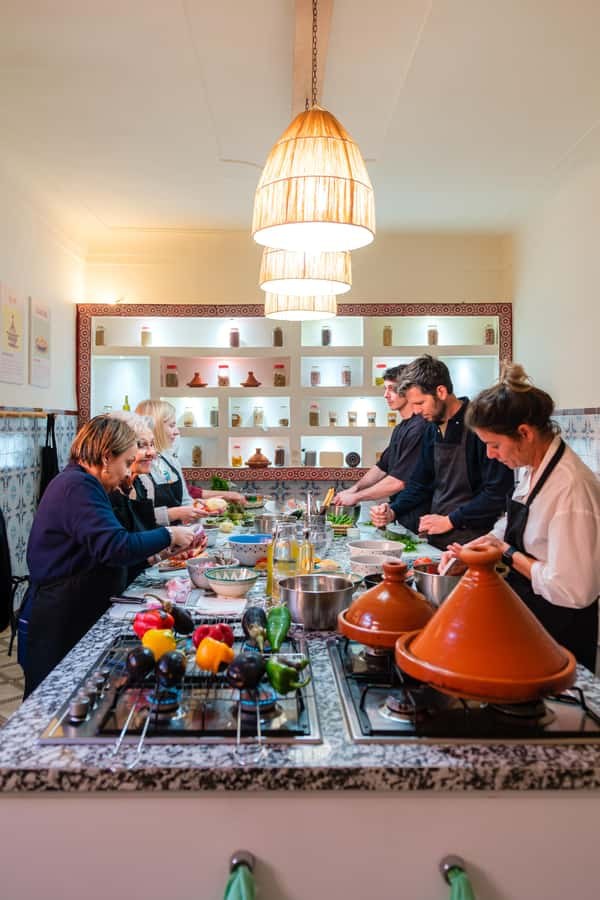
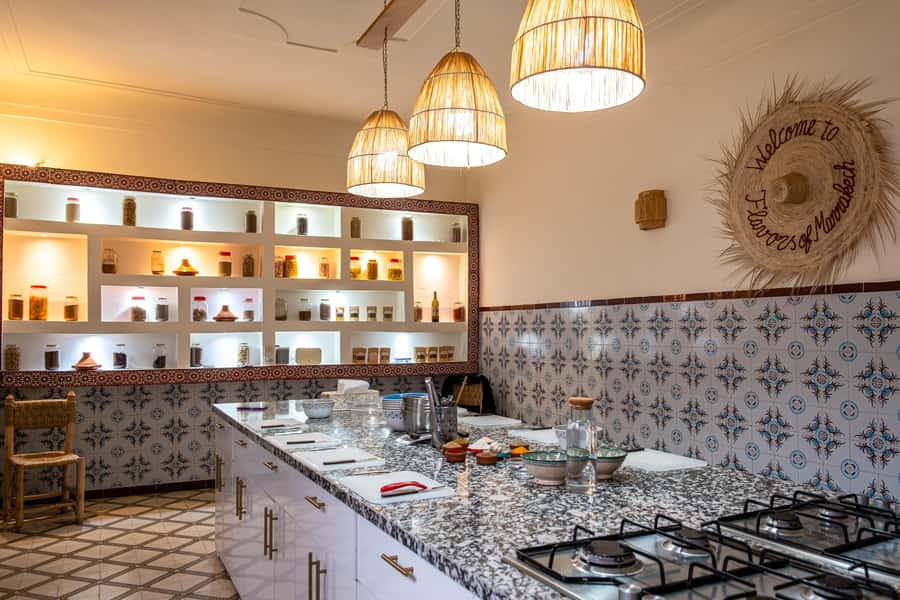
After the market, you return to the cooking school and usually have tea before starting the preparation. The kitchen is described as spacious, bright, clean, and well equipped, with a Moroccan-style salon for eating afterward.
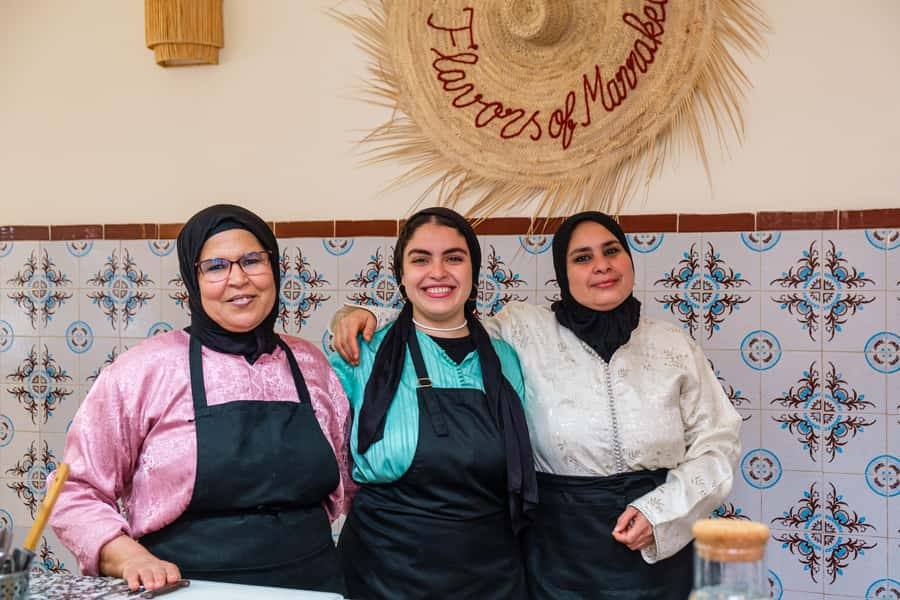
The cooking team varies by session. You may meet Kaoutar, known by the nickname Kooky or Cookie, Leyla, Fatiha, Fatima, Bouchra, or other members of the team. Their roles can include guiding the market visit, explaining techniques, helping with preparation, and keeping the cooking organized.
The tone is friendly and informal. Music, conversation, and even a little dancing may be part of the atmosphere, depending on the instructor. That makes the class feel more like a shared household meal than a professional kitchen exam.
English and Arabic are listed as the available languages. English-speaking participants have found it easy to follow explanations, and the small group allows time for questions. With a maximum of 10 people, you should have a reasonable chance to chop, mix, season, and handle ingredients yourself.
Preparing tagine, salads, and dessert
The exact menu can vary, but the class has included two tagines: lemon chicken and a vegetable version. You may also prepare Moroccan salad, zaalouk, and taktouka, along with an almond and filo pastry dessert.
Zaalouk is a cooked salad usually based on eggplant, while taktouka commonly uses peppers and tomatoes. These dishes show why Moroccan meals are not just about the main tagine. Several smaller plates, contrasting textures, herbs, and spices build the meal.
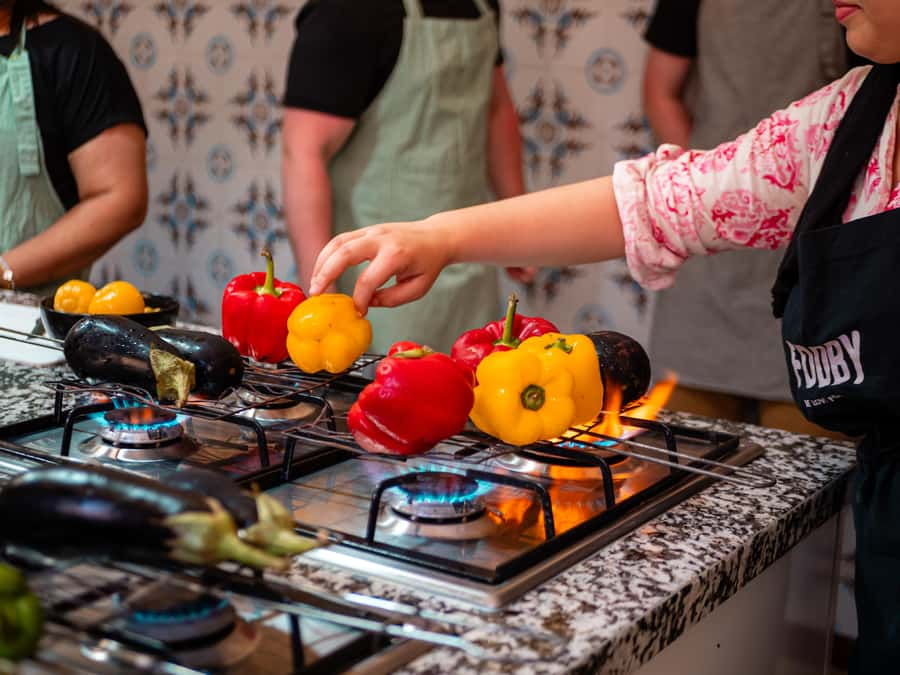
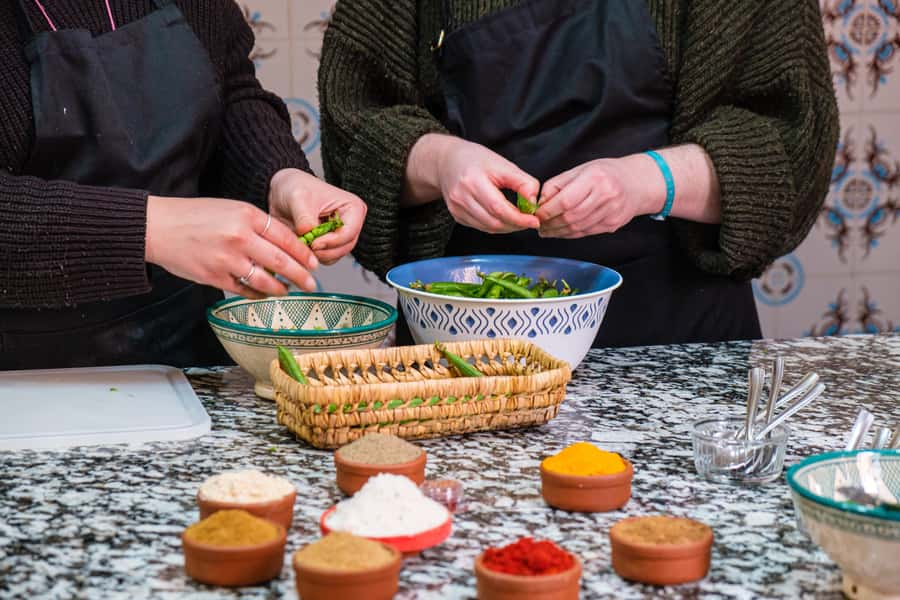
The tagines are prepared with guidance on chopping and seasoning before they cook slowly. You learn how spices are used rather than simply receiving a finished dish. Commonly featured spices include ras el hanout, saffron, paprika, and cumin.
The class is arranged so that different dishes can be prepared while other items cook. This keeps the four hours moving, though it also means you may spend time waiting for a tagine or dessert to finish. That pause is part of the process, and it gives you time for tea, conversation, and questions.
One useful detail concerns dietary needs. A participant with a nut allergy reported receiving a nut-free dessert and being able to avoid handling nuts. The available information does not promise a specific accommodation for every allergy, so contact the provider before booking and explain your needs clearly.
What the cooking instruction is really like
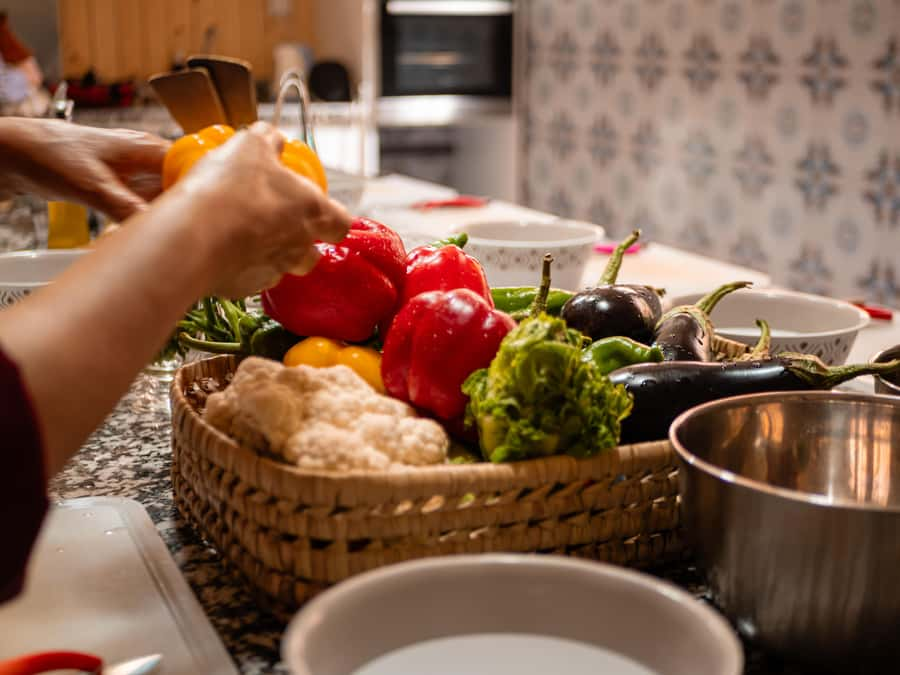
This is a practical class, but it is not presented as formal culinary training. You will learn by preparing food alongside the cooks, with instruction on basic techniques, spices, and timing.
The value comes from the small details. You may learn why a particular spice is added at one point rather than another, how vegetables are prepared for a tagine, or how filo pastry is handled for dessert. The instructors also connect the food with Moroccan customs and daily life.
If you cook often, you may find parts of the class familiar. The reward is not technical difficulty. It is seeing how local cooks balance simple ingredients, strong seasoning, and slow cooking.
If you rarely cook, the format should feel manageable. The team leads you through each stage, and participants work together rather than being left alone with a complicated recipe. The social side also helps. A group of strangers can quickly become a team when everyone is chopping vegetables and waiting for the same tagine.
More Market and Cooking Class Tours in Morocco
- Marrakech: Cooking Class and Market Visit
★ 4.4 · 5 reviews - Moroccan Cooking Class & Marrakech Market Visit with Chef Khmisa
★ 5.0 · 1,504 reviews - Moroccan Cooking Class with Market Visit and Meal
★ 5.0 · 196 reviews - Fez: Souk Tour and Traditional Home Cooking Class
★ 4.9 · 186 reviews
Sitting down to eat what you prepared
The meal is served in a comfortable, beautifully set salon after the cooking is finished. This final stage matters. You are not rushed out after the lesson, and the meal gives you a chance to taste the result while the techniques are still fresh in your mind.
The menu can be generous. A typical session may include several starters, two tagines, dessert, and tea. Some groups have described preparing enough food for a substantial shared feast.
The food is the strongest reason to choose this experience, but the setting adds something too. You are eating together at a large table, with the instructors nearby and the cooking process still fresh in everyone’s mind. It feels personal without requiring a private booking.
Coffee, tea, and bottled mineral water are included. Tea is part of the rhythm of the session, appearing around the market visit or during breaks. The meal is included in the $57 price, so you do not need to budget separately for lunch or dinner.
The recipe PDF is useful after your trip
A recipe PDF is sent by email after the class. That is a practical benefit, since remembering the ingredients is easy and remembering the proportions is not.
You can use the recipes to recreate the meal at home, though results will vary depending on the ingredients available where you live. The class gives you more than a list of steps because you also see how the cooks handle the ingredients and adjust the preparation.
Check your email after the class, and contact the provider if it does not arrive. One participant had trouble receiving the recipe because of temporary internet problems, so it is sensible to keep a note of the dishes prepared during your session.
Is $57 a fair price?
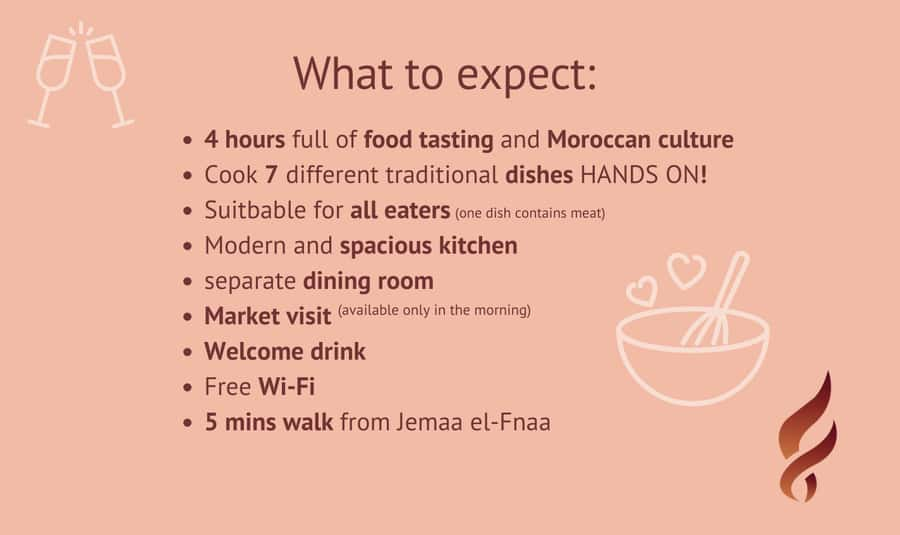
At $57, this experience sits above a basic cooking demonstration, but it includes considerably more than a lesson. You receive a four-hour activity, a guide, market shopping in the morning, all ingredients and equipment, a full meal, drinks, and recipes to take home.
The morning class offers the strongest value because it includes the souk visit. You are paying for a connected experience rather than separate activities: food shopping, cultural explanation, hands-on preparation, and lunch.
The afternoon session may suit you better if you want to avoid a morning start or have already spent time in Marrakech markets. It costs the same but leaves out the market visit, so choose it for the cooking and meal rather than the complete market-to-table sequence.
Transport is not included. You need to make your own way to Flavors of Marrakech, next to the BIM store. The central Medina location can be convenient if you are already near the main square, but allow time to find the meeting point. Look for the Flavors of Marrakech sign and go inside to meet the staff.
Who will enjoy this class most?
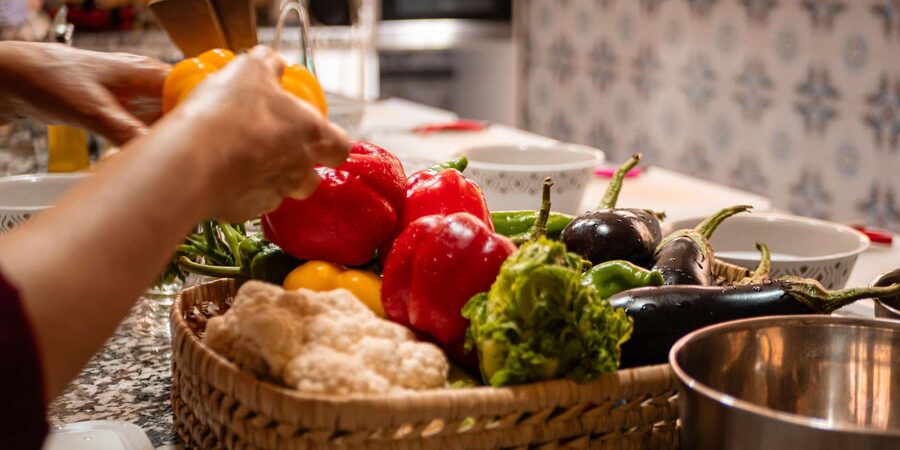
I would recommend it to you if food is one of the main reasons you are visiting Morocco. It gives you a better understanding of the spices, side dishes, and slow-cooked meals you will encounter elsewhere.
It also suits first-time cooks, couples, families, and solo visitors who want a social activity. A nine-year-old participant enjoyed the class with a parent, though every child will have a different level of interest and patience.
The class is a good early-trip activity. Once you understand the role of cumin, paprika, saffron, ras el hanout, tagine cooking, and Moroccan salads, restaurant meals can become easier to appreciate.
You may want to think twice if you dislike group activities, do not want to handle raw ingredients, or prefer a quiet restaurant meal. The class involves participation, shared work, and several hours with other people. The market visit can also include direct discussion of food preparation and halal slaughter, which may be uncomfortable for some.
Practical details before you book
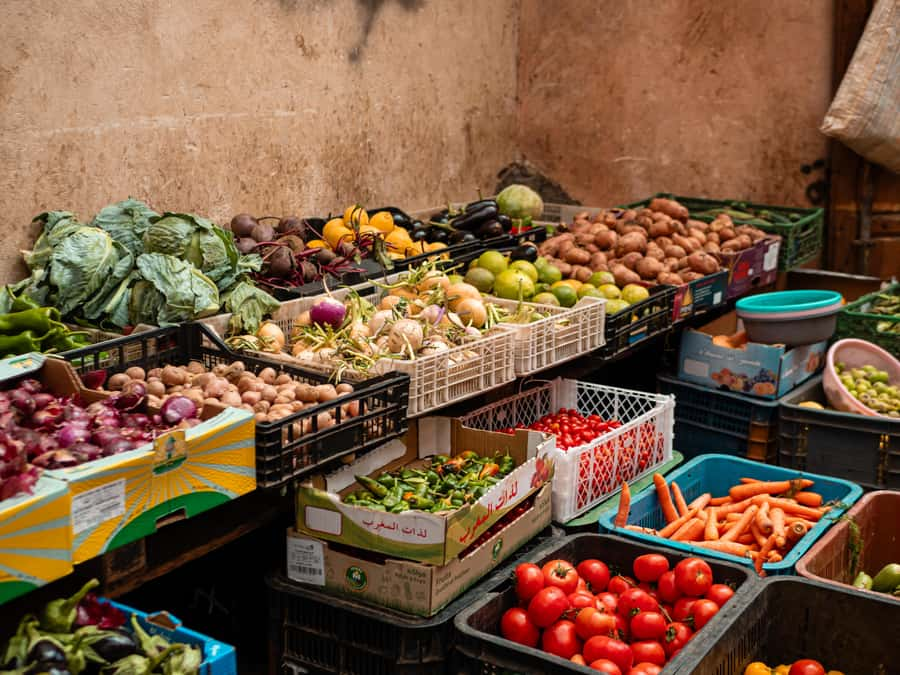
The activity lasts four hours. The morning session starts at 10:30 am, and the evening session starts at 4:30 pm, subject to availability.
The group is limited to 10 people. Smaller groups have been as few as two or six, while other sessions have had seven or more participants. That range affects the feel of the class, but the stated limit keeps it from becoming a large demonstration.
Wear comfortable clothes and bring a camera if you like taking photographs. You do not need to bring ingredients or cooking equipment. Tools, ingredients, food, tea, coffee, water, and Wi-Fi are included.
Free cancellation is available up to 24 hours before the activity for a full refund. You can also reserve and pay later, which helps if your Marrakech schedule is still changing.
Should you book the Flavors of Marrakech class?
Yes, if you want a hands-on introduction to Moroccan food and can attend the morning session. The market visit is the feature that gives this class its strongest sense of place, and the small group makes it easier to take part.
Choose the evening class if the timing works better, but understand that it is a cooking class without the market trip. The experience remains useful because you still prepare a substantial menu and eat the meal afterward.
At $57, I see this as a fair splurge for a four-hour activity with food, instruction, drinks, and recipes included. Book it near the start of your stay if you want the class to shape how you eat during the rest of your time in Marrakech.
FAQ
How long does the Marrakech cooking class last?
The class lasts four hours.
What time does the morning class begin?
The morning session begins at 10:30 am.
What time does the evening class begin?
The evening session begins at 4:30 pm, subject to availability.
Does every session include a market visit?
No. The local market visit is included with the morning session only. The evening session focuses on the cooking class and meal.
Where is the meeting point?
Meet at Flavors of Marrakech next to the BIM store. Look for the Flavors of Marrakech sign and go inside to meet the staff.
What languages are available?
The activity is offered in English and Arabic.
What food might I prepare?
The menu can include lemon-chicken and vegetable tagines, Moroccan salad, zaalouk, taktouka, dessert, tea, and other Moroccan dishes. The precise menu may vary by session.
Is the meal included?
Yes. Lunch is included with the morning class, and dinner is included with the evening class. Coffee, tea, and bottled mineral water are also included.
Do I receive the recipes afterward?
Yes. A PDF containing the recipes used in class is sent by email after the experience.
More Market and Cooking Class Tours in Marrakesh
- Hanoi Cooking Class: Culture, Local Market & Meaning CSR Impact
★ 5.0 · 5,147 reviews - 5 Traditional Dishes Hanoi Cooking Class with Market Trip
★ 5.0 · 4,890 reviews - Cooking Class and Lunch at a Tuscan Farmhouse with Local Market Tour from Florence
★ 5.0 · 4,831 reviews - Chiang Mai: Cooking Class, Market & Thai Herbs Garden Tour
★ 4.9 · 4,824 reviews
Just added around Marrakesh
- Souks tour of Marrakech ( 3 hours )★ 5.0 · 5 reviews
- Marrakech: Hidden Souks Shopping Tour with Private Guide★ 4.1 · 53 reviews
- Edgy 8 Dish Private, Fusion Cooking Class, Menu Plan, Market★ 4.9 · 31 reviews
- Marrakech: Half-Day Medina Markets Tour★ 4.5 · 11 reviews
- Marrakech: Private Souks Tour with Tea and Traditional Snack★ 4.6 · 33 reviews
- Marrakech: Vibrant Souks, Local Artisans & Medina Experience★ 4.5 · 66 reviews
- Marrakesh: Private Cooking Class & Local Market Shopping★ 4.7 · 15 reviews
- Marrakech Private Souks Shopping Tour★ 4.4 · 4 reviews
Market and Cooking Class Tours, compared.

Hanoi Cooking Class: Culture, Local Market & Meaning CSR Impact
Read our review →
5 Traditional Dishes Hanoi Cooking Class with Market Trip
Read our review →
Cooking Class and Lunch at a Tuscan Farmhouse with Local Market Tour from Florence
Read our review →
Cooking Class, Market & Thai Herbs Garden Tour
Read our review →
Authentic Cooking Class with Market & Farm Visit
Read our review →
Paella Cooking Experience & Boqueria Market Tour
Read our review →
Cooking Class Hoi An:Local Market, Basket Boat, Fishing & Cooking
Read our review →
Hoi An Cooking Class(Market,BasketBoat Crabfishing&Cooking Class)
Read our review →Browse the lists this tour appears in