
Review · MARKET AND COOKING CLASS TOURS
Marrakech: Traditional Moroccan Cooking Class & Market Visit
The best part of this Marrakech cooking class begins before you reach the kitchen. You walk through a local food souk, choose fresh ingredients, and then carry them to Khmisa’s intimate riad workshop in the Medina. I like that the shopping is part of the lesson, not a quick photo stop. I also like the way everyone takes a turn, from chopping vegetables to adding spices and shaping the meal.
The class is warm, practical, and generous with food. Kawtar and her family team explain the Moroccan mint-tea ritual, several salads, tagines, and dessert in a friendly setting. The one thing to consider is the meeting point: it may feel too broad unless you receive clear instructions, and the class is not suitable for wheelchair users.
Key points at a glance
- Shop before you cook: Choose fresh vegetables, chicken, herbs, and other ingredients at a local market away from the most tourist-focused stalls.
- Learn the tea ritual: Moroccan mint tea involves more than steeping mint in hot water, and the class explains the steps clearly.
- Cook several dishes: The menu usually includes three to six dishes, with starters, a main course, and a milk pastilla dessert.
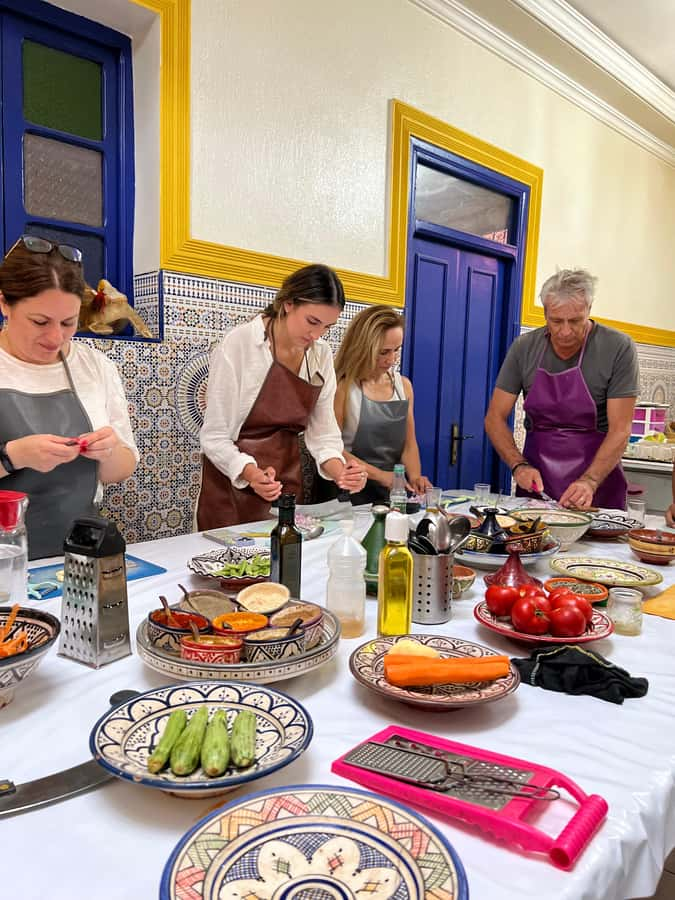
- Work as a team: You will chop, season, stir, and prepare food alongside the other people in your group.
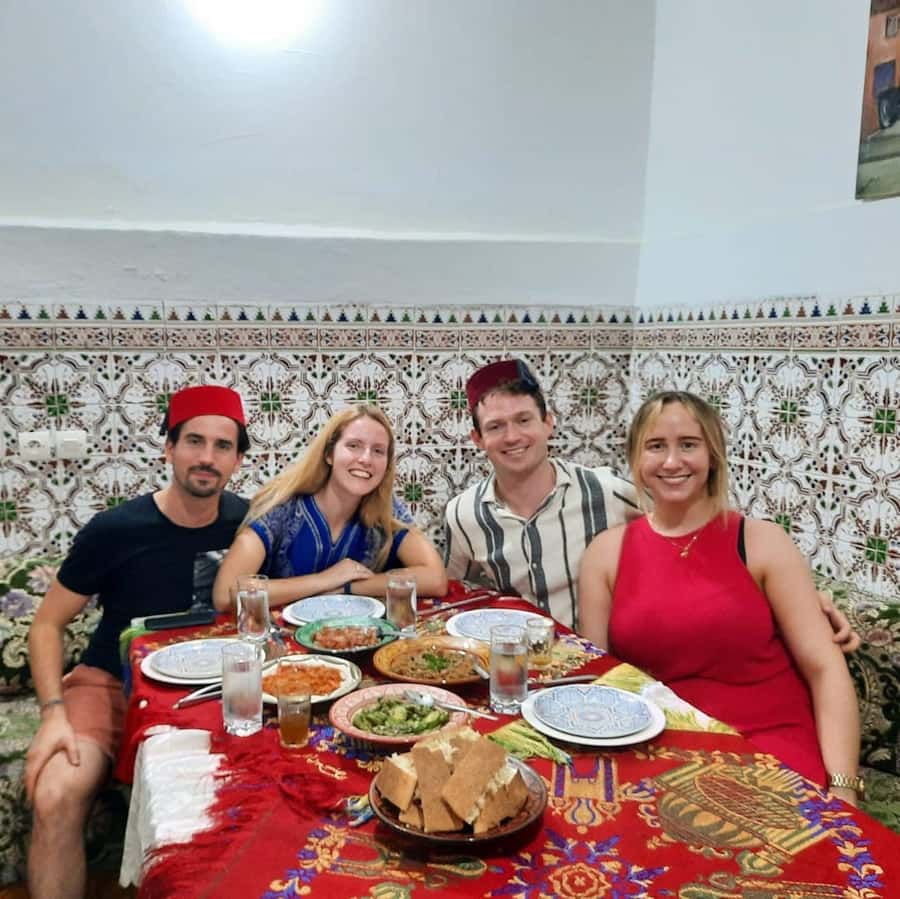
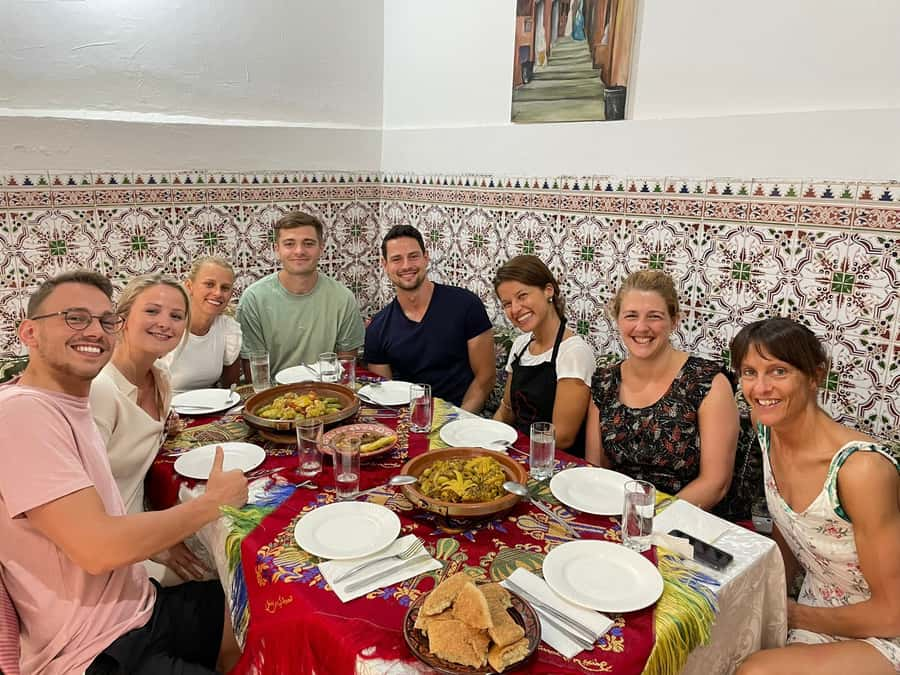
- Eat what you make: Lunch or dinner is included, and portions are described as plentiful and filling.
- Take the class home: Electronic recipes are sent afterward, and homemade spices may be available to buy.
A market visit that gives the class its flavor
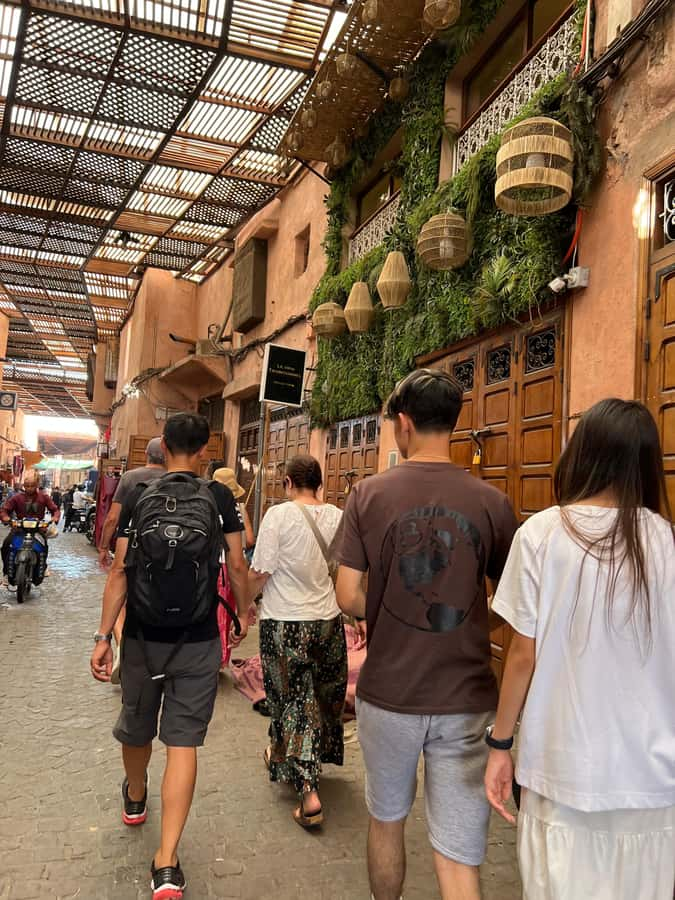
Many cooking lessons start with ingredients already laid out on a table. This one begins in the market. After your guide discusses allergies and dietary restrictions, you take a short walk through the souk to shop for the meal.
That small change matters. You see the vegetables, herbs, spices, and other products before they are washed, chopped, and mixed into a tagine. You also get a better sense of how Moroccan cooking starts with fresh market goods rather than a long list of packaged ingredients.
The market walk is not meant to be a full Marrakech shopping tour. It is short and focused on the food needed for the class. You should wear comfortable shoes, since the route takes place in the Medina and includes walking through market lanes.
The shopping also gives you a chance to ask questions. You can see which ingredients are being chosen and connect them with the dishes you will prepare later. That makes the lesson easier to follow, especially if you are unfamiliar with Moroccan spices or preserved lemon-based cooking.
One practical point deserves attention. The meeting instructions should be read carefully. One person found the meeting area too large to identify a precise spot, particularly around the mosque. If you are not familiar with the Medina, confirm the exact entrance or landmark before setting off.
More Market and Cooking Class Tours in Marrakech
- Marrakech: Moroccan Cooking Class with Market Visit and Meal
★ 4.9 · 347 reviews - Edgy 8 Dish Private, Fusion Cooking Class, Menu Plan, Market
★ 4.9 · 31 reviews - Marrakesh: Private Cooking Class & Local Market Shopping
★ 4.7 · 15 reviews
Entering Khmisa’s Medina riad
After the market, you continue to Khmisa’s workshop, an intimate riad in the heart of Marrakech’s Medina. The setting is part of the appeal. You are not sitting in a formal restaurant kitchen or a large school designed for dozens of students. You are welcomed into a family-style space where local women lead the preparation.
The cooking team includes Moroccan women and chefs with years of experience in cooking, catering, restaurants, and hotels. Kawtar often helps guide the group, while Khmisa and other family members may lead the cooking. Ilham has also helped translate and keep the class moving for English-speaking groups.
The language mix is useful. The class is offered in English, French, and Arabic, and the teaching style is hands-on rather than lecture-heavy. Some instructions may pass between languages, but the demonstrations, gestures, and shared work make the process easy to follow.
The riad has air conditioning, which is a real comfort when you are chopping, stirring, and sitting down to eat in warm Marrakech weather. It also keeps the class pleasant for families. An eight-year-old child took part successfully, and teenagers have enjoyed the practical tasks.
The group size can reach 12 people, though smaller groups of six have also been scheduled. A smaller group gives you more time with the cook and more chances to handle the ingredients. At the full size, the class is still designed as a shared session, so expect a social meal rather than private instruction.
Private sessions are available on demand. If you want the cook’s full attention or are planning a special family activity, ask about that option before booking.
The Moroccan mint-tea ceremony comes first
Before the cooking begins, you are served Moroccan mint tea and shown how to prepare it in the traditional way. This is not treated as a quick welcome drink.
The class explains the ceremony and the order of the ingredients. You learn that Moroccan tea is not simply mint left in boiled water with sugar. The preparation has its own rhythm, and the pouring is part of the presentation.
I like this opening because it places the food in its cultural setting. You begin with hospitality, conversation, and a shared drink before moving to knives and cutting boards. It also gives you a simple skill to repeat at home, using ingredients that are generally easy to find.
Pay attention to the demonstration, then take part if the group is invited to do so. The tea lesson is short, but it is one of the most memorable pieces of the class because it changes something familiar into a small ritual.
Cooking the Moroccan menu as a group
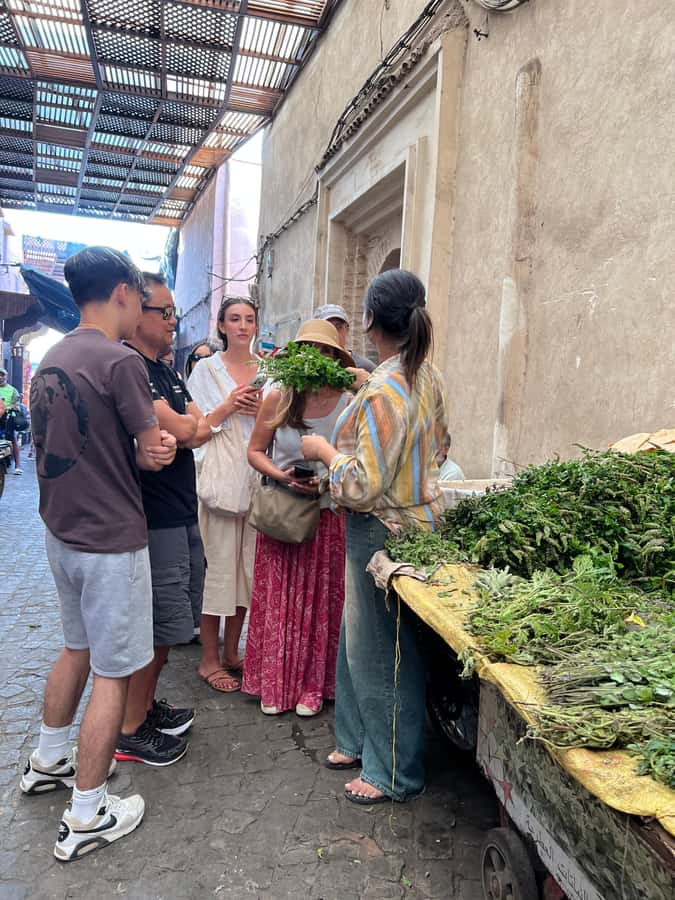
The menu changes, but you can expect a broad taste of home-style Moroccan cooking. The meal may include three to six dishes, with several starters, one or more main courses, and a dessert.
Previous menus have included four Moroccan salads or starters, a vegetarian tagine, chicken tagine, and a milk pastilla for dessert. The chicken tagine with lemon has been a particularly popular dish, while potatoes and vegetables also receive plenty of attention.
The group works together. You might chop vegetables, mix ingredients, add spices, or help prepare a tagine. The cooks guide you through each stage and may adjust the seasoning as you go. This is not a class where you sit back and watch a chef do everything.
That shared format has two effects. First, you learn more because your hands are involved. Second, the pace depends on the whole group. If you prefer a quiet, highly structured lesson with one instructor standing beside you at every moment, a private class may suit you better.
The cooking team also keeps the mood light. The chefs use humor and patience, and the class is meant to include everyone. Children, teenagers, solo participants, couples, and families can all take part without needing advanced cooking skills.
Vegetarians have done well here. A vegetarian tagine and several vegetable-based starters have been prepared, and the menu can be discussed before the class. Still, you should explain restrictions clearly when booking and again at the start, since the menu is built around the ingredients bought that day.
More Market and Cooking Class Tours in Morocco
- Marrakech: Cooking Class and Market Visit
★ 4.4 · 5 reviews - Moroccan Cooking Class & Marrakech Market Visit with Chef Khmisa
★ 5.0 · 1,504 reviews - Moroccan Cooking Class with Market Visit and Meal
★ 5.0 · 196 reviews - Fez: Souk Tour and Traditional Home Cooking Class
★ 4.9 · 186 reviews
Sitting down to a very full meal
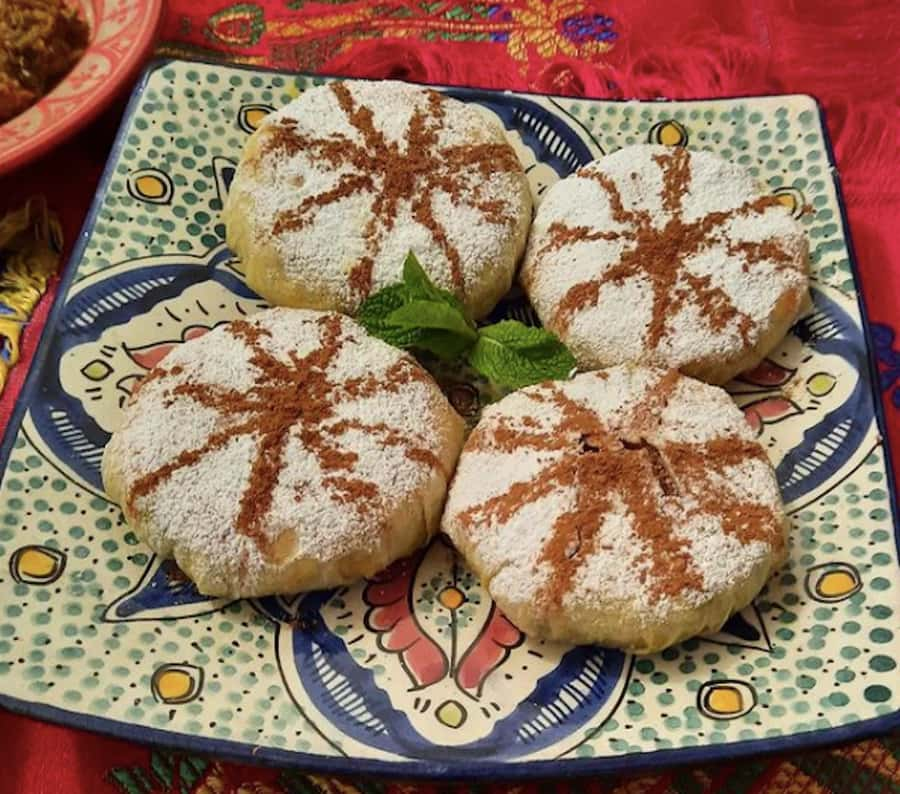
The final meal is not a small tasting. Lunch or dinner is included, and the food prepared by the group is served for everyone to enjoy together.
Expect a substantial spread. The starters may fill the table before the tagines arrive, followed by dessert and tea. Several people found the meal to be the best Moroccan food they had during their stay, but the more practical point is that you are likely to leave full.
Eating together is an important part of the class. You share the food with an international group, compare the work you have done, and have time to talk outside the kitchen. The result feels closer to a meal with a welcoming family than a demonstration followed by a restaurant bill.
You should allow around two and a half hours based on the way recent sessions have run. The exact pace can change with the menu, group size, and market visit. Do not schedule a tight appointment immediately afterward.
What makes the $40 price worthwhile
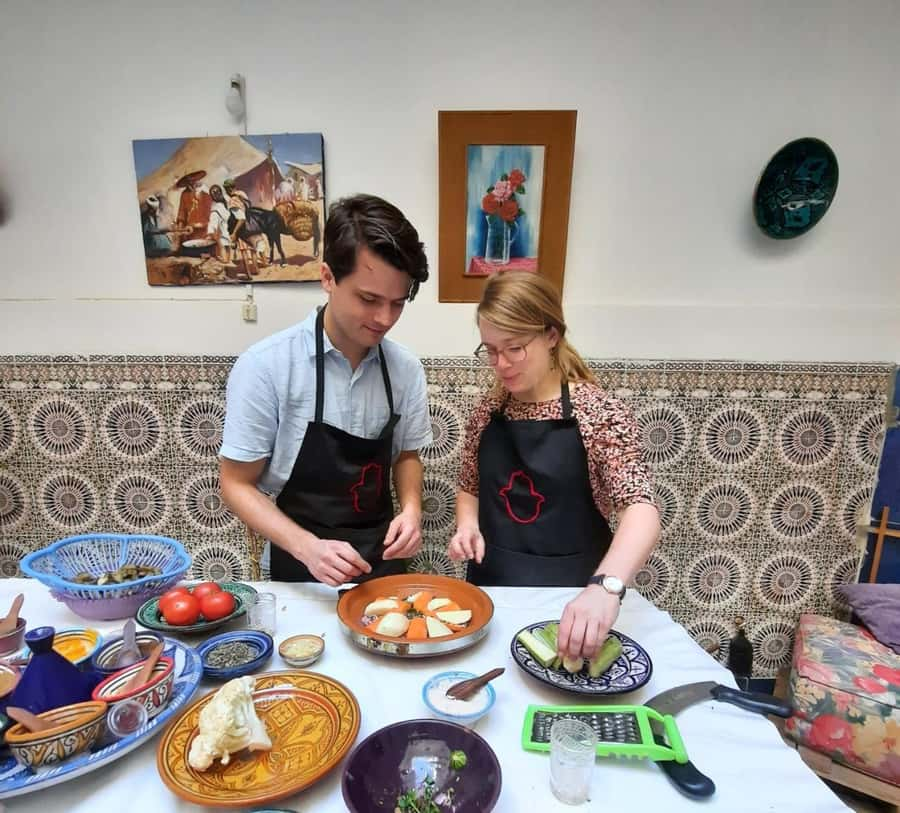
At $40 per person, the value is strong because the price covers several parts of a Marrakech outing: a market walk, a guide, a chef-led lesson, ingredients, tea, and a full lunch or dinner.
You also receive the recipes electronically afterward. That matters more than it might seem. Some cooking classes offer food that is difficult to recreate at home, but the recipes here are intended to be practical for home kitchens. The chicken tagine, salads, mint tea, and vegetarian dishes can give you a useful starting point after your trip.
The experience also includes the social side of a shared meal. You are paying for instruction, but you are also getting an introduction to the people, routines, and flavors behind Moroccan home cooking.
The price does not include hotel pickup or drop-off. You need to make your own way to the meeting point, and the Medina can take extra time to cross. Budget a little room for finding the exact location.
Homemade spices may be available to buy before you leave. These are prepared by Khmisa and can be a useful souvenir, especially if you want to repeat the dishes at home. The purchase is optional and is not part of the listed inclusions.
Who should book this cooking class?
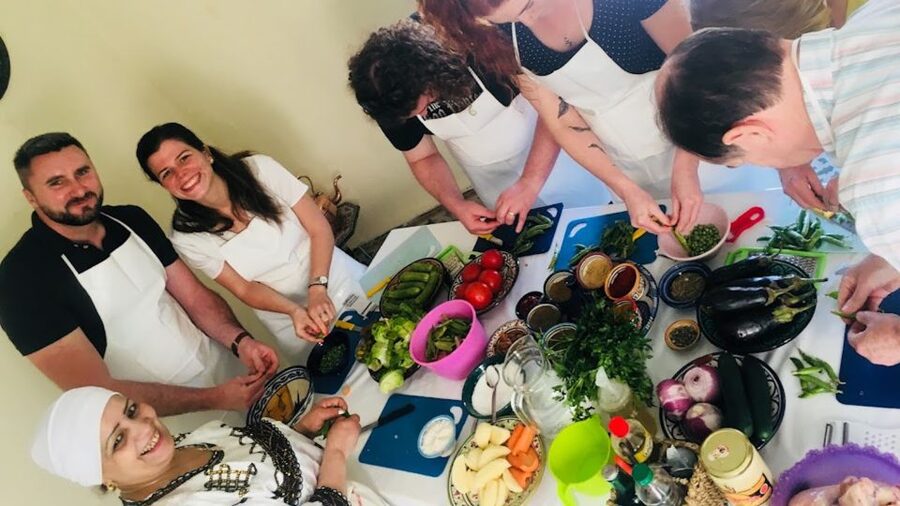
I would recommend it to you if food is one of the main reasons you visit Marrakech, or if you want an activity that puts you in contact with local people without requiring specialist cooking skills.
It suits families especially well. Teenagers can handle the preparation, younger children can take part with help, and the meal gives everyone something to do. It also works for solo visitors because the shared format makes conversation easy.
Vegetarians should ask about the menu in advance, but the class has included several vegetable starters and a vegetarian tagine. People who want to learn Moroccan spices, rather than simply eat Moroccan food, will get the most from the market and preparation stages.
You may want to skip it if you dislike group activities, have limited mobility in Medina lanes, or want a polished restaurant-style cooking school. The riad setting is friendly and personal, but it is not designed as a formal professional kitchen for private instruction.
The class is also a good choice for a repeat visitor. If you have already seen the major Marrakech sights, shopping for ingredients and cooking with local women offers a different way to spend an afternoon or evening.
Small details that will improve your visit
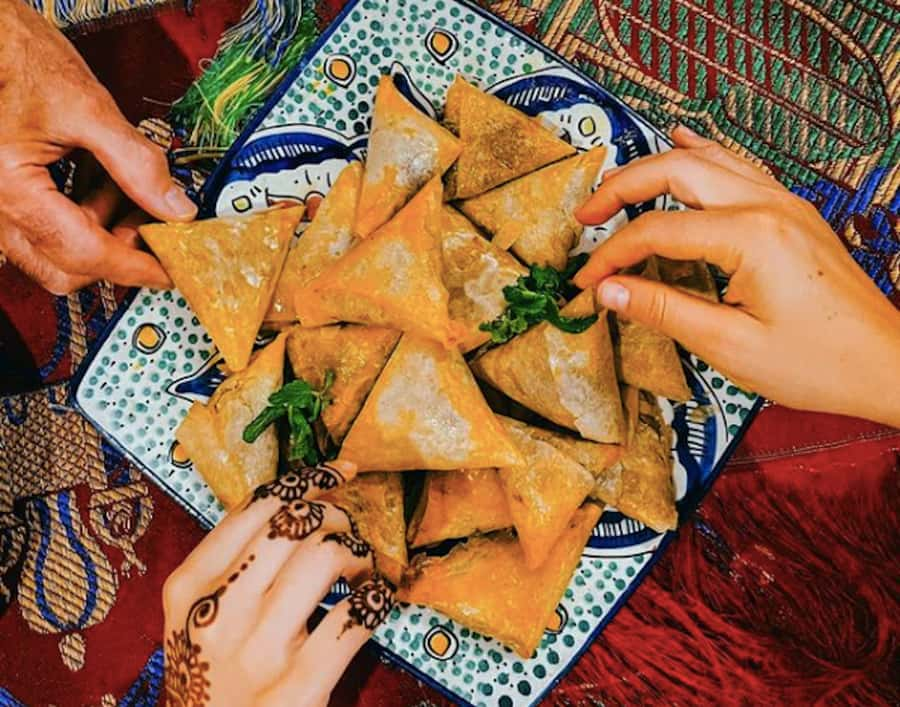
Discuss allergies and restrictions before the market visit. The menu is built around what the group buys, so early notice is important.
Wear comfortable shoes and bring a hair tie. You will walk through the souk and work around food preparation areas.
Bring an appetite. The meal can include several starters, two tagines, dessert, and tea.
Keep your schedule open. Classes have sometimes shifted by an hour, with notice given the night before, and the cooking itself can last about two and a half hours.
The activity does not include hotel transport. Check the meeting instructions closely, especially if your directions mention a large mosque or another broad landmark.
Smoking, alcohol, drugs, and pets are not allowed. The activity is not suitable for wheelchair users.
Cancellation is allowed up to 24 hours in advance for a full refund, and you can reserve now and pay later if that option is offered at booking.
Should you book it?
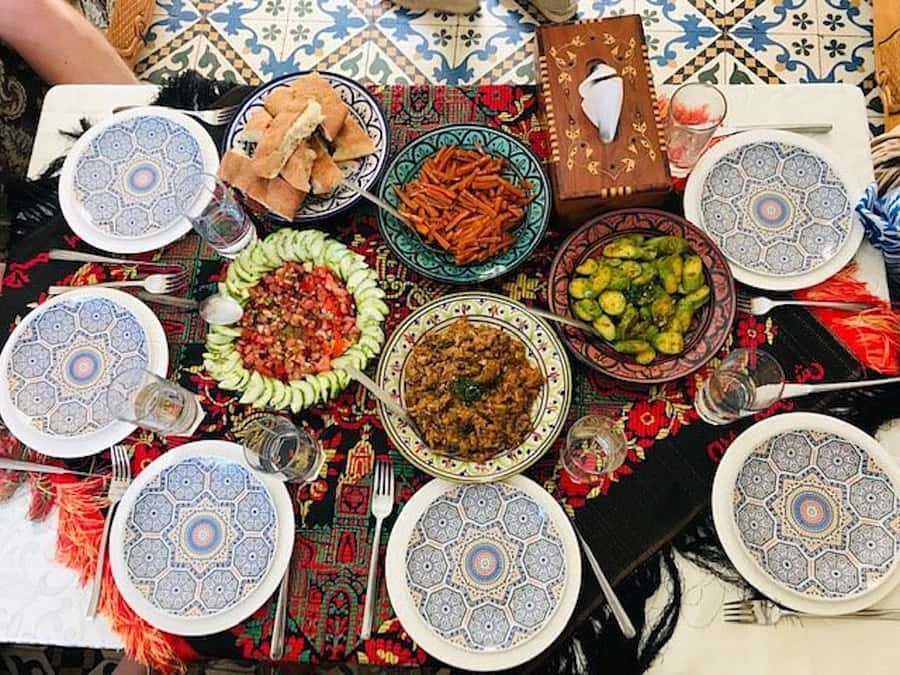
Book this class if you want more than a meal. The market visit, tea ritual, hands-on cooking, family-style riad, and recipes give you a complete introduction to Moroccan food for $40.
The strongest reason to choose it is the balance between instruction and participation. You are not just watching Kawtar, Khmisa, or another cook prepare food. You are selecting ingredients, handling the preparation, learning the method, and eating the result.
I would choose a smaller session if possible, especially for a family or anyone who wants more direct help. Just confirm the meeting point, allow time for the Medina, and mention dietary needs before the class. For most food-loving visitors, this is one of the more useful and enjoyable ways to spend part of a Marrakech day.
FAQ
How much does the cooking class cost?
The listed price is $40 per person.
What is included in the price?
The price includes lunch or dinner, a local guide speaking English, French, or Arabic, a Moroccan chef, all ingredients, a short market walk, Moroccan tea, and electronic recipes.
Is hotel pickup included?
No. Hotel pickup and drop-off are not included.
How many people are in the group?
The group can include up to 12 people, though the size may vary. Smaller sessions of six people have also taken place.
What food will I learn to cook?
The menu can include three to six Moroccan dishes, including starters, a main course, and milk pastilla for dessert. Previous menus have included Moroccan salads, chicken tagine, vegetarian tagine, and other vegetable dishes.
Will I learn how to make Moroccan mint tea?
Yes. The class includes a demonstration and explanation of the traditional Moroccan mint-tea ritual.
Are recipes provided after the class?
Yes. The recipes are sent electronically by email. They may also be sent through WhatsApp.
Can vegetarians take part?
Yes. Vegetarian starters and a vegetarian tagine have been included in previous menus. Discuss your dietary needs before the cooking begins.
What should I bring?
Wear comfortable shoes and bring a hair tie.
Is the activity accessible to wheelchair users?
No. The activity is not suitable for wheelchair users.
More Market and Cooking Class Tours in Marrakesh
- Hanoi Cooking Class: Culture, Local Market & Meaning CSR Impact
★ 5.0 · 5,147 reviews - 5 Traditional Dishes Hanoi Cooking Class with Market Trip
★ 5.0 · 4,890 reviews - Cooking Class and Lunch at a Tuscan Farmhouse with Local Market Tour from Florence
★ 5.0 · 4,831 reviews - Chiang Mai: Cooking Class, Market & Thai Herbs Garden Tour
★ 4.9 · 4,824 reviews
Just added around Marrakesh
- Souks tour of Marrakech ( 3 hours )★ 5.0 · 5 reviews
- Marrakech: Hidden Souks Shopping Tour with Private Guide★ 4.1 · 53 reviews
- Edgy 8 Dish Private, Fusion Cooking Class, Menu Plan, Market★ 4.9 · 31 reviews
- Marrakech: Half-Day Medina Markets Tour★ 4.5 · 11 reviews
- Marrakech: Private Souks Tour with Tea and Traditional Snack★ 4.6 · 33 reviews
- Marrakech: Vibrant Souks, Local Artisans & Medina Experience★ 4.5 · 66 reviews
- Marrakesh: Private Cooking Class & Local Market Shopping★ 4.7 · 15 reviews
- Marrakech Private Souks Shopping Tour★ 4.4 · 4 reviews
Market and Cooking Class Tours, compared.

Hanoi Cooking Class: Culture, Local Market & Meaning CSR Impact
Read our review →
5 Traditional Dishes Hanoi Cooking Class with Market Trip
Read our review →
Cooking Class and Lunch at a Tuscan Farmhouse with Local Market Tour from Florence
Read our review →
Cooking Class, Market & Thai Herbs Garden Tour
Read our review →
Authentic Cooking Class with Market & Farm Visit
Read our review →
Paella Cooking Experience & Boqueria Market Tour
Read our review →
Cooking Class Hoi An:Local Market, Basket Boat, Fishing & Cooking
Read our review →
Hoi An Cooking Class(Market,BasketBoat Crabfishing&Cooking Class)
Read our review →Browse the lists this tour appears in