
Review · MARKET AND COOKING CLASS TOURS
Lima: Market Tour, 35 Fruits Tasting & Cooking Class
The most unusual part of this Lima food experience is the 35-plus fruit tasting. You begin at Surquillo Market Nro 1, then move from market stalls to a kitchen where unfamiliar fruits, Andean ingredients, and a full Peruvian meal become part of one lesson.
I like the direct contact with local produce, and I like the rhythm of cooking a dish, eating it fresh, then moving on to the next course. The welcoming format, quality ingredients, and delicious results are the strongest reasons to book.
The main drawback is the length. At 330 minutes, this is a serious half-day commitment, not a quick market stop. You also need to find the correct Surquillo market, since several markets share the name.
Key points to know before booking
- Taste more than 35 fruits before cooking, a useful introduction to Peru’s unusual produce.
- Meet at Mercado 1 de Surquillo, not one of the nearby markets numbered 2 through 7.
- Cook and eat four courses, with each dish served soon after you finish preparing it.
- Learn classic Peruvian techniques while preparing the meal with an instructor.
- Enjoy one pisco sour, plus water and homemade fruit juice during the class.
- Plan for 5 hours and 30 minutes, including the market visit, transfer, fruit tasting, and lunch.
Why this Lima food tour works so well
This experience connects the ingredients to the finished food. You do not simply walk through a market, take a cooking lesson, and eat a meal as separate activities. The market gives you context first, then the kitchen shows you how those products fit into Peruvian cooking.
That connection matters in Lima. Peruvian food draws on coastal seafood, Andean grains and roots, tropical fruit, legumes, herbs, and many vegetables. A restaurant meal can be excellent, but it does not always tell you what you are eating or how the ingredients reach the plate.
Here, you begin by seeing the raw materials. Later, you chop, mix, and cook them yourself. The result is a more useful food memory, especially if you want to recreate some of the dishes at home.
The activity receives a 5/5 rating from three reviews, with particular praise for the welcoming setting, quality ingredients, clear learning experience, and authentic dishes. Those are exactly the areas where this format makes sense: you get a social lunch, a market lesson, and practical instruction in one long session.
More Market and Cooking Class Tours in Peru:
- Cusco: Peruvian Cooking Class, Cocktails & Local Market Tour
★ 4.9 · 512 reviews - Cooking class and market tour with a local chef
★ 5.0 · 186 reviews - Market Tour, Tasting of 35 Fruits, and 4-Course Peruvian Cooking Class in Lima
★ 5.0 · 86 reviews
Starting at Mercado 1 de Surquillo
Your meeting point is the main entrance of Mercado 1 de Surquillo, directly beneath the large sign marked Mercado 1. This detail matters. Surquillo has several markets, including numbers 2 through 7, so entering the wrong name into a taxi app can send you to the wrong place.
Ride-sharing apps such as Uber, Didi, Cabify, and Beat can search for Mercado 1 de Surquillo. If you use a regular taxi, ask for Estación Ricardo Palma. The market is on block 53 of Paseo de la República, next to that station.
From the center of Miraflores, the market is about a 10-minute walk from the Ovalo de Miraflores. It is also about a seven-minute taxi ride from the cooking-class location. Give yourself enough time to locate the main entrance and the correct market number.
The meeting point is practical rather than scenic. You are arriving at a working food market, not a polished attraction with a grand entrance. That is part of the appeal. You start among vendors and everyday shopping rather than in a staged culinary showroom.
Fifty minutes among Peru’s market ingredients
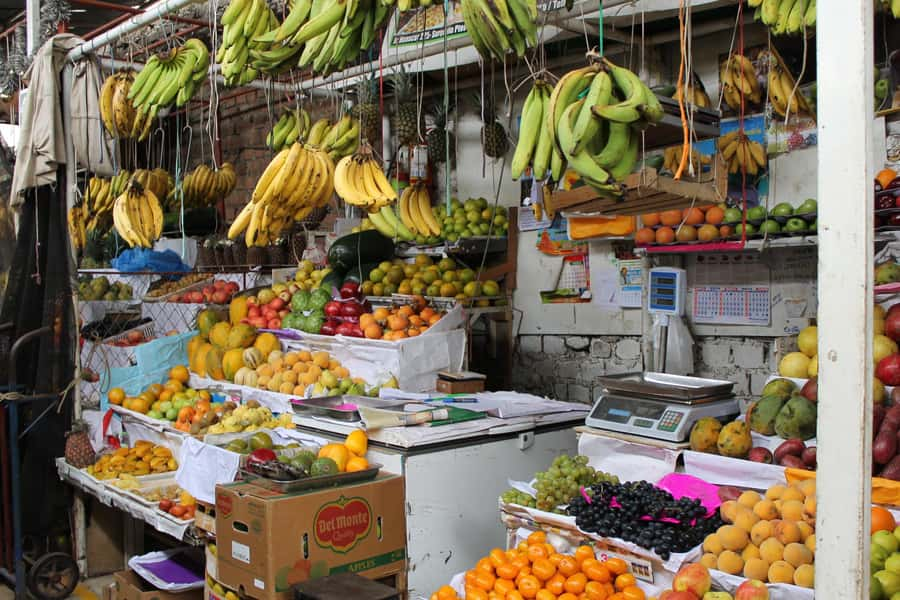
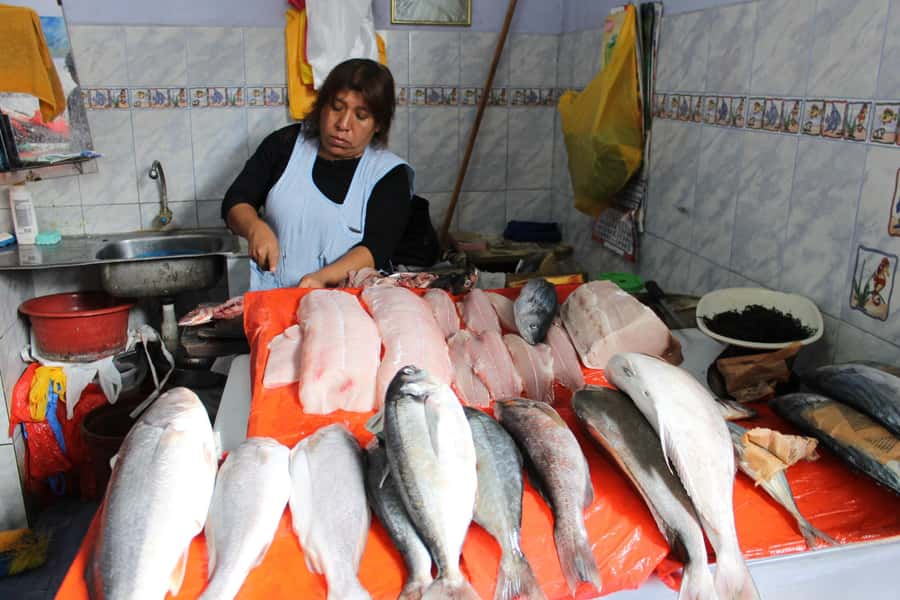
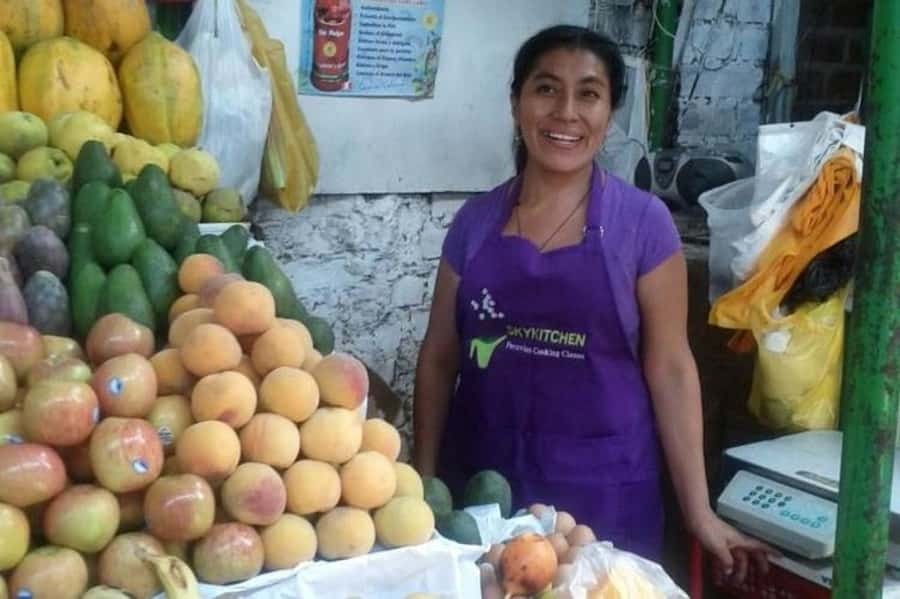
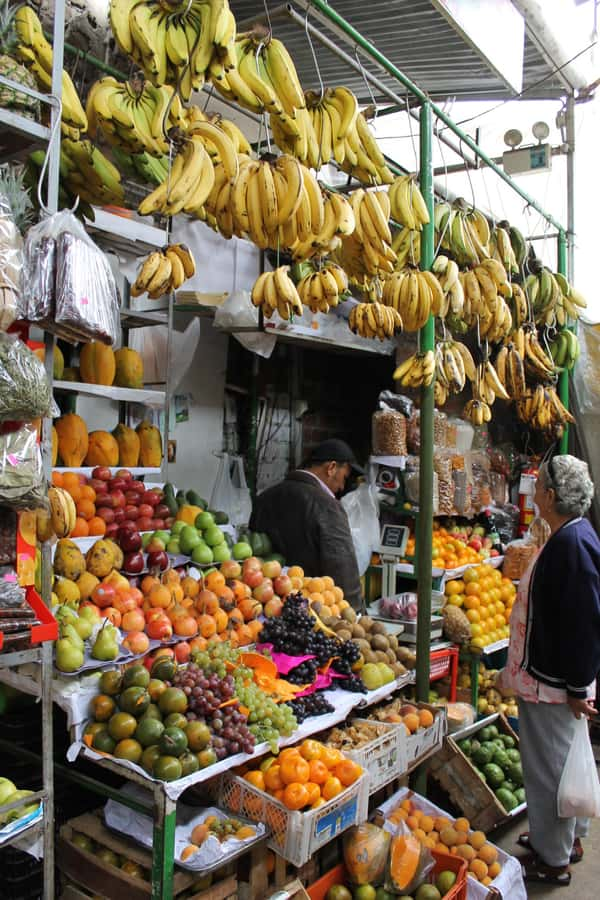
The market visit lasts about 50 minutes. Your guide introduces you to local vendors and explains the produce on display, including fruits, vegetables, legumes, herbs, meats, fish, seafood, quinoa varieties, Andean roots, seeds, plants, and other less familiar ingredients.
The value here is the range. You are not limited to the ingredients used in the cooking class. You get a broad look at the foods that shape Peru’s cooking traditions, from coastal products to ingredients associated with the Andes.
I especially like this part for anyone who feels unsure when ordering Peruvian food. Learning the difference between ingredients, seeing their size and color, and hearing how they are used gives you a better basis for choosing dishes later in your trip.
The market can also be the most visually active part of the morning. You should expect a working market environment with vendors, food products, and other shoppers. The tour is not designed as a slow photography walk. Keep your attention on the guide, the produce, and the explanations.
The 35-fruit tasting
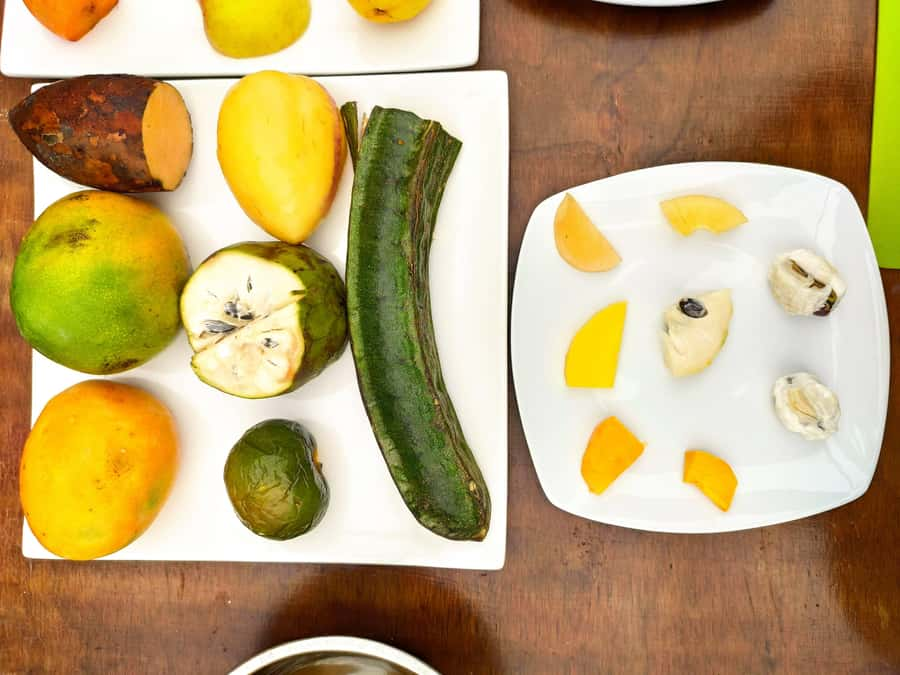
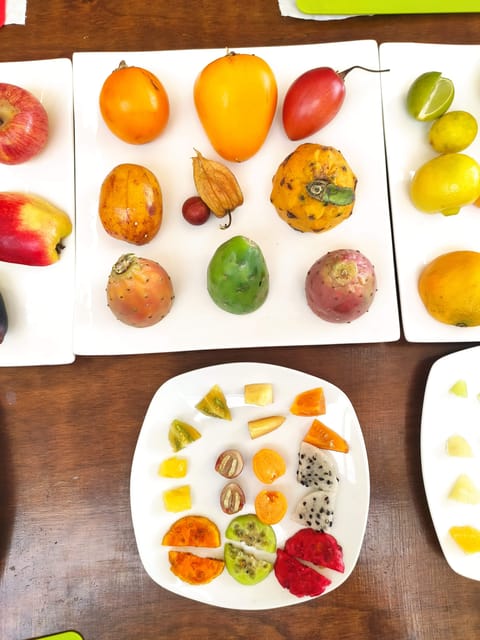
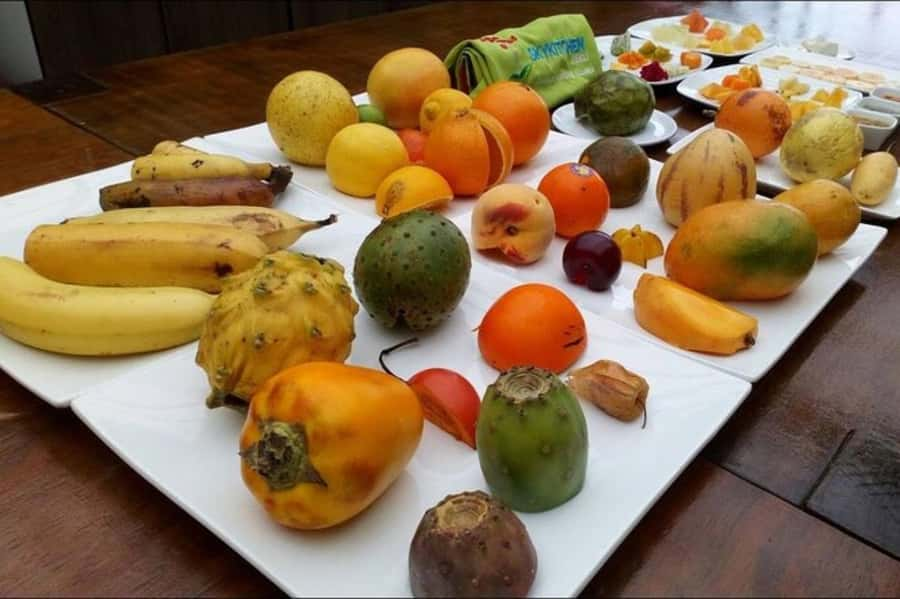
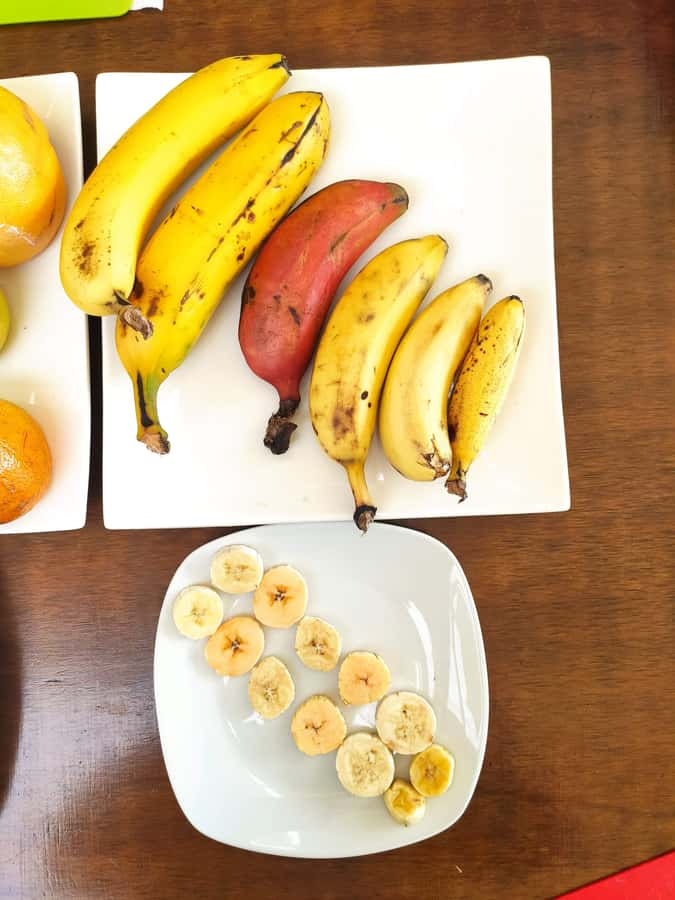
After the market, transportation takes you to the cooking-class location. There, you taste more than 35 different exotic fruit samples. This is one of the clearest features that sets the experience apart from an ordinary Peruvian cooking class.
The tasting is useful because fruit names can mean little until you actually see and taste the fruit. A sample-based format lets you compare flavors and textures in one sitting. It also gives you a better sense of the variety available in Peru.
Do not treat this as a minor snack before lunch. More than 35 samples can be a substantial part of the experience, and it adds a playful element before the more structured cooking begins. If you enjoy trying unfamiliar foods, this may be your favorite segment.
The supplied information does not identify every fruit, so you should not expect a fixed list in advance. The important point is the scale of the tasting and its focus on less familiar local produce.
More Food and Drink Trips in Peru:
- Lima: Historic Center Street Food, Market, and Eateries Tour
★ 4.9 · 216 reviews - Lima Street Food Tour Beyond Netflix
★ 5.0 · 117 reviews - Lima: Food Tour on Local Market
★ 5.0 · 8 reviews - Lima Food Experience with local Markets & Barranco Tour
★ 5.0 · 2 reviews
An introduction to Peruvian cooking with pisco sour
Once the fruit tasting is underway, you receive an introduction to Peruvian cuisine before beginning the cooking class. You also get one pisco sour, Peru’s best-known cocktail.
That drink is included in the price, while beer and wine are available to buy separately. Water is available throughout the class, and homemade fruit juice is served with the food.
The pisco sour creates a relaxed start, but the class remains focused on food rather than drinking. If you are looking for an evening of cocktails, this is not that sort of activity. The emphasis is on ingredients, technique, and eating the meal you prepare.
The instructor speaks English, Spanish, or German. That language choice can make a major difference in a hands-on class, where timing and technique are easier to follow when explanations are clear.
Preparing four courses, one at a time
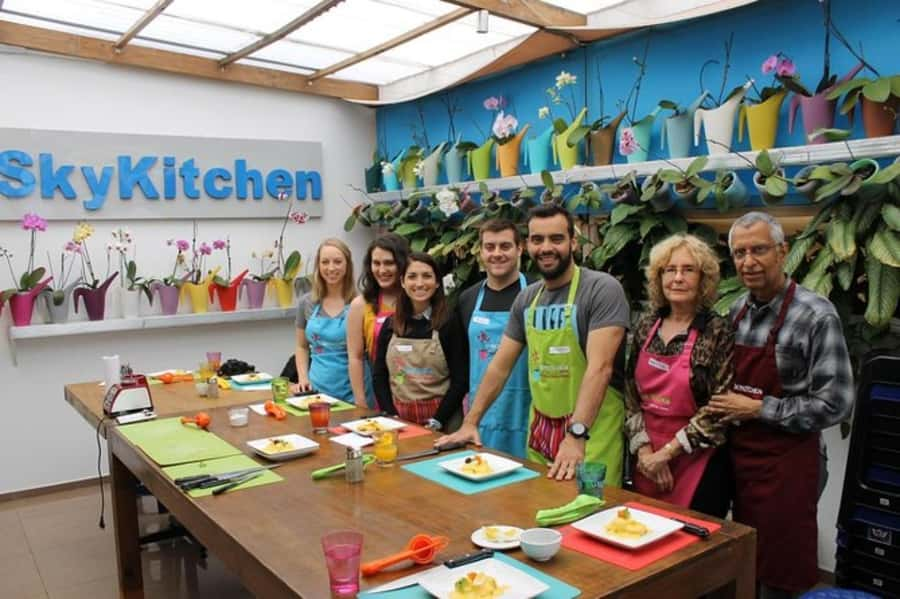
The cooking class teaches you to prepare a four-course Peruvian meal. You receive the ingredients, kitchen tools, and an apron during the class, so you do not need to bring cooking equipment.
The class is structured around finishing and eating one course before moving to the next. Once a dish is ready, you sit down and eat it with the other participants. During the meal, the instructor prepares the ingredients for the following course.
I like this arrangement more than cooking everything at once and eating a cold meal at the end. You get to taste each dish at its best, and you can ask questions while the next stage is being set up.
It also keeps the class from becoming a rushed production line. You have a natural pause between courses, with time to talk to the instructor and the other people in your group.
The meal is described as a traditional four-course Peruvian lunch, but the specific menu is not provided. That means you should not book this expecting a named dish list unless the provider confirms it in advance. The ingredients and dishes may also depend on availability.
What the hands-on format means for you
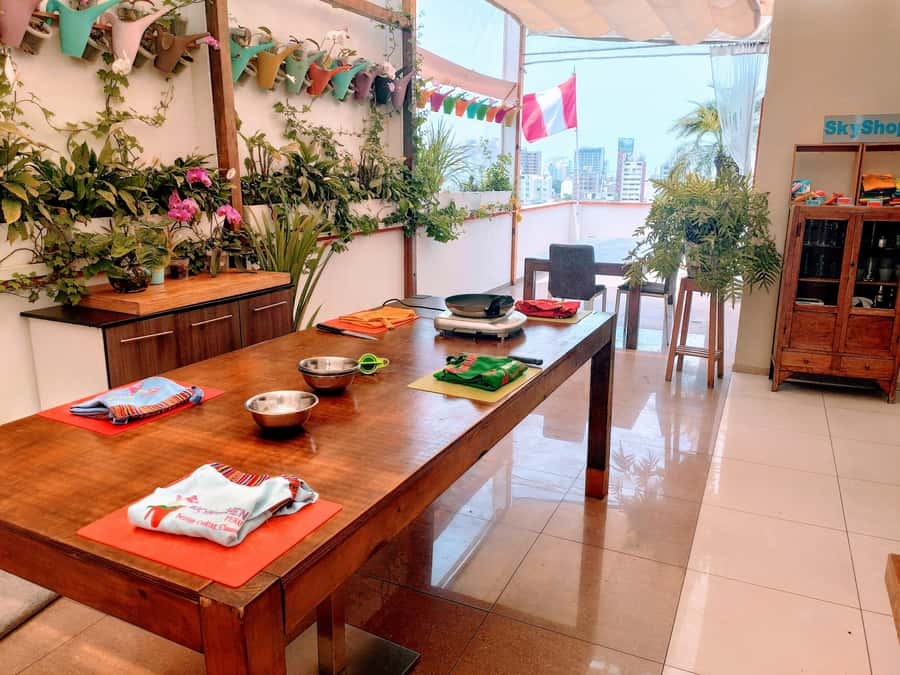
This is not a demonstration where you sit at a counter and watch someone else do the work. You chop, mix, and cook under the instructor’s direction.
That makes the experience more useful if you want to cook Peruvian food after returning home. You see the ingredients, handle them, and follow the steps that turn them into a finished dish. The lesson may be less polished than a professional kitchen show, but it gives you more direct practice.
The instructor also has to divide attention among participants. That is normal for a small-group class, and the format is intended to feel personal and social. If you prefer private instruction or need constant one-to-one help, ask about group size before booking.
Food restrictions can usually be accommodated for vegetarian, vegan, lactose-free, and gluten-free diets if you notify the provider ahead of time. Do not wait until you arrive. Contact the provider before the activity so the ingredients and menu can be planned properly.
Evaluating the $120 price
At $120 per person, this is not a budget lunch. The price needs to be judged against the full five-and-a-half-hour schedule, not against the cost of a meal in Lima.
Your fee covers the market tour, transport from the market to the class, the guide and instructor, more than 35 fruit samples, all cooking ingredients, kitchen tools, an apron, a four-course meal, water, homemade juice, and one pisco sour.
If you paid separately for a market visit, a fruit tasting, a cooking lesson, a substantial lunch, and a cocktail, the total could approach this amount. The stronger value comes from the number of connected activities rather than from any single feature.
Still, the value depends on your interests. If you mainly want to eat Peruvian food, a restaurant will be faster and cheaper. If you want a short market walk, this activity may feel too long. But if you want to understand ingredients and practice cooking, the price is easier to justify.
The fact that you eat each course as soon as it is finished also improves the value. You are not paying for a lesson followed by an unrelated meal. The lunch is the result of the work you do during the class.
Timing, comfort, and practical details
The total duration is 330 minutes, or five hours and 30 minutes. Starting times vary, so check availability when you book. Plan for a full half-day and avoid scheduling another important activity immediately afterward.
The activity includes transport from the market to the cooking-class location. You still need to make your own way to the market meeting point.
Wear something comfortable for standing, walking through a market, and cooking. Aprons are provided, along with the kitchen tools you need during the lesson. Aprons and tools are available to buy if you want to take them home, but they are not included as souvenirs.
Beer and wine are not included, though you can purchase them. Water is unlimited throughout the class, and fruit juice comes with the meal.
Cancellation is flexible up to 24 hours before the activity for a full refund. Booking confirmation can take up to 48 hours from the provider, so do not leave this until the last minute if the class is central to your plans.
Who should book this experience
I would recommend this to food-focused visitors staying in or near Miraflores, especially anyone who wants more than a restaurant meal. It suits couples, friends, solo visitors, and small groups who enjoy learning by doing.
It is also a good fit if you are curious about produce but do not know where to begin. The market explanations and fruit tasting give you a broad introduction before the cooking lesson narrows the focus to a meal.
Families may enjoy the fruit samples and practical cooking, but the five-and-a-half-hour length could be demanding for young children. The supplied information does not specify a minimum age, so confirm that point before booking for children.
Vegetarians, vegans, and people avoiding lactose or gluten may be able to take part, provided they contact the provider ahead of time. The earlier you share those needs, the better.
You may want to skip it if you dislike group cooking, do not enjoy trying unfamiliar foods, or have only a short time in Lima. The experience rewards patience. It is built around tasting, listening, preparing, and eating rather than rushing from one sight to another.
Should you book the Surquillo Market cooking class?
Book it if you want a full food experience with real market context, a large fruit tasting, a hands-on lesson, and a proper meal at the end. The most appealing feature is the sequence: see the ingredients at Surquillo, taste unusual fruit, then use what you have learned in the kitchen.
At $120, it is a splurge, but the price includes far more than lunch. You get five and a half hours of instruction, food, drinks, ingredients, equipment, and transport between the two main locations.
Skip it if you want a quick introduction or a simple restaurant experience. For everyone else, this is a strong way to make Peruvian food feel less mysterious and much more personal. Just confirm the meeting point, tell the provider about dietary needs, and set aside the entire half-day.
FAQ
Where does the experience begin?
It begins at the main entrance of Mercado 1 de Surquillo, beneath the large sign saying Mercado 1.
How do I find the correct Surquillo market?
Search for Mercado 1 de Surquillo in Uber, Didi, Cabify, or Beat. By regular taxi, use Estación Ricardo Palma as the reference point. Make sure you go to market number 1, not markets 2 through 7.
How long does the experience last?
The activity lasts 330 minutes, or five hours and 30 minutes.
How many fruits will I taste?
You will taste more than 35 different exotic fruit samples.
What happens during the market tour?
The guide introduces you to local vendors and explains fruits, vegetables, legumes, herbs, meats, fish, seafood, quinoa varieties, and lesser-known Andean plants, roots, and seeds.
What is included in the cooking class?
The class includes all ingredients, an instructor, an apron, kitchen tools for use during the class, and a four-course lunch that you prepare yourself.
Are drinks included?
Yes. One pisco sour, unlimited water, and homemade fruit juice served with the meal are included. Beer and wine are available for purchase.
Can dietary restrictions be accommodated?
The provider can accommodate common vegetarian, vegan, lactose-free, and gluten-free requirements if you provide the information ahead of time.
What languages are available?
The instructor is available in English, Spanish, and German.
Just added around Peru
- Lima: Market Tour and Cooking Class with Pisco Sour★ 5.0 · 3 reviews
- Lima: Peruvian cooking class and tour of Surquillo market★ 5.0 · 2 reviews
- Lima: Food Tour on Local Market★ 5.0 · 8 reviews
- Lima Food Experience with local Markets & Barranco Tour★ 5.0 · 2 reviews
- Full Day Lima: Local Market+ CityTour+ Barranco & Miraflores★ 5.0 · 3 reviews
- Cusco: Coricancha, Cathedral & San Pedro Market Walking Tour★ 5.0 · 2 reviews
- Cusco: Peruvian Cooking Class & Market Tour★ 4.9 · 19 reviews
- Belen Market & Floating City 2-3 Hour Private Tour★ 4.9 · 38 reviews
Market and Cooking Class Tours, compared.
Hanoi Cooking Class: Culture, Local Market & Meaning CSR Impact
Read our review →
5 Traditional Dishes Hanoi Cooking Class with Market Trip
Read our review →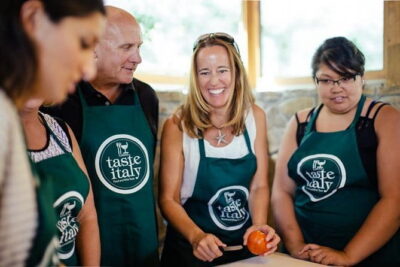
Cooking Class and Lunch at a Tuscan Farmhouse with Local Market Tour from Florence
Read our review →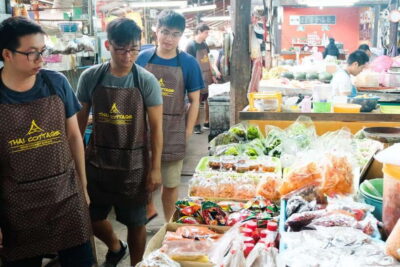
Cooking Class, Market & Thai Herbs Garden Tour
Read our review →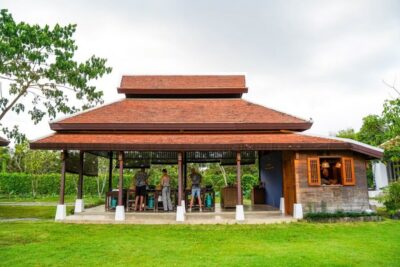
Authentic Cooking Class with Market & Farm Visit
Read our review →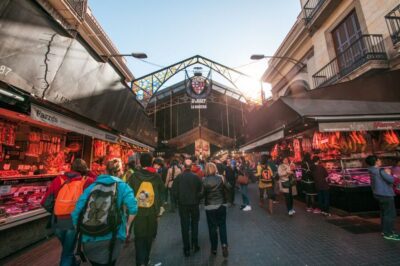
Paella Cooking Experience & Boqueria Market Tour
Read our review →
Cooking Class Hoi An:Local Market, Basket Boat, Fishing & Cooking
Read our review →
Hoi An Cooking Class(Market,BasketBoat Crabfishing&Cooking Class)
Read our review →Browse the lists this tour appears in