
Review · STREET FOOD MARKET TOURS
Kyoto: Nishiki Market and Depachika Food Tour with a Local
Kyoto’s best food lesson may begin underground. This tour takes you first to Daimaru Kyoto’s depachika, a department-store food hall where beautifully prepared sweets, seafood, bento, and regional specialties are sold beneath the city streets. You then move into Nishiki Market, Kyoto’s famous food arcade, with a guide explaining what is worth tasting and how local foods fit into Japanese cooking.
I like the small group of up to nine and the set tastings: yuba sashimi, a soy milk doughnut, Nishiki gyoza, and hamo tempura. I also like that the walk ends at Nishiki-Tenmangu Shrine, giving you a quiet cultural stop after the food stalls. The main caution is that the exact food flow may need clarification, and the published stop times add up to more than the advertised two-hour duration.
Key points at a glance
- Daimaru’s depachika first: Learn how a Japanese department-store food hall works and sample polished local and international treats.
- Four planned tastings: Expect yuba sashimi, a soy milk doughnut, Nishiki gyoza, and tempura made with hamo fish.
- Nishiki Market with context: Your guide helps you understand Kyoto ingredients, traditional snacks, seafood, cookware, knives, and food customs.
- A shrine breaks up the eating: Nishiki-Tenmangu offers a short look at Shinto practice, architecture, and the sacred water fountain.
- Guides make the difference: Mao, Jasmine, Boris, Ai, Richard, Kats, and others have been praised for friendly explanations and useful food advice.
- Best for curious eaters: You need comfortable shoes, some cash, and a willingness to try unfamiliar flavors.
Starting at Apple Kyoto and meeting your guide
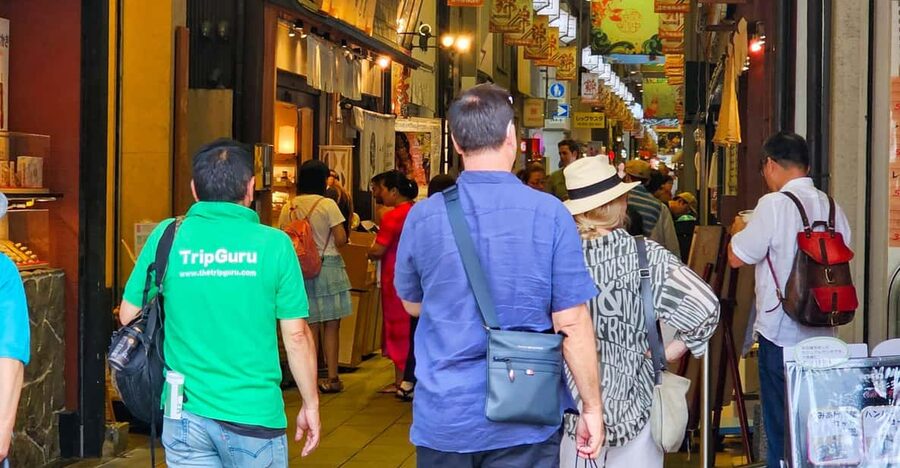
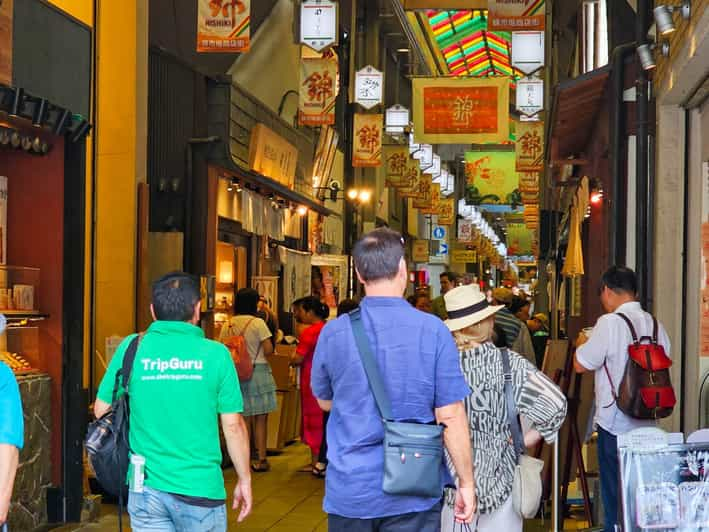
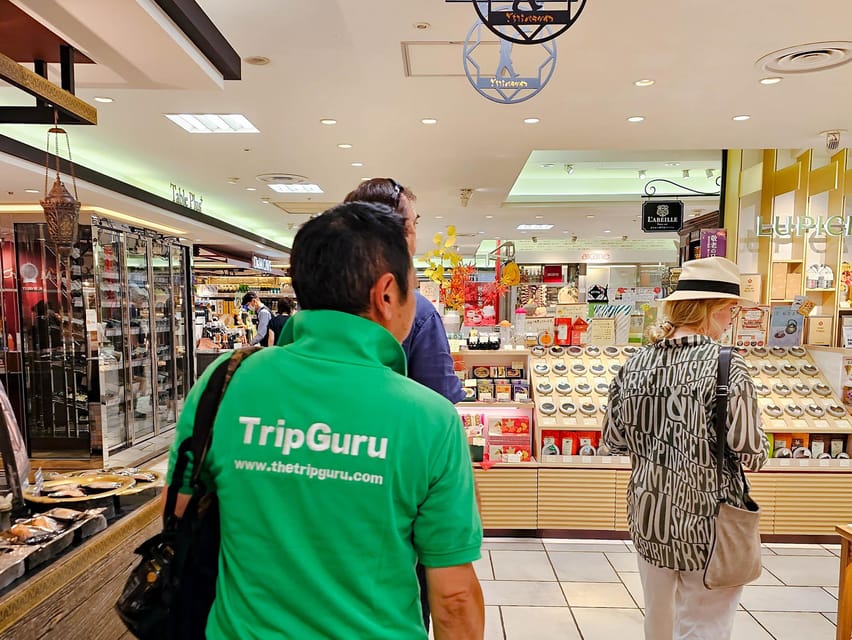
The meeting point is Apple Kyoto. Your guide should be wearing a TripGuru shirt or holding a TripGuru sign, but you’ll still want to arrive at least 10 minutes early. The guide waits only 10 minutes, and Kyoto traffic can take longer than navigation apps suggest.
This is a walking tour, not a vehicle-based outing. Wear shoes you can manage on a busy city route, and bring cash for anything you decide to buy beyond the included tastings. Hotel pickup and drop-off are not provided, so plan your route to and from the starting and ending stations.
The group is limited to nine people. That matters here. Nishiki Market has narrow, crowded passages, and a very large group would make it harder to hear explanations or gather around a food stall. A small group also gives you a better chance to ask about ingredients, eating customs, or places you may want to revisit later.
The tour is offered in English, with several possible start times. That makes it useful on a packed Kyoto day. You can place it between major sightseeing stops, use it as an introduction to Japanese food, or book it near the beginning of your stay so the guide’s suggestions help shape later meals.
More Street Food Market Tours in Japan
- Kyoto: Local Food Tasting Tour at the Nishiki Market
★ 4.7 · 135 reviews - Kyoto: Nishiki Market Tour with a Local Foodie & Tastings
★ 4.5 · 67 reviews - Nishiki Market Food Tour with Cooking Class
★ 4.9 · 42 reviews
Daimaru Kyoto’s depachika: Kyoto food below street level
The first major stop is Daimaru Kyoto, where you spend time in the department store’s underground food hall. In Japan, a depachika is more than a place to grab a quick snack. It is a carefully presented food market with prepared dishes, sweets, seafood, produce, gift foods, and specialty items.
For a first-time visitor, the setting can be easier to understand with a guide beside you. Displays may look beautiful but offer few clues in English, and the same food can be available in forms you have not seen before. Your guide can point out ingredients, explain what is seasonal, and help you understand which items are suitable for a quick bite, a gift, or a full meal elsewhere.
This portion also gives you a useful comparison. Daimaru presents food with a department-store polish, while Nishiki Market feels more like a long-running street market under a covered arcade. One is orderly and display-focused. The other is packed with specialist stalls and ready-to-eat foods. Seeing both in one outing gives you a broader picture of Kyoto’s food culture than visiting only one market.
The included tastings are not limited to sweets. Yuba sashimi, made from delicate tofu skin, offers a mild and refined introduction to Kyoto-style soy foods. The soy milk doughnut provides something softer and sweeter. Depending on the guide and availability, you may also see many other foods that are not part of the included tasting list.
This is where guide quality matters most. Ai has been praised for explaining what to buy and what to skip, including practical advice about bento boxes and expensive fruit. Richard has been appreciated for food and drink recommendations. Boris has been praised for explaining the cultural background of dishes while accommodating a child’s more cautious palate.
You should not assume every item you see is included. Additional food, drinks, and personal purchases cost extra. The guide may buy the planned tasting items, but your own shopping is your responsibility.
Nishiki Market, Kyoto’s Kitchen
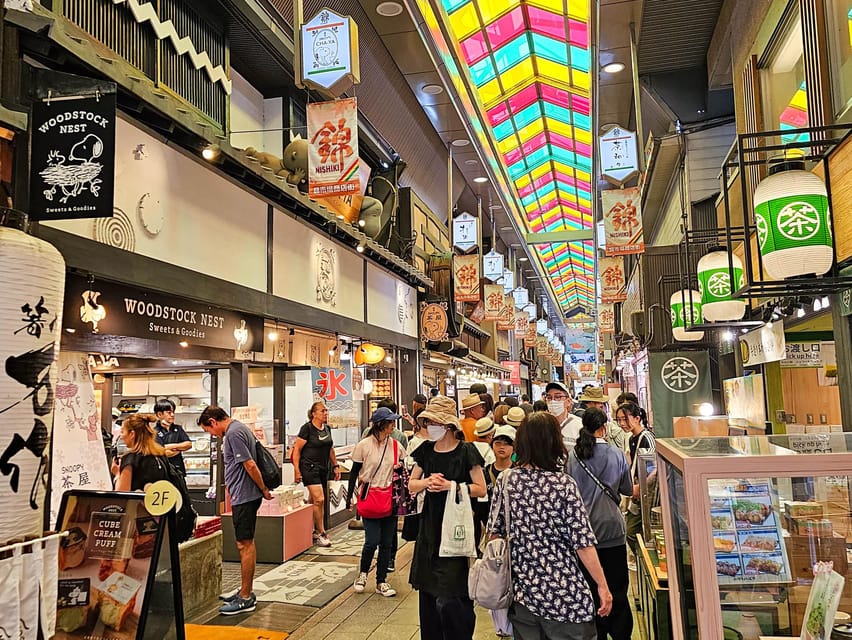
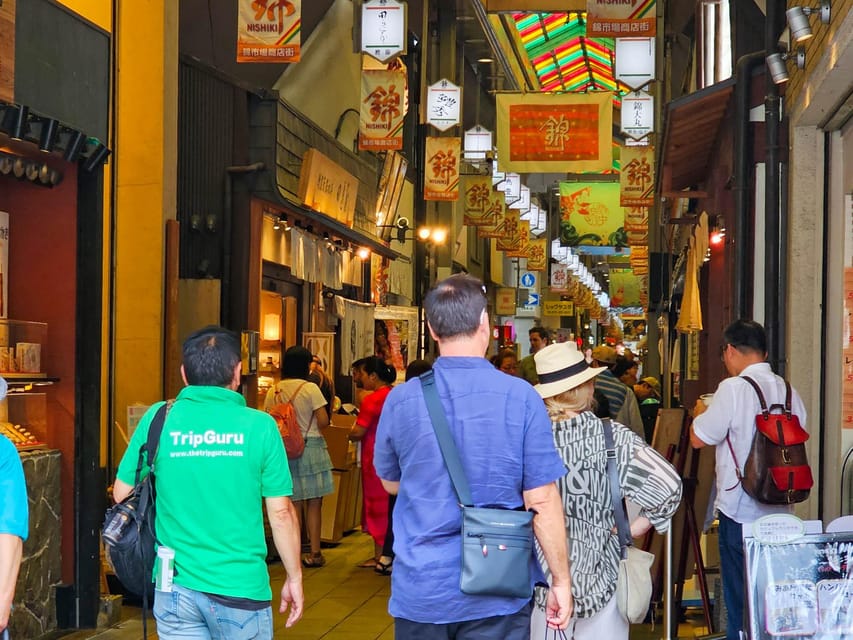
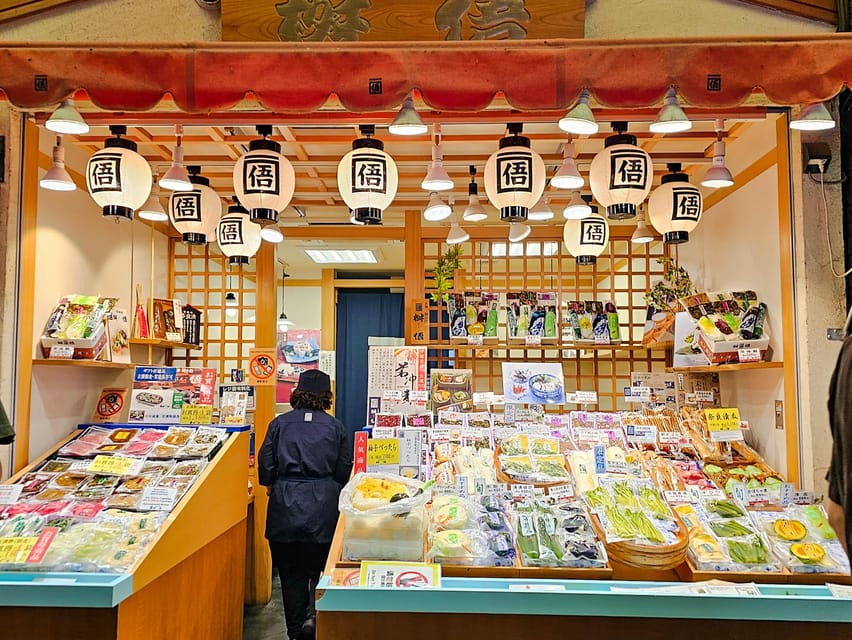
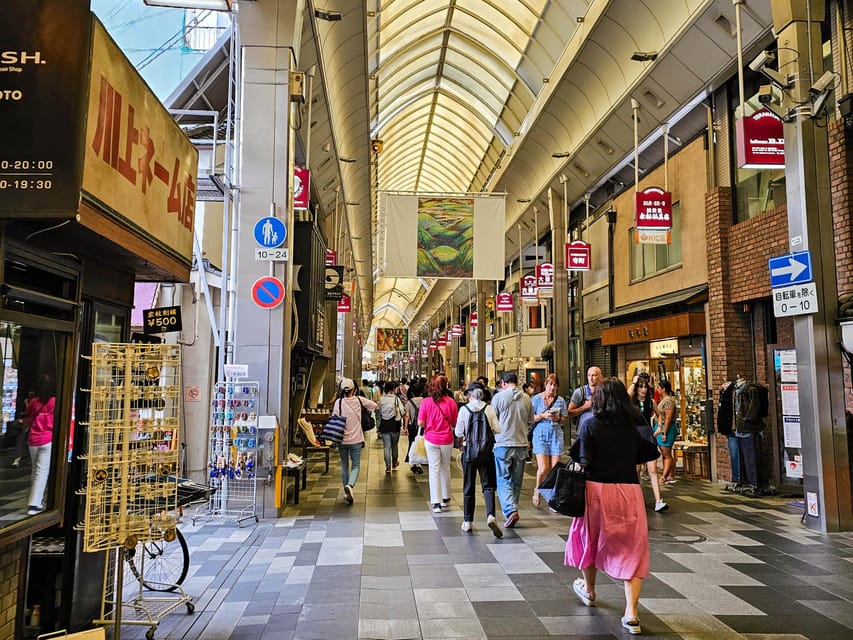
From Daimaru, the route continues to Nishiki Market. The covered market is lined with shops selling seasonal foods, Kyoto specialties, pickles, seafood, sweets, produce, knives, cookware, and other kitchen goods. It has served local shoppers for generations, and some businesses have remained with the same families for many years.
The market is easy to enter and harder to understand. You can walk through it on your own, but without guidance it is easy to miss the difference between a local specialty, a common snack, and a food mainly intended for home cooking. A guide gives the stalls a story and helps you decide what deserves your attention.
The planned tastings include Nishiki gyoza and tempura made with hamo, a long, fine-boned fish associated with Kyoto cuisine. Hamo is a particularly useful food to encounter with a guide because preparation and texture may be unfamiliar. You can ask how it is eaten and why it appears in Kyoto food traditions.
Yuba sashimi is another good example of what makes this walk worthwhile. The name may suggest raw fish, but yuba is tofu skin. Tasting it with an explanation helps you avoid confusion and gives you a better sense of the range of Japanese foods beyond sushi and ramen.
You may also find stalls selling items you do not want to eat but do want to see, such as knives, cookware, or unusual preserved foods. The market is not only a snack corridor. It shows how ingredients, tools, and prepared dishes connect in Japanese home cooking.
Several guides have been praised for taking time with questions. Jasmine has been noted for explaining both the food and the market’s past, while Yoku has been praised for explaining Kyoto customs. Kats, who was described as being from Kyoto and having studied in the United States, has been appreciated for clear English and helpful tips for the rest of a Kyoto visit.
The pace can vary. One group may want to keep moving, while another may spend extra time at Daimaru or a favorite market stall. A guide such as the one who patiently adjusted the route for a group lingering at Daimaru can make the outing feel more personal. Still, you should tell your guide early if you care more about tasting than shopping, or more about browsing than eating.
Nishiki-Tenmangu Shrine adds a quieter half hour
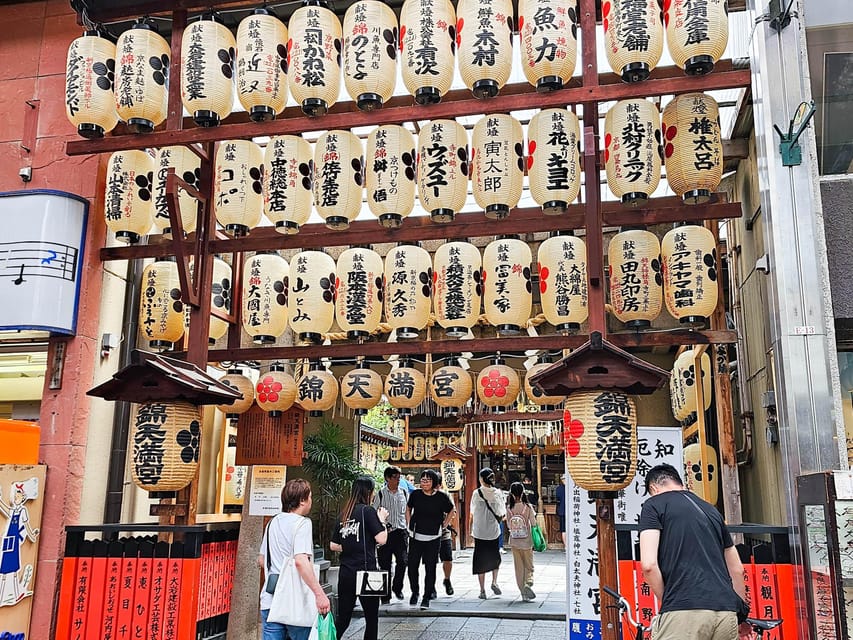
After the market, the route reaches Nishiki-Tenmangu Shrine. This small Shinto shrine sits close to the shopping streets, yet it offers a change of mood from the market’s noise and tight walkways.
The shrine is dedicated to the deity of learning. Your guide can explain the meaning of the shrine’s features, including the water fountain where you cleanse your hands before approaching the sacred area. Take a moment to observe the architecture and the way the shrine fits into the surrounding city.
This is a short visit, not a full shrine tour. That is a strength if you want a food-focused outing with a little cultural context rather than a long religious history lesson. It also creates a natural pause after the tastings.
You finish near Kyoto-Kawaramachi Station. That is useful for continuing into central Kyoto, finding a later meal, or returning to your hotel. The guide may also suggest nearby places to eat or visit, as Richard and several others have done for people looking to build the rest of their day.
More Street Food Market Tours in Kyoto:
- Kyoto: Nishiki Market Food Tour
★ 4.9 · 21 reviews - Taste of Nishiki Market Walking Food Tour with Local guide
★ 5.0 · 17 reviews - Kyoto: Nishiki Market Food Tour with Local Guide
★ 4.6 · 5 reviews - Dubai: Old Town, Creek, Museums, Souks, & Street Food Tour
★ 4.8 · 10,816 reviews
What the four included tastings tell you
The food is not simply a series of random samples. Each item offers a different entry point into Japanese cuisine.
- Yuba sashimi: A delicate tofu-skin preparation with a mild flavor and soft texture. It is a useful introduction to Kyoto’s soy-based cooking.
- Soy milk doughnut: A sweet, approachable contrast to the more delicate yuba. It may suit you if you want a familiar format with a Japanese ingredient.
- Nishiki gyoza: A savory dumpling-style bite that gives the market portion a hearty option.
- Hamo tempura: A fried preparation of local fish that lets you try a Kyoto specialty in a simple, recognizable form.
The guide’s explanation is as important as the tasting. A food you might dismiss after one bite can make more sense when you know its ingredients, preparation, or place in local customs. You are also free to ask for help with unfamiliar foods rather than pretending you understand everything on the counter.
One point needs attention: the tasting structure may not always feel obvious. A guest once expected the guide to announce which foods were planned, while the guide was waiting for the guest to ask. To avoid that problem, ask at the beginning which four tastings are included and when you will try them.
Is $42 a fair price?
At $42 per person, this is not the cheapest way to walk through Nishiki Market. You can enter the market without paying an admission fee, and you can buy individual snacks as you go.
The value comes from the guided access to both a depachika and Nishiki Market, the four planned tastings, the English explanations, and the small group. If you are unfamiliar with Japanese food, the guide can save you from spending money on items you do not understand or missing foods you would have wanted to try.
The price is easier to justify if you treat the tour as an introduction rather than a full meal. Four tastings may not replace lunch, and extra food and drinks are not included. You are paying for orientation, interpretation, and a short set of samples, not unlimited eating.
I would also consider booking early in your Kyoto stay. You can return to Nishiki Market later with more confidence, revisit a favorite yuba or sweet, and use the guide’s food suggestions during the rest of your trip.
Timing, comfort, and who should book
The advertised duration is two hours, with multiple starting times. The stated stop schedule lists 1.5 hours at Daimaru, one hour at Nishiki Market, and 30 minutes at the shrine, which adds up to longer than two hours. Treat the timing as an approximate outline and confirm the expected schedule when you book, especially if you have a train, restaurant reservation, or evening show afterward.
This is not a good choice if you have significant mobility limits, heart problems, respiratory issues, or if you are pregnant. The route involves walking through busy market areas, standing near stalls, and keeping pace with a group. Comfortable shoes are essential.
The tour suits first-time Kyoto visitors, food lovers, families with older children, and anyone who feels unsure about ordering unfamiliar Japanese dishes. It can also work well for solo visitors who want a small group without committing to a long, formal food tour.
If you already know Nishiki Market well, the Daimaru visit and food explanations may still interest you, but the tour will offer less novelty. And if your main goal is a large meal, this is not the right format. It is a tasting walk, not a restaurant crawl.
Should you book this Nishiki Market food tour?
I would book it if you have only a few hours and want a clear introduction to Kyoto food without spending half a day on a formal culinary class. The combination of Daimaru, Nishiki Market, four tastings, and Nishiki-Tenmangu Shrine gives you variety in a compact route.
Book it early if you want food advice for the rest of your trip. Ask the guide to outline the included tastings at the start, and leave a little flexibility around the advertised two-hour finish.
Skip it if you prefer to browse alone, need guaranteed accessibility, or want a full meal with drinks included. For curious eaters who enjoy asking questions and trying foods such as yuba and hamo, the $42 price is reasonable, especially with a friendly guide such as Mao, Jasmine, Boris, Ai, Richard, or Kats leading the way.
FAQ
Where does the tour start?
The meeting point is Apple Kyoto. Your guide will be wearing a TripGuru shirt or holding a TripGuru sign.
Where does the tour finish?
The tour finishes at Kyoto-Kawaramachi Station.
How long does the tour last?
The advertised duration is two hours. The stated stop schedule adds up to more than two hours, so confirm the expected timing if you have plans afterward.
What food is included?
The included tastings are yuba sashimi, a soy milk doughnut, Nishiki gyoza, and tempura made with hamo fish.
Are additional food and drinks included?
No. Additional food, drinks, and personal expenses are not included.
Is hotel pickup provided?
No. Hotel pickup and drop-off are not included.
What language is the tour offered in?
The tour is offered in English with a live English-speaking guide.
How large is the group?
It is a small-group tour limited to nine participants.
What should I bring?
Bring comfortable shoes, a camera, and cash. Arrive at least 10 minutes early because the guide will wait no more than 10 minutes.
More Food and Drink Trips in Kyoto
- Kyoto Nishiki Market Food and Culture Walking Tour
★ 5.0 · 412 reviews - Dubai: Old Town, Souks, Street Food, Guided Tour & Abra Ride
★ 4.9 · 7,170 reviews - Bangkok by Night: Temples, Markets and Food Tuk-Tuk Tour
★ 5.0 · 3,752 reviews - Chef Guided Food Tour of Pike Place Market
★ 5.0 · 3,733 reviews
Just added around Kyoto
- Taste of Nishiki Market Walking Food Tour with Local guide★ 5.0 · 17 reviews
- Kyoto: Nishiki Market Tour with a Local Foodie & Tastings★ 4.5 · 67 reviews
- Golden Pavilion, Nijo Castle, & Nishiki Market Half day tour★ 5.0 · 29 reviews
- Kyoto: Nishiki Market Food Tour with Local Guide★ 4.6 · 5 reviews
- Kyoto: Wholesale Fish Market Walking Tour★ 5.0 · 2 reviews
- Kyoto: Enjoy Sushi & Market Tour! Best for Family & Couple!★ 4.8 · 20 reviews
- Kyoto: Nishiki Market Food Tour★ 4.9 · 21 reviews
- Nishiki Market Food Tour with Cooking Class★ 4.9 · 42 reviews
Street Food Market Tours, compared.
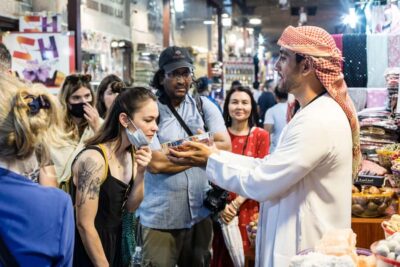
Old Town, Creek, Museums, Souks, & Street Food Tour
Read our review →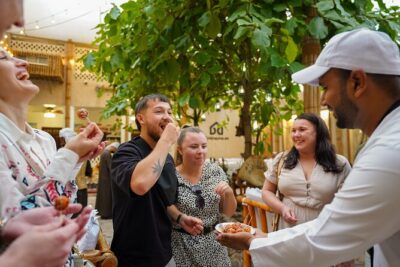
Old Town, Souks, Street Food, Guided Tour & Abra Ride
Read our review →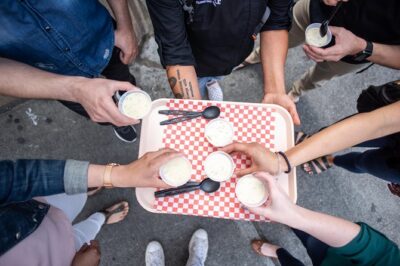
Old Town, Souks, Street Food, Guided Tour & Abra Ride
Read our review →
Small Group Cooking Class & Market Food Tour in Florence
Read our review →
Old Town, Street Food, Creek, Souks, & Emirati House
Read our review →
Browse the lists this tour appears in