Review · MARKET AND COOKING CLASS TOURS
Singapore: Market-to-Table Experience and Cooking Class
Singapore’s best food lesson begins before you reach the stove. You’ll walk through a local wet market, hear how ingredients fit into Singapore’s Chinese, Malay, and wider Asian food culture, then sit down for an iconic breakfast in a neighborhood coffeeshop. It is a useful way to see daily life beyond the polished shopping streets.
I like the combination of market visit and hands-on cooking, since you learn what ingredients look like before preparing them. I also like the warm, informal teaching style reported from hosts such as Denise, Collin, Vivian, and Angel. The one tradeoff is time: three hours goes quickly, and one person felt the market portion could have been shorter to allow more cooking.
Key points at a glance
- Real market first: Meet a licensed guide and chef, then explore a Singapore wet market and its food stalls.
- Breakfast included in the story: Stop at a local coffeeshop for an iconic Singapore breakfast before returning to the studio.
- Three dishes by weekday: Menus change between Tuesday, Thursday, Saturday and Wednesday, Friday, Sunday.
- Practical cooking: Prepare local favorites from scratch with ingredients and equipment supplied.
- Friendly teaching: Hosts including Denise, Collin, Vivian, and Angel have been praised for clear explanations and an easygoing manner.
- Good flexibility: The class lasts three hours, allows cancellation up to 24 hours ahead, and offers reserve now, pay later booking.
Why the market matters before you cook
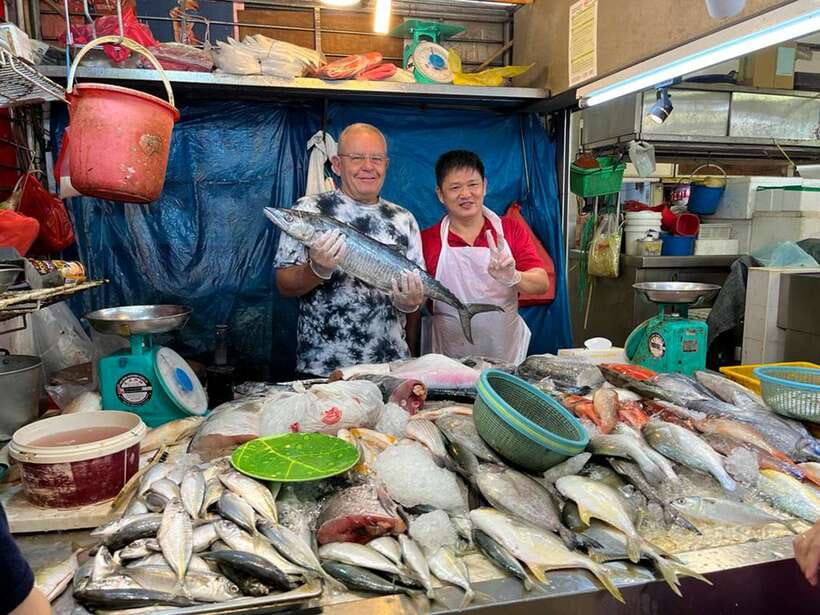
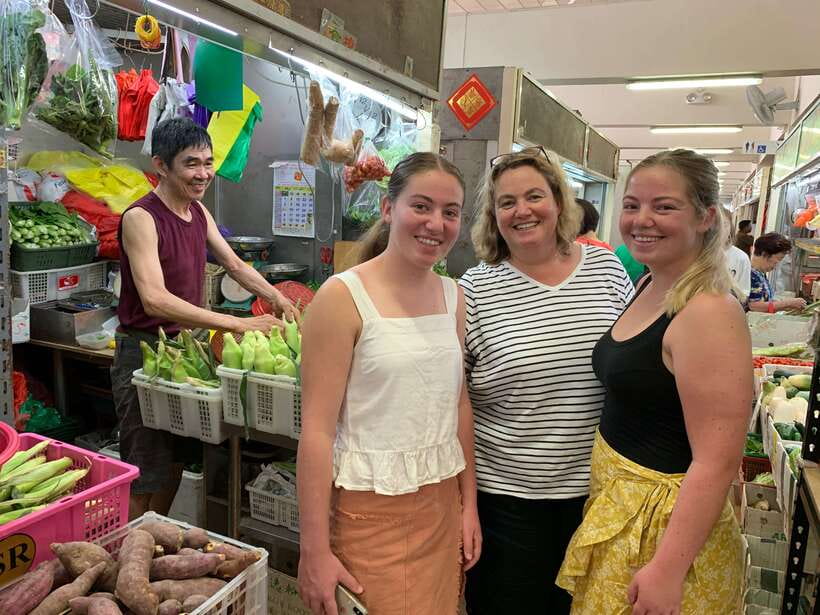
A cooking class can hand you a bowl of ingredients and get straight to chopping. This one takes a better route. Your guide first introduces you to a wet market, where food is part of ordinary neighborhood life rather than a display prepared for tourists.
You’ll learn about local ingredients and how they connect to Singapore’s mixed food culture. The experience is led by a licensed tour guide who is also a chef, so the market visit is not just a walk past produce and meat counters. The guide can connect what you see to the dishes you will later prepare.
That context is useful. Singaporean food draws from several communities, and a dish can tell you as much about the city’s cultural mix as a museum exhibit. The hosts also share stories about local life, which gives the visit more meaning than simply buying ingredients for class.
The market portion is a highlight for many people, especially if you want to see a different side of Singapore. Anna described the neighborhood walk and market shopping as fascinating, while David especially enjoyed hearing about local culture from Vivian. Ashleigh praised Collin’s informative and entertaining approach.
You should know that the market visit takes a meaningful share of the three-hour schedule. That is part of the appeal, but if you mainly want extended kitchen time, the balance may feel slightly weighted toward the walking portion. One participant specifically wished for less market time and more cooking.
More Market and Cooking Class Tours in the world:
- Hanoi Cooking Class: Culture, Local Market & Meaning CSR Impact
★ 5.0 · 5,147 reviews - 5 Traditional Dishes Hanoi Cooking Class with Market Trip
★ 5.0 · 4,890 reviews - Cooking Class and Lunch at a Tuscan Farmhouse with Local Market Tour from Florence
★ 5.0 · 4,831 reviews
A Singapore breakfast in a local coffeeshop
After the market, you’ll enjoy an iconic Singapore breakfast in a local coffeeshop. The supplied details do not specify the exact breakfast dish, so you should not book this expecting one particular item. The value is the setting and the chance to pause in a place used for everyday meals.
This stop helps the morning feel like a neighborhood food experience rather than a cooking lesson staged in isolation. You get to see how food fits into the rhythm of local life, then return to the studio with a clearer sense of where Singapore’s flavors come from.
It also gives the experience a pleasant pace. You are not asked to spend three straight hours standing over a work surface. The morning moves from street-level observation, to breakfast, to practical instruction.
What you actually cook on each day
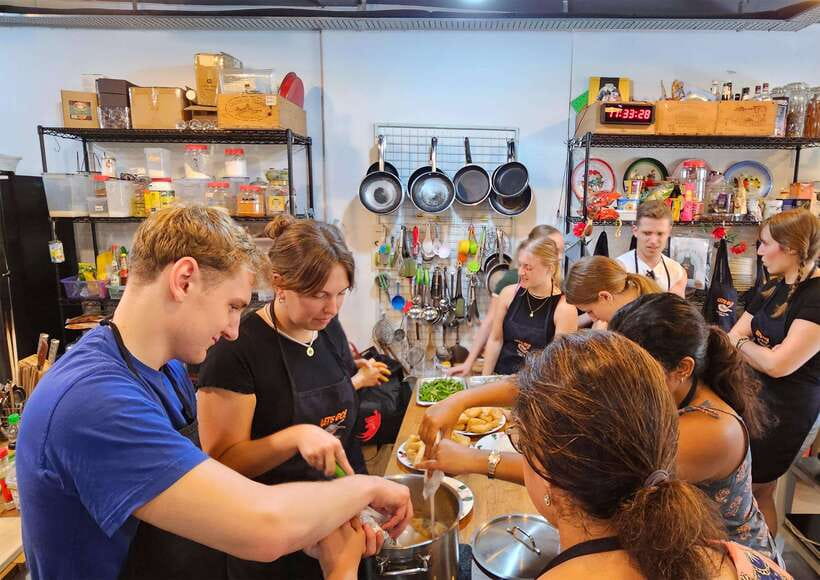
The menu changes by day, so check the date before booking. There are two main menus.
Tuesday, Thursday, and Saturday: noodles, spring roll, and ondeh ondeh
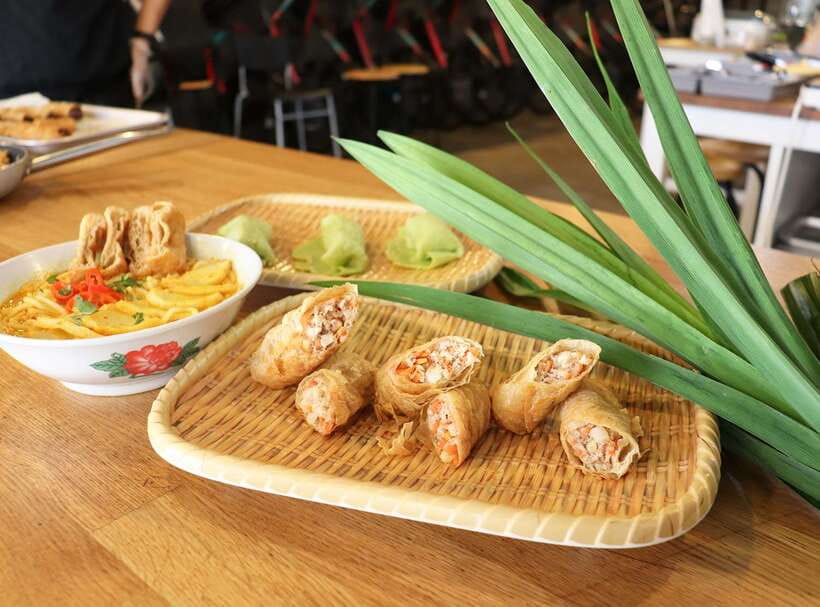
On these days, you prepare Hokkien Mee, also described as Singapore noodles, along with a vegetarian spring roll and ondeh ondeh.
Hokkien Mee gives you a chance to work with a well-known Singapore noodle dish. The combination of noodles and local seasoning makes it a useful introduction to the kind of savory, satisfying food found across the city.
The vegetarian spring roll adds a different technique and texture. It is a practical dish for a group because participants can work with fillings and rolling rather than spending the entire class on one pot.
Ondeh ondeh provides the sweet finish. It is a traditional treat, and making it yourself lets you handle a part of Singaporean food culture that is easy to miss if you focus only on noodles, rice, and hawker dishes.
A few more market tours around the world worth a look
- Bangkok: Damnoen Saduak Market and Maeklong Railway Market
★ 4.5 · 26,723 reviews - The Old Siam: Damnoen Saduak and Maeklong Railway Market
★ 4.5 · 10,992 reviews - Dubai: Old Town, Creek, Museums, Souks, & Street Food Tour
★ 4.8 · 10,816 reviews - Bangkok: Train Market & Floating Market with Boat Ride
★ 4.7 · 9,547 reviews
Wednesday, Friday, and Sunday: chicken rice, ngoh hiang, and kueh dadar
On these days, you prepare traditional chicken rice, ngoh hiang, and kueh dadar.
Chicken rice is one of Singapore’s best-known local favorites. The class also gives you a chance to make ngoh hiang, a five-spice minced meat roll with strong ties to Chinese culinary traditions.
Kueh dadar rounds out the menu with a pandan crepe filled with coconut sweetened with palm sugar. This is a more distinctive dessert lesson than a generic cake or cookie class. It introduces pandan, palm sugar, and coconut in one dish.
The menu information also refers to laksa, a spicy coconut milk-based noodle soup, as a local favorite covered by the culinary concept. However, the scheduled menu list names Hokkien Mee on some days and chicken rice on the others. If laksa is the dish you most want to learn, confirm the menu for your date before paying.
How the cooking class feels
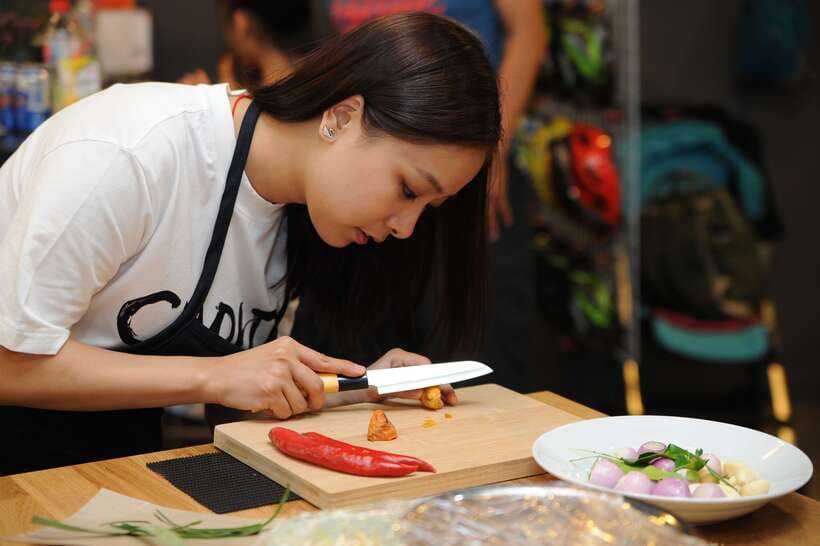
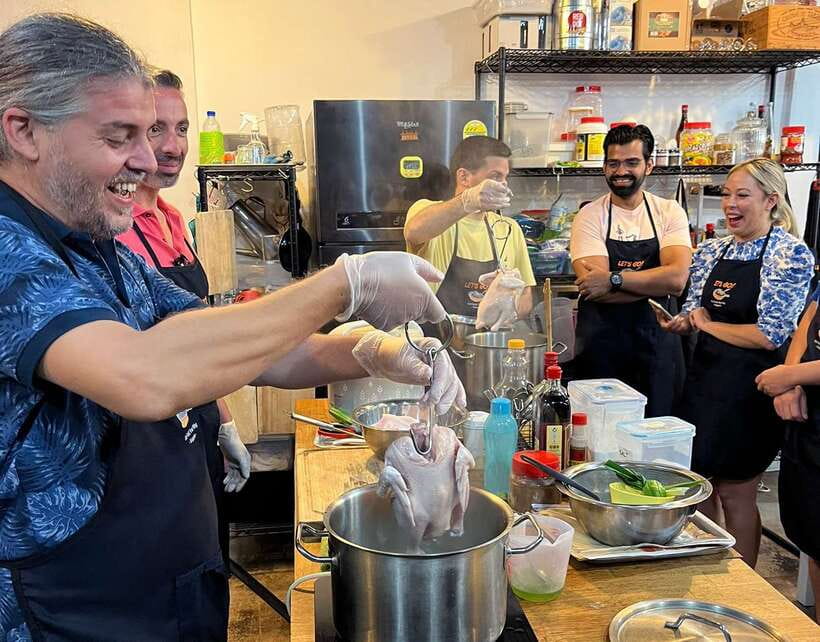
The kitchen portion is hands-on. The price includes all ingredients and equipment, so you do not need to shop for special items or bring cooking tools. Bottled water is also included.
You will learn techniques from trained chefs who also guide the market visit. The tone appears friendly rather than formal. Denise, Collin, Vivian, and Angel are each described as warm, clear, outgoing, or entertaining, which matters in a class where the quality of instruction can shape the whole morning.
Amy, who joined with American companions, found Angel easy to understand and enjoyed the class enough to want to return. Collin also took photos while the group cooked, a small but useful touch if you want a record of the experience without stopping to manage your phone.
The class can work well for mixed ability levels because the aim is not to turn you into a professional chef. You are learning local dishes, basic methods, and the role of ingredients in Singapore’s food culture. Still, the exact division of tasks may depend on the group and the day’s pace.
One recent group prepared three dishes in a little over two hours and finished the full experience, including eating, in about three and a half hours. The advertised duration is three hours, so allow a little flexibility around the schedule.
What makes the food lesson useful at home
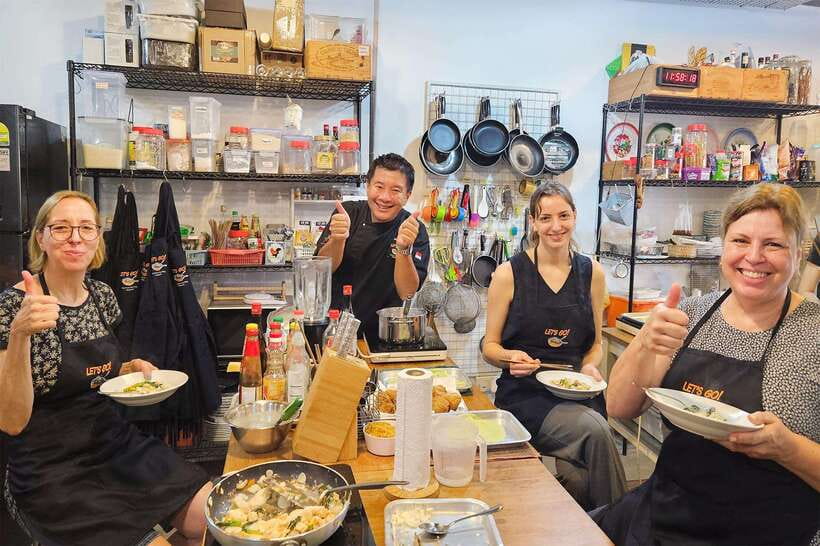
The best souvenir from a class is a method you can repeat. This experience gives you several dishes to remember, plus an understanding of the ingredients before they reach the cooking bench.
You may not find every ingredient easy to source at home, but the class can still help you recognize flavors and techniques. Learning how pandan smells, how palm sugar sweetens coconut, or how five-spice seasoning changes a filling is more useful than simply eating the finished food.
I also like that the dishes cover more than one category. Depending on the day, you get noodles or rice, a savory side or roll, and a sweet. That gives the class a broader picture of local cooking than a session devoted to one recipe.
The experience is also social without requiring a large group. A participant described a small class with just two other people, including a young local couple, and found the atmosphere relaxed. Group size can vary, but the available accounts suggest that at least some sessions are intimate.
Is $109 good value?
At $109 per person, this is not the cheapest way to eat in Singapore. A market breakfast and several hawker meals would cost far less. You are paying for instruction, a guide, ingredients, equipment, a market walk, cultural explanation, and the chance to eat what you make.
The value improves if you would otherwise book a separate cooking class and a food-focused neighborhood tour. Here, those elements are joined in one three-hour activity. You also avoid the work of sourcing ingredients and setting up a kitchen.
I would consider the price fair for someone who wants context as well as food. If you only want to taste local dishes, spend the money at hawker centers instead. If you want to understand ingredients and prepare dishes yourself, the combined format makes more sense.
The class is also a better fit for people who enjoy active experiences. You are not simply watching a demonstration. You will participate, listen, prepare food, and eat the result. That makes the price easier to justify for couples, families, and small groups who value a shared activity.
Who should book this experience
This is a strong choice if you want a close look at everyday Singapore and prefer food experiences with a cultural angle. You do not need to be an experienced cook. The hosts are trained chefs, and the class is designed to teach local favorites from scratch.
Families may appreciate the mix of walking, food, and practical work. The activity is described as suitable for all ages, although children will need to follow the guide’s kitchen instructions.
It also suits first-time visitors who want a quick introduction to Singapore’s food culture. In three hours, you see a neighborhood, enter a wet market, have breakfast, learn about local life, and prepare several dishes.
It is less suitable if you want a long, advanced cooking workshop. The market and breakfast are central parts of the experience, and the cooking time is limited by the three-hour format. It may also disappoint if you book without checking the menu and arrive expecting a specific dish.
The class is wheelchair accessible, but you should mention your accessibility needs when booking. Wheelchair rental is not provided. You should also report dietary concerns in advance so the team can consider them.
Meeting point, language, and weather tips
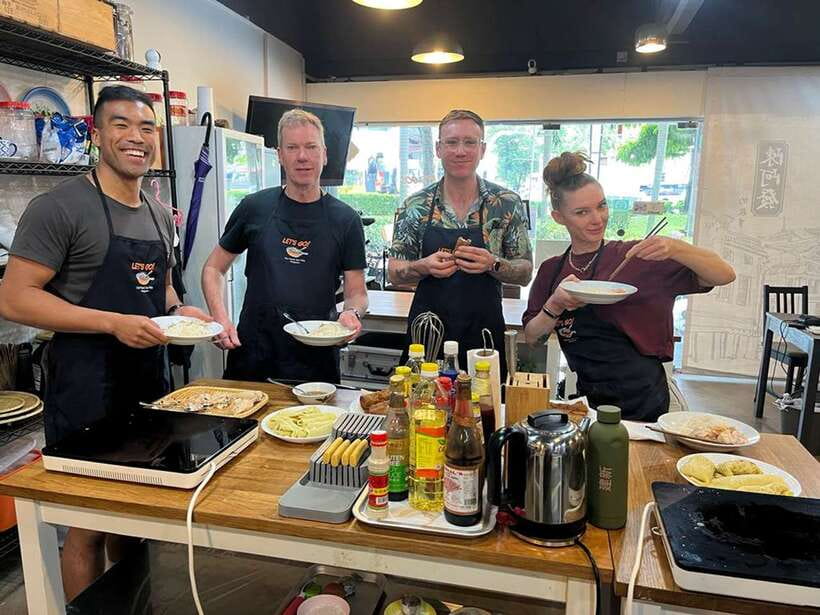
Look for the Let’s Go Tour Singapore sign at the junction of Northern Bridge Road and Jalan Sultan Road. The experience is offered in English and Chinese.
The tour runs rain or shine, so bring suitable clothing for outdoor walking. The wet market and neighborhood portion take place before the kitchen session, and the activity will continue in wet weather.
You can cancel up to 24 hours before the start for a full refund. Reserve now and pay later is available, which is helpful if your Singapore schedule is still shifting.
Should you book it?
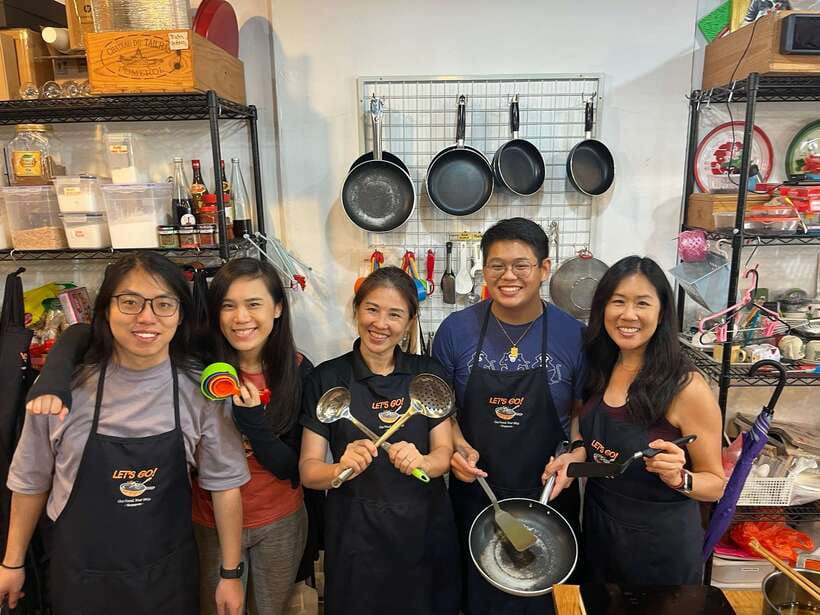
Book this experience if you want more than a meal and like learning by doing. The strongest features are the real market visit, the local coffeeshop breakfast, the small-group feel found on some sessions, and the friendly instruction from hosts such as Collin, Vivian, Denise, and Angel.
Check the weekday menu first. Choose Tuesday, Thursday, or Saturday for Hokkien Mee, vegetarian spring roll, and ondeh ondeh. Choose Wednesday, Friday, or Sunday for chicken rice, ngoh hiang, and kueh dadar.
Skip it if your main goal is a long technical cooking course or the lowest-cost way to eat Singaporean food. For everyone else, $109 buys a well-rounded morning that links the market, the meal, and the kitchen in a sensible way.
FAQ
How long does the Singapore market and cooking experience last?
The advertised duration is three hours. One group reported finishing in about three and a half hours including time to eat, so allow some flexibility.
What is included in the price?
The experience includes bottled water, the local market tour with a licensed guide and chef, and all ingredients and equipment needed for the cooking class.
Where is the meeting point?
Meet at the junction of Northern Bridge Road and Jalan Sultan Road. Look for the Let’s Go Tour Singapore sign.
Which languages are available?
The experience is offered in English and Chinese.
Which dishes are prepared on Tuesday, Thursday, and Saturday?
The menu is Hokkien Mee, also called Singapore noodles, vegetarian spring roll, and ondeh ondeh.
Which dishes are prepared on Wednesday, Friday, and Sunday?
The menu is traditional chicken rice, ngoh hiang, and kueh dadar.
Is the activity wheelchair accessible?
Yes, the activity is wheelchair accessible. You should mention your accessibility needs when booking. Wheelchair rental is not provided.
What if I have dietary concerns?
You should note any dietary concerns when booking so the team can take them into account.
Can I cancel or pay later?
You can cancel up to 24 hours in advance for a full refund. Reserve now and pay later is also available.
Just added around the world
- 3-Hour Herbal Wholesale TCM Market and a Local Wet Market Tour★ 5.0 · 4 reviews
- Half-day Dandan Noodles Cooking Class with a Local Market Visit★ 5.0 · 8 reviews
- Chania: Old Town, Public Market, Hill of Prophet Elias, Agia Triada★ 5.0 · 35 reviews
- Chania Old Town, Public Market and Chrisopigi Monastery Tour★ 4.5 · 6 reviews
- Charleston International Sweet Treats & Historic City Market Tour★ 5.0 · 22 reviews
- Food Tasting & Market Shopping: Private Guided Tour in PORT LOUIS★ 4.5 · 9 reviews
- Moroccan Cooking Class with a Local Family & Market Visit★ 5.0 · 16 reviews
- Private Market Tour & Cooking Class in Casablanca with Transfers★ 5.0 · 20 reviews
Market and Cooking Class Tours, compared.
Hanoi Cooking Class: Culture, Local Market & Meaning CSR Impact
Read our review →
5 Traditional Dishes Hanoi Cooking Class with Market Trip
Read our review →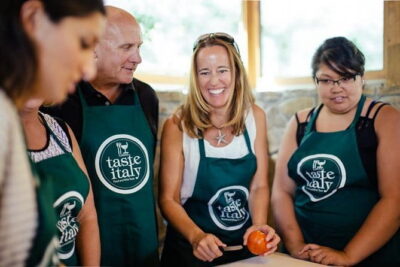
Cooking Class and Lunch at a Tuscan Farmhouse with Local Market Tour from Florence
Read our review →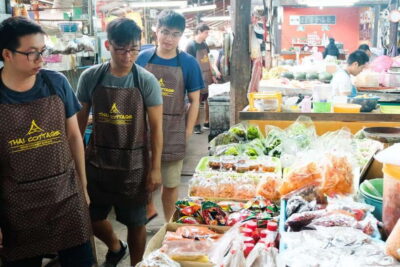
Cooking Class, Market & Thai Herbs Garden Tour
Read our review →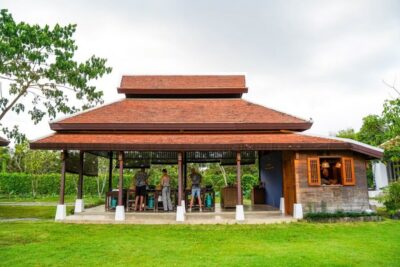
Authentic Cooking Class with Market & Farm Visit
Read our review →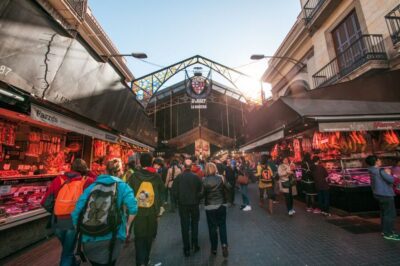
Paella Cooking Experience & Boqueria Market Tour
Read our review →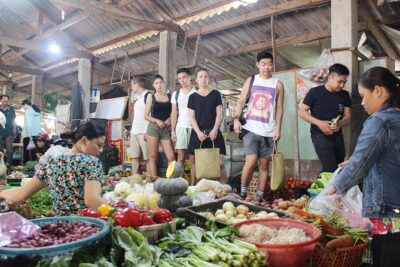
Cooking Class Hoi An:Local Market, Basket Boat, Fishing & Cooking
Read our review →