
Review · SIEM REAP MARKET TOURS
Siem Reap: Angkor Wat Sunrise and Market Tour by Jeep
Angkor Wat at sunrise is the star here, but the open-air jeep gives the morning a second attraction. You reach the temple before the heat builds, watch its towers reflect in the water, then move through jungle temples, stone faces, and a local market in one carefully packed day.
I like the mix of major sights and ordinary life. The tour pairs Angkor Wat and Bayon with breakfast at a local restaurant, palm cakes, fresh coconut, and market snacks. I also like the private-group format and the thoughtful touches: cold water, towels, seasonal fruit, and guides such as Raman and David who take photographs along the way.
The drawback is the early start and the extra cost of the Angkor pass. At $109 per person, you must add the $37 one-day temple ticket, so the price is easier to justify for a private group than for someone seeking the cheapest temple visit.
Key details at a glance
- Sunrise at Angkor Wat: Arrive early for the famous reflection view across the temple pond.
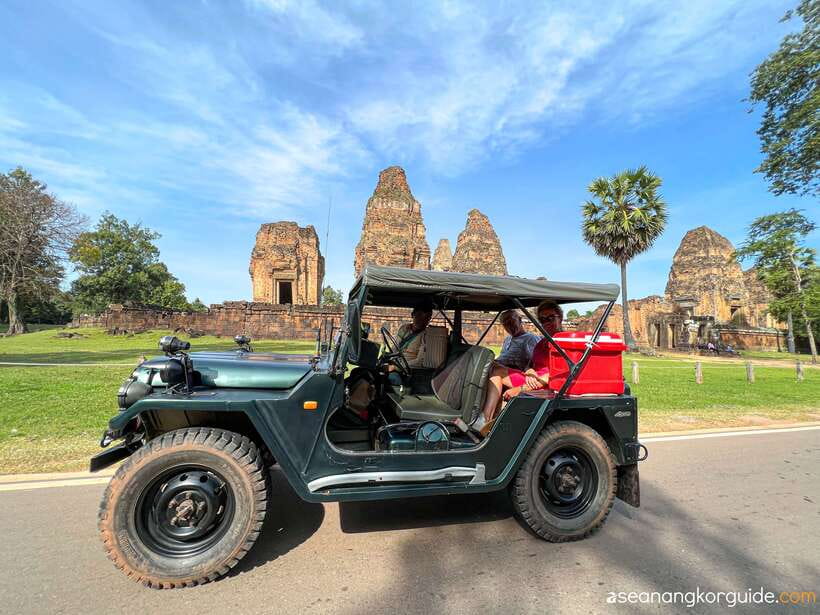
- Jeep transport: Ride between the temples in an original army-style jeep rather than a standard enclosed vehicle.
- Khmer breakfast: Try noodle soup, palm cake, and steamed rice dumplings with palm sugar at a local restaurant.
- Two jungle temples: Compare the better-known Ta Prohm with quieter Ta Nei, where roots and vines press into the old stonework.
- Private group: Travel with your own guide and driver, with English guiding throughout the day.
- Local market finish: See produce, clothing, handicrafts, and Cambodian food, with optional snacks at your own expense.
Why the jeep makes the morning memorable
The jeep is not just a way to get from one temple to another. It changes the feel of the outing. You are out in the morning air, with a clear view around you, rather than sealed inside a regular vehicle. The original army-style jeep is one of the more unusual details of the day and adds a little fun to a serious temple visit.
You will be picked up at your Siem Reap hotel before sunrise. The precise starting time depends on the date, so check availability when booking. Keep your camera ready, but also bring cash for the market and the required Angkor pass.
The tour lasts about eight hours. That gives you enough time for the main stops, breakfast, cooling breaks, and the market, but it is still a busy schedule. You are not spending a full morning at every temple. Instead, you get a broad introduction to the Angkor complex with a guide who keeps the day moving.
A few more market tours around Cambodia worth a look
- Kampot: Tuk Tuk Trip to Pepper Farm, Kep, Crab Market & More
★ 4.9 · 143 reviews - Phnom Penh’s Morning Market and Street Art Tour by Tuk tuk
★ 5.0 · 128 reviews - Phnom Penh Morning Market & Food Tour by Tuktuk – Includes All Food & Drinks!
★ 5.0 · 99 reviews
Angkor Wat before the heat
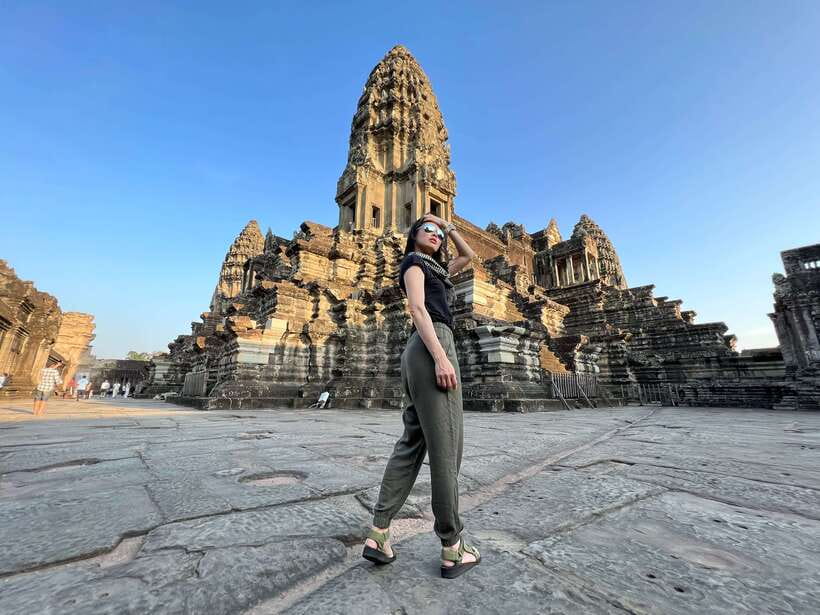
The first stop is Angkor Wat, Cambodia’s great temple complex and the largest religious monument in the world. It dates from the 12th century and was built as a Hindu temple before later use as a Buddhist site.
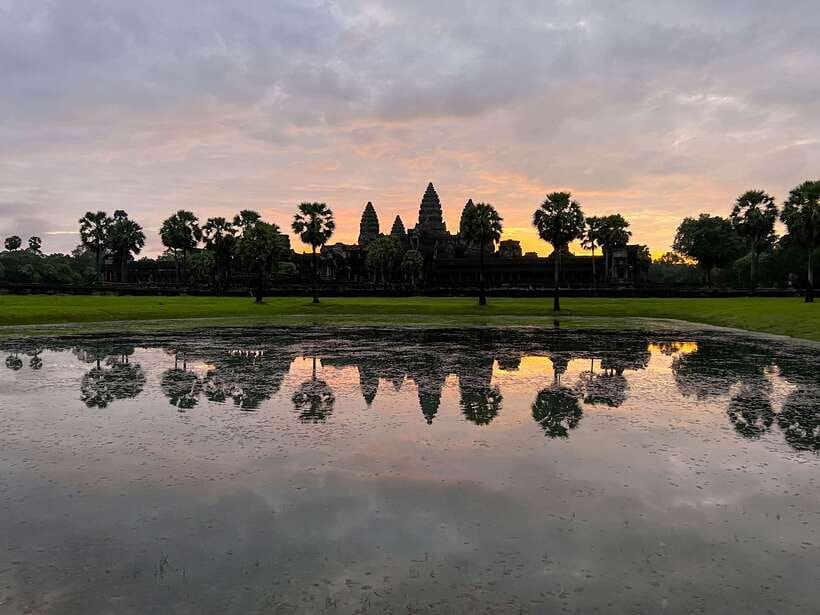
The usual sunrise view is across the water, with Angkor Wat’s towers reflected on the surface. The appeal is easy to understand: the dark temple outline slowly picks up the first light, and the water creates a second image below it. Sunrise conditions can change, of course, so think of this as a strong photo opportunity rather than a promise of perfect color.
You should arrive with realistic expectations. Sunrise is a popular time at Angkor Wat, and the area can feel busy even when the surrounding temple grounds are quiet. The tour’s early arrival helps you claim a good position for photographs, but it cannot control the weather or the number of other people present.
After sunrise, you spend about an hour and a half exploring Angkor Wat. This is where a good guide matters. The complex is enormous, and it is easy to look at towers and galleries without understanding how the spaces fit together. Your English speaking guide explains the temple’s cultural importance and points out how its design differs from the later Bayon.
Wear shoes that can handle uneven ground. Bring water, even though the tour supplies a cool bottle, and use the towel provided when the morning becomes hot. You will be outside for much of the day.
Breakfast with Khmer flavors
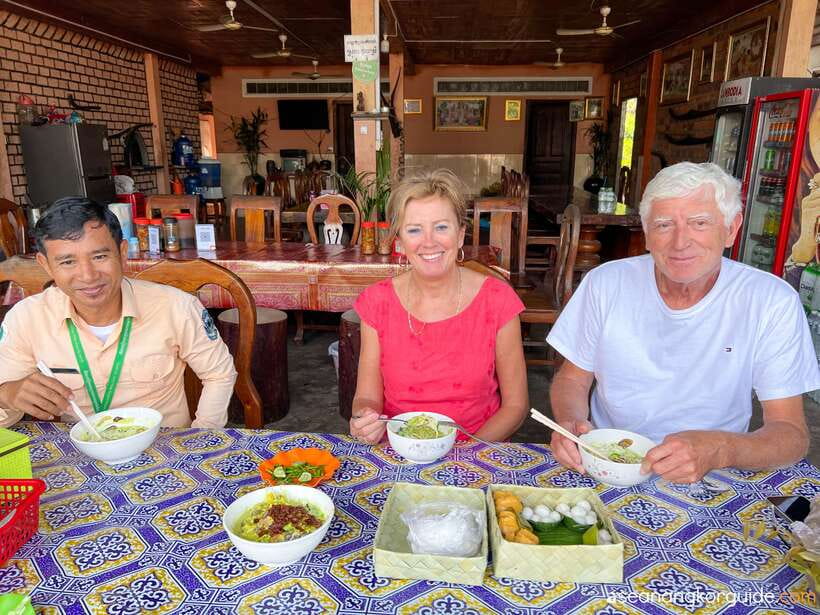
After Angkor Wat, you stop for a local breakfast. This is one of the most useful parts of the experience because it gives you a taste of Cambodia beyond temple photographs.
The meal includes Khmer noodle soup, along with traditional sweets such as palm cake and steamed rice dumplings filled with palm sugar. Fresh fruit and coconut are also included during the day. The palm desserts are a particular treat if you enjoy gently sweet food with a soft, chewy texture.
This is not a polished hotel buffet. You eat at a local restaurant, which makes the pause feel connected to daily Siem Reap life. It also gives you a chance to sit down after the first temple visit and regain energy before the next group of ruins.
If you have dietary needs, ask about the breakfast when booking or before the tour begins. The supplied details do not list alternative menus, so you should not assume substitutions are available.
Ta Prohm and Ta Nei under the trees
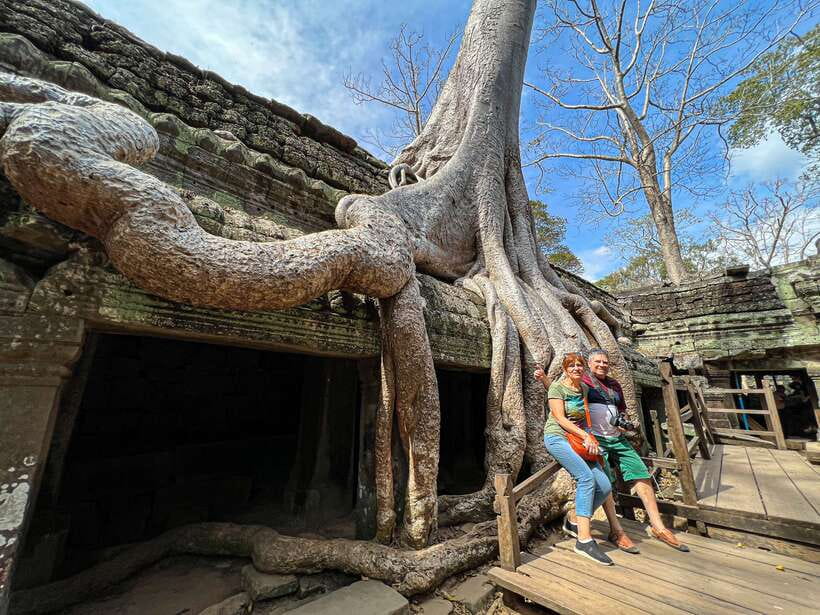
The jeep takes you next to Ta Prohm, the temple most closely linked with the film Lara Croft: Tomb Raider. Its fame comes from the way trees, vines, and huge roots press over the old stone buildings.
Ta Prohm is visually dramatic, but it is not untouched wilderness. Paths and sections of the complex are managed for safety, and the temple is a major stop on the Angkor circuit. Even so, the roots give the site a strong sense of age. You can see how nature is reclaiming spaces that were once carefully planned and built.
The guide helps you read the ruins rather than simply chase the best photo. Look for the contrast between carved stone, collapsed sections, and living roots. The most famous views can draw attention, but smaller doorways and covered galleries often give you better clues about the temple’s layout.
Ta Nei offers a different mood. It is another jungle temple, and the vegetation remains a major part of the setting. The stop lets you compare a well-known temple with a less familiar one. That comparison is valuable: Ta Prohm shows the power of a major, heavily visited site, while Ta Nei gives you a quieter look at ruins being overtaken by the forest.
The ground can be uneven around both temples. You should be comfortable walking, stepping over rough surfaces, and spending time outdoors. The tour is not a good fit if you want to stay in the jeep for most of the day.
Same place, a different set of stalls:
- KAMPOT TRAVEL-Pepper farm. Cave.Secret lake-Crab market & Salt…
★ 5.0 · 87 reviews - Battambang: Cooking Class and Market Touring
★ 4.8 · 80 reviews - Siem Reap: Morning Bike Tours with Local Market & Lunch
★ 5.0 · 52 reviews - 3 Hour Morning Market and Art Tour
★ 5.0 · 45 reviews
Bayon’s calm stone faces
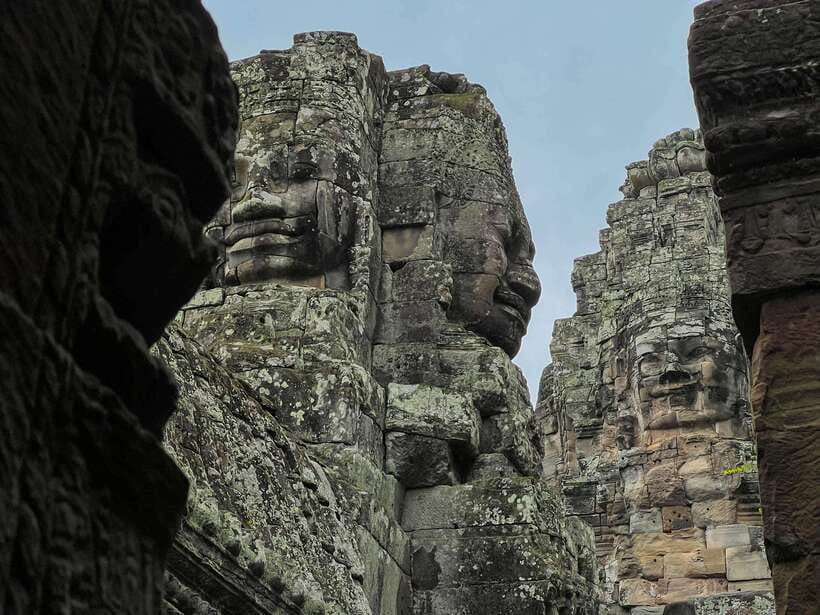
Bayon Temple changes the visual language completely. Angkor Wat is known for its grand towers, long galleries, and balanced design. Bayon feels more enclosed and puzzling, with serene stone faces carved into its towers.
The faces are the main attraction, but the temple rewards slow looking. From one angle, a face may appear to watch over a passage. From another, it becomes part of a larger cluster of towers. Your guide can explain the temple’s role and help you understand why its architecture differs so much from Angkor Wat.
This is a good place for photographs, especially if you enjoy details rather than only wide views. The faces give you a clear subject, while the narrow spaces and stacked towers create changing frames as you walk.
Bayon is also a useful reminder that Angkor is not one single monument. It is a wide collection of temples built and used in different periods, with different religious and political purposes. Seeing Angkor Wat, Ta Prohm, Ta Nei, and Bayon in one day gives you a practical sense of that range.
Victory Gate and the Angkor Thom walls
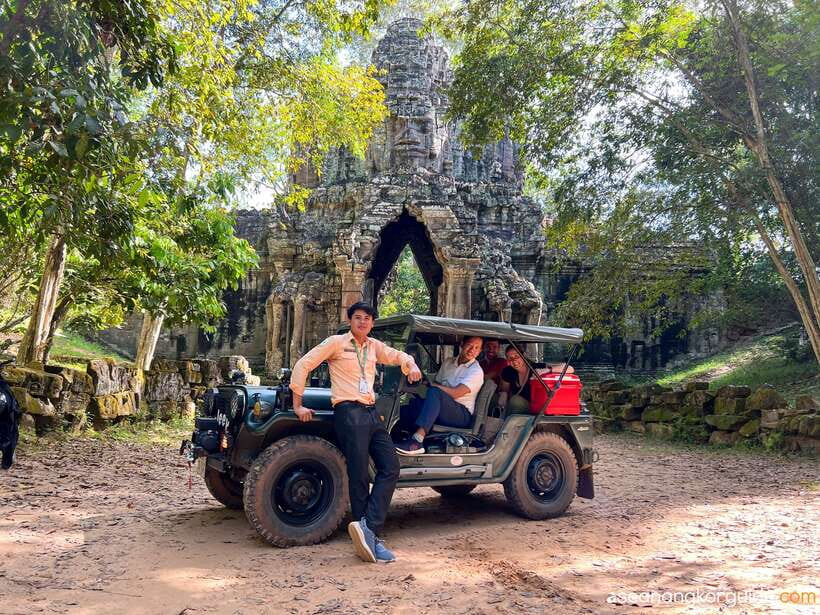
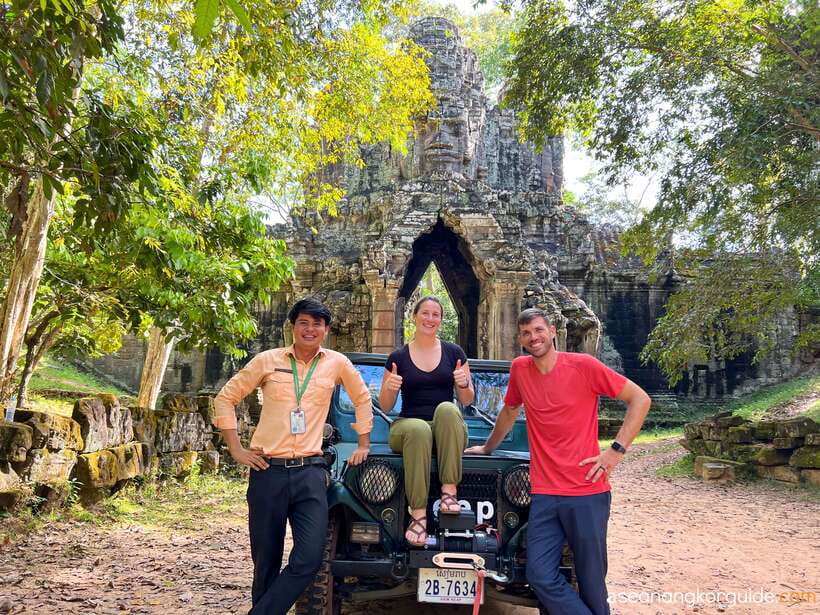
The itinerary also includes Victory Gate, one of the entrances connected with Angkor Thom. The gate was built by Jayavarman VII to help protect the city from neighboring enemies.
You will not spend as long here as at Angkor Wat or Bayon, but the stop adds context. A gate is easy to treat as a quick photo stop. Instead, look at it as part of a larger city plan, where entrances controlled movement into a major urban center.
The stonework has survived for centuries, which makes the gate an impressive sight even when viewed briefly. It also provides a change of scale after the close quarters of Bayon. You see how the temples fit into a fortified city rather than existing as isolated monuments.
A market after the monuments
The final major stop is a local market in Siem Reap. This is where the day moves from ancient stone to present-day shopping and food.
You can watch people buy and sell produce, clothing, handicrafts, and prepared food. You are free to try Cambodian dishes such as sticky rice, cakes, fruit, and egg noodles, but market food and drinks are not included in the tour price. Bring cash if you want to sample several items.
For adventurous eaters, fried spiders and scorpions may be available as local snacks. You do not have to try them. The market is worthwhile even if you prefer fruit, noodles, or sweets, because it shows what people buy and eat away from the temple circuit.
The market stop is less structured than the temple visits. That is a positive if you like to browse at your own pace, but it may feel short if you want a long shopping session. The day is already full, and the market is part of the final return route rather than a separate shopping tour.
What the $109 price really covers
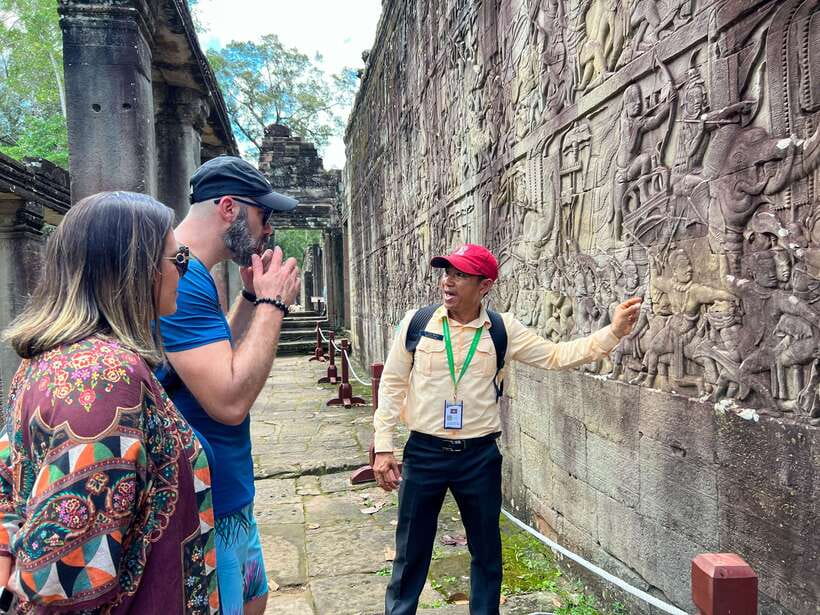
The advertised price is $109 per person. That includes hotel pickup and drop off, the jeep, an English speaking guide, breakfast with desserts, cool water, towels, seasonal fruit, and fresh coconut.
The Angkor one-day pass costs an additional $37 per person. That puts the basic total at $146 per person before any market purchases. Food and drinks at the market are also extra.
That is not a bargain-basement temple outing. You are paying for a private group, a dedicated driver and guide, an unusual vehicle, breakfast, and a full route that includes both famous and less familiar stops. If you are traveling as a couple or a small private party, the cost may make sense because you get a more personal pace and direct help with photographs.
Several practical touches add value. Cold water is available during the day, and the tour includes towels for cooling off. Fresh fruit and coconut are useful in Cambodia’s heat. Guides have also helped with photographs, which is handy at sunrise when you may want a proper picture of yourself rather than another solo temple shot.
If your main goal is simply to see Angkor Wat at the lowest possible cost, you can find cheaper ways to visit. If you want transport, food, temple explanations, and a local market combined in one private outing, the price is easier to defend.
Who should book this temple day
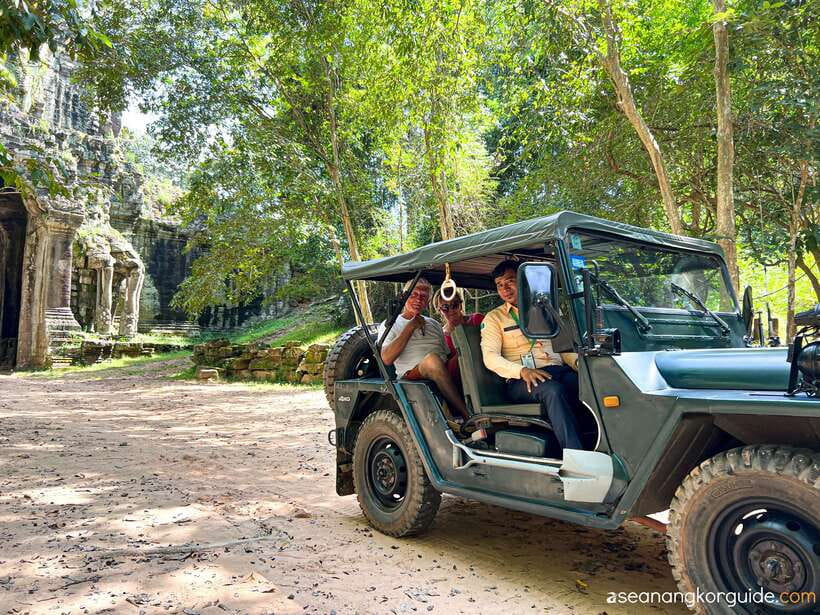
I would choose this tour if you want the major Angkor sights but do not want to arrange every transfer, meal, and entry point yourself. It suits first-time visitors who want clear explanations in English and a full introduction in one day.
It is also a strong choice for couples and small private groups. The private format allows you to ask questions, request photographs, and spend more time at the places that interest you most, within the fixed eight-hour schedule.
Food-curious visitors will enjoy the breakfast and market. The meal includes specific Khmer dishes and desserts rather than a generic western plate. The market adds a look at modern Cambodian life that temple-only programs miss.
I would think twice if you dislike early mornings, hot outdoor activity, uneven paths, or open vehicles. The tour starts before sunrise and packs several major sites into one day. It is rewarding, but it is not leisurely.
You should also check the pass cost before booking. The $109 tour price does not include the $37 Angkor pass, and you will want cash for market food and drinks. Cancellation is free up to 24 hours in advance, and you can reserve now and pay later, which helps if your Siem Reap plans are still shifting.
Should you book this Angkor jeep tour?
Book it if you want sunrise at Angkor Wat, a private jeep, Khmer breakfast, two jungle temples, Bayon’s stone faces, and a local market in one well-organized day. The strongest reasons are the personal guiding, the original army-style vehicle, the food stops, and the early schedule that gets you through the temples before the worst heat.
Skip it if your priority is the lowest price, a slow pace, or a late start. The extra temple pass matters, and eight hours of walking and sightseeing can be tiring.
For most first visits to Siem Reap, I think the combination is well judged. You see the postcard view at Angkor Wat, learn how the temples differ, eat food connected to local life, and finish with a market rather than another ruin. That gives you a fuller picture of the area than a temple transfer alone.
FAQ
How long does the tour last?
The tour lasts eight hours.
Is hotel pickup included?
Yes. Pickup and drop off at your Siem Reap hotel are included. You should wait in the hotel lobby or at the entrance.
Is the Angkor temple pass included?
No. The one-day Angkor pass costs $37 per person and is paid separately.
What language does the guide speak?
The live guide speaks English.
Is this a private tour?
Yes. The group type is private, so you travel with your own group rather than joining a large shared coach.
What breakfast is included?
Breakfast includes Khmer noodle soup and traditional desserts such as palm cake and steamed rice dumplings with palm sugar. Fresh fruit and fresh coconut are also included during the day.
Are market food and drinks included?
No. Food and drinks purchased at the local market are not included. Bring cash if you want to try sticky rice, cakes, fruit, egg noodles, fried spiders, or scorpions.
Can I cancel the tour?
You can cancel up to 24 hours in advance for a full refund. You can also reserve now and pay later.
Just added around Cambodia
- Siem Reap Morning Market & Food Tour by Tuk Tuk★ 5.0 · 2 reviews
- Siem Reap: Morning Cooking Class & Market Tour★ 5.0 · 7 reviews
- Siem Reap: FREE Market & Local Temple Tour★ 4.8 · 3 reviews
- Phnom Penh: Morning Foodie, Market Walking & Street Art Tour★ 5.0 · 3 reviews
- Siem Reap Khmer Cooking Class and Local Market Tour★ 4.1 · 4 reviews
- Siem Reap Cambodian Buddhist Water Blessing and Local Market★ 4.8 · 3 reviews
- Phnom Penh: Morning Market & Guided Breakfast Tour by Tuktuk★ 5.0 · 7 reviews
- Phnom Phnom: Local Market & Culture Walking of City Tour★ 5.0 · 3 reviews
Siem Reap Market Tours, compared.
3-Hour Siem Reap Guided Cooking Class and Market with Pick up
Read our review →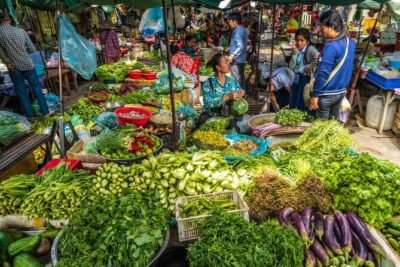
Morning Cooking Class and Market Tour in Siem Reap
Read our review →
Siem Reap Cambodian Buddhist Water Blessing and Local Market
Read our review →Siem Reap Cambodian Buddhist Water Blessing and Local Market
Read our review →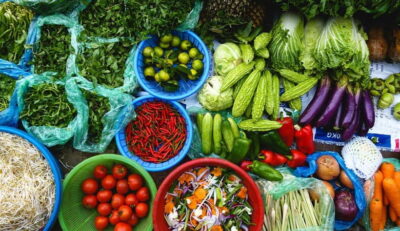
Siem Reap Cambodian Buddhist Water Blessing and Local Market
Read our review →Browse the lists this tour appears in