
Review · STREET FOOD MARKET TOURS
Seoul: Gwangjang Market Netflix Food Tour
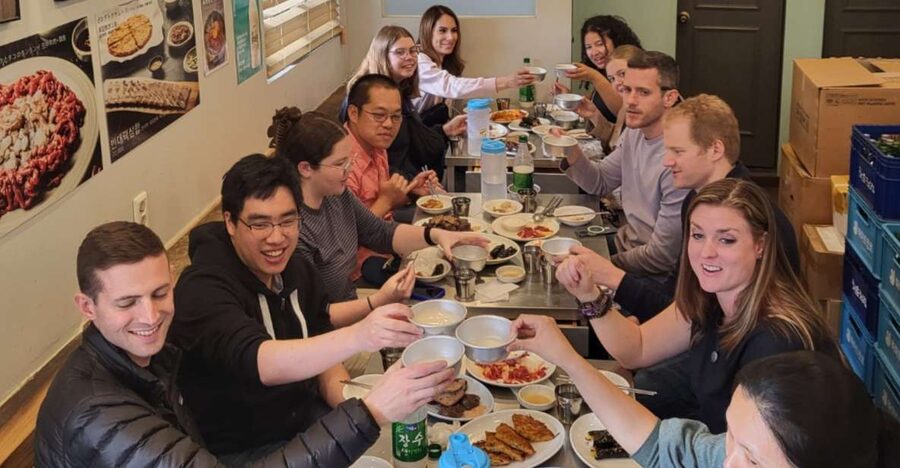
The best part of this three-hour Seoul walk is the way food, old neighborhoods, and everyday Korean life fit into one compact outing. You begin among the art shops of Insa-dong, pass through the hanok lanes of Ikseon-dong, and finish at Gwangjang Market with several street-food tastings.
I like the clear cultural context supplied by guides such as Peter, Sally, Alan, Sam, and Charlie. I also like that the tasting cost is included, with three to five kinds of food rather than one carefully selected dish. The main thing to remember is that this is a tasting tour, not a full meal, and the larger portions come near the end.
Key points at a glance
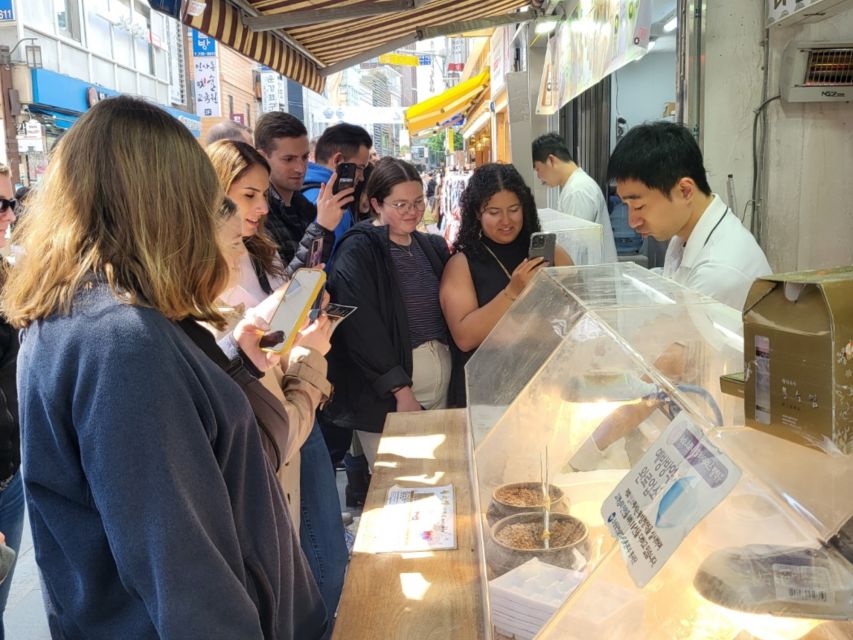
- Three Seoul districts in one walk: Begin at Anguk Station, explore Insa-dong, pass through Ikseon-dong, and finish inside Gwangjang Market.
- Three to five food tastings included: The number depends on the option you book, with no extra charge for the included street food.
- History comes with the snacks: Your guide explains Korean customs, food origins, art, buildings, and the changing character of each neighborhood.
- A strong guide record: Peter, Sally, Alan, Sam, and Charlie are praised for clear explanations, warmth, flexibility, and good food choices.
- Come hungry, but not starving: The tour does not provide a whole meal, and the biggest servings arrive late.
- Good value at $64: You pay for a guide, neighborhood walking tour, cultural interpretation, entrance fees, and several tastings.
Starting at Anguk Station and entering Insa-dong
Meet in front of Exit 6 at Anguk Station on Subway Line 3. Arrive 10 to 15 minutes early. That small buffer matters in central Seoul, where station exits can leave you on a busy street with several possible directions.
The tour opens on Insa-dong Culture Avenue, a fitting place to begin. This district is tied to traditional Korean arts, and its lanes are filled with galleries, antique stores, craft shops, and small boutiques. You are not simply walking from one food stop to another. The first section gives you a sense of how Seoul keeps older cultural practices in view while adding modern shops and cafes.
I find this opening useful because it slows the pace before the market food begins. Your guide can explain why Insa-dong matters, how it developed, and how its older identity now shares space with contemporary retail. Guides including Peter and Alan have been praised for explaining history, local customs, landmarks, and food origins in a way that remains easy to follow.
Do not expect a long museum visit or a detailed stop at every shop. Insa-dong is best treated as a walking district. You will see more by paying attention to the narrow side streets and building details than by rushing toward the next tasting.
More Street Food Market Tours in Seoul
- Seoul Street Food Market Tour
★ 5.0 · 1,226 reviews - Seoul: Night Market Food Tour with Local Guide
★ 4.9 · 943 reviews - Seoul: Palace, Temple and Market Guided Foodie Tour at Night
★ 4.9 · 750 reviews
Ikseon-dong, where hanok meet cafes
The route continues into Ikseon-dong, an older Seoul neighborhood known for its narrow lanes and traditional hanok buildings. Here, the appeal comes from contrast. Low historic homes sit beside modern cafes and shops, creating a district where the past and present occupy the same small blocks.
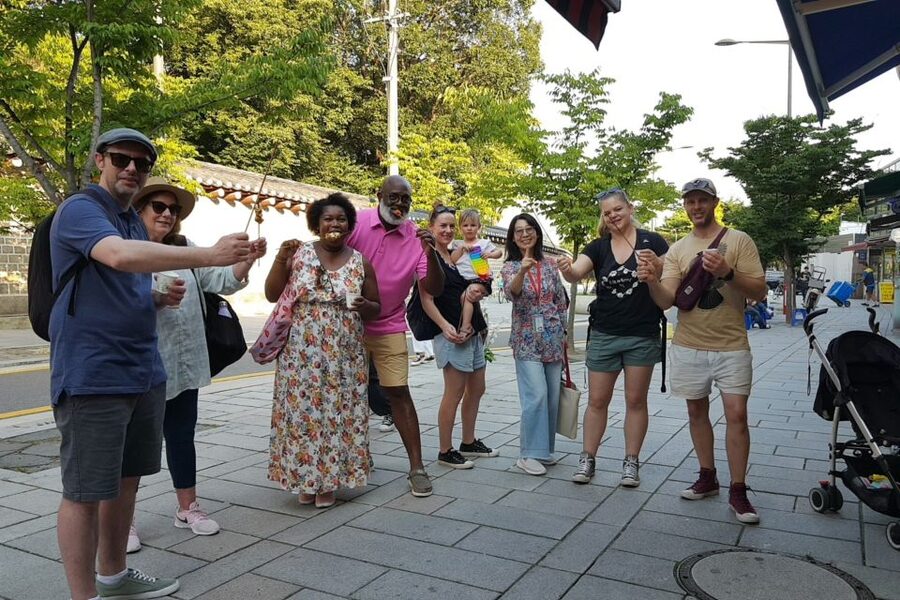
This section adds visual interest to the food focus. You can look at the rooflines, lane layout, and restored facades while your guide explains how the area fits into Seoul’s story. It is also a good place for photographs, though the close lanes may feel busy at times.
I like the inclusion of Ikseon-dong because a food tour limited to Gwangjang Market would give you only one slice of Seoul. This neighborhood shows a different side of the city. You get architecture and atmosphere before arriving at the market’s louder food stalls.
The walk does require some comfort with being on your feet. The full experience lasts about three hours and includes several districts, so wear shoes you can use comfortably on pavement. The supplied information does not give a precise walking distance, but the format is clearly an active neighborhood walk rather than a seated dining event.
Arriving at Gwangjang Market
Gwangjang Market is the food center of the tour and the final stopping point. The market dates from the early 1900s and remains associated with local food, textiles, handmade goods, and daily commerce. The setting gives the tastings some context: you are eating in a long-running market rather than visiting a restaurant designed mainly for visitors.
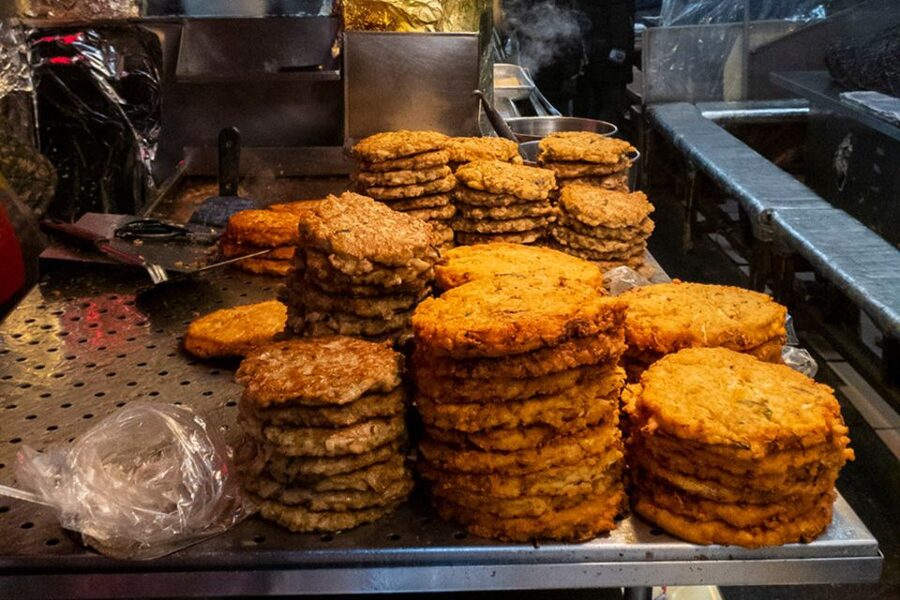
Expect plenty of visual activity. Stalls display prepared foods and ingredients, and the market’s narrow passages bring you close to the cooking and serving areas. Your guide helps you choose and understand what you are eating, which is especially useful if Korean street food is new to you.
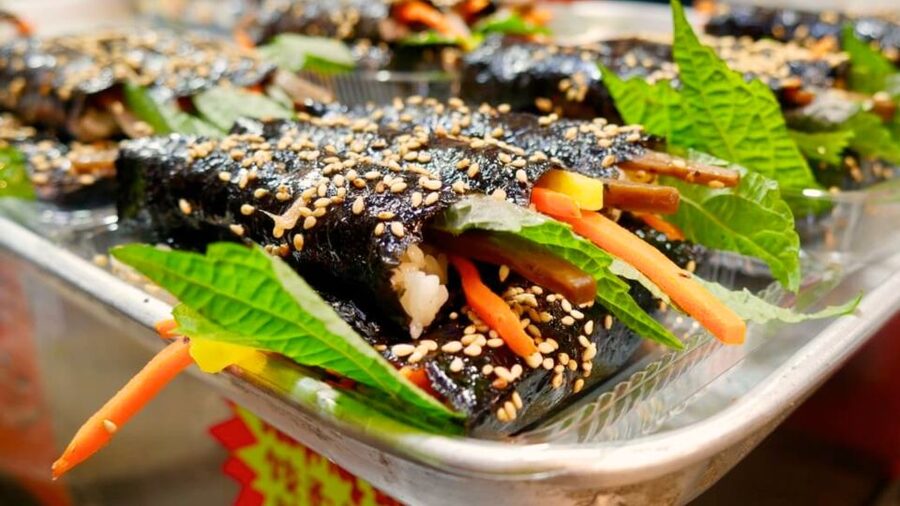
Food choices depend on the option you select and the availability during the visit, but the tour includes three to five kinds of street food. Past guide-led outings have included familiar Korean market dishes and more adventurous choices. Octopus served near the end has been a memorable highlight for some people, so this may be the moment to decide how far you want to push your food comfort zone.
The exact food sequence is not guaranteed in the information provided. That is normal for a market tour, where the available dishes and portion sizes can change. The advantage is a more local, flexible feel. The tradeoff is that you should not book this expecting a fixed restaurant menu.
What the food tasting is really worth
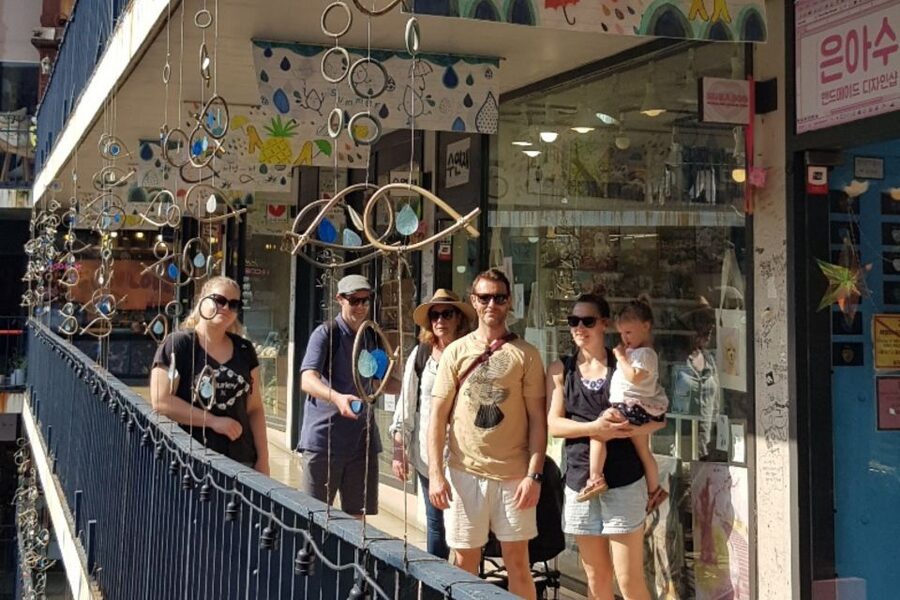
At $64 per person, the price makes most sense if you want more than a list of market dishes. You are paying for a three-hour guided walk, interpretation in English or Korean, entrance fees, and three to five tastings. There are no additional charges for the included street food, though personal expenses are separate.
The food itself is presented as a series of tastes, not a complete lunch or dinner. The tour specifically advises against skipping meals beforehand, yet you should still leave room for the later portions. The largest servings come toward the end, so eating a heavy meal just before meeting the guide would work against the format.
I see this as good value for a first day in Seoul, especially if you want help with ordering and local food customs. A guide can explain not only what a dish is, but also how it fits into Korean eating habits. That information is hard to gain by pointing at a stall and choosing at random.
If you already know Gwangjang Market well and mainly want a large meal, the value is weaker. You could spend less on food alone. The tour earns its price through the combination of neighborhoods, historical explanation, and guided tasting.
More Street Food Market Tours in South Korea
- Seoul Night Palace & Market Food Tour with Vehicle
★ 5.0 · 275 reviews - Seoul: Namdaemun Market Food Tour
★ 4.9 · 34 reviews - Seoul: Gwangjang Market Vegan & Vegetarian Food Tour
★ 5.0 · 16 reviews - Seoul: Guided Street Food Tour at Namdaemun Market
★ 5.0 · 10 reviews
The guides make the difference
This experience depends heavily on the person leading it. The available guides include Peter, Sally, Alan, Sam, and Charlie. Each has been described in practical terms: friendly, warm, flexible, clear, and well informed about history, culture, food, and customs.
Peter is especially associated with explaining Seoul and Korean culture while keeping the walk enjoyable. Sam has been praised for making smart food choices, while Charlie is known for keeping the tone light while still sharing useful information. Sally has been described as warm and adaptable, a useful trait for families or small groups with different interests. Alan is noted for explaining landmarks, food, local customs, and restaurant behavior.
Those details matter because the route crosses several subjects quickly. A weak guide could turn it into a march between snacks. A strong guide connects Insa-dong’s art shops, Ikseon-dong’s hanok buildings, and Gwangjang Market’s food traditions into one readable story.
The tour is offered as a private or small-group experience. Group size can change how much you can ask and how easily everyone fits near a food stall. If personal attention matters to you, choose the small-group or private option when available.
What to expect from the pace
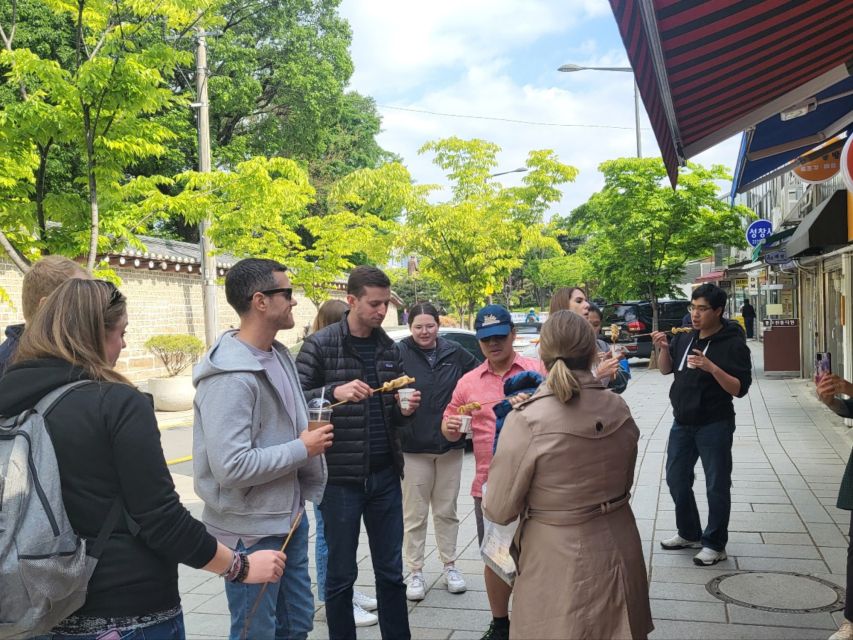
The tour lasts three hours and finishes at Gwangjang Market rather than returning to Anguk Station. That endpoint is useful. You can continue eating, shopping, or exploring the market afterward, or make your own way to the next Seoul sight.
The route is arranged in a sensible order. Insa-dong and Ikseon-dong provide a cultural and architectural opening. Gwangjang Market then supplies the food focus. Because the walk ends at the market, the last part may feel more concentrated and food-heavy than the first half.
The experience works best when you allow the guide to set the rhythm. You will have time to look around, listen, take photos, and taste several dishes, but this is not a slow private stroll with long shopping breaks. If you want extensive time inside every store or a full market crawl, the three-hour limit may feel short.
Rain does not automatically ruin the outing, but weather can affect comfort. One successful tour continued in poor weather because the guide kept the group moving and engaged. Still, bring suitable clothing for the forecast. The information provided does not promise weather protection or a rescheduled indoor route.
Who should book this Seoul food walk?
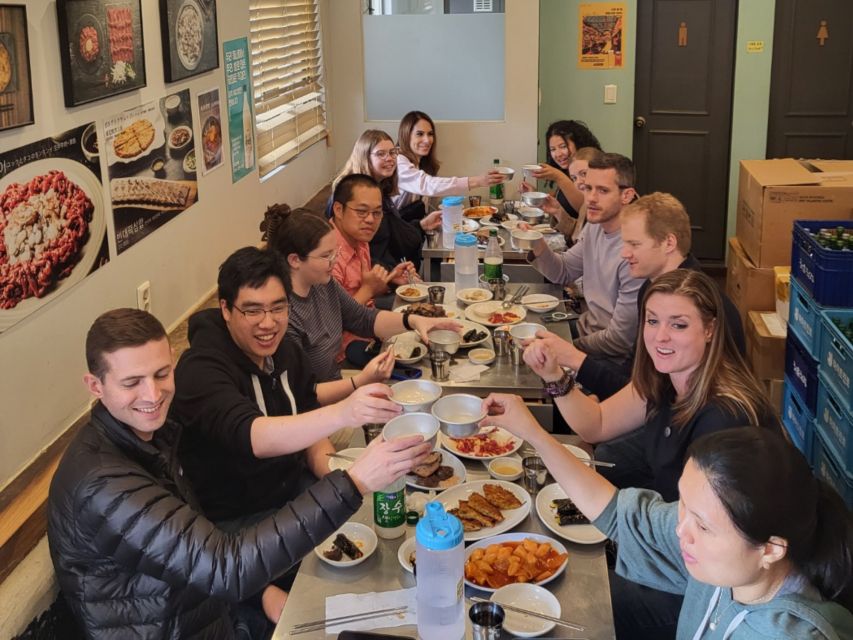
I would recommend it to first-time visitors who want an introduction to Seoul without spending a full day on a formal sightseeing tour. The route gives you art, old housing, market culture, and food in one manageable block.
It is also a good choice for families and small groups. The guides are used to explaining culture in an approachable way, and the flexible format allows the group to move at a comfortable pace. Children or cautious eaters may appreciate the chance to sample several items rather than commit to one unfamiliar meal, though the food may include more adventurous options.
Food-focused visitors who want local guidance will get the most from it. The guide can explain Korean dishes, restaurant behavior, and the background of traditional foods. That is useful if you plan to keep eating independently during the rest of your Seoul stay.
You may want to skip it if your top goal is an extended meal. This tour does not supply a whole dinner, and it does not promise a fixed list of dishes. It is also not the best fit if you dislike walking through busy market lanes or prefer a quiet, seated setting.
Practical details before you book
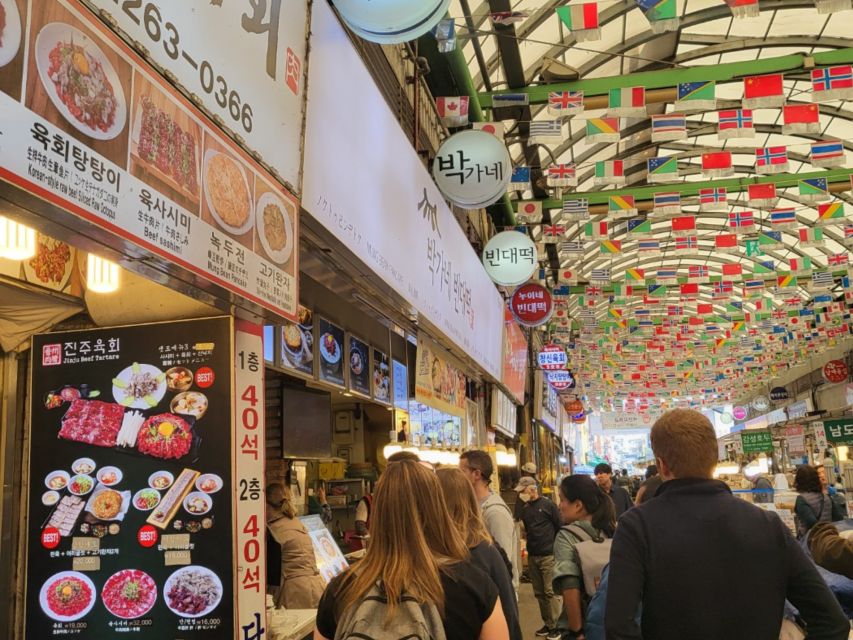
Book with the meeting point in mind: the group gathers in front of Exit 6 at Anguk Station on Subway Line 3. Arrive at least 10 to 15 minutes early, especially if you are unfamiliar with Seoul’s subway system.
The tour is offered in English and Korean. Private and small-group formats are available, and starting times vary, so check the schedule that matches your plans. The experience requires a minimum number of participants. If that number is not reached, you can be offered another date or experience, or receive a full refund.
Cancellation is flexible up to 24 hours before the tour for a full refund. You can also reserve now and pay later, which helps if your Seoul schedule is still changing.
Bring an appetite, but do not skip every meal before arriving. Wear comfortable walking shoes, keep personal spending money separate from the included tastings, and remember that the tour ends at Gwangjang Market.
Should you book the Gwangjang Market food tour?
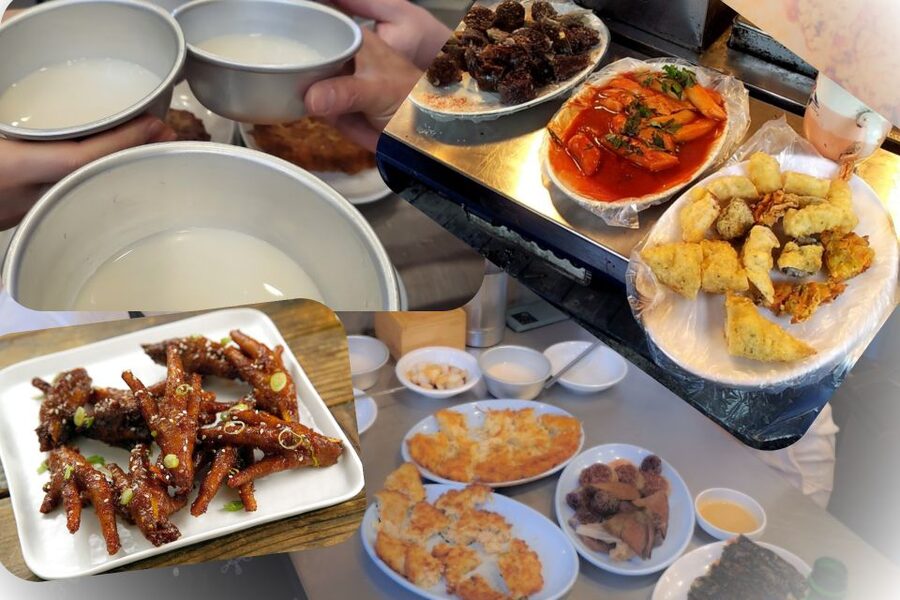
Book it if you want a compact, guided introduction to Seoul’s old neighborhoods and market food. The strongest reasons are the route through Insa-dong and Ikseon-dong, the included tastings, and the chance to learn how Korean dishes and customs fit together.
At $64, it is not the cheapest way to eat at Gwangjang Market. It is a reasonable price for a guided cultural walk with three to five tastings and a final market stop. Just set the right expectation: this is a food-and-history walk, not a full meal or a market-only feast.
FAQ
Where does the Seoul food tour begin?
It begins in front of Exit 6 at Anguk Station on Subway Line 3.
Where does the tour finish?
The tour finishes at Gwangjang Market.
How long does the experience last?
The walking tour lasts about three hours.
How many foods are included?
The tour includes three to five kinds of Korean street food, depending on the option selected.
Is a full meal included?
No. The tour includes food tastings but does not provide a whole meal. The largest portions come near the end, so you should not skip meals beforehand.
What languages are available?
The tour is available with a live guide in English or Korean.
More Food and Drink Trips in Seoul
- Seoul: Guided Food & Market Tour with 8+ Tastings
★ 4.9 · 342 reviews - Seoul: The Biggest Sea-food Noryangjin Market Tour
★ 4.3 · 30 reviews - Customizable Seoul Private Tour Palaces Food and Markets
★ 5.0 · 27 reviews - Seoul: Fearless Foodie Gwangjang Market Food Adventure
★ 5.0 · 10 reviews
Just added around Seoul
- Seoul: The Biggest Sea-food Noryangjin Market Tour★ 4.3 · 30 reviews
- Seoul: Namdaemun Market Food Tour★ 4.9 · 34 reviews
- Seoul: Sokcho beach, market, hot spring and Seorak Cable Car★ 4.8 · 5 reviews
- Seoul Gwangjang Market Foody Walking Tour★ 4.1 · 7 reviews
- Seoul: Gyeongbokgung Palace Tour & Lunch at Authentic Market★ 4.5 · 2 reviews
- Seoul: Gwangjang Market Vegan & Vegetarian Food Tour★ 5.0 · 16 reviews
- Seoul: Bukchon Village, Gyeongbokgung, Gwangjang Market★ 4.9 · 11 reviews
- Seoul Evening Tour:Gwangjang Market&Naksan Park&Eungbongsan★ 5.0 · 2 reviews
Street Food Market Tours, compared.
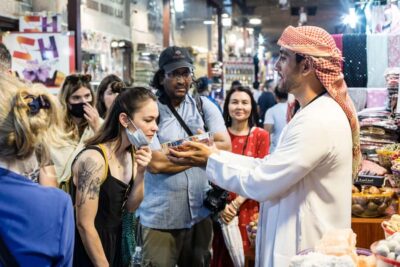
Old Town, Creek, Museums, Souks, & Street Food Tour
Read our review →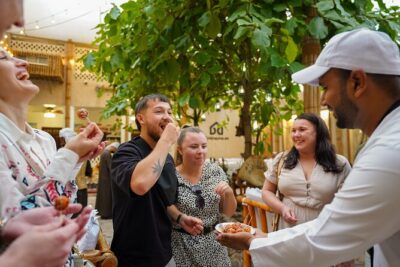
Old Town, Souks, Street Food, Guided Tour & Abra Ride
Read our review →
Old Town, Souks, Street Food, Guided Tour & Abra Ride
Read our review →
Small Group Cooking Class & Market Food Tour in Florence
Read our review →
Old Town, Street Food, Creek, Souks, & Emirati House
Read our review →
Browse the lists this tour appears in