
Review · LOCAL & FARMERS MARKET TOURS
Riga Central Market
Riga Central Market makes a strong first stop for understanding Latvia through what people eat. In about two hours, you move through meat, fish, dairy, vegetable, and gastronomy pavilions, tasting foods tied to long winters, family holidays, and everyday life. Hemp butter, sprats, rye bread, and beer give the experience a distinctly Latvian flavor.
I like the generous range of samples, which can include smoked meats, cheese, pastries, fish, vegetables, desserts, and drinks. I also like the chance to see the outdoor produce stalls and the nearby Spikeri warehouse district instead of staying only in a tasting room. The main drawback is the price: at $77.89 per person, this is best value if you want a guided cultural tour, not just a quick market snack.
Key points to know before you book
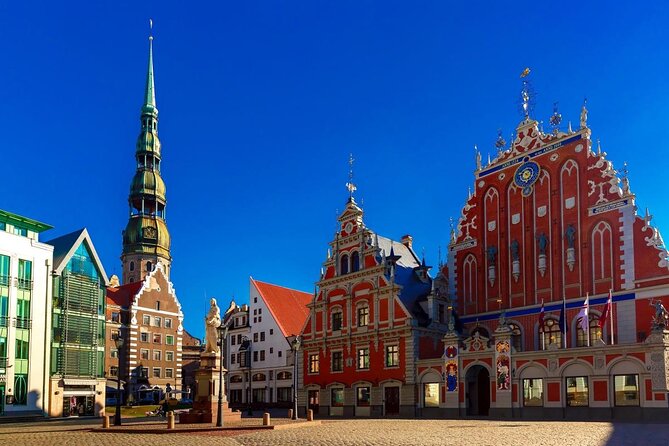
- Five food pavilions: Move through separate meat, fish, dairy, vegetable, and gastronomy halls.
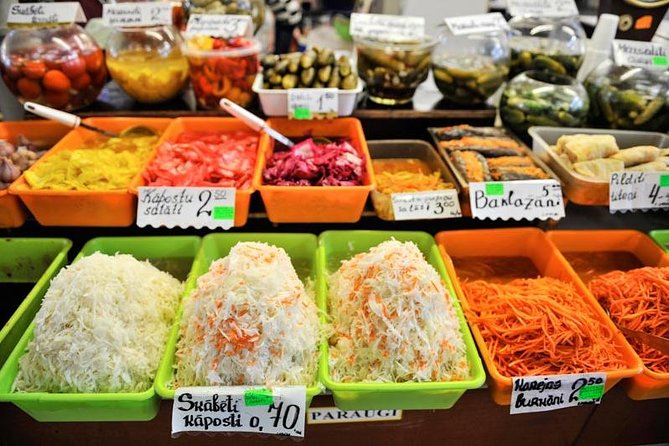
- Distinctly Latvian tastes: Try hemp butter, sprats, fried lampreys, sauerkraut, kvass, honey, and salted or dried mushrooms.
- Food with a story: Guides explain winter preservation, holiday traditions, and Latvian customs.
- A modern contrast: The Central Gastro Market offers more than 20 food businesses, two bars, and dishes ranging from Latvian fare to ramen and pizza.
- A private experience: Only your group takes part, with an English-speaking guide and mobile ticketing.
- Useful timing: The tour lasts about two hours and operates Monday through Friday from 11 a.m. to 6 p.m.
Why Riga Central Market is worth your appetite
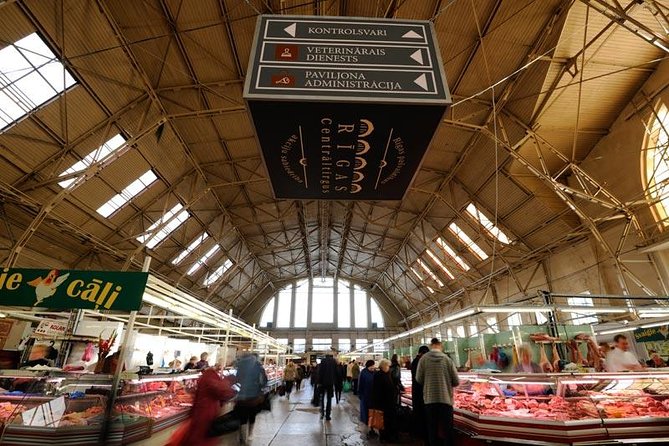
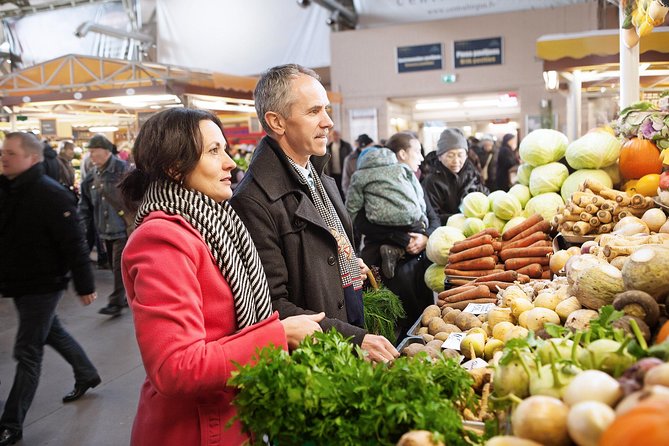
Riga Central Market is not a polished food museum. It is a working market where locals shop for produce, dairy, meat, fish, baked goods, and other daily staples. That makes the experience useful for you as a visitor: instead of learning about Latvian food only through a guidebook, you see where it is bought and how it fits into ordinary life.
The five main pavilions divide the market by product type. This simple layout gives the tour a clear path. You can compare the smell and look of smoked fish with the dairy counters, then move toward vegetables, fruit, and prepared foods. The guide helps you understand what is common, seasonal, festive, or unusual.
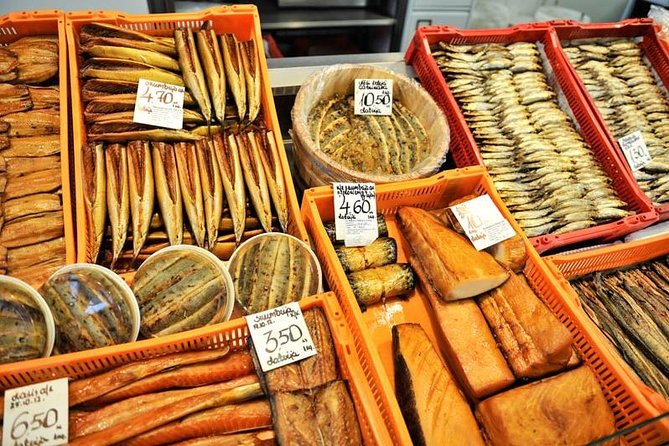
The best part is the connection between taste and climate. Latvia has long winters, so preserving food has been essential. Expect explanations about drying, salting, smoking, pickling, and storing food for colder months. That background gives small samples more meaning. A spoonful of sauerkraut or a piece of salted fish is not just a bite. It reflects how Latvian households have planned meals across the seasons.
The tour earns strong marks for cultural detail. Dace is praised for introducing traditional foods that many visitors might not try on their own. Edgar is singled out for explaining Latvian cuisine, customs, and the role of food at holidays and festivals. Guide quality matters here because the market itself can be enjoyed for free, while the paid experience depends on the explanations and the selection of tastes.
More Farmers Market Tours in the world:
- Hanoi Cooking Class: Culture, Local Market & Meaning CSR Impact
★ 5.0 · 5,147 reviews - Cooking Class and Lunch at a Tuscan Farmhouse with Local Market Tour from Florence
★ 5.0 · 4,831 reviews - Chef Guided Food Tour of Pike Place Market
★ 5.0 · 3,733 reviews
The five pavilions, from smoked fish to hemp butter
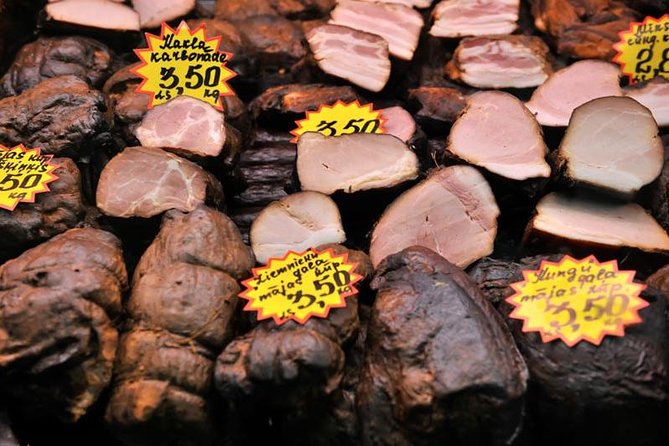
The meat pavilion may introduce you to smoked meats and other preserved products. Latvia has a strong tradition of smoking and curing, and these foods often make sense only after you learn how they were prepared and when they were served. You might find that a small sample is enough, especially if you are also trying fish, cheese, bread, and sweets.
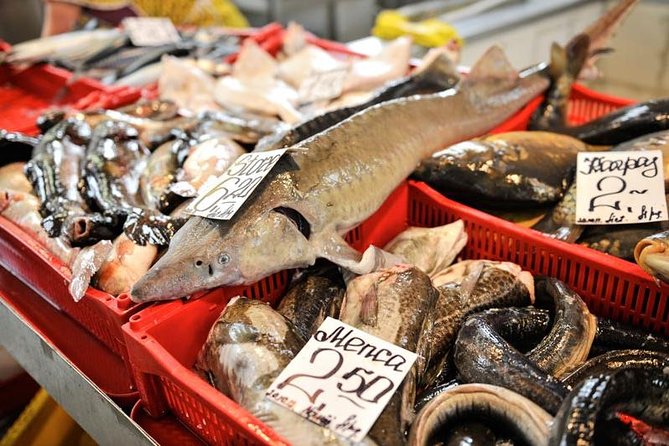
The fish pavilion is likely to be one of the more memorable stops. Sprats are a familiar Latvian specialty, and fried lampreys are among the less usual foods listed for tasting. If you are curious about local food but cautious about unfamiliar flavors, this is a good setting to try a little rather than commit to a full portion.
Dairy products, cheese, pastries, and butter offer a milder break from smoked or salted foods. Hemp butter is one of the more distinctive tastes on the route. It is not the sort of item most visitors would automatically find at a standard café, so a guide can help explain how it is used and why it belongs in the local food tradition.
The vegetable and produce areas show the market’s practical side. Fruits and vegetables arrive from Latvian farms as well as surrounding countries, and the selection changes with availability. You may see products sold for ordinary home cooking rather than arranged solely for visitors. Competitive prices and some room to bargain make this section useful if you want to buy food for later.
The market also includes honey, rye bread, kvass, sauerkraut, and salted or dried mushrooms. These are particularly good choices for understanding the Latvian pantry. Rye bread gives you a sturdy local staple, while kvass offers a lightly fermented drink that differs from the beer most visitors expect to find at a market.
Outdoor stalls and the route toward Spikeri
After the indoor pavilions, the outdoor area changes the pace. Stalls carry fruit, vegetables, garden plants, and flowers, along with small kiosks selling souvenirs, clothes, perfume, knitwear, amber jewelry, and other goods.
This section is less focused than the tasting route, which is both its appeal and its limitation. You gain a wider look at shopping in Riga, but the stalls are not all tied to Latvian cuisine. If your main aim is food, do not expect every minute outside to add another culinary lesson.
I like this part because it gives you a clearer sense of the market as a neighborhood shopping center. You can look at what is being sold, compare prices, and see the difference between produce shopping and the more organized food sampling inside. Bargaining is possible, but it should be treated as an opportunity rather than a guarantee on every item.
The nearby Spikeri historic warehouse district is only a few minutes away. Thirteen historic warehouses have survived there. The visit adds an architectural and industrial note to the market experience, though the tour information does not promise a long architectural walk or entry into every building. Think of Spikeri as a nearby extension of the outing, not a separate major sightseeing tour.
The Central Gastro Market changes the mood
The newer Central Gastro Market offers a different experience from the traditional vendor halls. More than 20 caterers and two bars serve food ranging from local Latvian dishes to burgers, pizza, ramen, Thai food, and other international choices.
This contrast is useful. The older pavilions show ingredients and shopping habits, while the gastro section shows how the market has adapted to modern dining. You can move from salted fish and rye bread to a bowl of ramen without leaving the same market complex.
For a food-focused visitor, the choice is practical. You can sample local specialties during the tour, then return later for a more substantial meal if you still feel hungry. The gastro section also helps groups with mixed tastes, since not everyone wants to eat traditional dishes at every stop.
The downside is that the modern section can dilute the local focus. If you have limited time in Riga and want only Latvian food, spend your attention on the five traditional pavilions and the guide’s explanations. If you enjoy comparing old and new food culture, the contrast is one of the outing’s best features.
A few more market tours around the world worth a look
- Bangkok: Damnoen Saduak Market and Maeklong Railway Market
★ 4.5 · 26,723 reviews - The Old Siam: Damnoen Saduak and Maeklong Railway Market
★ 4.5 · 10,992 reviews - Dubai: Old Town, Creek, Museums, Souks, & Street Food Tour
★ 4.8 · 10,816 reviews - Bangkok: Train Market & Floating Market with Boat Ride
★ 4.7 · 9,547 reviews
What you are likely to taste
Come hungry. The sampling can include smoked meats, cheese, pastry, fish, vegetables, desserts, and drinks, along with the named specialties such as hemp butter, rye bread, fried lampreys, sauerkraut, kvass, honey, and dried mushrooms.
The exact selection may vary because this is a working market. That is a good thing for freshness, but it means you should not treat every item as a fixed tasting menu. Availability, season, and the guide’s judgment can shape what appears during your visit.
Beer is included among the drinks associated with the experience. One account gives special praise to beer at Labietis, a Latvian brewery and taproom, though the supplied tour information does not guarantee that every departure includes the same beer stop. Treat it as a possible highlight rather than a promised part of every booking.
The dessert detail is worth noting. Edgar noticed a particular dessert that his group especially liked and bought extra to take back to their hotel. That suggests the tour can be responsive rather than rigid. It also gives you a useful tip: if one item catches your attention, ask the guide where to buy more before you leave.
What the guide adds to a free market visit
You can visit Riga Central Market without paying for a tour. The ticket has to justify itself through access, tastings, and interpretation. The strongest reason to book is the guide’s ability to connect food with Latvian life.
Dace’s tour style, as described in the supplied material, centers on traditional food and the challenges of living through Latvian winters. Edgar’s approach includes cuisine, customs, holidays, and the origin of local preferences. Those themes turn the market into a cultural lesson without making it feel like a formal lecture.
This is especially helpful if you do not know which products to choose. A stall may display unfamiliar fish, preserved vegetables, mushrooms, or sweets without much explanation in English. A guide can point out what is customary, what is festive, and what is simply new or popular.
The private format is another advantage. Only your group participates, so you can ask questions about ingredients, food preparation, and customs without worrying about a large crowd. The group size is not specified, so you should not assume the tour is designed for only two people, but it is not a shared public group experience.
Price, timing, and practical value
At $77.89 per person, the tour is not a bargain if you measure it only by the amount of food. You could enter the market yourself and purchase snacks for much less. The price makes more sense when you value a private guide, a planned route through five pavilions, several samples, and cultural background.
I would book it for a first day in Riga, especially if you want help deciding what to eat for the rest of your stay. The guide can give you ideas for local products and point out foods you might otherwise pass by. I would skip it if you prefer independent browsing, dislike tastings of unfamiliar foods, or mainly want a full sit-down meal.
The tour lasts about two hours. That is long enough to cover the pavilions, outdoor stalls, and the market’s modern food section without taking over your whole day. Since the activity begins and ends at Riga Central Market, it is easy to fit before or after sightseeing in central Riga.
The advertised operating window is Monday through Friday, 11 a.m. to 6 p.m. Check the exact start time when booking. The meeting point is Riga Central Market, Rīgas Centrāltirgus, in the Latgale district of Riga, and public transportation is nearby.
A mobile ticket makes arrival simple. Confirmation is provided within 48 hours, subject to availability. Most people can take part, but the supplied information does not give detailed mobility guidance, so ask ahead if you have specific access needs.
Free cancellation is available if you cancel at least 24 hours before the start time. Cancellations or changes made less than 24 hours before the experience are not refunded or accepted, using local Riga time for the cut-off.
Who should book this Riga food experience
I would recommend it to first-time visitors who want a quick introduction to Latvian food and customs. It also suits curious eaters who want to try sprats, lampreys, hemp butter, kvass, or dried mushrooms with some context rather than ordering at random.
Families and mixed groups may appreciate the range. One person can focus on bread, cheese, vegetables, or sweets while another tries fish and preserved foods. The gastro section also gives you modern alternatives such as pizza, burgers, ramen, and Thai food.
It is less suited to anyone who wants a long, restaurant-style meal. Tastings are spread across the market, and the main purpose is learning and sampling. You should also be comfortable with the fact that some foods are salted, smoked, fermented, or unfamiliar.
Should you book Riga Central Market?
Book this tour if you want the market explained, not just visited. The strongest features are the private format, the wide tasting range, and the way guides such as Dace and Edgar connect food with winter storage, holidays, and Latvian customs.
At $77.89, the cost is fair only if you will use the cultural guidance and samples. Independent visitors can save money by shopping alone, but they may miss the background that makes hemp butter, sprats, rye bread, kvass, and preserved mushrooms more than random snacks.
My practical advice is to schedule it early in your Riga stay, arrive hungry, and keep a little time afterward for Spikeri or the Central Gastro Market. For a focused introduction to Latvian food, this is a useful and flavorful choice. For a cheap lunch, it is not.
FAQ
Where does the Riga Central Market tour start?
The tour starts at Riga Central Market, Rīgas Centrāltirgus, in the Latgale district of Riga, Latvia.
Where does the tour end?
The activity ends back at the meeting point at Riga Central Market.
How long does the tour last?
The tour lasts approximately two hours.
What foods can I sample?
Samples can include hemp butter, rye bread, fried lampreys, sauerkraut, kvass, honey, salted and dried mushrooms, smoked meats, cheese, pastries, fish, vegetables, desserts, and drinks.
Does the ticket include food samples?
Yes. Food samples from the market’s pavilions are included with the ticket.
Is this a private tour?
Yes. Only your group participates in the activity.
Is the tour offered in English?
Yes. The tour is offered in English.
When does the tour operate?
The listed operating hours are Monday through Friday, from 11 a.m. to 6 p.m.
Can I cancel for a full refund?
Yes. You can receive a full refund if you cancel at least 24 hours before the experience starts. Changes or cancellations made less than 24 hours before the start time are not accepted or refunded.
Just added around the world
- 3-Hour Herbal Wholesale TCM Market and a Local Wet Market Tour★ 5.0 · 4 reviews
- Half-day Dandan Noodles Cooking Class with a Local Market Visit★ 5.0 · 8 reviews
- Chania Old Town, Public Market and Chrisopigi Monastery Tour★ 4.5 · 6 reviews
- Charleston International Sweet Treats & Historic City Market Tour★ 5.0 · 22 reviews
- Chania: Old Town, Public Market, Hill of Prophet Elias, Agia Triada★ 5.0 · 35 reviews
- Food Tasting & Market Shopping: Private Guided Tour in PORT LOUIS★ 4.5 · 9 reviews
- Moroccan Cooking Class with a Local Family & Market Visit★ 5.0 · 16 reviews
- Private Market Tour & Cooking Class in Casablanca with Transfers★ 5.0 · 20 reviews
Local & Farmers Market Tours, compared.

Hanoi Cooking Class: Culture, Local Market & Meaning CSR Impact
Read our review →
Cooking Class and Lunch at a Tuscan Farmhouse with Local Market Tour from Florence
Read our review →

Cooking Class Hoi An:Local Market, Basket Boat, Fishing & Cooking
Read our review →
Hoi An Cooking Class(Local market,Basket Boat,Fishing & Cooking)
Read our review →
Paella Cooking Class, Wine Tasting & Central Market in Valencia
Read our review →
Seattle: Pike Place Market Chef-Guided Food Tour
Read our review →Browse the lists this tour appears in