
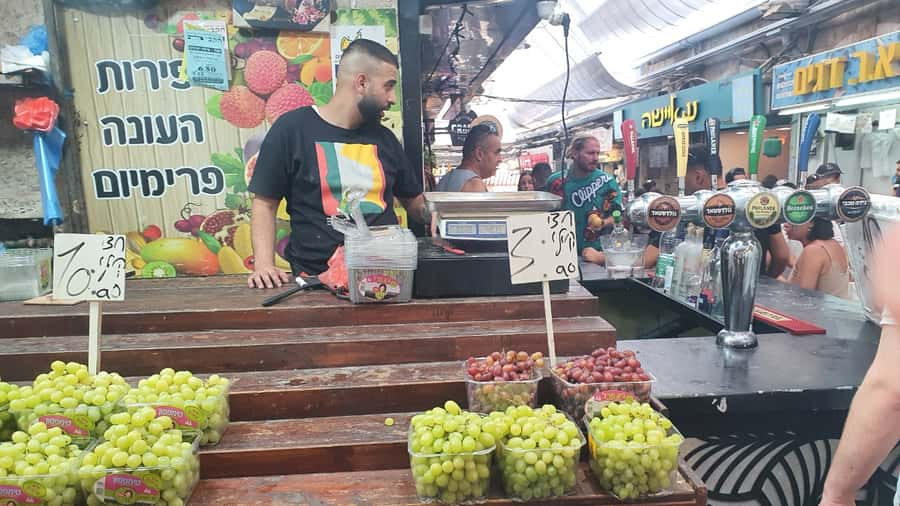
Review · PRIVATE MARKET TOURS
Private Tour to the Culinary World of Jerusalem Market
Mahane Yehuda is more than Jerusalem’s produce market. It is a place where food tells the story of Jewish communities from Yemen, Greece, Europe, and elsewhere, all meeting in one covered market. I like the way this private tour links each tasting to culture and migration, rather than treating the shuk as a simple eating stop.
I also like the generous tasting plan, with 6 to 8 samples, and the chance to talk with Nissim Slama about life in Jerusalem. The main consideration is price: at $183 per person for two hours, this is a costly market walk, so its value depends on how much you want a private guide and a cultural explanation alongside the food.
Key points at a glance
- A food tour with a story: Learn how modern Israeli cuisine grew from Jewish food traditions around the world.
- Six to eight tastings: The food is a central part of the experience, not a token sample at the end.
- Private group format: You get a more personal walk and room for conversation with Nissim Slama.
- Three language choices: The tour is offered in English, French, or Hebrew.
- Two hours in Mahane Yehuda: The compact length works well for a first taste of the market, though it leaves little time for lingering.
- Come hungry: The tastings can be ample, so plan this as a meal-sized stop rather than a light snack.
Why Mahane Yehuda is the right place for this tour
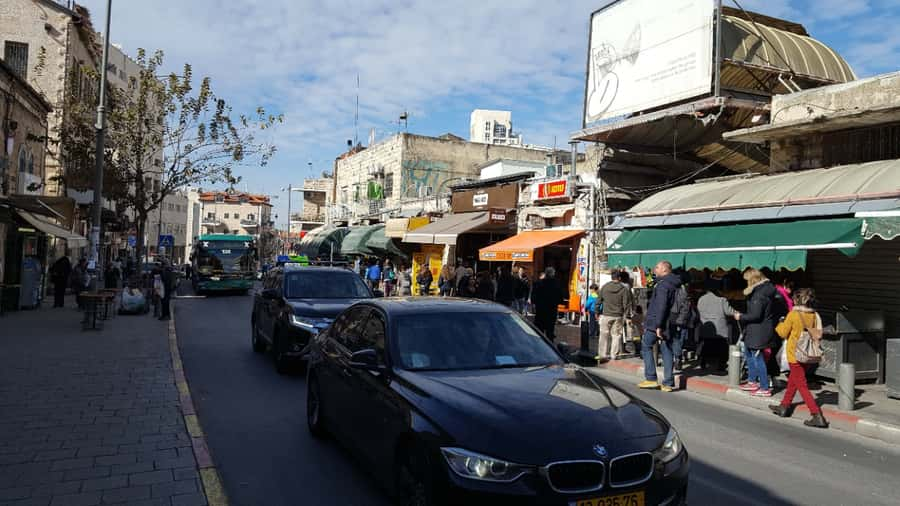
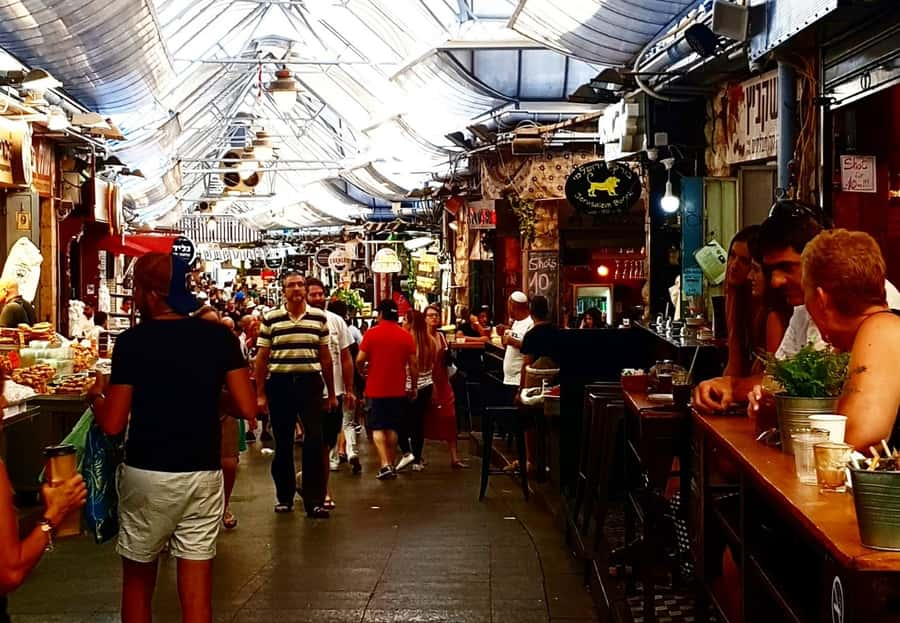
Mahane Yehuda is Jerusalem’s central market, a covered maze of produce stalls, food shops, and places to eat. During the day, it serves its traditional market role. Later, parts of it take on a social and nightlife character, with people coming out to eat and party.
The important point is that the market is not only about what is sold. It also reflects the people who shaped Jerusalem. The tour uses food to explain how Jewish communities from different parts of the world brought cooking habits, ingredients, and family traditions with them.
I find that approach especially useful in Jerusalem. A market can easily become a quick parade of colorful stalls. Here, the food gives you a way to understand how culture, mentality, and history connect. Instead of hearing only where a dish comes from, you explore how traditional Jewish cuisine changed into modern Israeli food.
The focus is on the market’s internal culture as well as its shops. That means the experience is designed to help you read the place, not simply move from one snack to another.
More Private Market Tours in the world:
- Cairo 8 Hour Private Tour of Pyramids, Egyptian Museum and Bazaar
★ 5.0 · 2,931 reviews - Private Excursion to Maeklong Railway and Floating Markets
★ 5.0 · 850 reviews - Floating and Railway Market (Optional Waterfall): Private Tour
★ 5.0 · 827 reviews
Meeting Nissim Slama at the mural
The meeting point is in front of the mural. That is a simple arrangement, but pay attention to the exact location when you book, since Mahane Yehuda can feel confusing once you are inside the covered lanes.
Your guide is Nissim Slama, a tour guide and lecturer. His role is important here because the tour depends on conversation as much as on tasting. You are not joining a large public group with a fixed speech and little time for questions. The private format gives you space to ask about Jerusalem, the market, and the people behind the food.
One particularly useful part of the experience is the chance to discuss life in Jerusalem with Nissim. That personal exchange adds something a standard market introduction may not provide. You can ask questions as they come up, instead of waiting for a formal question period.
The tour is available in English, French, or Hebrew. Choose the language in which you can best follow a story about food, identity, and history, since those ideas make up much of the walk.
Six to eight tastings across the Jewish world
The included tastings are the heart of the tour. You receive between six and eight samples as you move through Mahane Yehuda, with each stop helping explain a part of Israeli food culture.
The experience is not presented as one narrow cuisine. Instead, it traces connections across the Jewish world, including Yemen, Greece, and Europe. That range helps explain why Israeli food often feels like a meeting point of traditions rather than a single old-style menu.
You might find that one tasting introduces a cooking tradition, while another shows how a familiar Jewish food changed after reaching Israel. The supplied details do not name each dish or guarantee specific shops, so you should not book this expecting a fixed list of famous foods. The value is in the pattern: several stops, several traditions, and a guide explaining how they fit together.
The number of tastings matters. Six to eight samples over two hours gives the tour enough food to feel substantial. One past booking described the tastings as very ample and advised arriving hungry. I would treat this as a small meal, especially if you plan to eat elsewhere immediately afterward.
Food preferences are worth considering before booking. The available information does not specify vegetarian, vegan, kosher, allergy, or other dietary arrangements. If you have restrictions, ask before reserving rather than assuming every tasting can be adjusted.
From Yemen to Greece and Europe
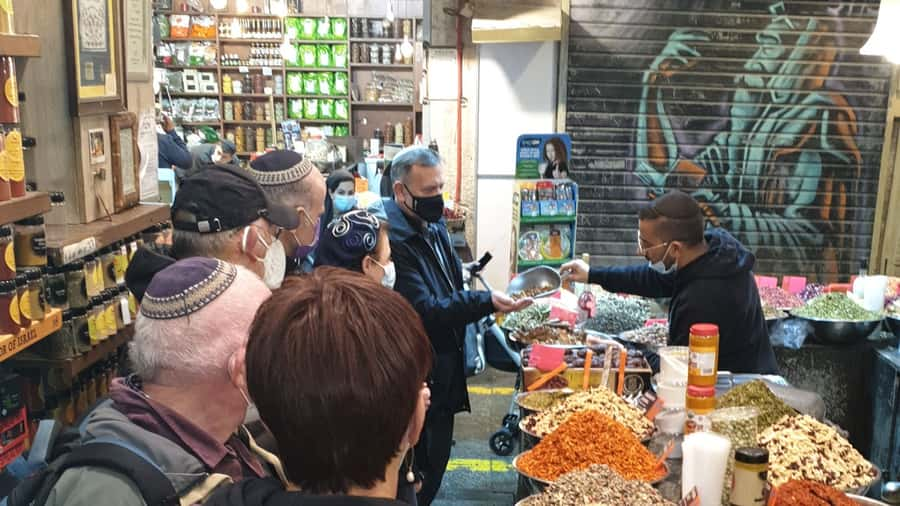
The tour’s strongest idea is its route through the Jewish world without requiring a long journey outside the market. Yemen, Greece, and Europe are used as cultural reference points, showing how Jewish communities carried food traditions across borders.
That makes the tastings more useful than a list of local bites. You are encouraged to think about how food changes when people move, settle, adapt, and live alongside other communities. Modern Israeli cuisine appears here as a newer form shaped by many older traditions.
I like this kind of explanation because it gives you a way to remember the food after the tour. You may forget the name of a particular sample, but you are more likely to remember that it represented a community, a migration story, or a shift in Israeli cooking.
The experience also avoids presenting Jerusalem food as frozen in the past. The market is shown as a place where traditional Jewish cuisine keeps changing. That balance between old customs and modern food is one of the best reasons to choose this tour.
A few more market tours around the world worth a look
- Bangkok: Damnoen Saduak Market and Maeklong Railway Market
★ 4.5 · 26,723 reviews - The Old Siam: Damnoen Saduak and Maeklong Railway Market
★ 4.5 · 10,992 reviews - Dubai: Old Town, Creek, Museums, Souks, & Street Food Tour
★ 4.8 · 10,816 reviews - Bangkok: Train Market & Floating Market with Boat Ride
★ 4.7 · 9,547 reviews
The shops are part of the lesson
The guide does not only explain the food. The tour includes the story of the place and its shops, which helps you see Mahane Yehuda as a working market rather than a backdrop for photographs.
A produce stall, specialty food shop, or prepared-food counter can each reveal something about how the market functions. The supplied details do not promise a particular route or a set list of businesses, so the exact stops may vary. That flexibility may be useful in a real market, where shop activity and availability can change.
The market’s covered setting makes it a practical stop in Jerusalem, and the two-hour length keeps the experience manageable. You can get an introduction without giving up half a day. At the same time, two hours passes quickly. This is a focused walk, not a full exploration of every passage and stall.
If you want time to shop, browse slowly, or return to a favorite stand, plan to do that separately. Shopping is not included in the tour price, and the experience is built around guided tastings and explanation rather than personal buying time.
What the private format adds
The private group setup is the main reason this tour costs more than a basic market walk. You are paying for a guide focused on your party, not for a seat in a large group. That can make a real difference in a crowded market, where hearing the guide and asking questions may otherwise be difficult.
A private tour also lets the conversation develop naturally. If you are interested in Jewish food traditions, the evolution of Israeli cuisine, or daily life in Jerusalem, you can spend more time on those subjects. If your group prefers to keep moving, the guide can maintain the two-hour pace.
The tradeoff is straightforward. At $183 per person, the tour is expensive for a two-hour activity, particularly for solo visitors or larger families. The price is easier to justify if you place high value on a private guide, several tastings, and a cultural discussion. It is harder to justify if you mainly want inexpensive food samples or time to browse independently.
I would compare it with the cost of buying food on your own. The tour is not simply a meal, but you should still ask yourself how much explanation and personal attention you want to add to that meal.
How the two-hour pace feels
A likely rhythm is simple: meet at the mural, enter the market, hear about its history and shops, stop for tastings, and connect the food to Jewish communities and modern Israeli cooking.
The compact timing should suit you if you want a clear introduction before exploring Jerusalem on your own. It works well as a first market visit because the guide helps provide orientation, then you can return later with a better sense of what interests you.
The same pace may feel rushed if you want long conversations at every stop. Six to eight tastings, shop stories, and cultural context leave limited time for lingering. You will get breadth rather than a slow examination of a few stalls.
Wear comfortable shoes and arrive ready to eat, but those are practical suggestions rather than stated requirements. The tour is a walking market experience, and the main activity is moving between shops and tasting points.
Who will get the most from this experience
I would recommend this tour to anyone who wants food to explain Jerusalem, not just feed them. It is especially suited to people curious about Jewish communities, migration, Israeli identity, and the way traditional cuisine changes over time.
It also fits repeat visitors to Mahane Yehuda. One booking came from a mother and daughter who had already been to the market many times, yet still found value in Nissim’s account of its evolution and his personal view of Jerusalem. That is a useful clue: you do not need to be a first-time market visitor for the tour to add something new.
Families and small private parties may appreciate the format because the group can talk at its own pace. Food-focused visitors will also get plenty to sample, though the tour is more cultural than a simple restaurant crawl.
You may want to skip it if your main goal is shopping, nightlife, or choosing your own food stops. You may also find the price too high if you are comfortable exploring the market without a guide.
Booking flexibility and practical details
The tour lasts two hours, and starting times depend on availability. You meet in front of the mural, and the group is private. The guide can lead in English, French, or Hebrew.
The booking terms are useful for a flexible Jerusalem schedule. You can reserve now and pay later, and cancellation is free up to 24 hours before the activity for a full refund. Those terms do not change the tour itself, but they make it easier to fit into a trip with changing plans.
The experience currently has a rating of 5 from three reviews. That is a very small sample, so I would not treat the number as a complete measure of the tour. The clearest strengths are the personal guide, the market context, and the generous food portions.
Should you book the Mahane Yehuda food tour?
Book it if you want a private, guided interpretation of Jerusalem’s market, with enough tastings to make the two hours feel substantial. Nissim Slama’s personal perspective and the focus on Yemen, Greece, Europe, and the wider Jewish world give the experience more purpose than a basic snack walk.
Think twice if $183 per person feels high for a short activity, or if you would rather spend your time shopping and choosing food independently. For the right audience, the price buys more than samples: it buys a conversation about how people, history, and cooking came together in modern Israel.
FAQ
Where does the tour meet?
The meeting point is in front of the mural at Mahane Yehuda Market in Jerusalem.
How long does the tour last?
The tour lasts two hours.
What is the price?
The listed price is $183 per person.
Is this a private tour?
Yes. The activity is offered for a private group.
Which languages are available?
The live guide can conduct the tour in English, French, or Hebrew.
How many tastings are included?
Between six and eight tastings are included.
Is shopping included in the price?
No. Personal shopping in the market is not included.
Can I cancel for a full refund?
Yes. You can cancel up to 24 hours in advance for a full refund.
Just added around the world
- 3-Hour Herbal Wholesale TCM Market and a Local Wet Market Tour★ 5.0 · 4 reviews
- Half-day Dandan Noodles Cooking Class with a Local Market Visit★ 5.0 · 8 reviews
- Chania Old Town, Public Market and Chrisopigi Monastery Tour★ 4.5 · 6 reviews
- Charleston International Sweet Treats & Historic City Market Tour★ 5.0 · 22 reviews
- Chania: Old Town, Public Market, Hill of Prophet Elias, Agia Triada★ 5.0 · 35 reviews
- Food Tasting & Market Shopping: Private Guided Tour in PORT LOUIS★ 4.5 · 9 reviews
- Moroccan Cooking Class with a Local Family & Market Visit★ 5.0 · 16 reviews
- Private Market Tour & Cooking Class in Casablanca with Transfers★ 5.0 · 20 reviews
Private Market Tours, compared.

Private Excursion to Maeklong Railway and Floating Markets
Read our review →
Floating and Railway Market (Optional Waterfall): Private Tour
Read our review →
Private Pyramids, Museum & Bazaar Tour with Lunch
Read our review →
Shopping in the Souks of Marrakech Private Tour
Read our review →
Local Markets & Khan el Khalili Private Shopping Tour
Read our review →
Private Excursion to Floating Market and Ayutthaya World Heritage
Read our review →
Private Heritage Walking Tour in Jaisalmer Fort and Old Bazaar
Read our review →Browse the lists this tour appears in