
Review · PRIVATE MARKET TOURS
Private Accra Market Tour
Accra’s markets are not tidy rows of stalls built for slow browsing. They are fast, crowded, practical places where fabrics, spices, clothing, crafts, and daily goods move quickly. This private tour puts Ebo Cobbinah beside you as you work through Makola, Nima, and Mallam Atta markets, with time at the Accra Arts Centre and lunch at Living Room Restaurant.
I like the private transportation, which saves you from sorting out several city transfers, and I like having a guide who can help with prices. The tour also gives you a proper local meal, not just a snack between stops. The tradeoff is pace: if you prefer quiet shopping and long browsing, the noise and pressure of the markets may feel like a lot.
Key points at a glance
- Makola Market leads the day: Spend an hour in Accra’s largest and most fascinating market, where fabrics, soaps, clothing, spices, and other goods fill the walkways.
- Ebo Cobbinah handles the market rhythm: His help with negotiating prices is especially useful if you are buying fabrics, clothing, or crafts.
- Three market stops show different sides of Accra: Makola, Mallam Atta, and Nima each offer a different setting for observing trade and daily life.
- The Accra Arts Centre is your craft-shopping stop: You can browse locally made arts and crafts with time set aside for purchases.
- Lunch is part of the experience: Choose from Ghanaian dishes such as fufu with light soup, red-red, banku with tilapia, or grilled chicken with jollof.
- Plan for heat, movement, and crowds: Wear comfortable shoes, carry a sunhat or umbrella and a face cloth, and bring only what you need in a small bag.
A full day in Accra’s working markets
This is an eight-hour private experience that begins at 9:00 a.m. at Accra Mall, near the Tetteh Quarshie Interchange on Spintex Road. You return to that same meeting point at the end of the day.
That setup matters. Accra’s markets are spread across the city, and private transportation keeps the day from becoming a puzzle of taxis and directions. It also means your group can move on its own schedule within the planned stops, rather than waiting for strangers or adjusting to a large coach.
The tour is best understood as a guided introduction to market life, with shopping folded into the day. You are not simply driven past stalls. You walk through active markets, look at what is being sold, ask questions, and get practical help when it is time to bargain.
Wear shoes you can walk in for hours. Take a hat or umbrella for the sun, and carry a face cloth because the heat and dust may be tiring. A bum bag or other small secure bag is a better choice than a large daypack. Bring only the items you need.
More Private Market Tours in the world:
- Cairo 8 Hour Private Tour of Pyramids, Egyptian Museum and Bazaar
★ 5.0 · 2,931 reviews - Private Excursion to Maeklong Railway and Floating Markets
★ 5.0 · 850 reviews - Floating and Railway Market (Optional Waterfall): Private Tour
★ 5.0 · 827 reviews
Makola Market: your first lesson in Accra shopping
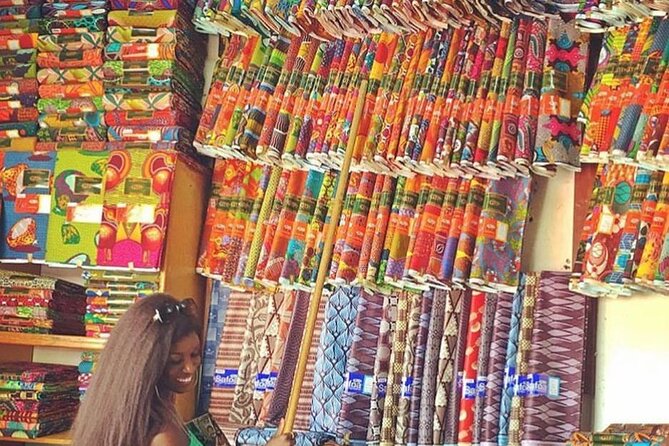
The first stop is Makola Market, where you spend about an hour. It is described as Accra’s biggest and most fascinating market, and it sets the tone for the rest of the day.
You can expect a dense, energetic shopping area rather than a relaxed craft fair. Fabrics, soaps, clothing, spices, and other everyday goods are part of the mix. The market works at a quick pace, so you will need to stay alert and keep close to your guide.
This is where Ebo Cobbinah’s role becomes especially useful. He can help you understand the flow of the market and negotiate prices when you want to buy something. That does not mean every purchase will be effortless. Bargaining is part of the process, and you may need to decide quickly if an item and its price suit you.
I would treat Makola as an introduction, not a chance to inspect every stall. An hour goes by quickly, especially if you stop to ask about fabrics or clothing. If you like browsing slowly, the pace may feel rushed. If you want to see how a major Accra market operates and make a few purchases, the short visit keeps the day moving.
Keep your belongings close. The practical advice to carry just what you need is worth following, especially in a crowded market where you may be handling purchases, checking prices, and moving through narrow spaces.
Accra Arts Centre: a calmer place to shop for crafts

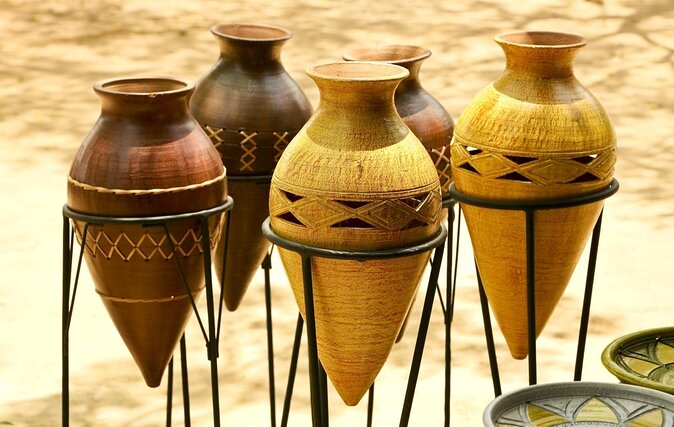
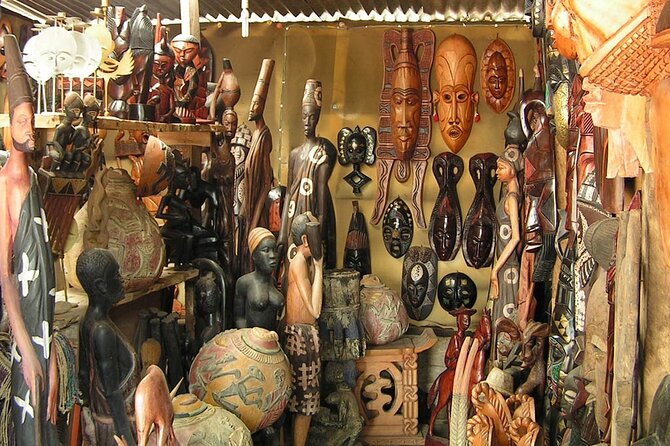
The Accra Arts Centre is the second stop, with about an hour set aside for local arts and crafts. This gives the day a useful change of pace after Makola.
Here, you can focus more directly on handmade items and souvenirs. The stated range is broad, covering local arts and crafts rather than one particular product. That makes it a good place to consider gifts or something connected to Ghanaian design, though the exact selection can vary.
An hour gives you room to browse and ask about items without turning the stop into a rushed photo break. If you are planning to shop, this is a good point to think about your budget and luggage space. The guide’s help with negotiation can also be useful here, but you should still choose what you truly want rather than buying simply because a price has been reduced.
The Arts Centre is also a practical contrast with the food and clothing trade you see at the larger markets. You get a clearer look at locally produced craft goods, then have the chance to compare them with the items sold in the busier commercial areas.
Mallam Atta Market: another look at daily commerce
The third stop is Mallam Atta Market, where you spend about an hour. It is one of Accra’s popular markets, giving you another chance to see how different areas handle everyday buying and selling.
The value here is comparison. Makola gives you the largest and most intense market introduction, while Mallam Atta lets you continue observing the city’s commercial life without repeating exactly the same stop. You might find more goods connected to daily needs than to souvenir shopping, so keep your expectations broad.
As with Makola, this is not a quiet museum visit. People are working, buying, carrying, and negotiating. That energy can be exciting, but it can also be tiring. Follow Ebo’s lead, wear comfortable shoes, and leave room in your schedule for the fact that walking through a market takes concentration.
The tour’s private format helps here. Your group is the only group participating, so you can ask questions without trying to hear a guide over a large crowd. The tour is still shaped by the market itself, however. It cannot make a working market slow down for you.
A few more market tours around the world worth a look
- Bangkok: Damnoen Saduak Market and Maeklong Railway Market
★ 4.5 · 26,723 reviews - The Old Siam: Damnoen Saduak and Maeklong Railway Market
★ 4.5 · 10,992 reviews - Dubai: Old Town, Creek, Museums, Souks, & Street Food Tour
★ 4.8 · 10,816 reviews - Bangkok: Train Market & Floating Market with Boat Ride
★ 4.7 · 9,547 reviews
Living Room Restaurant: a substantial Ghanaian lunch
After the market stops, lunch is served at Living Room Restaurant in East Legon. About an hour and a half is set aside, giving you time to sit down properly after the morning’s walking.
Lunch is included from the stated menu. The choices give you a useful introduction to several Ghanaian staples:
- Fufu with light soup and your choice of protein
- Groundnut soup
- Red-red, plantains served with a bean stew
- Grilled chicken with jollof
- Banku with tilapia
- Omoto, rice balls served with soup
- Boiled plantain and yam with palava sauce
This is one of the strongest parts of the day for anyone who wants food to be part of the cultural experience. You can choose something familiar, such as grilled chicken with jollof, or try a dish with a different texture and serving style, such as fufu, banku, or omoto.
The menu is not an unlimited restaurant credit. The included meal is limited to the listed choices, and anything outside that menu is not covered. One local alcoholic drink is included if you want it, along with bottled water.
The ninety-minute break matters. You are not being rushed through lunch in twenty minutes before another transfer. You can eat, rest, and talk through what you have seen. Since the morning is built around walking and busy public spaces, this pause gives the day a needed reset.
Nima Market: the final market stop
The last market visit is Nima Market, with about an hour for walking around. Nima is described as one of Accra’s most popular markets, so it provides a final look at the city’s active trading culture before you return to the meeting point.
By this stage, you will have seen three markets with different surroundings and rhythms. Nima works well as a final stop because you can compare it with Makola and Mallam Atta rather than treating each place as an isolated attraction.
You may be ready to slow down by this point. That is normal. The tour is long, and market walking can be more tiring than ordinary sightseeing because you are constantly watching your footing, belongings, and surroundings. The benefit is that the final stop gives you one more chance to see Accra beyond the polished parts of the city.
The schedule also includes time for photographs from a unique viewpoint after the market activity. The precise viewpoint is not specified, so I would see this as an extra photo opportunity rather than plan your day around a particular landmark or panoramic scene.
What the $100 price covers
At $100 per person, this is not the cheapest way to look around Accra. The value rests in the combination of private transport, a full day of guiding, market assistance, bottled water, and lunch at Living Room Restaurant.
If you tried to arrange several market visits on your own, you would still need to organize transportation, find your way through unfamiliar areas, decide where to eat, and handle negotiations without local help. The tour packages those decisions into one day. That can be worth the price if you have limited time in Accra or want a structured introduction.
The private format is another important part of the calculation. Only your group participates, so the experience is more personal than a large group outing. You can ask Ebo about Ghana, Accra, and the markets as you go, and his help with prices can make shopping less stressful.
The value is weaker if you already know Accra well, dislike guided shopping, or want to spend the whole day in one market. You are paying for variety and support, not an unhurried deep look at a single neighborhood.
The tour is booked, on average, about 80 days ahead. That does not guarantee every date sells out, but it is a useful reason to reserve early if your Accra dates are fixed.
Who will enjoy this market day most
I would recommend this experience to someone visiting Accra for the first time who wants more than formal sights. It suits you if you like seeing where people shop, want to taste local food, and appreciate having transport and a guide arranged in advance.
It is also a good fit if you want to buy fabrics, clothing, soaps, spices, or crafts but do not feel comfortable negotiating alone. Ebo’s help with prices is one of the most useful practical parts of the day.
This tour may not suit you if crowded markets make you anxious, if you need a slow pace, or if you want a polished shopping center. The description is clear about the hustle and speed. You should expect a working market, not a staged cultural show.
Most people can participate, and public transportation is nearby, but the day still involves walking through busy markets. Good shoes and light luggage will make a real difference.
Booking details worth knowing
The experience starts at 9:00 a.m. at Accra Mall, Plot C11, Tetteh Quarshie Interchange, Spintex Road, Accra. Pickup is offered, and the tour ends back at the meeting point.
Your booking confirmation is provided at the time of booking. The experience requires good weather and a minimum number of participants. If weather or minimum numbers cause a cancellation, you are offered another date or experience, or a full refund.
You can cancel for a full refund up to 24 hours before the start time. Changes or cancellations made less than 24 hours in advance are not accepted for a refund. The cut-off follows local time in Accra.
Should you book the Private Accra Market Tour?
Book it if you want a practical, energetic introduction to Accra’s markets and prefer to have transport, lunch, and price negotiations handled in one private day. The strongest reasons are Ebo Cobbinah’s personal guidance, the chance to compare Makola, Mallam Atta, and Nima, and the substantial Ghanaian lunch.
Skip it if your ideal market visit means standing quietly at one stall for half an hour. This tour covers a lot of ground in eight hours, and the crowds, heat, and quick pace are part of the deal.
For a first visit to Accra, I think the balance is good. You see active markets rather than only tourist sights, eat from a broad Ghanaian menu, and get support with the parts of market shopping that can feel confusing on your own.
FAQ
How long does the Private Accra Market Tour last?
The experience lasts approximately eight hours.
What time does the tour start?
The tour starts at 9:00 a.m.
Where does the tour begin?
It begins at Accra Mall, Plot C11, Tetteh Quarshie Interchange, Spintex Road, Accra, Ghana.
Where does the tour end?
The tour ends back at the meeting point.
Is transportation included?
Yes. Private transportation is included, and pickup is offered.
Is lunch included?
Yes. Lunch at Living Room Restaurant is included, but it must come from the specified menu.
What food choices are available at lunch?
Choices include fufu with light soup and protein, groundnut soup, red-red, grilled chicken with jollof, banku with tilapia, omoto with soup, and boiled plantain and yam with palava sauce.
Is a drink included?
Bottled water is included. One local alcoholic beverage is also included if required.
Can I cancel for a full refund?
Yes. You can cancel at least 24 hours before the start time for a full refund. Cancellations or changes made less than 24 hours before the start time are not accepted for a refund.
Just added around the world
- 3-Hour Herbal Wholesale TCM Market and a Local Wet Market Tour★ 5.0 · 4 reviews
- Half-day Dandan Noodles Cooking Class with a Local Market Visit★ 5.0 · 8 reviews
- Chania Old Town, Public Market and Chrisopigi Monastery Tour★ 4.5 · 6 reviews
- Charleston International Sweet Treats & Historic City Market Tour★ 5.0 · 22 reviews
- Chania: Old Town, Public Market, Hill of Prophet Elias, Agia Triada★ 5.0 · 35 reviews
- Food Tasting & Market Shopping: Private Guided Tour in PORT LOUIS★ 4.5 · 9 reviews
- Moroccan Cooking Class with a Local Family & Market Visit★ 5.0 · 16 reviews
- Private Market Tour & Cooking Class in Casablanca with Transfers★ 5.0 · 20 reviews
Private Market Tours, compared.
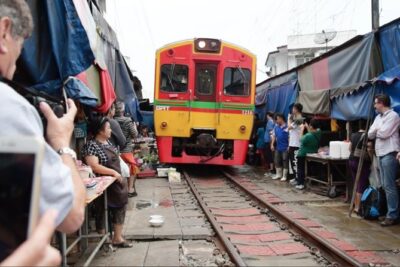
Private Excursion to Maeklong Railway and Floating Markets
Read our review →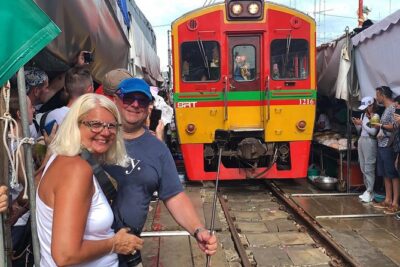
Floating and Railway Market (Optional Waterfall): Private Tour
Read our review →
Private Pyramids, Museum & Bazaar Tour with Lunch
Read our review →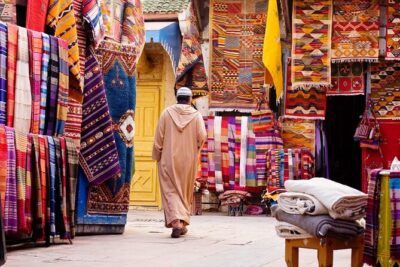
Shopping in the Souks of Marrakech Private Tour
Read our review →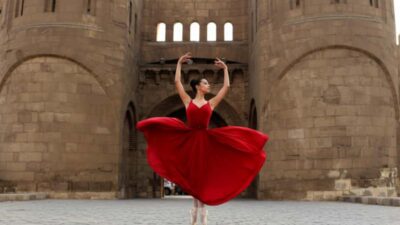
Local Markets & Khan el Khalili Private Shopping Tour
Read our review →
Private Excursion to Floating Market and Ayutthaya World Heritage
Read our review →
Private Heritage Walking Tour in Jaisalmer Fort and Old Bazaar
Read our review →Browse the lists this tour appears in