
Review · ALICANTE MARKET TOURS
Paella & Sangria Class with Tapas and Market Visit
A market visit followed by a hands-on paella lesson gives you a useful look at Alicante’s food culture, not just a meal in a restaurant. You shop for ingredients at Mercado Central, prepare salmorreta and broth, mix sangria, and sit down to eat what you made.
I like the chance to choose seafood, meat, or vegetarian paella, and I like that guides such as Federico, also called Fred, explain local products as you shop. The main caution is that this is a traditional rice-centered paella, so do not expect a mountain of seafood or a sweet, wine-heavy sangria.
Key points to know before booking
- The Mercado Central comes first: You help select ingredients and learn about local shrimp, Iberian ham, olives, salted fish, and regional produce.
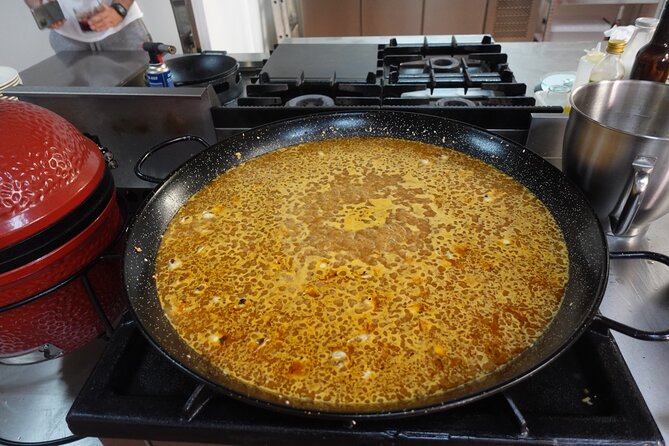
- You cook from scratch: The class covers fish broth, salmorreta, ingredient preparation, paella cooking, and sangria.
- You choose your paella: Seafood, meat, and vegetarian options are available, though the group may prepare more than one style.
- The setting is a working restaurant kitchen: This is designed as a real cooking experience rather than a staged demonstration.
- The group is fairly small: The stated maximum is 16 people, with many sessions apparently smaller.
- The meal includes more than paella: Tapas, tomato salad with salted fish, cured meats, olives, crisps, fruit, and sangria may be served.
Starting at Alicante’s Mercado Central
The experience begins at Plaza 25 de Mayo, outside Alicante’s Mercado Central. This is a practical meeting point in the city center, close to public transportation and easy to identify by the market itself.
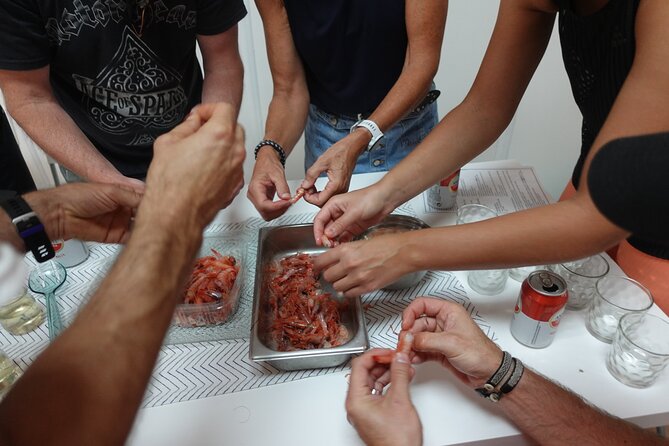
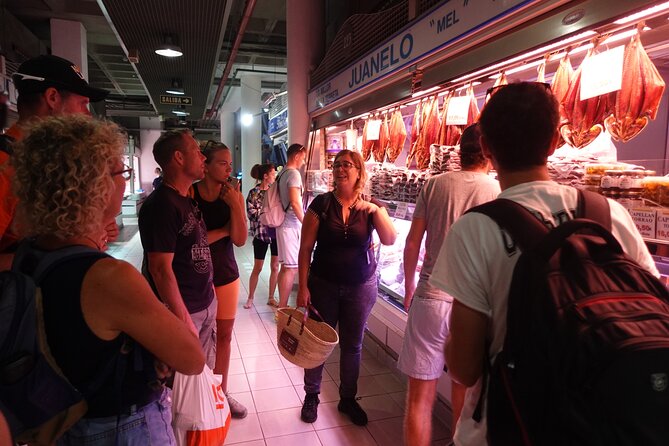
You do not simply walk through the market while a guide talks. You use it as the first part of the cooking lesson. Federico or Fred leads you through the food stalls and explains what you are buying for the meal. That may include vegetables, fruit, seafood, meat, wine, olives, ham, and other ingredients used in the class.
This part can be the most interesting section if you enjoy food shopping. You get a closer look at how local products are chosen, including the differences between kinds of shrimp and the role of cured meats in Spanish meals. The market also gives you a better sense of Alicante beyond its beaches and apartment blocks. It is a place where food remains part of daily life.
The visit takes about an hour, according to the experience description and participant accounts. That matters because the class is not a quick stop followed by instant cooking. You have time to ask questions and take in the market before heading to the kitchen.
You may learn that local Mediterranean shrimp are smaller than ocean shrimp. That is not necessarily a sign of poor quality. The class focuses on ingredients from Alicante Bay and on how they contribute flavor to the stock and rice. If you judge seafood only by size, this approach may surprise you.
The market can also be a little crowded and active, especially when the group is large. A group of five to eight is easier to keep together than one approaching the 16-person limit. If you prefer a quiet food tour, ask about the expected group size before booking.
A few more market tours around Spain worth a look
- Barcelona: Paella Cooking Experience & Boqueria Market Tour
★ 4.8 · 3,661 reviews - Barcelona Paella Cooking Class with Market Visit, Tapas & Sangria
★ 5.0 · 2,531 reviews - Paella Cooking Class, Wine Tasting & Central Market in Valencia
★ 5.0 · 1,150 reviews
Walking to a working restaurant kitchen
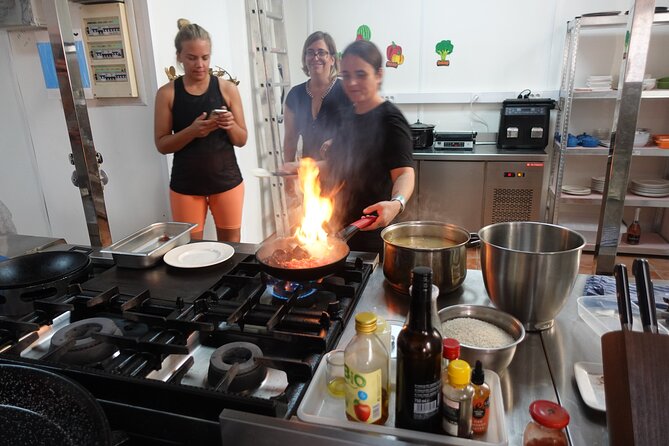
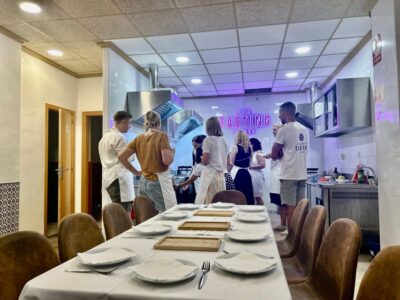
After the market, the group walks roughly three blocks to a local restaurant and its working kitchen. The setting is important. You are not cooking in a brightly decorated tourist classroom built only for demonstrations. You work in a place where locals eat, with a professional chef and host guiding the session.
Chef Maria has helped lead the cooking portion, while Federico or Fred handles much of the instruction and hosting. Federico is praised for switching comfortably between English and Spanish and for keeping the group involved. His style appears to be friendly and energetic, with plenty of explanation rather than a silent demonstration.
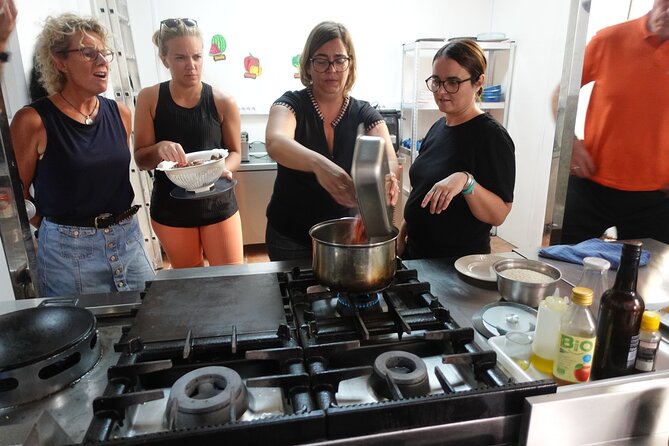
The room is set up so participants can take turns with the preparation. You may chop, mix, season, prepare seafood, help with the broth, or take part in cooking the rice. One session even included the use of a blowtorch for preparing fish. The exact tasks can vary, but the idea is clear: you are expected to participate.
This is a good format for beginners. You do not need advanced kitchen skills to take part, and the guide explains each stage. Still, remember that a group cooking class cannot give every person constant control of the pan. If you want a private lesson with one-on-one instruction, this is not that.
Salmorreta, stock, and the logic of Alicante paella
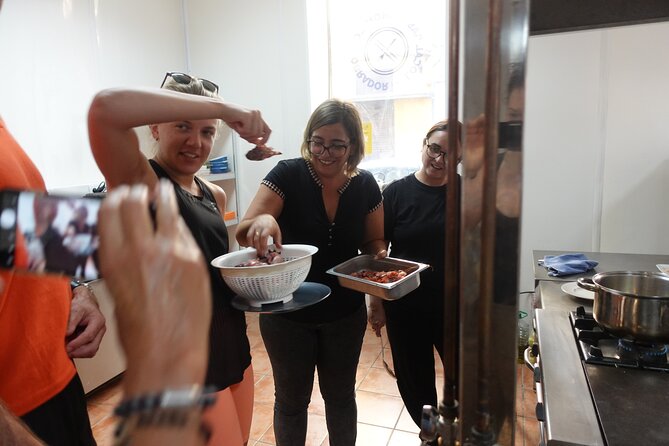
The class gives useful context about what makes paella taste like paella. You prepare the broth and salmorreta, the sofrito base that helps form the dish’s flavor. The rice is not treated as a blank filler waiting for seafood to be piled on top.
This is also where the class differs from versions of paella often served outside Spain. The seafood or meat matters, but the stock and seasoning do much of the work. The lesson places the focus on the rice, which is central to the Alicante style.
That approach may disappoint you if you expect large prawns, generous chunks of fish, and plenty of squid in every serving. The class may use small local shrimp and sepionet, a small squid with a high price and strong local reputation. The seafood is meant to flavor the dish as well as provide something to eat, rather than turn the paella into a heap of toppings.
I see this as a useful lesson in expectations. Traditional cooking is not always about adding more. In this case, the guide’s point is that well-made rice and stock matter more than sheer quantity of seafood. You can decide for yourself at the table, but you will come away with a clearer idea of how local paella is made.
The available choices are seafood, meat, or vegetarian paella. This flexibility helps mixed groups, though the kitchen may prepare two versions if different preferences are represented. If you have a strict dietary restriction, contact the provider before booking, since the supplied information confirms the three paella choices but does not list every possible allergy accommodation.
Tapas, sangria, and the meal between stages
While the paella cooks, you prepare and enjoy other Spanish foods. The meal can include traditional tapas, Iberian ham, sausage from the surrounding mountains, olives, crisps, tomato salad with salted fish, and fresh fruit. These side dishes give you a wider taste of Alicante than rice alone.
The tomato and salted fish salad is especially useful for understanding how simple local ingredients work together. The ham and sausage add a different side of Spanish food culture, while the olives provide a chance to compare brines and styles. The point is not to serve a long tasting menu. It is to give you small bites while the main dish develops.
You also make fresh sangria. The recipe uses wine, orange juice, soda, syrup, liquor, and fruit. That may sound less like a glass of wine and more like a mixed drink because it is. If you prefer dry wine served straight, sangria may taste too light or sweet. If you want the traditional drink served with a Spanish meal, this is the expected preparation.
Alcohol is included in the experience, and the minimum age for alcohol consumption is 18. The supplied information does not specify a separate nonalcoholic version, so ask ahead if you do not drink.
Same place, a different set of stalls:
- Valencian paella cooking class, tapas and visit to Ruzafa market.
★ 5.0 · 828 reviews - Spanish Cooking Class & Triana Market Tour in Sevilla
★ 5.0 · 760 reviews - Seville: 3.5-Hour Spanish Cooking Class & Triana Market Tour
★ 4.9 · 751 reviews - Valencia: Paella Cooking Class with Central Market Tour
★ 5.0 · 721 reviews
Sitting down to eat what you prepared
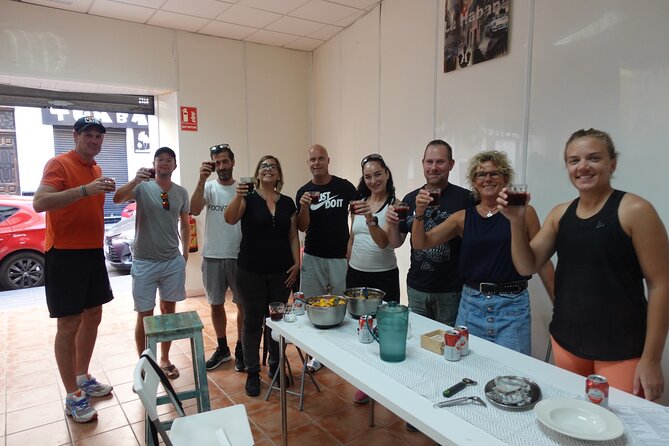
The final stage is the reward for the work. You sit with the group and eat the paella, tapas, and sangria in a relaxed setting. This shared meal is part of the class’s appeal. You are not just watching a chef cook and then receiving a plate. You have handled the ingredients and followed the dish from market to table.
The food is generally described as fresh and satisfying, with the rice receiving the most attention. The meal can be substantial, especially when the ham, sausage, salad, olives, fruit, and other snacks are included. One session was described as providing enough food for the whole group, with two people assisting the cooking.
The social side also matters. You begin as a group of strangers and spend several hours preparing and eating together. The cooking tasks give people an easy way to talk, and the shared meal makes the experience feel less formal than a standard guided tour.
The size of your group can shape the experience. A group of seven or eight gives you a good balance of conversation and access to the cooking. At the maximum of 16, you may spend more time waiting for your turn. The published information gives two slightly different maximum figures, 15 participants in the highlights and 16 in the additional details, so treat 16 as the upper limit.
What the guides add to the experience
The guide is a major part of this activity. Federico, also called Fred in participant accounts, receives repeated praise for his energy, humor, English, and ability to keep everyone involved. He explains ingredients at the market, describes Spanish food traditions, and manages the group in the kitchen.
His explanations cover more than recipes. You may hear about Iberian ham, olive brines, different shrimp, squid and cuttlefish, regional food traditions, and the differences between paella styles. That context turns the class into a short introduction to Spanish gastronomy.
The best evidence of his role is the number of activities he handles at once: market shopping, ingredient explanations, cooking instruction, sangria preparation, and group conversation. Chef Maria adds professional kitchen guidance during the preparation and cooking.
A warm guide cannot fix every possible food preference, though. If you dislike seafood, want very large portions of meat, or prefer a sangria made with little or no soda, the menu may not match your ideal. The class teaches a local style, rather than customizing every dish to suit international expectations.
Is $59.26 a good value?
At $59.26 per person, this is not the cheapest meal in Alicante. It is also not simply a restaurant lunch. Your price covers roughly three and a half hours, a market visit, instruction from a guide and chef, the cooking session, paella, sangria, tapas, and several side dishes.
I consider the price fair if you value participation and local food knowledge. A standard paella meal would cost less in some Alicante restaurants, but it would not include a guided market visit or the chance to learn the preparation. You also receive recipes to take home, according to the experience details.
The value depends on what you want from the afternoon. If your main goal is the largest possible portion of seafood, you may leave disappointed. If you want a social cooking lesson with a meal at the end, the price makes more sense.
The class is often booked around 19 days ahead, which suggests planning is wise during busy periods. It has a 4.8 rating from 122 reviews, with 95 percent of participants recommending it. Those figures do not guarantee your exact group or menu, but they indicate a strong overall record.
Who should book this Alicante cooking class?
I would choose this for a first visit to Alicante, especially if you want an activity that combines food, local shopping, and conversation. It works well for couples, families with adult children, solo visitors who enjoy meeting people, and small groups looking for something more active than sightseeing.
You do not need to be an experienced cook. The instruction is step by step, and everyone gets a chance to help. The class also suits people who want to understand why paella tastes different in Spain than it does at home.
It may be less suitable if you need a fully private experience, have extensive dietary restrictions, dislike group activities, or want a short demonstration with little hands-on work. It is also not ideal for anyone under 18 who hopes to drink sangria, since alcohol consumption is limited to adults.
The meeting point is Plaza 25 de Mayo, and the activity ends there after the meal. Confirmation is provided at booking, mobile tickets are accepted, and free cancellation is available up to 24 hours before the start time. If the minimum number is not reached, the provider may offer another date or a full refund.
Should you book it?
Book this class if you want to understand Alicante through its ingredients and cooking habits, not just eat a plate of paella. The market visit, salmorreta lesson, local seafood, sangria preparation, and shared meal create a full afternoon with plenty of variety.
Go in with the right expectations. The seafood may be smaller than you expect, the sangria includes juice and soda, and the rice is the main event. If that sounds like a fair trade for a hands-on class led by Federico or Fred, this is a strong-value food experience in Alicante.
FAQ
Where does the paella and sangria class begin?
It begins at Plaza 25 de Mayo, outside Alicante’s Mercado Central.
Where does the activity end?
The activity ends back at the meeting point.
How long does the experience last?
It lasts approximately three hours and 30 minutes.
Is the class offered in English?
Yes. The experience is offered in English.
What paella options are available?
You can choose seafood, meat, or vegetarian paella.
How many people can join the class?
The stated maximum is between 15 and 16 participants, depending on the information provided for the experience.
Is alcohol included?
Yes. The class includes sangria, and the minimum age for alcohol consumption is 18.
What food is included besides paella?
The class includes tapas and may include Iberian ham, sausage, tomato salad with salted fish, olives, crisps, and fresh fruit.
Is the experience near public transportation?
Yes. The meeting point is near public transportation.
Can I cancel for a full refund?
Yes, if you cancel at least 24 hours before the experience start time. Cancellations made less than 24 hours in advance are not refunded.
Just added around Spain
- Explore Bilbao’s Flavors Mercado de la Ribera and Old Town★ 4.5 · 3 reviews
- CERTAL Exclusive Tour: LA RIBERA Market + GASTROBARS Bilbao (3h)★ 4.5 · 12 reviews
- Spanish Oysters, Cava and Ibérico Ham at Barcelona’s La Boqueria Market★ 5.0 · 8 reviews
- Taste of Barcelona: Boqueria Market, Tapas & History Tour★ 4.5 · 22 reviews
- Private Barcelona Market Tour & Paella Cooking Class with Josh★ 5.0 · 4 reviews
- Barcelona La Boqueria & Sant Antoni Private Food Experience★ 5.0 · 7 reviews
- Cook Paella & Tapas + Market Tour in Barcelona (4-Course Meal)★ 5.0 · 2 reviews
- Market Gourmet Visit and Spanish Culinary Experience in Barcelona★ 5.0 · 34 reviews
Alicante Market Tours, compared.
Alicante Paella Cooking Class, Tapas, Drinks and Market
Read our review →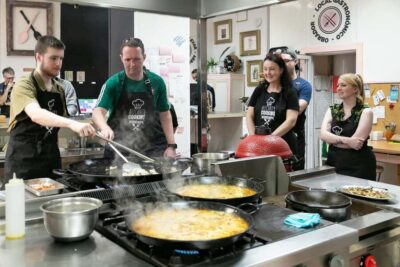
Alicante: Paella & Sangria Class with Tapas and Market Visit
Read our review →
Alicante Tour: Full City, Castle, Market & Tapas Experience
Read our review →
Alicante: Bullring and Central Market Gastronomic Tour
Read our review →
Alicante: Central Market Guided Food Tour with Tapas Bars
Read our review →
All of Alicante with the Castle, Market, and Tapas. Small group, max 6 people
Read our review →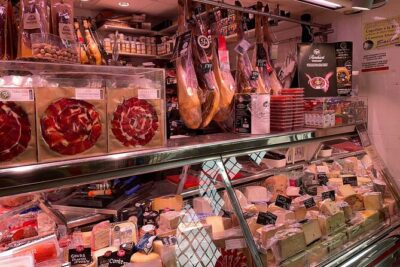
Browse the lists this tour appears in