
Review · ALICANTE MARKET TOURS
Alicante: Paella & Sangria Class with Tapas and Market Visit
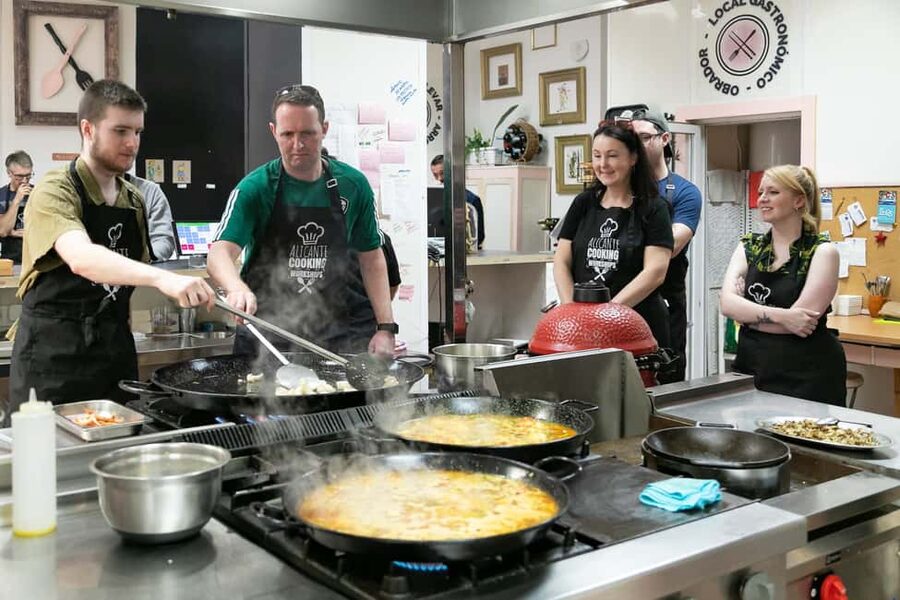
Alicante’s best cooking lesson starts before you reach the kitchen. You meet guide and chef Federico, often called Fred or Freddie, at the Central Market, choose the ingredients together, then turn them into paella in a real local restaurant. The market-to-table route gives the meal a clear sense of place.
I like two things right away: you choose seafood, meat, or vegetarian paella, and you get the recipe to use at home. I also like the relaxed group spirit, helped along by tapas, sangria, and Fred’s easy way with both English and Spanish. The main thing to consider is the heat and standing time, especially during summer, and one past group found that a mobility concern needed extra attention between the market and restaurant.
Key points at a glance
- Start at the Civil War memorial: Meet at the Central Market entrance, where your guide wears a black Paella&Sangria cooking Workshop Alicante shirt.
- Shop with a local purpose: Learn why the class uses particular ingredients, including Alicante’s signature salmorreta, a cooked sofrito used to build the paella.
- Pick your paella style: Choose seafood, meat, or vegetarian rice before cooking.
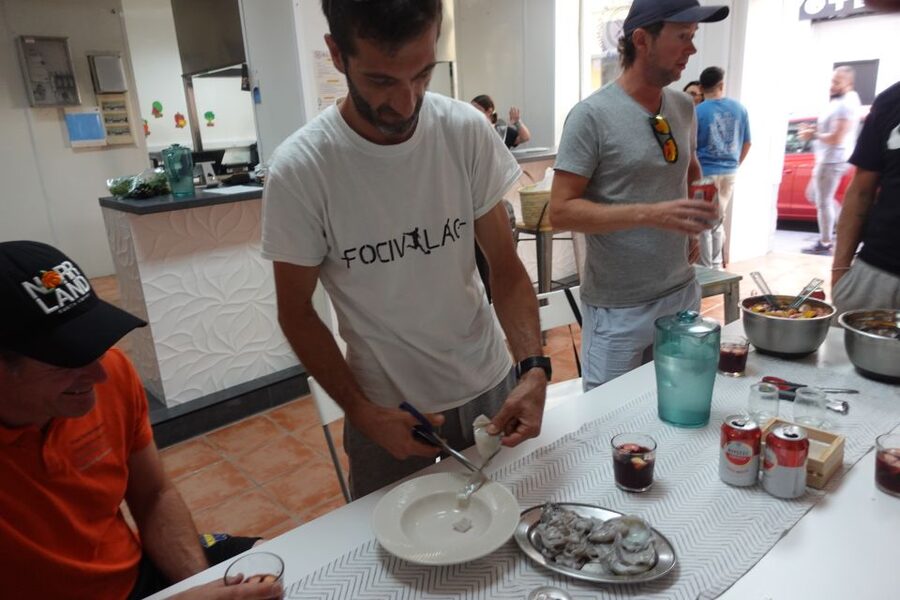
- Cook in a working restaurant: This is not a staged demonstration kitchen. You prepare the food inside a local restaurant where local people eat.
- Expect more than rice: Tapas include Iberian ham, tomato salad with salted fish, cold local sausages, olives, and crisps, plus sangria, beer, soft drinks, and water.
- Allow three and a half hours: The class has enough time for shopping, preparation, cooking, eating, and conversation without feeling like a quick photo stop.
Starting at Alicante Central Market
The meeting point is easy to identify if you know what to look for. Go to the market entrance and find the metal Civil War memorial on the ground. Your guide should be there wearing a black T-shirt with white Paella&Sangria cooking Workshop Alicante lettering.
That clear landmark matters in a busy city center. You do not need to search for a restaurant door or guess which market entrance to use. Still, arrive with comfortable shoes and clothes, since the opening part involves walking around the market and standing at stalls.
The Central Market is not just a place to collect ingredients. It gives you a quick introduction to the food culture behind the dish. You see the produce, seafood, meats, and other Mediterranean products before they are cleaned, measured, and placed into a pan. That small change in order makes the cooking lesson more useful. You understand what the ingredients look like at the point of purchase, not only after they have been prepared.
Federico, also called Fred or Freddie, is the guide most often associated with this class. His role is more than reading instructions. He explains what the group is buying, why each ingredient matters, and how the products fit into Alicante cooking. He also works in English and Spanish, which helps mixed-language groups follow the process.
The market section has a social side, too. You are not simply watching a chef shop. The group helps select ingredients, asks questions, and begins to work together before entering the kitchen. If you are visiting Alicante alone, this is one of the better parts of the experience because conversation starts naturally around food.
A few more market tours around Spain worth a look
- Barcelona: Paella Cooking Experience & Boqueria Market Tour
★ 4.8 · 3,661 reviews - Barcelona Paella Cooking Class with Market Visit, Tapas & Sangria
★ 5.0 · 2,531 reviews - Paella Cooking Class, Wine Tasting & Central Market in Valencia
★ 5.0 · 1,150 reviews
Choosing ingredients and learning Alicante’s paella style
The class focuses on an authentic Alicante paella, rather than presenting one fixed recipe to every person. You choose seafood, meat, or vegetarian preparation. That choice is useful for people with clear food preferences, though it is wise to select your option when booking or confirm it with the provider if you have strict dietary needs.
The cooking lesson covers the basic building blocks. You learn about the broth, the sofrito, and salmorreta, a signature Alicante mixture that gives the rice its flavor and color. This is the sort of detail that separates a local cooking lesson from a generic Spanish food demonstration.
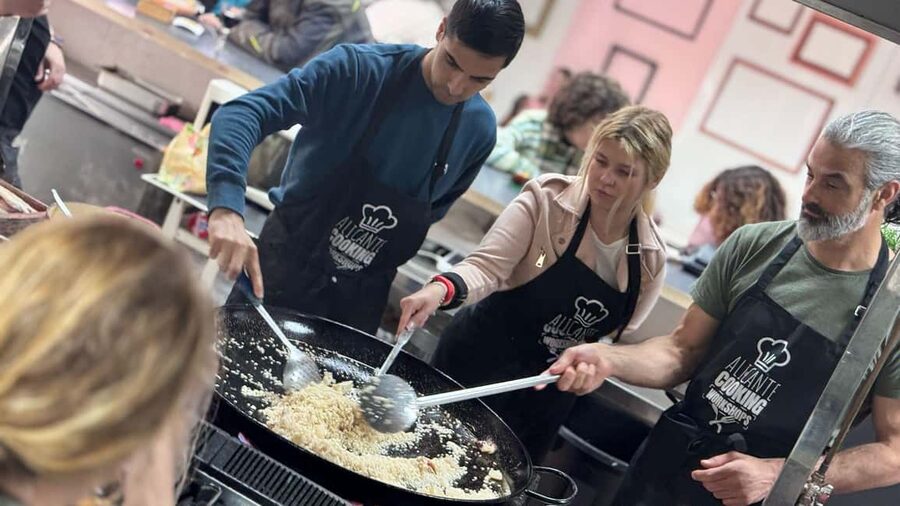
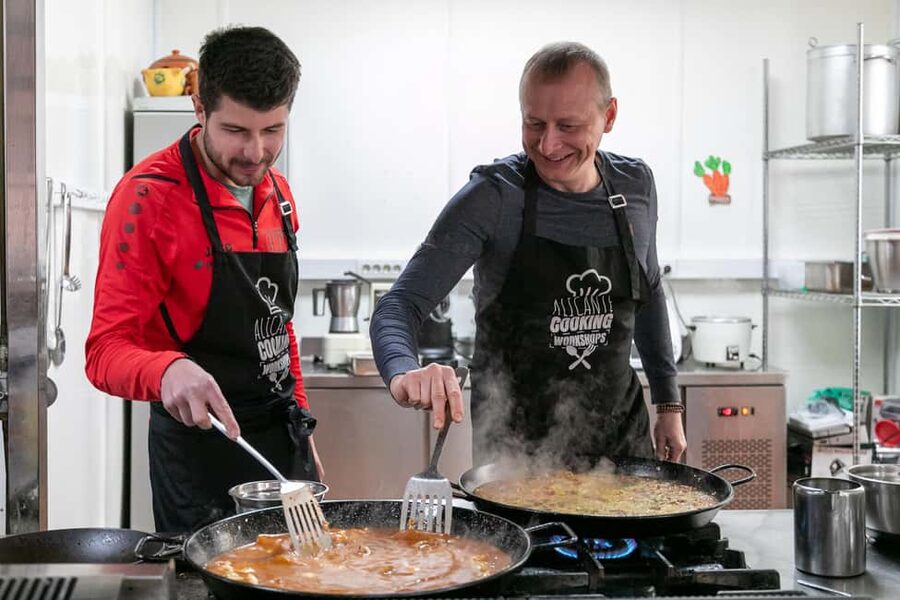
Paella can look simple when it arrives at the table: rice, broth, and a few toppings. The technique is less forgiving than it looks. The class lets you see how the ingredients are prepared, how the flavor base is built, and how the rice reaches its final golden finish. Fred guides the group step by step, so you are not left guessing when to add something or how to handle the pan.
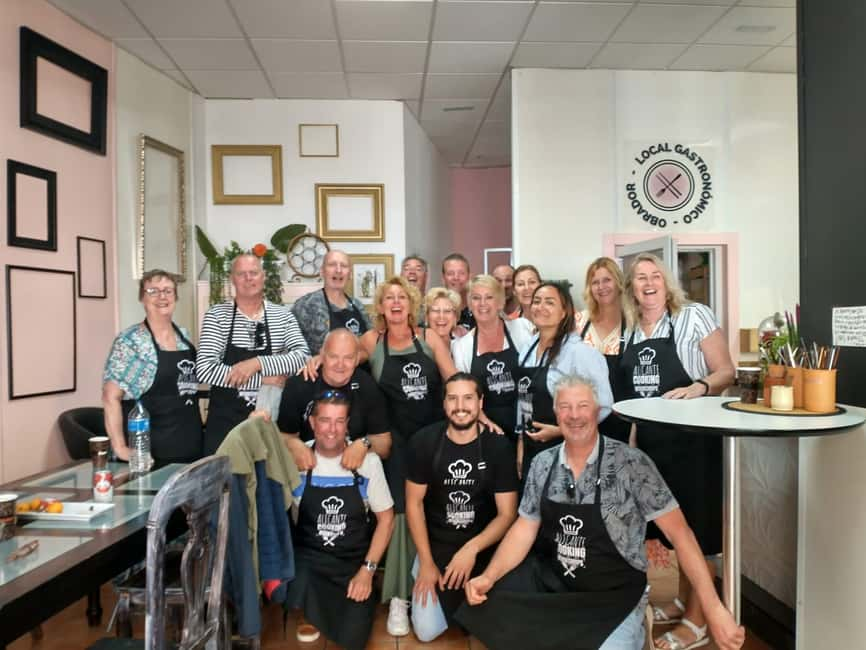
Do not expect to cook an individual paella from start to finish in complete silence. This is a shared workshop, and the group prepares the food together. That makes it lively and social, but it also means your personal cooking time depends on the size and rhythm of the group. A group of about 12 people has been handled successfully, while one unusually large party made the session feel more crowded. If you prefer a quiet, highly personal lesson, ask about the expected group size before booking.
Making sangria while the paella cooks
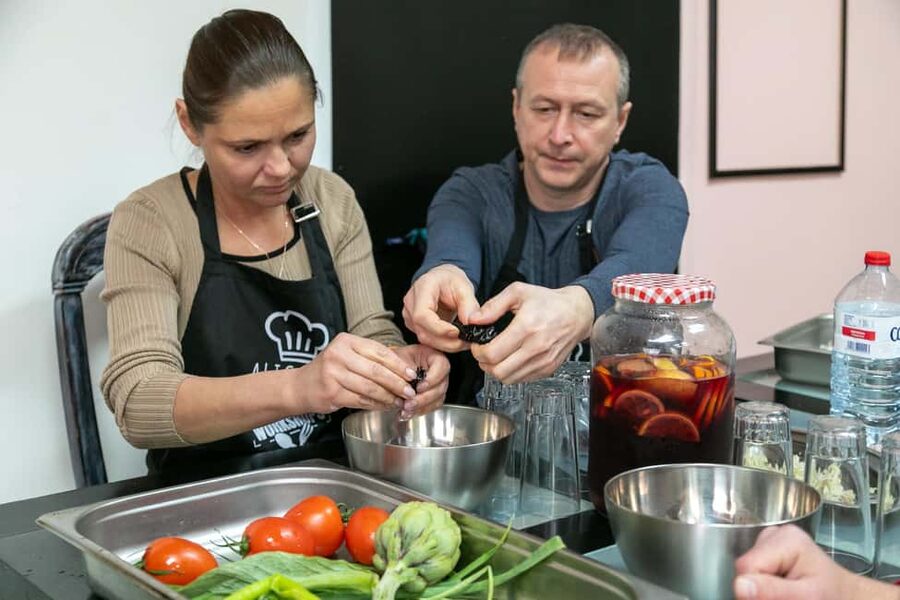
Sangria gives the class a second hands-on task and helps fill the cooking time. You make your own version, with alcohol or without it. Other drinks are available, including beer, soft drinks, bottled water, and coffee mentioned as being provided during one session.
The alcohol-free option is important for families, non-drinkers, and anyone who wants to keep a clear head for the cooking. It also means you can take part in the same activity as the rest of the group without needing to sit out.
The drink is paired with a selection of local snacks. The included tapas feature Iberian ham, tomato salad with salted fish, cold local sausages, olives, and crisps. The tomato and salted-fish salad received especially warm attention from one participant, which makes sense: it is a simple local combination that you might not order on your own.
This part of the meal helps the class feel like a long lunch rather than a technical lesson. You can taste as you go, talk with the people at your table, and watch the paella come together. Several participants found the portions generous enough that they were ready for a rest afterward. Plan your next activity with a little breathing room.
Cooking inside a real Alicante restaurant
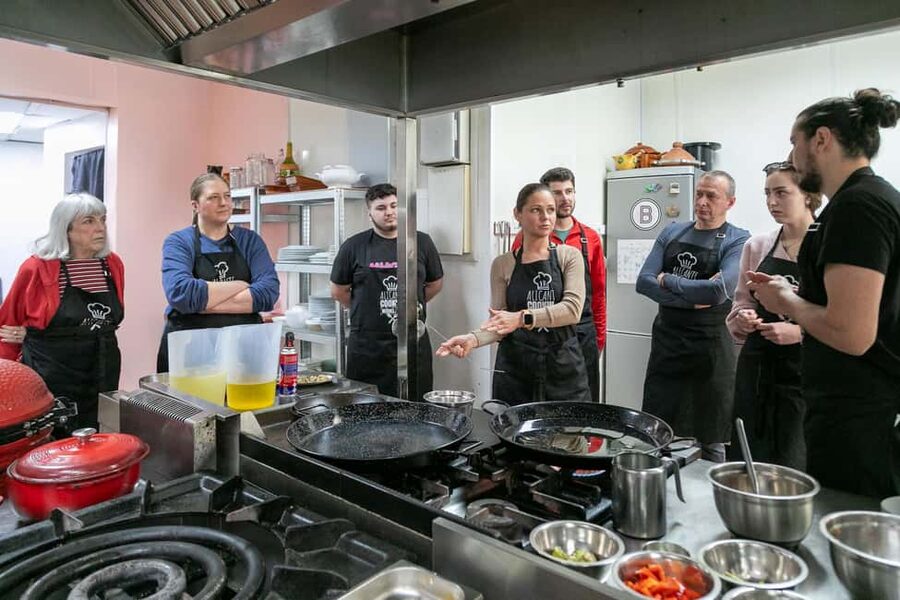
The kitchen is inside a working local restaurant, not a purpose-built tourist studio. That distinction matters. You get a sense of the setting where local meals are actually served, and the restaurant staff are part of the welcoming atmosphere.
The class is designed so everyone takes part. Fred explains the steps, answers questions, and keeps the group moving. His most praised qualities are patience, humor, clear English, and the ability to draw separate groups into one team. That is valuable in a cooking class because the food is only half the experience. The other half is deciding who chops, who stirs, who prepares the drink, and who watches the pan.
The teaching style is relaxed rather than formal. You should expect practical cooking tips, explanations of ingredient choice, and plenty of chances to ask questions. One participant who already works as a chef still found useful things to learn, particularly from Fred’s tips on ingredients and technique.
A good cooking host needs to manage both food and people. Fred appears to do that well. He keeps the activity social without forcing everyone to perform. If you are shy, you can ease into the group through small tasks. If you like being involved, there is enough to do.
The restaurant setting also brings a few practical points. You may be standing for long periods, and the kitchen can feel hot, especially in summer. At least one session took place in very warm weather, when water on arrival would have been appreciated. Bottled water is included, but carrying your own refillable bottle is sensible.
Same place, a different set of stalls:
- Valencian paella cooking class, tapas and visit to Ruzafa market.
★ 5.0 · 828 reviews - Spanish Cooking Class & Triana Market Tour in Sevilla
★ 5.0 · 760 reviews - Seville: 3.5-Hour Spanish Cooking Class & Triana Market Tour
★ 4.9 · 751 reviews - Valencia: Paella Cooking Class with Central Market Tour
★ 5.0 · 721 reviews
Eating the paella you helped prepare
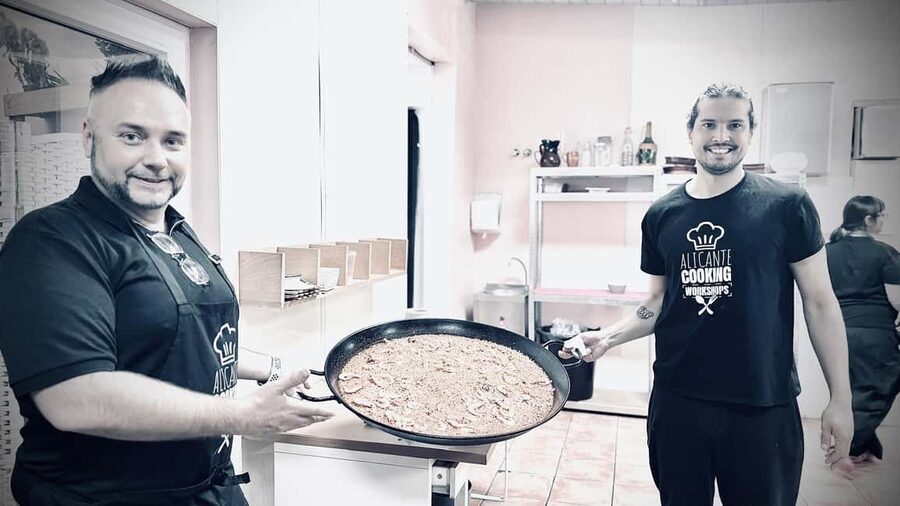
The final meal is the payoff, but it is also a test of the teaching. You sit down with the group and eat the paella you prepared. The experience is strongest when you pay attention during the earlier steps, because you can connect the finished dish with the broth, salmorreta, rice, and chosen filling.
The seafood version is a popular choice, but meat and vegetarian options are available. You should not expect every participant to receive a separate restaurant-style dish. The food is prepared as part of the shared class, which is why the activity works well for couples, families, and solo participants who enjoy communal meals.
The meal includes the earlier tapas, sangria, and other drinks. At $58 per person, that makes the value quite solid. You are paying for a market visit, a 3.5-hour guided activity, instruction from a local chef, a full meal, drinks, and a recipe to take home. A restaurant meal alone may cost less, but it would not include the market walk or the cooking lesson. A private cooking class would normally cost more, while a short demonstration would offer much less participation.
The recipe is one of the most practical extras. You can repeat the dish after returning home, using the techniques rather than relying on a vague memory of what happened in the kitchen. If you want to recreate the meal, write down any extra notes you find useful during the class, especially the order of preparation and the way the salmorreta is handled.
Who will enjoy this three-and-a-half-hour class
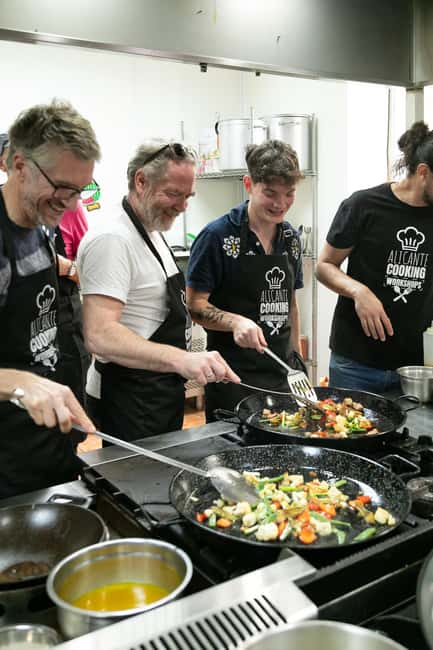
I would recommend this for food-focused visitors who want more than a plate of paella. It suits couples, families, solo participants, and groups of friends. It also works well as a rainy-day activity, since much of the experience takes place indoors after the market visit.
You do not need advanced cooking skills. The instructions are given step by step, and the group format lets you learn by watching and doing. At the same time, people who cook often should not assume the class will be too basic. The ingredient advice and Alicante-specific technique add useful local detail.
It is also a good fit if you want a social activity. The group usually includes people from different countries, and the cooking gives everyone a reason to talk. Several participants found that the group felt comfortable by the end, including people who arrived alone.
I would think twice if you dislike shared cooking, standing, or a meal built around rice and regional ingredients. You should also communicate mobility needs clearly before the day. The activity is wheelchair accessible, but one past participant with mobility issues was left behind during the walk from the market to the restaurant. That does not cancel out the accessibility information, but it is a reminder to confirm the route and make sure the guide knows what support is needed.
Price, timing, and practical preparation
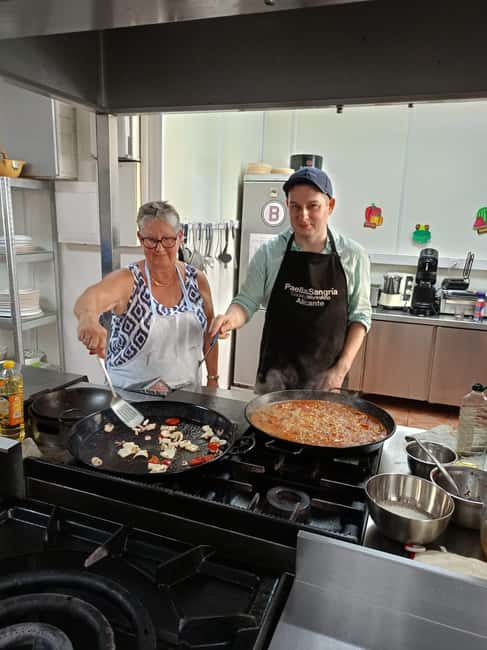
The price is $58 per person, and the class lasts 3.5 hours. That is a reasonable spend for Alicante if you count the market tour, hands-on instruction, tapas, sangria, other drinks, and the main meal. It is especially good value for people who would otherwise book a market visit and restaurant dinner separately.
Wear shoes that are comfortable for walking and standing. Choose clothes you do not mind wearing around food preparation. Pets are not allowed.
The tour is offered in English and Spanish. The guide’s ability to explain in both languages is useful for mixed groups, though you should expect some natural switching between languages if the participants speak differently.
You can cancel up to 24 hours before the start for a full refund, and the reserve-now-pay-later option helps if your Alicante schedule is still shifting. Check the available start times, since the 3.5-hour duration can occupy a large part of your day.
One final tip: do not schedule a demanding sightseeing plan immediately afterward. Between the tapas, drinks, and paella, this is a substantial lunch. Give yourself time to walk slowly, enjoy the meal, and let the class finish at its own pace.
Should you book the Alicante paella and sangria class?
Book it if you want to understand Alicante through its food, meet people in a relaxed setting, and learn a recipe you can use at home. The strongest features are the Central Market visit, the choice of paella style, the real restaurant kitchen, and Federico’s friendly, patient teaching.
Skip it if you want a short activity, a private lesson, or a simple restaurant meal with no participation. Also take the standing time and mobility route seriously.
For most food-loving visitors, the $58 price is fair because you receive far more than a cooking demonstration. You shop, prepare, cook, drink, eat, and leave with a better sense of what makes Alicante paella different. Bring comfortable shoes, arrive at the market memorial, and come hungry.
FAQ
Where does the paella and sangria class meet?
Meet your guide at the entrance to Alicante’s Central Market. Look for the metal Civil War memorial on the ground. The guide wears a black T-shirt with white Paella&Sangria cooking Workshop Alicante lettering.
How long does the activity last?
The full experience lasts 3.5 hours, including the Central Market visit, cooking workshop, drinks, tapas, and meal.
Which paella options are available?
You can choose seafood, meat, or vegetarian paella.
Is sangria available without alcohol?
Yes. You can make sangria with or without alcohol. Beer, soft drinks, bottled water, and other beverages are also available.
What food and drinks are included?
The activity includes Iberian ham, tomato salad with salted fish, cold local sausages, olives, crisps, sangria, bottled water, beer, and soft drinks, along with the paella you prepare.
Is the activity offered in English?
Yes. The live guide can host the class in English or Spanish. The activity is also listed as wheelchair accessible, though you should communicate any mobility needs clearly before attending.
Just added around Spain
- CERTAL Exclusive Tour: LA RIBERA Market + GASTROBARS Bilbao (3h)★ 4.5 · 12 reviews
- Explore Bilbao’s Flavors Mercado de la Ribera and Old Town★ 4.5 · 3 reviews
- Spanish Oysters, Cava and Ibérico Ham at Barcelona’s La Boqueria Market★ 5.0 · 8 reviews
- Taste of Barcelona: Boqueria Market, Tapas & History Tour★ 4.5 · 22 reviews
- Private Barcelona Market Tour & Paella Cooking Class with Josh★ 5.0 · 4 reviews
- Barcelona La Boqueria & Sant Antoni Private Food Experience★ 5.0 · 7 reviews
- Cook Paella & Tapas + Market Tour in Barcelona (4-Course Meal)★ 5.0 · 2 reviews
- Market Gourmet Visit and Spanish Culinary Experience in Barcelona★ 5.0 · 34 reviews
Alicante Market Tours, compared.
Alicante Paella Cooking Class, Tapas, Drinks and Market
Read our review →
Paella & Sangria Class with Tapas and Market Visit
Read our review →
Alicante Tour: Full City, Castle, Market & Tapas Experience
Read our review →
Alicante: Bullring and Central Market Gastronomic Tour
Read our review →
Alicante: Central Market Guided Food Tour with Tapas Bars
Read our review →
All of Alicante with the Castle, Market, and Tapas. Small group, max 6 people
Read our review →
Browse the lists this tour appears in