

Review · LOCAL & FARMERS MARKET TOURS
Lisbon: Local Market, Food, and Culture Walking Tour
Lisbon’s food culture makes most sense when you eat your way through it, and this tour gives you a neatly packed route from Time Out Market to Cacilhas and back through the old center. You’ll cross the Tagus by ferry, taste seafood on the south bank, and finish near Rossio Square with classic Portuguese snacks and drinks.
I like the ferry crossing because it turns a standard food walk into a small city outing, with fine views back toward Lisbon. I also like the human scale: groups are capped at 12 people, and guides such as Luis, Bruno, Alexandra, and Tania have been praised for mixing food, history, and easy conversation. The main tradeoff is the amount of walking, with uneven city streets, ferry access, and no suitability for wheelchair users or people with mobility impairments.
Key points to know before you book

- The ferry is part of the meal: A 15-minute crossing to Cacilhas adds river views and a change of setting.
- You taste more than one snack: Expect pastel de nata, fish soup, a shrimp patty, bifana, ginjinha, cheese, wine, coffee, and other salty treats.
- Time Out Market is the starting point: You begin with coffee and a custard tart at Lisbon’s best-known modern food hall.
- The group stays small: A maximum of 12 people gives you a better chance to hear the guide and ask questions.
- Come ready to walk: Comfortable shoes, water, and weather protection matter more here than dressing up.
- The pace depends on timing: One tour group found the market closing down by 2 p.m., so check the start time carefully.
From Time Out Market to a Portuguese breakfast
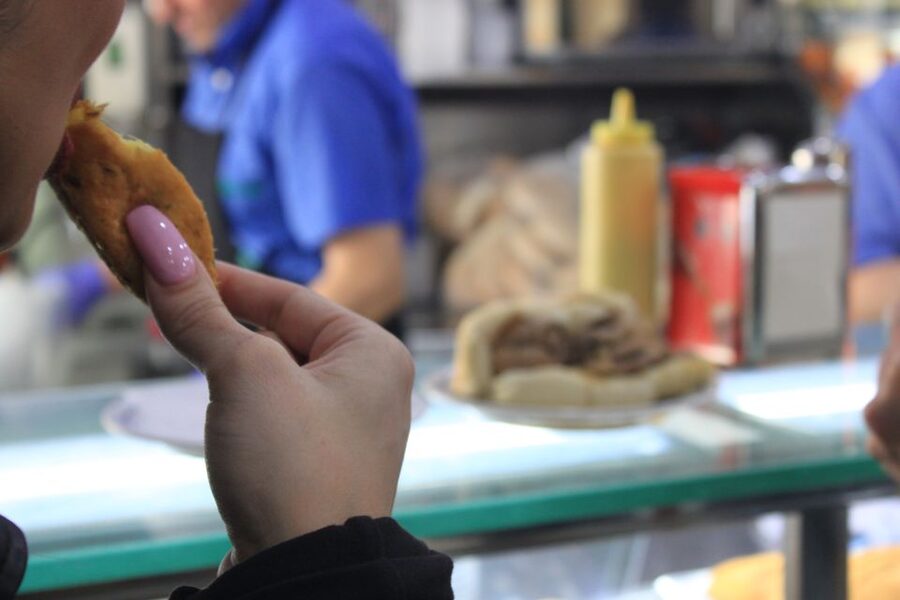
The tour begins outside the river-side entrance of Time Out Market Lisboa, also known as Mercado da Ribeira. This is a useful meeting point because it sits near the waterfront and puts you close to the city center from the start.
Inside, you get a quick introduction to one of Lisbon’s most active food halls. The opening tasting is simple and very Portuguese: coffee with a pastel de nata. That custard tart, with its flaky pastry and creamy center, is not just a sweet bite. It gives your guide an easy way to explain how food fits into daily life in Portugal.
Allow yourself a little patience here. Time Out Market can be busy, and the tour’s food stop is not designed as a long free period for browsing every counter. One practical warning is worth noting: a group arriving around 2 p.m. found the market packing up, so a late start may affect what you see at this first stop. Check the available times before booking, especially if seeing the market in full operation matters to you.
I like this opening because it avoids beginning with a long lecture. You get something to eat, hear some city background, and start walking with a clear sense of what the tour is about.
More Farmers Market Tours in Portugal
- Porto Local Market Visit & Cooking Class / Showcooking
★ 5.0 · 206 reviews - Porto: Local Market Tour & Cooking Class/Showcooking
★ 4.9 · 32 reviews - Madeira : Santo de Serra Local Farmers’ Market half day trip
★ 4.3 · 26 reviews
Crossing the Tagus by ferry
After the market, you board a ferry for the trip across the Tagus to Cacilhas, on the south bank. The crossing takes about 15 minutes each way, so transport becomes part of the experience rather than a simple transfer between restaurants.
From the boat, you can look back toward Lisbon while your guide continues the conversation about the capital. The view helps you understand Lisbon’s position along the river, and it gives your legs a short break before the next round of tastings.
This is one of the tour’s best choices. Many food walks stay within the same few streets, but this one gives you a change of scenery without requiring a long coach ride. You also get a look at how Lisbon connects with the south bank in ordinary daily life.
The ferry does mean you should keep the schedule in mind. The tour has a fixed three-hour duration, and a boat crossing is less flexible than walking around one neighborhood. If the ferry portion appeals to you, arrive at the meeting point on time.
Cacilhas and the south-bank seafood stop
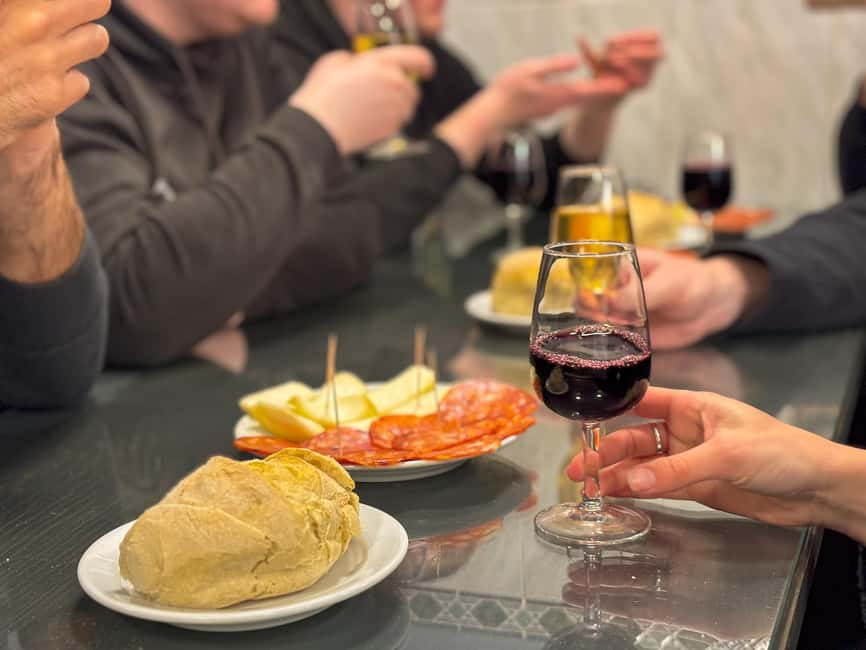
Cacilhas is the tour’s seafood chapter. The south bank is presented through food, with seafood taking the leading role. You taste fish soup and a shrimp patty during a stop of about 45 minutes.
This part gives the tour a useful contrast. At Time Out Market, you begin in a modern, highly organized food hall. In Cacilhas, the focus shifts to a more traditional food setting and to dishes linked with Portugal’s strong relationship with the sea.
The fish soup is especially useful for understanding how Portuguese cooking can turn straightforward ingredients into a filling meal. The shrimp pastry adds a different texture and a more portable kind of bite. You are not sitting down to a full restaurant lunch, but the portions are intended as a series of samples, so you can keep room for the later stops.
The ferry view also makes this section feel less like a checklist. You see Lisbon from across the water, then return with a better sense of how the city and river fit together.
Back in Baixa for salty snacks and local drinks
The return ferry brings you back toward central Lisbon, where the route continues through Baixa. This is the part of the walk that connects food with the capital’s central streets and everyday movement.
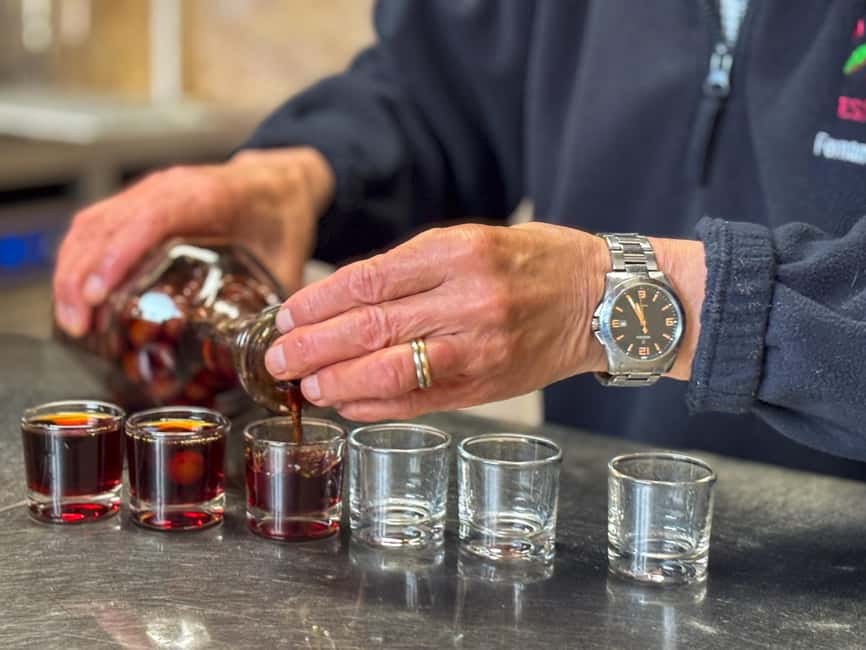
The tastings here include salty delicacies, Portuguese coffee, wine, and cheese. The exact order can vary, but the idea is clear: you move from breakfast-style pastry and seafood to the small savory foods people reach for during the day.
You also get to try ginjinha, the sweet cherry liqueur closely linked with Lisbon. It is a small serving, but it is one of the tour’s most local-feeling tastes. Ginjinha is not simply a generic Portuguese drink, and trying it with a guide gives you useful context instead of leaving you to guess what to order at a bar.
The Baixa stop is also where the walking and talking become more important. The guide explains the city while you move between food stops, so the tour does not treat Lisbon as a collection of disconnected bites. You learn about the capital’s past and present while seeing shops and streets used by local people.
Same place, a different set of stalls:
- Lisbon Market and Food Tour with Cooking Class and Lunch
★ 5.0 · 117 reviews - Chef Led Porto Market Tour and Portuguese Tapas Class with Wine
★ 5.0 · 92 reviews - Private Lisbon Market Tour & Portuguese Cooking Class with Paula
★ 5.0 · 89 reviews - Arrábida Jeep Tour – Incredible Market & Hidden Gems
★ 5.0 · 61 reviews
Rossio Square and the bifana finish
The final stop is Rossio Square, where the tour ends after another food tasting of about 45 minutes. The route includes a bifana, a Portuguese pork sandwich served in a roll. It is one of the country’s most familiar casual foods, and it gives the final stage a satisfying, practical feel.
A bifana is not a grand ceremonial dish. That is exactly why it belongs on this kind of walk. You get a sense of the food people choose for a quick, inexpensive meal rather than only sampling dishes prepared for sightseeing.
Rossio is a sensible finish. It is central, easy to recognize, and close to other parts of Baixa. Since the activity ends there and returns to the starting area, you are not left at an unfamiliar edge of the city. You can continue exploring, stop for another drink, or make your way back to your accommodation.
The route is advertised as three hours, though one guide-led outing lasted a little longer. That can be a bonus if you are enjoying the conversation, but keep it in mind if you have a tight dinner reservation or a timed attraction afterward.
What the guide adds to the food
Food is the main reason to book, but the guide determines how useful the experience feels. The tour is led in English, Spanish, or Portuguese, and a group may include up to two languages. That makes it worth checking your preferred language when you choose a time.
The best version of this tour is not a fast march from one snack to another. It is a chance to ask why a dish matters, how it fits into local routines, and what you might order later on your own. Guides named Luis, Bruno, Alexandra, and Tania have each received strong praise for being friendly, informative, and willing to answer questions.
I would especially value this format at the start of a Lisbon stay. A good guide can help you recognize a bifana, understand what ginjinha is, and feel less uncertain when you walk into a traditional café later in the trip.
The tone is informal rather than academic. If you want a long, detailed history lecture, this is not that. If you want food, city stories, and a chance to ask practical questions, the balance is much better.
Is $82 a fair price?
At $82 per person, this is not the cheapest way to eat in Lisbon. You could buy individual snacks and take the public ferry for less. The price pays for more than the food itself, though.
You are getting roughly three hours with a local guide, several tastings, the ferry crossings, and a small-group setting capped at 12 people. The food includes a broad spread: pastel de nata, coffee, fish soup, shrimp pastry, salty snacks, bifana, ginjinha, cheese, and wine. For someone who wants a guided introduction rather than a self-planned snack crawl, that is a reasonable package.
The value is strongest if you are new to Lisbon and want orientation on your first day or two. It is also useful if you want to try foods you might overlook when ordering alone. The value is weaker if you already know Lisbon’s food scene, dislike group tours, or would rather spend the same money on one long restaurant meal.
Because the tour is small, you are not paying for a large coach operation. You are paying for a compact route and a guide who can connect the dishes to the city. That distinction matters.
Walking, weather, and practical comfort

Wear tennis shoes or other comfortable walking shoes. This is not a gentle sit-down tasting with a few steps between tables. The route includes central Lisbon streets, ferry access, and enough walking that tired feet can take the edge off the food.
Bring a bottle of water. In summer, add sunscreen. In winter, bring a jacket because the river crossing and open streets can feel cold. These are basic suggestions, but they matter on a three-hour route with several outdoor sections.
The tour is not suitable for pregnant women, people with mobility impairments, or wheelchair users. If you have food restrictions, tell the operator in advance so arrangements can be considered. The information provided does not promise that every restriction can be accommodated, so ask before paying if the food list raises concerns.
The route includes alcohol tastings, especially ginjinha and wine. If you do not drink, confirm what alternatives are available before booking. The listed tastings are part of the experience, but the tour is still centered on food and local culture rather than drinking.
Who will enjoy this Lisbon food walk?
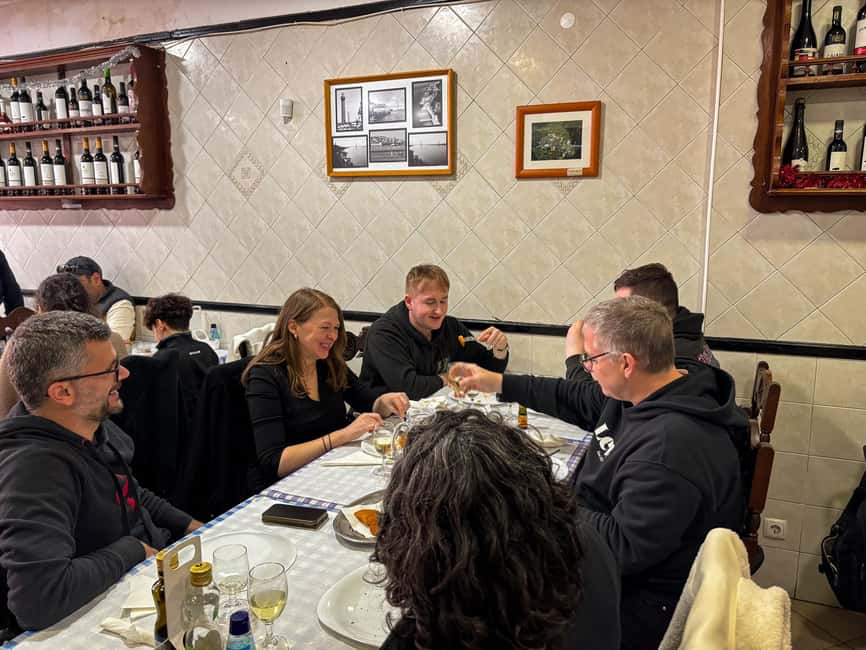
I would recommend it to first-time visitors who want a quick introduction to Lisbon’s food customs and central neighborhoods. It works well for couples, solo visitors, and small groups who enjoy trying several bites instead of spending three hours at one table.
It is also a good fit for anyone who likes learning through ordinary food. The pastel de nata, bifana, fish soup, cheese, and salty snacks show different sides of Portuguese eating, from breakfast to casual meals and drinks.
You should think twice if you have difficulty walking, need a wheelchair-accessible route, or want a relaxed pace with long periods of sitting. You should also avoid placing an important timed booking immediately after the tour, since the route can run beyond three hours.
Free cancellation up to 24 hours before the activity and a reserve-now, pay-later option make the booking less rigid. Still, the main decision is not the cancellation rule. It is whether you want a guided food introduction with a ferry trip or prefer to explore Lisbon’s eateries independently.
Should you book this tour?
Book it if you want many small tastes, local context, and a river crossing in one compact outing. The Cacilhas stop gives it more range than a standard Baixa food walk, while the small group and strong guide feedback make the social side appealing.
Skip it if your mobility is limited, you need a strictly timed schedule, or you prefer choosing every dish yourself. For most first-time visitors who arrive hungry and wear good shoes, $82 buys a practical introduction to Lisbon that can help shape the rest of your eating plans.
FAQ
Where does the tour start?
It starts in front of the river-side entrance of Time Out Market Lisboa, also known as Mercado da Ribeira.
Where does the tour end?
The activity ends back in central Lisbon at Rossio Square.
How long does the tour last?
The scheduled duration is three hours, though one outing lasted more than three hours.
What food and drinks are included?
The tastings include pastel de nata, Portuguese coffee, fish soup, a shrimp patty, salty delicacies, bifana, ginjinha, wine, and cheese.
What languages are available?
The tour is offered in English, Spanish, and Portuguese. Up to two languages may be spoken during one tour.
Is the tour suitable for wheelchair users?
No. The activity is not suitable for wheelchair users or people with mobility impairments. It is also listed as unsuitable for pregnant women.
More Food and Drink Trips in Portugal
- Authentic Market & Food Tour in Portimão, Algarve
★ 5.0 · 38 reviews - Setúbal: Winery & Fish Market Tasting Tour from Lisbon
★ 5.0 · 35 reviews - Bolhão Market Guided Food Tour
★ 4.5 · 23 reviews - Porto: Bolhão Market Guided Food Tour
★ 4.6 · 15 reviews
More Market Market Walking Tours in Portugal
- Bangkok: City Highlights Temple and Market Walking Tour
★ 4.5 · 3,990 reviews - Tokyo Tsukiji Fish Market Food and Culture Walking Tour
★ 5.0 · 3,184 reviews - Marrakech: Ben Youssef, Secret Garden, & Souks Walking Tour
★ 4.6 · 2,802 reviews - Marrakech: Colorful Medina Souks Guided Walking Tour
★ 4.7 · 2,470 reviews
Just added around Portugal
- From Market to Table with Paula (Loulé) – Private Cookery Class★ 5.0 · 21 reviews
- Quarteira Town & Gypsy Market Tour with Beach Bliss★ 3.5 · 14 reviews
- West Algarve Tour Visit Tavira Olhão Market and Ayamonte in Spain★ 5.0 · 2 reviews
- Loulé Market and Town Half-Day Bus Round Trip from Albufeira★ 4.5 · 14 reviews
- Loule Traditional Market Tour★ 4.5 · 17 reviews
- Quarteira Market & Town Bus Trip from Albufeira★ 4.0 · 13 reviews
- Algarve Wines Tasting Shared Experience at Mercado Municipal de Silves★ 5.0 · 11 reviews
- Authentic Algarve: Loulé Town Tour and Markets★ 4.0 · 19 reviews
Local & Farmers Market Tours, compared.

Hanoi Cooking Class: Culture, Local Market & Meaning CSR Impact
Read our review →
Cooking Class and Lunch at a Tuscan Farmhouse with Local Market Tour from Florence
Read our review →

Cooking Class Hoi An:Local Market, Basket Boat, Fishing & Cooking
Read our review →
Hoi An Cooking Class(Local market,Basket Boat,Fishing & Cooking)
Read our review →
Paella Cooking Class, Wine Tasting & Central Market in Valencia
Read our review →
Seattle: Pike Place Market Chef-Guided Food Tour
Read our review →Browse the lists this tour appears in