
Review · KATHMANDU MARKET TOURS
From Bazaar to Hippie Hub: Ason & Freak Street in Kathmandu
Kathmandu’s story comes into focus when you walk from tourist-friendly Thamel into the old market lanes of Asan, Indra Chowk, and Potey Bazaar, then finish on Freak Street. The route shifts from trekking shops and cafés to spice stalls, religious shrines, handmade bead garlands, and the fading bohemian world of the Hippie Trail.
I like the small five-person limit, which gives you a better chance to ask questions in crowded lanes. I also like the route’s unusual mix of daily commerce and cultural history, especially the Temple of Annapurna and the Newar Muslim artisans of Potey Bazaar.
The main consideration is the walking itself. The tour lasts three hours and includes several walking sections, with no transport between stops, so comfortable shoes, water, and some tolerance for uneven or crowded streets are important.
Key points at a glance
- A five-person group: You get a more personal walk and easier access to the English-speaking guide.
- From Thamel to old Kathmandu: The route shows how the modern tourist quarter gives way to long-established markets and shrines.
- The Temple of Annapurna: Learn why this goddess of grain and prosperity matters to local worshippers.
- Potey Bazaar: See glass bead garlands made and sold by Newar Muslim artisans for married women in Nepal.
- Freak Street’s Hippie Trail past: Connect 1960s and 1970s counterculture with the cafés and shops of Jhochhen today.
- A $15 walking tour: The price is reasonable if you want local context rather than only a self-guided stroll through the markets.
Starting with coffee in Thamel
The meeting point is Pumpernickel Bakery, in the center of Thamel. Your guide arrives 15 minutes before the meeting time with a sign reading Meeting Point, Amazing Kathmandu. The bakery serves coffee, all-day breakfasts, cakes, and gluten-free and vegan items, so it is a practical place to meet if you want food before setting off.
Thamel is a useful starting point because it is familiar to most visitors. Its narrow streets are packed with shops, cafés, travel businesses, and colorful stalls aimed at people visiting Nepal. That makes it easy to get your bearings, but Thamel can also feel more commercial than the neighborhoods ahead.
The tour uses Thamel as a point of contrast. You begin among shops used by visitors, then walk toward places where people buy household goods, worship, trade, and work as part of everyday Kathmandu life. I find that change more useful than spending three hours in one tourist district.
The tour is conducted in English, and the group is limited to five participants. That matters here. Kathmandu’s old streets are crowded and visually busy, and a large group would be harder to keep together. A small group also makes it easier to ask about a shrine, market custom, or item on a stall without holding up a long line of people.
A few more market tours around the world worth a look
- Bangkok: Damnoen Saduak Market and Maeklong Railway Market
★ 4.5 · 26,723 reviews - The Old Siam: Damnoen Saduak and Maeklong Railway Market
★ 4.5 · 10,992 reviews - Dubai: Old Town, Creek, Museums, Souks, & Street Food Tour
★ 4.8 · 10,816 reviews
The 45-minute walk toward Asan Bazaar
The first listed walking section lasts about 45 minutes. This is the longest stretch of the route, taking you from Thamel toward Asan Bazaar. The walk is part of the experience, not just a transfer between attractions.
As you leave Thamel, the streets change in purpose and feel. Shops and cafés give way to market activity, with more attention on practical goods and local trade. You should expect a city walk rather than a quiet sightseeing path. Kathmandu is full of movement, and the route takes you into that daily rhythm.
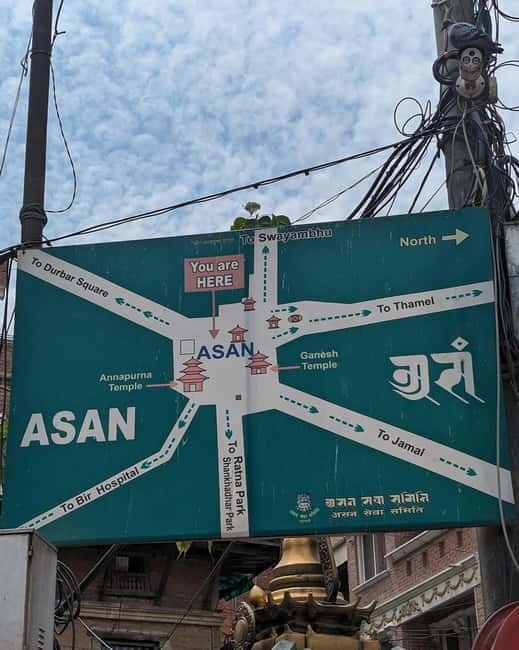
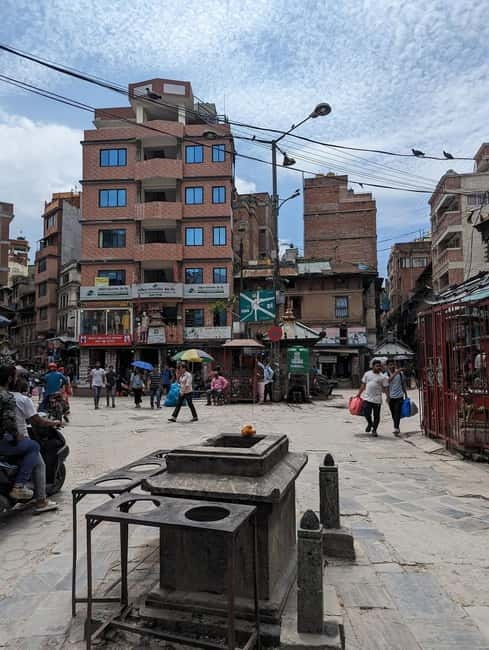
Asan Bazaar is one of Kathmandu’s oldest and best-known market squares. It is a place to pay attention with all your senses: spices bring strong scents, textiles add color, and stalls sell kitchenware and ordinary household supplies. This is not a staged market built for sightseeing. It is a working part of the city.
I like this stop because it gives context to Kathmandu’s religious life. You are not simply looking at old buildings. You are seeing a market that continues to serve local needs, with sacred places woven into the same streets as commercial stalls.
The drawback is that the market can be crowded and noisy. If you prefer museums, open squares, or carefully arranged sights, Asan may feel hectic. If you enjoy watching how a city functions, it is one of the strongest parts of the walk.
The Temple of Annapurna and local worship
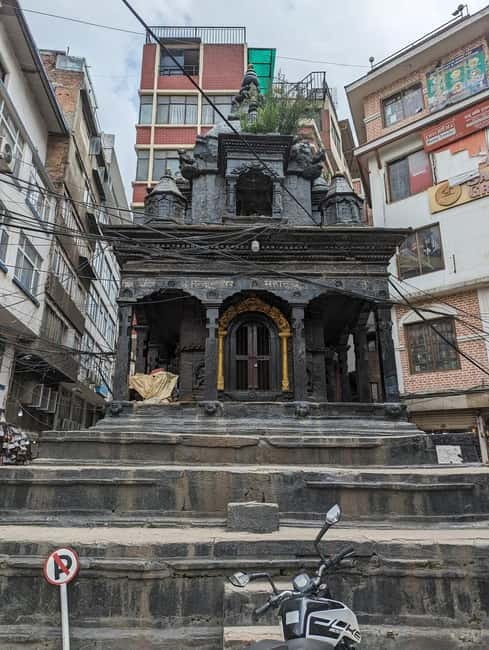
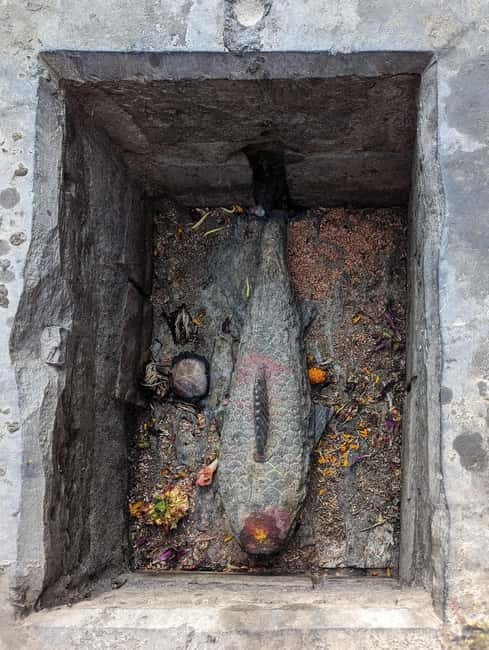
At Asan, the guide explains the Temple of Annapurna, dedicated to the goddess associated with grain and prosperity. The temple’s importance is tied to food, livelihood, and well-being, which makes it especially fitting in the middle of a market.
You may see devotees carrying out spiritual rituals during the visit. The tour provides an opportunity to understand the meaning of these practices, but you should give worshippers space and avoid treating the temple like a theatrical display.
Photography is allowed, though privacy matters. Ask before photographing people, particularly anyone taking part in prayer or ritual. A little care goes a long way in a place where religious practice and daily shopping happen side by side.
For me, this is where the tour moves beyond a list of old sites. The guide connects the deity with the market around it, helping you see how belief, food, trade, and family life overlap in Kathmandu. You get a clearer sense of why a small shrine or temple can matter so much to the people passing through the square.
Indra Chowk and the craft of Potey Bazaar
The route continues from Asan to Indra Chowk, another active market square. The walk between the two areas is listed at about 30 minutes, giving you time to see how one commercial quarter leads into another.
Indra Chowk is full of movement and small businesses. Rather than offering one grand monument, it rewards close attention to details: the goods on display, the narrow lanes, and the way people use the streets. Keep an eye on where you step and stay aware of the group, since the route passes through working market areas rather than a closed pedestrian attraction.
From Indra Chowk, you reach Potey Bazaar. This is one of the most distinctive stops on the walk. Newar Muslim artisans make and sell glass bead garlands known locally as potey. These garlands are traditionally worn by married women in Nepal.
The bazaar also sells cosmetics and small household items, but the beadwork gives it a clear identity. I like this stop because it shows Kathmandu’s cultural mix through an everyday craft. You are not only hearing that different communities have shaped the city. You are seeing a specific trade and its connection to dress, marriage, and local custom.
The listed walk from this section takes about 15 minutes, followed by another 30-minute walking segment later in the route. The timing gives you a useful expectation: this is a steady walking tour with several short stops, not a long stay inside one market or temple.
You may want to buy a small item here, but personal expenses are not included. If you shop, keep your purchases modest and remember that the tour’s main value is the explanation and access to places you might otherwise pass without understanding.
Same place, a different set of stalls:
- Bangkok: Train Market & Floating Market with Boat Ride
★ 4.7 · 9,547 reviews - Dubai: Old Town, Souks, Street Food, Guided Tour & Abra Ride
★ 4.9 · 7,170 reviews - From Bangkok: Ayutthaya & Ayothaya Floating Market Day Trip
★ 4.7 · 6,084 reviews - Dubai: Frame Tickets, Creek, Souks & Blue Mosque Guided Tour
★ 4.8 · 5,980 reviews
New Road, where old and new Kathmandu meet
After Potey Bazaar, the walk continues through New Road. This part of Kathmandu brings together older traditions and modern city life. Shops, traffic, commercial activity, and older market customs share the same urban space.
New Road helps prevent the tour from becoming a simple journey through the past. Kathmandu is not a preserved historical set. It is a living capital where new businesses and old customs operate next to one another.
I appreciate this transition because it gives the route a clear shape. Thamel shows the visitor economy. Asan and Indra Chowk show long-running market life. Potey Bazaar highlights a particular craft community. New Road shows the city adapting without leaving its older identity behind.
You should expect a city walk with changing levels of noise and congestion. The tour does not include transportation, and the route is on foot from start to finish. Wear shoes that are comfortable for three hours and be ready for changing weather. Carry water and a snack if you need one, since food and drinks are not part of the price.
Freak Street and the old Hippie Trail
The final major area is Jhochhen, better known as Freak Street. In the 1960s and 1970s, it became a major stop on the Hippie Trail, attracting people looking for alternative lifestyles, spiritual ideas, and artistic inspiration.
The area was associated with well-known counterculture figures such as Jimi Hendrix, George Harrison, Cat Stevens, Joni Mitchell, and Allen Ginsberg. Members of The Rolling Stones were also rumored to have visited. The stories give Freak Street a colorful reputation, but the tour also explains what brought that era to an end.
A government crackdown on drug use in the mid-1970s weakened the hippie movement in Nepal. Freak Street did not vanish, but its role changed. Today, you can still find cafés, shops, and local character in Jhochhen, along with reminders of the visitors who once made the area famous.
The appeal of this stop is not that it perfectly preserves the past. It does not. Instead, you get to compare the old reputation with the present-day street. That makes the history more believable. Places change, and the traces of the Hippie Trail now sit alongside ordinary Kathmandu life.
The route gives Freak Street a different role from the markets earlier in the walk. Asan and Potey Bazaar are about active trade and religious custom. Freak Street is more about memory, reputation, and the way outside influences shaped Kathmandu’s cultural identity.
The final walk back to Pumpernickel Bakery
After exploring Jhochhen, the group returns to Pumpernickel Bakery. The itinerary lists walking sections of 45 minutes, 30 minutes, 15 minutes, and 30 minutes, for about two hours of walking in total. The three-hour duration leaves time for the markets, temple explanations, craft stops, and Freak Street.
That balance is important. You are not being rushed through a string of landmarks, but you are also not spending the whole afternoon at one site. The walk has enough structure to show a clear section of Kathmandu while leaving room for the guide to explain what you are seeing.
The finishing point is useful because it returns you to a familiar part of Thamel. You can stop for coffee or food at the bakery, continue exploring Thamel, or use the area as a base for the rest of your day.
What the $15 price really gives you
At $15 per person, this is priced as an accessible introduction to Kathmandu rather than a full-day cultural program. You are paying for a three-hour guided walk, an English-speaking guide, market and neighborhood interpretation, and a group capped at five people.
The value comes from the connections between places. You can walk from Thamel to Asan Bazaar on your own, but it is harder to understand why the Temple of Annapurna matters, how Potey bead garlands relate to marriage customs, or why Freak Street became part of the Hippie Trail.
Food, drinks, transport to and from the meeting point, and personal purchases are not included. That keeps the base price low, but you should budget for your own refreshments and make your own way to Thamel.
Two verified ratings give the tour a perfect score, with particular praise for the guide’s clear explanations, friendly manner, and ability to include less obvious stops. One person described it as a strong first-day activity in Kathmandu. That makes sense: the route is broad enough to introduce the city without committing you to a full-day excursion.
Who should book this Kathmandu walk
I would choose this tour for a first day in Kathmandu, especially if you want an introduction to the city’s street life before visiting larger landmarks. The route helps you understand how Thamel relates to older market quarters and historic neighborhoods.
It also suits you if you enjoy:
- Walking through working markets rather than only visiting formal attractions
- Learning about local religious customs
- Seeing a craft linked to marriage and community life
- Exploring the history of the Hippie Trail
- Asking questions in a small group
- Spending $15 for context and guidance rather than transport or meals
It may not suit you if you want a relaxed, quiet outing or have difficulty walking for several hours. The markets can be crowded, the weather may change, and you must provide your own water and snacks.
Book it if you want a compact introduction to Kathmandu that connects commerce, worship, craft, and counterculture. Skip it if your priority is a private vehicle tour, a major monument-only visit, or a food-focused experience. For many people, its best use is early in a Kathmandu stay, when the city’s streets still need some explanation.
FAQ
How long does the tour last?
The tour lasts three hours.
Where does the tour start?
It starts at Pumpernickel Bakery in Thamel, Kathmandu.
Where does the tour finish?
The tour returns to Pumpernickel Bakery.
How many people can join the group?
The group is limited to five participants.
What language is the tour conducted in?
The live tour guide speaks English.
What places does the tour visit?
The route includes Thamel, Asan Bazaar, the Temple of Annapurna, Indra Chowk, Potey Bazaar, New Road, and Freak Street, also known as Jhochhen.
Is transportation included?
No. You walk between the stops, and transportation to and from the starting point is not included.
Are food and drinks included?
No. Food and drinks are not included, so you should carry water and snacks for personal use.
What should I wear?
Wear comfortable walking shoes and prepare for changing weather conditions.
Can I take photographs?
Photography is allowed, but you should respect local customs and ask permission before photographing people, especially during religious rituals.
Just added around the world
- 3-Hour Herbal Wholesale TCM Market and a Local Wet Market Tour★ 5.0 · 4 reviews
- Half-day Dandan Noodles Cooking Class with a Local Market Visit★ 5.0 · 8 reviews
- Chania Old Town, Public Market and Chrisopigi Monastery Tour★ 4.5 · 6 reviews
- Charleston International Sweet Treats & Historic City Market Tour★ 5.0 · 22 reviews
- Chania: Old Town, Public Market, Hill of Prophet Elias, Agia Triada★ 5.0 · 35 reviews
- Food Tasting & Market Shopping: Private Guided Tour in PORT LOUIS★ 4.5 · 9 reviews
- Moroccan Cooking Class with a Local Family & Market Visit★ 5.0 · 16 reviews
- Private Market Tour & Cooking Class in Casablanca with Transfers★ 5.0 · 20 reviews
Kathmandu Market Tours, compared.



Best Nepali Cooking Class in Thamel with Local Market Trip
Read our review →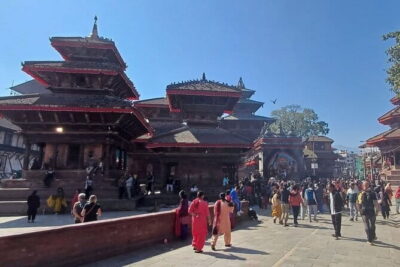
Oldest Local Market Walking Tour With Living Goddess Kumari
Read our review →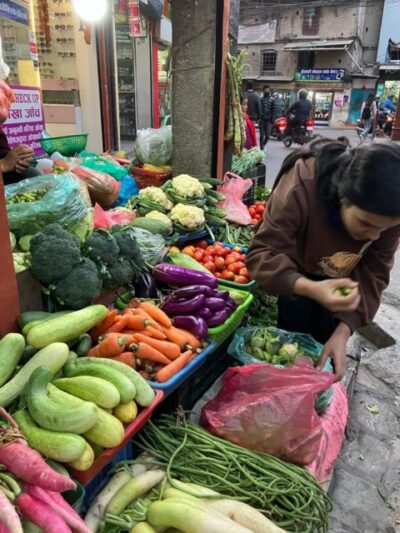
Half Day Cooking Class in Thamel with Local Market Visit
Read our review →Browse the lists this tour appears in