
Review · MARKET AND COOKING CLASS TOURS
Bangkok: Maliwan Thai Cooking Class with Market Tour
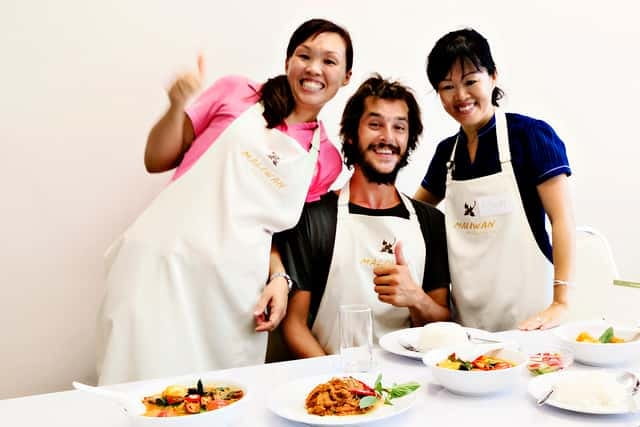
Thai food makes the most sense when you see the ingredients before they reach the wok. This four-hour Bangkok class takes you by tuk-tuk to a local market, then brings you back to a well-equipped kitchen where you prepare four dishes from start to finish.
I like the small groups of up to six, which leave room for real help at the stove. I also like the practical format: you shop for produce, watch each recipe demonstrated, cook it yourself, then sit down to eat the results. The main consideration is that the menu is chosen ahead of time, so you should report dietary needs when booking.
Key points to know
- Tuk-tuk market visit: You select ingredients at a local market and learn what they are used for in Thai cooking.
- Four dishes: Each class includes four recipes, with the exact menu decided by the instructor.
- Hands-on cooking: Ingredients are prepared and measured, then you cook with step-by-step guidance.
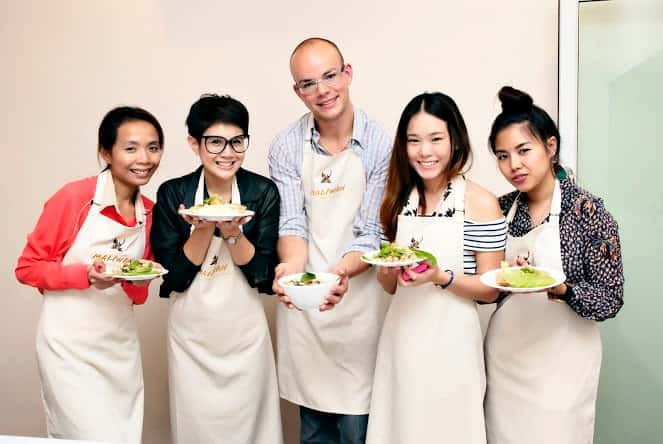
- Small class size: Groups are limited to six people, making it easier to ask questions and get stove-side help.
- Useful take-home extras: You receive recipe instructions, an e-certificate, and any food you cannot finish may be taken home.
- Central meeting point: The school is near Khao San Road, but the final alley can be easy to miss.
Why this Bangkok cooking class works so well
Thai cooking is not just about following a recipe. It is about balancing hot, sour, salty, sweet, creamy, and fresh flavors. A good cooking lesson should show you how those parts work together, not simply hand you a bowl of ingredients and tell you to stir.
Maliwan’s format handles that well. You begin with a market visit, so the food has some context before you cook it. Back at the school, the instructor demonstrates each dish, explains the steps in English, and gives you time to work at your own station.
I especially like the connection between the market and the kitchen. You are not only learning how to make pad Thai or curry. You are seeing the produce, herbs, and other ingredients before they are cleaned, measured, and arranged for cooking. That small step helps you recognize what to buy when you try the recipes at home.
The four-hour length also feels useful. It is long enough to cover several dishes without turning into a rushed demonstration, yet short enough to fit into a Bangkok sightseeing day. Morning and afternoon sessions are available, so you can choose between starting your day with Thai food or making the class your main activity later on.
More Market and Cooking Class Tours in Bangkok
- Bangkok: Hands-on Thai Cooking Class and Market Tour
★ 4.9 · 1,614 reviews - Hands on Thai Cooking Class and Market Tour
★ 5.0 · 660 reviews - Tingly Thai Cooking Class with Morning Market Tour
★ 5.0 · 589 reviews
Finding Maliwan near Khao San Road
The meeting point is at 9 Sipsamhang Road in the Taladyod area of Phra Nakhon. It is close to Khao San Road and the Banglamphu Market area, but the entrance is tucked into a small alley.
If you arrive by taxi, ask for Kraisi Road near Banglamphu Market. Look for the small alley beside the Chinese shrine or Domino’s Pizza, then walk into the alley and turn right. The school is in a four-story building painted dark grayish brown at the end. Ring the bell for entry.
This is one place where allowing extra time helps. The address is central, but central Bangkok does not always mean simple to navigate. A taxi driver may recognize the market area more easily than the cooking school itself, so keep the full directions available on your phone.
The experience ends back at the same meeting point. That is convenient because you are not left trying to find your way from an unfamiliar market or cooking venue.
The tuk-tuk ride and local market
The class begins with a tuk-tuk trip to a local market to select fresh ingredients. The ride is short, but it adds a distinctly Bangkok touch that a class held entirely inside a school cannot provide.
At the market, your instructor explains the foods being bought and points out the ingredients used in the day’s recipes. This is the most useful part for anyone who wants to cook Thai food at home, since unfamiliar herbs and produce can be difficult to identify in a supermarket.
The market is also a chance to see a more ordinary side of Bangkok. You are not simply looking at ingredients on a printed list. You are seeing where the class gets its supplies and learning how those foods fit into everyday Thai meals.
The exact shopping list depends on the menu. Since the instructor decides the dishes before the class date, you should not book expecting one fixed set of recipes. Previous menus have included chicken green curry, prawn pad Thai, chicken coconut soup, curry paste made from scratch, and mango sticky rice, but these examples do not guarantee what you will cook.
That flexibility has an upside. It allows the school to use suitable ingredients and adjust dishes for vegetarian or pescatarian participants when arranged in advance. The downside is that you cannot choose your favorite four dishes at the last minute.
Four dishes, one working kitchen
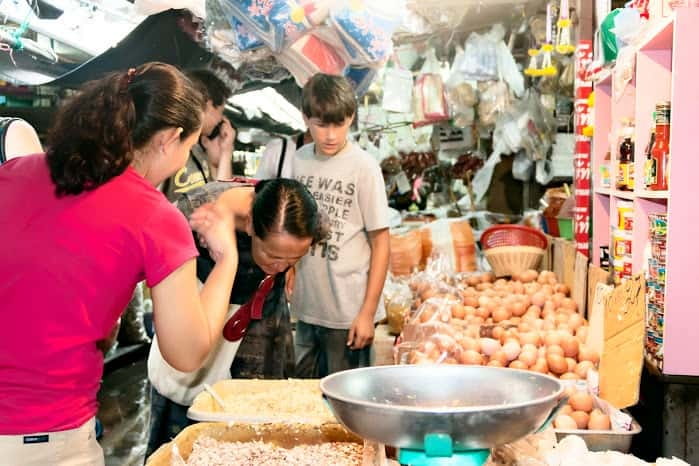
After the market, you return to the school for a welcome drink and cooking demonstration. The kitchen is fully equipped, and the staff prepare the ingredients so you can focus on the important steps rather than spending the entire session washing and chopping.
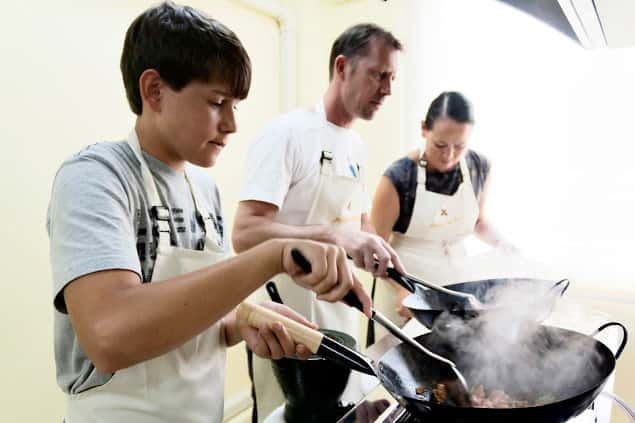
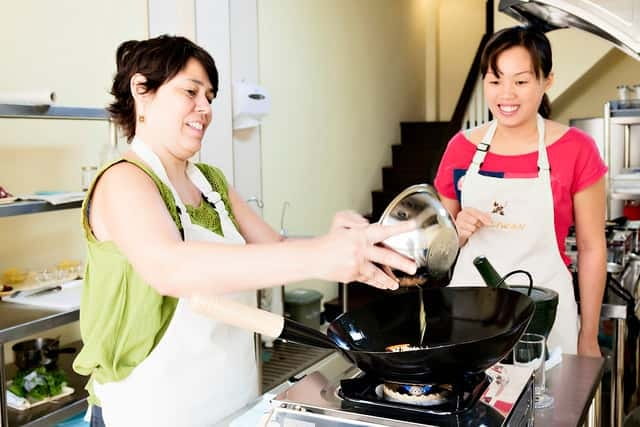
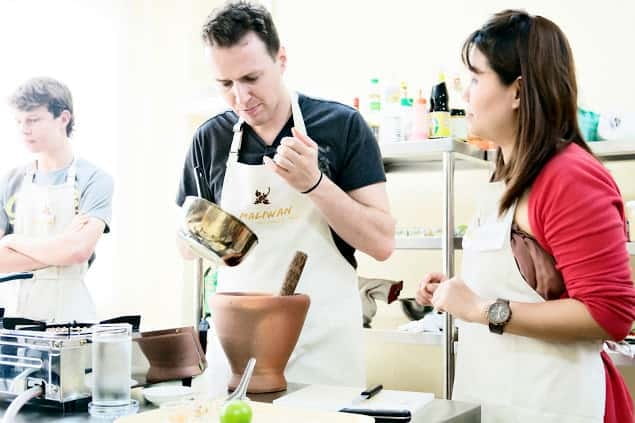
The instructor first shows how each dish is made. You then move to the stove and prepare your own food, with help available as you go. This is much more useful than standing behind a counter while someone else cooks. You get to handle the ingredients, control the cooking, and see how the dish changes as it comes together.
The class is designed for beginners. Instructions are given in English, and the cooking process is broken into manageable steps. Staff also help with preparation and cleanup, which keeps the class moving and gives you more time to cook.
A small class matters here. With no more than six participants, the instructor can notice when you are unsure about a technique or need help adjusting a dish. Some sessions also have extra staff helping with preparation and cooking. That support is valuable when several dishes are being prepared at once.
One especially useful lesson is the curry paste. Making it from scratch gives you a better feel for the fresh ingredients behind Thai curry and shows why the flavor is different from a jarred paste. You also get practical reminders about fresh herbs and produce, details that can change the final taste more than an expensive piece of equipment.
More Market and Cooking Class Tours in Thailand
- Hands-on Thai Cooking Class & Market Tour in Sukhumvit
★ 5.0 · 571 reviews - Pink Chili – Thai Cooking Class and Market Tour in Bangkok
★ 5.0 · 416 reviews - Authentic Thai Cooking with the Largest market visit &TukTuk ride
★ 5.0 · 350 reviews - Bangkok: White Lotus Thai Cooking Class with Market Tour
★ 5.0 · 285 reviews
What you may cook
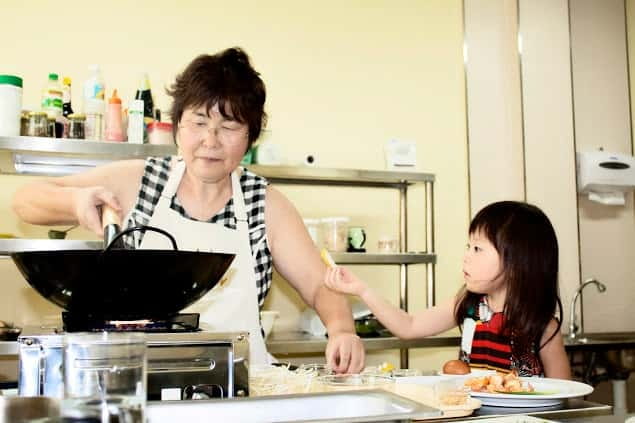
You will prepare four dishes, but the menu is not fixed in the activity details. The instructor chooses it before your class. That means you should treat the dishes named in past sessions as examples, not promises.
Pad Thai, green curry, coconut soup, and mango sticky rice have all appeared in class menus. A session may also include seafood, chicken, or other ingredients depending on the plan. Rice is included with the meal.
This variety gives you a good introduction to different Thai cooking methods. Pad Thai teaches you about noodle dishes and balancing flavor. Curry brings together paste, coconut, and aromatics. Coconut soup shows how a broth can be fragrant without being heavy. A dessert such as mango sticky rice adds a sweet finish and rounds out the meal.
The class does not appear to focus on one narrow regional style. Instead, it offers a broad introduction to familiar Thai dishes that you are likely to want to make again.
The food portions are generous. If you cannot eat everything at the end, you may be able to take leftovers with you. Bring that possibility into your planning, especially if you have another large meal booked soon after class.
Eating the food you prepared
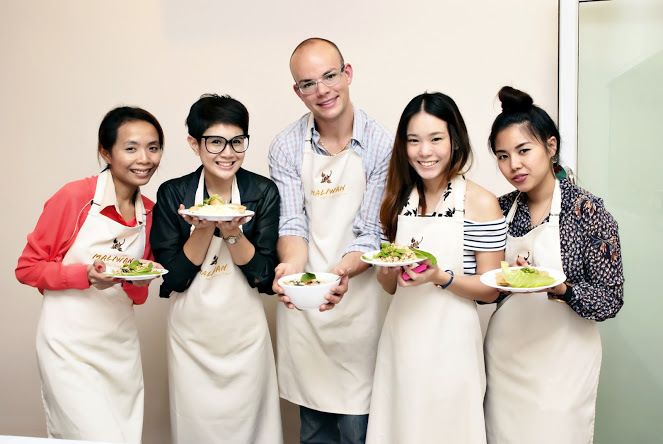
The meal is served after the cooking is complete, in an informal dining area. This gives you time to sit down, taste the dishes, and compare the results with the others in your group.
One small drawback is the timing. You do not necessarily eat each dish immediately after cooking it, so some food may sit while the remaining recipes are finished. If you care most about tasting each dish at its freshest, this is worth knowing.
Still, eating everything together has its own benefit. You can see the full meal at once and appreciate how the dishes work as a group. It also gives you a relaxed finish after several hours on your feet and at the stove.
The meal is the reward, but it is also a useful test. You can see which flavors you want to repeat at home and which ingredients you might adjust. The food is prepared by you, but the instructor’s guidance helps keep the dishes balanced and recognizable.
The instructors and teaching style
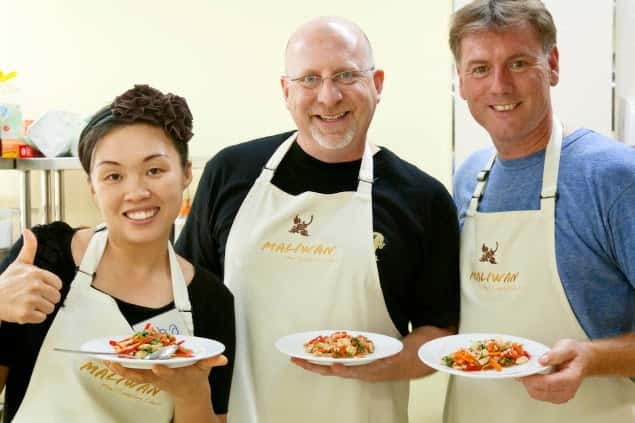
The English-speaking instructors are described as friendly, patient, and clear. Staff members named May and Mae appear in class experiences, though the person leading your session may differ.
The teaching style is hands-on without being intimidating. You watch a demonstration, then try the same work yourself. The instructor and assistants help with preparation, explain unfamiliar ingredients, and offer corrections as needed.
That approach suits a first cooking class. You do not need to arrive with knife skills or Thai cooking experience. At the same time, people who already cook will still find useful ideas in the market visit, fresh curry paste, and discussions of Thai flavor balance.
Parents should know that children need adult accompaniment and do not receive their own workstation. Unaccompanied minors are not allowed. The class is also not suitable for people with back problems or mobility impairments, since it involves a market visit, tuk-tuk transport, standing, and cooking activity.
Price and what the $40 includes
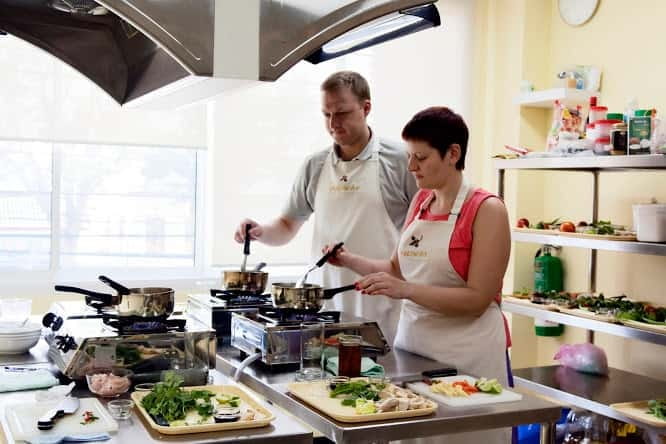
At $40 per person, this is a good value if you want more than a single meal. The price includes the market visit, tuk-tuk transport for that part of the experience, a welcome drink, drinking water, rice, all cooking ingredients, four recipes, and an e-certificate of completion.
The strongest value comes from the amount of food and instruction packed into four hours. You get a meal, a market outing, hands-on practice, printed recipes, and a small group rather than a large demonstration.
The e-certificate is a pleasant extra, but it is not the reason to book. The real value is the chance to recreate the food at home. The printed recipe handout is useful, although a digital copy or QR code would be easier to store than paper. Keep the handout somewhere safe after class.
Insurance is not included. Cancellation is free up to 24 hours before the activity for a full refund, and you can reserve now and pay later. Those terms help if your Bangkok schedule is still changing, but they do not replace travel insurance.
Dietary needs and menu limits
Tell the school about dietary restrictions when you book. Vegetarian, vegan, gluten-free, allergy, pescatarian, and other requests may be accommodated, but last-minute changes can be difficult.
The class has adjusted menus for vegetarian and pescatarian participants, and the dishes can be adapted in some cases. That said, you should not assume every allergy or preference can be handled without advance notice. The instructor sets the menu before the class date, so early communication matters.
If you have a serious allergy, ask for confirmation before paying. The supplied details confirm that dietary requests should be reported during booking, but they do not promise a separate allergy-free kitchen or guarantee against cross-contact.
Who should book this class?
I would choose this class if you want a practical introduction to Thai food and prefer doing rather than watching. It suits solo visitors, couples, friends, and families with children who can take part with an adult.
It is also a good choice for anyone staying near Khao San Road or Banglamphu. The location makes it easy to combine with other central Bangkok plans, although you should allow time to find the alley.
You may prefer another activity if you want to select every dish yourself, eat each course immediately after cooking, or avoid standing and market walking. People with mobility limitations or back problems should skip this one.
The class is less about polished fine dining and more about learning through a friendly, organized kitchen session. That is exactly why it works. You leave with practical recipes, a better sense of Thai ingredients, and four dishes you have made with your own hands.
Should you book Maliwan Thai Cooking Class?
Yes, if you want a small, well-structured cooking lesson with a local market visit and plenty of food for the price. The market stop gives the class more substance than a kitchen-only workshop, while the six-person limit keeps the instruction personal.
Book early if you have dietary requirements, and confirm that the planned menu suits you. If you are happy to let the instructor choose the recipes, this is an excellent four-hour use of your Bangkok time. The combination of tuk-tuk transport, fresh ingredients, patient instruction, generous portions, and take-home recipes makes the $40 price easy to justify.
FAQ
Where does the Bangkok cooking class meet?
It meets at Maliwan Thai Cooking Class, 9 Sipsamhang Road, Taladyod, Phra Nakhon, Bangkok 10200, near the Khao San Road and Banglamphu Market area.
How long does the experience last?
The cooking class and market visit last four hours.
Is the class offered in the morning and afternoon?
Yes. Morning and afternoon sessions are offered, with starting times shown when you check availability.
How many people are in each group?
The group is limited to six participants.
How many dishes will I cook?
You will prepare four different Thai dishes. The instructor decides the menu before the class date.
Is the class taught in English?
Yes. English instruction is provided.
Does the price include the market visit and ingredients?
Yes. The price includes the market tour, all cooking ingredients, rice, drinking water, and a welcome drink.
Can dietary restrictions be accommodated?
You should provide details about vegetarian, vegan, gluten-free, pescatarian, or allergy needs during booking. The school may be able to adapt the menu, but last-minute changes may be limited.
Is the class suitable for children and people with mobility problems?
Children must be accompanied by a parent or adult and will not have their own workstation. The activity is not suitable for people with back problems or mobility impairments.
Just added around Bangkok
- Morning Buddhist Almsgiving, Grand Palace and Flower Market Tour in Bangkok★ 3.5 · 9 reviews
- Bangkok Udomsuk Thai Cooking Class with local market tour★ 5.0 · 5 reviews
- Floating & Railway Markets and Erawan Waterfall [Optional Luxury]★ 5.0 · 43 reviews
- Floating Market & Railway Market near Bangkok★ 4.0 · 5 reviews
- Private 4 days : Bangkok, Floating market and Ayutthaya★ 5.0 · 2 reviews
- Silom Thai Cooking School with Fresh Market Tour★ 5.0 · 73 reviews
- Ayutthaya Floating Market Admission Ticket with Transfer★ 5.0 · 2 reviews
- Train & Floating Market Food Adventure + Scenic train ride★ 5.0 · 102 reviews
Market and Cooking Class Tours, compared.

Hanoi Cooking Class: Culture, Local Market & Meaning CSR Impact
Read our review →
5 Traditional Dishes Hanoi Cooking Class with Market Trip
Read our review →
Cooking Class and Lunch at a Tuscan Farmhouse with Local Market Tour from Florence
Read our review →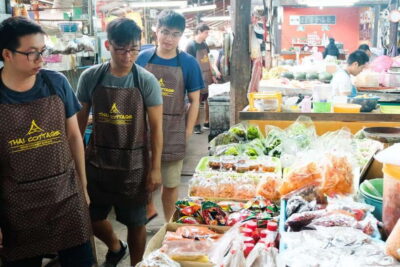
Cooking Class, Market & Thai Herbs Garden Tour
Read our review →
Authentic Cooking Class with Market & Farm Visit
Read our review →
Paella Cooking Experience & Boqueria Market Tour
Read our review →
Cooking Class Hoi An:Local Market, Basket Boat, Fishing & Cooking
Read our review →
Hoi An Cooking Class(Market,BasketBoat Crabfishing&Cooking Class)
Read our review →Browse the lists this tour appears in