
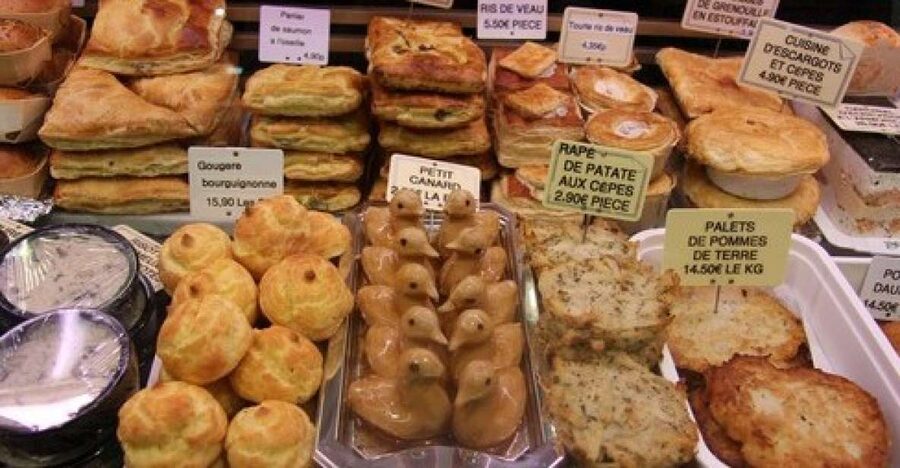
Review · 2-HOUR EXPERIENCES
Discover Paris’ Marché d’Aligre: 2-Hour Market Tour
Marché d’Aligre gives you a look at Paris beyond the grand monuments. In two hours, you move from the old covered Marché Beauvau to street stalls, North African shops, food tastings, and a flea market full of odd finds. The market feels local and lived-in, not arranged for sightseeing.
I like two things here: the food stops make the market easier to understand, and the small groups, limited to eight people, allow room for questions. You may taste items such as fresh bread, cheese, coffee, or specialty spreads, then finish with mint tea at a corner café. The main drawback is simple: at $129 per person, this is a costly two-hour outing, especially if you have already explored several Paris markets on your own.
Key points to know before booking
- Marché d’Aligre combines two market styles: the covered Marché Beauvau and an outdoor street market.
- The tour includes specialty-food tastings and mint tea, so the price is not just for a guided walk.
- Past guides Caroline and Christine received especially warm praise for making the food and neighborhood feel personal.
- The flea market is worth browsing for its oddities, but it may not satisfy you if you want serious antiques.
- Groups are capped at eight people, which suits visitors who prefer conversation over a large tour crowd.
- Ledru-Rollin is the nearest metro stop, with the meeting point at 100, rue du Faubourg Saint-Antoine.
Why Marché d’Aligre feels different from central Paris
Paris has famous markets that appear on many sightseeing routes. Marché d’Aligre offers something less polished and more everyday. It sits along rue du Faubourg Saint-Antoine, near the Ledru-Rollin metro station, and brings together several kinds of shopping in one compact area.
You find the covered Marché Beauvau, an outdoor market, and a flea market connected to it. The mix matters. One minute you are looking at food stalls, and the next you are considering a strange old object whose purpose is not immediately clear.
The market also borders shops with North African connections, adding different food traditions and shopping habits to the area. That variety helps explain why the market feels like a neighborhood meeting place rather than a single-purpose attraction.
I would choose this tour if you want to see how food shopping works in Paris and you enjoy asking questions. If your idea of a market is a quiet row of postcard-perfect stalls, this may feel noisy or untidy. That is part of its appeal, but it is not everyone’s preferred way to spend two hours.
More Two-Hour Tours in Paris:
- Paris: 2-Hour Aligre Market Walking Food Tour & Tasting
★ 5.0 · 13 reviews - 2 Hour Historic Market Food Tour and Hands-On Biscuit Class
★ 5.0 · 251 reviews - 2-Hour Food, History and Street Art Tour of Ponce City Market
★ 5.0 · 159 reviews
Entering the covered Marché Beauvau
The covered section is the first major point of interest. Marché Beauvau is one of the remaining covered markets associated with the old tradition of les passages couverts, the roofed shopping passages built behind Paris’s major boulevards.
The important detail is not only the roof. The building gives the market a sense of continuity and shelter, while the stalls keep the setting practical. Your guide can help you look past the simple act of shopping and notice how these market spaces fit into Parisian daily life.
Inside, expect rows of food stalls with products such as tapenades, spices, flowers, and coffee. The selection gives your guide plenty to explain. You can ask about how foods are used, what to look for, and how a French market differs from buying everything in a supermarket.
A stop here is especially useful if you are not confident ordering food in France. You do not have to guess what every jar, cheese, or spice might be. The guide can connect what you see with the tasting that follows.
The covered market is not a grand palace of food. It is a working market, and the experience depends on the stalls and the guide’s explanations. Come ready to look closely rather than rush through a checklist of sights.
Tasting tapenades, bread, cheese, and more
Food is the strongest reason to choose this particular walk. Specialty tastings are included, and past tours have featured items such as fresh coffee, baguette, truffle cheese, bakery goods, and a warm croissant.
Those details give you a sense of the tour’s approach. This is not just a guide pointing out ingredients from a distance. The tasting lets you connect the market’s appearance with its flavors. A warm croissant from a bakery, for example, offers a different experience from a hotel breakfast pastry.
A previous guide named Caroline was praised for making these stops feel personal. Her route included a bakery, a butcher, and a chance to speak with someone working behind the counter. The butcher stop is useful because it shows the market as a place where food is selected and discussed, not simply placed on a shelf.
The truffle cheese also received special attention. It was explained as a cheese traditionally eaten around Christmas, and it became one of the memorable parts of the food tasting. You may not find that exact selection on every departure, so treat the specific foods as examples rather than a guaranteed menu.
This is one place where the $129 fee gains some value. You are paying for access to tastings, interpretation, and a guide who can direct you toward items you might otherwise pass by. Still, the value depends on your appetite for food talk. If you prefer to browse independently and buy your own snacks, the price may seem high.
From market shopping to Parisian conversation
A good market tour should explain more than the names of foods. It should show you how people use the place. The strongest account of this experience described the chance to see how residents shop for fresh food, speak with a butcher, and visit a bakery.
That kind of contact can make the walk feel like time with a local friend. Guides Caroline and Christine were both singled out for their warm, helpful approach. Christine also shared additional Paris tips that visitors could use after the tour.
You should not expect a private meeting with every vendor or a long lesson at each stall. The entire experience lasts only two hours, and the group may need to keep moving. But a small group of no more than eight gives you a better chance to ask a question than a large coach tour would.
The language options are English and French. If you book in English, you can focus on the food and neighborhood without worrying about missing key explanations. French speakers can use the walk as a practical way to hear and use the language in a market setting.
A few more market tours around Paris worth a look
- Versailles Palace Bike Tour with Market & Marie-Antoinette hamlet
★ 5.0 · 2,680 reviews - Versailles Bike Tour with Market, Gardens & Guided Palace Tour
★ 5.0 · 1,121 reviews - Paris Cooking Class and Lunch with Wine plus Market Visit Option
★ 5.0 · 1,024 reviews - Paris Evening Cooking Class French Dinner and Market Visit Option
★ 5.0 · 430 reviews
The outdoor stalls and North African shops
After the covered market, the tour continues through the outdoor street market. This changes the feel of the walk. The indoor market offers a contained route, while the street stalls spread the shopping experience into the neighborhood.
You might see more produce, prepared foods, spices, flowers, and other market goods. The exact selection can change, which is normal for an outdoor market. The guide’s role is useful here because you can learn what is seasonal or typical without treating the stalls as a museum display.
The nearby North African shops add another layer to the area. Their presence helps you see that Parisian food culture is not limited to classic French bread, cheese, and pastry. Spices, mint tea, and other products widen the picture.
That is why I would not compare Marché d’Aligre only with a traditional farmer’s market. One person who had visited stronger food markets still found this place interesting. You may not consider it the best market in Paris, but its mix of food, street life, and different culinary traditions makes it worth seeing.
A mint tea break at a corner café
Mint tea is included, served at a corner café. This is a small part of the outing, but it gives the tour a welcome pause.
The tea also fits the area’s North African influence. Rather than treating the market as a collection of objects, the stop lets you sit down and talk about what you have seen. A break can be particularly useful if you want recommendations for the rest of your Paris visit.
Do not expect a full meal. The tour includes tastings and mint tea, not lunch. If you are hungry, plan your day around that fact. You may want to eat before the tour or arrange a meal afterward, depending on how much food is offered during your departure.
The café stop is also one reason the small group limit matters. Eight people can share a table and conversation more easily than a large tour group. The mood is likely to feel more social and relaxed than a standard stop-and-listen walking tour.
Browsing the flea market
The connected flea market is the most unpredictable part of the route. You can look for unusual objects, old household items, and other curious finds. The fun is in the browsing, not in expecting a major antique collection.
One account rated the flea market as unexceptional. That is fair warning. If you are searching for valuable antiques, a specialist market, or a carefully arranged design shop, this stop may disappoint.
I would still keep it in the plan because it breaks up the food route. The market tour is not only about tasting. The flea stalls show another side of buying and selling in the neighborhood, and you may enjoy spotting an object that is amusing, puzzling, or unexpectedly useful.
Your guide can also help put the flea market in context. With limited time, you will probably not inspect every table. Use the stop to browse, ask questions, and enjoy the contrast with the covered food market.
Is $129 a fair price for two hours?
At $129 per person, this is not a budget market visit. You can walk around Marché d’Aligre without a guide and spend much less. The question is what you want your money to do.
The fee includes a two-hour guided experience, specialty-food tastings, and mint tea. You also receive explanations in English or French, help choosing what to notice, and a small group capped at eight. If your guide is as engaging as Caroline or Christine, the personal connection adds real value.
The price makes more sense for a first visit to Paris, for food lovers, or for anyone uneasy about navigating a French market alone. It is less convincing for repeat visitors who already know Marché d’Aligre, speak French comfortably, and prefer to buy their own food.
You should also remember that transportation is not included. Getting to and from the market is your responsibility. The meeting point is 100, rue du Faubourg Saint-Antoine, and Ledru-Rollin is the nearest metro station, using exit 2.
Who will enjoy this market walk most?
I would recommend this tour to you if you want local food explained in a friendly setting. It is a good fit for first-time visitors who have seen the Eiffel Tower and Louvre but still want a more ordinary slice of Paris.
It also suits couples, solo visitors, and small groups who like tasting as they walk. The eight-person limit gives the guide room to answer questions and keeps the experience from turning into a crowded procession.
Food-focused visitors will get the most from it. The route includes enough tasting detail to make the market more than a photo stop. You will likely enjoy it even more if you are curious about bread, cheese, coffee, spices, pastries, and how residents shop.
I would be cautious if you have already visited many markets and want something entirely new. One assessment found better farmer’s markets elsewhere, and the flea market may not be a major attraction by itself. The tour’s strength is the combination of the guide, food stops, and neighborhood setting.
Practical details that shape the experience
The tour lasts two hours, so you do not need to devote half a day to it. That makes it easy to pair with other plans in Paris, though you should allow enough time to reach the meeting point at 100, rue du Faubourg Saint-Antoine.
Starting times vary, so check availability when you choose a date. The tour runs in English and French, and the maximum group size is eight people.
You can cancel up to 24 hours ahead for a full refund. You can also reserve now and pay later, which helps if you are still arranging a longer Paris schedule.
Because the tour takes place in an active market, the exact food selection and atmosphere may change. That is normal. Go for the setting and the guide’s interpretation, not a fixed list of guaranteed products.
Should you book Marché d’Aligre?
Book it if you want a friendly introduction to Paris market culture with food to taste and a guide to explain what you are seeing. The covered Marché Beauvau, outdoor stalls, North African shops, and mint tea create a varied two-hour route. Caroline and Christine also show the level of personal guidance this experience can offer.
Skip it if $129 feels steep for a short walk, or if you are already an experienced Paris market shopper. The flea market is not the main reason to go, and the quality of the experience depends heavily on the guide and the food selection that day.
For a first-time visitor who wants to shop like a Parisian for a morning, this is a worthwhile splurge. For everyone else, compare the price with simply visiting Marché d’Aligre on your own.
FAQ
Where does the Marché d’Aligre tour meet?
The meeting point is 100, rue du Faubourg Saint-Antoine, 75012 Paris. The nearest metro station is Ledru-Rollin, using exit 2.
How long does the tour last?
The tour lasts two hours. Starting times vary, so you need to check availability for your chosen date.
What languages are available?
The tour is offered in English and French with a live guide.
How many people are in each group?
Groups are limited to a maximum of eight participants.
Are food and drinks included?
Yes. Specialty-food tastings and mint tea at a corner café are included. Transportation is not included.
Can I cancel the tour for a refund?
You can cancel up to 24 hours in advance for a full refund. The activity also offers a reserve-now, pay-later option.
Just added around Paris
- Paris: Saint Ouen Flea Market Guided Tour★ 4.9 · 8 reviews
- Paris: Christmas Market Guided at Notre Dame & Food Tasting★ 5.0 · 3 reviews
- Paris: Evening Cooking Class with Optional Market Visit★ 4.8 · 19 reviews
- Paris: Food Market Tour in Bastille★ 4.6 · 12 reviews
- Paris: 2-Hour Aligre Market Walking Food Tour & Tasting★ 5.0 · 13 reviews
- Versailles: Local & small-group Farmers’ Market Food Tour★ 5.0 · 3 reviews
- Local Food Market Walking Tour near the Marais★ 4.5 · 22 reviews
- Stroll a Local French market & have a picnic★ 5.0 · 24 reviews
2-Hour Experiences, compared.
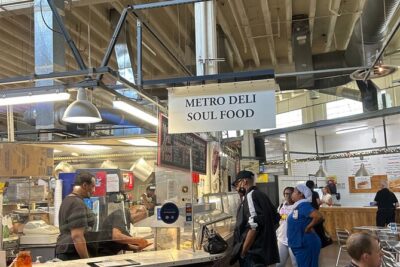
2 Hour Historic Market Food Tour and Hands-On Biscuit Class
Read our review →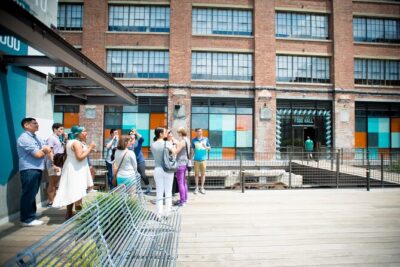
2-Hour Food, History and Street Art Tour of Ponce City Market
Read our review →
Palermo in 2 hours Main monuments and historic markets
Read our review →
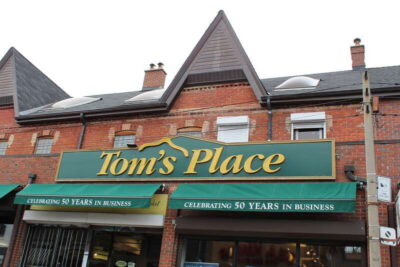
Toronto: 2-Hour Kensington Market Chinatown Walking Tour
Read our review →
Memorable Daily KIBERA Slums/Toi Market Tour with Locals (2 hours)
Read our review →
Tel Aviv: 2-Hour Carmel Market Tour in English with Lunch
Read our review →
2-Hour Aligre Market Walking Food Tour & Tasting
Read our review →Browse the lists this tour appears in