
Review · LOCAL & FARMERS MARKET TOURS
Cook 3 Authentic Korean Dishes with Local Market Tour
The best part of this Seoul experience happens before you touch a knife. Jomin meets you at Mangwon Station and walks you through Mangwon Market, pointing out ingredients, explaining Korean food customs, and helping you sample street foods. Then you cook three dishes yourself at a tidy studio, rather than watching a chef work from across the room.
I like the maximum four-person class and the way the market visit gives the cooking real context. I also like the practical finish: you eat what you make, take home leftovers when available, and receive a professionally designed cookbook.
The main consideration is that the menu can vary. You may cook bibimbap, bulgogi, and soft tofu stew, or you may get japchae, kimchi stew, or stir-fried pork. If you want one exact dish, confirm the menu before booking. The class may also be rescheduled or canceled if the minimum number of four participants is not reached.
Key points to know before booking
- Mangwon Market comes first: You see and taste local ingredients before cooking with them.
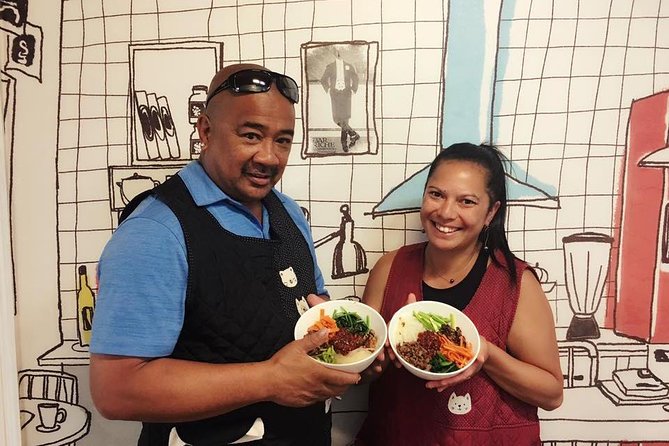
- You cook, not just watch: Each participant gets a personal table and cooker.
- Jomin leads the class: Her instructions cover knife work, seasoning, stock, and cooking order.
- Three dishes in about three and a half hours: The pace is active but designed for beginners.
- Vegetarian and vegan options are available: Share restrictions when booking.
- The $79 price includes more than a meal: You get a market walk, hands-on teaching, food, and a cookbook.
Starting at Mangwon Station and entering local Seoul life
Your meeting point is Entrance 2 of Mangwon Metro Station on Line 6. This is a useful detail to save in your phone, since Mangwon Station has more than one exit and the group begins on foot. The activity returns to the same meeting point at the end.
From the station, Jomin leads you into Mangwon Market. This is not just a quick stop to collect groceries. She uses the market to explain the ingredients that give Korean cooking its character, including items used in the class. You may also get the chance to taste street food and look at the everyday foods bought by local residents.
I like this opening because it answers questions that recipes alone cannot. Why are certain vegetables prepared in a particular way? What is banchan? How do kimchi, anchovies, prawns, tofu, clams, and other ingredients fit into a Korean meal? The market gives you a better sense of the food before you start cooking it.
The market section also adds some welcome flexibility. You may have time to buy something that catches your eye, though the main purpose is learning about the ingredients for the class. Market conditions can vary, too. During Chuseok, for example, some stalls may be closed, so do not expect every counter to be open on every date.
Allow some attention for the walking portion. You are moving through an operating market, not a staged food hall, so it may be crowded or lively at points. Keep your meeting time clear, wear comfortable shoes, and arrive at the correct station exit.
More Farmers Market Tours in Seoul
- Fortress Night Hike & Snack at a Local Market
★ 5.0 · 112 reviews - Seoul: Gyeongbok Palace, N Tower, & Local Market City Tour
★ 4.9 · 107 reviews - Korean Cooking Class with Grocery Shopping at Seoul Local Market
★ 5.0 · 107 reviews
A cooking studio built for participation
After the market visit, you go to Jomin’s cooking studio. The setting is described as clean, organized, and spacious, with a separate personal cooking table and cooker for each participant. That setup matters. You are not waiting for one shared burner while someone else handles the important steps.
This is a hands-on class, not a demonstration. Jomin explains the menu, introduces the ingredients, and guides you through each preparation. You may prepare a marinade for bulgogi, cut vegetables for bibimbap, make stock for stew, or work with noodles for japchae. The precise dishes depend on the class menu.
The private stations also make the class suitable for people with different cooking abilities. If you are already comfortable in the kitchen, you can pay attention to Korean techniques and seasoning. If you are a beginner, you can follow each step with help close by. Several parts of the class involve cutting and timing, so the instruction is practical rather than simply descriptive.
Jomin’s teaching style appears structured and direct. That is helpful when several dishes must be prepared in one session. One class requires a little discipline, especially when ingredients need to be ready in the right order, but the approach is still presented as patient and accessible for first-time cooks.
The studio is also where the food culture discussion continues. You learn not only what to add, but why an ingredient belongs in a dish and how several dishes fit together as a Korean meal. Rice, soup, noodles, meat, vegetables, side dishes, kimchi, and sauces each play a role.
What you might cook in three and a half hours
The menu is not fixed in the information provided, but the possible dishes offer a useful picture of the class. You may cook three of the following:
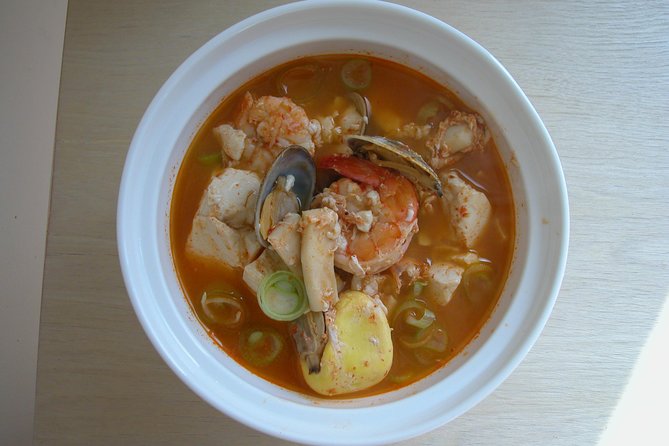
- Soft tofu stew, also known as sundubu jjigae
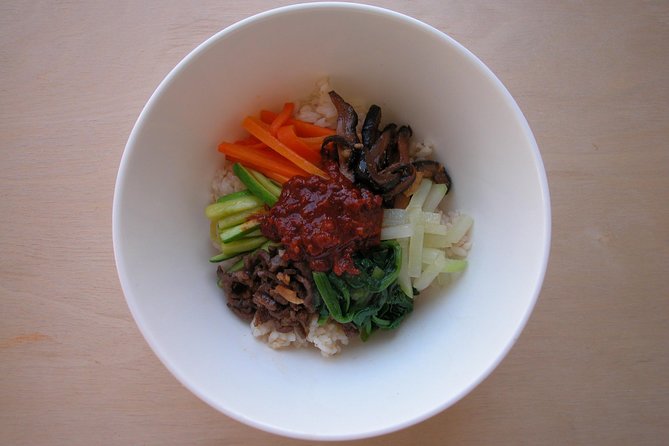
- Bibimbap
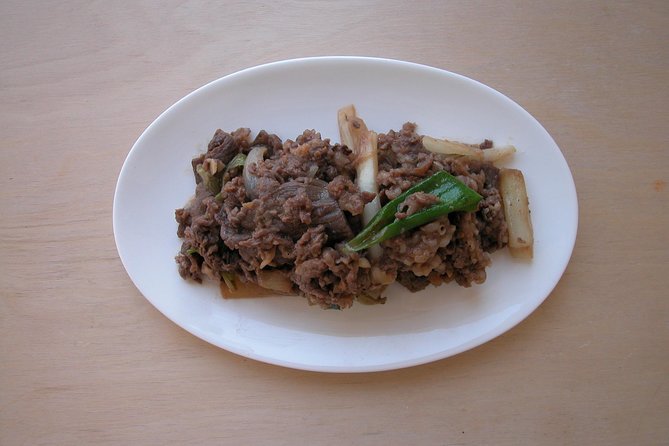
- Bulgogi
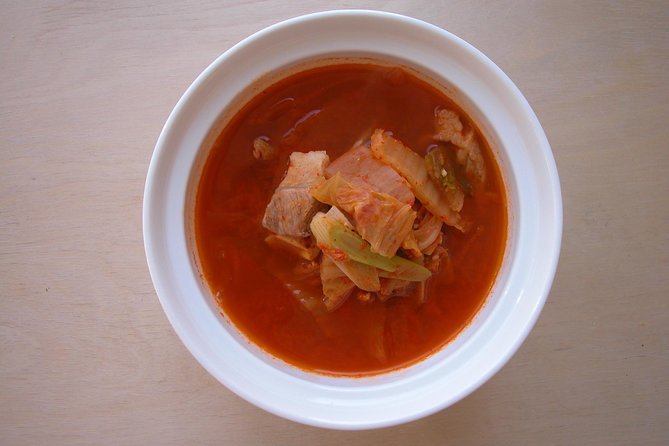
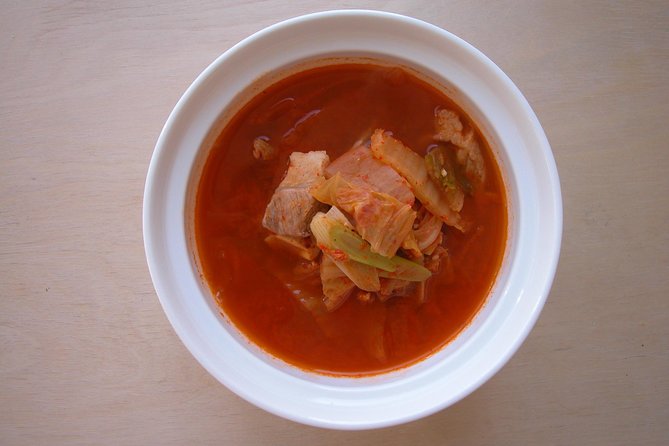
- Kimchi stew
- Japchae
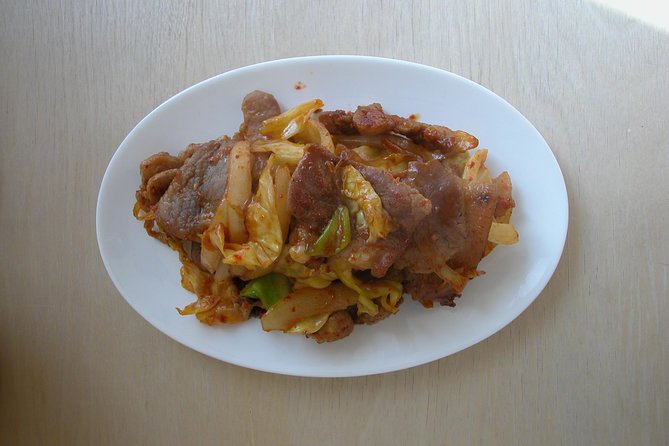
- Stir-fried pork
The class may include a soup or stew, a rice or noodle dish, and a seasoned meat or vegetable preparation. That combination lets you practice several kinds of Korean cooking rather than repeating one technique three times.
Soft tofu stew can introduce you to broth, seasoning, and the use of seafood or other ingredients. One reported class used clams and soft tofu, while other preparation details included stock made from anchovies and prawns. If seafood is not your favorite, tell Jomin ahead of time. The available information shows that food restrictions can be accommodated, but the exact substitution should be discussed before the class.
Bibimbap is especially useful for home cooks because it teaches organization. You prepare vegetables, meat or another topping, rice, and sauce, then bring them together at the end. The finished bowl looks simple, but the separate components require careful cutting and cooking.
Bulgogi gives you a clear lesson in Korean marinades. You may prepare the marinade yourself, then cook the beef or another version at your station. The dish is familiar to many people from Korean restaurants, but making the seasoning from the start helps you understand its balance.
Japchae offers a different texture and method. Instead of rice, you work with noodles and vegetables, and the dish becomes a good lesson in combining separate ingredients without losing their character. Kimchi stew brings a stronger fermented flavor, while stir-fried pork adds another option for cooks who want something savory and substantial.
Because the menu can change, contact the provider if one particular dish is the reason you are booking. The range is a strength for repeat visitors, but it means the class is not a guaranteed bibimbap or bulgogi lesson on every date.
Eating the meal you prepared
Once the dishes are ready, you sit down and eat them. This is more satisfying than receiving a plate prepared in advance because you understand the work behind each bowl. You have handled the ingredients, followed the cooking order, and seen how the flavors come together.
The class schedule may serve the dishes in stages. One detailed account described taking the finished stew to the dining area while the next dish was prepared, then eating the bibimbap and bulgogi afterward. That arrangement keeps the meal fresh and gives you a natural pause between cooking tasks.
You can take home leftovers when there are any. The class also provides a take-home recipe book, described as professionally designed and containing the dishes prepared in class along with additional Korean favorites. This is an important part of the value. A cooking class is far more useful when you can repeat the meal after returning home.
The recipes and photographs help, too. The experience includes food to eat on the day, but the cookbook gives you a way to keep using what you learned. If you enjoy Korean food and want to recreate it outside Seoul, this is more useful than a simple tasting tour.
More Farmers Market Tours in South Korea
- Seoul Night “Private Tour”(Korean BBQ, N-Tower, Seoul Fortress, Local Market)
★ 4.5 · 86 reviews - Fortress Night Hike & Snack at a Local Market
★ 5.0 · 10 reviews
Food culture beyond the recipes
This class is not only about making three popular dishes. The market walk and cooking instruction together explain how Korean food works as a daily habit.
You learn about common ingredients in their original setting, then see how they are cleaned, cut, seasoned, or cooked at the studio. That connection helps you remember the lesson. The market is not an unrelated sightseeing stop, and the cookbook is not just a souvenir. Each part supports the others.
The food culture discussion may include banchan and kimchi, as well as Korean cooking methods and ingredients. You may taste rice wine or learn how anchovies and prawns contribute to stock. These details give the class more depth than a basic recipe lesson, but the teaching remains practical.
I would especially recommend this experience early in a Seoul visit. After the class, menus in restaurants and market stalls may make more sense. You will recognize ingredients and understand more about how a Korean meal is put together.
Is $79 a fair price?
At $79 per person, the class is not the cheapest way to eat in Seoul. A restaurant meal will cost less, and a market visit alone may cost nothing. But the price includes roughly three and a half hours of guided time, a market walk, ingredient instruction, three dishes, your own work station, the meal, possible leftovers, and a cookbook.
The small group changes the value. With up to four people in the cooking class, Jomin can correct your knife work, answer questions, and adjust the pace. That personal help is more useful than a large demonstration where you only watch.
The listed additional information gives a maximum of 11 participants for the activity, while the class description repeatedly specifies a maximum of four. I would treat four as the expected cooking-class size and confirm the group arrangement if that distinction matters to you.
The 4.9 rating from 231 reviews and 98 percent recommendation rate also suggest that the experience has been delivered consistently. Those numbers do not remove the need to check the menu or dietary arrangements, but they support the price for someone who wants instruction rather than just lunch.
Who will enjoy this class most?
You are a good match if you like food, want a local market experience, and prefer doing something active. It also suits novice cooks. The instructions are designed to be followed step by step, and the personal station makes it easier to ask for help.
Families and pairs can enjoy it together, especially if one person cooks often and the other rarely does. The class is not limited to experienced home chefs. One participant who did not particularly enjoy cooking still found the activity enjoyable, which says something about the social and instructional side.
Vegetarians and vegans can request suitable options. Food restrictions are accommodated, but you should provide the details in advance rather than waiting until the class begins.
You may want another type of activity if you dislike cooking, cannot spend three and a half hours standing and preparing food, or need a fixed menu. The class is relaxed, but it is still a cooking lesson with several dishes to complete.
Practical details that affect your day
You can choose a lunch or dinner class. The duration is approximately three hours and 30 minutes, so leave room around it rather than scheduling another timed attraction immediately afterward.
The activity is near public transportation and begins and ends at Mangwon Station. Bring the meeting instructions with you, and make sure you are at Entrance 2.
Mobile tickets are accepted, and confirmation is provided when you book. Free cancellation is available if you cancel at least 24 hours before the local start time. Cancellations or changes within 24 hours are not accepted for a refund.
The class requires a minimum of four participants. If the provider cancels because that number is not reached, you can receive a full refund or be offered another date or experience. This is worth keeping in mind if your Seoul schedule is tight.
Should you book Cook 3 Authentic Korean Dishes with Local Market Tour?
I would book this if you want a personal, useful introduction to Korean food rather than a passive tasting. The combination of Mangwon Market, Jomin’s instruction, three dishes, and the cookbook gives you something to see, do, eat, and repeat at home.
Book with two checks in mind: confirm the menu if you have one must-try dish, and send dietary restrictions ahead of time. If you value a small class and want to understand Korean ingredients in context, the $79 price is reasonable. If you only want a quick meal or a guaranteed fixed recipe, choose a simpler food tour instead.
FAQ
Where does the cooking class meet?
The class begins at Entrance 2 of Mangwon Metro Station on Line 6 in Seoul.
How long does the experience last?
The experience lasts approximately three hours and 30 minutes.
Where does the activity end?
The activity ends back at the Mangwon Station meeting point.
How many people are in the cooking class?
The class description gives a maximum of four people. The additional activity information lists a maximum of 11 travelers, so confirm the group arrangement if the exact size is important to you.
What dishes will I cook?
The three-course menu may include soft tofu stew, bibimbap, bulgogi, kimchi stew, japchae, or stir-fried pork. The exact menu can vary.
Are vegetarian and vegan options available?
Yes. Vegetarian and vegan options are available. Provide your dietary requirements when booking.
Can I choose a lunch or dinner class?
Yes. You can choose between a lunch class and a dinner class.
What is the cancellation policy?
You can cancel at least 24 hours before the local start time for a full refund. Cancellations or changes made less than 24 hours before the start time are not accepted. If the provider cancels because the minimum number of participants is not reached, you will be offered another date or experience, or a full refund.
Just added around Seoul
- Seoul: The Biggest Sea-food Noryangjin Market Tour★ 4.3 · 30 reviews
- Seoul: Namdaemun Market Food Tour★ 4.9 · 34 reviews
- Seoul: Sokcho beach, market, hot spring and Seorak Cable Car★ 4.8 · 5 reviews
- Seoul Gwangjang Market Foody Walking Tour★ 4.1 · 7 reviews
- Seoul: Gyeongbokgung Palace Tour & Lunch at Authentic Market★ 4.5 · 2 reviews
- Seoul: Gwangjang Market Vegan & Vegetarian Food Tour★ 5.0 · 16 reviews
- Seoul Evening Tour:Gwangjang Market&Naksan Park&Eungbongsan★ 5.0 · 2 reviews
- Seoul: Guided Street Food Tour at Namdaemun Market★ 5.0 · 10 reviews
Local & Farmers Market Tours, compared.

Hanoi Cooking Class: Culture, Local Market & Meaning CSR Impact
Read our review →
Cooking Class and Lunch at a Tuscan Farmhouse with Local Market Tour from Florence
Read our review →
Cooking Class Hoi An:Local Market, Basket Boat, Fishing & Cooking
Read our review →
Hoi An Cooking Class(Local market,Basket Boat,Fishing & Cooking)
Read our review →
Paella Cooking Class, Wine Tasting & Central Market in Valencia
Read our review →
Seattle: Pike Place Market Chef-Guided Food Tour
Read our review →Browse the lists this tour appears in