
Review · MARKET AND COOKING CLASS TOURS
Phuket Thai Cooking Class with Market Tour Option
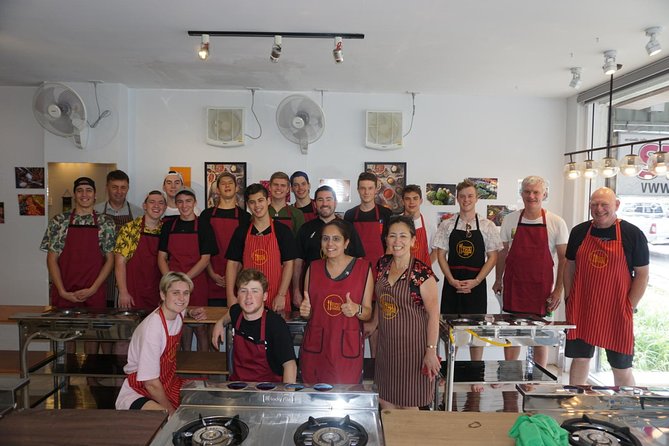
Thai food makes perfect sense once you learn its balance of hot, sour, salty, sweet, and fragrant. This Phuket class takes you past the mystery by putting you at your own cooking station, where you chop, pound curry paste with a mortar and pestle, and cook the dishes yourself. Chef Gigi, Nid, VJ, and their team keep the pace lively and explain what each ingredient does.
I like the market-to-plate connection, especially on the option that visits Mae Somchit Kata Fresh Market and includes tropical fruit tasting. I also like the practical advice on substitutions, since some Thai ingredients can be hard to find at home. The main consideration is the room: one account found cooking surfaces greasy, and serious home cooks may find the upbeat group energy a little too playful.
Key points at a glance
- Make curry paste from scratch: You pound the paste yourself with a traditional mortar and pestle, with no MSG or ready-made paste.
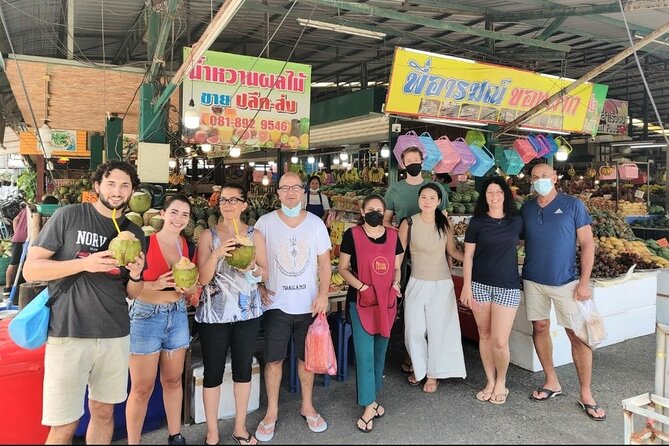
- Choose the market version: The upgrade includes Mae Somchit Kata Fresh Market and fruit tasting, including the chance to sample durian.
- Cook at your own station: You chop and cook the food yourself rather than simply watching a demonstration.
- Useful home-cooking advice: The instructors explain substitutions for ingredients that may not be available where you live.
- Transfers cover key Phuket areas: Pickup is included from Kata, Kata Noi, and Karon, with conditions for Patong, Rawai, Nai Harn, Kamala, and Surin.
- Expect plenty of food: You eat the dishes fresh and can take leftovers with you if you cannot finish.
Why this Phuket cooking class works
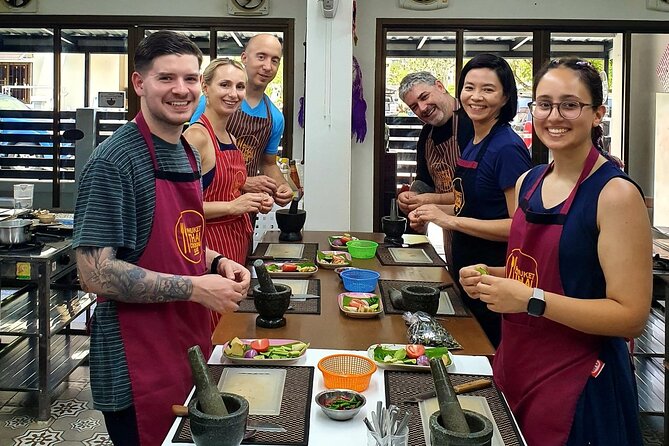
The best part of this experience is its hands-on format. You are not seated in a classroom watching a chef do all the work. Each person gets a cooking station, and you handle the chopping, pounding, mixing, and cooking.
That matters because Thai cooking is less about memorizing a fixed recipe than learning how ingredients behave together. A curry paste made with a mortar and pestle has a different texture from a jarred paste. Fresh herbs, chilies, aromatics, coconut milk, fish sauce, lime, and sugar each play a role, and the class explains how those pieces fit.
The English instruction is another practical strength. The chefs speak English fluently, so you can ask about ingredients, cooking methods, and substitutions without relying on guesswork. If you cook Thai food at home after the class, the substitution advice may be as useful as the recipes themselves.
The class lasts about three hours. That is long enough to prepare several dishes and sit down to eat, but short enough to fit neatly into a Phuket sightseeing day. Two class times are offered, which helps if you are working around a beach morning, an evening outing, or a hotel transfer.
More Market and Cooking Class Tours in Thailand
- Phuket: Half Day Easy Thai Cooking Class & Local Market Tour
★ 4.9 · 725 reviews - Thai Cooking Class with Market & Garden Tour
★ 4.9 · 249 reviews - Half day Thai cooking Class + Market tour+Garden tour
★ 5.0 · 237 reviews
Start at Mae Somchit Kata Fresh Market
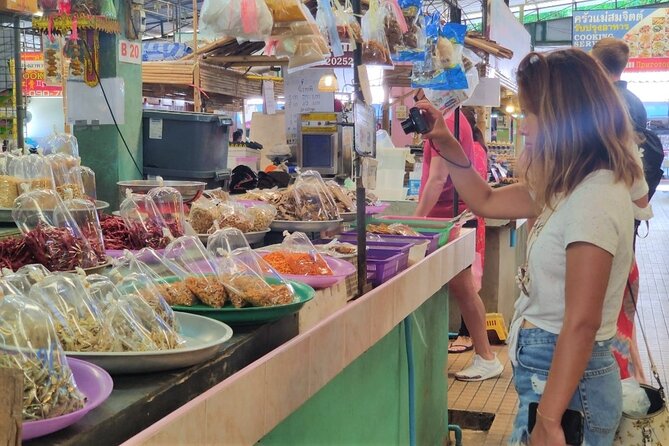
If you choose the market option, the food lesson begins at Mae Somchit Kata Fresh Market. This is more than a quick stop for photographs. The instructors introduce the ingredients used in Thai cooking and help you connect the produce and herbs in front of you with the dishes you will later prepare.
This is useful if Thai markets are new to you. Names and appearances can be confusing, especially when several herbs or chilies look similar. A guided explanation gives the ingredients a purpose. You learn what you are looking at before it arrives on your cutting board.
Fruit tasting is part of the market version. The tropical fruit selection is a pleasant break from the cooking lesson, and the tasting can include durian. If you have been curious about this famously strong-smelling fruit, this gives you a straightforward chance to try it.
The market visit also gives the class a clearer sense of place. You are not just following a recipe adapted for a tourist kitchen. You see the sort of produce that informs everyday Thai food, then use those flavors in the class.
There is one practical distinction to keep in mind. The market visit is an option, not part of every booking. For classes without the market tour, the team brings the market to you by explaining the ingredients in the cooking room. You still receive an introduction to Thai produce, but you lose the chance to walk through the market and taste fruit there.
Your own station, your own curry paste
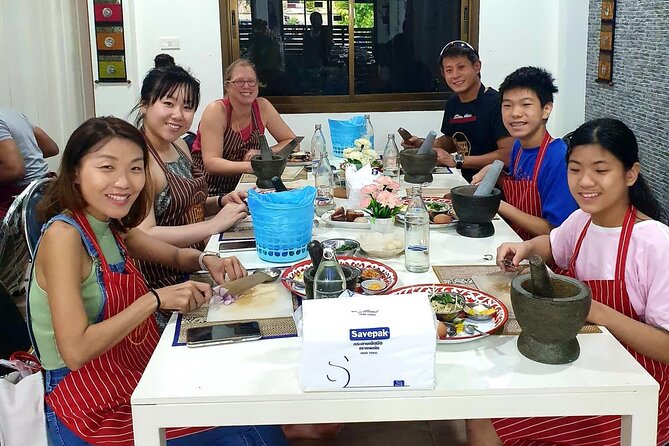
Back at the cooking school, you work at an individual station. This setup is a real advantage for anyone who wants to repeat the dishes later. You can see the amount of each ingredient, feel how the paste changes as you pound it, and practice the cooking steps instead of watching from the edge of a group.
The curry paste is made from scratch with a mortar and pestle. The class does not rely on MSG or ready-made curry paste from the market. That traditional step takes effort, but it also teaches one of the central techniques of Thai cooking: building flavor by grinding fresh ingredients together.
The atmosphere is energetic. Chef Gigi and her assistants, including Nid, are described as friendly, active, and encouraging, with plenty of help moving around the room. This is good news for beginners who worry about making a mistake. You can ask for help as you chop or cook, and the team keeps the process moving.
The style may not suit everyone. The class can become loud and playful, with energetic encouragement during the mortar-and-pestle work. If you are looking for a quiet, technical lesson focused on culinary theory, this may feel too lighthearted. If you want a social activity with clear instructions, the energy is more likely to help than hinder.
What you may cook during the three hours
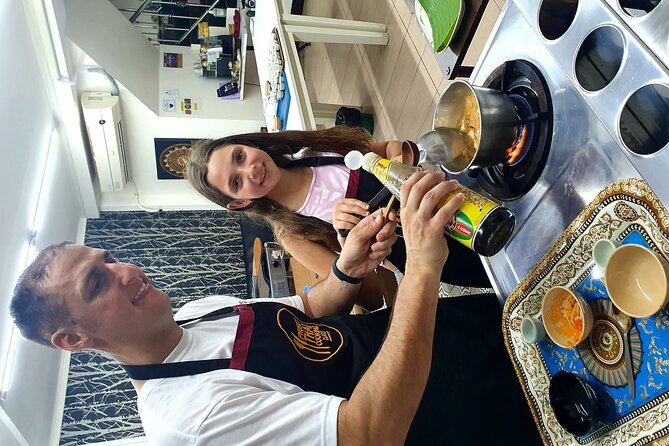
The exact menu is adapted to preferences and dietary needs, and the dishes described in the experience vary by session. Common examples include Tom Yum soup, Pad Thai, Thai curry, and a sticky-rice dessert. Some sessions include a choice of red or green curry, while other descriptions mention Panang curry.
You may also prepare a spicy stir-fry and a dessert such as mango sticky rice or pineapple sticky rice. Since the menu can be adjusted, do not assume every dish listed in a description will appear in your particular class. Ask about the menu when booking if one specific recipe is the main reason you are interested.
The class is structured around doing rather than observing. You chop the ingredients, cook the dishes, and eat the finished food fresh. That approach gives you a better feel for timing, especially with Thai dishes that cook quickly over high heat.
The instructors also explain how ingredients can be replaced at home. This is one of the most useful parts of the experience for cooks outside Thailand. You may not find every Thai herb, paste, or seasoning in your local shop, so learning the function of an ingredient helps you choose a workable alternative.
Do not plan a large meal immediately before class. Several dishes are prepared, and the portions can be generous. If you cannot finish everything, you are allowed to take the rest with you.
More Market and Cooking Class Tours in Phuket:
- Phuket: Thai Cooking Class with 4 Dishes and Market Visit
★ 5.0 · 16 reviews - Phuket: Half Day Thai Cooking Experience with Market Tour
★ 5.0 · 11 reviews - Phuket – Blue Elephant Thai Cooking Class with Market Tour
★ 5.0 · 11 reviews - Dinner from cooking class & enjoy local night market
★ 5.0 · 2 reviews
A class for beginners, families, and curious eaters
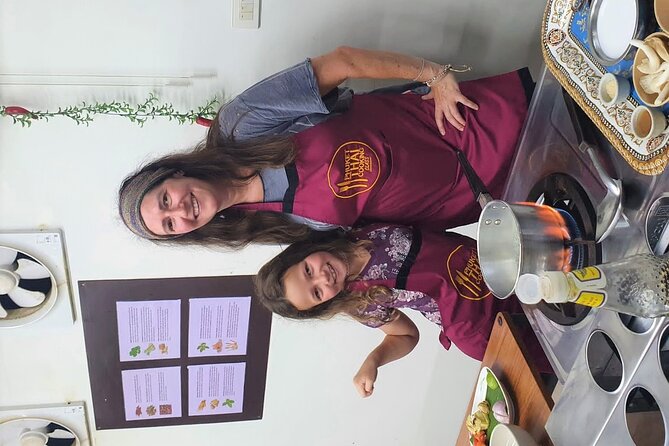
You do not need previous cooking experience. The instructions are given step by step, and assistants help with the practical work. The format suits couples, friends, solo participants, and families who want an activity that involves everyone.
Beginners get the most from the class because the process removes much of the intimidation from Thai cuisine. Ingredients are supplied and portioned, so you can focus on technique and flavor rather than shopping for unfamiliar items.
It also works well for people who already enjoy Thai food but have never made it. The class explains the logic behind popular dishes without requiring you to build a pantry from scratch. The recipes sent by email afterward give you a useful record of the meal.
I would be more selective if you are an experienced home cook hoping for advanced culinary training. The lesson is practical and social, not a professional chef course. It emphasizes accessible recipes, guided preparation, and a good meal. You may find the teaching style too basic or too playful if you want detailed work on regional differences, knife skills, fermentation, or restaurant-level technique.
Cleanliness, comfort, and the group setting
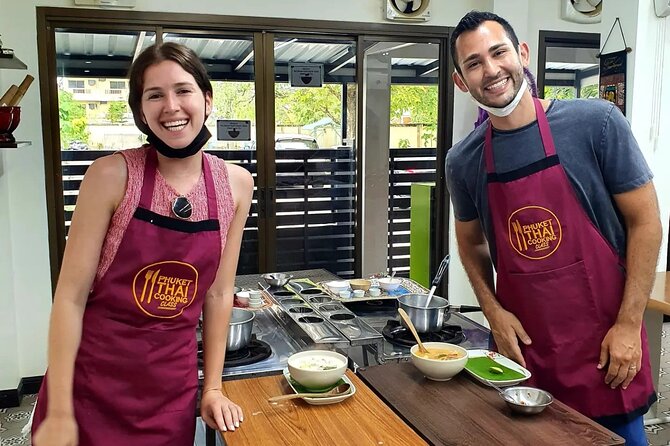
The cooking is described as taking place in a clean kitchen, and the maximum group size is 20 people. That is not an intimate private lesson, but individual stations help keep the activity hands-on even when the room is full.
The staff provide unlimited bottled water, tea, and ground coffee during the course. This is a small detail, but Phuket is hot, and having drinks available makes a three-hour cooking session more comfortable.
Most of the practical feedback is positive, especially about organization, hotel transfers, clear instructions, and staff support. One less favorable account found a fatty film on the cooking surfaces and felt the room needed a thorough cleaning. I would treat that as a reason to keep expectations sensible rather than as a reason to dismiss the class. The lesson is built around active cooking, so the room may show signs of heavy use. If spotless surroundings are especially important to you, this is worth considering.
The class also has a lively group feel. That can make the session fun and social, but it means you should not expect a silent, private kitchen lesson. The staff use energy and humor to keep the group engaged.
Transfers from Kata, Karon, Patong, and beyond
Pickup and drop-off are offered from selected Phuket areas. Free round-trip transportation is listed for Kata, Kata Noi, and Karon. Transfers from Patong, Rawai, and Nai Harn require a minimum of two people.
For Kamala and Surin, the meeting point is Hard Rock Cafe Patong, also with a minimum of two people. The activity begins and ends at the cooking class meeting point at 31 Patak Road in Karon, unless your included transfer arrangements take you from your hotel.
This coverage makes the experience easier to fit into a Phuket stay, particularly if you are based around the Kata or Karon beaches. Confirm your pickup area and meeting instructions when booking, since not every Phuket hotel receives the same door-to-door service.
The mobile ticket is convenient, and confirmation is provided when you book. The activity is also near public transportation, though the supplied details do not specify routes or travel times.
Is the $65.22 price good value?
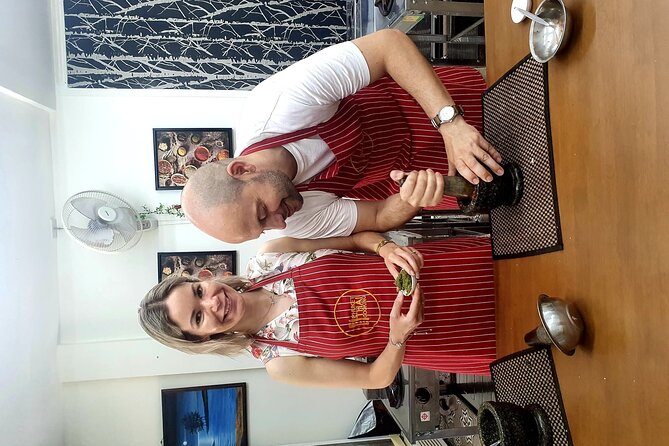
At $65.22 per person, this is not the cheapest way to eat Thai food in Phuket. You can find an inexpensive plate of Pad Thai for far less. The value comes from the full package: roughly three hours of instruction, ingredients, multiple dishes, drinks, a meal, recipes by email, and possible hotel transfers.
The market option improves the value if you want more than a kitchen lesson. You get a guided introduction to local ingredients and fruit tasting before you cook. The combination gives you both context and practical work, which is more useful than simply sitting down to a prepared meal.
The price also covers the ingredients and kitchen setup, so you do not need to buy unfamiliar items or arrange equipment. For a first Thai cooking lesson, that makes the cost reasonable. I would choose the market version if the price difference is manageable, since the market helps explain where the food begins.
If your main goal is a quick meal or a formal advanced cooking course, the price may feel less attractive. You are paying for a social cultural activity as much as for recipes.
Booking details worth knowing
Free cancellation is available if you cancel at least 24 hours before the start time. Cancellations made less than 24 hours in advance are not refunded, and changes within that window are not accepted.
The class has a maximum of 20 participants. Dietary needs and menu preferences can be discussed because the menu is adapted to preferences and dietary requirements. It is sensible to provide that information when booking rather than waiting until the cooking begins.
Recipes are emailed after the class. This is useful because it lets you concentrate on the lesson instead of trying to write everything down while handling a knife or hot pan.
Should you book this Thai cooking class?
Book it if you want to cook, not just watch. The strongest reasons are the individual stations, handmade curry paste, clear English instruction, useful substitution tips, and generous meal. Add the market option if you want to connect the dishes with Thai produce and try tropical fruit, including durian.
I would choose this class for first-time Thai cooks, couples, families, and anyone who wants a relaxed cultural activity with food at the center. I would hesitate only if you need a spotless, quiet kitchen or an advanced lesson aimed at serious home chefs.
For most visitors, the market version offers the fuller experience. It turns a three-hour cooking class into a practical introduction to how Thai food moves from market ingredients to a finished plate.
FAQ
How long does the Phuket Thai cooking class last?
The class lasts approximately three hours.
Does the class include a market visit?
The market visit is an upgrade option. Classes with the tour visit Mae Somchit Kata Fresh Market and include fruit tasting. In classes without the tour, the instructors explain the ingredients in the cooking room.
What dishes will I cook?
The menu can be adapted to preferences and dietary needs. Dishes described for the class include Tom Yum soup, Pad Thai, Thai curry, Panang curry, spicy stir-fry, and sticky-rice desserts. The exact menu may vary.
Do I make curry paste from scratch?
Yes. You make curry paste traditionally with a mortar and pestle. The class does not use MSG or ready-made curry paste for this step.
Is hotel pickup available?
Free round-trip transfer is available from Kata, Kata Noi, and Karon. Pickup from Patong, Rawai, and Nai Harn requires at least two people. For Kamala and Surin, the meeting point is Hard Rock Cafe Patong, with a minimum of two people.
Are recipes provided after the class?
Yes. Recipes are emailed after the experience.
Can I cancel for a full refund?
Yes, if you cancel at least 24 hours before the experience start time. Cancellations or changes made less than 24 hours before the start time are not accepted for a refund.
Just added around Phuket
- Phuket: Thai Cooking Class with 4 Dishes and Market Visit★ 5.0 · 16 reviews
- Phuket: Half Day Thai Cooking Experience with Market Tour★ 5.0 · 11 reviews
- Phuket: Old Town + ATV 30Min Zipline 15Pform + Night Market★ 5.0 · 2 reviews
- Phuket – Blue Elephant Thai Cooking Class with Market Tour★ 5.0 · 11 reviews
- Phuket: Amazing Sunset View & Local Market Tour★ 4.4 · 8 reviews
- Dinner from cooking class & enjoy local night market★ 5.0 · 2 reviews
- Phuket City Tour & Scenic Viewpoints / Night Market★ 4.0 · 43 reviews
- Phuket City Tour with Night Market Visit & Elephant Feeding★ 4.4 · 50 reviews
Market and Cooking Class Tours, compared.

Hanoi Cooking Class: Culture, Local Market & Meaning CSR Impact
Read our review →
5 Traditional Dishes Hanoi Cooking Class with Market Trip
Read our review →
Cooking Class and Lunch at a Tuscan Farmhouse with Local Market Tour from Florence
Read our review →
Cooking Class, Market & Thai Herbs Garden Tour
Read our review →
Authentic Cooking Class with Market & Farm Visit
Read our review →
Paella Cooking Experience & Boqueria Market Tour
Read our review →
Cooking Class Hoi An:Local Market, Basket Boat, Fishing & Cooking
Read our review →
Hoi An Cooking Class(Market,BasketBoat Crabfishing&Cooking Class)
Read our review →Browse the lists this tour appears in