
Review · MARKET AND COOKING CLASS TOURS
Thai cooking class &Market tour by Amazon Prime Series Chef.
The most useful part of this Khao Lak cooking class happens before you reach the stove. At Bang Niang Fresh Market, your guide introduces the herbs, chilies, vegetables, seafood, coconut milk, meats, and fruit that give Thai food its character. Then Chef Wandee, who taught two finalists on Amazon Prime’s The World Cook season 2, turns those ingredients into lunch or dinner.
I like the market-to-table flow, because you see unfamiliar ingredients before being asked to cook with them. I also like the small group limit of nine, which gives Wandee and her assistants time to help beginners, adjust dishes for vegetarians, and deal with needs such as a nut allergy. The main drawback is the open-air kitchen: in hot weather, cooking can be sweaty, and mosquitoes make insect repellent a sensible extra.
Key points at a glance
- Bang Niang Market first: Learn how coconut milk is made and see where local cooks buy produce, seafood, meat, herbs, and spices.
- Chef Wandee teaches: Her background includes Thai cooking in Thailand, New Zealand, and Iceland, plus royal Thai recipes learned from a former palace chef.
- Choose your own menu: Pick from about 29 to 30 dishes, with extra requests possible when arranged ahead.
- Make curry paste by hand: You work with fresh ingredients rather than relying on canned or processed pastes.
- Eat what you cook: Starters, mains, and dessert are prepared during the session and shared at the garden school.
- Useful take-home material: Recipes and online cooking video clips help you repeat the dishes at home.
Why the market tour matters before you cook
The class begins with hotel pickup, usually between 9:40 and 10:15 a.m. for the morning session, or around 3:30 to 3:50 p.m. for the afternoon class. The exact pickup time depends on your hotel area, and the operator sends an update the evening before.
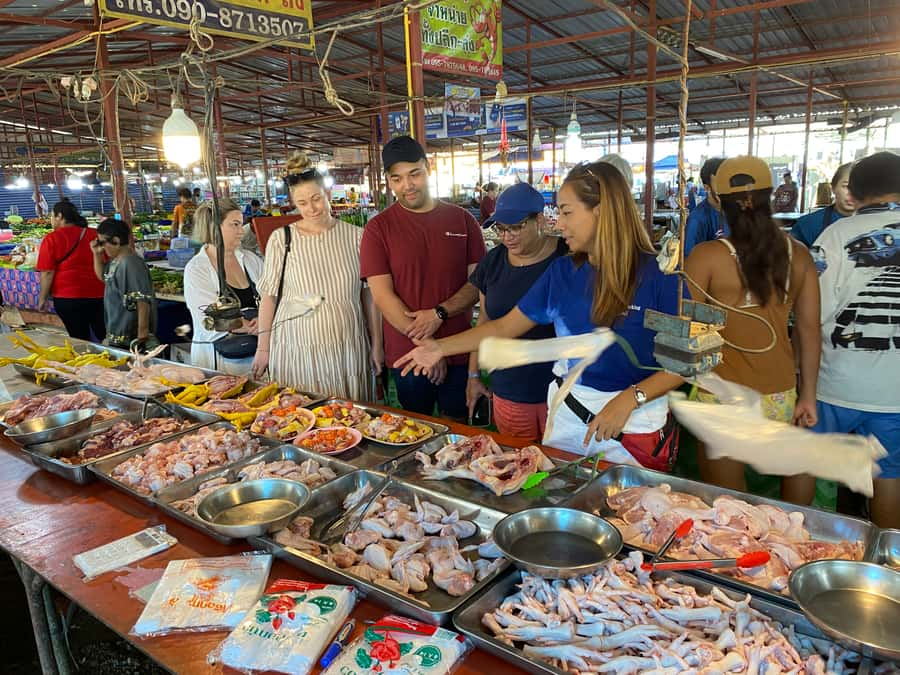
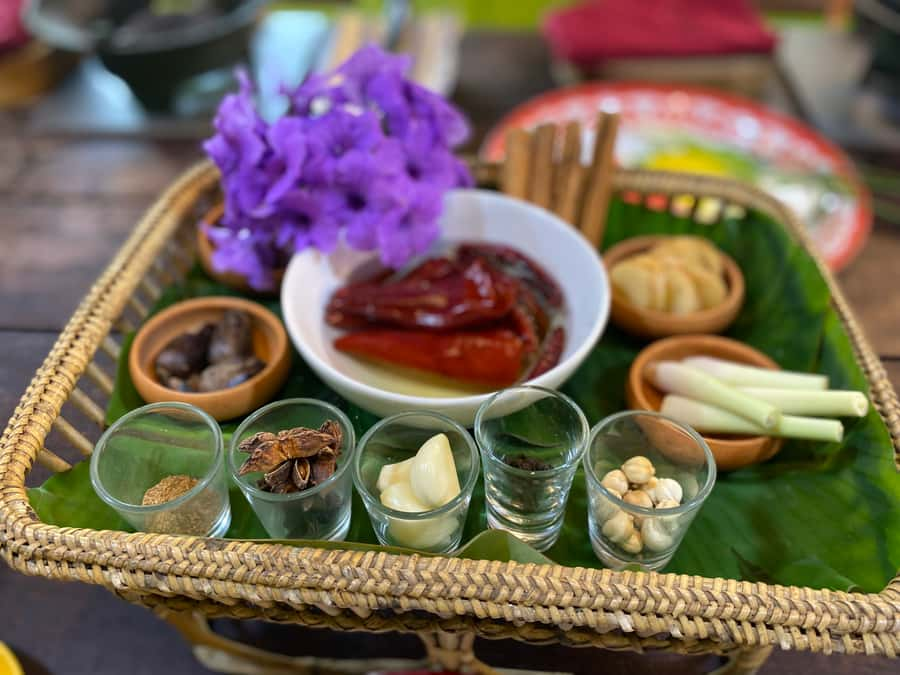
The ride takes you to Bang Niang Fresh Market, a place where the class gets its practical grounding. This is not just a quick walk past stalls. Your guide explains the ingredients you will later use, including Thai basil, eggplant, galangal, chilies, spices, tropical fruit, seafood, and different forms of coconut milk.
One especially useful lesson is seeing how coconut cream and coconut milk are made. At home, you may know these ingredients from a can, but seeing the fresh process helps explain the difference in texture and flavor. The market also gives you a chance to connect a name with an actual ingredient, which is helpful when you try to shop for Thai food later.
Guides have included Ole and Da, both praised for their friendly, clear explanations. The tone appears relaxed rather than formal. You can ask questions, smell and taste ingredients, and spend about 20 minutes shopping for yourself before leaving.
That free time is a nice touch, but bring small purchases back carefully. Fresh produce, fruit, spices, and packaged foods may tempt you, yet the class itself is already carrying the ingredients needed for cooking. The market can also be hot and crowded, so comfortable shoes and light clothing are wise.
More Market and Cooking Class Tours in Thailand
- Chiang Mai: Cooking Class, Market & Thai Herbs Garden Tour
★ 4.9 · 4,824 reviews - Chiang Mai: Authentic Cooking Class with Market & Farm Visit
★ 4.9 · 4,546 reviews - Phuket Thai Cooking Class with Market Tour Option
★ 5.0 · 2,665 reviews
From market stalls to a bamboo garden kitchen
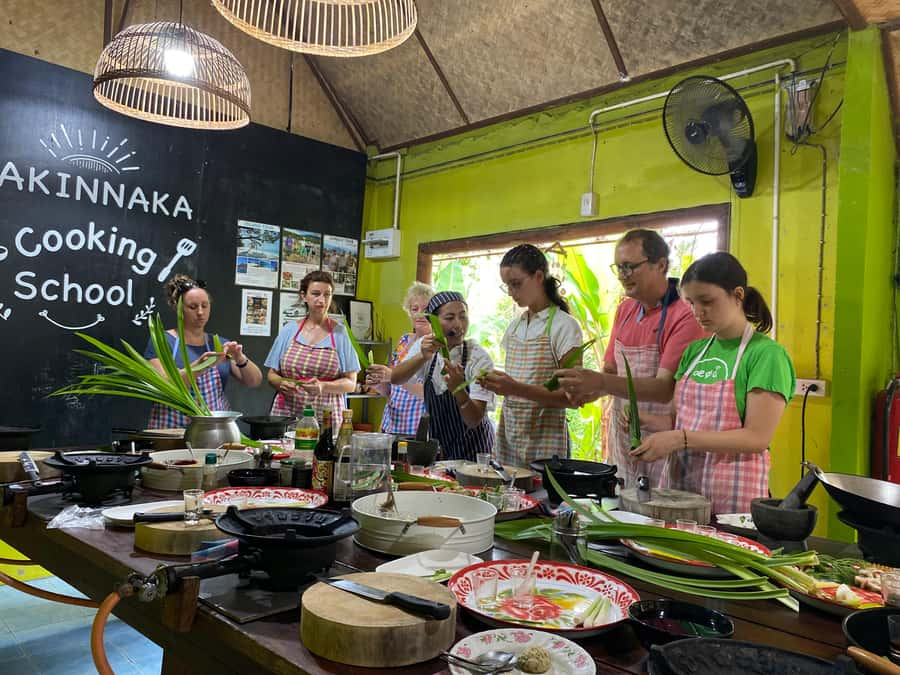
After the market, you continue to Pakinnaka Thai Cooking School. The cooking takes place in a bamboo hut or open-air garden kitchen, surrounded by an organic garden. The setting gives the class a more personal feel than a standard indoor demonstration room.
You begin at your own station or work with a small group, depending on the dish. Wandee demonstrates each stage, then you prepare the food with assistance nearby. Beginners should find the pace manageable, since the staff explains the steps clearly and helps with chopping, seasoning, and cooking.
The class is hands-on, but it is not a test of your cooking ability. You do not need to arrive with Thai kitchen experience. Several dishes can be prepared in one session, and the menu is arranged so you cook a complete meal rather than a single sample dish.
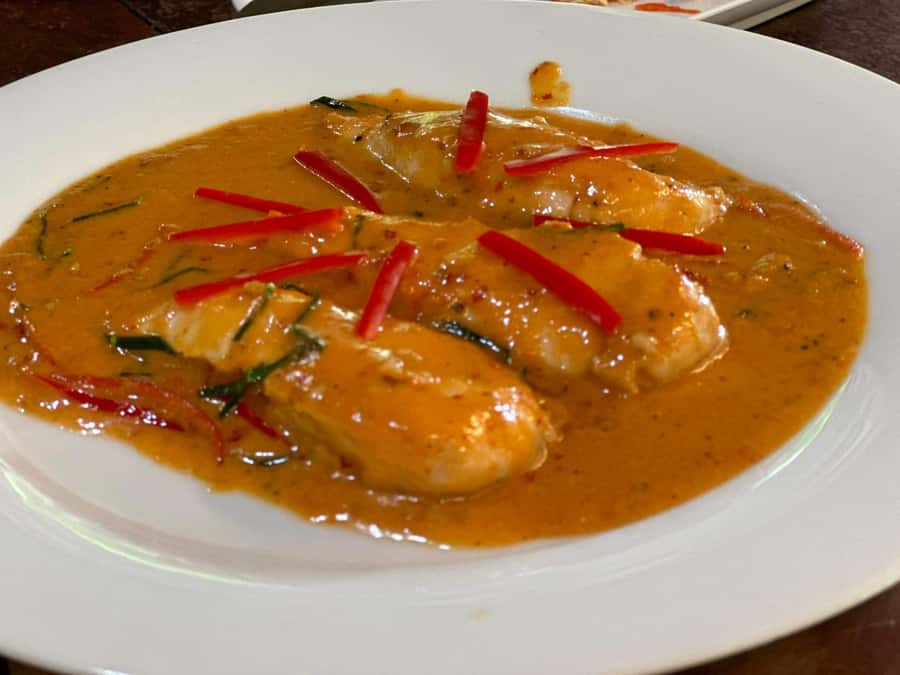
The menu includes about 29 dishes, with choices such as:
- Papaya salad
- Spring rolls
- Chicken satay
- Pad Thai
- Fried rice
- Red or green curry
- Massaman curry
- Tom Kha soup
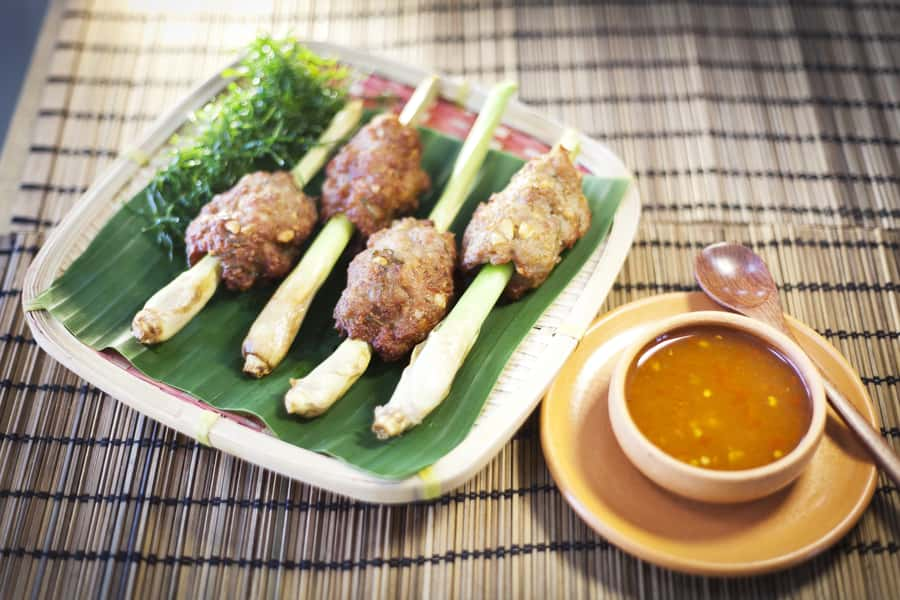
- Fried pork on lemongrass skewers
- Coconut pancakes
- Mango sticky rice
The exact combination depends on the choices made for your class. Some people prepare two starters, two mains, and a dessert, while others select a starter, main course, and dessert. If you have a particular dish in mind, contact the school before the class. The staff has shown flexibility with vegetarian menus and personal preferences.
The curry paste lesson is the real cooking skill
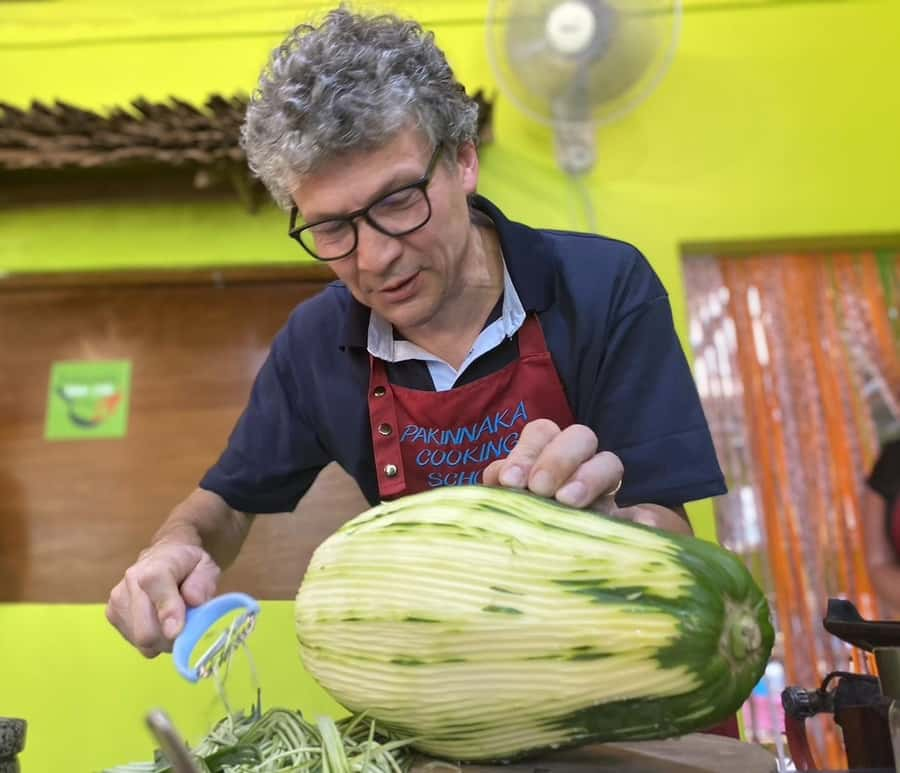
Many Thai cooking classes let you open a container of prepared curry paste. This one teaches you to make the paste from fresh ingredients. That takes more work, but it also gives you the clearest lesson in how Thai flavor is built.
You learn how herbs, chilies, and spices work together rather than treating curry as a single supermarket product. Wandee’s approach centers on traditional methods, and the school does not rely on canned or processed foods for its homemade curries.
This is where her background adds value. Along with more than 10 years working as a Thai chef in Thailand and overseas, she learned royal Thai recipes from the mother of a friend who had cooked in the Thai palace. That does not mean every class becomes a formal royal cuisine lesson, but it helps explain the care given to traditional preparation.
I also like that the class includes questions throughout the session. You can ask about ingredient substitutions, spice levels, and how to adapt a recipe to what you can find back home. Those small tips may be more useful than a long demonstration because they help you actually repeat the dish.
What the four-hour schedule feels like
The morning class generally follows this pattern:
- Hotel pickup around 9:40 to 10:15 a.m.
- Market tour at about 10:20 a.m.
- Cooking from roughly 11 a.m. to noon
- Shared meal after cooking
- Garden photos around 1:20 p.m.
- Return to your hotel near 2 p.m.
The afternoon class runs later, with market time around 4 p.m., cooking from approximately 4:40 to 5:40 p.m., a shared meal afterward, garden photos, and hotel return around 7:30 p.m.
The schedule is compact, so you should expect an active class rather than a slow, leisurely cooking retreat. You move from transport to market to kitchen, then sit down to eat what you made. That structure works well for a half-day in Khao Lak and leaves the rest of your day free.
The afternoon option may suit you if you prefer avoiding the strongest midday heat. However, the outdoor kitchen can still feel warm, and the cooking itself creates extra heat. Bring water, use sunscreen, and pack insect repellent. Soft drinks are included, while beer and wine may be available to buy at reasonable prices.
Same place, a different set of stalls:
- Bangkok: Damnoen Saduak Market and Maeklong Railway Market
★ 4.5 · 26,723 reviews - The Old Siam: Damnoen Saduak and Maeklong Railway Market
★ 4.5 · 10,992 reviews - Bangkok: Train Market & Floating Market with Boat Ride
★ 4.7 · 9,547 reviews - From Bangkok: Ayutthaya & Ayothaya Floating Market Day Trip
★ 4.7 · 6,084 reviews
Chef Wandee and the teaching style
Chef Wandee is the owner and head chef of Pakinnaka Thai Cooking School. Her role here is more than showing recipes. She explains why a dish uses a certain herb, when to add a spice, and how traditional methods affect the final taste.
Her television connection is a pleasant extra, not the main reason to book. Wandee was selected as a teacher for Amazon Prime’s The World Cook season 2 and worked with two finalists. If you have seen the series, that connection adds interest. If not, the practical teaching is still the main attraction.
The assistants matter, too. In a small class, they can give one-on-one help while Wandee demonstrates the next stage. That is particularly useful if you are cooking with children, trying Thai food for the first time, or working around a food restriction.
Families with teenagers have found the format workable, and complete beginners have been able to follow along. Vegetarians can have recipes adapted, and a previous class also accommodated a nut allergy. You should still tell the school about allergies and dietary needs before arrival rather than waiting until cooking begins.
Eating your own Thai meal
The reward comes in stages. You cook the starters, sit down to eat them, then move on to the main dishes and dessert. This avoids the common problem of preparing everything at once and eating a lukewarm pile of food at the end.
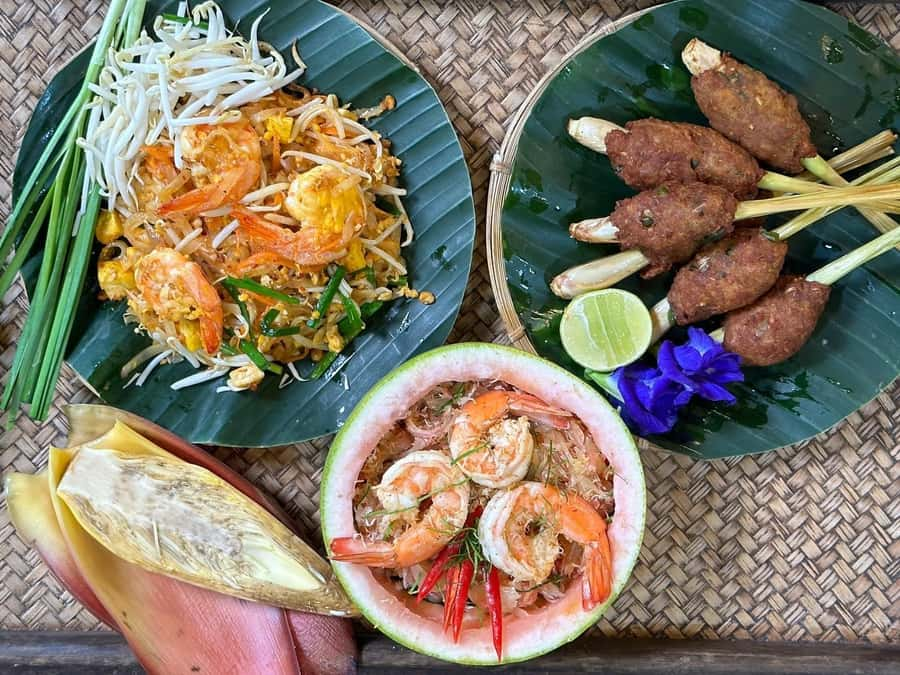
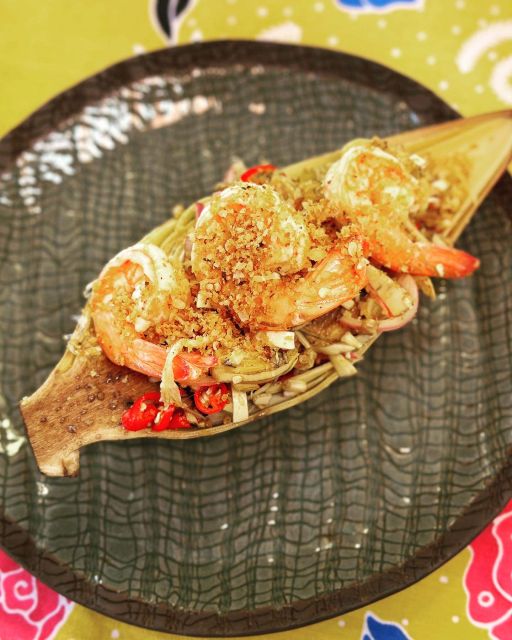
The portions are described as generous, with enough variety to make the meal feel substantial. A typical combination might include papaya salad, satay, curry, soup, and a sweet dish. Since you prepare the food yourself, you also get a clear sense of how much lime, fish sauce, chili, coconut milk, or sugar goes into the final balance.
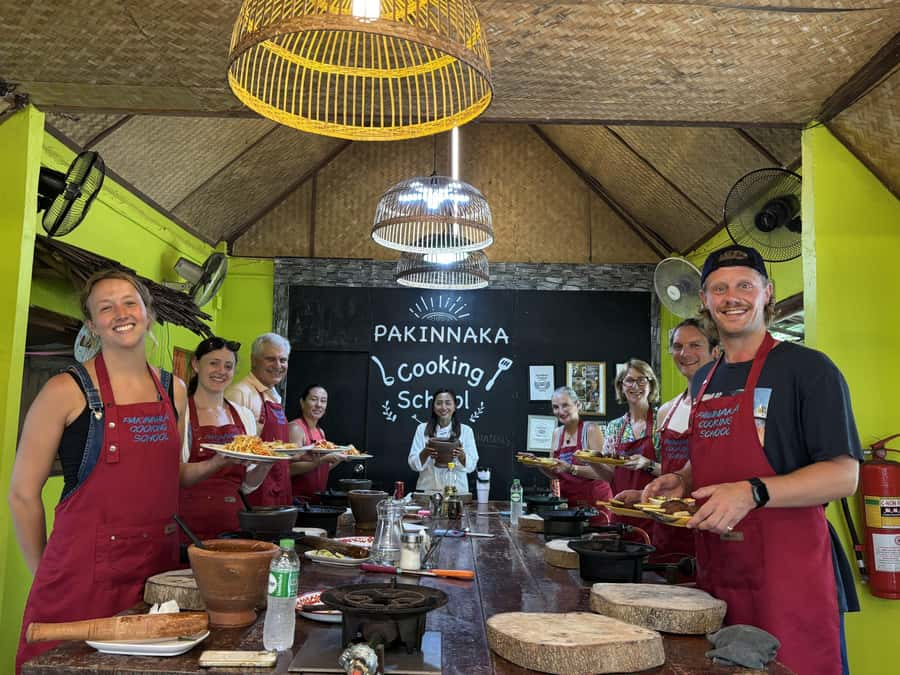
The shared meal is social without requiring a large group. With a maximum of nine participants, you have a chance to talk with the other cooks and compare results. That can be part of the fun, though anyone wanting a private lesson should note that this is a small-group experience, not a one-to-one class.
The garden setting helps the meal feel like a proper pause rather than a rushed tasting. After eating, there is time for photos in the organic garden before the return drive.
Is $70 a fair price?
At $70 per person, this is not the cheapest cooking lesson you might find in Thailand. The price includes hotel pickup and return, the market tour, instruction by a professional chef, soft drinks, the food you prepare, recipes, online cooking clips, and the garden setting.
The value becomes clearer when you count the parts separately. You are not paying only for a recipe demonstration. You get transport, a guided market visit, fresh ingredients, several dishes, a full meal, and teaching from a chef with international experience.
The class also gives you choice. You are not locked into one fixed menu, and the school can often adjust dishes to suit vegetarian diets or personal tastes. That flexibility matters if you are booking as a couple or family with different preferences.
The one value question is how much cooking you want to do. One participant wished there had been time to prepare more dishes. The four-hour format includes transport, the market, cooking, eating, and photos, so there is a limit to how many recipes can receive full hands-on attention.
Who should book this class?
I would choose this experience if you want to understand Thai food rather than simply eat it. The market visit gives you context, and the curry paste lesson gives you a skill you can use at home.
It is a strong fit for:
- First-time visitors who want a direct introduction to Thai ingredients
- Couples looking for a shared activity
- Families with older children or teenagers
- Beginner cooks who want patient guidance
- Vegetarians who want menu adjustments
- Anyone who wants recipes and video help after the holiday
- Food lovers interested in traditional Thai methods
You may want to reconsider if you dislike heat, open-air cooking, or group activities. The kitchen is outdoors, mosquitoes may be present, and the class follows a set four-hour rhythm. You also need to be comfortable eating a meal prepared by the group rather than choosing from a restaurant menu.
Pickup is included from your hotel or accommodation in the Khao Lak area, but timing varies by location. The operator provides the final pickup time the night before, so keep your phone available and wait in the hotel lobby.
Should you book Pakinnaka Thai Cooking School?
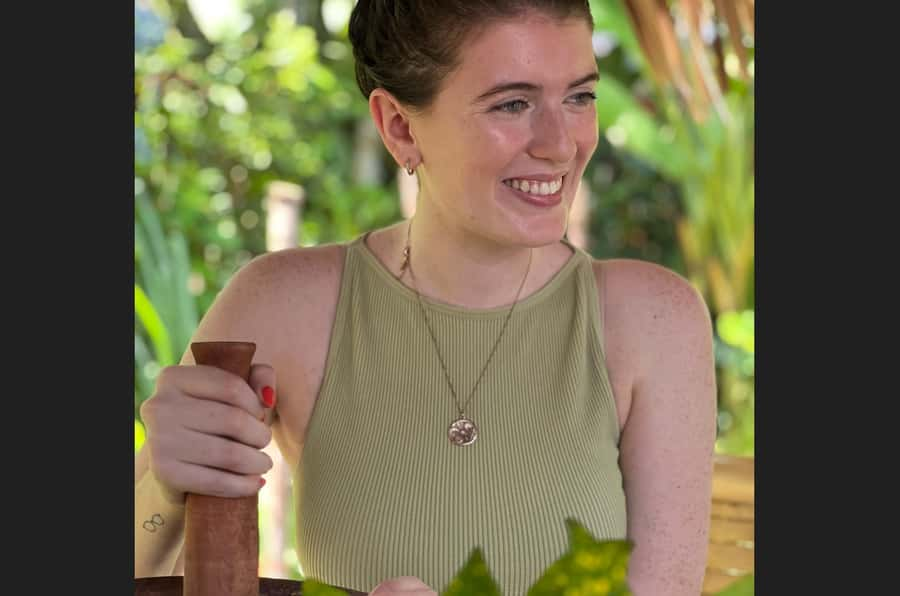
Yes, if you want a practical and personal introduction to Thai cooking in Khao Lak. The combination of Bang Niang Market, fresh curry paste, a small class, and a complete meal gives you more than a standard cooking demonstration.
The strongest reason to book is the teaching. Wandee and her assistants make the class approachable for beginners while still offering useful detail for experienced home cooks. Add the recipes and cooking clips, and the experience continues after you leave Thailand.
Book the morning session if you want the market at the start of the day and an early afternoon return. Choose the afternoon session if you prefer a later start. Pack light clothing, comfortable shoes, insect repellent, and a willingness to get your hands dirty. For $70, this is a well-rounded half-day activity that connects what you see in the market with what you eat at the table.
FAQ
How long does the Thai cooking class and market tour last?
The experience lasts about four hours, including hotel pickup and return, the market tour, cooking, the shared meal, and time for photos in the garden.
Where does the market tour take place?
The tour visits Bang Niang Fresh Market in the Khao Lak area. You learn about Thai herbs, vegetables, spices, seafood, meats, coconut milk, and tropical fruit.
What dishes can I cook?
You can choose from about 29 to 30 dishes, including papaya salad, spring rolls, Pad Thai, curries, Tom Kha soup, satay, coconut pancakes, and mango sticky rice. Additional menu requests may be possible if arranged with the school.
Is hotel pickup included?
Yes. Hotel pickup and return are included. Morning pickups generally take place between 9:40 and 10:15 a.m., while afternoon pickups are around 3:30 to 3:50 p.m. The exact time depends on your hotel location and is updated the evening before.
Is the class suitable for vegetarians?
Yes. The school has adapted recipes for vegetarian participants. Tell the operator about dietary needs before the class so the menu can be prepared appropriately.
What do I receive after the class?
You receive the recipes for the dishes prepared during the class, along with access to online cooking video clips. Soft drinks are included during the experience.
Just added around Thailand
- Morning Buddhist Almsgiving, Grand Palace and Flower Market Tour in Bangkok★ 3.5 · 9 reviews
- Bangkok Udomsuk Thai Cooking Class with local market tour★ 5.0 · 5 reviews
- Floating & Railway Markets and Erawan Waterfall [Optional Luxury]★ 5.0 · 43 reviews
- Floating Market & Railway Market near Bangkok★ 4.0 · 5 reviews
- Private 4 days : Bangkok, Floating market and Ayutthaya★ 5.0 · 2 reviews
- Silom Thai Cooking School with Fresh Market Tour★ 5.0 · 73 reviews
- Ayutthaya Floating Market Admission Ticket with Transfer★ 5.0 · 2 reviews
- Train & Floating Market Food Adventure + Scenic train ride★ 5.0 · 102 reviews
Market and Cooking Class Tours, compared.
Hanoi Cooking Class: Culture, Local Market & Meaning CSR Impact
Read our review →
5 Traditional Dishes Hanoi Cooking Class with Market Trip
Read our review →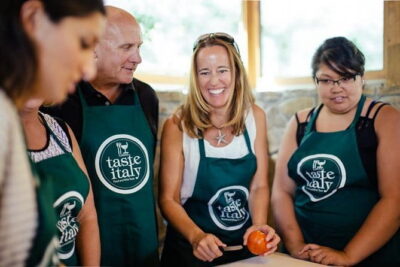
Cooking Class and Lunch at a Tuscan Farmhouse with Local Market Tour from Florence
Read our review →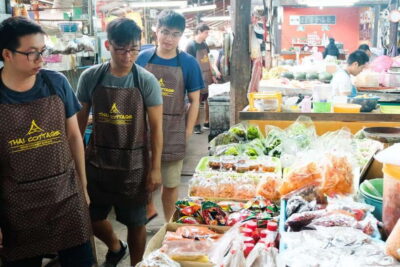
Cooking Class, Market & Thai Herbs Garden Tour
Read our review →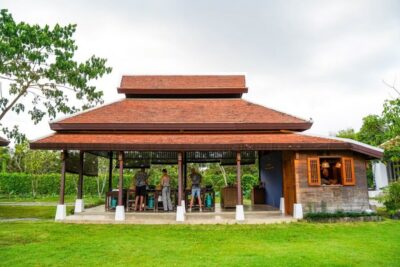
Authentic Cooking Class with Market & Farm Visit
Read our review →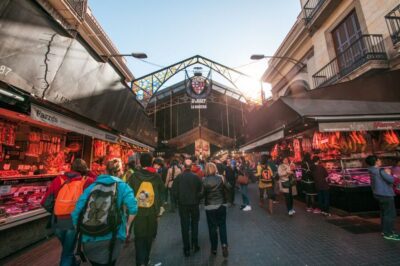
Paella Cooking Experience & Boqueria Market Tour
Read our review →
Cooking Class Hoi An:Local Market, Basket Boat, Fishing & Cooking
Read our review →
Hoi An Cooking Class(Market,BasketBoat Crabfishing&Cooking Class)
Read our review →Browse the lists this tour appears in