
Review · PRIVATE MARKET TOURS
Split: Private Roman History & Market Tour
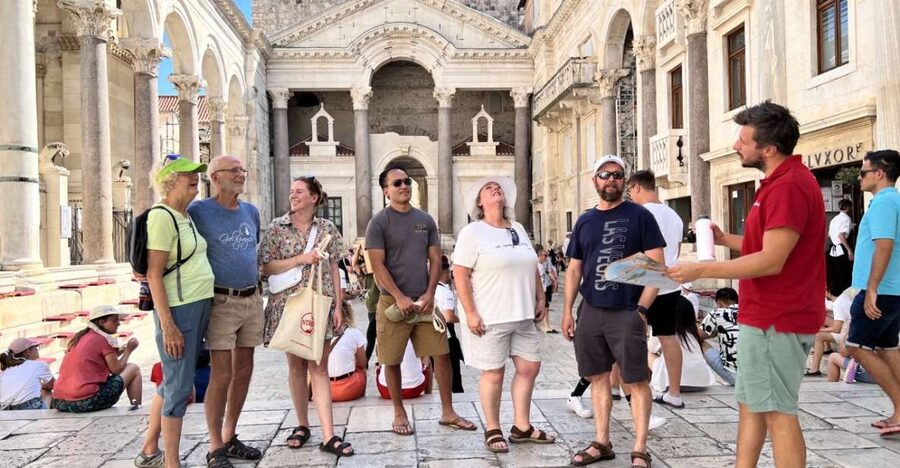
Split’s Roman palace is not a museum with ropes and glass. It is the old town itself, where people live, shop, meet for coffee, and walk streets first laid out for Emperor Diocletian. This private two-hour tour connects those ancient walls to everyday Dalmatian life, with a stop at the Green Market for seasonal tastes and local food customs.
I like the way the tour combines history with a real market visit, and I like that local guides such as Ted and Ivan bring personal knowledge of Split into the walk. The main drawback is the price: at $280 per person, this is a costly two-hour outing unless you value a private group, focused attention, and food tastings.
Key points to know before booking
- A Roman palace that still functions as a town: You walk through Diocletian’s Palace while local residents go about their day.
- Food is part of the lesson: The Green Market stop may include fruit, vegetables, olive oil, rakija, cheese, or dried figs.
- A private format: You receive a live English-speaking guide for your own group rather than joining a large public walk.
- Important palace sights: The route includes Peristil, the Vestibule, Golden Gate, a main square, and a private section of the palace.
- Local customs beyond Roman history: You hear about Dalmatian rituals linked to Iliryan times, Hajduk Split, and the role of food in local hospitality.
- A lighter footprint: The tour is carbon neutral and run by a B Corp certified operator.
Why this tour is really about daily life in Split
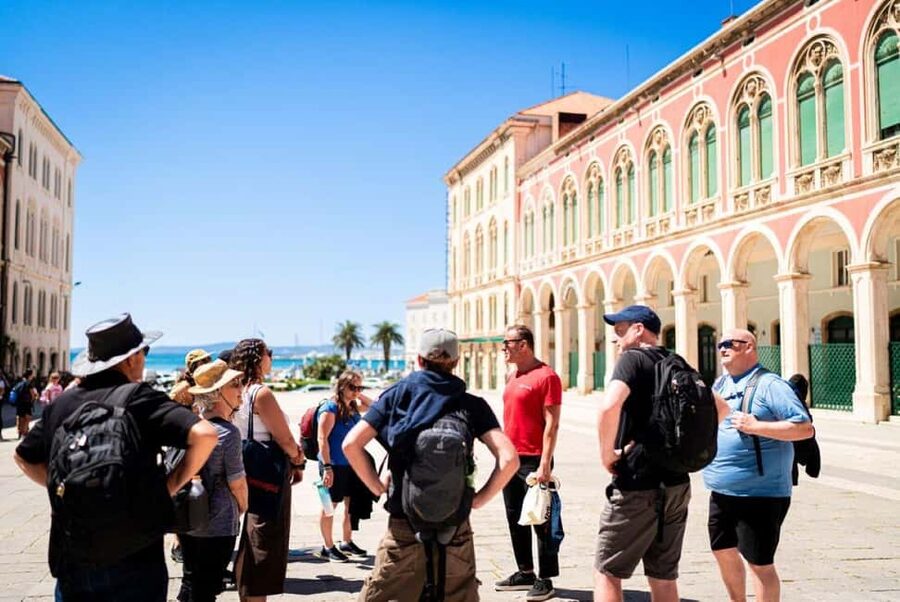
Many city tours treat Diocletian’s Palace as a grand Roman monument, then move on. This one uses the palace as a doorway into modern Split. You see ancient stone, medieval additions, apartment buildings, shops, cafés, and public spaces all packed into the same small area.
That mixture is the point. The palace was built more than 1,700 years ago for Emperor Diocletian, but its walls were later absorbed into the city. Your guide can show how the old structure became part of ordinary life rather than remaining a frozen archaeological site.
The tour also gives you a quick introduction to Splićana, the people of Split. Local pride matters here. The supplied description makes that clear with a playful warning: locals expect you to admire their city. You do not need to flatter anyone, but showing interest in Split’s customs and history will help you connect with the guide and the place.
I especially like that the tour does not separate food from culture. In Dalmatia, what people buy, cook, serve, and share says a great deal about family life and hospitality. The Green Market is therefore not just a snack stop. It is a practical look at how locals shop.
More Private Market Tours in the world:
- Cairo 8 Hour Private Tour of Pyramids, Egyptian Museum and Bazaar
★ 5.0 · 2,931 reviews - Private Excursion to Maeklong Railway and Floating Markets
★ 5.0 · 850 reviews - Floating and Railway Market (Optional Waterfall): Private Tour
★ 5.0 · 827 reviews
Starting on the Riva and finding your bearings
You meet at the beginning of the Riva, Split’s waterfront promenade, near the iron map and model of the city. This is a sensible meeting point because the Riva is easy to recognize and gives you an immediate sense of Split’s layout.
Your guide begins by setting the palace and old town in context. From the Riva, you are close to the historic core, and the walk quickly moves from the open waterfront into the tighter streets inside the palace walls.
This first section is useful if you have just arrived in Split. You get a basic orientation before tackling the narrow lanes, palace courtyards, and busy public squares. Ask your guide to point out favorite coffee shops and evening spots as you go. The tour finishes on the Riva, so those suggestions are convenient for planning the rest of your day.
Because the tour lasts only two hours, the pace matters. A private guide can spend more time on your questions, but you should not expect a full archaeological study of every building. Think of this as a compact introduction to Split, not a complete survey of the city.
Tasting Split at the Green Market

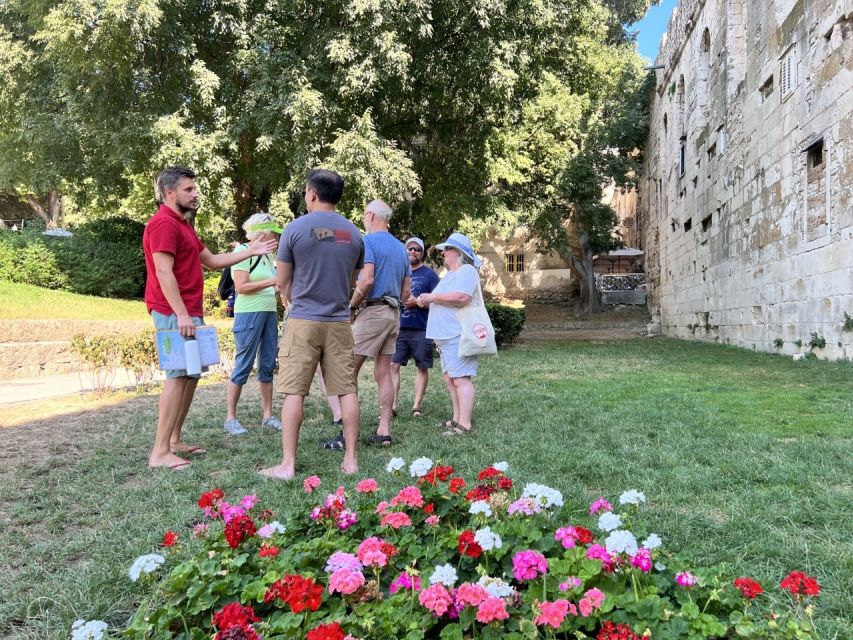
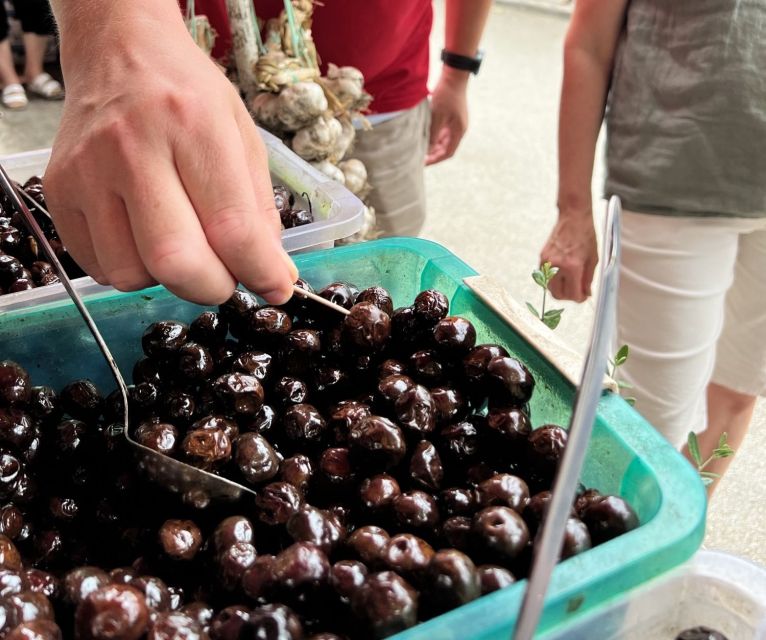
The Green Market is one of the strongest parts of the experience because it takes you away from monuments and into local routines. You meet vendors and learn how people in Split shop for produce and pantry staples.
The tasting selection depends on what is in season. You might try fruit, vegetables, olive oil, rakija, cheese, or dried figs. That variety gives the guide room to explain not only what you are eating, but also how the food fits into Dalmatian life.
The stop is also a good chance to ask direct questions. You can learn what locals look for when buying produce, how olive oil is used, or why a small glass of rakija can have a place in social hospitality. The tour description does not promise a full lunch, so plan to eat separately if you need a substantial meal.
One older booking described the lunch as very good, while the formal details describe a market tasting and additional food and drinks as extra. I would treat this as a tasting stop, not a guaranteed lunch. If you want more food, ask your guide for a recommendation on the Riva or in the old town.
The market can also be a lively place, especially at popular times. A private group gives you a little more freedom to pause, but you should stay close to the guide and keep the tasting portion moving so the palace section has enough time.
Following the Roman emperor through Diocletian’s Palace
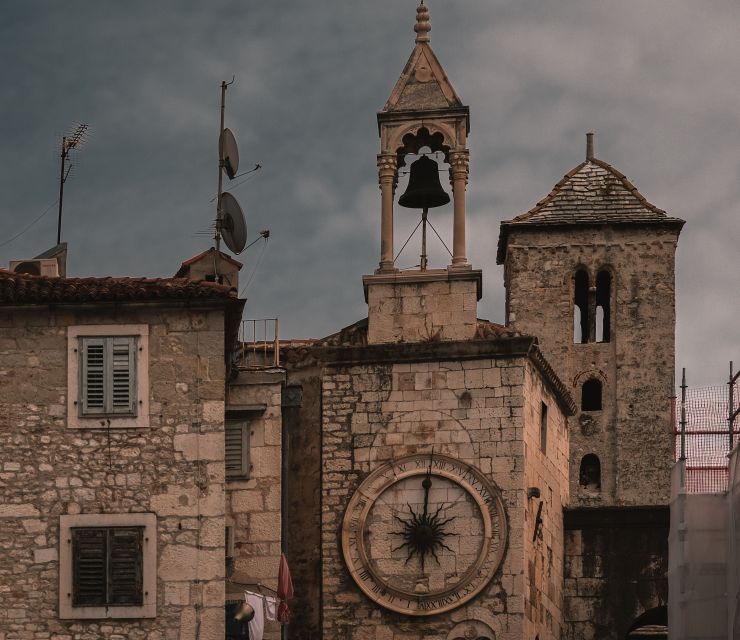
After the market, the tour turns to the palace, the centerpiece of Split. Diocletian was a Roman emperor who chose this area for a large retirement residence. The result was far more than a quiet villa. It was a fortified complex with ceremonial spaces, residential areas, entrances, and working sections.
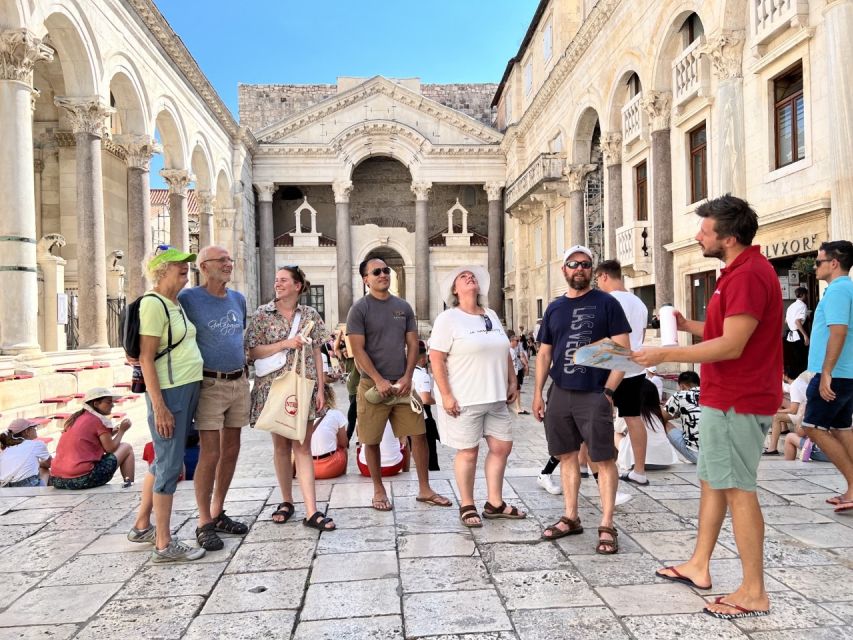
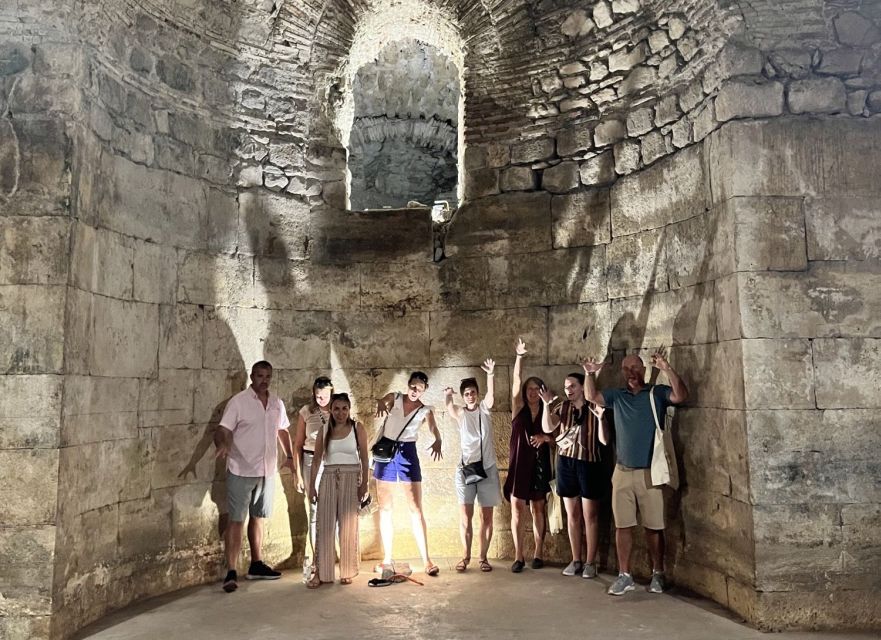
You visit the main square within the palace walls, the Vestibule, the Golden Gate, and a private section of the palace. These places help you see the palace from different angles.
The main square, Peristil, is the ceremonial heart of the complex. It is where the scale and ambition of Diocletian’s project become easiest to grasp. The Vestibule gives you another look at the palace’s formal design, while the Golden Gate shows one of the important entrances into the complex.
The private section is especially useful because it helps explain that this was a home as well as a political statement. The tour focuses on stories about Diocletian’s life, including why he loved salad and why a piece of the mythical White Stone is associated with happiness.
Those small details make the palace easier to remember. You are not just collecting dates and architectural terms. You are hearing the sort of stories that help you picture the emperor’s habits, beliefs, and public image.
The palace also has a strong connection to popular culture because it has appeared in Game of Thrones. That may interest fans, but the Roman and local history should remain the main reason to book this tour. The palace is much more than a television backdrop.
More History Tours in the world:
- Private Excursion to Floating Market and Ayutthaya World Heritage
★ 5.0 · 515 reviews - Palermo: Walking Tour of Historic Markets and Monuments
★ 4.9 · 478 reviews - Discover Palermo in 3 hours. Art, history, markets and street food
★ 5.0 · 352 reviews - Private Heritage Walking Tour in Jaisalmer Fort and Old Bazaar
★ 5.0 · 306 reviews
Stories that connect Iliryan customs to modern Split
The experience goes beyond Roman history by discussing rituals Dalmatians respect from Iliryan times. The available information does not list every ritual in detail, so you should expect your guide to explain the specific examples in person rather than arrive with a fixed checklist.
This is one reason a private tour can work well. If a custom catches your attention, you can ask how it relates to modern life. You can also ask what has changed and what remains familiar. That kind of exchange is more useful than a rapid lecture delivered to a large group.
The stop at the statue of Gregory of Nin adds another local tradition. You can make a wish by touching the golden toe of Grgur Ninski. It is a simple ritual, but it gives you a physical way to take part in Split’s public culture.
You also hear about Hajduk Split, the city’s famous football club. Its name appears across Split, from the suburbs to the old town. Even if football is not your main interest, the subject helps explain a powerful part of local identity and pride.
The guide may also point out details that you would otherwise pass without notice. One of the tour’s strengths is its focus on the meaning behind familiar sights, not just their age.
Ending on the Riva with practical local advice
The tour ends back on the Riva promenade. This is a good finish because you are left in a central location with time to continue exploring, have a drink, or find dinner.
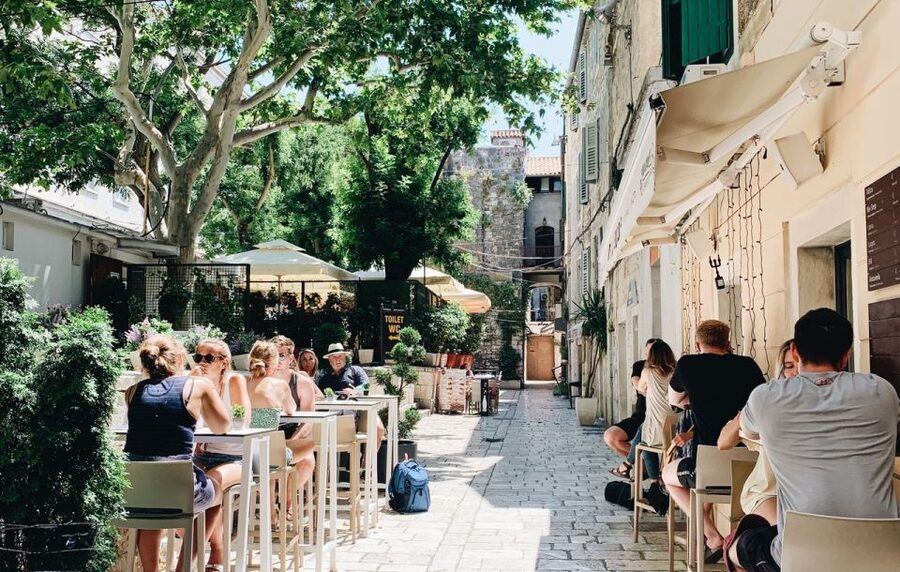
Your guide points out favorite coffee shops and places for Dalmatian food and evening entertainment. That advice can be more useful than a long restaurant list because it comes at the end of a walk through the city’s food traditions and local habits.
One posted experience described an aperitif at the end as a highlight, but the formal inclusions list only the Green Market tastings. Do not assume that every extra drink is included in the $280 price. Additional food and drinks are specifically excluded, so confirm with your guide before ordering anything beyond the included tasting.
The Riva is also a natural place to pause and reflect on the contrast you have just seen. Behind you are Roman walls and palace courtyards. In front of you is the waterfront, where Split’s modern social life continues.
What the $280 price buys you
At $280 per person, this tour is expensive for two hours. The price makes the most sense for couples, families, or small groups who want their own guide and prefer a focused introduction rather than a large shared walk.
A private guide changes the value of the experience. You can ask about local customs, adjust the pace within reason, and spend more time on subjects that interest you. If you are traveling with several people, the cost may feel more reasonable when shared across a private booking, though the listed price is per person.
The food tasting adds something tangible, but it is not enough to replace a meal. You are paying mainly for access to a local guide, a private format, a carefully chosen route, and interpretation of the palace and market.
If you already know Split well, the price may be harder to justify. You could visit the Riva, Green Market, Golden Gate, and public palace areas independently. But you would not necessarily get the same explanation of Iliryan customs, local food habits, Diocletian’s stories, or Hajduk Split.
The tour also carries a carbon-neutral commitment from a B Corp certified operator. That does not erase the cost, but it may matter to you if responsible travel is part of your booking decision.
Guide style and what past bookings suggest
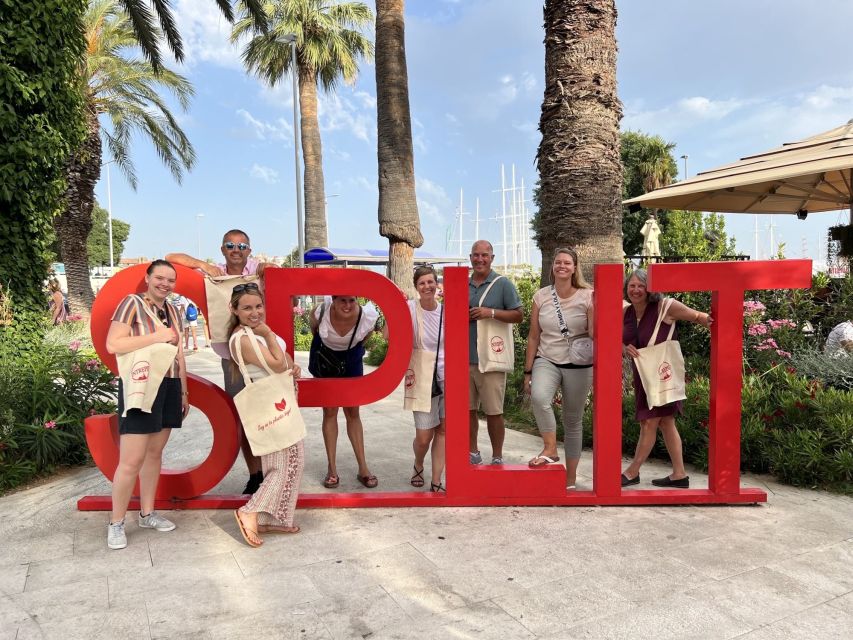
The strongest praise centers on the guides. Ted was described as well informed and steady in pace, while Ivan was singled out for his strong command of Split and its history. Another booking described a female guide who spoke excellent English, showed beautiful corners of the city, and added many stories.
That pattern tells you what to expect from the human side of the tour: clear English, a good amount of local detail, and a walk that aims to tell stories rather than rush from one photo stop to another.
The pace was specifically praised in one booking, which matters on a two-hour route. You need enough time to look around the market, taste the food, and understand the palace without feeling pushed from one stop to the next.
The activity has a 5 out of 5 rating from nine published bookings. The comments repeatedly point to strong guiding, useful detail, and an enjoyable food element. Since guide assignments can vary, I would not book expecting a specific person unless the operator confirms that name in advance.
Who will enjoy this private Split walk
This tour suits you best if you are visiting Split for the first time and want history tied to daily life. It is also a good match if you prefer a private setting and enjoy trying small portions of local food rather than sitting down for a formal meal.
Families can join, and children under six are free when noted in advance. The market tastings and statue ritual may give younger children something concrete to focus on, while older children may enjoy the Roman palace and Game of Thrones connection.
The tour is less suitable if you want extensive access to paid monuments. Entrance fees to the cathedral and former mausoleum, the palace underground, Bell Tower, museums, and Temple of Jupiter are not included. You can visit those separately, but you need to budget for them and allow extra time.
It is also not the right choice if you want a long food tour. The Green Market stop is part of a wider historical walk, and additional food and drinks cost extra.
Practical details before you go
The tour is conducted in English with a live local guide and is limited to your private group. It lasts two hours, so wear comfortable shoes and arrive ready to keep moving through old streets and palace spaces.
The meeting point is the start of the Riva near the iron city map and model. The route finishes on the Riva, which makes it easy to continue with lunch, coffee, shopping, or an evening meal.
You can cancel up to 24 hours before the start for a full refund, and the reserve-now, pay-later option keeps your plans flexible. Check available starting times when booking because the schedule can change.
The activity is child-friendly, but notify the operator if you are bringing a child under six. That child may join free of charge.
Should you book the Roman History and Market Tour?
Book it if you want a short, private introduction to Split that joins Roman architecture, local food, customs, and modern city life. The guides appear to be the main asset, and the mix of Green Market tasting and palace stories gives you more than a standard monument walk.
Skip it if $280 per person feels too high for two hours, if you want a full meal, or if your main goal is entry to the cathedral, underground, museums, or Bell Tower. Those costs are separate.
For a first visit, I see the best value in using this tour early in your stay. You finish with a better sense of the old town, practical food suggestions, and a short list of places to return to. That makes the experience worthwhile for visitors who want context and personal guidance, not just a fast look at Diocletian’s walls.
FAQ
Where does the tour meet?
You meet at the beginning of the Riva promenade near the iron map and model of the city.
How long does the tour last?
The tour lasts two hours.
What language is the tour conducted in?
The tour is conducted in English with a live local guide.
Is this a private tour?
Yes. The activity is organized for a private group.
What food can I taste at the Green Market?
Depending on the season, tastings may include fruit, vegetables, olive oil, rakija, cheese, or dried figs.
Are palace entrance fees included?
No. Entry to the cathedral and former mausoleum, palace underground, Bell Tower, museums, and Temple of Jupiter is not included.
Can children join the tour?
Yes. The tour is child-friendly, and children under six may join free of charge when you inform the operator in advance.
Just added around the world
- 3-Hour Herbal Wholesale TCM Market and a Local Wet Market Tour★ 5.0 · 4 reviews
- Half-day Dandan Noodles Cooking Class with a Local Market Visit★ 5.0 · 8 reviews
- Chania Old Town, Public Market and Chrisopigi Monastery Tour★ 4.5 · 6 reviews
- Charleston International Sweet Treats & Historic City Market Tour★ 5.0 · 22 reviews
- Chania: Old Town, Public Market, Hill of Prophet Elias, Agia Triada★ 5.0 · 35 reviews
- Food Tasting & Market Shopping: Private Guided Tour in PORT LOUIS★ 4.5 · 9 reviews
- Moroccan Cooking Class with a Local Family & Market Visit★ 5.0 · 16 reviews
- Private Market Tour & Cooking Class in Casablanca with Transfers★ 5.0 · 20 reviews
Private Market Tours, compared.

Private Excursion to Maeklong Railway and Floating Markets
Read our review →
Floating and Railway Market (Optional Waterfall): Private Tour
Read our review →
Private Pyramids, Museum & Bazaar Tour with Lunch
Read our review →
Shopping in the Souks of Marrakech Private Tour
Read our review →
Local Markets & Khan el Khalili Private Shopping Tour
Read our review →
Private Excursion to Floating Market and Ayutthaya World Heritage
Read our review →
Private Heritage Walking Tour in Jaisalmer Fort and Old Bazaar
Read our review →Browse the lists this tour appears in