
Review · COLOMBIA MARKET TOURS
Medellín Multi-sensory Tour in the market, +15 Exotic Fruits
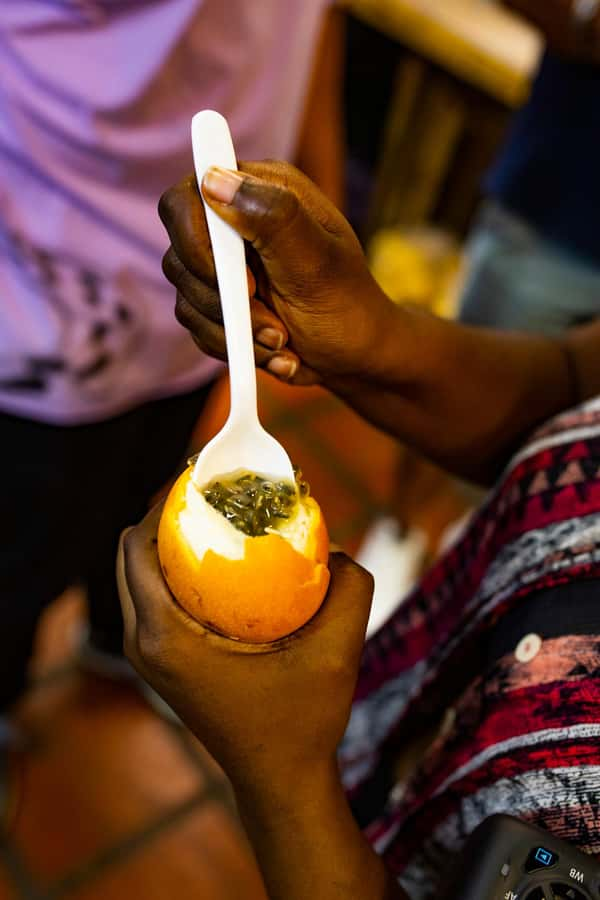
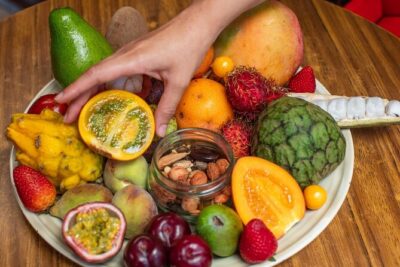
Medellín’s Plaza Minorista is not a polished food hall. It is a working market, and that is exactly why this experience is so appealing. You move through aisles stacked with pitahayas, guanábanas, guavas, lulo, mangoes, and fruits you may never have seen before, tasting as you go and learning how the market feeds the city.
I like the personal ties to the market. Sergio, one of the most frequently named guides, grew up around the plaza, worked there, and has family connections among the traders. I also like the small groups and generous tasting: the plan is 15 to 20 fruits, but several outings have included 23, 25, 30, or even 31 varieties.
The main consideration is that this is a busy produce market, not a quiet culinary class. Expect noise, movement, strong smells, uneven attention from passersby, and plenty of fruit. If you have food allergies, this is not the right activity. Wear closed, comfortable shoes, and do not arrive after a heavy breakfast.
Key points to know before booking

- Taste a serious range of fruit: The usual selection includes 15 to 20 varieties, with the final number shaped by the harvest season.
- Meet traders through local connections: Guides introduce you to longtime stallholders and explain how produce reaches the market.
- Visit Plaza Minorista José María Villa: The market has been an economic center of Medellín since 1984.
- Keep your group small: No more than eight people makes it easier to ask questions and keep up in crowded aisles.
- Save room for juice: A fresh fruit juice is included near the end of the experience.
- Plan for a morning outing: The market is at its most active then, so the setting feels lively but can also feel hectic.
Why this market tour feels different
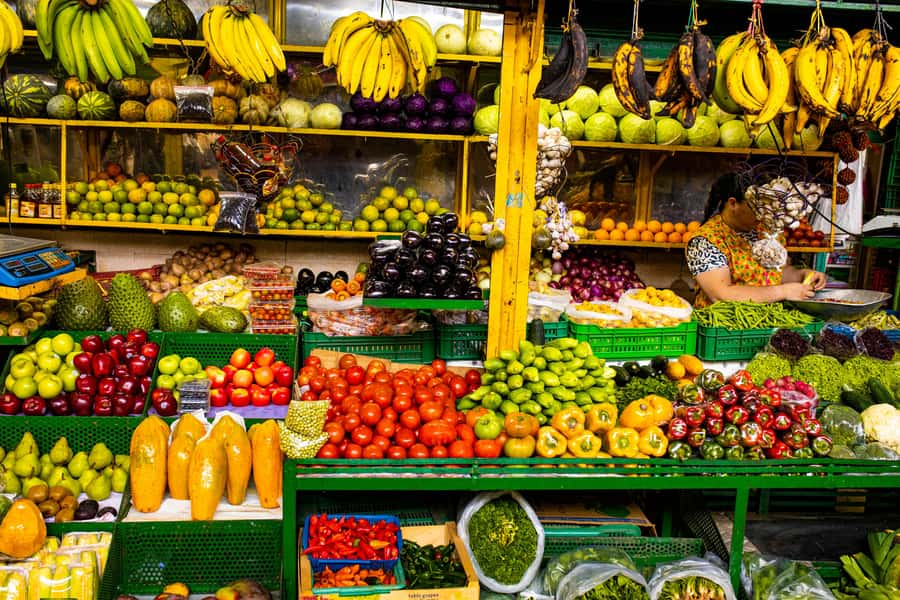
Many food tours take you from one prepared dish to another. This one begins with the raw material of Colombian cooking and daily life. You see where fruit is sold, how traders arrange it, and how customers shop before you taste it.
That difference matters. A cut piece of fruit on a plate tells you about flavor. A whole pile of fruit at a market stall tells you about season, supply, price, and habit. Your guide connects those details with stories about Colombia and the role of Plaza Minorista in Medellín’s local economy.
The tour describes itself as 80 percent flavor and 20 percent history. That is a useful expectation. You will get context, but this is not a long lecture about the city. The history comes in short, practical portions while you walk, taste, and talk with people who work in the market.
The market has also become a symbol of community resistance and local trade. The tour uses that setting to show you a working side of Medellín that many visitors would miss if they stayed only in the city’s restaurant districts and sightseeing areas.
A few more market tours around Colombia worth a look
- Bazurto Public Market
★ 5.0 · 81 reviews - PALOQUEMAO MARKET FOOD TOUR. EXOTIC FRUIT. LOCAL SNACKS. /Min 2 pax
★ 5.0 · 70 reviews - Fruit Tour at the World’s sweetest Market
★ 5.0 · 67 reviews
Starting at Puerta 1 of Plaza Minorista
Your meeting point is the main entrance, Puerta 1, marked P1. This detail is important because the plaza has several entrances. Look for the guide holding a purple umbrella.
Give yourself enough time to find the correct door. Arriving at the wrong entrance could mean a confusing start in a large market building. The meeting point is not a vague street corner, so check the entrance number before setting out.
The experience begins with a short safety briefing of about 10 minutes. That is sensible here. You will be walking through a working market rather than a closed attraction, so you need to stay with the group, watch your footing, and pay attention to people carrying goods.
One practical point deserves mention. A person who came from the metro advised taking care on the route to the meeting point because of homeless people nearby. That is not a report of a problem inside the tour itself, but it is a reminder to stay alert on the way to Puerta 1 and use the exact meeting instructions.
The first fruit stalls and the market’s working rhythm
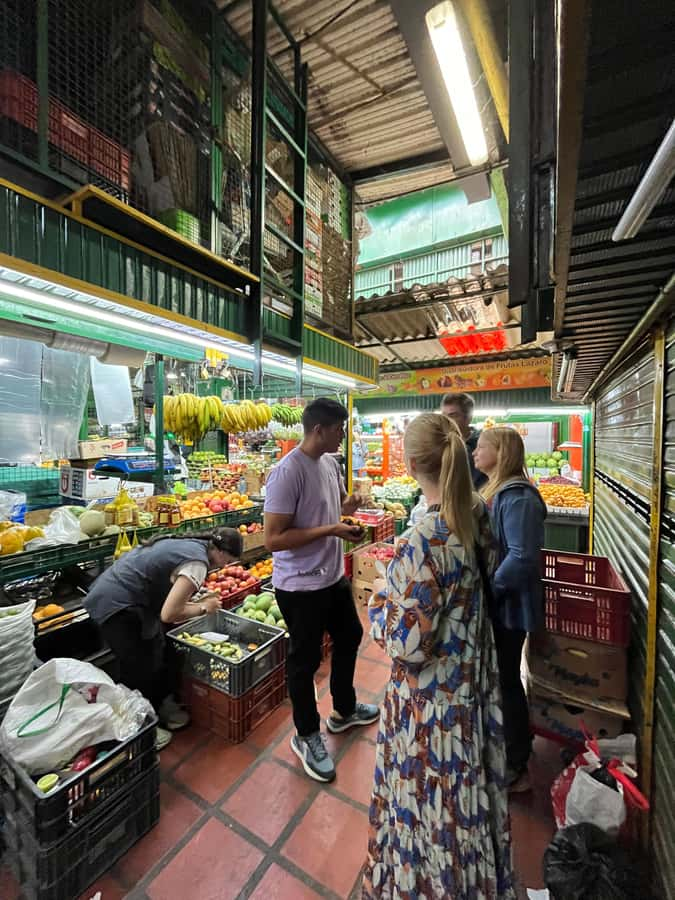
After the briefing, you walk for roughly five minutes before beginning the first tasting section. The early part combines sightseeing, photographs, and an introduction to the market itself.
This is where your guide helps you get your bearings. Plaza Minorista can feel enormous if you enter alone, especially when you are trying to identify one fruit stall from another. A guide with long-standing vendor relationships can take you directly to appropriate stalls instead of having you wander without a plan.
The produce itself provides the visual welcome. You might see mountains of mangoes, guavas, pitahayas, and guanábanas, along with smaller or less familiar fruits such as lulo and granadilla. The exact selection changes with the harvest, so do not expect a fixed tasting menu.
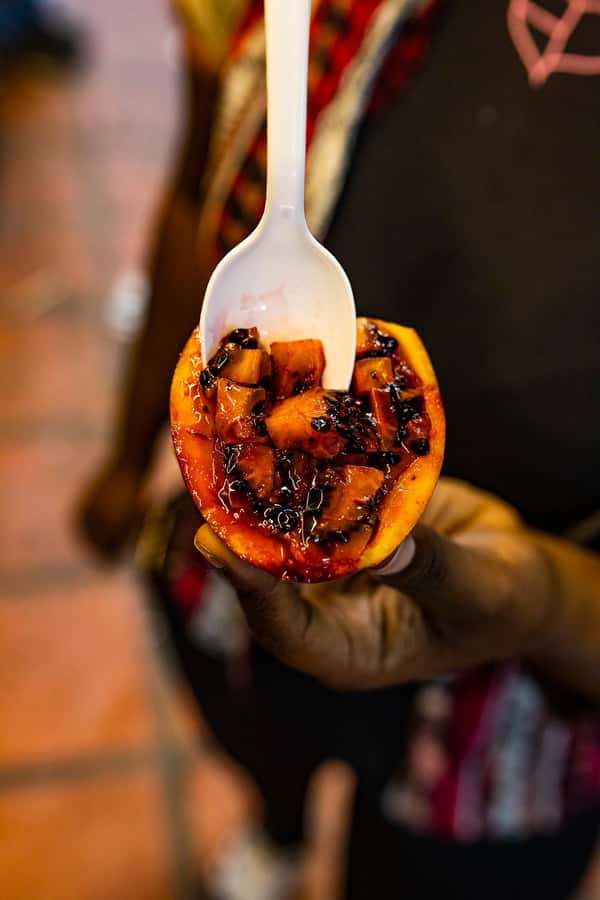
You may taste fruit plain, with lime or salt, or with condensed milk, depending on the item and the way your guide presents it. The point is not simply to count varieties. It is to notice how preparation changes flavor and how Colombians commonly enjoy particular fruits.
The guide also explains where fruits come from and how people use them. You may learn which fruits are eaten fresh, which are turned into drinks, and which ones are especially associated with the country’s tropical produce. The strongest part of this format is the direct link between the stall, the product, and the story.
Meeting traders who know the stalls by heart
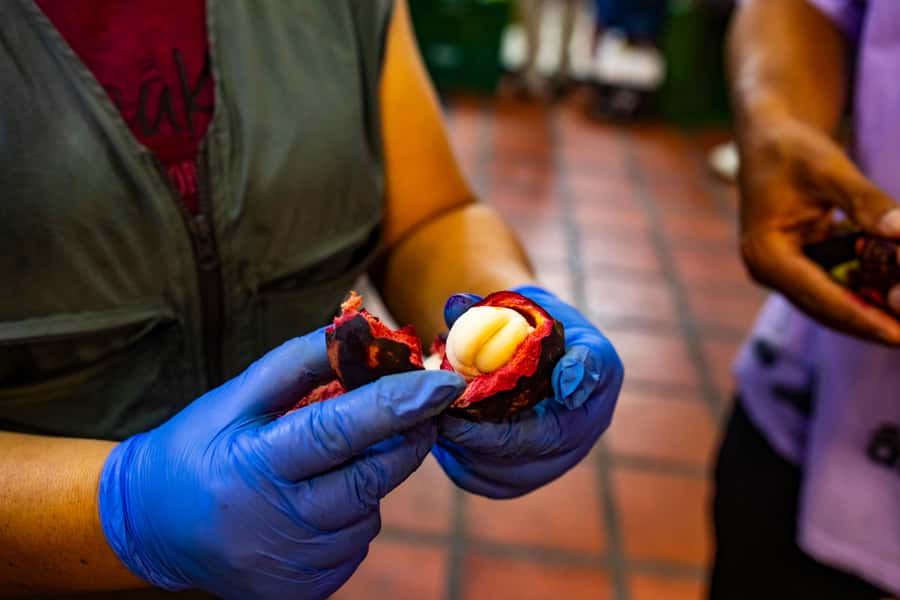
The next walking section takes about five minutes and leads into another tasting stop. This is where the social side of the experience becomes most useful.
The guides are not just naming fruit from a printed list. Sergio, in particular, has been described as having close relationships with the people working in the market. His father has worked there for more than 20 years, and Sergio himself worked at the market. Those connections help the experience feel more like an introduction by a local than a standard stop-by-stop presentation.
Other guides named in the experience include Laura, Adriana, Cheche, Daniel, and Salome. The guide assigned to your date may differ, but the service is offered in English or Spanish. English-language visitors have found the explanations easy to follow, while Spanish speakers can experience the market in its everyday language.
The traders add something a guide alone cannot provide. They can explain sourcing, share market anecdotes, and show pride in the goods on their stalls. You are also more likely to see how the market works as a social place, where buyers, sellers, and workers know one another.
That interaction is valuable, but you should keep your expectations realistic. This is a working market, and vendors are there to sell produce. The tour aims to support small producers in the plaza, but it is not a private performance arranged only for your group.
Same place, a different set of stalls:
- VIP Bogota City Tour: Farmers Market, Monserrate, Candelaria, 9hr
★ 5.0 · 66 reviews - Shared Tour of Colombian Exotic Fruit at Paloquemao Market
★ 4.7 · 20 reviews - Cartagena Bazurto Market: Authentic Food & Culture Tour
★ 4.5 · 13 reviews - Shared Tour Cali’s Local Food at Alameda Market
★ 4.8 · 12 reviews
The long tasting sessions: come hungry, but not empty
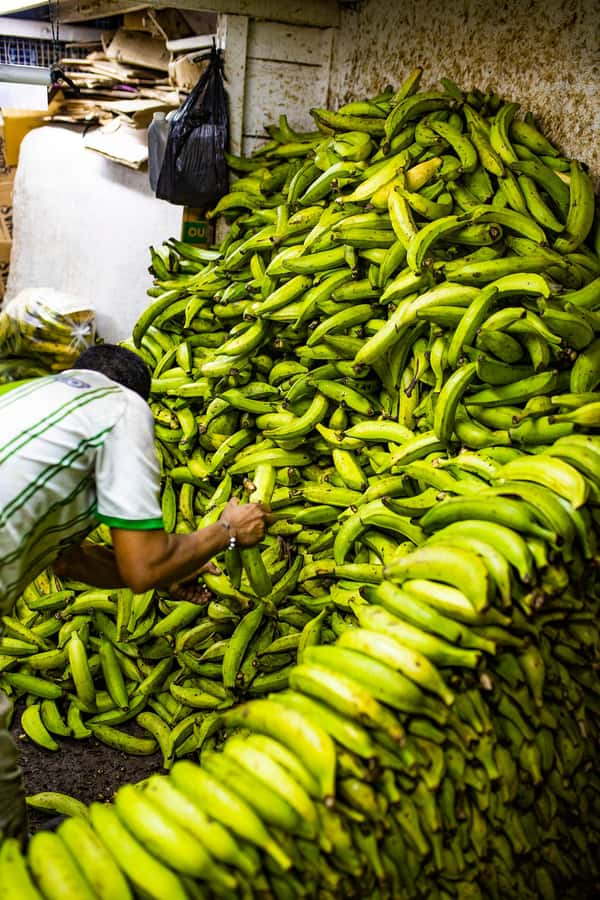
The schedule includes several 30-minute blocks for tasting and guided walks. In practical terms, the tour keeps returning to the same market complex, moving between stalls and pausing to sample fruit.
A typical outing offers at least 15 to 20 varieties. The final total can be higher. Different groups have tasted around 18, 19, 20, 23, 24, 25, 30, or 31 fruits. That range is not a contradiction. It reflects the season, the available produce, the guide, and the pace of your group.
You should treat the advertised number as a minimum range rather than a guaranteed fixed count. If you are interested in particular fruits, tell your guide early. One family’s guide adjusted the route to include the kinds of fruit their child wanted to try, and another person received a list afterward to remember everything sampled.
The quantity is substantial. Several people advised eating only a light breakfast, and that is good advice. You are not taking one tiny bite of each item and moving on. The repeated tasting, juice, and possible extras can add up quickly.
Cleaning supplies, napkins, and a personal spoon are provided. Fruit is cleaned for tasting, which makes the process easier and more comfortable for visitors who are not used to buying cut produce in a busy market. Water is not included, so bring your own bottle.
If you have food allergies, skip this activity. The tour is built around sampling many kinds of fruit, and there is no indication that an allergy-specific tasting plan is offered.
A final market circuit and the fruit juice finish
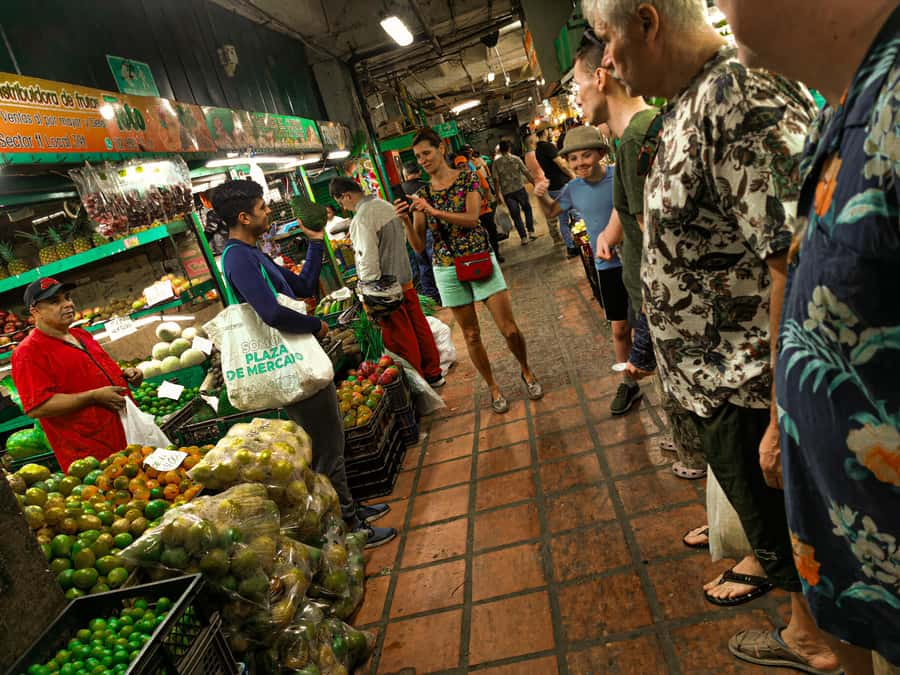
The later portion includes another guided 30-minute tasting block, followed by a short walk and a final break and tasting period. This gives you time to slow down rather than race through a single large sample tray.
By this point, the market should make more sense. You will have seen how the fruit is displayed, met some of the people selling it, and heard why Plaza Minorista matters to Medellín’s daily economy. The repeated movement between stalls lets you compare different areas of the market instead of stopping in one place and missing the scale of the plaza.
The included fruit juice provides a natural finish. You can choose a juice, according to the experience details and the way past outings have been run. It is a pleasant change from tasting fruit one piece at a time, and it gives you one more way to understand how Colombian produce becomes part of an everyday drink.
The tour returns to Plaza Minorista, so you do not finish in an unfamiliar neighborhood. Some people have used the final part of the visit to buy fruit for later. That purchase is not included in the $36 price, but the guide may help you identify good choices and communicate with sellers.
What the $36 price gets you
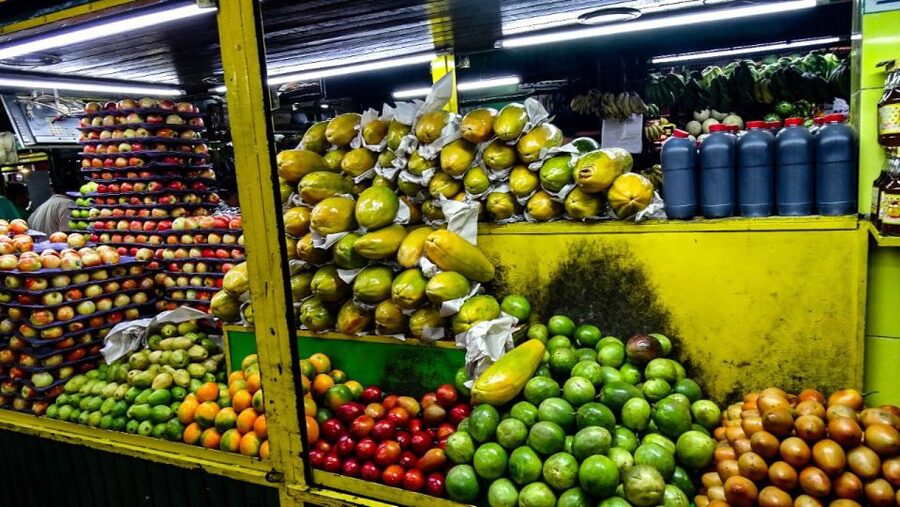
At $36 per person, the value depends on how much you care about access and explanation rather than simply the cost of the fruit.
You could buy fruit at a market for much less than the tour price. That is not the real comparison. You are paying for 150 minutes of guidance, a route through a large market, cleaning supplies, a spoon, napkins, the tasting itself, juice, and interpretation between visitors and traders.
The small group limit of eight is especially important. In a huge market, a group of 20 or 30 would be harder to manage and less personal. With eight or fewer people, you can ask about unfamiliar fruit, hear the answer, and keep close to the guide without creating a moving crowd.
The strongest value comes if you are new to Colombia, interested in food, or uncertain about visiting the market alone. You leave with a better sense of how to return on your own, and you may also learn which fruits you want to buy during the rest of your stay.
The value is weaker if you want a formal cooking lesson, a sit-down meal, or a calm indoor tasting. This is a moving, social market visit. The price is fair for a personal introduction, but the setting will matter as much as the food.
Who will enjoy this, and who should skip it
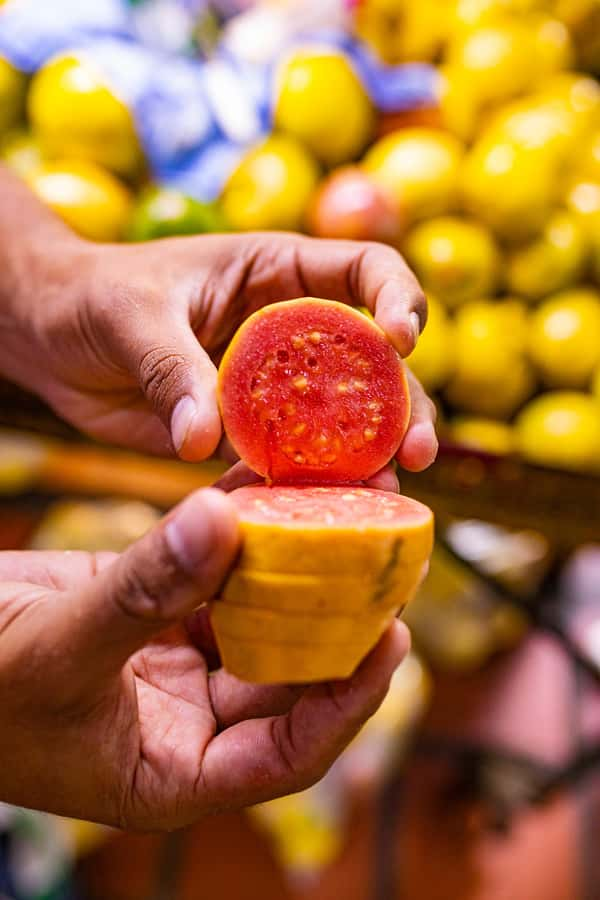
I would choose this for food-focused visitors, first-time visitors to Medellín, and anyone who wants a closer look at ordinary city life. It is also a good first-day activity because the guide can answer broader questions about Medellín while introducing you to local food.
Solo visitors should find the small group format helpful. One person was the only participant on an outing and found that the tour felt more like time spent with a local companion. That flexibility may not happen every time, but a group capped at eight still gives solo visitors a better chance to talk.
Families may enjoy it too, especially if children are curious about unusual colors, shapes, and flavors. Keep in mind that this is a working market, not a children’s attraction. Parents need to watch young children around busy aisles and moving goods.
You should skip it if you have fruit allergies, dislike trying unfamiliar foods, or need a fully seated activity. Sandals and flip-flops are not allowed, so wear sturdy closed shoes. Comfortable footwear is not a minor detail here. You will be on foot for much of the 2.5 hours.
My practical advice for getting the most from it
Eat a light breakfast, not a full one. You will want room for the tasting, but arriving hungry can make a long morning of acidic, sweet, and unfamiliar fruit less pleasant.
Bring water, since it is not supplied. Carry your passport or identification card, or a copy, because identification is required for the activity.
Ask questions early. If you want to know how to buy a certain fruit, where it grows, or how locals prepare it, the guide can shape the conversation around your interests. You may also want to keep a note on your phone. After 20 or more samples, names can blur together.
Take advantage of the guide’s local connections, but remain respectful of the vendors’ time. The best moments come when the exchange feels natural rather than staged.
Finally, book a morning departure. The activity is designed for the market’s busiest, most active hours, and the produce selection and social energy are part of the point. You will see more of the market in motion than you would during a quiet afternoon visit.
Should you book the Medellín fruit market tour?
I would book it if you want a food experience tied to a real place and real people. The fruit is the hook, but the market access, personal stories, and chance to understand how Plaza Minorista works are the lasting benefits.
I would not book it expecting luxury, a fixed tasting menu, or a polished culinary studio. You will walk, stand, share space with workers, and eat according to the season. That tradeoff is exactly what makes the experience feel connected to daily Medellín.
At $36, the tour is a good buy for curious eaters, especially if your guide is Sergio or another guide with strong market ties. Come in closed shoes, bring water, leave room in your stomach, and meet the purple umbrella at Puerta 1.
FAQ
Where does the Medellín fruit market tour start?
It starts at the main entrance of Plaza Minorista José María Villa, specifically Puerta 1, marked P1. The guide waits there with a purple umbrella.
How long does the experience last?
The experience lasts 150 minutes, or 2.5 hours.
How many fruits will I taste?
The tour includes 15 to 20 fruit varieties according to the harvest season. Some outings have included more, with totals ranging from the low 20s to around 30 or more.
Is juice included?
Yes. A fruit juice is included along with the fruit tasting.
Which languages are available?
The tour is offered with a live guide in English or Spanish.
What should I bring?
Bring a passport or identification card, or a copy, and wear comfortable closed shoes. Bring water because it is not included.
Can I join if I have food allergies?
No. The activity is not suitable for people with food allergies because tasting many fruit varieties is central to the experience.
Just added around Colombia
- VIP Bogota City Tour: Farmers Market, Monserrate, Candelaria, 9hr★ 5.0 · 66 reviews
- Shared Tour of Colombian Exotic Fruit at Paloquemao Market★ 4.7 · 20 reviews
- Shared Tour Cali’s Local Food at Alameda Market★ 4.8 · 12 reviews
- Get to know the real Cartagena: Bazurto Market gastronomic & cultural tour★ 5.0 · 2 reviews
- Flavors of Cali: Food tour at the local market★ 5.0 · 5 reviews
- Cartagena Bazurto Market: Authentic Food & Culture Tour★ 4.5 · 13 reviews
- Cali: Fruit Market Walking Tour with Tastings★ 4.6 · 7 reviews
- Bogotá: Colombian Cooking Class with Market Visit★ 4.0 · 2 reviews
Colombia Market Tours, compared.
PALOQUEMAO MARKET FOOD TOUR. EXOTIC FRUIT. LOCAL SNACKS. /Min 2 pax
Read our review →

VIP Bogota City Tour: Farmers Market, Monserrate, Candelaria, 9hr
Read our review →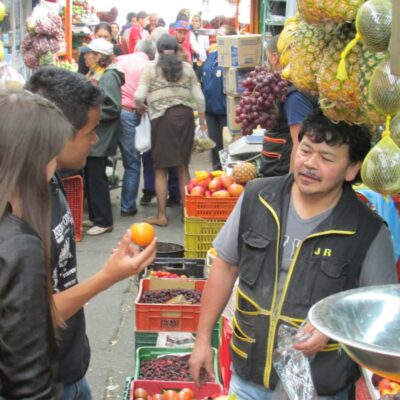
Shared Tour of Colombian Exotic Fruit at Paloquemao Market
Read our review →
Cartagena Bazurto Market: Authentic Food & Culture Tour
Read our review →
Cartagena: Bazurto Market & La Popa Convent Tour with Lunch
Read our review →Browse the lists this tour appears in