
Review · MARKET AND COOKING CLASS TOURS
5 Dishes Cooking Class with Market Trip in Da Nang
Da Nang’s best food lesson may begin before you reach the stove. This four-hour class takes you through Bắc Mỹ An Market to see the ingredients first, then brings you back to prepare five Vietnamese dishes, from bánh xèo to avocado ice cream. I like the market visit because it gives useful context, and I like the broad menu because it covers savory, fresh, spicy, and sweet flavors in one sitting. The main drawback is that the class can feel less smooth if the previous session runs late or your instructor’s English is limited.
I also like the practical touch of learning ingredient substitutions for cooking at home. Instructors such as Jenny and Chef Bora have received special praise for clear teaching and a fun approach, though the quality of communication may vary by session.
Key points
- Bắc Mỹ An Market comes first: You see local produce and learn what the ingredients are before cooking.
- Five dishes cover a full meal: The menu includes bánh xèo, bún bò Huế, Hoi An fresh rolls, young jackfruit salad, and avocado ice cream.
- Jenny and Chef Bora are named instructors: Jenny is especially noted for careful explanations, while Chef Bora is praised for making the class engaging.
- The meal is part of the lesson: You eat what you prepare and sample homemade rice vodka.
- Vegetarian and allergy requests are accepted: Add dietary needs when booking.
- The class lasts about four hours: It begins and ends at 07 Nguyễn Bá Lân, with a maximum of 30 people.
Starting at 07 Nguyễn Bá Lân in Da Nang
Your morning or afternoon begins at 07 Nguyễn Bá Lân, in the Bắc Mỹ An area of Ngũ Hành Sơn. Plan to arrive 15 minutes early. That small cushion matters because the group heads to the market at the start, and you do not want to be searching for the meeting point while the shopping begins.
The activity uses a mobile ticket, and the meeting point is near public transportation. You return to the same address after cooking, so you do not need to arrange a second pickup or figure out a new end point.
The maximum group size is 30 people. That is not an intimate private lesson, but it is still a manageable format for a hands-on class if the kitchen is organized well. A larger group can also make the meal more social, though you should expect some shared instruction rather than constant one-to-one coaching.
More Market and Cooking Class Tours in Da Nang
- 5 traditional dishes Da Nang cooking class with market trip
★ 5.0 · 331 reviews - Da Nang Cooking Class with Coffee Tasting and Market Visit
★ 5.0 · 310 reviews - Market Tour, Basket Boat Ride & Cooking Class by Hangcoconut
★ 4.8 · 95 reviews
What Bắc Mỹ An Market adds to the class
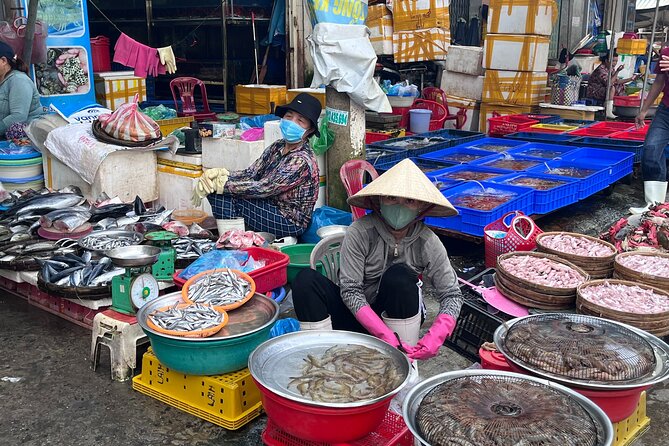
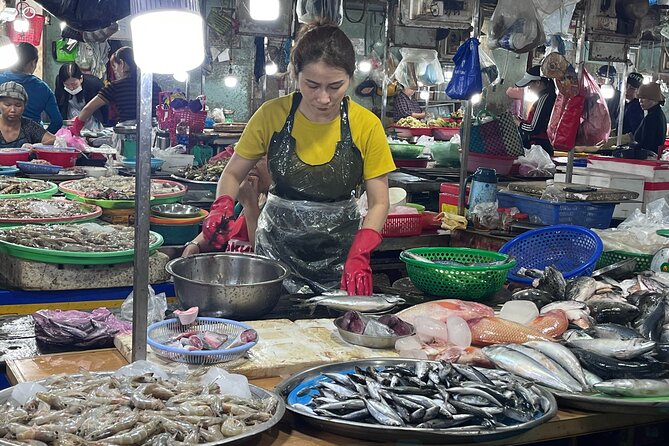
The first stop is Chợ Bắc Mỹ An, also called Bắc Mỹ An Market. This is more than a quick ingredient run. It gives you a look at the raw materials behind the recipes and helps explain why Vietnamese cooking depends so much on fresh herbs, vegetables, noodles, wrappers, sauces, and fruit.
I find this part especially useful because many Vietnamese ingredients are easy to recognize once someone points them out, but confusing when you first encounter them. The class is designed to explain the ingredients and suggest possible replacements if you want to recreate the dishes at home.
That home-cooking angle is important. A cooking class can be entertaining for an afternoon and useless the next week. Here, the market stop connects the finished food to things you can search for later in an Asian grocery store or replace with more familiar ingredients.
Allow time for the market portion to be practical rather than polished. You are there to shop and learn, not to watch a staged food show. The exact flow may depend on the market and the size of the group, but the stop gives the class a clear sense of place before the recipes begin.
One caution is worth noting. A past session ran about an hour behind because the previous class was delayed, and the market portion was missed. That appears to be an exception rather than the intended format, but it is a good reason not to schedule an important flight, spa appointment, or dinner reservation immediately afterward.
Bánh xèo: the crisp, hands-on opening dish
Bánh xèo is a smart first dish for a cooking class because it shows how Vietnamese food can be crisp, light, fragrant, and filling at the same time. You learn the basic elements of a savory Vietnamese pancake and how it fits into a meal with fresh greens and dipping flavors.
The dish also gives you a chance to work with texture. The goal is not simply to follow a recipe, but to understand how a thin batter becomes a crisp shell while the filling stays distinct. Your instructor’s job is to make those steps clear, and Jenny is specifically praised for explaining each stage carefully.
This is one of the recipes most likely to become a favorite at home because it feels special without requiring a long list of finished courses. Pay attention to the ingredient names and replacement suggestions during the market visit. Those details may be more useful later than the recipe card alone.
Bún bò Huế brings a different regional flavor
Bún bò Huế gives the class a second style of Vietnamese cooking. Compared with bánh xèo, it shifts the focus toward noodles, broth, seasoning, and the layered taste associated with Huế cuisine.
The value here is variety. You are not spending four hours making five versions of the same spring roll. The menu moves across different cooking methods and flavor profiles, giving you a wider sense of Vietnamese food in one lesson.
A dish like this can also take more explanation than a simple assembled roll. Listen closely as the instructor covers the components and seasoning. The class is meant to answer questions about Vietnamese food, so this is a good moment to ask about ingredients you do not recognize or about substitutions available back home.
If you prefer very quick recipes, bún bò Huế may feel like the most involved part of the menu. That is not a flaw, but it does mean the class is about learning a range of dishes, not just producing the fastest possible lunch.
More Market and Cooking Class Tours in Vietnam
- Hanoi Cooking Class: Culture, Local Market & Meaning CSR Impact
★ 5.0 · 5,147 reviews - 5 Traditional Dishes Hanoi Cooking Class with Market Trip
★ 5.0 · 4,890 reviews - Cooking Class Hoi An:Local Market, Basket Boat, Fishing & Cooking
★ 5.0 · 3,660 reviews - Hoi An Cooking Class(Market,BasketBoat Crabfishing&Cooking Class)
★ 5.0 · 3,386 reviews
Hoi An fresh rolls keep the cooking practical
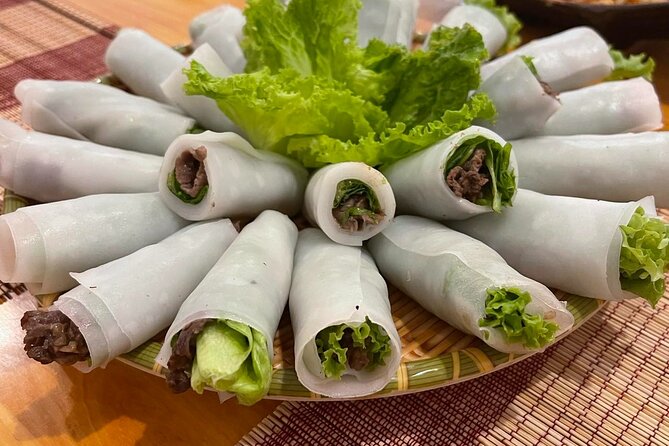
The Hoi An fresh roll adds a lighter, more hands-on item to the table. Fresh rolls are useful for a group class because you can learn the basic assembly technique, see how the ingredients work together, and adjust the filling to suit your own taste.
This is also a good recipe for home cooking. You do not need to reproduce an elaborate restaurant plate to use the method. Once you understand the wrapper, filling, and rolling process, you can adapt the format with the ingredients you can find.
The Hoi An connection gives the menu a wider regional reach. You are based in Da Nang, but the class does not limit itself to one city’s dishes. Along with bún bò Huế and bánh xèo, the fresh roll helps show how central Vietnam has several distinct food traditions close together.
Young jackfruit salad offers the biggest talking point
Young jackfruit salad may be the dish that raises the most questions. For many people, jackfruit is familiar only as a ripe, sweet fruit. Young jackfruit is used differently, and the salad shows how Vietnamese cooking can turn a less obvious ingredient into a savory dish.
This is where the market trip earns its place. Seeing the ingredient before preparing it makes the recipe less mysterious. You can ask what to look for, how it is used, and what might work as a substitute if young jackfruit is not available where you live.
I would pay close attention to the texture and seasoning here. Salads in Vietnamese cooking are not always built around lettuce. This one gives you a useful lesson in balancing fresh, savory, and crisp elements without relying on a heavy dressing.
The dish may not be the easiest one to recreate outside Vietnam, depending on the ingredients in your local shops. Still, it is exactly the sort of recipe that makes the class more than a basic spring-roll workshop.
Avocado ice cream finishes the meal on a local note
Avocado ice cream is an unexpected ending, and that is part of its appeal. It takes an ingredient usually associated with savory dishes and puts it into a cool dessert, giving the meal a playful final course.
This dessert also keeps the menu balanced. After pancakes, noodles, rolls, and salad, you finish with something sweet rather than another savory plate. The class therefore feels like a complete meal, not five disconnected demonstrations.
Do not expect a European-style pastry lesson. The value is in seeing how avocado is used in a Vietnamese dessert and learning a preparation you may not have encountered before. For many people, this will be the most memorable recipe to discuss when they get home.
Eating together with rice vodka
After cooking, you eat the food together. That shared meal is one of the best parts of a class like this because you can compare the dishes as a complete menu and ask questions while everything is still fresh.
The experience also includes homemade rice vodka. It is a small cultural detail, but it adds a local touch to the meal. If you do not drink alcohol, mention your preference to the instructor rather than assuming you must take part.
The food itself is included in the class format, so the $39 price covers more than instruction. You are paying for the market visit, the cooking lesson, the five dishes, the meal, the cookbook, and the certificate. Compared with booking several separate food activities, that is a reasonable package for a four-hour session.
The value depends on how much you want to cook. If you only want to taste Da Nang food, a market tour or food walk may be cheaper and simpler. If you want to understand ingredients, practice several dishes, and leave with ideas for cooking at home, the price makes more sense.
What the instructors can add to the lesson
The named instructors include Jenny and Chef Bora. Jenny is singled out for careful explanations and a strong understanding of the food culture. Chef Bora is praised for making the class clear, fun, and engaging.
That personal teaching style matters. Recipes are easier to remember when the instructor explains why an ingredient is used, not only when to add it. The class also welcomes questions about Vietnamese food, so use the time to ask about substitutions, preparation methods, and unfamiliar market products.
The teaching quality may vary by session. One experience included an instructor whose English was limited, although communication was still possible. If detailed culinary explanations are a priority for you, keep that possibility in mind. The overall rating is very strong, but no group class can guarantee the same instructor every time.
Dietary needs, timing, and group size
Vegetarian, vegan, and allergy requests can be accommodated when you include them in the special request at booking. Do this in advance, since the recipes and market shopping need to be planned around your needs.
The activity takes about four hours. That is long enough to include a market visit, five dishes, and a shared meal, but it also means you should arrive rested and avoid packing another fixed activity too tightly afterward.
The class ends back at 07 Nguyễn Bá Lân. Confirmation is provided at booking, and the meeting point is near public transportation. Free cancellation is available if you cancel at least 24 hours before the start time. Cancellations or changes made within 24 hours are not refunded or accepted, and a minimum group size is required for the class to operate.
Who will get the most from this cooking class
I would choose this class if you want more than a tasting. It suits curious eaters, home cooks, couples, families, and anyone who likes learning through food rather than simply ordering from a menu.
It is also a good fit for someone new to Vietnamese ingredients. The market trip helps you connect names, shapes, and uses, while the cookbook gives you something to refer to after the class.
You may want a different activity if you dislike group lessons, have very limited time, or want a quiet private cooking session. A maximum of 30 people is not huge, but it is large enough that the pace may not always feel personal.
Should you book the Da Nang cooking class?
Yes, if you want a broad introduction to central Vietnamese food in one well-priced half-day. The market visit, five-dish menu, shared meal, cookbook, and certificate make $39 a fair deal, especially for anyone who plans to cook Vietnamese food later.
Book with realistic expectations. The session may run late, instructor communication can vary, and a larger group will not feel like a private chef lesson. But if you arrive early, note dietary needs in advance, and leave room in your schedule, this is a practical way to connect Da Nang’s market ingredients with the food on your plate.
FAQ
Where does the cooking class begin?
The class begins at 07 Nguyễn Bá Lân, Bắc Mỹ An, Ngũ Hành Sơn, Da Nang 550000, Vietnam. You should arrive 15 minutes before the start time.
Which market does the class visit?
The group visits Chợ Bắc Mỹ An, also known as Bắc Mỹ An Market, near the meeting point.
Which dishes will I cook?
You will prepare bánh xèo, bún bò Huế, Hoi An fresh rolls, young jackfruit salad, and avocado ice cream.
How long does the activity last?
The cooking class and market visit take approximately four hours.
Can vegetarian, vegan, or allergy requests be accommodated?
Yes. Include your dietary needs in the special request when booking so the class can plan accordingly.
What is the cancellation policy?
You can cancel at least 24 hours before the start time for a full refund. Cancellations or changes made less than 24 hours before the experience are not accepted or refunded.
Just added around Vietnam
- Tra Su Cajuput Forest An Cairang Floating Market★ 5.0 · 4 reviews
- Private ecotour in Can Tho: floating market-nature reserved★ 5.0 · 23 reviews
- Can Tho: Floating Market, Canals, Nature Reserve & Forest★ 5.0 · 42 reviews
- Hau River Floating Market and Con Son Islet Adventure★ 5.0 · 3 reviews
- Cai Rang Floating Market Tour -Amazing Can Tho★ 5.0 · 106 reviews
- Floating Market & Hidden Canals – Small Group Morning Boat Tour★ 5.0 · 34 reviews
- Explore Floating Market with Local People★ 5.0 · 7 reviews
- Can Tho Floating Market and Fruit Garden Tour★ 5.0 · 40 reviews
Market and Cooking Class Tours, compared.

Hanoi Cooking Class: Culture, Local Market & Meaning CSR Impact
Read our review →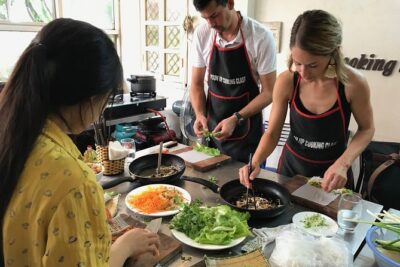
5 Traditional Dishes Hanoi Cooking Class with Market Trip
Read our review →
Cooking Class and Lunch at a Tuscan Farmhouse with Local Market Tour from Florence
Read our review →
Cooking Class, Market & Thai Herbs Garden Tour
Read our review →
Authentic Cooking Class with Market & Farm Visit
Read our review →
Paella Cooking Experience & Boqueria Market Tour
Read our review →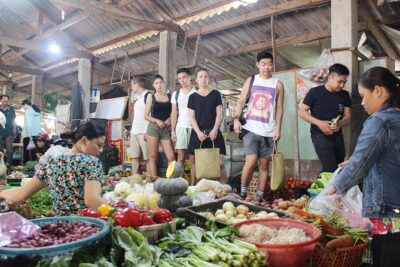
Cooking Class Hoi An:Local Market, Basket Boat, Fishing & Cooking
Read our review →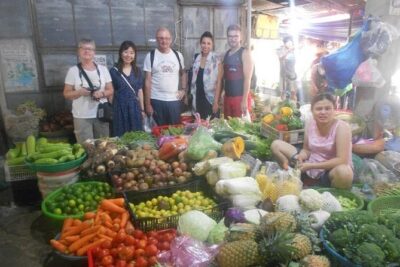
Hoi An Cooking Class(Market,BasketBoat Crabfishing&Cooking Class)
Read our review →Browse the lists this tour appears in