
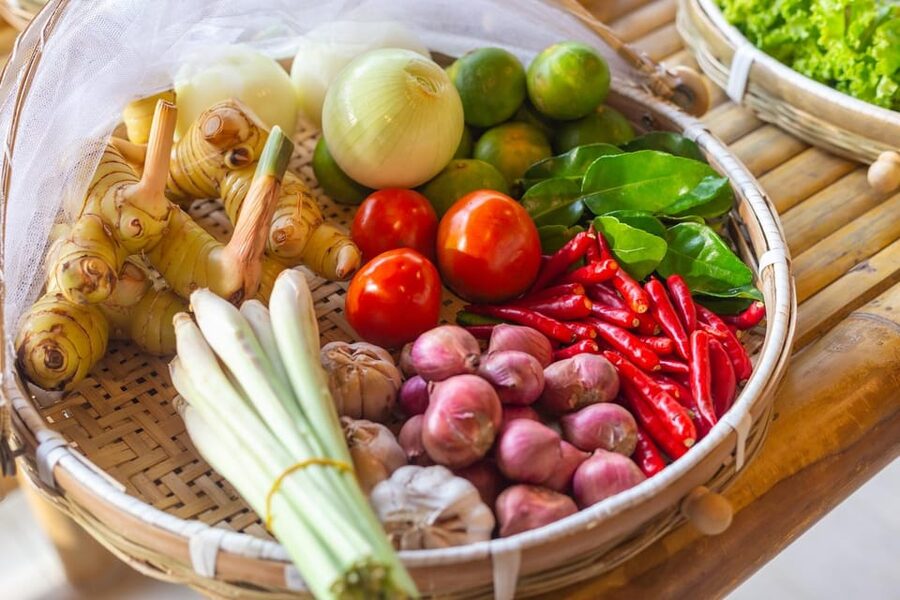
Review · MARKET AND COOKING CLASS TOURS
3 hours Khao Lak Cooking Class and Market Visit
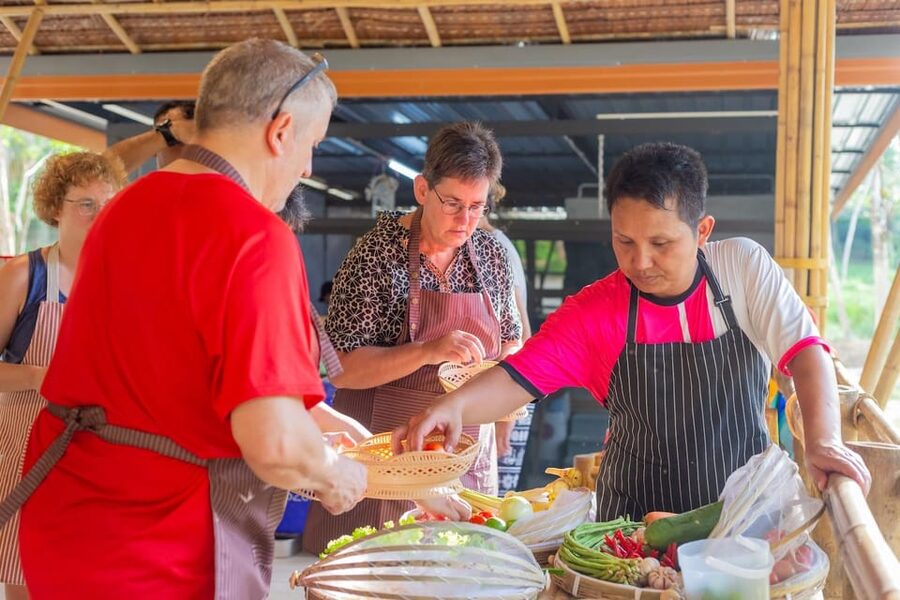
The best part of this three-hour Khao Lak experience happens before the cooking starts. You walk through a local market, see unfamiliar produce up close, sample snacks, and help choose the ingredients that will become your meal. That gives the class a useful sense of place instead of making Thai food feel like a set of disconnected recipes.
I like the hands-on format and the friendly teaching style, especially with guides such as Tony, who explains ingredients clearly without making the class feel stiff. I also like the generous meal: you prepare four dishes, taste market snacks, and may get to try homemade ice cream from local residents.
The main consideration is that much of the food preparation is done ahead of time, so this is not a full kitchen apprenticeship. One attendee also found that recipe instructions were not provided, despite the included recipe-guide information, so confirm what you will receive before leaving.
Key points at a glance
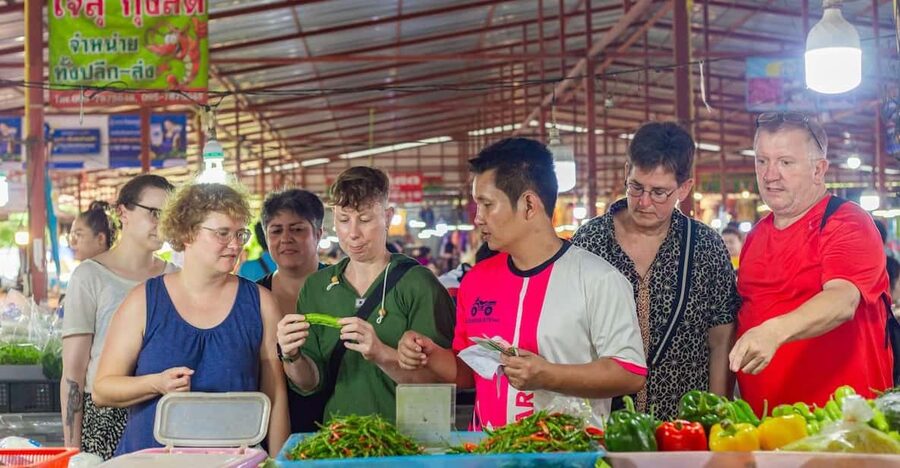
- Market first: Choose ingredients, learn about Thai products, and sample snacks such as sesame balls.
- Four dishes to eat: The menu can include Pad Thai, Tom Yum Goong, Som Tum, and mango sticky rice.
- Small groups can be very personal: One session had only one participant, allowing unusually close guidance.
- All practical items are covered: Ingredients, cooking equipment, tea or coffee, hotel transfers, and a certificate are included.
- Bring a hat and spare clothes: Market heat and cooking splashes can make both useful.
- Food is a major part of the outing: Arrive hungry, since you will taste snacks and eat the dishes you prepare.
Why the market visit matters
Thai cooking makes more sense once you have seen the ingredients in their everyday setting. At the market, your guide points out the products used in the meal and helps select what you will cook. You are not simply handed a tray of measured ingredients with no context.
This is a good chance to ask basic questions. You can look at the produce, spices, herbs, and other products that give Thai food its sharp mix of sweet, sour, salty, and spicy tastes. The guide also helps connect those flavors to familiar dishes, so you begin to understand why a recipe needs each ingredient.
The market is also a tasting stop. Snacks are served at the beginning, and sesame balls have been a particular hit. You may also get to try homemade ice cream made by local people. These small tastes are valuable because they show you Thai food beyond the standard restaurant menu.
You should keep your expectations practical. The market visit is part of a short cooking class, not a long food tour with a detailed stop at every stall. Its purpose is to prepare you for the kitchen and give you a closer look at local ingredients.
More Market and Cooking Class Tours in Thailand
- Chiang Mai: Cooking Class, Market & Thai Herbs Garden Tour
★ 4.9 · 4,824 reviews - Chiang Mai: Authentic Cooking Class with Market & Farm Visit
★ 4.9 · 4,546 reviews - Phuket Thai Cooking Class with Market Tour Option
★ 5.0 · 2,665 reviews
Cooking four dishes in three hours
After the market, you move into the cooking portion of the experience. The class is designed for all skill levels, so you do not need previous kitchen training. Your chef guides you through the methods, flavors, and order of preparation.
The class can cover four dishes, with much of the early preparation completed before you arrive. That arrangement helps the three-hour schedule work and lets you focus on cooking techniques rather than spending the entire session chopping. It also means you can eat several dishes during the class without waiting through long pauses.
The dishes named for the class represent a useful spread of Thai cooking:
- Pad Thai gives you a familiar starting point, with noodles and a balance of savory, sweet, sour, and salty flavors.
- Tom Yum Goong shows how a Thai soup can combine bold seasoning with fragrant ingredients and prawns.
- Som Tum offers a fresh, punchy contrast through green papaya salad.
- Mango sticky rice brings the meal to a sweet finish with ripe mango, sticky rice, and coconut flavors.
The exact menu and cooking order may vary, so you should treat these as representative dishes rather than a guaranteed four-course list. The important point is that you cook several Thai favorites and then eat them as part of the class.
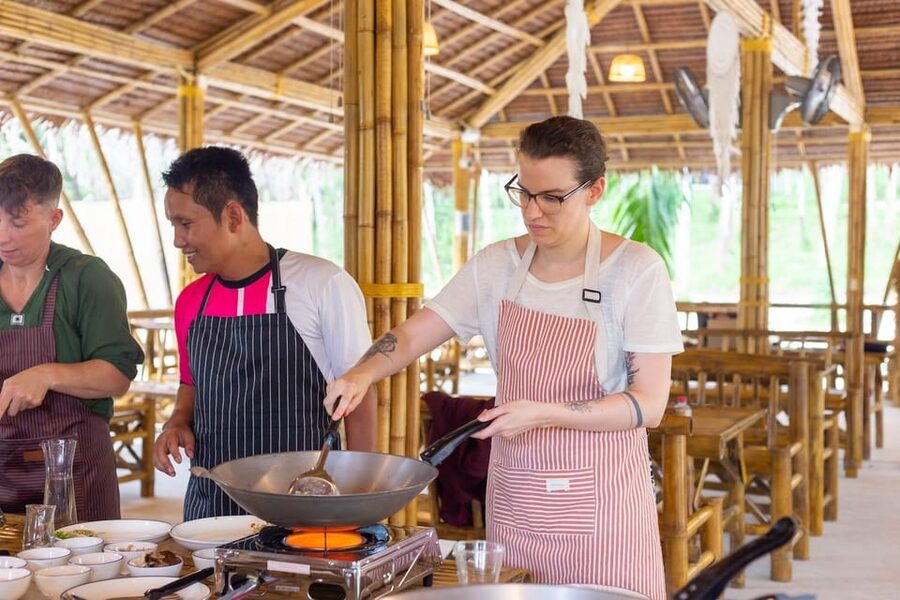
A wok is used for the four main dishes. That makes the class lively and practical, but it also means the pace can be quick. Pay attention when the chef explains heat, timing, and the order in which ingredients go into the pan. Those details matter more than simply copying a list of ingredients.
A class that works for beginners
You will get the most from this experience if you enjoy learning by doing. The chef demonstrates the process, then guides you through your own preparation. Because the class is hands-on, you can ask questions as you go instead of trying to remember everything from a demonstration.
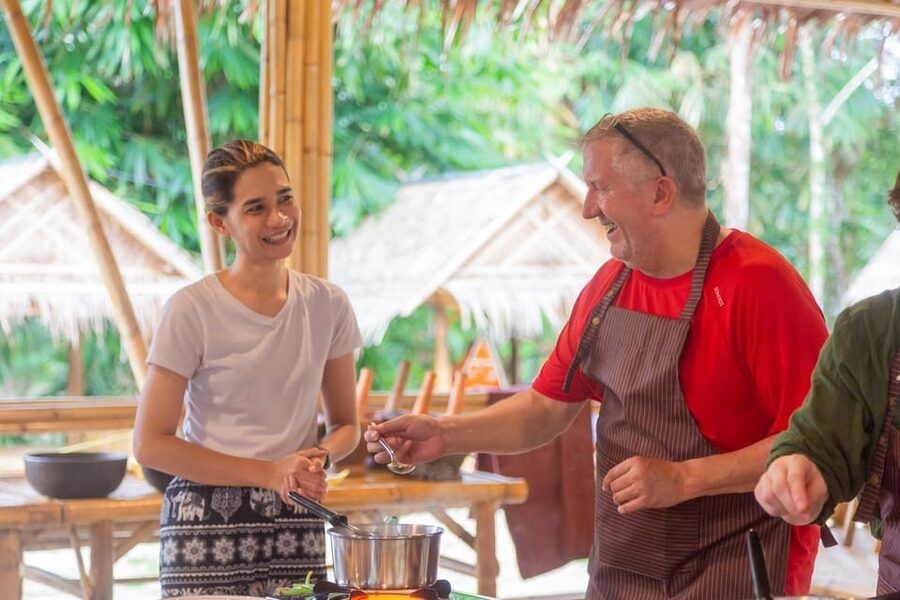
The teaching style appears relaxed rather than formal. Guide Tony, in particular, is described as humorous, approachable, and clear when explaining Thai ingredients and cooking methods. That matters in a short class. A warm guide can make it easier to ask why a dish tastes sour, how spicy it should be, or what an unfamiliar market product is used for.
Group size can change the feel of the outing. One participant had a class so small that it became a private cooking lesson. That allowed close attention and plenty of time to work directly with the guides. A larger group would naturally offer less individual time, so ask about the expected group size if personal instruction is important to you.
You should also know what this class is not. It is not designed to turn you into a Thai chef in one morning. Since some preparation is completed in advance, you may not handle every step from start to finish. Still, you will learn enough about flavor balance, ingredients, and basic methods to repeat the dishes at home.
What you actually eat and learn
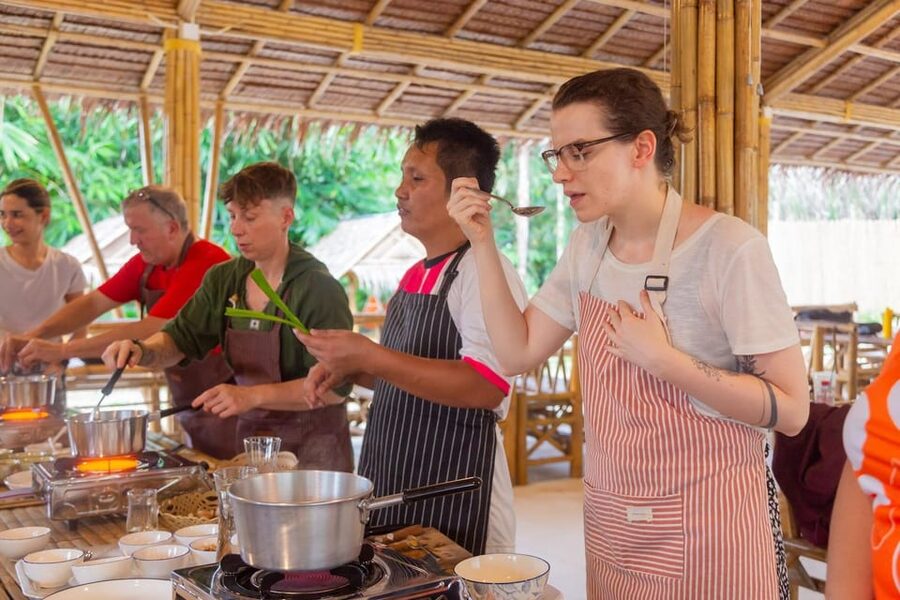
The food is the strongest reason to book this class. You are not cooking a single sample dish and then leaving. The format includes several courses, market snacks, drinks, and sometimes an extra taste from local people.
Pad Thai is a particular favorite for its easy combination of noodles, sauce, and fresh toppings. It is also one of the most useful dishes to learn because you can make it again at home with ingredients found in many supermarkets. The class helps you understand that its flavor comes from balance rather than heat alone.
Tom Yum Goong gives the meal a sharper edge. It is the dish to watch if you want to understand how Thai food uses sour and spicy notes without losing its aroma. Som Tum provides another contrast, with crisp ingredients and a bright dressing.
The dessert, mango sticky rice, is simple in appearance but teaches a different lesson. Coconut milk, sticky rice, and ripe fruit depend on texture and sweetness. Fruit carving or coconut milk preparation may also be included, adding a small craft element to the meal.
Tea or coffee is provided, and all ingredients and equipment are included. That makes the experience easy to join, especially if you are staying at a hotel and do not want to shop for specialty products yourself.
Same place, a different set of stalls:
- Bangkok: Damnoen Saduak Market and Maeklong Railway Market
★ 4.5 · 26,723 reviews - The Old Siam: Damnoen Saduak and Maeklong Railway Market
★ 4.5 · 10,992 reviews - Bangkok: Train Market & Floating Market with Boat Ride
★ 4.7 · 9,547 reviews - From Bangkok: Ayutthaya & Ayothaya Floating Market Day Trip
★ 4.7 · 6,084 reviews
The value of the $87 price
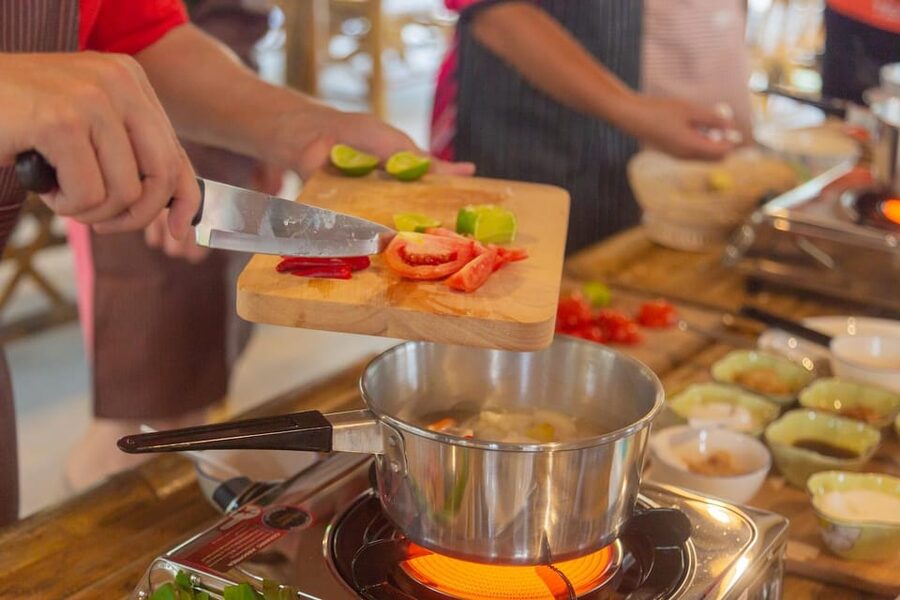
At $87 per person, this is not the cheapest way to eat Pad Thai in Thailand. You could buy a meal for far less. The price makes more sense when you count the full package: hotel pickup and drop-off, a market visit, instruction, ingredients, equipment, snacks, drinks, several cooked dishes, and a certificate.
The value is strongest for people who want an activity rather than only a meal. You are paying for access to a local market, an English-speaking guide, structured instruction, and the chance to cook food you might otherwise only order. The hotel transfer also removes the need to arrange separate transport.
The price is less compelling if you mainly want a market walk or a quick cooking demonstration. It is also worth checking whether a recipe guide is included in your booking details. The activity information lists recipe guides, but one participant left without recipe instructions. If taking the dishes home is a key reason for booking, ask what form the recipes take.
Reserve and pay later is available, and you can cancel up to 24 hours in advance for a full refund. Those terms give you some flexibility, though you should still check the final booking conditions before payment.
What to bring and how to prepare
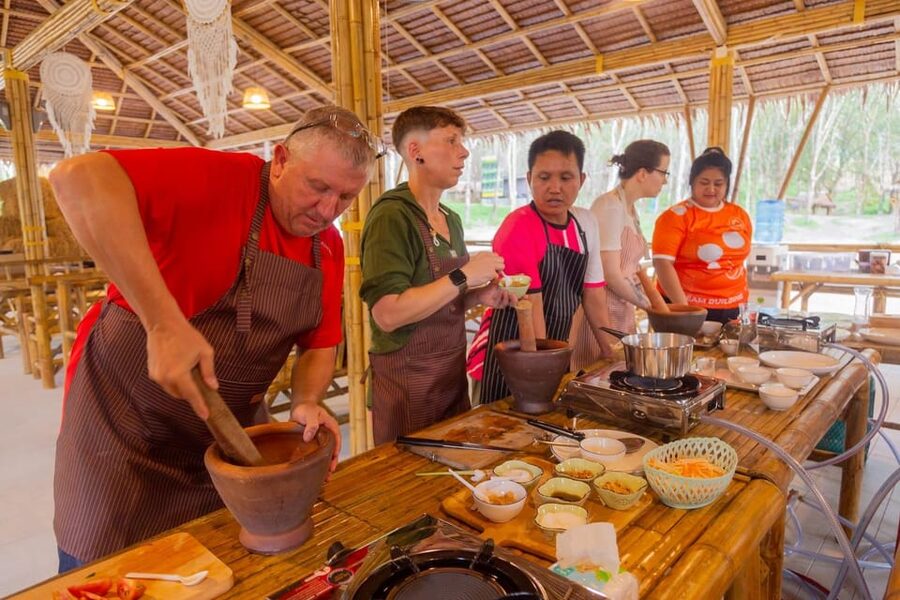
Wear clothes you do not mind cooking in. A spare set is specifically recommended, which suggests that splashes, heat, or market spills are possible. A hat is also useful for the market portion.
Arrive hungry. The schedule includes market snacks, cooking, and a substantial meal. One participant sensibly advised skipping breakfast, and I agree, especially if you want to sample everything without feeling full before the cooking begins.
Alcohol and drugs are not allowed. The class is conducted in English, so you should be comfortable following spoken instructions in English and asking questions when something is unclear.
The experience is linked to Khao Lak Ethical Elephant Sanctuary, and the information includes a note about not forcing elephant activities. That notice appears to apply to sanctuary activities rather than the cooking lesson itself. The key point for this class is that the focus is food, the market, and local teaching, not a guaranteed animal encounter.
Who will enjoy this Khao Lak activity
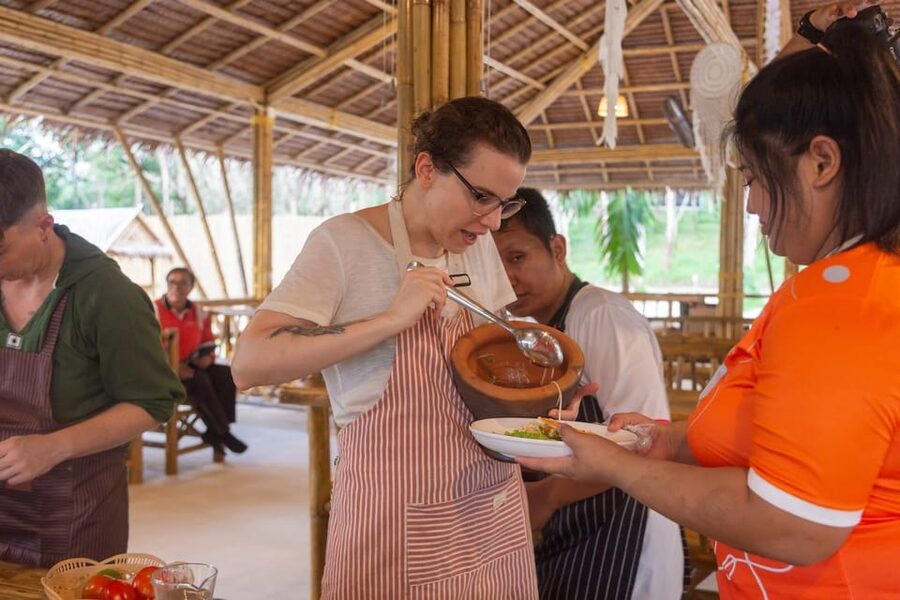
I would recommend the class to couples, families, solo visitors, and food-minded groups who want more than a restaurant meal. Beginners should feel comfortable, and experienced home cooks can still enjoy learning how Thai flavors are balanced.
It is especially suitable if you want:
- A short activity that fits into a Khao Lak holiday
- A market visit with a clear purpose
- Several dishes rather than one recipe
- A relaxed guide who explains as he cooks
- Hotel pickup and drop-off
- A meal you help create and eat immediately
It may not suit you if you dislike heat, market food, or quick kitchen work. It is also not ideal if you want every preparation step handled personally or need a formal recipe workbook at the end.
The class can be a good choice for families, but the supplied information does not give a minimum age or specific child policy. If you are booking with young children, ask the provider before reserving.
Final call: should you book it?
Book this class if you want a friendly, food-centered introduction to Thai cooking and like the idea of seeing ingredients before they reach the pan. The combination of market shopping, four dishes, snacks, and hotel transfers gives the $87 price reasonable value, particularly for first-time visitors to Thailand.
I would book it with two small checks. Ask about the expected group size and confirm whether printed or digital recipes are included. If you accept that some preparation is done ahead of time, you will get a lively, useful class rather than a slow, step-by-step culinary course.
FAQ
How long does the Khao Lak cooking class last?
The experience lasts three hours, including the market visit and cooking session.
What dishes might I cook?
The class may include Pad Thai, Tom Yum Goong, Som Tum, and mango sticky rice. The exact menu can vary.
Is a market visit included?
Yes. The experience includes a market tour where you see and help select ingredients for the meal.
Are ingredients and cooking equipment provided?
Yes. All ingredients and equipment needed for the class are included.
Is hotel transportation included?
Yes. Hotel pickup and drop-off are included.
What should I bring?
Bring a hat and a change of clothes. Alcohol and drugs are not allowed.
Is the class taught in English?
Yes. English is the listed language for the experience.
More Three-Hour Tours in Thailand
- Marrakech Monuments & Souks 3-Hour Tour
★ 3.8 · 1,540 reviews - Discover Palermo in 3 hours. Art, history, markets and street food
★ 5.0 · 352 reviews - 3h Private Walking Tour in Tangier Kasbah Medina & Colorful Souks
★ 5.0 · 148 reviews - Marrakech: 3-Hour Monuments, Souks & Old Medina Walking Tour
★ 4.7 · 133 reviews
Just added around Thailand
- Morning Buddhist Almsgiving, Grand Palace and Flower Market Tour in Bangkok★ 3.5 · 9 reviews
- Bangkok Udomsuk Thai Cooking Class with local market tour★ 5.0 · 5 reviews
- Floating & Railway Markets and Erawan Waterfall [Optional Luxury]★ 5.0 · 43 reviews
- Floating Market & Railway Market near Bangkok★ 4.0 · 5 reviews
- Private 4 days : Bangkok, Floating market and Ayutthaya★ 5.0 · 2 reviews
- Silom Thai Cooking School with Fresh Market Tour★ 5.0 · 73 reviews
- Ayutthaya Floating Market Admission Ticket with Transfer★ 5.0 · 2 reviews
- Train & Floating Market Food Adventure + Scenic train ride★ 5.0 · 102 reviews
Market and Cooking Class Tours, compared.

Hanoi Cooking Class: Culture, Local Market & Meaning CSR Impact
Read our review →
5 Traditional Dishes Hanoi Cooking Class with Market Trip
Read our review →
Cooking Class and Lunch at a Tuscan Farmhouse with Local Market Tour from Florence
Read our review →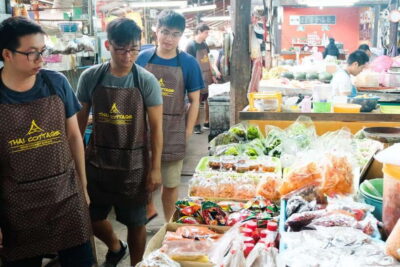
Cooking Class, Market & Thai Herbs Garden Tour
Read our review →
Authentic Cooking Class with Market & Farm Visit
Read our review →
Paella Cooking Experience & Boqueria Market Tour
Read our review →
Cooking Class Hoi An:Local Market, Basket Boat, Fishing & Cooking
Read our review →
Hoi An Cooking Class(Market,BasketBoat Crabfishing&Cooking Class)
Read our review →Browse the lists this tour appears in