
Review · MARKET AND COOKING CLASS TOURS
Pondicherry: Indian Cooking Class with Market Visit
The most rewarding part of this Pondicherry experience happens before the cooking begins. You ride an autorickshaw to a local market, where your instructor explains unfamiliar produce, spices, and ingredients before you help choose what goes into the meal. I like that the menu can bend to your interests, and I like the garden meal at the end, served with the food you made. The main caution is that the kitchen setup has drawn mixed feedback, so you should expect a homely teaching space rather than a polished culinary studio.
You also get a small group of no more than 10 people, recipes to take home, and a choice of vegetarian, vegan, South Indian, North Indian, or non-vegetarian dishes. Confirm your teaching language in advance if French matters to you, and tell the centre about allergies or dietary needs before the class.
Key points to know before you book
- The market visit comes first: Ride by autorickshaw and learn how local produce and spices are selected.
- Your menu has room to change: You may choose around four recipes, including dishes such as sambar, chicken Chettinad, palak paneer, carrot halwa, or Pondicherry-style meen kozhumbhu.
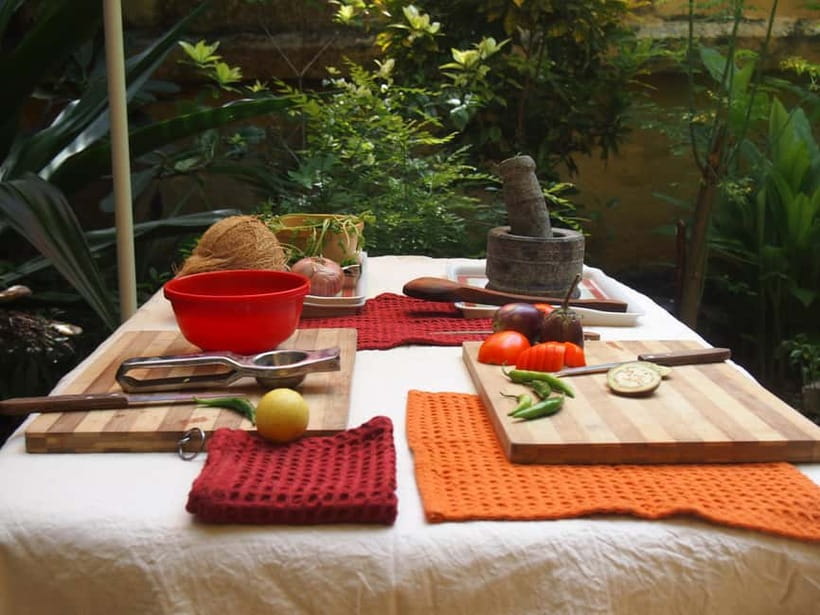
- You do the practical work: Chopping, grating coconut, seasoning, and cooking are part of the lesson.
- The class ends around a garden table: Eat the meal you prepared and share the experience with the group.
- The group stays small: A maximum of 10 participants gives you a better chance to ask questions and take part.
- The teaching language matters: English, Hindi, and French are offered, but confirm your selected language before arrival.
A market lesson before the first pan is heated
The class begins with a trip to a local vegetable market, including transport by autorickshaw. This is more than a quick shopping stop. Your instructor helps you identify ingredients that may be new to you, explains how they are used, and buys fresh products for the cooking session.
Pondicherry’s markets give you a useful introduction to Indian food before you have to cook it. You see the raw ingredients in their everyday setting, rather than meeting them only after they have been chopped, fried, or covered in sauce. Spices, vegetables, coconut, lentils, and other staples become easier to understand when you can point to them and ask what they do.
Goubert Market is specifically named in the experience, and Keerthi has guided people through it. The market portion can be especially helpful if you would not feel confident shopping alone. You can ask which vegetables are common in local cooking, how a product is prepared, and what might work as a substitute.
One particularly useful example is banana stem. It is an ingredient many visitors may not recognize, and one group asked how it was prepared. The menu was adjusted to include it. That shows the potential advantage of a small, flexible class: your questions can affect what you cook instead of being brushed aside.
The market is also the least controlled part of the outing. It is a working Indian market, not a staged food display. Expect crowds, noise, strong smells, and plenty of activity around you. Wear comfortable clothes and bring a camera if you want to record the ingredients and market scenes, but keep your attention on your guide and the people moving around you.
More Market and Cooking Class Tours in India
- Jaipur Market Tour & Vegetarian Rajasthani Home Cooking Class
★ 5.0 · 113 reviews - Spice Knight (Cooking Class -> Meal -> Local Market walk)
★ 5.0 · 59 reviews - New Delhi: Traditional Indian Cooking Class & Market Visit
★ 5.0 · 32 reviews
Choosing four dishes that fit your appetite
Back at the cooking centre, you work through about four recipes with guidance from the instructor. The choices can include vegetarian, vegan, South Indian, North Indian, and non-vegetarian food. This is a useful feature because it lets you aim the class toward your interests instead of accepting one fixed menu.
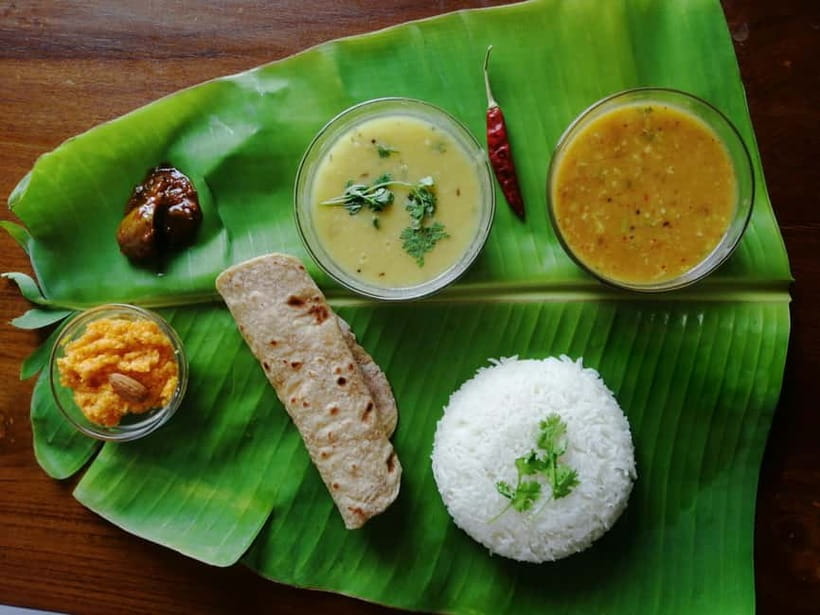
South Indian options may include sambar, a lentil and vegetable gravy, or meen kozhumbhu, a fish preparation associated with Pondicherry. For northern flavors, palak paneer is one possible choice. Chicken Chettinad offers a more substantial non-vegetarian route, while carrot halwa gives the meal a sweet finish.
The menu examples are not a promise that every dish will be available at every session. They show the range you can discuss with the instructor. If you have a strong preference, state it when booking and repeat it at the start of the class.
The choice of food also makes this experience useful for different kinds of cooks. If you are new to Indian food, you can focus on familiar vegetables and basic spice combinations. If you already cook Indian dishes, you can ask about regional variations, coconut, lentils, or the way a Pondicherry recipe differs from a northern one.
Tell the centre about allergies and dietary restrictions ahead of time. Vegan cooking is offered, but you should not rely on an assumption that every dish can be changed at the last second. Early notice gives the instructor a fair chance to plan ingredients.
Hands-on work, from chopping to coconut
This is not a demonstration where you sit back and watch someone else cook. You are expected to take part in the basic preparation, including chopping vegetables and grating coconut. The instructor then guides you through the cooking steps and explains how the ingredients come together.
That practical approach is where the $24 price begins to make sense. You are paying for food, instruction, market transport, and a meal, not just a plate of prepared dishes. You also leave with an e-booklet, so the value continues after you leave Pondicherry if the recipes are clear enough for you to repeat at home.
The teaching style is described as conversational. Ask about the spices, cooking order, ingredient choices, or possible variations. Saranya has been singled out for guiding a class with warmth and strong food knowledge, while Krishti and Keerthi have also led highly praised sessions. The names matter because this experience depends heavily on the individual instructor. A patient teacher can turn an unfamiliar ingredient into a memorable lesson.
Still, keep your expectations sensible. One very negative account described a cramped, poorly kept space with a tiny kitchen and felt that the class did not deliver four separate dishes. That view conflicts with several highly positive experiences, but it raises a fair point: this is a cultural centre kitchen, not a professional cooking school built for large-scale instruction.
If you want spotless counters, individual workstations, and a tightly timed restaurant-style lesson, this may feel basic. If you care more about personal guidance, local food, and a less formal setting, the simple setup may be part of the appeal.
Sharing the meal in the garden
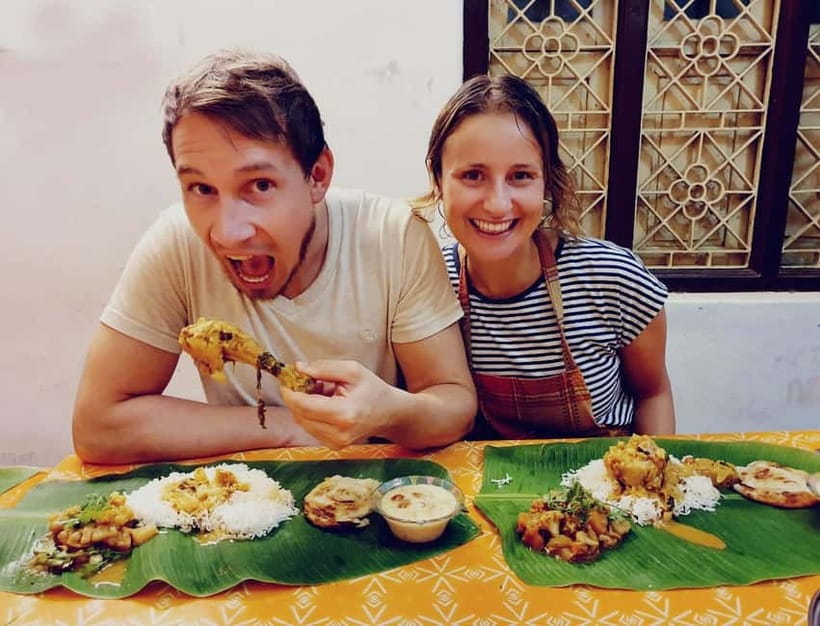
The class ends with lunch or dinner made by the group. You eat in the garden, which gives the session a relaxed finish after the market and kitchen work. In one particularly local touch, the food was served on a banana leaf, adding another connection between the ingredients and the meal.
This final table is not an extra course tacked onto the itinerary. It is the point of the class. You see what the chopping and seasoning produced, compare the dishes, and have time to talk with the other people in the group.
The food can also make the class more memorable than a restaurant meal. At a restaurant, you taste the finished dish. Here, you have handled the ingredients and watched the recipe take shape. Even a simple potato fry or carrot dessert means more when you know how it was made.
Families can take part too. Children over six are welcome, and two children aged 11 and 13 were reported to have joined in alongside adults. Younger children are not suitable for this activity, and the hands-on work means parents should expect them to participate rather than simply sit at the table.
Same place, a different set of stalls:
- Mumbai: Street Food and Night Markets Tour
★ 4.9 · 719 reviews - Private Heritage Walking Tour in Jaisalmer Fort and Old Bazaar
★ 5.0 · 306 reviews - Old Delhi Food-Spice Market-Temples Tour Soon Featured on NETFLIX
★ 5.0 · 304 reviews - Old Delhi Odyssey: A Tour of Religion, Spice Market, & Best Food
★ 5.0 · 284 reviews
What the three hours really include
The stated duration is three hours, covering the market outing, transport, cooking, and shared meal. That makes this a compact activity for a Pondicherry stay. You do not need to give up a whole day, but you should allow enough flexibility for the market portion and the pace of a small group.
The market transport is included from the cooking centre, while your journey to and from the class is not. That distinction matters. Plan your own way to the meeting location and do not assume the included autorickshaw service covers your entire trip from a hotel.
The small-group limit of 10 is a practical advantage. You have more opportunity to hold an ingredient, ask about a step, and receive correction while cooking. It also means the experience can feel social, particularly during the garden meal.
The available teaching languages are English, Hindi, and French. One French-speaking booking was conducted in English instead, despite French being selected. If you can manage English, this may not cause trouble. If French instruction is important, confirm it before the session rather than assuming the booking choice will settle it.
Smoking is not allowed. Comfortable clothing is recommended, which makes sense for a class involving market walking, chopping, grating, and cooking.
Is $24 good value in Pondicherry?
At $24 per person, the experience is priced below many full-service cooking classes in major tourist cities. You receive the market trip, autorickshaw transport during the activity, ingredients, equipment, instruction, the meal, and a recipe e-booklet.
That is a solid package if the class runs as intended and you value the market visit. The market tour is what separates this from simply ordering an Indian meal. You gain some context about the food and a chance to ask questions while shopping for the ingredients.
The value is less certain if your main goal is a polished kitchen lesson. The negative account focused on sanitation, space, and a disagreement about the number of dishes. Since the class takes place in a cultural centre, you should think of it as a local food activity with cooking instruction, not as a luxury culinary workshop.
I would also compare the price with your other plans. If you only want to eat good Indian food, a restaurant may cost less. If you want to understand how the food is made and take recipes home, the extra cost pays for participation and context.
The flexible cancellation policy, with a full refund available up to 24 hours ahead, and the option to reserve without paying immediately, make it easier to fit into a changing itinerary. These terms are useful, but they do not remove the need to check the language and dietary arrangements.
Who will enjoy this class most
I would recommend this experience to you if you like food, enjoy asking questions, and want a closer look at daily cooking in Pondicherry. It suits solo visitors, couples, friends, and families with children over six.
It is a particularly good choice if you are curious about ingredients you cannot easily identify in a shop at home. The market visit gives you a guide at your side, while the class lets you put those ingredients to work.
You should think twice if you dislike shared cooking, basic facilities, or strong market conditions. The class may also disappoint you if you expect a fixed four-course menu with a precise, restaurant-school format. Menu flexibility is a strength for some people, but it can also mean the exact dishes depend on the ingredients and discussion that day.
Ask for Saranya, Krishti, or Keerthi by name only if the centre confirms who will teach your session. The most positive experiences place clear emphasis on the instructor, so the person leading the class can shape your experience as much as the recipes.
Should you book this Pondicherry cooking class?
Book it if you want to connect a market visit with a meal you help prepare. The combination of autorickshaw transport, ingredient shopping, hands-on work, and garden dining gives you more than a standard cooking demonstration, and the $24 price is fair for what is included.
Do not book it expecting a spotless professional kitchen or guaranteed French instruction without confirming first. Tell the centre about allergies, choose your preferred food style, and ask which dishes and language are planned.
For most food-curious visitors, this is a worthwhile three-hour introduction to Indian cooking, especially when the instructor is attentive and the menu responds to your interests.
FAQ
How long does the cooking class last?
The activity lasts three hours, including the market visit, cooking session, and meal.
What is included in the price?
The price includes ingredients and cooking materials, transport by autorickshaw for the market visit, the lunch or dinner you prepare, and an e-booklet with the recipes afterward.
Is transport to the cooking class included?
No. Transport to and from the cooking class location is not included. Autorickshaw transport for the market visit is included.
What kinds of food can I cook?
You can choose from vegetarian, vegan, South Indian, North Indian, and non-vegetarian recipes. Possible dishes include sambar, meen kozhumbhu, carrot halwa, palak paneer, and chicken Chettinad.
Which languages are available?
The session can be taught in English, Hindi, or French. Confirm your selected language in advance, especially if French instruction is essential.
Can children join the class?
Children aged six and older are welcome. Children under six are not suitable for this activity.
Should I tell the centre about allergies?
Yes. You should mention dietary restrictions or allergies before the class so the instructor can plan the ingredients.
What should I bring?
Bring comfortable clothes and a camera if you want to photograph the market and cooking experience. Smoking is not allowed.
Just added around India
- Bangalore: Walk in Historic Ulsoor – Landmarks, Bazaar & Culture★ 5.0 · 9 reviews
- Experience Bangalore Evening City Walk Tour and Market Visit★ 5.0 · 9 reviews
- Shopping and Bazaar Trail in Bangalore★ 4.5 · 5 reviews
- Old Bangalore Historical Walk thro Palace, Temples, Fort & Market★ 5.0 · 60 reviews
- KR Market Photo Walk★ 5.0 · 12 reviews
- Lalbagh+Bull Temple+Tipu Palace+Market+Lunch=Bangalore City Tour★ 5.0 · 9 reviews
- Bangalore Evening Food Street Walk and Market Visit★ 5.0 · 32 reviews
- Private Walking Tour into the Oldest Local Market in Bengaluru★ 5.0 · 5 reviews
Market and Cooking Class Tours, compared.

Hanoi Cooking Class: Culture, Local Market & Meaning CSR Impact
Read our review →
5 Traditional Dishes Hanoi Cooking Class with Market Trip
Read our review →
Cooking Class and Lunch at a Tuscan Farmhouse with Local Market Tour from Florence
Read our review →
Cooking Class, Market & Thai Herbs Garden Tour
Read our review →
Authentic Cooking Class with Market & Farm Visit
Read our review →
Paella Cooking Experience & Boqueria Market Tour
Read our review →
Cooking Class Hoi An:Local Market, Basket Boat, Fishing & Cooking
Read our review →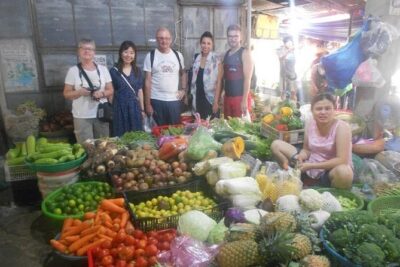
Hoi An Cooking Class(Market,BasketBoat Crabfishing&Cooking Class)
Read our review →Browse the lists this tour appears in