
Review · LOCAL & FARMERS MARKET TOURS
Old Dubai tour: Local Market, Tasting, Dubai creek with Abra ride
Old Dubai comes into focus in the narrow lanes of Al Fahidi, where wind towers, shaded courtyards, and old merchant houses offer a sharp contrast to Dubai’s glass towers. I like the small group of no more than 10 people and the way the walk links architecture, trade, religion, and food rather than treating each sight as a separate photo stop.
I also like the abra ride across Dubai Creek, a short but memorable trip on the same waterway that helped turn Dubai into a trading center. The main caution is that museum access and scheduling can change, and some people have found the market visits rushed or too focused on shopping.
Key points to know before you book
- Al Fahidi gives you Dubai before the skyscrapers: Explore wind-tower buildings, courtyards, galleries, and cultural spaces in one compact neighborhood.
- The abra ride is included: Cross Dubai Creek by traditional wooden boat and finish in Deira, near the Spice and Gold Souks.
- The guide makes the difference: Hichem, Mahmoud, Abdullah, and Azzem have received especially warm praise for clear stories, humor, and cultural explanations.
- The tour is a walking experience: Expect roughly two to four hours on foot, with heat and limited sitting in the markets.
- Museum entry needs a reality check: The Dubai Museum and Coins Museum may not always be open, so do not book solely for guaranteed indoor admission.
- The price is modest: At $22.33 per person, the tour offers a guide, water, tasting, and abra ride, but independent visitors can cover much of the route for less.
Why Old Dubai is worth your morning
Modern Dubai is easy to admire from a viewing deck, but the older city requires a slower eye. Along Dubai Creek, you can still see the places where merchants, pearl traders, sailors, and shopkeepers shaped the city before oil money transformed it.
This tour is designed as a short introduction to that earlier Dubai. You walk through Al Fahidi, pause at heritage buildings and museums, cross the creek by abra, and finish among the spices, perfumes, gold, and textiles of Deira. It is a useful first look rather than a full study of Emirati history.
I especially like the range of subjects covered in a few hours. You hear about traditional homes, money, religion, trade, food, and the growth of Dubai from the mid-19th century through the 1970s. The route also gives you a practical sense of how Bur Dubai and Deira fit together.
The experience has an average rating of 4.8 from 834 ratings, with 95 percent recommending it. That high score reflects the value of good guiding, but the quality can depend heavily on the person leading your group. Hichem, Mahmoud, Abdullah, and Azzem are names associated with particularly strong feedback. Guides are not necessarily Emirati, so book this for clear interpretation of Old Dubai, not for a guarantee of a local-born guide.
More Farmers Market Tours in Dubai:
- Hanoi Cooking Class: Culture, Local Market & Meaning CSR Impact
★ 5.0 · 5,147 reviews - Cooking Class and Lunch at a Tuscan Farmhouse with Local Market Tour from Florence
★ 5.0 · 4,831 reviews - Chef Guided Food Tour of Pike Place Market
★ 5.0 · 3,733 reviews
Starting beside the creek at Al Seef
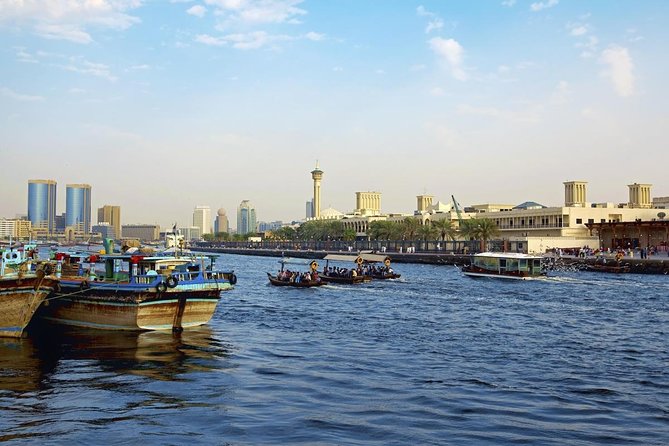
The meeting point is the Al Fahidi Marine Transport Station, beside Dubai Creek in Bur Dubai. The first stop is Souk Al Seef, a waterfront area mixing old-style architecture with shops, restaurants, and modern visitor facilities.
You spend about 15 minutes here. That is enough to get your bearings and see how Dubai presents its heritage beside the water, but not enough for a leisurely meal or serious shopping. Al Seef is more polished than the older market streets, so think of it as a bridge between the city’s past and its present.
The creek setting matters. Water, not highways, was once the practical center of Dubai’s trade. Starting here helps you understand the route ahead, which eventually crosses from Bur Dubai to Deira.
Walking the wind-tower lanes of Al Fahidi
Al Fahidi Historical Neighbourhood, also called Al Bastakiya, is the heart of the tour. Allow about 35 minutes, although the actual pace may vary with the group and guide.
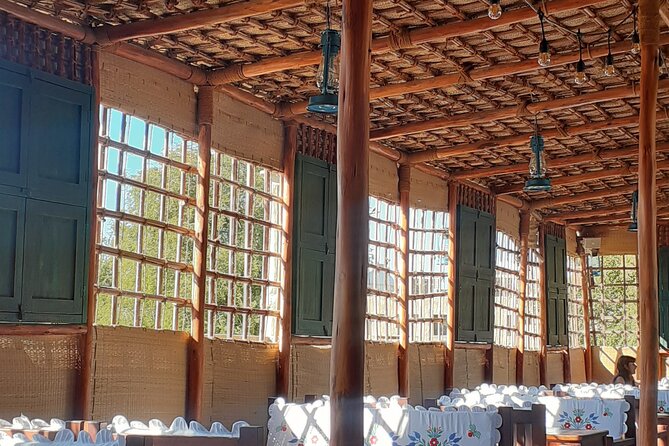
The district is known for narrow lanes, traditional wind towers, courtyards, and low-rise buildings. The wind towers were designed to catch air and help cool homes before modern air conditioning. You will also find galleries, museums, and cultural spaces in the old buildings.
This is where the best guides add real value. A guide can explain how the buildings worked, who lived in them, and how the neighborhood fits into Dubai’s development. Without that context, the area can look like a pleasant collection of restored walls. With good explanation, the lanes become a lesson in climate, family life, and commerce.
Several people have praised Hichem for combining humor with clear explanations. Mahmoud has also been singled out for making UAE history lively and accessible, including for families with teenagers. Abdullah has been praised for answering questions about daily life and culture. Your guide will vary, but the route works best when you ask questions instead of simply following the group.
Some parts of the walk take place inside air-conditioned buildings, which is helpful in Dubai’s heat. Still, this is not an indoor tour. Wear light clothing, bring sun protection, and keep water close.
A small stop with the Coins Museum
The Coins Museum is listed as a 10-minute stop in Al Fahidi. It displays more than 470 coins from important periods in Middle Eastern history, including links among the British Empire, India, and other parts of the region before independence.
That connection makes the museum more useful than a quick look at old currency. Coins show who traded with whom, which powers influenced the region, and how commerce moved through Dubai. It is a compact stop, so you should expect an introduction rather than a detailed numismatic lesson.
There is an important qualification. The information provided for this experience says the Coins Museum will open soon, so admission may not be available at every departure. Ask about current access if this stop matters to you.
More Food and Drink Trips in Dubai:
- Dubai: Old Town, Creek, Museums, Souks, & Street Food Tour
★ 4.8 · 10,816 reviews - Dubai: Old Town, Souks, Street Food, Guided Tour & Abra Ride
★ 4.9 · 7,170 reviews - Dubai: Old Town, Souks, Street Food, Guided Tour & Abra Ride
★ 5.0 · 1,664 reviews - Dubai: Old Town, Street Food, Creek, Souks, & Emirati House
★ 4.9 · 1,496 reviews
The Grand Bur Dubai Masjid and the Dubai Museum
The Grand Bur Dubai Masjid is another short pause, listed at about 15 minutes. Its 70-meter minaret, geometric patterns, Quranic inscriptions, and stained glass make it one of the area’s most noticeable religious buildings.
The mosque began in 1900 as a school for Quranic studies and was rebuilt in 1960 and again in 1998. That layered history helps explain why this is more than a quick exterior photo. Your guide can also place the mosque within the religious and community life of Bur Dubai.
Dress respectfully around the mosque and follow your guide’s instructions about where the group may go. The information supplied does not promise an interior visit, so do not assume that this stop means a full mosque tour.
The Dubai Museum is located in Al Fahidi Fort and is described as a major part of the route. Its displays cover Dubai before oil, with scenes of homes, mosques, souks, date farms, pearl diving, swords, jewelry, and a spice market with real smells.
The fort itself is historically important, and the museum’s old-style displays can help you picture a much smaller trading town. However, access appears to be subject to current opening conditions. Some people have arrived expecting a museum visit and found the site closed or received only an exterior explanation.
That uncertainty is the biggest weakness of the experience. The walking route remains worthwhile, but you should not pay for this tour mainly to see the Dubai Museum unless the operator confirms that it will be open on your date.
Browsing the Old Souk in Bur Dubai
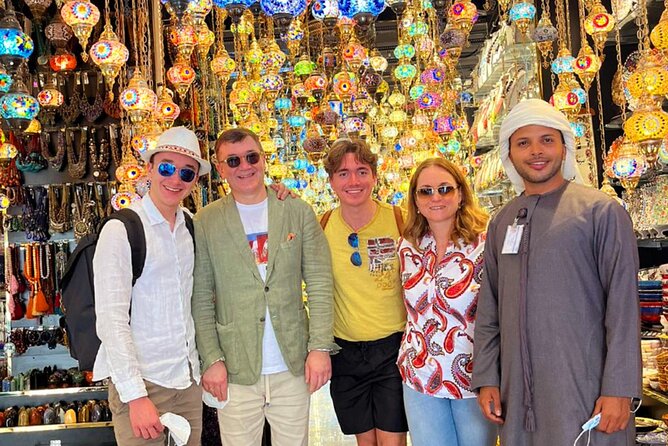
The Old Souk is a 25-minute stop, with stalls selling items such as silk, wool, cashmere, perfumes, spices, dried fruit, abayas, thawabs, scarves, and tailored clothing.
This is the point where the tour becomes more commercial. You can look at fabrics and traditional clothing, compare perfumes, and practice bargaining. The time is enough for a quick introduction, but it may feel short if you want to shop carefully.
Keep your expectations sensible. A guided market visit helps you understand what you are seeing, but it is not the same as spending an afternoon browsing independently. If you want to buy a scarf, garment, or spice selection, tell the guide early that you need a few minutes for shopping.
The tour includes a tasting of camel milk chocolate. The experience information also mentions snacks as an optional inclusion if you choose the relevant option when booking. Check the exact option you select, since the standard inclusions do not promise a full meal.
Crossing Dubai Creek by abra
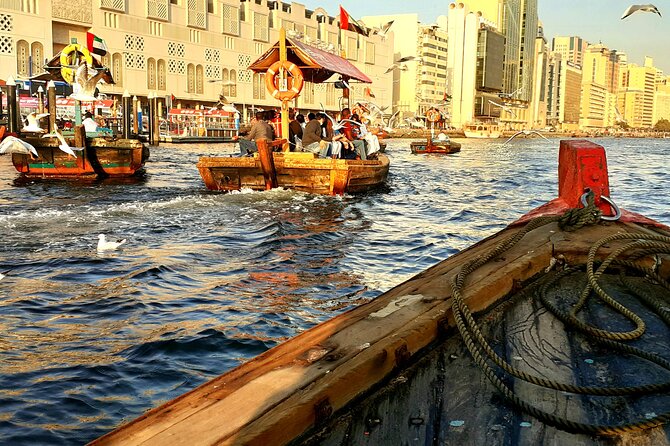
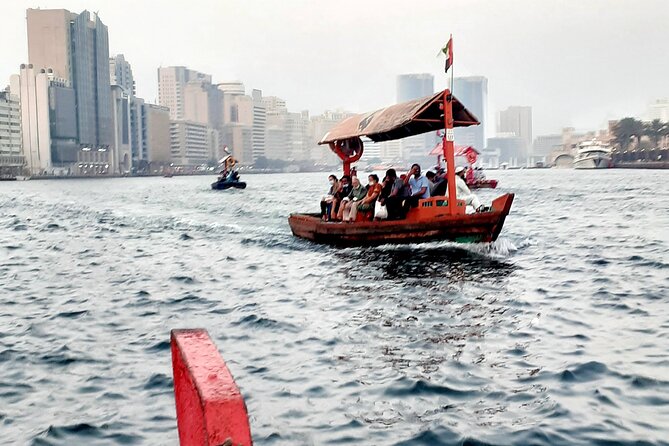
From Bur Dubai Abra Station, you board a traditional wooden abra. The boat ride itself is brief, listed at about five minutes, but it is one of the most satisfying parts of the route.
Dubai Creek is the reason this itinerary works so well. It divides Bur Dubai from Deira, yet it also connects them through a simple local crossing. From the boat, you see the waterfront from the same working waterway that carried goods and people long before Dubai became a global business center.
Do not expect a sightseeing cruise with a long commentary. The abra is public-style local transport, short and practical. That is precisely its appeal. You get a real sense of movement through the old city instead of traveling between attractions in a vehicle.
The boat may not have the shade or comfort of a tour vessel, so plan for sun and heat. Bottled water is included, which is useful, but bring extra water if you are sensitive to high temperatures.
Spices, perfumes, and shopping in Deira
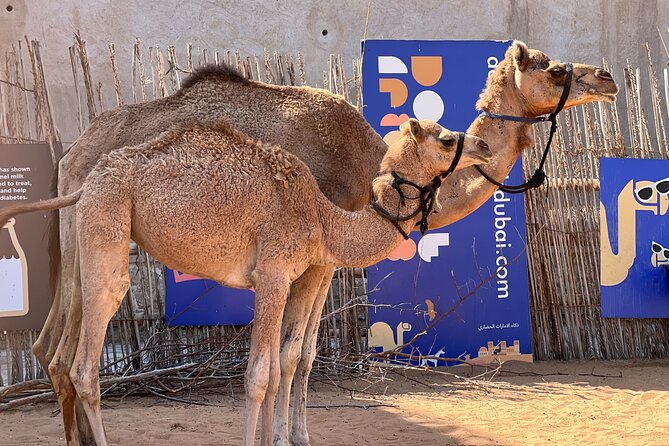
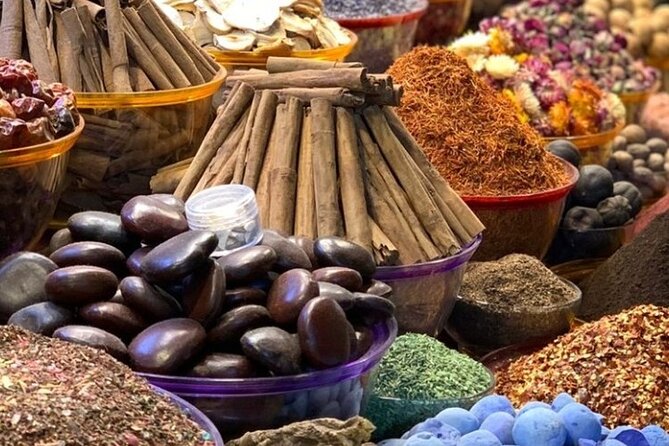
The Dubai Spice Souk is scheduled for about 25 minutes. Its stalls carry spices, herbs, dried fruit, nuts, traditional perfumes, and other goods from across the region.
This is a sensory stop. You might smell cardamom, saffron, dried roses, or incense before you see the display. Prices are not always fixed in the same way as in a department store, so ask clearly about cost, quantity, and packaging before buying.
A practical warning: market sellers can be persistent, and some people have felt pressured to visit particular shops or make purchases. You are not required to buy anything. If a sales stop feels too long, politely say you want to continue with the group.
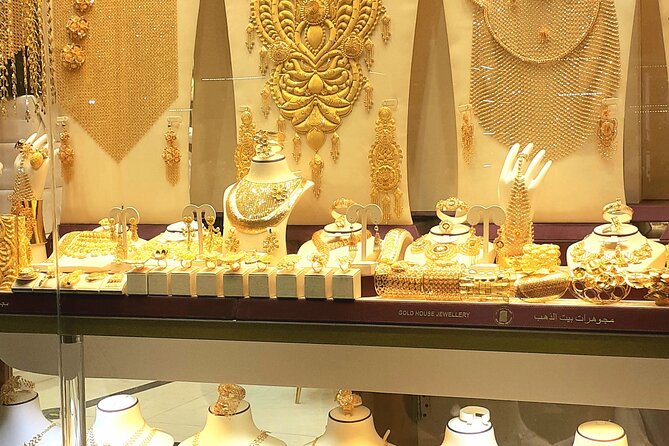
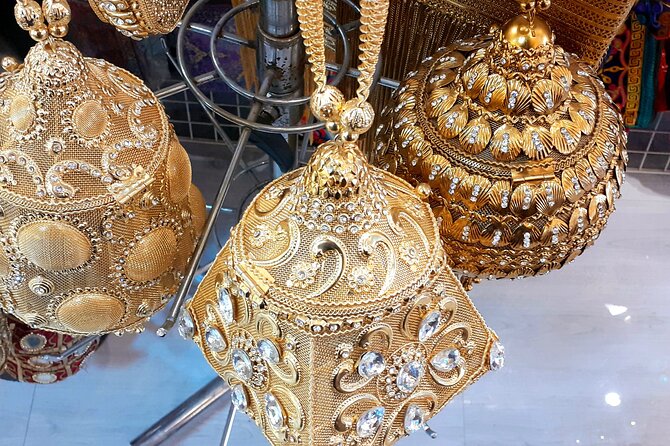
The Gold Souk comes last, with about 20 minutes scheduled. More than 350 retailers sell gold, diamonds, pearls, platinum, silver, and precious stones. The sheer amount of jewelry is striking, even if you have no intention of buying.
The market is best treated as a cultural and visual stop unless you have a specific purchase in mind. If you do shop, compare several stores and ask about the workmanship and the separate gold price before agreeing. The tour ends here, in Deira’s Al Ras area, near a taxi stop and metro station.
What $22.33 buys you
At $22.33 per person, this is a reasonable price for a short orientation tour. You receive a personal guide, bottled water, the abra crossing, the camel milk chocolate tasting, and guided visits around Old Dubai, the souks, and the creek.
The value is strongest when your guide is engaging. A good guide can connect a wind tower to desert climate, a coin to regional trade, and an abra crossing to Dubai’s growth. That kind of explanation is difficult to reproduce by simply walking around with a map.
The price is less compelling if you mainly want to shop or visit the museums. You can walk around the neighborhoods independently, use the abra at very low cost, and explore the markets at your own pace. The tour earns its price through structure and interpretation, not through expensive admission tickets.
The group limit of 10 is a real advantage. You can usually hear the guide more easily than in a large coach group, and it is simpler to ask questions. On the other hand, a small group does not remove the heat, the walking, or the possibility of a rushed schedule.
Timing, comfort, and practical details
The tour lasts approximately two to four hours. That wide range suggests that pace, crowd levels, museum access, and shopping time can affect the total length.
The route begins at Al Fahidi Marine Transport Station and ends at Dubai Gold Souk. There is no drop-off service, but the final location has a taxi stand and metro access. This makes the finish convenient if you plan to continue around Deira or return to your hotel.
Wear comfortable shoes. You will walk through lanes, streets, souks, and waterfront areas, with some time standing. The heat can be intense, especially when the group pauses outdoors, so choose a cooler part of the day if departure times allow.
Confirmation is provided at booking, and mobile tickets are supported. The experience requires good weather. You can cancel for a full refund up to 24 hours before the start time, while cancellations or changes inside that period are not accepted. The operator can offer another date or a full refund if poor weather forces cancellation.
Who should book this Old Dubai walk
I would choose this tour for a first visit to Dubai, especially if you want cultural context but have only a few hours. It suits families, couples, and solo visitors who prefer a guide to connect the sights and handle the route across the creek.
It is also a good fit if you enjoy markets but do not want to plan the Bur Dubai to Deira route yourself. The combination of Al Fahidi, the mosque, Old Souk, abra, Spice Souk, and Gold Souk gives you a broad first impression.
I would hesitate if your priority is a guaranteed museum admission, a slow shopping session, or a fully indoor activity. I would also ask about the guide’s language and the current museum opening status before paying.
Should you book it?
Book it if you want an affordable, compact introduction to the older side of Dubai and value a guide who can explain culture, religion, trade, and architecture. The strongest departures have been led by guides such as Hichem and Mahmoud, whose humor and clear storytelling help the short route feel substantial.
Skip it if you prefer complete independence, dislike market selling, or want to spend serious time bargaining. For most first-time visitors, though, the small group, included abra ride, tasting, and convenient finish at the Gold Souk make this a sensible way to begin exploring Old Dubai. Just treat the museums as a possible bonus, not the central promise.
FAQ
How long does the Old Dubai tour last?
The experience lasts approximately two to four hours, depending on the pace of the group and conditions at the stops.
Where does the tour start?
It starts at Al Fahidi Marine Transport Station, beside Dubai Creek in Bur Dubai, near the information and ticket office.
Where does the tour end?
The tour ends at Dubai Gold Souk in Deira’s Al Ras area. A taxi stop and metro station are nearby.
Is the abra ride included?
Yes. The traditional abra boat ride across Dubai Creek is included in the tour price.
Are museum admissions included?
Admission to the Coins Museum is listed as included, but the information also says it will open soon. The Dubai Museum is part of the planned route, though current access may vary, so confirm opening status before booking.
Is food included?
Bottled water and a camel milk chocolate tasting are included. Snacks are included only if you select the option that provides them.
How large is the group?
The tour has a maximum of 10 participants.
Just added around Dubai
- Walking Tour in Dubai. Souks, museums, Local Food Testing★ 5.0 · 11 reviews
- Old Dubai Heritage Tour: Souks, Mosques & more hidden gems!★ 4.3 · 72 reviews
- Old Dubai Guided Tour With Photographer: Souks & Street Food★ 4.9 · 74 reviews
- Dubai Tour: Haritage Walking Guide, Gold & Spice Souq, Creek★ 4.5 · 11 reviews
- Dubai: Discover Dubai Old Town, Souks, Museum & Street Food★ 4.9 · 25 reviews
- Dubai:Private Frame Entry, Mosque, Souks, Tastings& transfer★ 4.8 · 9 reviews
- Dubai: Guided City Walking Tour to Spice and Gold Souk★ 5.0 · 3 reviews
- Dubai Food Tour: 4 Cuisines, Souks & Street Bites★ 3.0 · 3 reviews
Local & Farmers Market Tours, compared.
Hanoi Cooking Class: Culture, Local Market & Meaning CSR Impact
Read our review →
Cooking Class and Lunch at a Tuscan Farmhouse with Local Market Tour from Florence
Read our review →

Cooking Class Hoi An:Local Market, Basket Boat, Fishing & Cooking
Read our review →
Hoi An Cooking Class(Local market,Basket Boat,Fishing & Cooking)
Read our review →

Paella Cooking Class, Wine Tasting & Central Market in Valencia
Read our review →
Seattle: Pike Place Market Chef-Guided Food Tour
Read our review →Browse the lists this tour appears in