
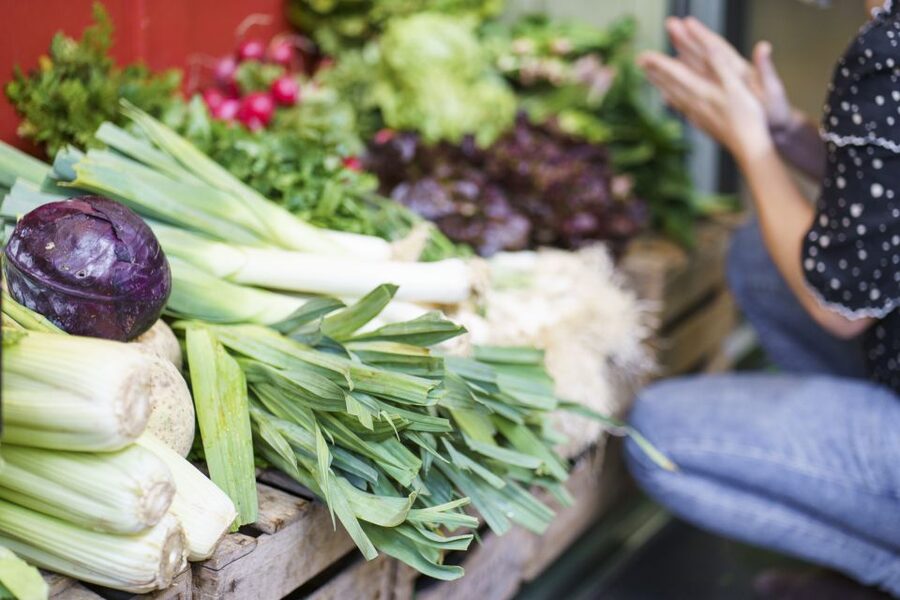
Review · MARKET AND COOKING CLASS TOURS
Mallorca: Market Visit and Traditional Cooking Workshop
Mallorca’s food culture makes the most sense when you see the ingredients first. This four-hour experience begins at Mercat de L’Olivar, then moves to Forn de sa Llotgeta, an 18th-century bakery where Deborah leads you through a seasonal Mallorcan meal.
I like the small groups, capped at eight, and the way the menu follows the island’s food calendar rather than forcing the same dishes all year. I also like that you leave with recipes and the ingredients used in the class. The main caution is price: at $171 per person, this is a serious food splurge, and the market tastings may be modest.
Key points at a glance
- Mercat de L’Olivar first: Meet by the statue El darrer vestit a l’ampla, then explore Palma’s central food market with a guide.
- A real cooking session: Prepare a starter, main course, dessert, and aperitif instead of simply watching a demonstration.
- Seasonal Mallorcan menu: Dishes can include flatbread with greens and raisins, artichoke and sobrasada rice, and gató almond cake.
- Historic bakery setting: Cook and eat at Forn de sa Llotgeta, an emblematic bakery dating from the 18th century.
- Small-group format: Open groups hold no more than eight people, with private options for two to fifteen.
- Useful take-home value: Ingredients, recipes, and workshop materials are included, so you can repeat the dishes at home.
Starting with Palma’s Olivar Market
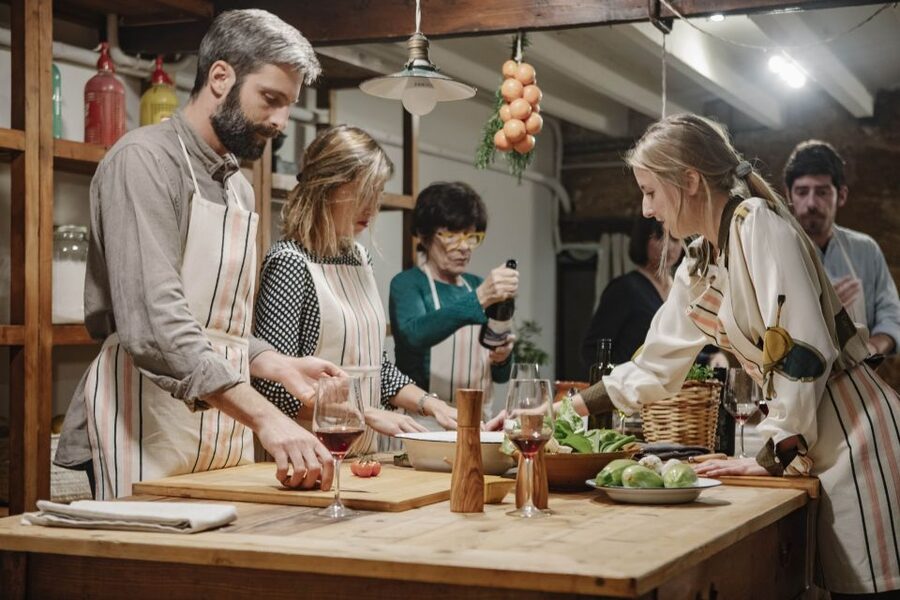
The meeting point is easy to identify: in front of the statue El darrer vestit a l’ampla, outside Mercat de L’Olivar on the BBVA side of the building. From there, the first hour is devoted to the market and to choosing ingredients for the cooking session.
Mercat de L’Olivar is described as Palma’s largest typical market, and the route takes you through fruit, fish, and other food stalls. That order matters. You do not begin with a recipe detached from its setting. You first see the produce, hear about local products, and get a feel for how Mallorcan cooking is tied to the time of year.
I like this approach because it gives the meal a reason. Artichokes, greens, almonds, grapes, fish, cured meats, and other ingredients are not just items on a shopping list. They reflect the island’s farming traditions, coastal food culture, and practical use of what is available.
The market visit includes tastings of local delicacies, such as ham. Evening sessions include an aperitif of one vermut and a banderilla. Keep your expectations measured here. One account found the market walk interesting but felt that a single slice of ham was a little light for the price. The value of this hour is mainly the explanation, the atmosphere, and the chance to source ingredients, not a large tasting lunch.
More Market and Cooking Class Tours in Spain
- Barcelona: Paella Cooking Experience & Boqueria Market Tour
★ 4.8 · 3,661 reviews - Barcelona Paella Cooking Class with Market Visit, Tapas & Sangria
★ 5.0 · 2,531 reviews - Paella Cooking Class, Wine Tasting & Central Market in Valencia
★ 5.0 · 1,150 reviews
Meeting the people behind Mallorca’s food
The workshop is built around traditional family recipes and the island’s food calendar. That gives Deborah, the instructor, room to explain not only how to prepare a dish but also why it belongs in Mallorcan cooking.
This cultural context was one of the strongest parts for me. The class connects food with seasonality, local farming, restraint, and respect for nature. Those ideas can sound abstract in a brochure, but they become practical when you are working with a short list of ingredients and preparing a meal that suits the season.
Past participants found Deborah especially effective at explaining the island’s food traditions and history. One described the class as a useful introduction to Mallorcan cooking, with a group of only seven people. Another appreciated learning about life on Mallorca before mass tourism changed the island.
The language options are English and Spanish. If you want plenty of time for questions, the small group helps. You are not one face in a large cooking demonstration. The open sessions are limited to eight people, which should make it easier to take part in the preparation and speak directly with the instructor.
Cooking at Forn de sa Llotgeta
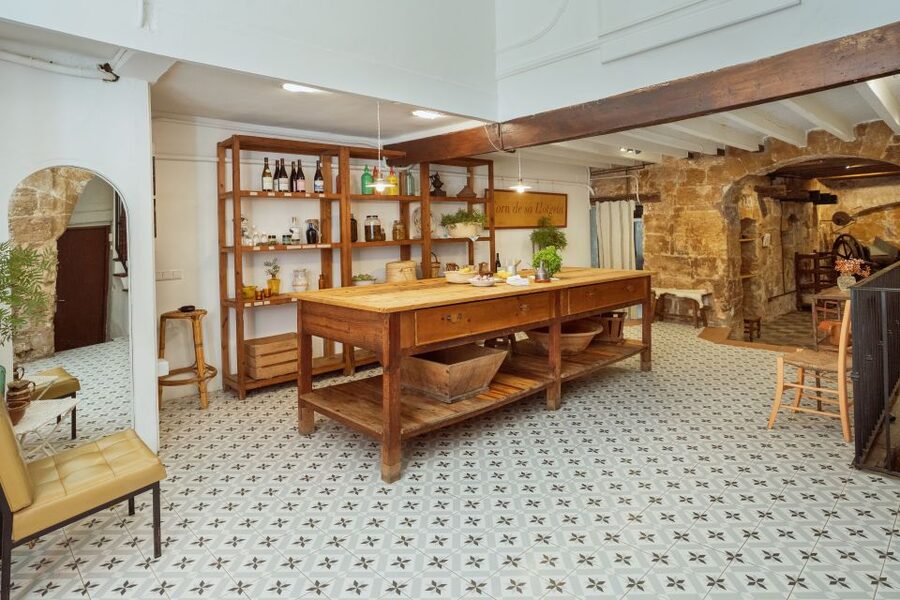
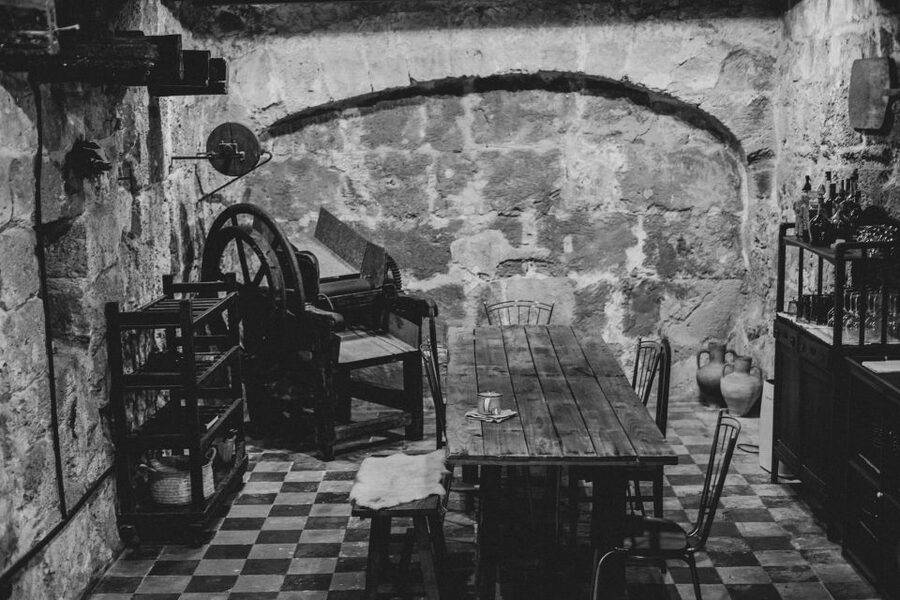
After the market, you travel to the atelier at Forn de sa Llotgeta. The bakery dates from the 18th century and is part of the experience’s appeal. You are cooking in a place tied to Mallorca’s food traditions, rather than in a generic modern classroom.
The setting has been described as a comfortable, attractive studio suited to preparing, cooking, and eating. That sequence is important. You do not cook and then leave. The finished dishes form your meal, with an aperitif, a starter, a main course, dessert, and local wine.
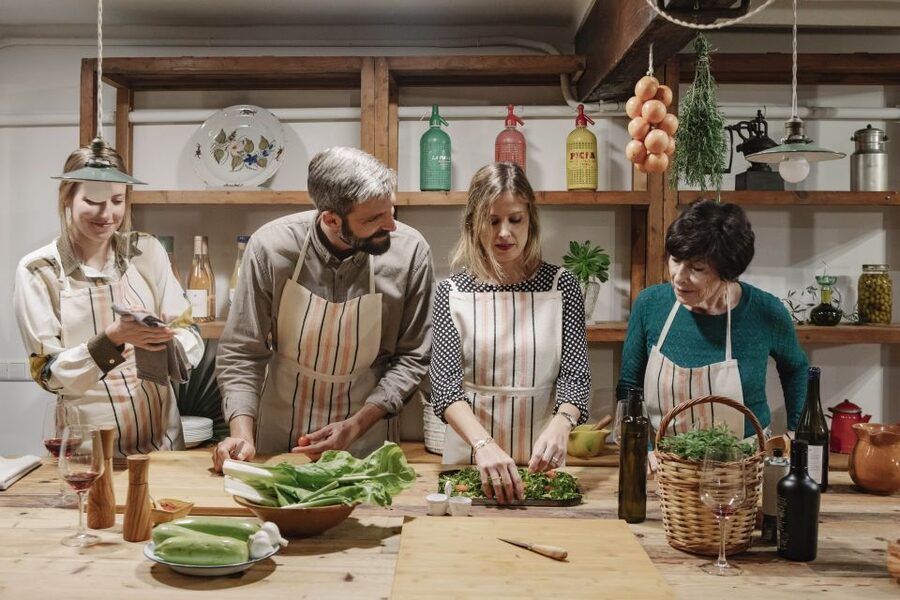
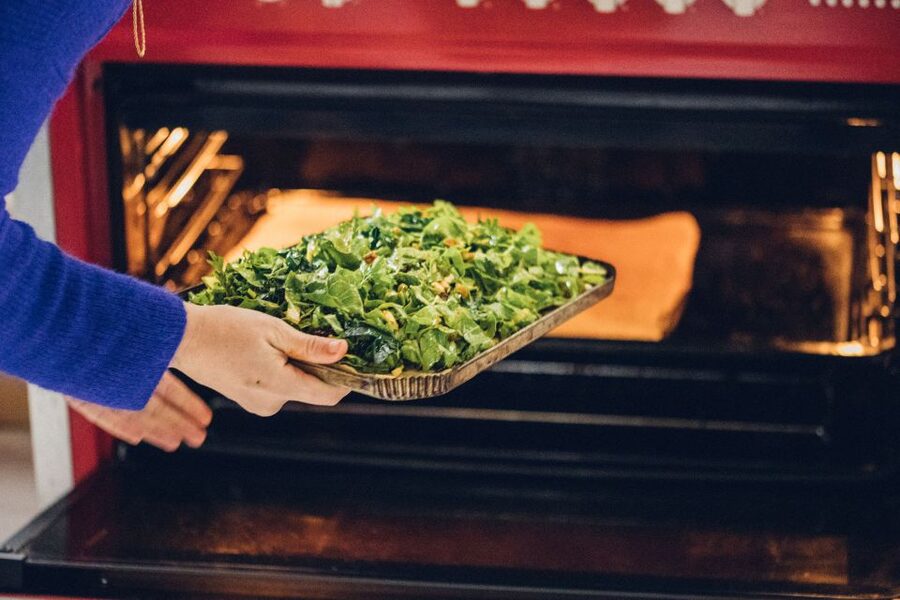
The class is hands-on. You help prepare the menu, use the ingredients purchased through the market visit, and learn techniques linked to older Mallorcan cooking methods. The aim is not chef-level training. It is a practical introduction to the foods and habits that shape the island’s home cooking.
You should expect shared participation rather than a private lesson with one instructor focused only on you. Still, a group of eight is small enough to keep the session personal. Private courses are available for two to fifteen people, subject to availability, and private groups can request vegetarian or vegan adaptations.
What you may cook during the four-hour session
The sample menu gives a good idea of the meal’s character:
- Local cold meats and artisan cheeses with grapes and almonds
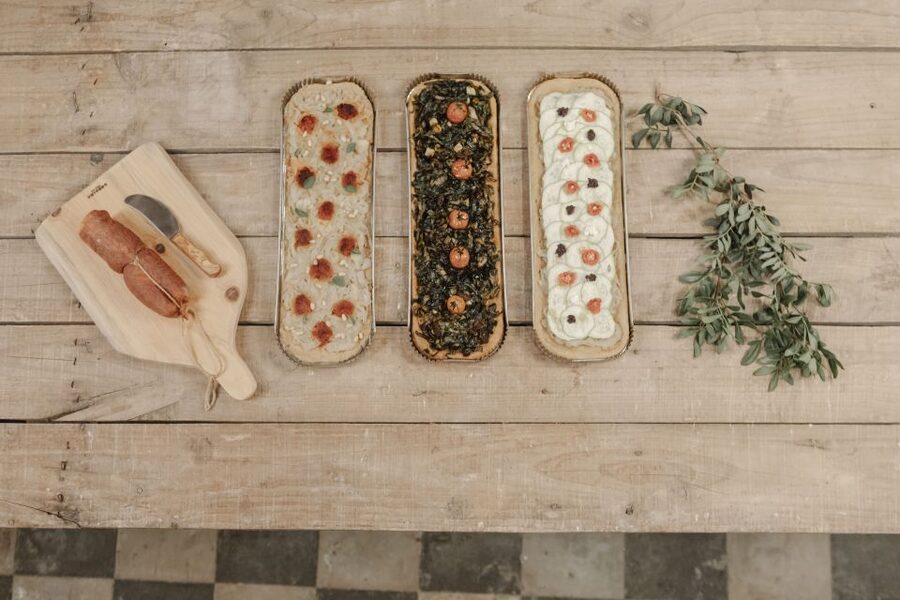
- Mallorcan flatbread with greens and raisins
- Artichoke and sobrasada meloso rice cooked in a clay pot called a greixonera
- Gató, a Mallorcan almond cake, served with almond ice cream
This is a generous four-course menu, and it shows the balance of the island’s cooking. You get preserved meats and cheese, sweet fruit and nuts, greens, rice, a traditional clay vessel, and a dessert built around almonds.
The rice is likely to be the central cooking project. Meloso rice is softer and more yielding than a dry rice dish, and the use of a greixonera brings a clear local touch. Artichokes add a seasonal vegetable, while sobrasada brings the paprika-rich pork sausage that is closely linked to Mallorca.
Animal protein is important to traditional Mallorcan food culture, and the sample menu reflects that with cold meats and sobrasada. If you eat vegetarian or vegan, do not assume the standard open class can be changed. The supplied details say adaptations are easy for private groups, so contact the provider before booking if this is essential.
The gató is another strong reason to take interest in the menu. This almond cake is a familiar Mallorcan dessert, and pairing it with almond ice cream keeps the focus on a product central to the island’s cooking.
Same place, a different set of stalls:
- Valencian paella cooking class, tapas and visit to Ruzafa market.
★ 5.0 · 828 reviews - Spanish Cooking Class & Triana Market Tour in Sevilla
★ 5.0 · 760 reviews - Seville: 3.5-Hour Spanish Cooking Class & Triana Market Tour
★ 4.9 · 751 reviews - Valencia: Paella Cooking Class with Central Market Tour
★ 5.0 · 721 reviews
Local products, organic wine, and what is included
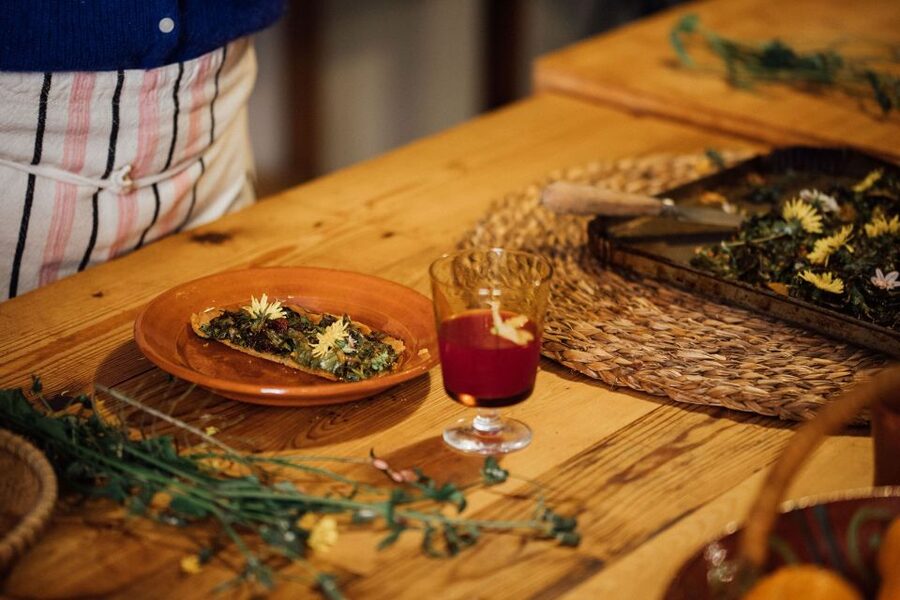
The ingredients are locally and sustainably sourced through small producers and farmers. That does not mean every part of the experience is a farm visit. It means the cooking class is linked to local food production, and the recipes are built around ingredients that belong to Mallorca.
You receive the ingredients and materials needed for the session, along with the recipes. That is useful value. A cooking class is more worthwhile when you can make the food again, rather than leaving with only a pleasant memory and a full stomach.
Lunch includes the four-course menu prepared during the workshop. Two wine glasses per person are included, with organic wines selected to go with the meal. Additional wine costs extra, so the included amount is best understood as a pairing rather than an open bar.
Market shopping for personal gifts is not included. Hotel pickup and drop-off are not included either. I would plan to arrive at the meeting point independently and allow a little extra time to find the statue and the correct side of the market.
Is $171 a fair price?
At $171 per person, this is not a bargain cooking class. You are paying for four hours, a guided market visit, tastings, all cooking ingredients and materials, recipes, a four-course lunch, local wine, and a small group.
The price makes more sense if you value the cultural side as much as the food. You are not simply paying for a meal. You are paying for explanations of Mallorca’s food traditions, a market visit with ingredient sourcing, hands-on preparation, and time with an instructor who can also point you toward restaurants and museums.
One particularly useful detail is the local advice Deborah has given after class, including suggestions for less obvious places to visit. That can add value early in your stay, since you may use the advice for the rest of your time in Palma.
Still, you should know where the limits are. Market tasting portions may be small, and only two wine glasses per person are included. If your main goal is to eat as much as possible, a restaurant meal will be cheaper. If your goal is to understand what you are eating and learn how to prepare it, the price is easier to justify.
When the season changes the experience
The menu changes with seasonal produce. That is one of the best features of the class, but it also means you should not book expecting the exact sample menu.
A winter session may feature different produce from a summer class. One February class included winter cooking and left the door open for returning in another season. This makes the experience more useful for repeat visits, since the dishes can change with the island’s food calendar.
Seasonal cooking also keeps the class tied to Mallorca rather than turning it into a fixed tourist performance. You may get a stronger sense of local life when the ingredients reflect what farmers and cooks are using at that time of year.
If you have your heart set on artichoke and sobrasada rice, ask what menu is planned for your date. The provider presents the listed dishes as a sample menu, not a promise that every session will serve exactly the same meal.
Who will enjoy this experience most?
I would recommend this workshop to you if you enjoy food with a story and prefer participating to watching. It suits couples, friends, and solo visitors who are comfortable cooking with a small group.
It is also a good fit early in a Mallorca trip. The market gives you a useful introduction to Palma, and Deborah’s recommendations for restaurants and museums may help shape the days that follow.
The class is less suitable if you have severe food allergies or very specific dietary restrictions unless you contact the provider before booking. The same warning applies to strict vegetarian and vegan diets. Private groups can be adapted more easily, but the standard experience centers on traditional recipes that may include animal products.
The age guidance needs attention. The activity information says it is not suitable for children under 12. Elsewhere, private groups are described as welcoming children under 10, with the course not recommended for that age in general. If you are booking for children, confirm the current rule directly before paying.
Timing, group size, and practical details
The experience lasts four hours: one hour at the market and three hours in the workshop. That is enough time for a proper meal, but it is still a half-day activity rather than a full-day food tour.
The guide speaks English and Spanish. Open groups hold up to eight people. Private bookings can be arranged for two to fifteen people, subject to availability.
There is no hotel transportation, so you need to make your own way to Mercat de L’Olivar. The meeting point is central Palma, and the exact starting time varies. Check availability for the date you want.
You can cancel up to 24 hours in advance for a full refund, and the reserve-now, pay-later option lets you hold a place without paying immediately. Those terms are useful if your Mallorca plans are still shifting.
Should you book this Mallorcan cooking class?
Book it if you want a personal introduction to Mallorca through its markets, recipes, and seasonal ingredients. The strongest features are the small group, the historic bakery setting, Deborah’s clear teaching, and the chance to eat what you prepare.
I would skip it if you want a cheap tasting tour, a large meal with many samples, or a class built around a fixed menu. The $171 price asks you to value instruction and cultural context, not just food.
For most food-focused visitors, I think the experience earns serious consideration, especially at the start of a Palma stay. Just confirm the menu and dietary arrangements in advance, and remember that the market tastings are a small part of a much larger cooking session.
FAQ
Where does the experience begin?
You meet in front of the statue El darrer vestit a l’ampla, outside Mercat de L’Olivar on the side next to the BBVA bank.
How long does the experience last?
The total duration is four hours. One hour is spent at the market, followed by three hours in the cooking workshop.
What language is the workshop offered in?
The instructor offers the experience in English and Spanish.
How large are the groups?
Open groups are limited to eight participants. Private courses can be arranged for two to fifteen people, subject to availability.
What food is included?
The experience includes a four-course lunch prepared during the workshop, with an aperitif, starter, main course, dessert, and local wine. Two wine glasses per person are included.
Is the market visit included?
Yes. The one-hour market visit includes a guided walk through Mercat de L’Olivar and tastings of local delicacies, such as ham. Evening sessions include one vermut and a banderilla as an aperitif.
Can vegetarian or vegan meals be arranged?
Vegetarian and vegan versions can be arranged for private groups. If you have dietary restrictions or severe allergies, contact the provider before booking.
Are transportation and extra wine included?
Hotel pickup and drop-off are not included. Additional wine and personal gift shopping at the market also cost extra.
Just added around Spain
- Explore Bilbao’s Flavors Mercado de la Ribera and Old Town★ 4.5 · 3 reviews
- CERTAL Exclusive Tour: LA RIBERA Market + GASTROBARS Bilbao (3h)★ 4.5 · 12 reviews
- Spanish Oysters, Cava and Ibérico Ham at Barcelona’s La Boqueria Market★ 5.0 · 8 reviews
- Taste of Barcelona: Boqueria Market, Tapas & History Tour★ 4.5 · 22 reviews
- Private Barcelona Market Tour & Paella Cooking Class with Josh★ 5.0 · 4 reviews
- Barcelona La Boqueria & Sant Antoni Private Food Experience★ 5.0 · 7 reviews
- Cook Paella & Tapas + Market Tour in Barcelona (4-Course Meal)★ 5.0 · 2 reviews
- Market Gourmet Visit and Spanish Culinary Experience in Barcelona★ 5.0 · 34 reviews
Market and Cooking Class Tours, compared.
Hanoi Cooking Class: Culture, Local Market & Meaning CSR Impact
Read our review →
5 Traditional Dishes Hanoi Cooking Class with Market Trip
Read our review →
Cooking Class and Lunch at a Tuscan Farmhouse with Local Market Tour from Florence
Read our review →
Cooking Class, Market & Thai Herbs Garden Tour
Read our review →
Authentic Cooking Class with Market & Farm Visit
Read our review →
Paella Cooking Experience & Boqueria Market Tour
Read our review →
Cooking Class Hoi An:Local Market, Basket Boat, Fishing & Cooking
Read our review →
Hoi An Cooking Class(Market,BasketBoat Crabfishing&Cooking Class)
Read our review →Browse the lists this tour appears in