
Review · MARKET AND COOKING CLASS TOURS
Madrid: Paella & Tapas Cooking Class and Market Visit
Madrid’s best food lessons begin before the stove is turned on. This 3.5-hour paella and tapas class starts in a traditional market, where you learn how Spanish cooks choose the ingredients that later land on your plate. Then you head to a private kitchen in the Huertas neighborhood to make paella Valenciana, croquetas, patatas bravas, a Basque tapa, and dessert.
I like the market visit because it gives the meal a proper setting, not just a list of recipes. I also like the friendly, hands-on format, with a small group of 12 or fewer and plenty of time to cook, eat, and ask questions. The main drawback is that the class is not suitable for vegans, people with lactose intolerance, or those with gluten intolerance, and the kitchen is not accessible for wheelchairs or strollers.
Key points at a glance
- A market comes first: Start near one of Madrid’s historic food markets and choose fresh ingredients with your guide.
- More than paella: Prepare three tapas, including croquetas and patatas bravas, then finish with seasonal fruit or another traditional dessert.
- A proper Spanish aperitif: Taste sweet vermouth and learn how locals enjoy it before lunch.
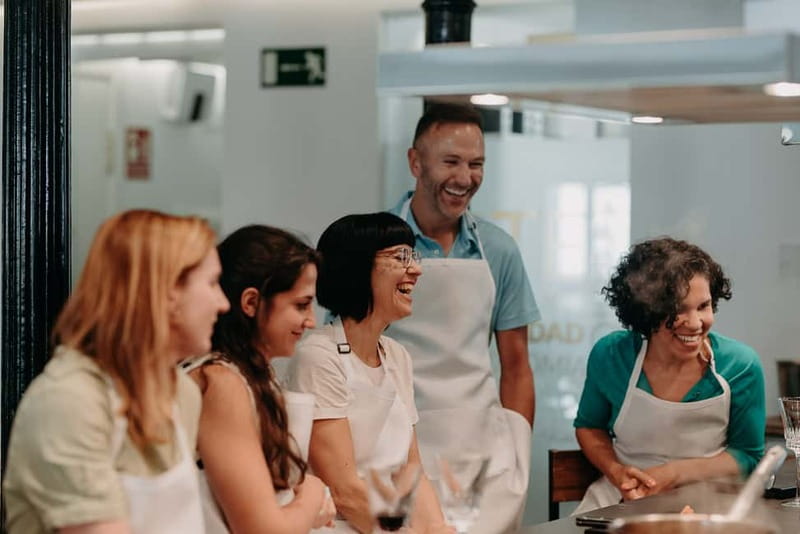
- Small-group cooking: Work in a private kitchen with no more than 12 people, or choose a private option if available.
- Several respected chef-guides: Sessions may be led by chefs such as Dan, Danny, Benny, Arantxa, or Daniel.
- A full meal is included: Eat the dishes you prepare, with beer or wine, after the cooking is done.
Starting at a Madrid market
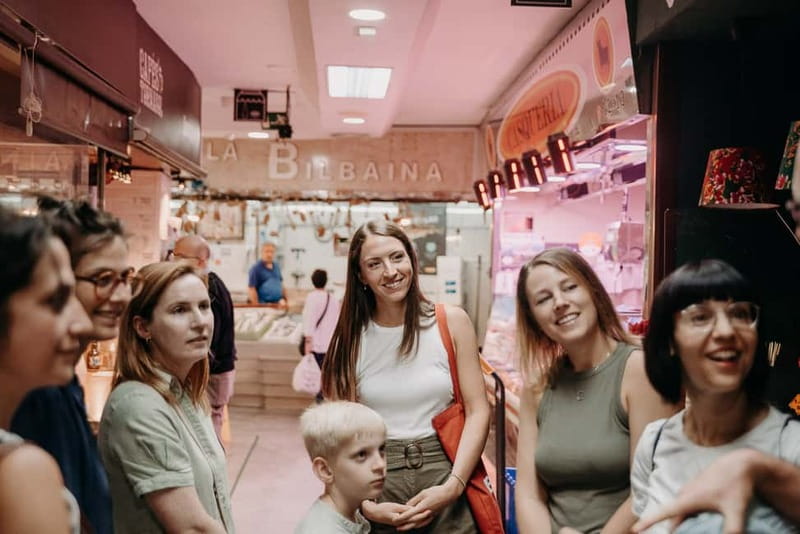
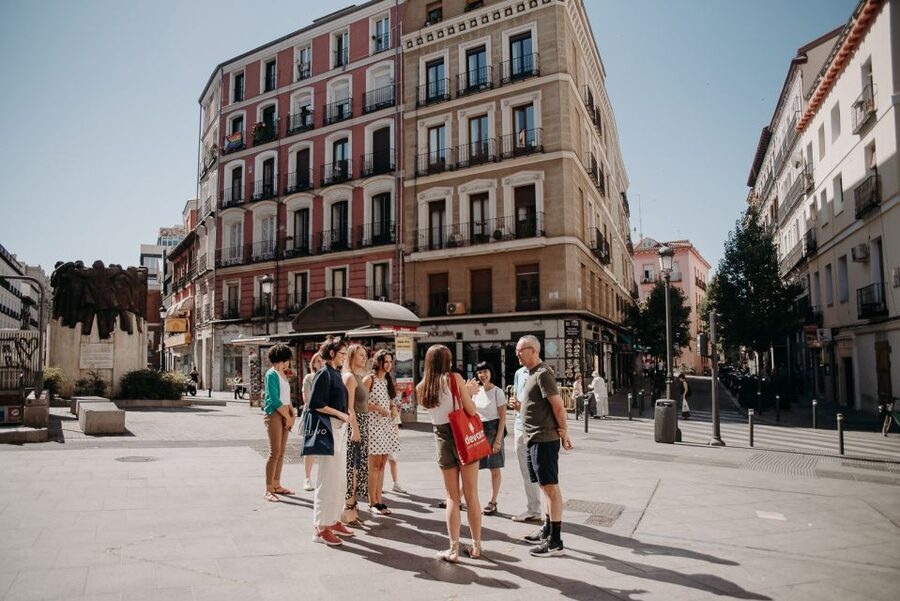
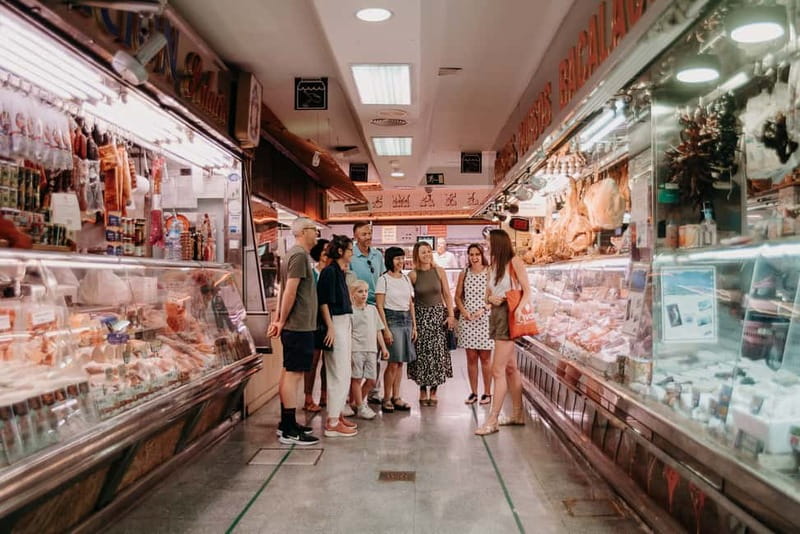
Your meeting point depends on the option you book, so check the exact location before setting out. The class begins near one of Madrid’s historic markets, where neighborhood residents have shopped for more than a century.
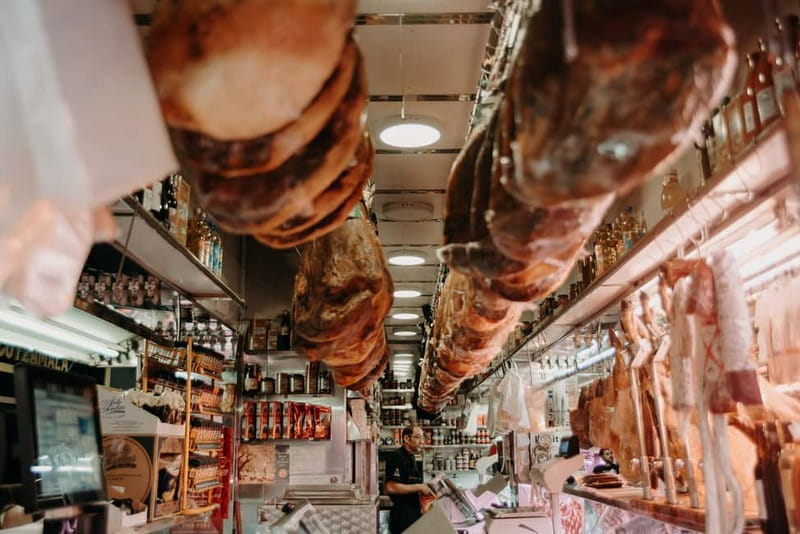
This opening walk is short but useful. Instead of treating Spanish food as a collection of famous dishes, your guide introduces the raw materials behind it. You see the sort of produce, cheese, cured foods, and other ingredients that shape everyday cooking in Madrid.
I like this part because it helps you read the meal ahead. When you later handle the ingredients in the kitchen, you already have some idea of where they came from and why they were selected. You also pick up fresh items to use during the class, so the market is part of the cooking rather than a separate sightseeing stop.
Your English-speaking guide explains Spanish food traditions and can help you speak with vendors. Do not expect a long market lecture. The value is in the practical connection between the stalls and the meal waiting later.
More Market and Cooking Class Tours in Spain
- Barcelona: Paella Cooking Experience & Boqueria Market Tour
★ 4.8 · 3,661 reviews - Barcelona Paella Cooking Class with Market Visit, Tapas & Sangria
★ 5.0 · 2,531 reviews - Paella Cooking Class, Wine Tasting & Central Market in Valencia
★ 5.0 · 1,150 reviews
Vermouth, cheese, and the first tapa
Back in the cooking space, the class begins with a traditional aperitivo. You taste sweet Spanish vermouth, a drink often enjoyed before lunch, and learn how it fits into local food culture.
You also assemble a cheese plate and a traditional tapa from the Basque region. This gives you something to eat while the main preparation begins, and it introduces a slower Spanish approach to lunch. Food is not treated as fuel here. It is part of the social occasion.
The private kitchen is located behind one of the restaurants in Madrid’s Huertas neighborhood. It is set aside for the small group, which makes the class feel more like a shared kitchen gathering than a demonstration in a large studio.
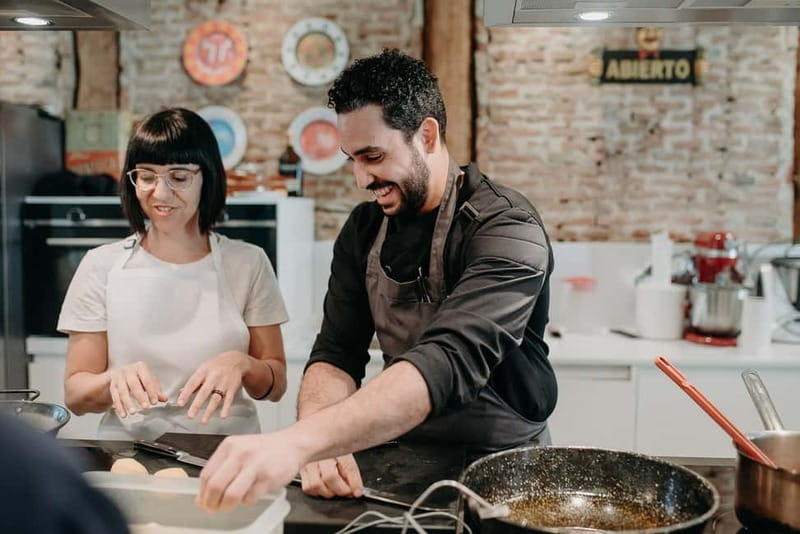
That format matters. You are not simply watching a chef stir a pan from across the room. You work alongside the chef and the other people in the group. The exact amount of work you do can depend on the group and the pace of the session, but the experience is designed around participation.
Making croquetas and patatas bravas
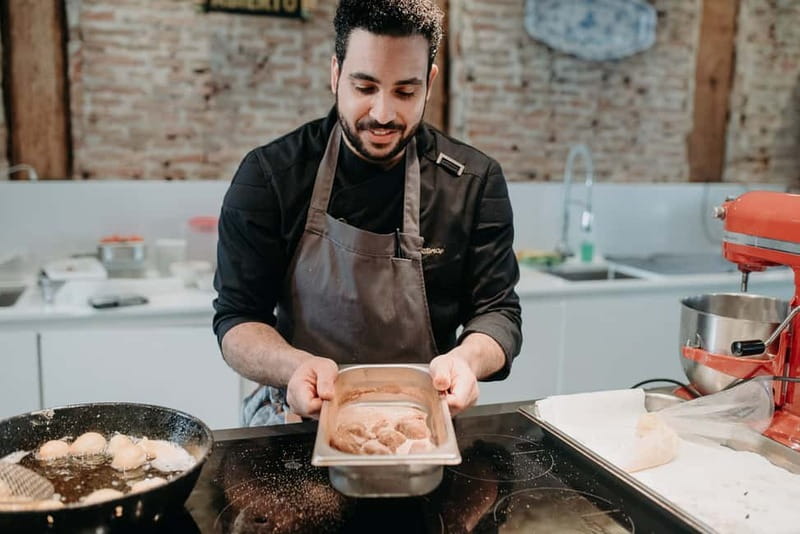
The class moves through several familiar Spanish dishes before paella takes over. You prepare homemade croquetas and patatas bravas with two homemade sauces.
Croquetas are a useful lesson because their appeal depends on texture. The outside should be crisp, while the center stays soft and creamy. You learn the steps behind that contrast rather than simply ordering the finished dish in a bar.
Patatas bravas are simpler in appearance but equally important to Spanish tapas culture. Potatoes, frying, and sauce all need to work together. Preparing two sauces gives the dish more interest and shows how a small change in seasoning can alter the result.
The group cooks these dishes together, so this is not the kind of class where every person creates a completely separate meal. That shared work can be a plus if you enjoy conversation and teamwork. If you want a quiet, highly technical lesson with one-on-one instruction, a private booking is likely the better choice.
Past sessions have been led by chefs and hosts named Dan, Danny, Benny, Daniel, and Arantxa. The individual personality of your guide will shape the class. The strongest accounts of the experience point to chefs who combine cooking instruction with stories about Spanish traditions and an easy sense of humor.
The main event, paella Valenciana
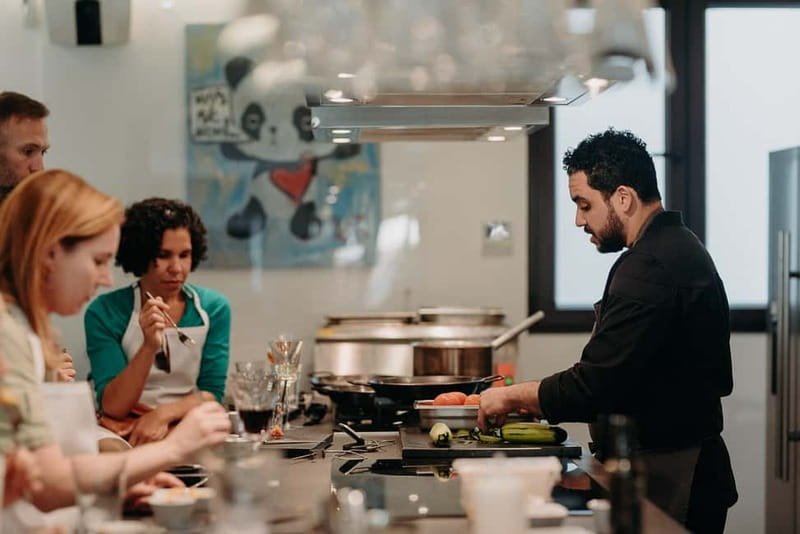
Paella is the reason many people book this class, but the lesson aims to explain more than the basic method. Your guide discusses the dish’s Valencian roots and helps you understand what makes a true paella Valenciana different from a casual rice dish cooked in a wide pan.
You work with the ingredients, watch how the rice absorbs the cooking liquid, and follow the process from preparation to serving. Along the way, the guide explains the smells, textures, and cooking stages that matter.
The class does not promise a single fixed ingredient list for every date. The menu uses fresh market ingredients and may adapt to seasonal availability. That is a strength from a food perspective, though it means you should not expect every session to match a photographed menu exactly.
I like the paella lesson because it gives you a recipe you can attempt at home without pretending that one afternoon turns you into a Valencian chef. The guide can explain the principles, but your home stove, pan, and ingredients may produce a different result. Take notes, ask questions, and pay attention to the details your chef emphasizes.
The class also gives you a chance to separate authentic technique from restaurant shortcuts. You learn about the history of paella, how to recognize paella Valenciana, and why the ingredients and cooking method matter.
Same place, a different set of stalls:
- Valencian paella cooking class, tapas and visit to Ruzafa market.
★ 5.0 · 828 reviews - Spanish Cooking Class & Triana Market Tour in Sevilla
★ 5.0 · 760 reviews - Seville: 3.5-Hour Spanish Cooking Class & Triana Market Tour
★ 4.9 · 751 reviews - Valencia: Paella Cooking Class with Central Market Tour
★ 5.0 · 721 reviews
Eating the meal you helped prepare
After the cooking, you sit down for lunch. The meal includes the dishes prepared during class, including the paella and tapas, along with seasonal fruit from the market for dessert.
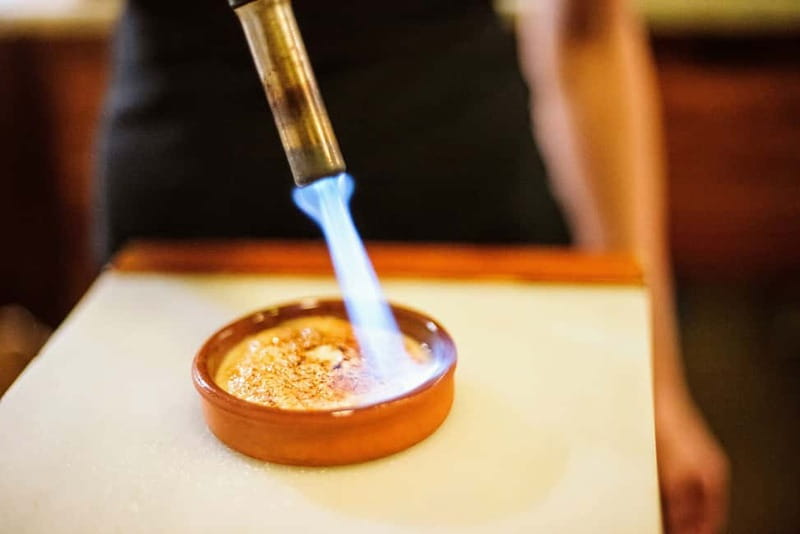
Some sessions have also featured desserts such as crema catalana, while the stated menu describes seasonal fruit. The exact dessert can therefore vary. It is best to think of dessert as the final market-based course rather than count on one particular sweet.
Beer or wine is included with lunch. Non-alcoholic choices can be arranged, and the class can adapt for pregnant participants, pescatarians, vegetarians, and people following a gluten-free diet who do not have celiac disease.
The meal is one of the experience’s practical advantages. At $112 per person, you are not paying only for a cooking demonstration. The price covers the market visit, fresh ingredients, instruction, aperitivo, lunch, and drinks. In central Madrid, that is a reasonable package for someone who wants both a substantial meal and a cultural activity.
Still, value depends on what you want. If your main aim is simply to eat paella, a restaurant meal will cost less. If you want recipes, kitchen time, market context, and a social lunch, the price makes more sense.
What the 3.5-hour schedule feels like
The class lasts 3.5 hours, which is long enough to give the cooking some breathing room. You are not rushing through one dish for a quick photo before moving on.
The first stage focuses on the market and ingredients. The middle portion covers the aperitivo, cheese plate, Basque tapa, croquetas, patatas bravas, sauces, and paella preparation. The final stage is lunch.
That is a full morning or afternoon, so avoid booking it too close to another major activity. You will be standing in a kitchen, walking through the market, and eating a substantial meal. Comfortable shoes are specifically recommended.
The group size is limited to 12 or fewer. That is small enough for a more personal class, although the level of individual attention still depends on how many people attend and how active everyone is. A private option is available for those who want more control over the pace, menu discussion, or group dynamic.
Hotel pickup and drop-off are not included. You need to reach the meeting point yourself, and the meeting location can vary by booking option. Build in time to find the market or restaurant kitchen, especially if you are unfamiliar with Madrid.
Dietary limits and accessibility
This experience is adaptable for vegetarians, pescatarians, gluten-free diets that are not related to celiac disease, non-alcoholic preferences, and pregnancy. If you have a food allergy or another dietary restriction, contact the activity provider in advance so ingredients can be arranged.
The class is not suitable for vegans, people with gluten intolerance, or people with lactose intolerance. That matters because the menu includes cheese, croquetas, and other ingredients that may be difficult to replace within the planned cooking format.
The experience is also not suitable for children under 12. The reason is practical: the kitchen includes sharp knives, hot stoves, and high work surfaces.
Wheelchairs and strollers cannot be accommodated, and the experience is not suitable for people with mobility impairments. You will walk through the market and work in a kitchen where standing and moving around are part of the activity.
The teaching style and chef personalities
The chef is more than a person who demonstrates recipes. Your guide explains Spanish food traditions, gives cooking instructions, and keeps the meal moving.
Chef Daniel has been praised for combining culinary instruction with cultural background. Danny has been described as an engaging host who shares his love of cooking and Spanish traditions. Benny has been noted for close attention to participants during both the cooking and the meal. Arantxa has led sessions that combine market guidance, warm hosting, and detailed help with paella and croquetas.
Your assigned chef may be different, so do not book on the assumption that one named guide will lead your date. The useful point is that the class has a strong emphasis on personal hosting. If you have a question about a sauce, rice texture, or ingredient, ask it while you are in the kitchen.
A recipe PDF may also be provided, giving you a way to recreate the dishes after returning home. That is an important benefit for cooks who want a lasting souvenir rather than a one-time meal.
Who should book this class?
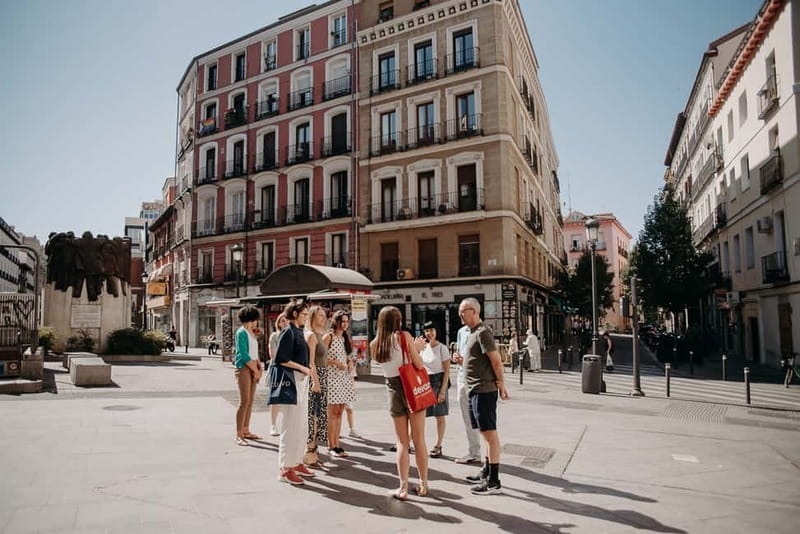
I would recommend it to anyone who wants a food-focused introduction to Madrid and prefers doing something over simply sitting at a restaurant. It works especially well for couples, friends, solo participants comfortable in a small group, and families with older teenagers aged 12 or above.
It is also a good choice early in a Madrid visit. The market tour and food explanations can help you understand later meals across Spain. You may leave with a better sense of vermouth, tapas, sauces, rice dishes, and market produce.
Choose the private option if you want the most personal experience or are booking for a group with its own pace. Choose the small-group option if you enjoy meeting people while cooking and want to keep the cost more manageable.
I would skip it if you are vegan, cannot eat gluten or lactose, dislike kitchen participation, or have limited mobility. The class is built around handling food and standing near hot equipment, not watching from a seated position.
Should you book the Madrid paella class?
Book this experience if you want a full Spanish food lesson rather than a single paella meal. The market visit gives the class local context, the kitchen work keeps you involved, and the lunch makes the $112 price easier to justify.
The best reason to choose it is the mix of activities: market shopping, vermouth, tapas, paella, dessert, and conversation with a local chef. The main caution is the menu and kitchen setup. Check your dietary needs carefully, wear comfortable shoes, and confirm the meeting point before you go.
If those conditions suit you, this is a practical and sociable way to spend half a day in Madrid, with recipes and food memories you can carry into the rest of your trip.
FAQ
How long does the Madrid paella and tapas class last?
The experience lasts 3.5 hours, including the market visit, cooking session, and meal.
How much does the experience cost?
The listed price is $112 per person.
Is the class taught in English?
Yes. The live tour guide and cooking instruction are in English.
What food will I prepare?
You prepare authentic paella, three tapas, and dessert. The tapas include homemade croquetas, patatas bravas with two sauces, and a traditional Basque tapa with a cheese plate.
Is lunch included?
Yes. You eat the dishes prepared during the class, along with seasonal fruit for dessert and your choice of beer or wine.
Are drinks included?
Yes. The experience includes a traditional aperitivo, sweet vermouth, and drinks with lunch. Non-alcoholic options can be arranged.
Can vegetarians join?
Yes. The class can adapt for vegetarians and pescatarians, but you should contact the activity provider in advance about your ingredients.
Can people with dietary restrictions participate?
The class can adapt for some vegetarian, pescatarian, gluten-free diets that are not related to celiac disease, non-alcoholic preferences, and pregnancy. It is not suitable for vegans, people with gluten intolerance, or people with lactose intolerance. Food allergies should be reported in advance.
Is the class suitable for children?
No. The experience is not suitable for children under 12 because of sharp knives, hot stoves, and high work surfaces.
Is hotel pickup included?
No. Hotel pickup and drop-off are not included. The meeting point may vary depending on the option booked, so check your confirmation carefully.
Just added around Spain
- Explore Bilbao’s Flavors Mercado de la Ribera and Old Town★ 4.5 · 3 reviews
- CERTAL Exclusive Tour: LA RIBERA Market + GASTROBARS Bilbao (3h)★ 4.5 · 12 reviews
- Spanish Oysters, Cava and Ibérico Ham at Barcelona’s La Boqueria Market★ 5.0 · 8 reviews
- Taste of Barcelona: Boqueria Market, Tapas & History Tour★ 4.5 · 22 reviews
- Private Barcelona Market Tour & Paella Cooking Class with Josh★ 5.0 · 4 reviews
- Barcelona La Boqueria & Sant Antoni Private Food Experience★ 5.0 · 7 reviews
- Cook Paella & Tapas + Market Tour in Barcelona (4-Course Meal)★ 5.0 · 2 reviews
- Market Gourmet Visit and Spanish Culinary Experience in Barcelona★ 5.0 · 34 reviews
Market and Cooking Class Tours, compared.

Hanoi Cooking Class: Culture, Local Market & Meaning CSR Impact
Read our review →
5 Traditional Dishes Hanoi Cooking Class with Market Trip
Read our review →
Cooking Class and Lunch at a Tuscan Farmhouse with Local Market Tour from Florence
Read our review →
Cooking Class, Market & Thai Herbs Garden Tour
Read our review →
Authentic Cooking Class with Market & Farm Visit
Read our review →
Paella Cooking Experience & Boqueria Market Tour
Read our review →
Cooking Class Hoi An:Local Market, Basket Boat, Fishing & Cooking
Read our review →
Hoi An Cooking Class(Market,BasketBoat Crabfishing&Cooking Class)
Read our review →Browse the lists this tour appears in