
Review · MARKET AND COOKING CLASS TOURS
Real Paella Cooking Class – Market Visit & Sangría Workshop
Valencia’s best food lesson may begin with a market basket, not a classroom. This 3.5-hour paella experience takes you through Ruzafa Market, then puts you beside local chefs as you cook, season, and serve the dish Valencia claims as its own. The reward is not just lunch. You leave with a recipe you can use at home.
I especially like two things here: the market is a real neighborhood stop rather than a photo-only food hall, and the paella work is hands-on. You learn about J. Sendra rice, saffron, salmorreta, and the prized socarrat, that crisp layer at the bottom of the pan. The one consideration is that the group may be larger than expected, so this is social and lively rather than a quiet private lesson.
Key points
- Ruzafa Market first: Shop where local residents buy ingredients, then walk a short distance to the cooking kitchen.
- Two paella paths: Prepare either Valencian meat and vegetable paella or seafood paella, with the traditional salmorreta sofrito.
- The socarrat lesson: Learn how to create the golden, crisp rice crust that many Valencians consider the best part.
- A full food-and-drink table: Tapas, bottomless sangría, beer, DO Valencia wine, soft drinks, dessert, coffee, and mistela are included.
- Friendly English-speaking chefs: Anna, José, Guillermo, Cristina, and other team members guide the cooking and keep the group involved.
- Good value at $77: The price covers a market visit, cooking class, substantial meal, drinks, and a recipe to take home.
Starting at San Valero Church in Ruzafa
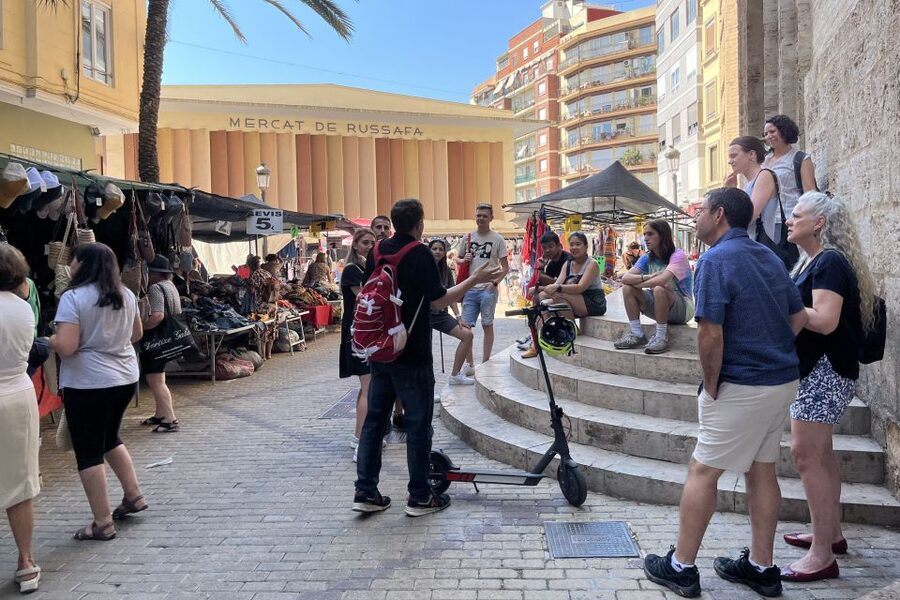
You meet your English-speaking guide at the door of the Church of San Valero. This is a useful meeting point in Ruzafa, one of Valencia’s most popular neighborhoods for eating and local life.
The experience begins with a short guided visit to Ruzafa Market. That choice matters. Valencia’s Central Market is an impressive sight, but it is also a major stop for visitors. Ruzafa gives you a more everyday look at shopping in the city, with the practical focus of a neighborhood food market.
Your chef helps select the ingredients used later in the class. I like this setup because it connects the finished dish to the raw materials. You are not simply handed a tray of measured items in a kitchen. You first see the produce and other ingredients in their market setting, then learn how they become paella.
The market visit is not a full morning food tour. It is a short introduction before the cooking session, so you should think of it as context rather than a chance to browse every stall. Extra purchases at the market are not included in the price.
More Market and Cooking Class Tours in Spain
- Barcelona: Paella Cooking Experience & Boqueria Market Tour
★ 4.8 · 3,661 reviews - Barcelona Paella Cooking Class with Market Visit, Tapas & Sangria
★ 5.0 · 2,531 reviews - Paella Cooking Class, Wine Tasting & Central Market in Valencia
★ 5.0 · 1,150 reviews
Ruzafa Market and the ingredients behind paella
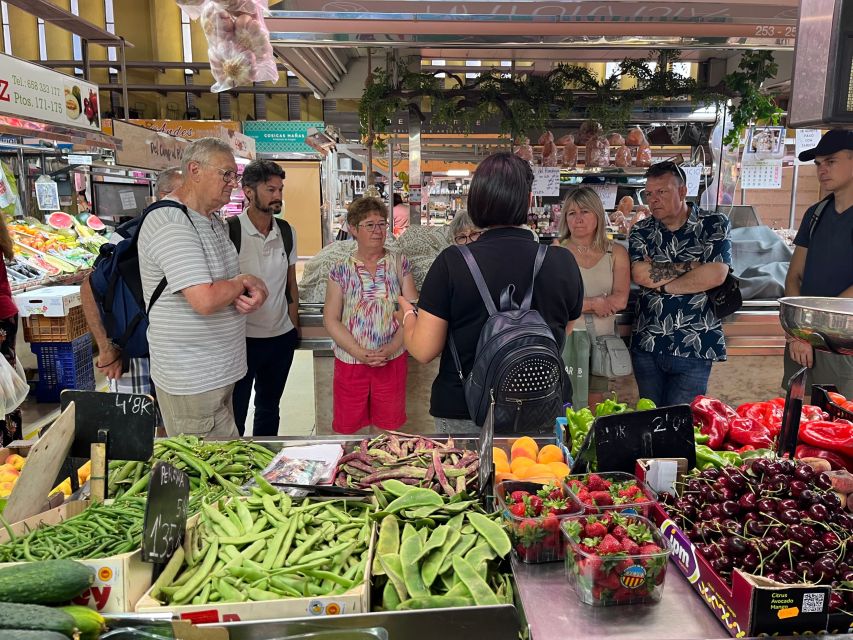
A good paella class should explain more than the order in which ingredients go into a pan. This one uses the market visit to introduce the ingredients and the local approach before the cooking starts.
You learn why J. Sendra rice is used and how rice choice affects the finished dish. You also hear how much saffron to use, which is useful because home cooks often treat saffron as either a rare luxury or an ingredient to pour in by instinct.
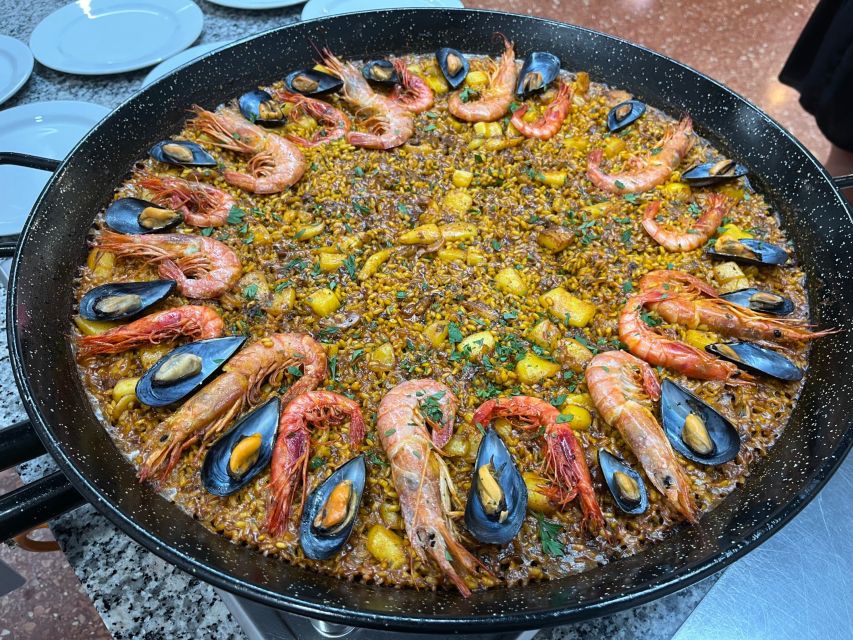
For the seafood version, the class teaches the traditional salmorreta sofrito. For the Valencian version, you work with meat and vegetables. The two styles are kept distinct, which is an important point for anyone hoping to cook the dish in a more local way. This is not presented as a mixed paella with every possible topping.
The market walk also gives the class a sense of place. You are learning a dish in the city most closely linked with its name, and the ingredients are introduced in the neighborhood where people shop for ordinary meals. That makes the visit more useful than a generic market stop added only to fill time.
Tapas, sangría, and the social start
Back at the kitchen, the cooking does not begin with an empty stomach. You are welcomed with tapas including manchego cheese, jamón, steamed mussels, patatas bravas, and olives.
This opening spread helps set the tone. You can settle in, meet the other people in your group, and enjoy familiar Spanish foods before concentrating on the paella. The patatas bravas and jamón are especially practical choices for a group because they are easy to share while the staff explains what comes next.
You also learn how to make sangría. Sangría is part of the activity rather than a drink simply placed on the table, so the class includes a small workshop within the larger workshop. Bottomless sangría is included, along with beer, wine, and soft drinks.
The alcohol is generous, and several people describe the drinks as a major part of the relaxed mood. That can be a plus for a long lunch with new friends, but it is worth knowing what sort of activity you are booking. This is a social food event with plenty of refreshments, not a tightly controlled professional cooking course.
Nonalcoholic options are available. If you prefer not to drink, you can still take part in the food, instruction, and shared meal.
Cooking paella with Anna, José, and the team
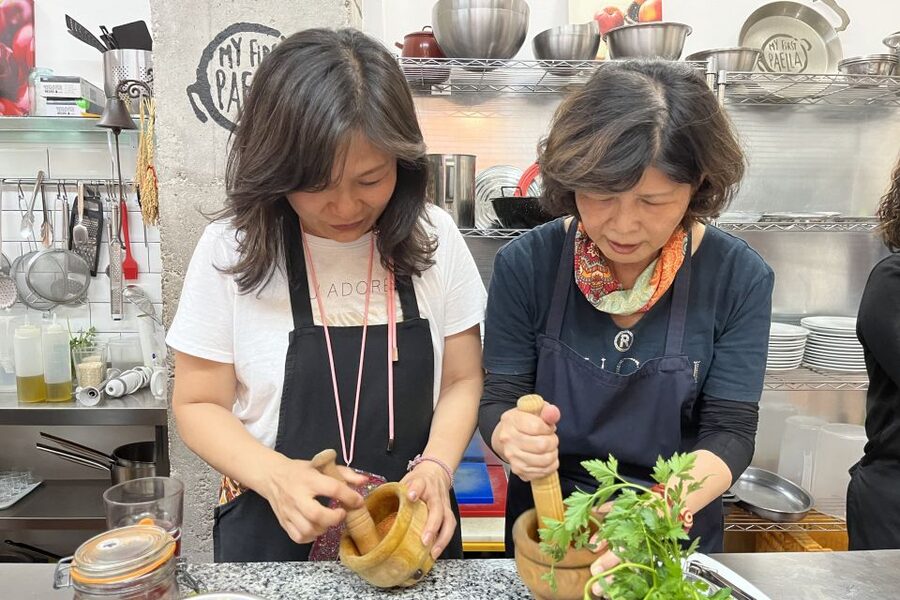
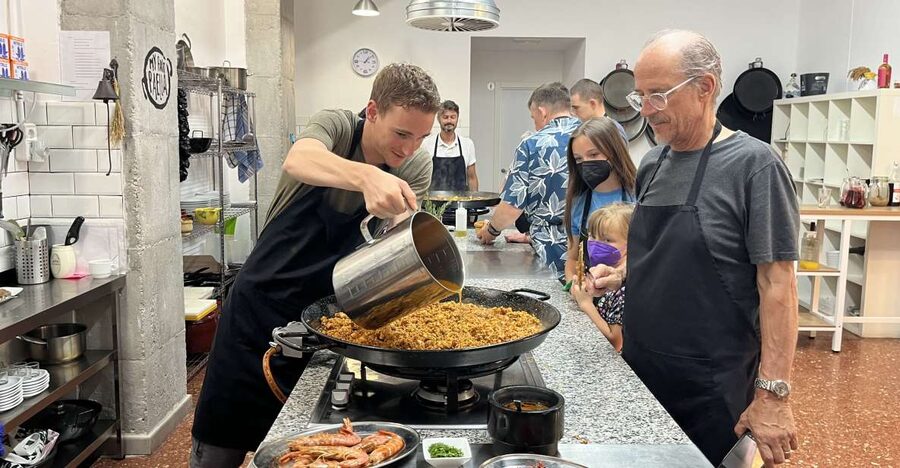
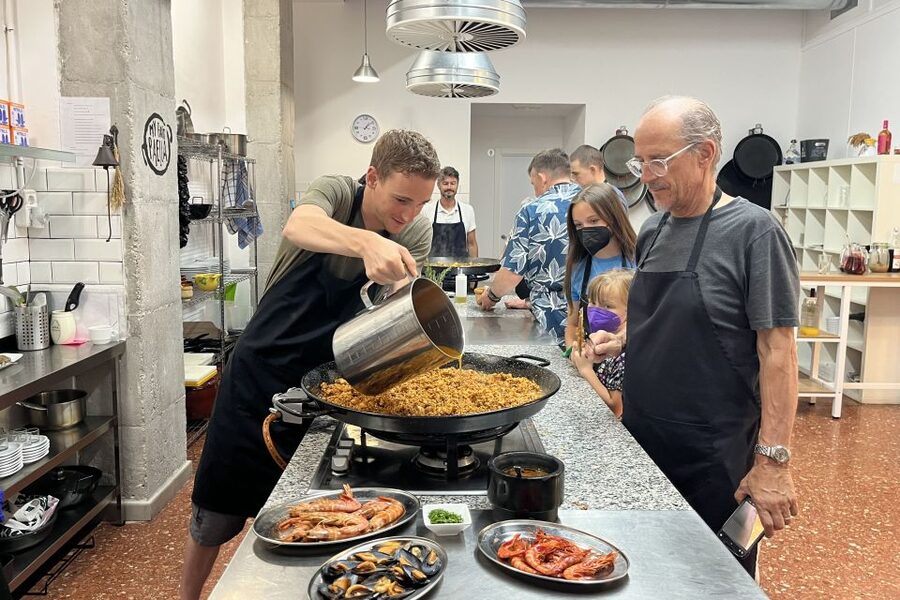
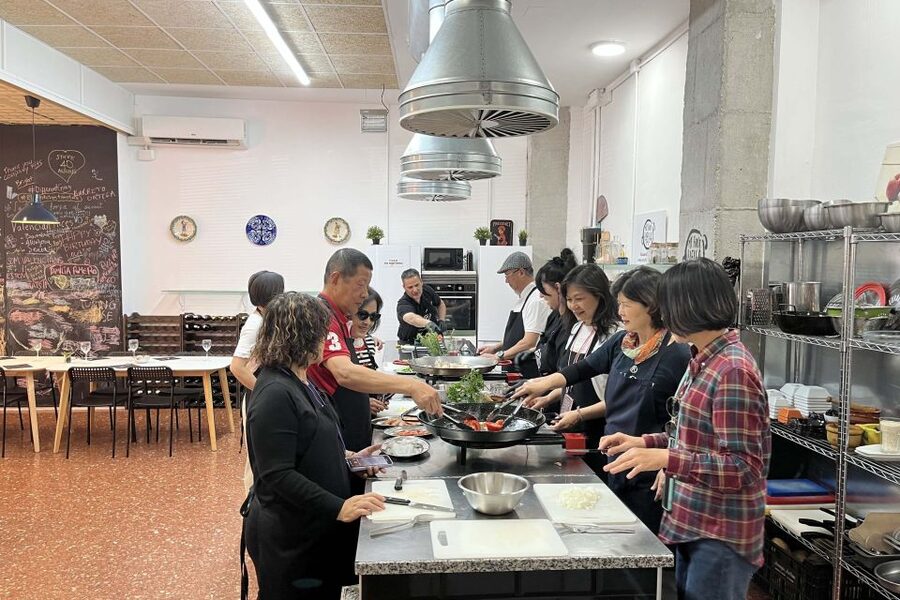
The main session is deliberately practical. You do not sit at the back and watch a chef perform while someone else handles the difficult parts. The chefs guide the group step by step and correct your technique as you work.
The team has included chefs and guides such as Anna, José, Guillermo, and Cristina. Anna is noted for her warm humor and clear instruction, while José is often described as both entertaining and attentive. The exact chef leading your group can vary, but the pattern is consistent: a friendly team keeps the pace moving and makes a point of bringing people into the process.
You may be divided into smaller cooking groups around several paella pans. One point to keep in mind is group size. Some sessions may feel intimate, while others can be fairly large. A larger group means you will meet more people from different countries and may get the easygoing family-meal atmosphere many people enjoy. It also means you should not expect one chef to stand beside you for every second of the cooking.
The instructors explain the reasons behind each stage. You learn about the rice, the saffron, and the sofrito, rather than only memorizing a sequence of actions. That is what makes the recipe more useful when you return home. You are being shown how to recognize the stages of the dish, not just how to copy a demonstration.
Same place, a different set of stalls:
- Valencian paella cooking class, tapas and visit to Ruzafa market.
★ 5.0 · 828 reviews - Spanish Cooking Class & Triana Market Tour in Sevilla
★ 5.0 · 760 reviews - Seville: 3.5-Hour Spanish Cooking Class & Triana Market Tour
★ 4.9 · 751 reviews - Valencia: Paella Cooking Class with Central Market Tour
★ 5.0 · 721 reviews
The socarrat lesson is the real test
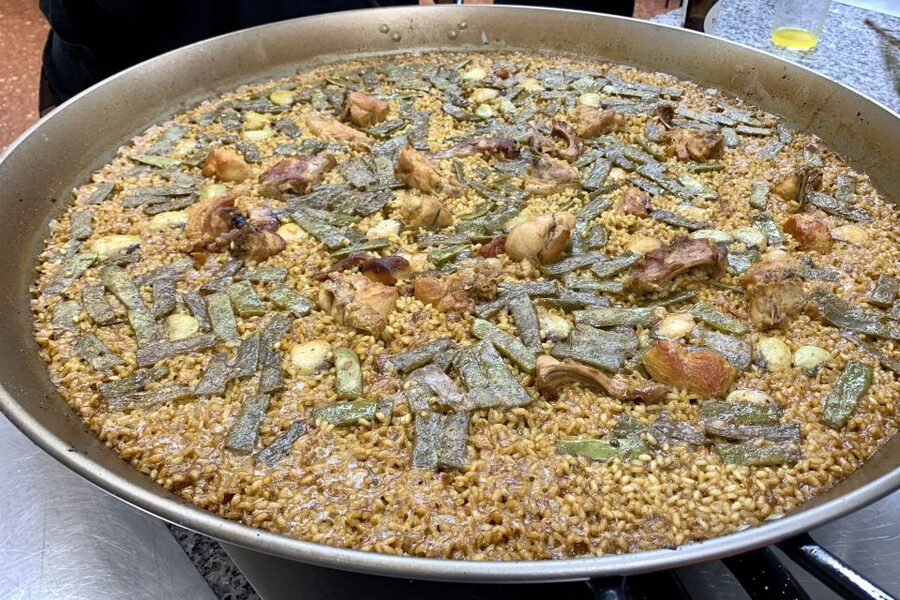
The prize of a Valencian paella is often the socarrat, the crisp rice layer that forms at the bottom of the pan. It is easy to burn rice while trying to make it crisp, so this is one of the most useful skills in the class.
The chef shows you how to judge the final stage and how to aim for that golden crust. You may not reproduce it perfectly on your first attempt at home, but you will understand what you are trying to create and why it matters.
This is also where the class moves beyond a basic tourist cooking activity. Instead of stopping when the rice is merely cooked, the lesson pays attention to texture and tradition. The difference between soft rice and rice with a properly formed bottom crust can make the dish feel finished.
The experience includes either meat and vegetable paella or seafood paella. If you have a strong preference, check the available option when booking. The class description makes clear that these are separate styles, not a combination of meat and seafood in one pan.
Sitting down to eat your own paella
Once the paella is ready, everyone sits down together to eat. This shared meal is the natural payoff, and it changes the feel of the activity from a lesson into a long Valencian lunch.
The paella comes with Valencian tomato salad, seasonal fruit, coca de llanda, coffee, and mistela. Coca de llanda is a traditional local sponge cake, while mistela provides a sweet final drink. The meal is much more substantial than a sample tasting.
DO Valencia wine is included with the meal, along with beer and other drink options. Since sangría is served during the preparation, the food-and-drink portion covers most of the afternoon. You should arrive ready for a leisurely experience rather than a quick class followed by an immediate departure.
The group meal is also where the social side becomes clearest. People who arrive as strangers share the same pans, work together, and then eat at one table. If you are traveling alone, this is one of the stronger reasons to choose the experience. The format gives you a natural way to meet people without needing to force conversation.
Families can also fit comfortably into the activity. Children have been included in the preparation, and the cooking can give younger participants something concrete to do. Since the class includes alcohol, parents should judge the setting and pacing for their own family.
What the $77 price really covers
At $77 per person, this is not the cheapest way to eat paella in Valencia. You can find a restaurant meal for less, especially if you skip the drinks and extras. But a restaurant does not give you the market visit, cooking instruction, sangría workshop, or recipe.
The price includes:
- A guided visit to Ruzafa Market
- A live English-speaking chef
- All workshop ingredients
- Hands-on paella preparation
- Tapas such as jamón, manchego, mussels, patatas bravas, and olives
- Sangría, beer, wine, and soft drinks
- Tomato salad, seasonal fruit, and coca de llanda
- Coffee and mistela
That is a strong package for a 3.5-hour activity. I see the value most clearly if you want one main food experience in Valencia and prefer a full afternoon over a simple meal. The cost is less compelling if you dislike group activities, do not drink, or only want a short demonstration.
You also take home a recipe you can actually use. That matters because paella is a dish people often try to recreate after visiting Spain. The instruction on rice, saffron, sofrito, and socarrat gives you more help than a recipe card alone.
Who will enjoy this class most
I would choose this experience for food-focused visitors who want to understand how Valencian paella is made, not just eat it. It suits couples, families, solo visitors, and groups of friends, with the shared table helping different types of parties mix.
It is also a good choice for anyone who has already seen Valencia’s main sights and wants an activity with local food at its center. The market visit adds a neighborhood angle, while the cooking gives you a skill to carry home.
You should think twice if you want a private lesson or a very small group. The experience is advertised as small-group and hands-on, but the group size can vary, and one session may feel larger than expected. You should also expect a lively atmosphere, plenty of conversation, and regular drinks rather than a silent, technical cooking course.
The class is conducted in English. The guides have made an effort to include people with different language backgrounds, but English is the stated tour language.
Timing, cancellation, and practical details
Allow the full 3.5 hours. The activity starts at the Church of San Valero, includes the Ruzafa Market visit, and then continues at the nearby cooking kitchen. You should arrive at the stated meeting point rather than going directly to the kitchen.
Starting times vary, so check availability for your date. Extra shopping at Ruzafa Market is not included. You can cancel up to 24 hours before the activity for a full refund, and the reserve-now, pay-later option lets you hold a place without paying immediately.
The class includes a great deal of food and drink, so plan it as a main meal. You do not need to arrange a separate lunch afterward.
Should you book My First Paella?
I would book this if you want a sociable, food-centered afternoon that combines local shopping, cooking, and a proper meal. The most valuable parts are the market connection, the hands-on work, and the explanation of details such as J. Sendra rice, salmorreta, saffron, and socarrat.
The main tradeoff is the group setting. You may get a smaller class, or you may find yourself cooking with a larger crowd. Either way, the format leans toward friendly shared fun rather than private instruction.
At $77, the included tapas, drinks, meal, dessert, and recipe make the price fair for a three-and-a-half-hour experience. If you want to eat paella and learn how to make it the Valencian way, this is an easy activity to recommend. If you want a quiet or highly technical lesson, choose a smaller private class instead.
FAQ
Where does the paella experience meet?
You meet your guide at the door of the Church of San Valero in Valencia.
How long does the activity last?
The experience lasts 3.5 hours.
What language is the class conducted in?
The live tour guide and class are conducted in English.
Is the market visit included?
Yes. The experience includes a guided visit to Ruzafa Market, where you select fresh ingredients with the chef.
Is the cooking hands-on?
Yes. You take part in preparing the paella while the chefs guide you through each stage.
Which types of paella can you prepare?
You can prepare authentic Valencian paella with meat and vegetables or a seafood paella with traditional salmorreta sofrito.
What drinks are included?
The experience includes bottomless sangría, beer, DO Valencia wine, and soft drinks.
Is food included besides the paella?
Yes. Tapas, Valencian tomato salad, seasonal fruit, coca de llanda, coffee, and mistela are included.
Are market purchases included?
No. Extra purchases at Ruzafa Market are not included.
Can I cancel for a refund?
Yes. You can cancel up to 24 hours in advance for a full refund.
Just added around Spain
- Explore Bilbao’s Flavors Mercado de la Ribera and Old Town★ 4.5 · 3 reviews
- CERTAL Exclusive Tour: LA RIBERA Market + GASTROBARS Bilbao (3h)★ 4.5 · 12 reviews
- Spanish Oysters, Cava and Ibérico Ham at Barcelona’s La Boqueria Market★ 5.0 · 8 reviews
- Taste of Barcelona: Boqueria Market, Tapas & History Tour★ 4.5 · 22 reviews
- Barcelona La Boqueria & Sant Antoni Private Food Experience★ 5.0 · 7 reviews
- Private Barcelona Market Tour & Paella Cooking Class with Josh★ 5.0 · 4 reviews
- Cook Paella & Tapas + Market Tour in Barcelona (4-Course Meal)★ 5.0 · 2 reviews
- Market Gourmet Visit and Spanish Culinary Experience in Barcelona★ 5.0 · 34 reviews
Market and Cooking Class Tours, compared.

Hanoi Cooking Class: Culture, Local Market & Meaning CSR Impact
Read our review →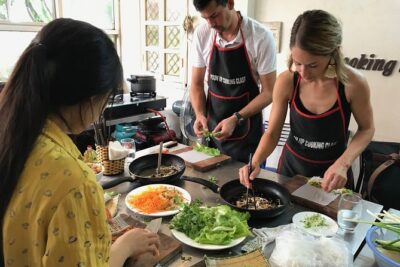
5 Traditional Dishes Hanoi Cooking Class with Market Trip
Read our review →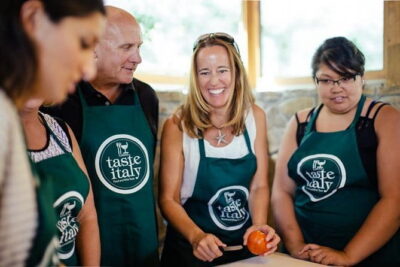
Cooking Class and Lunch at a Tuscan Farmhouse with Local Market Tour from Florence
Read our review →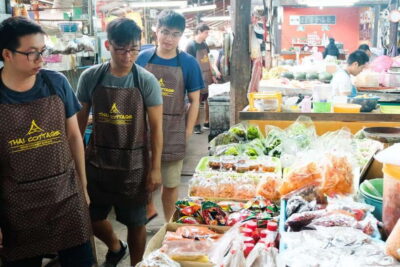
Cooking Class, Market & Thai Herbs Garden Tour
Read our review →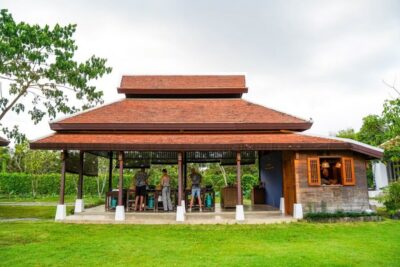
Authentic Cooking Class with Market & Farm Visit
Read our review →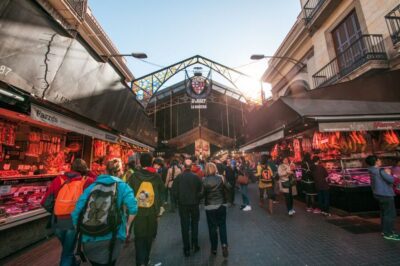
Paella Cooking Experience & Boqueria Market Tour
Read our review →
Cooking Class Hoi An:Local Market, Basket Boat, Fishing & Cooking
Read our review →
Hoi An Cooking Class(Market,BasketBoat Crabfishing&Cooking Class)
Read our review →Browse the lists this tour appears in