
Review · MARKET AND COOKING CLASS TOURS
4-Hour Market Visit and Traditional Cooking Workshop in Palma
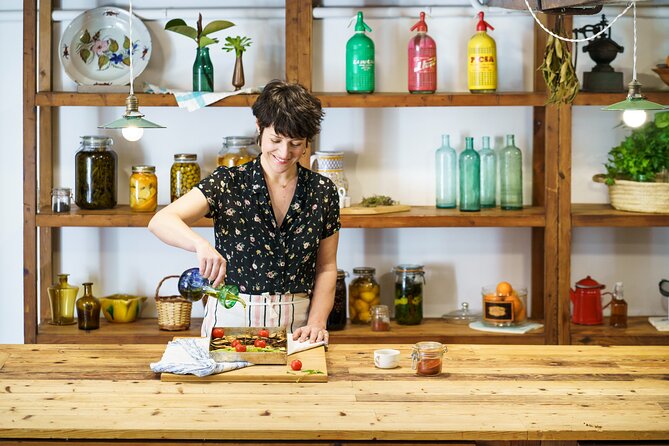
Palma’s Mercat de l’Olivar is more than a place to buy ingredients on this four-hour outing. It is your introduction to Mallorca’s food culture, followed by a hands-on class in a traditional cooking studio with Deborah. You’ll shop for the meal, prepare it, and eat what you make.
I like two things right away: the group size is capped at eight, and the menu follows the season rather than forcing the same dishes all year. I also like that the price includes ingredients, recipes, lunch, and two glasses of wine, not just a demonstration.
The main consideration is the price, $173.75 per person. That is a serious spend for a four-hour activity, and the value depends on whether you want instruction and cultural context, not simply a meal. The class is in English, and dietary requests should be made before you arrive.
Key points to know before booking
- You shop before you cook: The first hour takes place inside Palma’s Mercat de l’Olivar, where you help source ingredients from fruit, fish, and specialty stalls.
- Deborah leads the class: Her approach connects Mallorcan food with island customs, seasonal produce, and family recipes.
- The menu is a full meal: Expect two starters, a main course, dessert, and two glasses of wine.
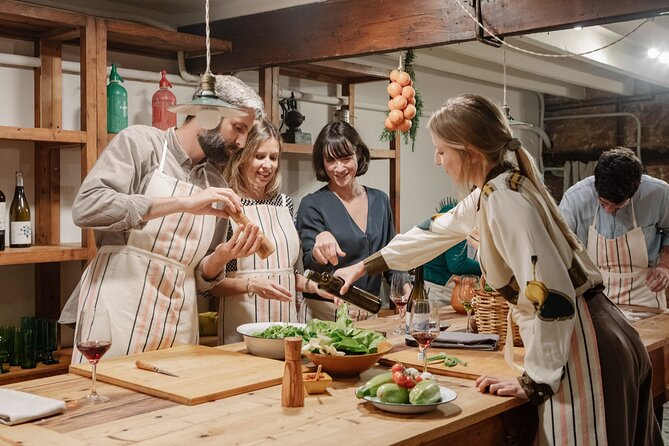
- You do the work yourself: This is a guided workshop, not a cooking demonstration where you sit and watch.
- The setting is personal: The maximum of eight people allows more time for questions and hands-on help.
- You leave with recipes: The cooking skills and recipes are designed to be useful after your trip.
Starting in central Palma at Mercat de l’Olivar
You meet at El darrer vestit a l’ampla, near Tomàs Vila in central Palma. The activity begins with a one-hour walk through Mercat de l’Olivar, the city’s main traditional market.
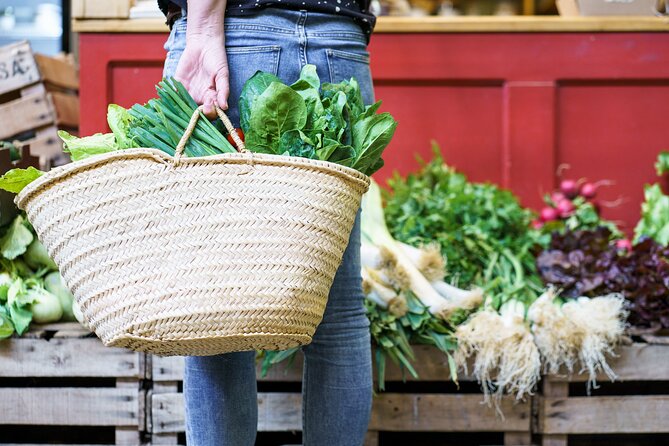
This is a smart place to begin. A cooking class can feel detached from its setting if all the ingredients are already lined up in a kitchen. Here, you first see the products in the place where local people buy them. You can look at fruit, fish, meats, cheeses, almonds, and other island foods before learning how they fit into a Mallorcan meal.
Deborah’s role matters during this hour. She does not simply point out stalls and name ingredients. The tour is built around the food calendar and the customs tied to it, so you get context before picking up a knife. The market visit also gives you a practical sense of Mallorca’s produce and artisanal food traditions.
You should expect a walking tour rather than a long lecture. The market is in the center of Palma, and the route focuses on finding the ingredients needed for the class. If you enjoy food markets, this may be the most naturally engaging part of the morning. If markets are not your thing, the hour could feel slower than the cooking portion, but it has a clear purpose: you are buying the meal you will later prepare.
More Market and Cooking Class Tours in Spain
- Barcelona: Paella Cooking Experience & Boqueria Market Tour
★ 4.8 · 3,661 reviews - Barcelona Paella Cooking Class with Market Visit, Tapas & Sangria
★ 5.0 · 2,531 reviews - Paella Cooking Class, Wine Tasting & Central Market in Valencia
★ 5.0 · 1,150 reviews
What the seasonal menu tells you about Mallorca
The sample menu gives you a good idea of the class’s character. It is not a generic Spanish cooking lesson built around paella and tapas. The dishes point toward Mallorca’s own pantry.
The first starter combines local cold meats and artisan cheeses with grapes and almonds. That is a simple course, but it introduces several important island ingredients at once. The pairing also gives you something to eat while the rest of the meal comes together.
The second starter is Mallorcan flatbread with greens and raisins. Here, you get a lesson in the balance of savory and sweet flavors that appears in many Mediterranean cooking traditions. Greens, raisins, and bread are humble ingredients, but the dish shows how a good recipe can depend more on proportion and technique than expensive products.
The main course is artichoke and sobrasada meloso rice cooked in a clay pot called a greixonera. This is the dish that gives the class its strongest sense of place. Sobrasada is a soft, paprika-seasoned Mallorcan sausage, while artichokes bring a seasonal vegetable element. Cooking the rice in clay adds another traditional touch and gives you a chance to learn how a softer, saucier rice differs from a dry rice dish.
Dessert is gató, a Mallorcan almond cake, served with almond ice cream. Almonds are closely tied to island cooking, so the dessert completes the meal in a distinctly local way rather than ending with a standard pastry.
The exact menu can change with the season. That is a strength, but it also means you should not book solely for one named dish. The sample menu is useful as a guide, not a guarantee. The broader promise is a complete Mallorcan meal built around what is available.
Moving from the market to Deborah’s cooking studio
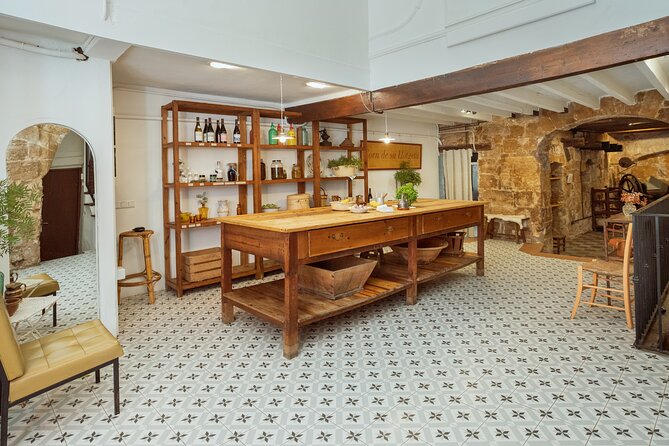
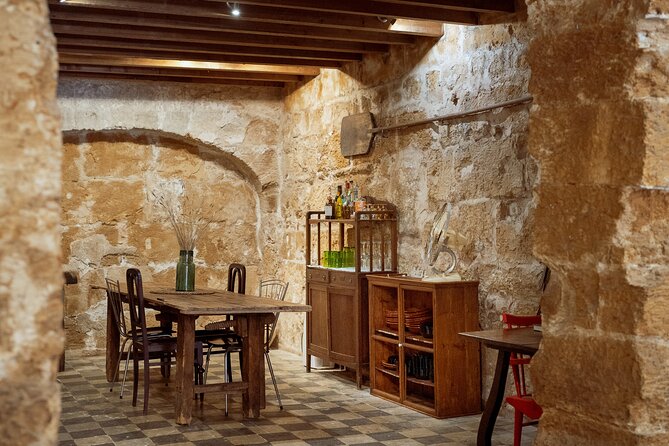
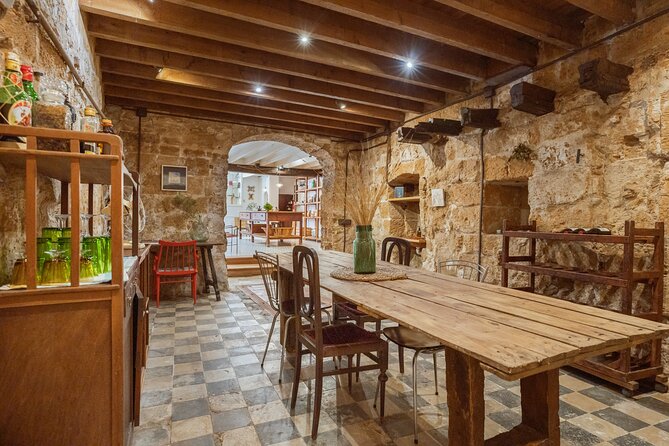
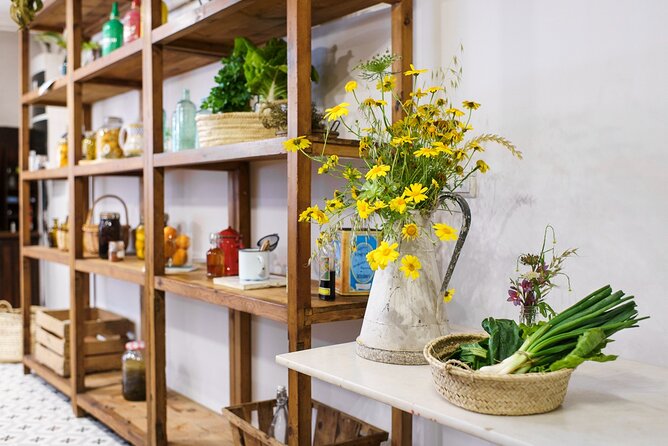
After the market visit, you head to the atelier for the workshop. The cooking space is described as a beautiful, authentic Majorcan house with a rustic feel. That setting is part of the appeal. You are not simply standing in a polished demonstration kitchen while someone else handles the difficult steps.
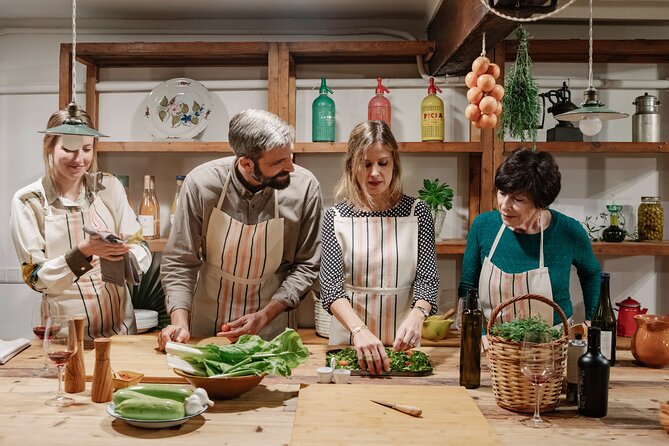
The class is hands-on, so you should expect to chop, mix, cook, and assemble parts of the meal. Deborah puts people to work while keeping the process approachable. That makes the class a good fit if you want to learn by doing, especially if you cook at home and like taking recipes back with you.
The small group is important here. With no more than eight people, Deborah has a better chance of answering individual questions and adjusting the pace. The format also works well for families with older children who enjoy food and cooking. One family found the class especially helpful because their daughter needed breaks during the day, and Deborah was attentive and patient.
That does not mean the class is private. You will share the kitchen and the meal with other people, and the amount of individual attention can vary depending on the group. Still, eight is a manageable number for a workshop, especially compared with large cooking classes where participants are divided into stations and rarely speak with the chef.
Learning Mallorca through technique, not just tasting
The best reason to choose this class is the connection between food and place. Deborah links recipes to Mallorca’s history, customs, local products, and seasonal habits. You are not just learning how to reproduce a dish. You are learning why certain ingredients belong together and how island cooking developed around what farmers and producers could supply.
The emphasis on small producers and sustainable sourcing also gives the class a clear point of view. You get a closer look at artisanal food production rather than an anonymous restaurant-style meal. That may be especially valuable if you want your time in Palma to include contact with local food makers and everyday culinary traditions.
I would not treat this as professional chef training. The goal is practical home cooking and cultural understanding. You should come away with new techniques, recipes, and a better sense of Mallorcan ingredients, but the class is not presented as an advanced culinary course.
The lesson also appears suitable for different skill levels. The instructions are designed to be easy to follow, and Deborah’s role is both teacher and host. If you already cook often, you may appreciate the regional methods and ingredients more than the basic knife work. If you rarely cook, the guided format should make the meal approachable.
Same place, a different set of stalls:
- Valencian paella cooking class, tapas and visit to Ruzafa market.
★ 5.0 · 828 reviews - Spanish Cooking Class & Triana Market Tour in Sevilla
★ 5.0 · 760 reviews - Seville: 3.5-Hour Spanish Cooking Class & Triana Market Tour
★ 4.9 · 751 reviews - Valencia: Paella Cooking Class with Central Market Tour
★ 5.0 · 721 reviews
Eating the four-course lunch you helped prepare
The meal is served after the cooking work, and lunch is included in the price. This is an important distinction from classes that provide only small samples while the real meal is prepared in advance.
You will eat the food made during the workshop, including the two starters, rice, and dessert, depending on the seasonal menu. Two glasses of wine per person are included for adults aged 18 and above. Additional wine costs extra.
That combination makes the day feel like both a class and a long lunch. You get time to taste the results, compare techniques, and ask questions once the cooking is done. The meal also gives the dishes context. A recipe can seem ordinary when read on paper, but eating the courses together helps you understand how the menu is balanced.
Anyone under 18 can still take part in the food portion, but the included wine is limited to adults. If you do not drink alcohol, the main value remains in the market visit, instruction, meal, and recipes. The supplied details do not state whether nonalcoholic replacements are available, so you should ask before booking if that matters to you.
Is $173.75 a fair price?
At $173.75 per person, this is not a budget lunch. You are paying for four hours, a market tour, a small group, ingredients, kitchen materials, instruction, recipes, the meal, and two glasses of wine.
The price makes more sense if you would otherwise book both a food tour and a cooking class. Here, the market visit supplies the shopping and cultural part, while the atelier supplies the practical lesson. The food itself is not the only product. You are also buying time with a local guide, access to a traditional cooking setting, and the ability to repeat the dishes at home.
The value is weaker if you only want to eat Mallorcan food. Palma has many less expensive ways to have lunch, and a restaurant will not require you to spend several hours preparing it. You should book this for the activity, not as a cheap meal deal.
The strong satisfaction rate and 4.8 rating from 38 reviews support the idea that the format works well, especially for people who value personal instruction and local connection. The comments consistently highlight Deborah’s warmth, the market knowledge, the beautiful cooking space, and the quality of the food. That does not remove the price concern, but it helps explain why the class earns its cost for the right person.
Timing, meeting details, and practical planning
The activity lasts about four hours and ends back at the meeting point. Private transportation is not included, but the location is near public transportation. You should plan to reach the central Palma meeting point on your own and leave enough time to find the exact starting place.
The activity is offered in English. Since the market walk and cooking instruction both depend on conversation, that is useful to know before booking. Dietary requirements should be provided in advance. The host will try to accommodate them, but you should not assume every request can be met without prior notice.
The experience is usually booked well ahead of time, with an average booking lead time of 47 days. That suggests you should not wait until the last minute if your schedule in Palma is fixed. Confirmation is provided at booking, and the group maximum is eight.
You can cancel for a full refund up to 24 hours before the local start time. Changes or cancellations made inside that window are not accepted for a refund. The activity also requires a minimum number of participants, and if it cannot run for that reason, you will be offered another date or activity, or given a full refund.
Who will enjoy this Palma cooking class?
I would choose this for you if you enjoy food markets, want direct contact with local cooking, and prefer a small group to a large sightseeing tour. It also suits couples, families with food-loving children, and home cooks who want recipes they can use after returning home.
It is a particularly good fit if you want more than a restaurant meal. The market visit gives you a closer look at ingredients and vendors, while the workshop turns those ingredients into a meal you understand from start to finish.
I would be more cautious if you have limited time in Palma, dislike group activities, or want a quick tasting. Four hours is a substantial part of a day. The activity also includes walking through the market and active kitchen work, so it is not designed as a sit-back-and-watch event.
Dietary needs deserve a direct question before you pay. The host will do her best to adjust the course, but the menu depends on seasonal ingredients and traditional recipes. Ask clearly about substitutions if you have an allergy or strict restriction.
Should you book Deborah’s Mallorcan cooking workshop?
Book it if you want Palma through its food, not just its monuments. The strongest parts are the one-hour visit to Mercat de l’Olivar, Deborah’s personal teaching style, the small group, and the chance to prepare a full four-course meal in a traditional setting.
The price is high, but the package includes far more than lunch. You get market shopping, instruction, ingredients, recipes, wine, and a meal you helped create. I would place this near the top of your list for a food-focused day in Palma, especially if you enjoy cooking and want a lasting reminder of Mallorca beyond photographs.
Skip it if you only want an inexpensive meal or a short market stop. For everyone else, this is a thoughtful way to connect Mallorca’s produce, traditions, and home cooking in one well-shaped morning or afternoon.
FAQ
How long does the market and cooking activity last?
The activity lasts approximately four hours. One hour is reserved for the market tour, followed by the hands-on cooking workshop and lunch.
Where does the experience begin?
It begins at El darrer vestit a l’ampla, near Tomàs Vila in central Palma, at the listed address in the 07002 area. The activity ends back at the meeting point.
Is the class offered in English?
Yes. The experience is offered in English.
How many people can join the class?
The activity has a maximum of eight travelers.
What food is included?
The sample seasonal menu includes local cold meats and artisan cheeses with grapes and almonds, Mallorcan flatbread with greens and raisins, artichoke and sobrasada meloso rice cooked in a greixonera, and gató almond cake with almond ice cream. The menu can follow the season.
Are drinks included?
Yes. Two glasses of wine per person are included for participants aged 18 and over. Additional wine is not included.
Can dietary requirements be accommodated?
You should advise the host of dietary requirements before the activity. The host will do her best to accommodate them, but specific substitutions are not guaranteed.
Just added around Spain
- CERTAL Exclusive Tour: LA RIBERA Market + GASTROBARS Bilbao (3h)★ 4.5 · 12 reviews
- Explore Bilbao’s Flavors Mercado de la Ribera and Old Town★ 4.5 · 3 reviews
- Spanish Oysters, Cava and Ibérico Ham at Barcelona’s La Boqueria Market★ 5.0 · 8 reviews
- Taste of Barcelona: Boqueria Market, Tapas & History Tour★ 4.5 · 22 reviews
- Private Barcelona Market Tour & Paella Cooking Class with Josh★ 5.0 · 4 reviews
- Barcelona La Boqueria & Sant Antoni Private Food Experience★ 5.0 · 7 reviews
- Cook Paella & Tapas + Market Tour in Barcelona (4-Course Meal)★ 5.0 · 2 reviews
- Market Gourmet Visit and Spanish Culinary Experience in Barcelona★ 5.0 · 34 reviews
Market and Cooking Class Tours, compared.
Hanoi Cooking Class: Culture, Local Market & Meaning CSR Impact
Read our review →
5 Traditional Dishes Hanoi Cooking Class with Market Trip
Read our review →
Cooking Class and Lunch at a Tuscan Farmhouse with Local Market Tour from Florence
Read our review →
Cooking Class, Market & Thai Herbs Garden Tour
Read our review →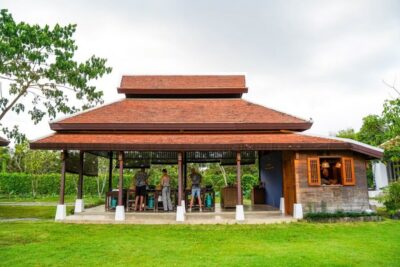
Authentic Cooking Class with Market & Farm Visit
Read our review →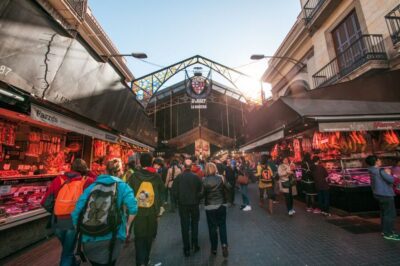
Paella Cooking Experience & Boqueria Market Tour
Read our review →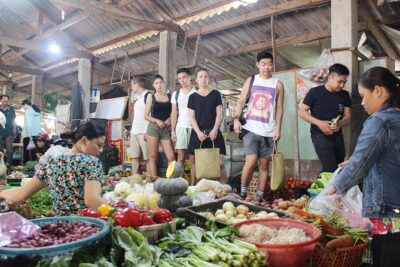
Cooking Class Hoi An:Local Market, Basket Boat, Fishing & Cooking
Read our review →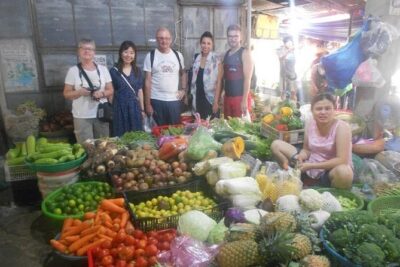
Hoi An Cooking Class(Market,BasketBoat Crabfishing&Cooking Class)
Read our review →Browse the lists this tour appears in