
Review · BARCELONA MARKET TOURS
Barcelona Markets Tour
Barcelona’s food markets tell the city’s story better than a museum label can. On this two-hour walk, you move from the crowded stalls of La Boquería to the remains of an old market in El Born, with Catalan snacks, Gothic churches, and local oddities along the way. The best part is the mix of food and history, rather than a simple eat-and-move-on tasting tour.
I like the way the tour connects everyday food to place, especially through the nougat and olive tasting at La Boquería and the olive-oil stop in El Born. I also like the guides’ personal touch. Guides such as Eoghan, Cal, Alberto, Valentina, and Zeynep have been praised for lively storytelling, useful restaurant tips, and an easy pace. The main tradeoff is time: two hours gives you a fine introduction, but not much time to shop or linger at La Boquería.
Key points at a glance
- La Boquería starts the story: Learn Catalan food customs while tasting olives and nougat in Barcelona’s famous central market.
- Three market settings: Compare La Boquería’s tourist energy, Santa Caterina’s neighborhood role, and El Born’s preserved archaeological remains.
- History between the bites: The route includes La Rambla, the Gothic Quarter, Santa Maria del Mar, and the old Born neighborhood.
- A guide makes the difference: The strongest guides bring personal market connections, food knowledge, humor, and restaurant advice.
- Optional food-and-wine finish: Upgrade to cured meats, fine cheeses, pa amb tomàquet, and wine in a private room with a sommelier.
- Easy logistics: Meet outside Dunkin’ Donuts, follow an English-speaking guide, and finish at Plaça Comercial in El Born.
Why this tour works as a first look at Barcelona
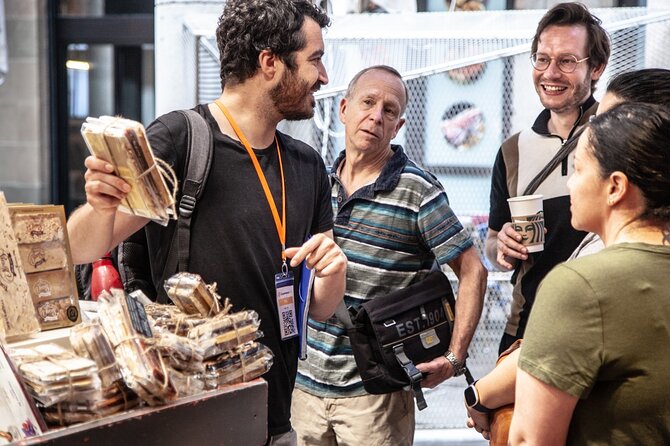
I see this experience as a useful orientation walk with food attached. You are not only visiting stalls. You are learning how Barcelona eats, how its markets changed, and how the Gothic Quarter and El Born fit together.
The route covers several busy parts of central Barcelona, so it helps you get your bearings early in your stay. You may also leave with a short list of foods to seek out later, from Iberian ham and local olives to Catalan tomato bread and nougat.
The tour has a rating of 4.8 from 46 reviews, and the repeated praise centers on the guides. That matters here because markets can be confusing without context. A good guide helps you understand what you are seeing, points out worthwhile stalls, and keeps the walk from becoming a blur of seafood counters and souvenir shoppers.
Several guides have received especially warm praise. Eoghan has been described as a regular customer at market stalls who knows the vendors personally. Alberto is praised for combining food history with a walking tour of the Gothic Quarter and El Born. Cal is known for his affection for La Rambla, while Zeynep has been praised for strong energy, good pacing, and engaging stories.
You cannot choose every guide in advance based on the information provided, but the pattern is clear: this experience depends heavily on the person leading it. The strongest guides do more than recite dates. They explain why a food matters and how the city around you changed.
A few more market tours around Barcelona worth a look
- Barcelona: Paella Cooking Experience & Boqueria Market Tour
★ 4.8 · 3,661 reviews - Barcelona Paella Cooking Class with Market Visit, Tapas & Sangria
★ 5.0 · 2,531 reviews - Barcelona: Paella Cooking Class with Market Visit and More
★ 4.9 · 711 reviews
La Boquería, where the food story begins
The meeting point is outside Dunkin’ Donuts, where your guide will hold an ExperienceFirst sign. From there, you head to La Boquería, Barcelona’s best-known food market and one of the city’s major sights.
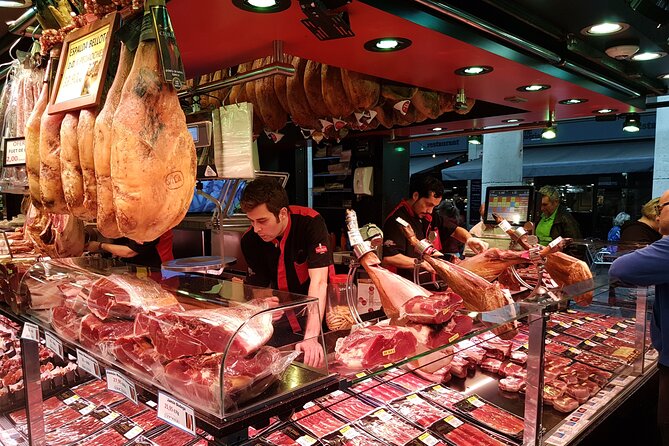
La Boquería can feel like two markets at once. It serves as a working food market, but it is also a major stop for people who want quick photographs and snacks. The tour helps you look past the noise and notice the Catalan traditions behind the stalls.
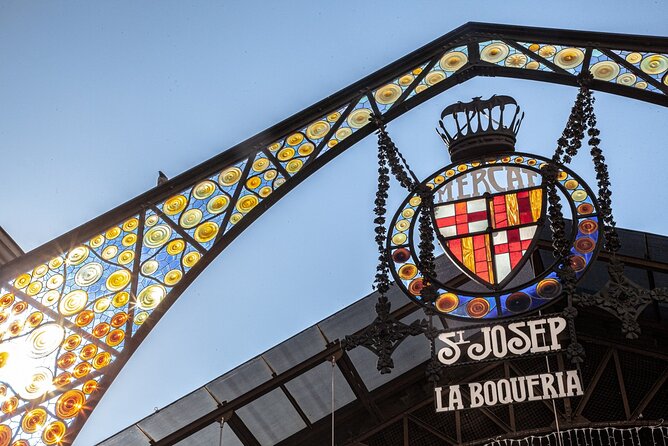
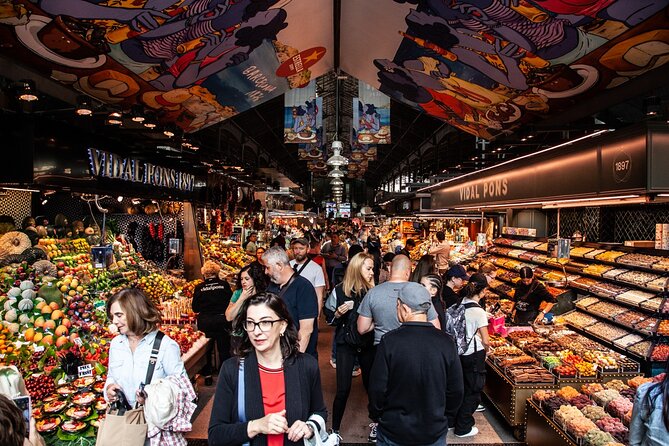
Expect a guided walk through the patterned aisles, with explanations of local ingredients and eating habits. The standard tour includes two small tastings here, with nougat and Catalan olives specifically mentioned. The olives are a good choice for a short tasting because they offer a direct sense of local flavor without taking much time.
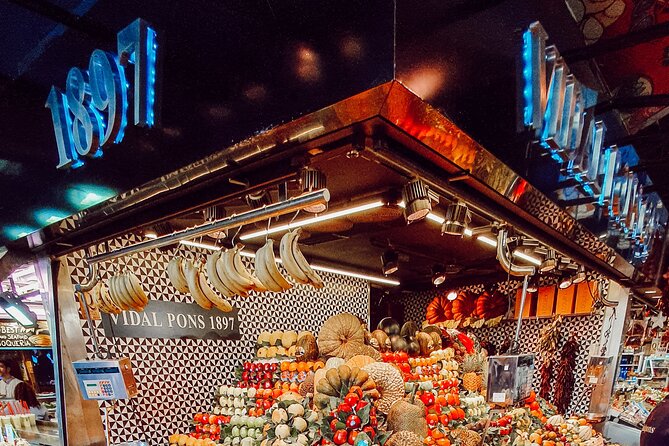
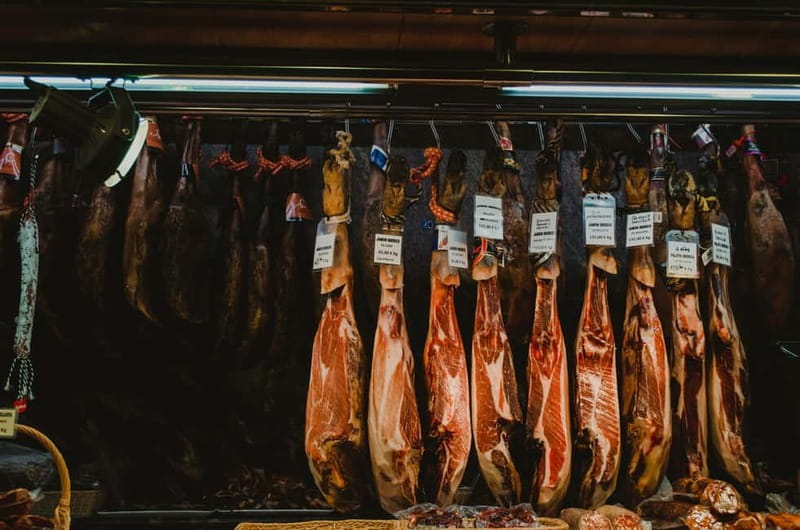
You will also hear about foods such as Iberian ham, seafood, salami, mushrooms, breads, and pastries. The guide can explain differences between products and suggest what is worth buying. You should not expect a full meal, though. The included tastings are small, and anything else you want to eat or take home is at your own cost.
This is the stop where time can feel tight. One participant wanted an additional half hour to stay at La Boquería and shop, and I understand why. If you enjoy markets, you may want to return on your own after the tour. Use the guided visit to learn what to look for, then come back later when you can browse without watching the clock.
La Rambla and the old market route
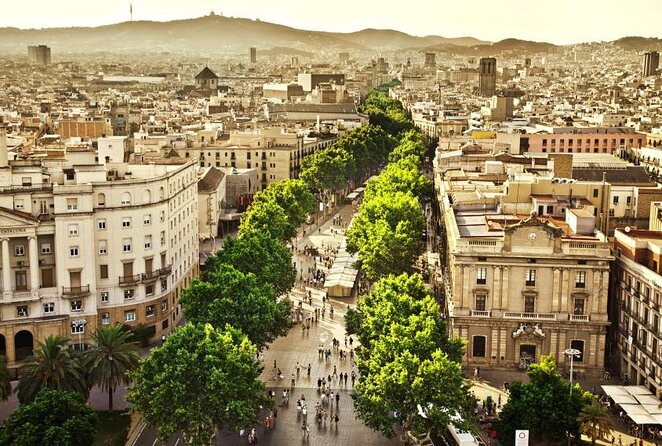
From La Boquería, the walk continues along La Rambla. This broad promenade is now lined with cafés, flower stalls, street activity, and shops, but it also has an older connection to market life.
Your guide points out the open-air character of the promenade and the unusual Miró mosaic underfoot. It is a short section, but it helps connect the formal food market with the wider public life of the city.
La Rambla is also one of the busiest parts of the route. Keep your belongings secure and stay close enough to hear the guide. The walk is not difficult, but crowds can make conversation harder, especially at popular times.
I like this portion because it prevents the tour from becoming a series of indoor stops. You get a sense of Barcelona’s street life and see how visitors and residents share the same central spaces. If your guide is someone like Cal, who has a strong personal connection to La Rambla and its surrounding streets, this section can become more than a transfer between markets.
Santa Caterina’s colorful roof and local role
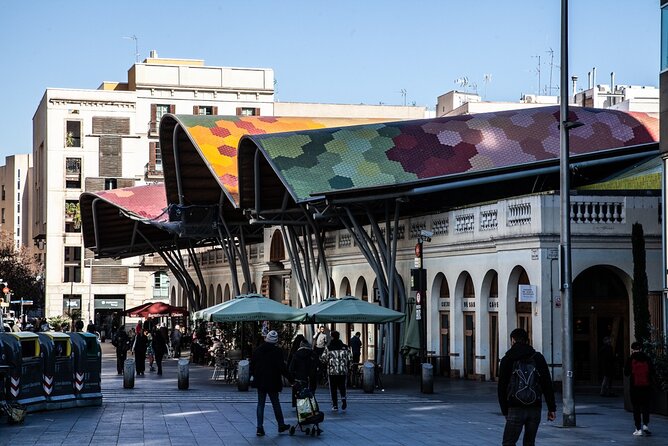
The next major food stop is Santa Caterina Market, described as Barcelona’s first covered market. Its roof is the immediate attraction, with a rolling form and a mosaic of colors that looks quite different from La Boquería.
The contrast is useful. La Boquería is the famous name, while Santa Caterina gives you another view of the city’s market life. Your guide explains the market’s place in the Gothic Quarter and points out ruins connected with a medieval monastery.
This is a good place to listen rather than rush. The market itself is not presented as a long shopping session, so the value comes from learning how covered markets developed and how food buying fits into neighborhood life.
The route also gives you a chance to compare market design. La Boquería is famous for its busy central aisles and international reputation. Santa Caterina feels tied to the surrounding quarter and has a strong architectural identity. Seeing both in one short walk gives you a more useful picture than visiting either one alone.
Same place, a different set of stalls:
- Ultimate Barcelona Food Tour with visit to a Local Market
★ 5.0 · 507 reviews - Half-Day Spanish Cooking Class & Boqueria Market Tour
★ 4.9 · 383 reviews - Interactive Paella & Market: Bottomless Wine & Rambla Views
★ 5.0 · 376 reviews - Barcelona Markets Tour
★ 5.0 · 376 reviews
The caganer shop and Catalan humor
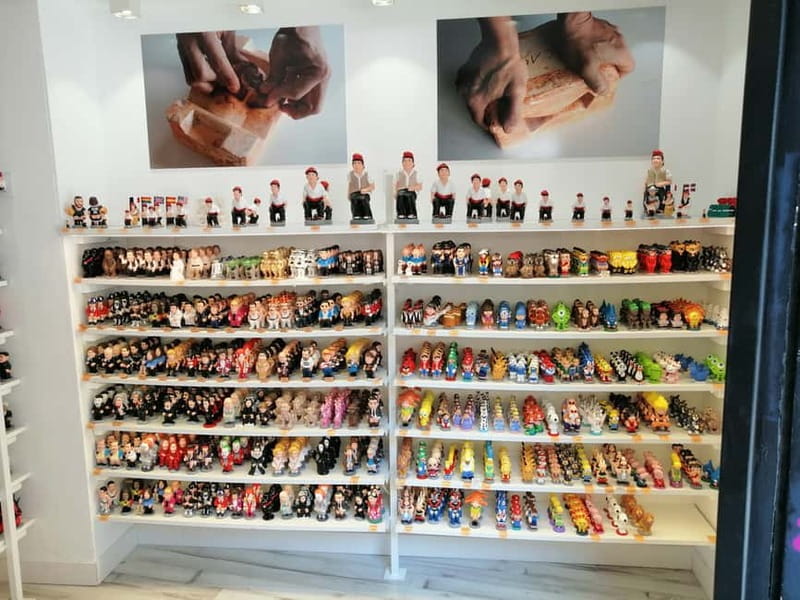
One of the more unusual stops is a caganer shop. The caganer is a small figure connected with a strange and distinctly Catalan tradition, and your guide explains its meaning.
This is exactly the sort of stop that can be missed if you explore Barcelona only through major monuments. It adds humor to a route that otherwise leans toward food, architecture, and history.
The shop may be especially entertaining for families. One guide was praised for encouraging children to try new foods and for making the history accessible to an eight-year-old and a twelve-year-old. The caganer story offers an easy break from dates and building details.
Do not expect a long shopping stop here. The point is the explanation and the cultural context, not a guaranteed purchase. Still, it gives the walk personality and helps you understand that Catalan traditions are not always solemn or formal.
Santa Maria del Mar and the Born neighborhood
The tour then reaches Santa Maria del Mar, often called the Cathedral of the Sea. The church is a major architectural sight in the Born area, and the guide provides context before you continue to the neighborhood’s old market site.
The visit is a guided exterior or neighborhood stop based on the stated route, so this should not be treated as a full church tour unless your guide says otherwise. The value is in seeing how the church fits into the medieval quarter and in connecting it with the streets around El Born.
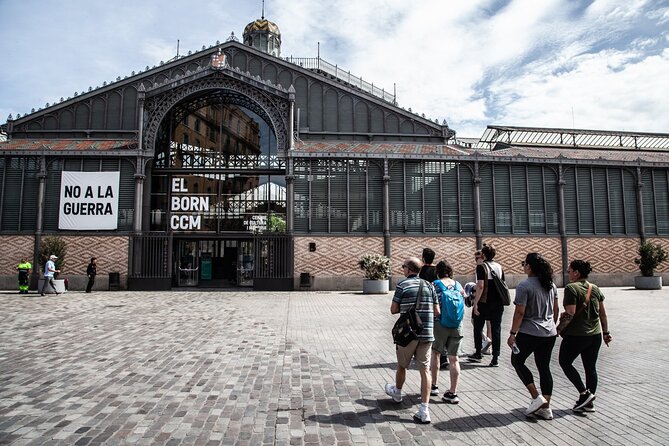
The final main stop is El Born Market, a striking former market building that now protects the remains of the old Born neighborhood beneath its structure. The archaeological remains show an earlier city and market area, giving you a physical look at Barcelona’s past rather than only a verbal description.
This is one of the tour’s most memorable contrasts. At La Boquería, you see food being sold today. At El Born, you see the remains of an older urban district and its market. The sequence makes the city’s changes easier to understand.
One guide described the final excavation as the remains of a sixteenth-century town and market. The more general description is a medieval city and market, so the exact historical detail is best left to your guide. Either way, the important point is that El Born preserves the footprint of an earlier neighborhood inside a later market building.
The tour ends at Plaça Comercial, 12, near El Born. That is a convenient place to continue exploring the area, eat a meal, or return to the market and church at your own pace.
What you actually taste, and what costs extra
The standard experience includes two small tastings at La Boquería and an olive-oil tasting in El Born. The food mentioned for the market tasting includes Catalan olives and nougat, also called turrón.
These samples are best understood as introductions. They let you try local flavors and give the guide something concrete to discuss, but they will not replace lunch. You can purchase additional food in the markets, and the guide can suggest local flavors and better-value choices.
The optional upgrade adds a more substantial finish in a private room. It includes cured meats, premium cheeses, pa amb tomàquet, and wines, with a professional sommelier and your guide leading the tasting.
Pa amb tomàquet is Catalan tomato bread, a simple local staple made by rubbing tomato onto bread and adding seasoning and olive oil. It is a useful dish to try because it shows how Catalan cooking often depends on a few good ingredients rather than elaborate preparation.
I would consider the upgrade if you want the social part of the experience to continue after the walk or if you prefer a seated tasting with more food. If your priority is seeing the markets and learning the neighborhoods, the standard tour should be enough.
Is $34 a fair price for two hours?
At $34 per person, the standard tour is fairly priced if you want a guided introduction to central Barcelona. You are paying for an English-speaking guide, a walking route through several notable areas, two small La Boquería tastings, and olive-oil tasting in El Born.
The price is less attractive if you want a full food tour with generous portions. You will need to buy anything beyond the included samples, and the two-hour schedule leaves limited time for independent browsing.
The value improves if you are new to Barcelona. A guide can save you time by explaining what you are seeing and offering suggestions for restaurants, bakeries, shopping, and later market visits. Guides have also recommended places such as restaurants and pastry shops during the walk, though specific recommendations can vary by guide.
This is not a tour built around luxury service or a long meal. It is a compact city walk with food as the connecting thread. Think of the price as paying for orientation, interpretation, and a few tastes rather than for a large quantity of food.
Pace, comfort, and practical details
The tour lasts two hours and is described as an easy walking experience. Wear comfortable shoes, bring water, and choose clothes you can walk in comfortably.
The route uses busy central streets and market aisles, so you should be prepared for noise and crowds. You will also want enough room in your bag if you plan to buy food along the way, though you should not assume there will be time for extensive shopping.
The walk is wheelchair and stroller accessible according to the activity details. That is useful for families and for anyone who needs a route without stairs as a central feature. You should still mention any specific mobility needs when booking, since market crowds can affect ease of movement.
The tour is offered in English with a live guide. Starting times vary, so you need to check availability for your preferred date. Free cancellation is available up to 24 hours in advance, and you can reserve now and pay later, which helps if your Barcelona plans are still shifting.
Who will get the most from this walk?
I would recommend it to first-time visitors who want a quick introduction to Barcelona’s food, central neighborhoods, and local customs. It also suits families, especially if children respond well to stories, unusual traditions, and small chances to try new foods.
Food-focused visitors should enjoy the market explanations, but I would set expectations carefully. This is not a two-hour eating session. It is a history and neighborhood walk with selected tastings.
It also works well early in a trip. You can use the guide’s suggestions to plan a later visit to La Boquería, choose foods to buy, or decide where to spend more time in the Gothic Quarter and El Born.
You may want a different experience if you prefer a long seated meal, extensive wine education, or a slow market visit with plenty of shopping time. In that case, choose the food-and-wine upgrade or pair this tour with a separate market visit later in your stay.
Should you book the Barcelona Markets Tour?
Book it if you want Barcelona’s markets explained rather than simply photographed. The strongest reasons are the mix of Catalan food, La Rambla, the Gothic Quarter, Santa Maria del Mar, the caganer tradition, and the preserved remains beneath El Born Market.
The guides are a major part of the value, and names such as Eoghan, Alberto, Cal, Valentina, and Zeynep have been associated with the qualities this route needs: humor, local food knowledge, history, and a friendly pace.
Skip it if your main goal is a large meal or a long afternoon of browsing stalls. For everyone else, $34 buys a practical introduction to several important parts of central Barcelona, with enough tasting to make the history easier to remember.
FAQ
Where does the Barcelona Markets Tour begin?
Meet outside Dunkin’ Donuts. Your guide will be holding an ExperienceFirst sign.
Where does the tour finish?
The tour finishes at Plaça Comercial, 12, 08003 Barcelona, Spain, in the El Born area.
How long does the tour last?
The walking tour lasts two hours.
What language is the tour offered in?
The tour is offered in English with a live tour guide.
What food tastings are included?
The standard tour includes two small tastings at La Boquería and an olive-oil tasting in El Born. Catalan olives and nougat are specifically mentioned among the foods tasted.
Can I buy additional food during the tour?
Yes. Food purchases are not included, but you have some time to buy items in the markets. Your guide can suggest local flavors and ways to get better value.
Is the tour accessible for wheelchairs and strollers?
Yes. The walking tour is described as accessible for both wheelchairs and strollers.
What does the optional tasting upgrade include?
The upgrade includes cured meats, premium cheeses, Catalan tomato bread called pa amb tomàquet, and wines. A professional sommelier and your guide lead the tasting in a private room for the group.
Just added around Barcelona
- Spanish Oysters, Cava and Ibérico Ham at Barcelona’s La Boqueria Market★ 5.0 · 8 reviews
- Taste of Barcelona: Boqueria Market, Tapas & History Tour★ 4.5 · 22 reviews
- Private Barcelona Market Tour & Paella Cooking Class with Josh★ 5.0 · 4 reviews
- Barcelona La Boqueria & Sant Antoni Private Food Experience★ 5.0 · 7 reviews
- Cook Paella & Tapas + Market Tour in Barcelona (4-Course Meal)★ 5.0 · 2 reviews
- Market Gourmet Visit and Spanish Culinary Experience in Barcelona★ 5.0 · 34 reviews
- Tasty Barcelona Street Food Tour With Local Market Visit★ 4.5 · 24 reviews
- Eat Barcelona 3 Covered Markets & Hands On Mini Cooking Workshop★ 5.0 · 2 reviews
Barcelona Market Tours, compared.
Paella Cooking Experience & Boqueria Market Tour
Read our review →
Barcelona Paella Cooking Class with Market Visit, Tapas & Sangria
Read our review →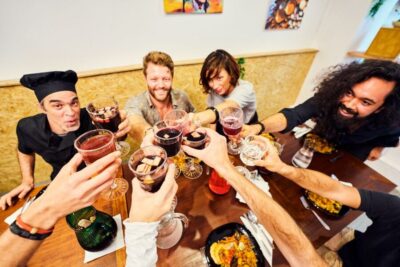
Paella Cooking Class with Market Visit and More
Read our review →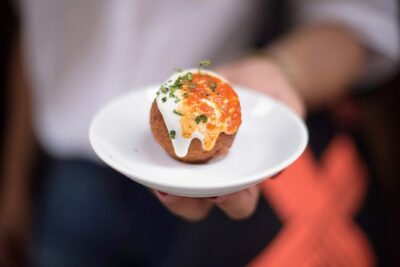
Ultimate Barcelona Food Tour with visit to a Local Market
Read our review →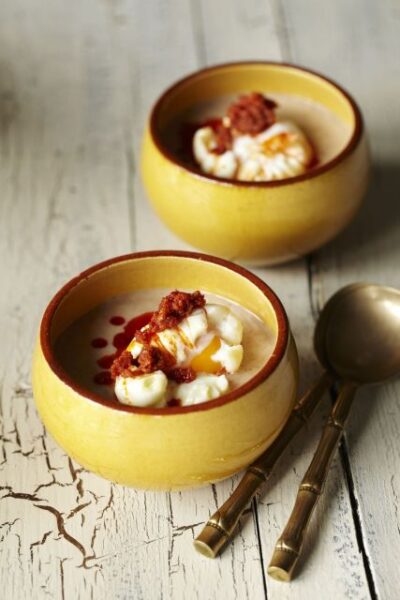
Half-Day Spanish Cooking Class & Boqueria Market Tour
Read our review →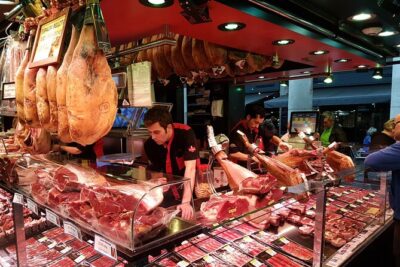
Interactive Paella & Market: Bottomless Wine & Rambla Views
Read our review →
La Boqueria Market and Paella Cooking Class in Barcelona
Read our review →Browse the lists this tour appears in