
Review · MARKET AND COOKING CLASS TOURS
Mexico City: Authentic Mexican Cooking Class & Market Tour
Mexico City’s food culture makes the most sense when you see the ingredients before they reach the plate. This market-to-table experience takes you from Mercado de Medellín in Roma Norte to an intimate cooking studio, where you prepare sopes, a pre-Hispanic tamal-style dish, white mole, and pastel de elote.
I like the small group, limited to seven, and the way the market tour goes beyond a quick look at produce. You’ll taste native-corn quesadillas, raw cacao, seasonal fruit, ice cream, and even crickets, chicatana ants, and chinicuil worms. I also like that the meal includes Mexican craft beer, Oaxacan mezcal, and wine from Valle de Parras.
The main drawback is the price: $204 per person is a serious spend for a 4.5-hour activity. Nut allergies, limited mobility, and children under 12 are also deal-breakers, so check those points before booking.
Key Points to Know Before You Book
- Mercado de Medellín comes first: Walk through one of Roma Norte’s main markets and sample ingredients at several local stands.
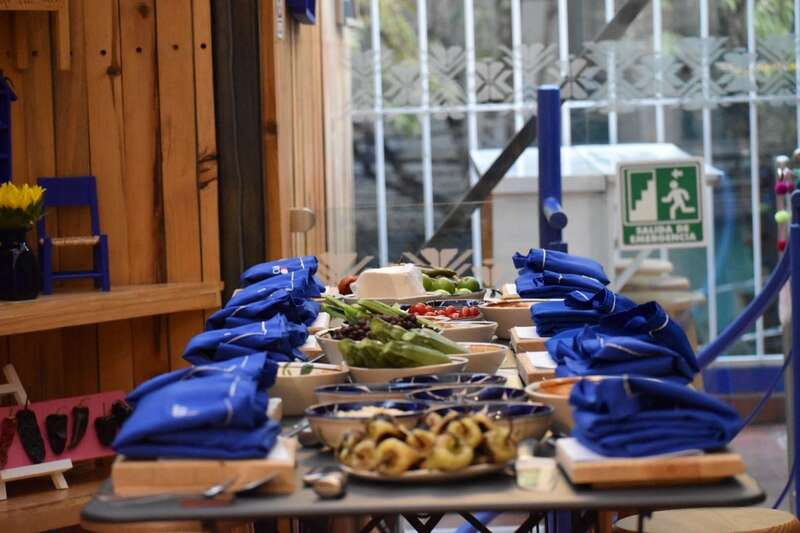
- You cook all four courses: The menu includes sopes, vegetable mextlapiques, white mole, and pastel de elote.
- The group stays small: With no more than seven participants, the chef can give you a real role at the counter.
- The drinks are part of the meal: Expect agua fresca, Mexican craft beer, mezcal from Oaxaca, and premium red or white wine.
- The class is cultural as well as culinary: Guides explain nixtamalization, chili varieties, Mexican food history, and regional traditions.
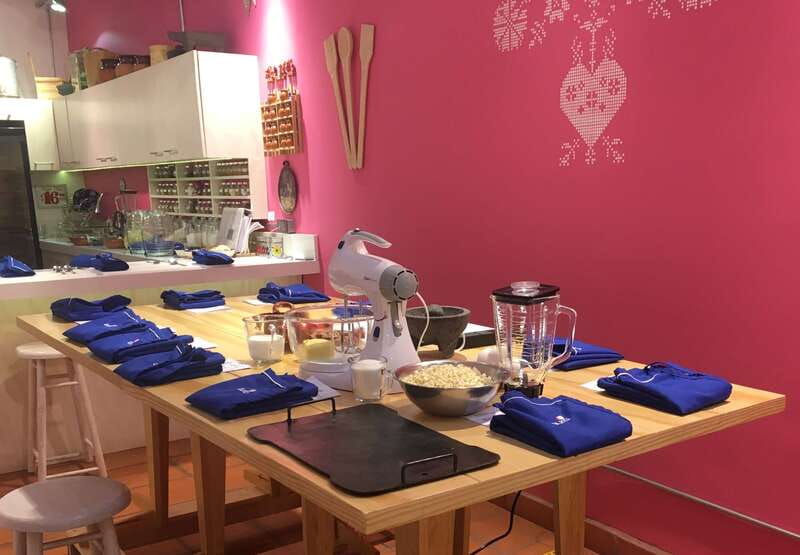
- The setting is polished: Aura Cocina Mexicana uses a contemporary studio rather than a rough-and-ready classroom.
Starting With Agua Fresca in Roma Norte
You meet at Aura Cocina Mexicana, at Medellín 191a in Roma Norte. Medellín’s street numbers are not in sequence, so use the more useful landmark: the studio sits between Chiapas and Tapachula streets.
The class begins inside a carefully designed Mexican contemporary cooking studio. You’ll receive a refreshing agua fresca, selected Mexican coffee, or a special infusion while the group settles in. This opening gives the chef time to explain the broad story of Mexican cuisine before the market walk begins.
That background matters. Mexican food is not just a collection of familiar dishes such as tacos, mole, and tamales. It is built around corn, beans, chilies, native fruits, cacao, local cooking methods, and regional customs. The class gives you a framework for understanding those ingredients before asking you to cook with them.
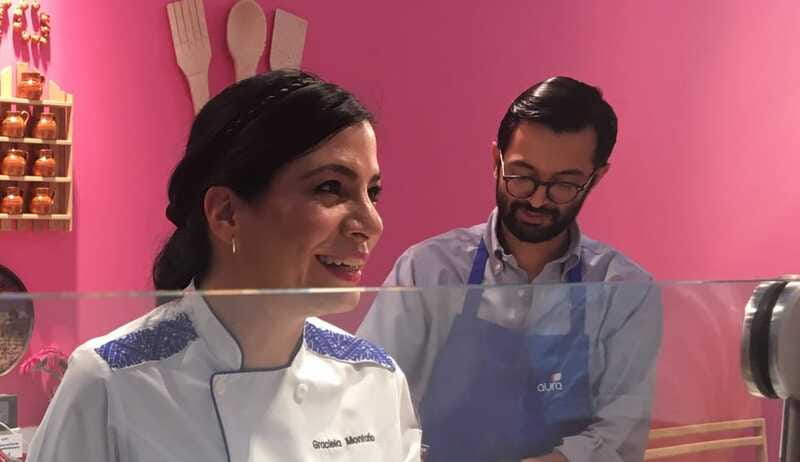
The staff has included instructors named Pame or Pamela, Mariana, Lorena, and Kristel, depending on the session. The strongest part of their teaching style is the combination of clear instructions and warm energy. Pame, in particular, is described as making sure each person takes part, even when the group has different levels of cooking confidence.
You do not need to arrive as an experienced cook. The point is to learn by handling the ingredients, making sauces, and taking responsibility for part of each course. An apron is provided.
More Market and Cooking Class Tours in Mexico
- Cabo San Lucas Mexican Cooking Class Experience and Local Markets
★ 5.0 · 915 reviews - Puerto Vallarta Cooking Class Experience with Market Tour
★ 5.0 · 698 reviews - Mexican Cooking Class with Food Market Visit in Mexico City
★ 5.0 · 506 reviews
Mercado de Medellín, One Block at a Time
The market portion takes place within walking distance of the studio, at Mercado de Medellín. This is a practical choice because you see the ingredients in their everyday setting, then return to cook with them while the information is still fresh.
The guide explains the market’s history, organization, and main halls. You will see how a neighborhood market brings together fresh produce, chilies, tortillas, prepared food, sweets, and specialty products under one roof. It is less about ticking off famous sights and more about learning how Mexican households shop and eat.
One of the best stops is an organic tortillería, where you taste quesadillas made with native corn. You can also see the traditional nixtamalization process, in which corn is treated before it is ground into masa. This is a small but important lesson. It helps explain why corn tortillas have such a central place in Mexican cooking and why the type of corn matters.
The chili stop is equally useful. Instead of treating chili as one generic source of heat, the guide introduces different varieties and explains how they affect flavor. You may taste separate parts of the same chili prepared at different levels of spice, a simple lesson that makes salsa preparation easier later in the class.
The market tastings continue with 100 percent raw cacao and handmade chocolate from Oaxaca. You’ll also sample seasonal fruit such as mamey, chicozapote, and tuna, along with handmade ice cream. These are the kinds of tastes that can be hard to identify from a restaurant menu alone.
Then comes the more adventurous section: edible insects. The selection can include crickets, chicatana flying ants, and chinicuil worms. You do not have to pretend that all three sound familiar. The guide’s role is to explain their place in Mexican food culture and give you a chance to taste them without pressure.
The market walk is also where the activity feels most connected to daily life. You are not only looking at ingredients chosen for a cooking demonstration. You are learning how corn, fruit, cacao, chilies, and small snacks fit into the food culture of the neighborhood.
Back to the Studio for Four Hands-On Courses
After the market, you return to the cooking studio for the main class. The group works through four courses, with the chef and assistants dividing tasks so everyone has something to do.
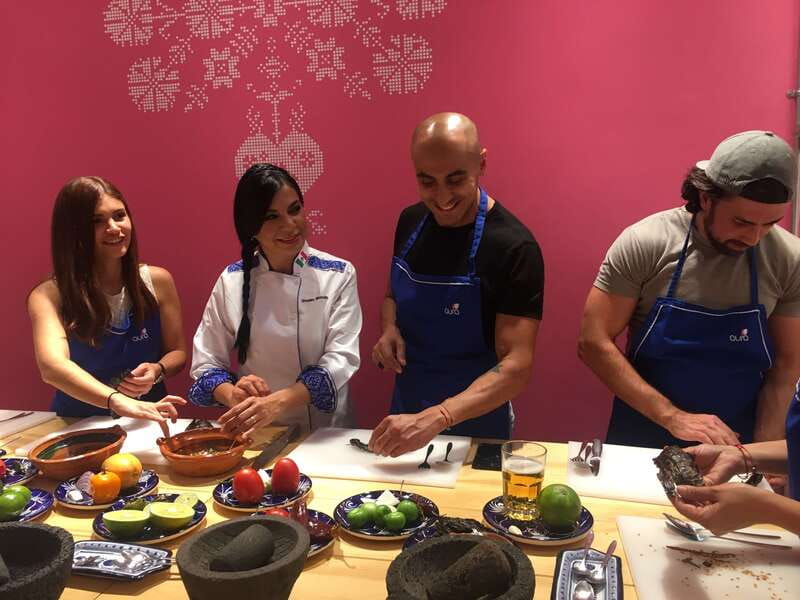
This is more active than a demonstration where you sit back and watch a professional handle every pan. You may chop, mix, shape, season, or help assemble a dish. The exact division of work can vary by group, but the small size gives the instructor a better chance to include everyone.
Course One: Sopes and Mexican Salsas
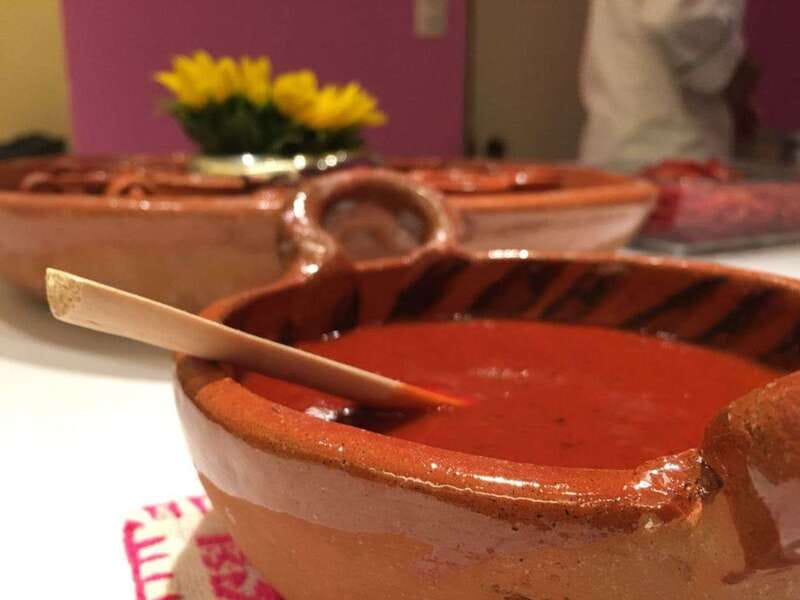
The first course focuses on antojitos mexicanos, the small Mexican dishes often associated with casual eating and street food. You prepare sopes and serve them with two salsas: a red molcajete sauce and a green sauce.
This is a smart starting point because it teaches several basic ideas at once. You work with corn-based dough, learn how texture affects the finished dish, and compare two sauces built from different ingredients. The molcajete preparation also connects the class to older kitchen methods rather than treating salsa as something that simply comes from a jar or blender.
The salsa lesson can be adjusted to different tolerance levels for heat. If you are cautious with chilies, pay attention to how the guide explains using separate parts of the same chili to control the spice. You will leave with a more useful understanding of how heat and flavor can be managed together.
More Market and Cooking Class Tours in Mexico City
- Essence of Mexico: Authentic Mexican Cooking Class & Market Tour
★ 5.0 · 289 reviews - Mexican Street Tacos Hands-on Cooking Class and Market Tour
★ 5.0 · 37 reviews - Private Market Tour, Cooking Class in Mexico City with Alex & Ale
★ 5.0 · 25 reviews - Coyocán: Market Tour and Cooking Class
★ 5.0 · 23 reviews
Course Two: Vegetable Mextlapiques
The second course is mextlapiques, a pre-Hispanic dish that resembles a tamal but is made without masa. The class prepares a vegetable version covered with hierbabuena sauce.
This course is especially interesting because it challenges the idea that every tamal-style dish must be built from corn dough. It also gives you a direct taste of older Mexican cooking traditions while keeping the preparation accessible.
The vegetable filling makes this course suitable for people who want more plant-based food, though the full menu includes other dishes that are not vegetarian. The hierbabuena sauce adds a fresh herbal note, and the preparation shows how a dish can feel substantial without relying on meat or masa.
One practical point: this is a cooking class, not a restaurant where you can simply order alternatives at the table. If you have dietary restrictions beyond the stated information, ask before booking rather than assuming the menu can be changed.
Course Three: White Mole
White mole is the most elaborate lesson in the class. This central Mexican celebration dish uses pale ingredients such as white pine nuts, almonds, peanuts, blonde raisins, and chile guero.
The pale color can surprise people who associate mole with a dark, complex sauce. The guide explains how the ingredients are combined and how the sauce is served with chicken, mushrooms, or panela cheese. You also learn how the dish fits into celebrations in central Mexico.
This is the course where the class feels most like a serious cooking lesson. You are not just assembling a snack. You are learning how nuts, dried fruit, chilies, and other ingredients create a sauce with depth without relying on the dark color many people expect from mole.
It is also the clearest reason to take this class instead of a standard taco workshop. White mole is less familiar to many visitors, and the lesson gives you a dish you can try to recreate at home using the printed recipes.
Course Four: Pastel de Elote
Dessert is pastel de elote, a Mexican cornbread served with water-based chocolate. This is a fitting end to a menu that began with native corn and returned to it in several forms.
The dessert has earned particularly strong praise for its texture and flavor. If you normally avoid cake, this is still worth trying because it is based on sweet corn rather than a standard flour-heavy sponge. The water-based chocolate keeps the pairing connected to cacao’s older Mexican traditions.
Dessert also gives the group a calmer final task after the sauces and main dishes. By this point, you have seen corn treated as tortilla, antojito, tamal-style preparation, and sweet bread. That makes the meal feel like a lesson in the range of one important ingredient.
Mexican Drinks With the Meal
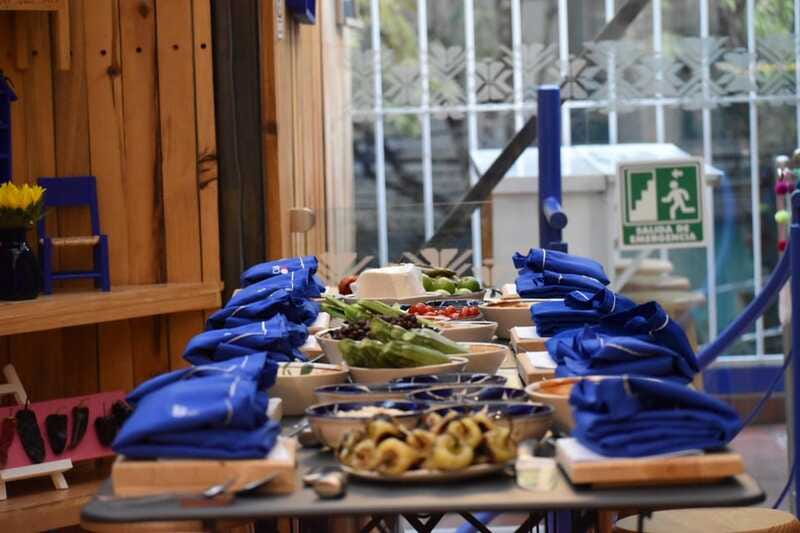
Once the cooking is complete, you sit down to eat the four courses together. The drinks include agua fresca, Mexican craft beer, mezcal from Oaxaca, and premium red or white wine from Valle de Parras.
The drink pairing adds real value to the experience, especially at a price of $204. You are not paying only for ingredients and instruction. You are also getting a prepared lunch and several drinks that connect to different parts of Mexico.
The alcohol is worth noting before you book. The package includes beer, mezcal, and wine, so this will suit adults who want a social meal with drinks more than someone looking for a strictly alcohol-free cooking lesson. The wording allows for beer, mezcal, or wine, but the exact serving sequence may depend on the session.
The drinks also help pace the meal. Agua fresca works as a refreshing welcome and nonalcoholic option, while beer, mezcal, and wine offer different ways to compare Mexican drinks with the food you have made.
What $204 Buys You
At $204 per person, this is one of the pricier food activities you can book in Mexico City. The value depends on what you want from a cooking class.
If you only want to learn one simple recipe, the cost will feel high. You are paying for a 4.5-hour program, a market tour, a professional chef guide, all ingredients, a four-course lunch, printed recipes, and alcoholic drinks. The group size is capped at seven, which is important for a hands-on class.
I see the price as easier to justify if you treat the activity as several experiences combined: a guided market visit, a cultural food lesson, a cooking workshop, a full meal, and a tasting session. The market samples alone cover a wide range, from native corn and cacao to insects and seasonal fruit.
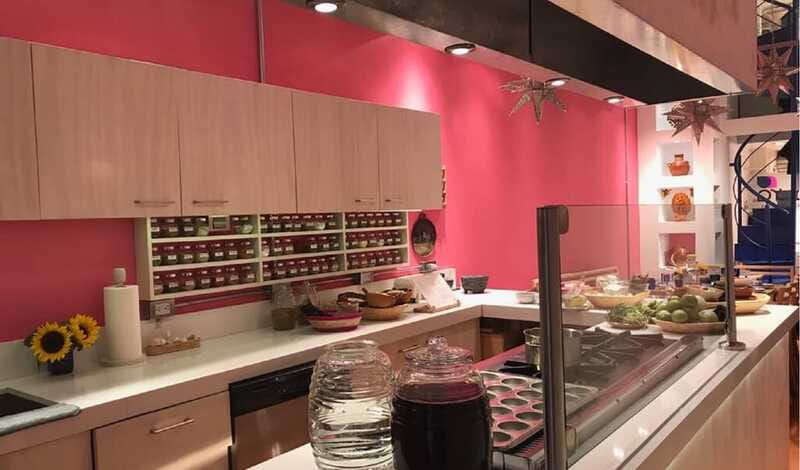
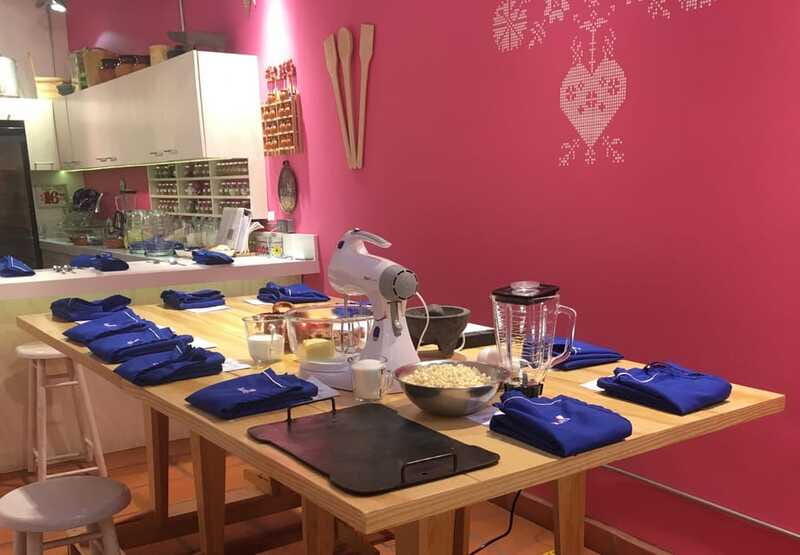
The polished studio also affects the value. You are not being asked to learn in a cramped home kitchen or follow a rushed demonstration. The setting is designed for an intimate class, with staff support and room for each participant to contribute.
Still, budget carefully. If you are traveling on a tight food budget, you can eat very well in Mexico City for far less than $204. Book this for the access, instruction, and range of dishes, not because it is the cheapest lunch in town.
Group Size, Pace, and Practical Limits
The class lasts 4.5 hours, though one participant described spending more than five hours on the experience. Allow extra time if you have a later reservation or evening plan.
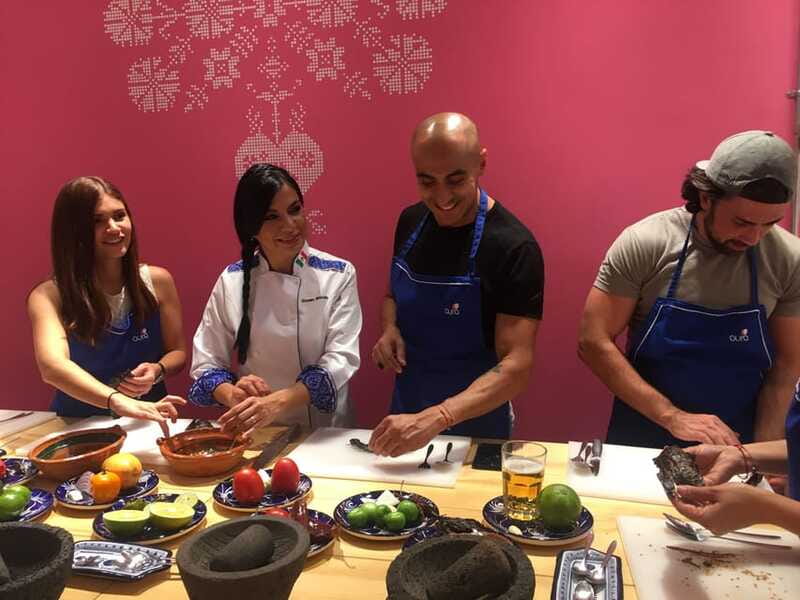
A group of up to seven is a major advantage. It gives the chef a better chance to answer questions, correct technique, and make sure nobody gets pushed aside. It also makes the meal more social without creating the feel of a large tour group.
The activity is offered in English and Spanish. If you want detailed explanations of ingredients, history, and technique, confirm that your preferred language is available when you check starting times.
The experience is not suitable for children under 12, people with nut allergies, or people with mobility impairments. The nut allergy restriction is especially important because white mole contains pine nuts, almonds, and peanuts. The market walk also involves moving through a working market, so anyone with mobility concerns should consider the stated limitation seriously.
There is no hotel pickup or drop-off. Plan to reach the Roma Norte meeting point yourself. The exact address is Medellín 191a, between Chiapas and Tapachula streets, but do not rely only on the street-number sequence.
Free cancellation is available up to 24 hours before the activity for a full refund, and you can reserve now while paying later. Those options help if your Mexico City schedule is still shifting, but they do not change the need to check the allergy and mobility rules before reserving.
Who Will Get the Most From This Class
I would choose this for someone who wants more than a restaurant meal and enjoys asking why a dish tastes the way it does. It suits curious eaters, home cooks, couples, solo visitors who like small groups, and anyone interested in Mexico’s food traditions beyond tacos and guacamole.
It is also a good fit if you want to bring something home from the trip. The printed recipes, salsa methods, white mole lesson, and explanation of nixtamalization give you useful material to work with later.
The class may not suit you if you dislike group participation, avoid alcohol, have a serious nut allergy, or want a quick activity. It is also not the right choice for very young children or anyone who cannot comfortably manage a walking market tour.
Should You Book Aura Cocina Mexicana?
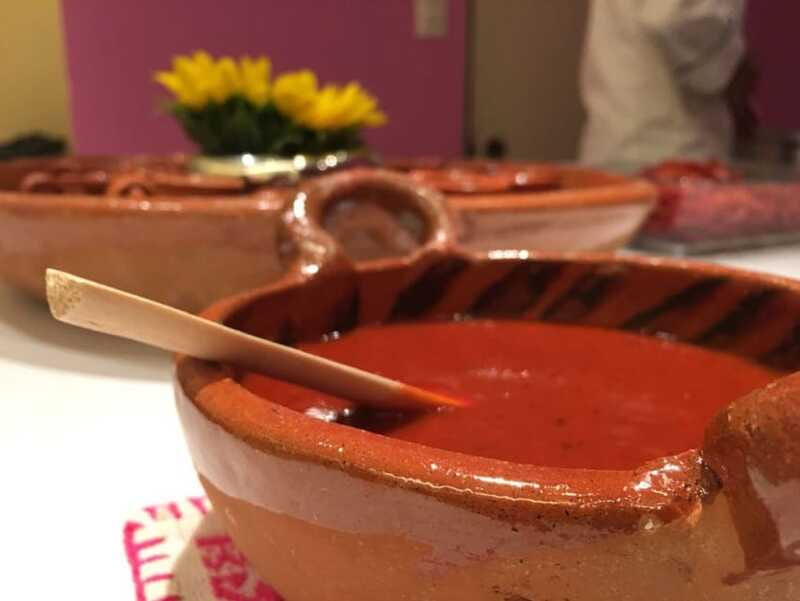
Book it if you want a polished but hands-on introduction to Mexico City food, with a real market visit and dishes you may not encounter in an ordinary cooking class. The combination of Mercado de Medellín, native corn, unusual tastings, white mole, mextlapiques, and pastel de elote gives the half-day a clear sense of place.
The strongest reason to go is the teaching. Guides such as Pame, Mariana, Lorena, and Kristel bring warmth and useful context, while the small group lets you take part rather than watch from the back.
Skip it if $204 stretches your budget, you need a fully customized menu, or you want a short, informal snack tour. For everyone else, this is a thoughtful way to spend a half-day in Roma Norte and leave with both a full meal and a better grasp of how Mexican cooking works.
FAQ
Where does the cooking class meet?
The meeting point is Aura Cocina Mexicana at Medellín 191a in Roma Norte, Mexico City. Medellín’s street numbers are not in sequence, so look for the location between Chiapas and Tapachula streets.
How long does the experience last?
The stated duration is 4.5 hours. Starting times vary, so check availability when booking.
How large is the cooking class?
The class is limited to seven participants, making it a small-group experience.
Which languages are available?
The experience is offered in English and Spanish.
Are food and drinks included?
Yes. The price includes all ingredients, the four-course lunch, printed recipes, agua fresca, and alcoholic beverages including Mexican craft beer, Oaxacan mezcal, or wine from Valle de Parras.
Is the experience suitable for people with nut allergies or children?
No. It is not suitable for people with nut allergies, people with mobility impairments, or children under 12.
Just added around Mexico
- Lucha Libre, Tacos, Margaritas,Tequila and Night Market Tour★ 5.0 · 64 reviews
- Cancun Street Food, Urban Art and Local Market Experience★ 4.0 · 4 reviews
- Experience Cancun’s Hidden Gems, Mayan museum, cenote & Market 23★ 5.0 · 49 reviews
- Taste of Cancun: Street Food, Local Market and Urban Murals Tour★ 5.0 · 6 reviews
- Flavors of Mexico: Cancun Cooking Class & Market Visit★ 4.5 · 5 reviews
- Cancun Taco & Beer Fiesta: Authentic Mexican Tasting Experience★ 5.0 · 3 reviews
- Cancun Private Foodies Market Tour and Street Food★ 5.0 · 3 reviews
- Cancun Walking Food Tour: Local Food, Markets, and Street Art.★ 5.0 · 49 reviews
Market and Cooking Class Tours, compared.

Hanoi Cooking Class: Culture, Local Market & Meaning CSR Impact
Read our review →
5 Traditional Dishes Hanoi Cooking Class with Market Trip
Read our review →
Cooking Class and Lunch at a Tuscan Farmhouse with Local Market Tour from Florence
Read our review →
Cooking Class, Market & Thai Herbs Garden Tour
Read our review →
Authentic Cooking Class with Market & Farm Visit
Read our review →
Paella Cooking Experience & Boqueria Market Tour
Read our review →
Cooking Class Hoi An:Local Market, Basket Boat, Fishing & Cooking
Read our review →
Hoi An Cooking Class(Market,BasketBoat Crabfishing&Cooking Class)
Read our review →Browse the lists this tour appears in