
Review · STREET FOOD MARKET TOURS
Madrid: Ultimate Food Tour of Local Markets & Tapas
Madrid’s food culture makes the most sense one small bite at a time. This three-hour walk takes you from churros and chocolate to market olives, cured meats, vermouth, Spanish cheeses, and a crisp calamari sandwich near Plaza Mayor. It is less about sitting down to one grand meal and more about seeing how madrileños eat during an ordinary day.
I like the strong mix of family-run places and everyday food, especially the stop at Mercado de Antón Martín. I also like the steady pace: you eat, walk, hear a little city history, then eat again. The main drawback is that this is a serious walking and tasting commitment, and it is not suitable for vegans, people with celiac disease, wheelchair users, or strollers.
Quick takeaways
- Morning churros stop: Learn how Madrid’s classic churros differ from the versions many visitors already know, with hot chocolate at Chocolate Madrid.
- Eight local food stops: The route includes cafes, a bakery, a market, a deli, and a traditional tapas bar.
- 15-plus tastings and one drink: Expect enough food to replace a meal, not just a few sample bites.
- Mercado de Antón Martín: Taste olives, cured meats, produce, olive oil, and red vermouth while locals shop.
- A useful city introduction: Guides such as Flo, Liliana, Mitzi, David, and Jose have brought food knowledge, history, and practical Madrid tips to the walk.
- Choose your time carefully: Morning tours include churros. The 5 pm departure substitutes two tapas and a beer.
Why this food walk works in Madrid
At $93 per person, this is not a bargain snack crawl. But the price covers eight stops, more than 15 tastes, a drink, an English-speaking guide, and three hours of walking between places you might otherwise pass without noticing.
I see the value in the combination. You are not paying only for food. You are also paying for the route, the explanations, the introductions to small businesses, and the chance to taste several Madrid staples without ordering full portions at every stop.
The food is spread across central Madrid, beginning at Plaza Santa Ana and ending at Plaza Mayor. That makes the tour useful on your first day, when you want to get your bearings and learn what to order later. It also works well near the start of your stay because guides often share suggestions for other places to eat.
This is a social experience, not a private meal. The group walks at a moderate pace and eats in several different settings. You might stand outside for a quick sandwich, share a tasting in a deli, or pause at market stalls while regular shoppers go about their business.
More Street Food Market Tours in Spain
- San Sebastian Pintxo Food, Wine & Market Foodie Tour(Small Group)
★ 5.0 · 621 reviews - Ultimate Barcelona Food Tour with visit to a Local Market
★ 5.0 · 507 reviews - De Mercados: A Neighborhood Market and Food Tour
★ 5.0 · 237 reviews
Starting at Plaza Santa Ana
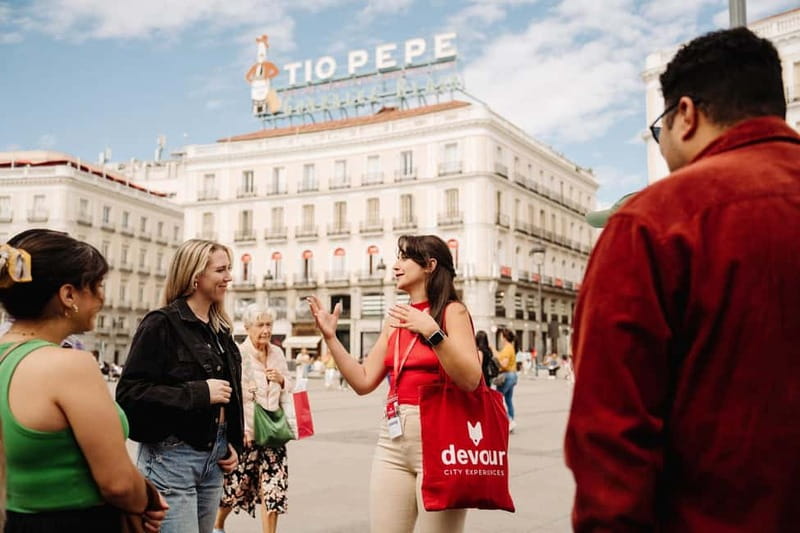
Your meeting point is the statue of Calderón de la Barca in Plaza Santa Ana, in front of the large white hotel. Arrive 15 minutes early and look for a guide carrying a red Devour Tours tote bag or sign.
Plaza Santa Ana is a sensible starting point. It is central, easy to recognize, and already gives you a feel for Madrid’s public life. From here, the tour heads into cafes, small food shops, and neighborhood streets rather than spending the whole morning in places designed only for sightseeing.
The guide is an important part of the experience. Past walks have been led by Flo, Liliana, Mitzi, David, Jose, Marinos, Nicole, Daniel, and others. Their backgrounds vary, but the strongest tours have mixed food facts with local history and practical advice. One guide, Jose, is a trained chef, while Mitzi has offered the perspective of an American living in Madrid.
Churros and chocolate at Chocolate Madrid
On a morning tour, the first food stop is Chocolate Madrid. This is where you get a proper introduction to churros and hot chocolate, including how the Madrid version differs from the sweet, cinnamon-heavy churros often sold elsewhere.
The tour also connects churros with the story of chocolate in Spain. That short history lesson gives the tasting some context without turning breakfast into a lecture. You learn how to approach the dish, how locals order coffee, and why the combination is part of Madrid’s daily rhythm.
The timing matters. Starting with something warm and filling makes the first part of the walk comfortable, but it also means you should not eat a large breakfast beforehand. You will have many more stops ahead.
If you choose the 5 pm tour, you do not get the churros stop. Instead, you visit a popular tapas bar for two local tapas and a beer. That evening option may suit you better if you prefer a later start, but the morning route offers a more distinctive opening.
Bread and chorizo-stuffed rolls at MOEGA
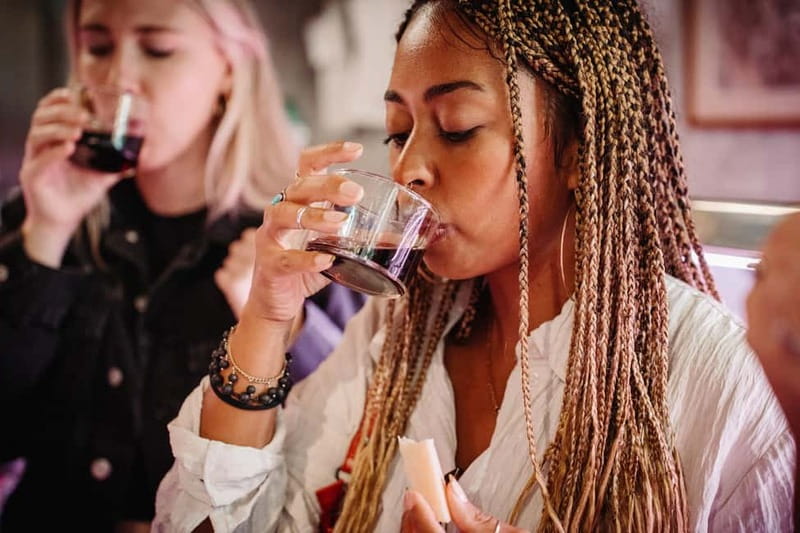
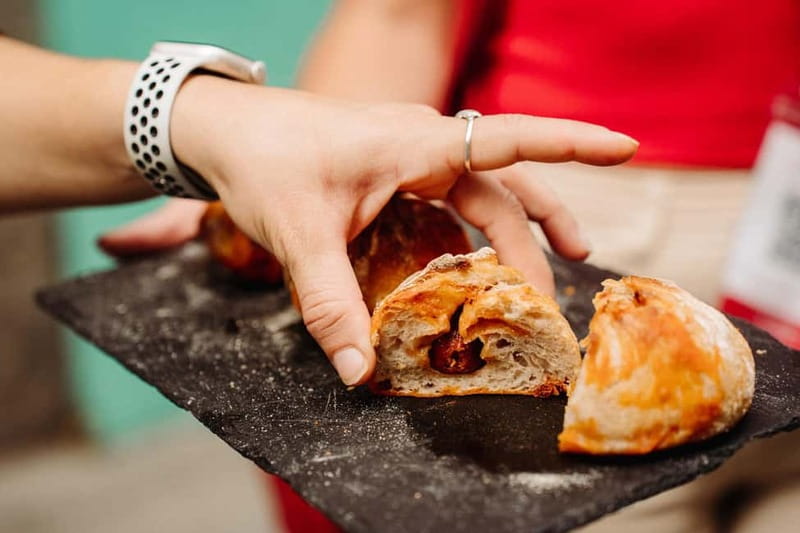
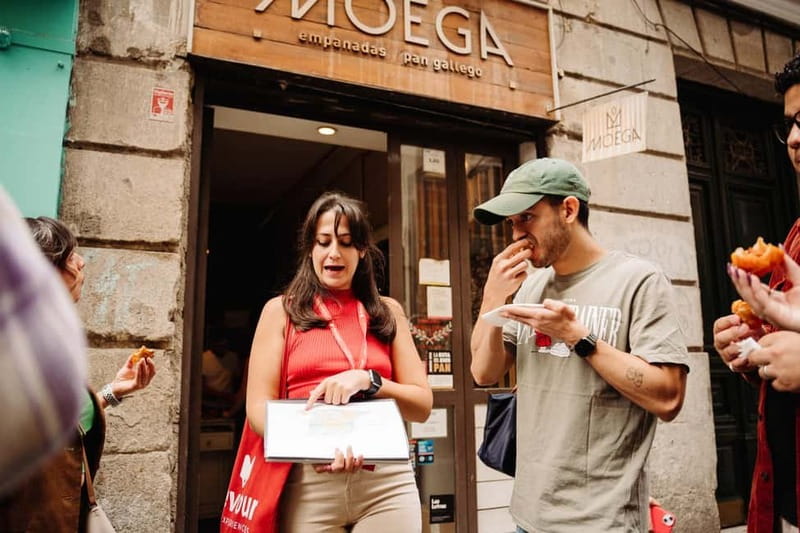
Next comes MOEGA Empanadas y Pan Gallego, a tiny bakery run by a young baker from northern Spain. The focus here is freshly baked bread and homemade chorizo-stuffed rolls.
This stop adds something the usual Madrid tapas checklist often misses. Bread is a basic part of Spanish eating, yet finding a truly good loaf in central Madrid can be harder than you expect. The tasting shows how much flavor comes from good dough, a proper bake, and well-made sausage.
I like this kind of stop because it links food with the person making it. You are not simply handed a prepared sample. You get a short look at the work behind a simple roll, and you may find yourself wanting to return for another one later.
The portion is small, but that is a blessing. By this point, you are still early in a route that includes cheese, cured products, olives, and a sandwich. The goal is variety, not one oversized serving.
Same place, a different set of stalls:
- Barcelona: Paella Cooking Experience & Boqueria Market Tour
★ 4.8 · 3,661 reviews - Barcelona Paella Cooking Class with Market Visit, Tapas & Sangria
★ 5.0 · 2,531 reviews - Paella Cooking Class, Wine Tasting & Central Market in Valencia
★ 5.0 · 1,150 reviews - Valencian paella cooking class, tapas and visit to Ruzafa market.
★ 5.0 · 828 reviews
Shopping like a local at Mercado de Antón Martín
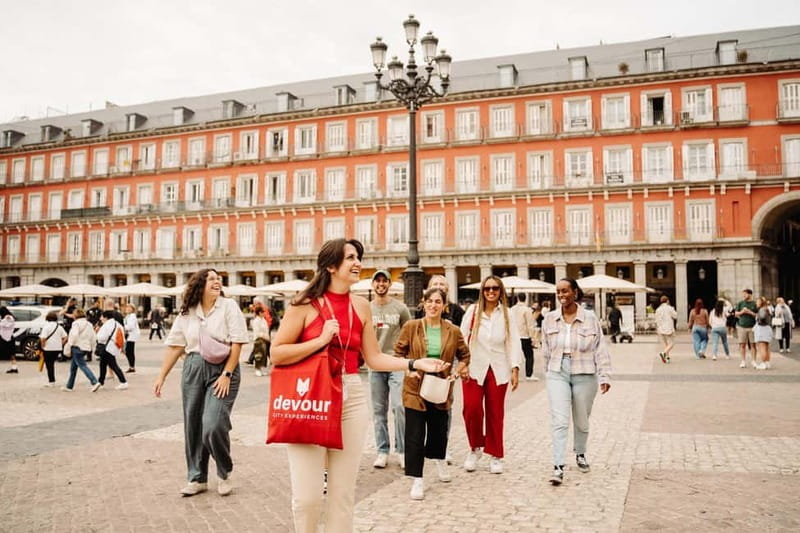
The market visit takes about 40 minutes, making it one of the main sections of the tour. Mercado de Antón Martín is a working food market where Madrid residents shop for daily groceries. It is more useful than a market designed only for photographs.
You stop at several stalls to taste products such as:
- Olives
- Cured meats
- Locally sourced produce
- Extra virgin olive oil
- Spanish red vermouth
The olive oil tasting is especially useful if you have trouble understanding the range of Spanish oils in shops. You can compare the flavor directly and learn why Spain treats olive oil as a central part of the table, not just a cooking ingredient.
The vermouth is another strong point. You learn when madrileños drink this red aperitif and why it has a special place in local routines. The drink is included, so you get a taste without needing to order a full serving.
Antón Martín also gives the tour a welcome change of scene. You are no longer only moving between prepared food stops. You are watching people shop, seeing the products before they reach a restaurant kitchen, and learning how a city feeds itself.
Come ready to keep moving. The market can be crowded, and you may be standing while tasting. Comfortable shoes are essential, and bringing water is sensible, especially in Madrid’s warmer months.
Spanish cheeses at Casa González
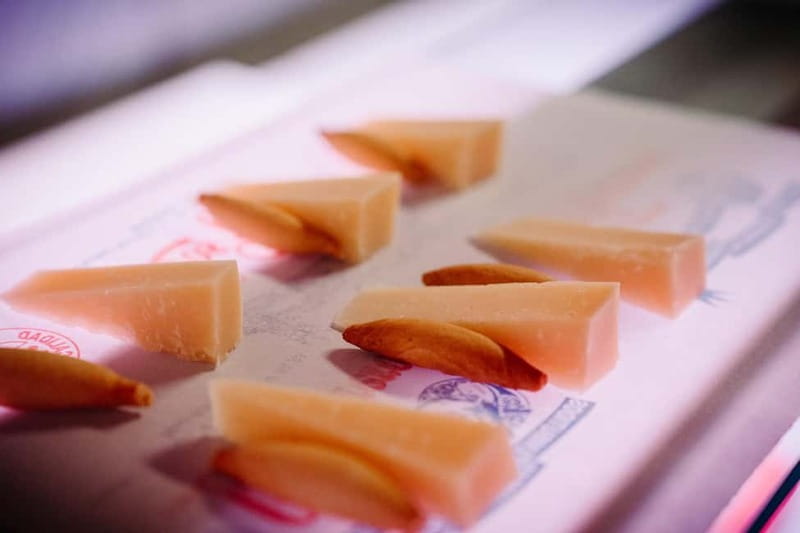
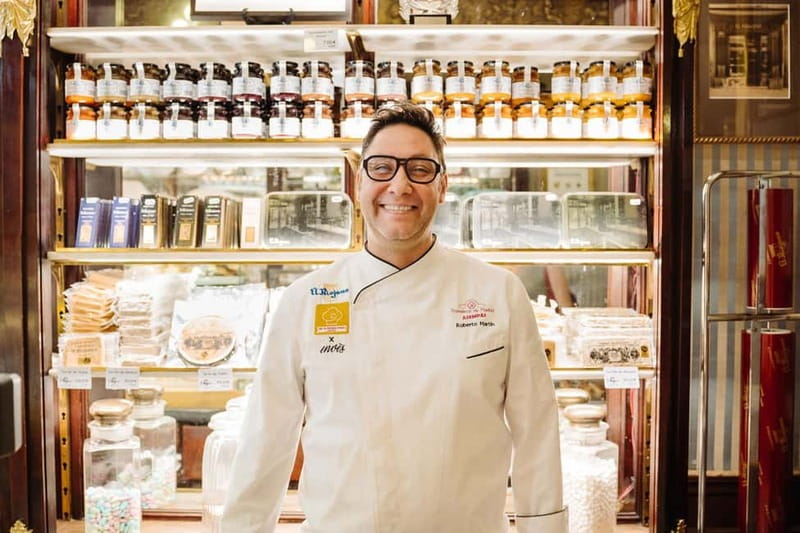
Casa González is an unassuming neighborhood deli with a memorable family story. The owner’s father reportedly used the space for clandestine meetings against Spain’s dictatorship in the 1930s. Today, you sit down there for a tasting of cheeses from around Spain.
The contrast gives this stop extra character. It is still a food tasting, but the room also carries a connection to Madrid’s political past. You get a brief reminder that small shops and cafes can have lives far beyond their current menus.
The cheeses are a good test of your preferences. If you enjoy dairy, cured foods, and savory flavors, this will likely be one of the more satisfying stops. If you dislike cheese or olives, the tour becomes less appealing because those flavors appear more than once.
The seating is also welcome. Most of the experience is a walking route with short tastings, so a pause at Casa González helps break up the pace. It is not a long restaurant meal, but you get time to taste and ask questions.
The calamari sandwich at Bar La Campana
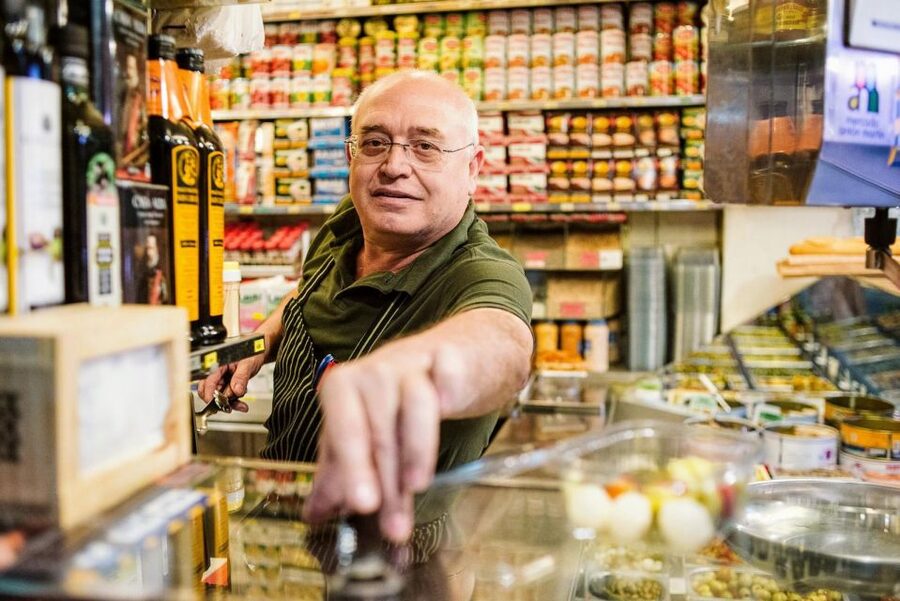
Near Plaza Mayor, the tour finishes its food stops at Bar La Campana for a calamari sandwich. This is one of Madrid’s classic casual bites: fried calamari rings in a light, crunchy batter inside bread.
You eat it standing outside the bar, following the local habit. That detail matters. The sandwich is not presented as a refined dish. It is quick, filling street food, and part of the everyday food culture around Plaza Mayor.
The batter should be light enough to keep the calamari from becoming heavy. Since you have already eaten many tastes, the sandwich may feel like the final substantial bite rather than a small sample. Several people have found the tour filling enough to delay their next meal until late in the evening.
This stop can be busy, and standing outside is not as comfortable as sitting down for a plated lunch. Still, I would rather have the sandwich in its natural setting than turn it into a formal tasting. It gives the route a clear Madrid finish.
Ending at Plaza Mayor
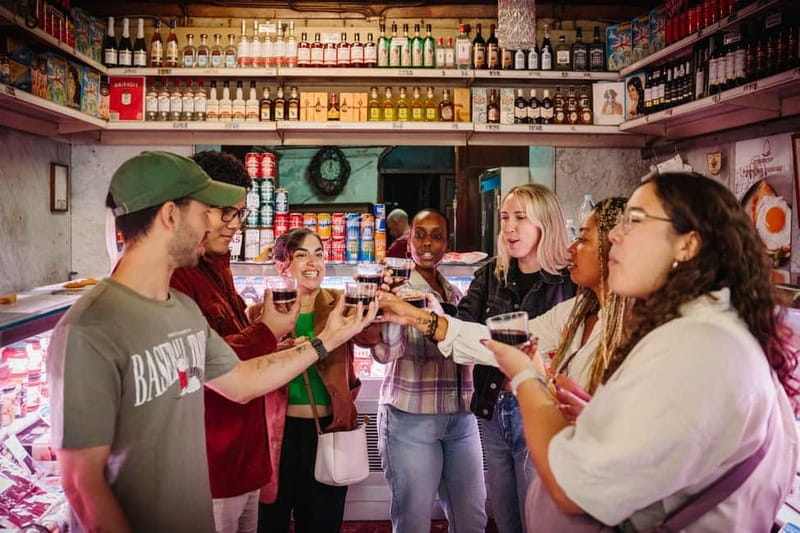
The final walk brings you into Plaza Mayor, one of Madrid’s central public spaces and the setting for important events across the city’s past and present. The tour does not end with a long sightseeing lecture, but the guide uses the square to connect the food route with Madrid’s wider story.
Ending here is practical. You are close to major sights, central streets, and places to continue exploring on foot. You can also use what you learned immediately, from ordering vermouth to recognizing a better bakery or choosing a local snack.
The route is most useful when you treat it as an introduction rather than a complete food tour of Spain. It focuses on Madrid and on accessible local products, not every regional specialty in the country.
What the $93 price gets you
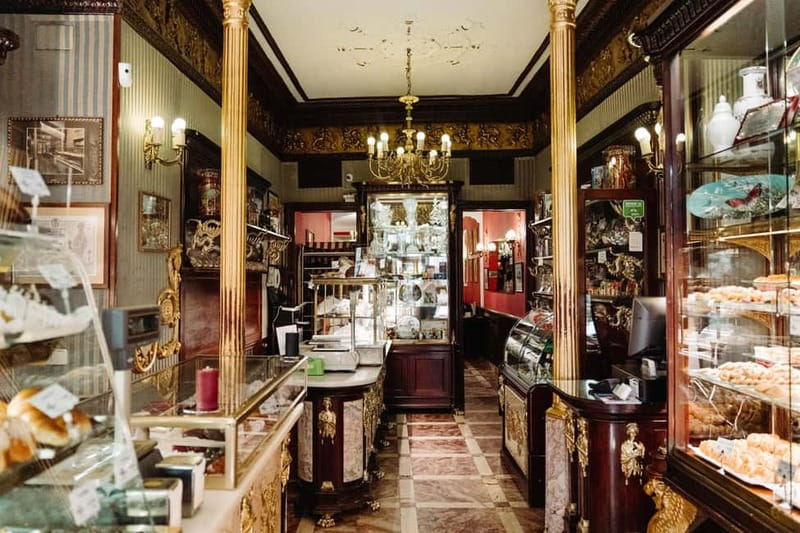
The strongest value comes from the amount of food. You receive 15 or more tastes at eight family-run businesses, plus one drink. That is enough for many people to count the tour as lunch, though I would not skip food for the entire day because appetites vary.
You also receive a guide who manages the timing and explains what you are eating. A well-prepared guide can make a familiar item, such as an olive or a cheese, much more interesting by explaining how it fits into Spanish habits.
The price is harder to justify if you already know Madrid’s food scene well, speak Spanish comfortably, and enjoy choosing your own bars. It makes more sense if you want structure, context, and a wide sample of food in one sitting.
The route also takes you to places you might miss while following a standard sightseeing plan. The bakery, market stalls, and deli feel more connected to daily life than a famous restaurant built around visitors.
Dietary needs and physical demands
You need to contact the provider in advance if you have allergies or dietary restrictions. The tour can adapt for vegetarians, pescatarians, people avoiding dairy, people who want nonalcoholic drinks, some gluten-free diets, and pregnant women.
There may not be a replacement at every stop. The tour is not suitable for vegans or people with celiac disease, and the stated gluten-free option does not cover celiac requirements.
This is a walking tour, with a moderate pace and repeated stops where you may stand. It is not suitable for wheelchair users, people with mobility impairments, or strollers. Wear comfortable shoes and bring water.
Families can enjoy it if children are open to trying different foods. One guide made a point of including three children in a group, but the format still requires children to walk and wait through several tastings.
Who should book this Madrid food tour?
I would choose this tour for a first or second day in Madrid. It gives you a practical food map, introduces local eating customs, and finishes near one of the city’s best-known squares.
It suits curious eaters who want more than restaurant recommendations. You will taste bread, cured meats, olives, oil, vermouth, cheese, chocolate, churros, tapas, and calamari in one route.
I would skip it if you want a long, seated meal, dislike savory food, avoid dairy and gluten completely, or have difficulty walking for three hours. I would also choose the morning tour if churros are high on your list. Pick the 5 pm option if you would rather have tapas and beer at the start of an evening food walk.
Should you book it?
Yes, if you want a filling, well-organized introduction to Madrid’s everyday food culture. The best reasons are the market visit, the family-run stops, the useful explanations, and the sheer range of tastes packed into three hours.
Book with realistic expectations. This is not a luxury dining experience, and the route can be tiring if you are not used to walking and eating on the move. At $93, it offers fair value for the quantity of food and the guidance, especially early in your Madrid stay. Choose the morning departure for churros, contact the provider about dietary needs, and arrive hungry.
FAQ
How long does the Madrid food tour last?
The tour lasts three hours, including walking between the food stops and the final visit to Plaza Mayor.
Where does the tour begin?
It begins at Plaza Santa Ana, at the statue of Calderón de la Barca in front of the large white hotel. Arrive 15 minutes before departure and look for a guide carrying a red Devour Tours tote bag or sign.
Where does the tour finish?
The tour finishes at Plaza Mayor in central Madrid.
Are churros included on every departure?
No. Churros are included on morning tours. The 5 pm tour replaces that stop with two popular tapas and a beer.
Is the tour suitable for dietary restrictions?
The tour can adapt for vegetarians, pescatarians, dairy-free diets, some gluten-free diets, nonalcoholic options, and pregnant women. Contact the provider before the tour, since a replacement may not be available at every stop. The tour is not suitable for vegans or people with celiac disease.
Is the tour accessible for wheelchairs or strollers?
No. The tour is not suitable for wheelchair users, people with mobility impairments, or strollers. You should be able to walk at a moderate pace for the full three hours.
More Food and Drink Trips in Spain
- Valencia: Morning Food Tour with Central Market Visit
★ 4.9 · 196 reviews - Barcelona: La Boqueria Food, Wine & History Walking Tour
★ 5.0 · 126 reviews - Madrid: Street Food Walking Tour in the Plaza Mayor Area
★ 5.0 · 119 reviews - San Sebastian: Market, Pintxos and Wine Tasting Tour
★ 5.0 · 111 reviews
Just added around Spain
- Explore Bilbao’s Flavors Mercado de la Ribera and Old Town★ 4.5 · 3 reviews
- CERTAL Exclusive Tour: LA RIBERA Market + GASTROBARS Bilbao (3h)★ 4.5 · 12 reviews
- Spanish Oysters, Cava and Ibérico Ham at Barcelona’s La Boqueria Market★ 5.0 · 8 reviews
- Taste of Barcelona: Boqueria Market, Tapas & History Tour★ 4.5 · 22 reviews
- Private Barcelona Market Tour & Paella Cooking Class with Josh★ 5.0 · 4 reviews
- Barcelona La Boqueria & Sant Antoni Private Food Experience★ 5.0 · 7 reviews
- Cook Paella & Tapas + Market Tour in Barcelona (4-Course Meal)★ 5.0 · 2 reviews
- Market Gourmet Visit and Spanish Culinary Experience in Barcelona★ 5.0 · 34 reviews
Street Food Market Tours, compared.
Old Town, Creek, Museums, Souks, & Street Food Tour
Read our review →
Old Town, Souks, Street Food, Guided Tour & Abra Ride
Read our review →
Old Town, Souks, Street Food, Guided Tour & Abra Ride
Read our review →
Small Group Cooking Class & Market Food Tour in Florence
Read our review →
Old Town, Street Food, Creek, Souks, & Emirati House
Read our review →
Browse the lists this tour appears in